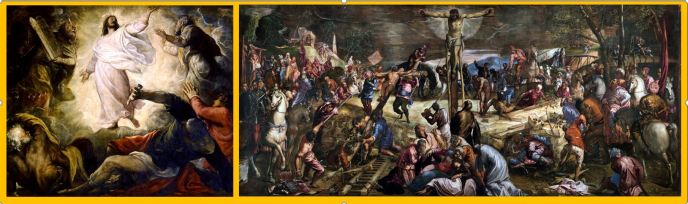
Stating the Facts & Facing the Conclusions

by Angela Lambert

March 26th, 2017; 4th Sunday of Lent

Gospel of John 9:1-41

As Jesus passed by He saw a man blind from birth. His disciples asked him, “Rabbi, who sinned, this man or his parents, that he was born blind?” Jesus answered, “Neither he nor his parents sinned; it is so that the works of God might be made visible through him. We have to do the works of the one who sent me while it is day. Night is coming when no one can work. While I am in the world, I am the light of the world.” When he had said this, he spat on the ground and made clay with the saliva, and smeared the clay on his eyes, and said to him, “Go wash in the Pool of Siloam” —which means Sent—. So he went and washed, and came back able to see. His neighbors and those who had seen him earlier as a beggar said, “Isn’t this the one who used to sit and beg?” Some said, “It is,” but others said, “No, he just looks like him.” He said, “I am.” So they said to him, “How were your eyes opened?” He replied, “The man called Jesus made clay and anointed my eyes and told me, ‘Go to Siloam and wash.’ So I went there and washed and was able to see.” And they said to him, “Where is he?” He said, “I don’t know.” They brought the one who was once blind to the Pharisees. Now Jesus had made clay and opened his eyes on a sabbath. So then the Pharisees also asked him how he was able to see. He said to them, “He put clay on my eyes, and I washed, and now I can see.” So some of the Pharisees said, “This man is not from God, because he does not keep the sabbath.” But others said, “How can a sinful man do such signs?” And there was a division among them. So they said to the blind man again, “What do you have to say about him, since he opened your eyes?” He said, “He is a prophet.” Now the Jews did not believe that he had been blind and gained his sight until they summoned the parents of the one who had gained his sight. They asked them, “Is this your son, who you say was born blind? How does he now see?” His parents answered and said, “We know that this is our son and that he was born blind. We do not know how he sees now, nor do we know who opened his eyes. Ask him, he is of age; he can speak for himself.” His parents said this because they were afraid of the Jews, for the Jews had already agreed that if anyone acknowledged him as the Christ, he would be expelled from the synagogue. For this reason his parents said, “He is of age; question him.” So a second time they called the man who had been blind and said to him, “Give God the praise! We know that this man is a sinner.” He replied, “If he is a sinner, I do not know. One thing I do know is that I was blind and now I see.” So they said to him, “What did he do to you? How did he open your eyes?” He answered them, “I told you already and you did not listen. Why do you want to hear it again? Do you want to become his disciples, too?” They ridiculed him and said, “You are that man’s disciple; we are disciples of Moses! We know that God spoke to Moses, but we do not know where this one is from.” The man answered and said to them, “This is what is so amazing, that you do not know where he is from, yet he opened my eyes. We know that God does not listen to sinners, but if one is devout and does his will, he listens to him. It is unheard of that anyone ever opened the eyes of a person born blind. If this man were not from God, he would not be able to do anything.” They answered and said to him, “You were born totally in sin, and are you trying to teach us?” Then they threw him out. When Jesus heard that they had thrown him out, he found him and said, “Do you believe in the Son of Man?” He answered and said, “Who is he, sir, that I may believe in him?” Jesus said to him, “You have seen him, the one speaking with you is he.” He said, “I do believe, Lord,” and he worshiped him. Then Jesus said, “I came into this world for judgment, so that those who do not see might see, and those who do see might become blind.” Some of the Pharisees who were with him heard this and said to him, “Surely we are not also blind, are we?” Jesus said to them, “If you were blind, you would have no sin; but now you are saying, ‘We see,’ so your sin remains.

 Meditation Reflection:

Another long passage.  Why?  Two in a row?  Is it because it’s Lent and the Church wants to test or patience?  No, despite our ever-shortening attention spans, we still need to hear real stories of real people’s transformation in Christ.

John could only include a sliver of these experiences in his Gospel, so he reserved room for the most powerful or most instructive.  His Gospel is not written as myth or legend, but as testimony.  Jesus’ encounter with the Samaritan woman at the well taught us the surprising nature of the kingdom of God which we, like many of the Jews at the time, may find difficult to understand on a natural level. Jesus’ healing of the man born blind, testifies to the undeniable evidence of Jesus’ divine origin.  Thus, discipleship of Christ cannot be sustained by natural reason alone, which is why believing in Him as merely a good moral teacher is not enough and not very effective.  Rather, disciples follow Christ based on faith in Who He is.  This faith may develop gradually over a period of time and interaction like the Samaritan woman’s village with whom Jesus spent two days, or happen in a miraculous moment like the man born blind.  Either way, the call of discipleship exceeds our understanding, and can only make sense if we believe that Jesus is truly God.

Discipleship, therefore, begins with encounter and follows with witness.  The man born blind stated the facts of the situation without interpretation several times.  The Pharisees refused to acknowledge the logical conclusion so they tried to raise doubts about the premises.  Finally, the exasperated man connected the dots for them and stated the logical conclusion. He was born blind, now he is not blind; only God could have given him sight ; God only blesses those whom He approves; therefore…Jesus is from God.  For the Pharisees to reject Christ when the miracle was standing right in front of them, was to willingly choose blindness.  God acts in our lives daily and has sent His only Son for our salvation.  We have no more excuses for our ignorance.

The Pharisees tried to pit Jesus against Moses, but Jesus is the fulfillment of God’s promise to send a new Moses.  Moses received the Law from God and brought it to the people.  Jesus is God, and communicates the New Law from His own authority.  He also, therefore, has the authority to correct any misinterpretations or mis-applications of the Old Law.

God also promised, that someone from the line of David would always be king.  As the New David, Jesus takes up the crown as eternal king.  When God told the prophet Samuel to go to the house of Jesse and anoint one of his sons as the new king, Samuel expected the oldest to be chosen.  Instead, God chose the youngest.  This was such an unforeseen call, that David wasn’t even present at the visit but instead was tasked with tending the sheep.  Just as God said to Samuel regarding David, “Not as man sees does God see, because man sees the appearance but the LORD looks into the heart” (1 Samuel 16:7), so the blind man gave witness to Jesus by his miraculous and supernatural sight.  One thing I do know is that I was blind and now I see…It is unheard of that anyone ever opened the eyes of a person born blind. If this man were not from God, he would not be able to do anything.”

All Christians are called to bear witness to Christ, evidenced by His transformative power in their lives.  How others react to that witness, brings to light their true state of soul.  We all have an innate yearning for God.  We sometimes avoid Him however to continue in some of our sins.  Sometimes we feign ignorance, rationalize away Christ’s teaching, or discount the witness given by the lives of strong Christians we know, so we can avoid facing the truth about our attachments.  We cannot hide any longer.  Christ has come, His light has shone, and He continues to live and act through His Mystical Body the Church.  He has given a New Law as our Eternal King.  His expectations exceed our natural abilities and weakness, but His grace makes the Christian life possible.

The more our relationship with Christ develops, the more our faith will strengthen and our trust in Him will grow.  Then, when the Christian life tests our minds and hearts, we will hopefully respond as St. Peter did, “Lord, to whom shall we go? You have the words of eternal life; and we have believed and have come to know, that you are the Holy One of God.” (John 6:68-69) and to give witness as St. John does at the beginning of His Gospel: “the Word became flesh and dwelt among us, full of grace and truth; we have beheld His glory, glory as the only-begotten Son from the Father.” (John 1:14)

Consider:

  • Where would you consider yourself in your spiritual journey?
    • Initial Outreach – just beginning the search for God, curious about Jesus but unsure of whether to follow Him
    • Early Development – responding to Christ, learning His truths, forming convictions, developing Christian habits, shedding sinful habits, wavering but growing stronger
    • Disciple – follower of Christ, faith in Him and trust in Him above oneself, motivated by love and loyalty, allowing Christ full authority to transform you, witness of His life in you
  • If, like the man born blind, you were asked to testify about your encounter with Christ, what would you say?  What would be the “facts” of the case, and what would be your conclusions?
  • How has the Christian witness of others strengthened your faith or moved you to make a serious change in your life?

Make a Resolution (Practical Application):

  • Each morning take five minutes of prayer to think about your day ahead, and resolve to  witness to Christ in one to three concrete ways.
    • Consider in each aspect – home, work, recreation, family time.
    • Think of ways in each area you can live your Christian faith and witness to Christ by either your words or your actions.
    • Resolve on one thing to say or do in each area for the day.
    • At the end of the day, reflect back on how you did.  Praise God for your successes, and where you failed ask for grace to do better tomorrow.

~ Written by Angela Lambert © 2017

* To receive these weekly posts automatically in your email just click the “follow” tab in the bottom right hand corner and enter your email address.


Hope…When Least Expected

by Angela Lambert

woman at well

March 19th, 2017; 3rd Sunday of Lent

Gospel of John 4:5-42

 Jesus came to a town of Samaria called Sychar, near the plot of land that Jacob had given to his son Joseph. Jacob’s well was there. Jesus, tired from his journey, sat down there at the well. It was about noon. A woman of Samaria came to draw water. Jesus said to her, “Give me a drink.” His disciples had gone into the town to buy food. The Samaritan woman said to him, “How can you, a Jew, ask me, a Samaritan woman, for a drink?” —For Jews use nothing in common with Samaritans.— Jesus answered and said to her, “If you knew the gift of God and who is saying to you, ‘Give me a drink, ‘ you would have asked him and he would have given you living water.” The woman said to him, “Sir, you do not even have a bucket and the cistern is deep; where then can you get this living water? Are you greater than our father Jacob, who gave us this cistern and drank from it himself with his children and his flocks?”

Jesus answered and said to her, “Everyone who drinks this water will be thirsty again; but whoever drinks the water I shall give will never thirst; the water I shall give will become in him a spring of water welling up to eternal life.” The woman said to him, “Sir, give me this water, so that I may not be thirsty or have to keep coming here to draw water.”

Jesus said to her, “Go call your husband and come back.” The woman answered and said to him, “I do not have a husband.  Jesus answered her, “You are right in saying, ‘I do not have a husband.’ For you have had five husbands, and the one you have now is not your husband. What you have said is true.” The woman said to him, “Sir, I can see that you are a prophet. Our ancestors worshiped on this mountain; but you people say that the place to worship is in Jerusalem.” Jesus said to her, “Believe me, woman, the hour is coming when you will worship the Father neither on this mountain nor in Jerusalem. You people worship what you do not understand; we worship what we understand, because salvation is from the Jews. But the hour is coming, and is now here, when true worshipers will worship the Father in Spirit and truth; and indeed the Father seeks such people to worship him. God is Spirit, and those who worship him must worship in Spirit and truth.” The woman said to him, “I know that the Messiah is coming, the one called the Christ; when he comes, he will tell us everything.” Jesus said to her, “I am he, the one speaking with you.”

At that moment his disciples returned, and were amazed that he was talking with a woman, but still no one said, “What are you looking for?” or “Why are you talking with her?” The woman left her water jar and went into the town and said to the people, “Come see a man who told me everything I have done. Could he possibly be the Christ?” They went out of the town and came to him. Meanwhile, the disciples urged him, “Rabbi, eat.” But he said to them, “I have food to eat of which you do not know.” So the disciples said to one another, “Could someone have brought him something to eat?” Jesus said to them, “My food is to do the will of the one who sent me and to finish his work. Do you not say, ‘In four months the harvest will be here’? I tell you, look up and see the fields ripe for the harvest. The reaper is already receiving payment and gathering crops for eternal life, so that the sower and reaper can rejoice together. For here the saying is verified that ‘One sows and another reaps.’ I sent you to reap what you have not worked for; others have done the work, and you are sharing the fruits of their work.”

Many of the Samaritans of that town began to believe in him because of the word of the woman who testified, “He told me everything I have done.” When the Samaritans came to him, they invited him to stay with them; and he stayed there two days. Many more began to believe in him because of his word, and they said to the woman, “We no longer believe because of your word; for we have heard for ourselves, and we know that this is truly the savior of the world.”

Meditation Reflection:

What a long passage.  Why?  Why does John give this much space in his Gospel to one woman’s conversion?  Jesus encountered multitudes of people during His brief public ministry.  John even gives a disclaimer at the end of his Gospel, apologizing that he could only include a handful of Jesus’ miracles, enough to make the point that He is the Son of God, because they were too innumerable to recount in written form.

The woman at the well’s encounter with Christ, models the process of conversion.  Jesus approached her when she least expected it.  She went to the well at noon, the worst time of the day, to avoid the other women.  Sin has a way of isolating us from others as we try to cover up our sins or rationalize our choices.

Jesus initiated the conversation.  He sought her.  He began with a request, but in fact desired to offer her healing and salvation.  Every Christian’s conversion begins with an encounter with Christ, and the experience of Him having sought us before we sought Him.  Discipleship is not a project, club, or philosophy.  It’s a response.  It’s a realization that what Christ asks of us, is in fact His invitation to receive from Him.

Next, He addressed her sins.  She skirted the issue, and even when confronted directly, she tried to distract Him with a theological debate.  By the end however, she felt relief and joy. From her encounter, she learned that the Christ, the anointed one of God, had come.  Moreover, He had come to her – despite her personal unfaithfulness, as well as the unfaithfulness of her people the Samaritans. Jesus revealed Himself as the Savior, come through the promise of the Jews, and at the same time for the salvation of all.

Imagine her hopelessness as she approached the well in the heat of the day.  Women of her time would view success as a good marriage and large family.  She had already had five husbands and given up on marriage altogether with the man she was living with. She had no friends and was excluded from the community of women.  There was no way back for her, and no opportunity going forward.

God gives surprisingly and super-abundantly.  Met with physical thirst, Jesus offered her the living waters of eternal life.  It took awhile for her to wrap her mind around what He was saying.  Eventually however, she recognized the work of God and ran to the people of her town to tell them.  She left her water jug, despite her physical thirst and needs.  She boldly told everyone of her experience, despite the shame of her reputation among them.

Her witness was so moving that they went to Jesus to see for themselves.  They too encountered Christ in an unexpected and surprising way – through the seemingly least religious woman in town.  By the end of their encounter however, they too were converted.

During Lent, Jesus comes to meet us in our shame and our thirst.  As a Church, we endeavor to hear Him through increased prayer and introspection.  We recall that He came to save us, while we were still sinners.  We remember that He first sought us, but we must respond.  Thankfully, He is patient.  Our transformation in Christ will become our witness, and our witness will bring Christ to others.  But first, we must set aside our tactics for avoiding our sins, and allow Christ to lead us through them.

Consider:

  • The woman went to the well at noon instead of morning because of shame:
    • What are you ashamed of? What do you hide from others?
  • Imagine meeting Jesus there.
    • Would you feel surprised? What excuses might you make?
  • Imagine Jesus calling you out on your sins.
    • What are your competing loves? Be honest.
  • How is Jesus the living water compared to these other “spouses”?
  • How are the other pleasures you seek temporary and always needing replenishing, whereas Christ’s joy is abiding?
  • Jesus offers her life, and commands her to sin no more.  Let Jesus confront your sin.  You too must choose. You cannot have both.

Make a Resolution (Practical Application):

  • When God confronted King David about his sin through the prophet Nathan, David responded by composing Psalm 51.  He acknowledged his sin, asked for forgiveness, and trusted God to transform his heart.
  • Do an examination of conscience this week.  If possible, meet Christ in the sacrament of Confession.

~ Written by Angela Lambert © 2017

* To receive these weekly posts automatically in your email just click the “follow” tab in the bottom right hand corner and enter your email address.


We Have Seen His Glory…Gospel Meditation for Second Sunday of Lent

by Angela Lambert


March 12th, 2017; 2nd Sunday of Lent

Gospel of Matthew 17:1-9

Jesus took Peter, James, and John his brother, and led them up a high mountain by themselves. And he was transfigured before them; his face shone like the sun and his clothes became white as light. And behold, Moses and Elijah appeared to them, conversing with him. Then Peter said to Jesus in reply, “Lord, it is good that we are here. If you wish, I will make three tents here, one for you, one for Moses, and one for Elijah. “While he was still speaking, behold, a bright cloud cast a shadow over them, then from the cloud came a voice that said, “This is my beloved Son, with whom I am well pleased; listen to him.” When the disciples heard this, they fell prostrate and were very much afraid. But Jesus came and touched them, saying, “Rise, and do not be afraid.” And when the disciples raised their eyes, they saw no one else but Jesus alone. As they were coming down from the mountain, Jesus charged them, “Do not tell the vision to anyone
until the Son of Man has been raised from the dead.”

 Meditation Reflection:

It requires little effort to encounter Jesus in His humbled, human form.  Belief in His human existence doesn’t require faith, since the historical evidence regarding His time on earth exceeds that of other great figures of history.  The wisdom of His teachings resonates with Christians, Muslims, Buddhists, and secular persons alike.  Thus, to view Jesus as a great Teacher doesn’t equate to faith per se either, but merely to good education. Limiting Christ to His human form, His own people had no qualms about making Him famous one day, shouting “Hosanna in the highest!”, and killing Him the next, shouting “Crucify Him!”.

Discipleship requires encountering Christ as He truly is – both human and divine; a great teacher, and God’s only Son sent as ransom for our sins.  To see Jesus’ divinity means strenuous effort to move beyond easy earthly worldviews and comforts.  Christ’s divinity and His redemptive love add a supernatural dimension to reality which impacts our decision making. Why turn the other cheek if justice can only be meted out on earth?  Why forsake wealth, travel, status, or pleasures if “you only live once” and this life is it? God works in surprising ways. He calls us to follow Him and to do things we cannot do on our own.   Discipleship requires faith, because it requires decisions that necessitate grace being real, and the Cross being the path to Resurrection.

Jesus took Peter, James, and John up the high mountain.  If invited to climb a high mountain (without the reason even being stated), how many of us would choose to relax at the bottom instead.  Looking up we might say, “I bet the view is beautiful, but it’s too much work.”  Peter, James, and John could not have anticipated what they saw that day.  They embarked on an arduous hike for the simple reason that Christ brought them.  Although easy to imagine as we read it in Scripture, consider the inertia you feel when trying to make time for exercise in the day, or how many excuses and competing priorities crowd out taking time aside for prayer.

These three wanted to be great in Christ’s kingdom.  Climbing the mountain of the Transfiguration, Jesus revealed that greatness meant trust in His Person.  He didn’t make a case to them as to why they should climb, nor did He make any promises about what they would get out of it.  They followed because He took them, and they trusted Him.

True to His character, God gave super-abundantly.  Peter, James, and John witnessed a magnificent sight.  They saw Jesus in His glorified form, His divine nature radiating through His human nature.  They saw Moses and Elijah conversing with Him, and so fulfillment of some of the greatest promises of the Old Covenant. Aware of the presence of God as His voice spoke from the heavens, they fell prostrate on the ground, overwhelmed and unworthy of such a profound gift.

Peter, James, and John did indeed become great in Christ’s kingdom.  Christ made Peter the head of His Church and the first pope.  James became the bishop of the Christian community in Jerusalem.  John, the beloved disciple and the contemplative theologian, received Mary into his home after Jesus’ death, wrote the intensely deep 4th Gospel, three letters included in Scripture, and the book of Revelation.

Their discipleship developed gradually however.  They believed they had found the Messiah when they first encountered Christ and left their possessions and careers to follow Him at His request. Inspired by the Holy Spirit, and having witnessed innumerable miracles, they came to believe He was the only begotten Son of God. Despite all of this however, the last, and hardest belief would be accepting that His messianic kingdom could only come through the Cross.  Whenever Jesus prophesied that He would be rejected, suffer, and die by crucifixion, the disciples vigorously protested.  They could not conceive any way in which that would make sense – naturally or super-naturally.

Jesus had compassion on their weakness.  He brought them up the high mountain and gave them a glimpse of His divine power, so that during the horrific events of His arrest, scourging, crowning of thorns, carrying the cross, and crucifixion, they would not lose faith.

Each person’s spiritual journey, though unique to the individual, at the same time follows a similar pattern.  Discipleship begins with an invitation from Christ.  To follow Him, we must leave some things behind to attain greater things ahead.  To move further, we must develop the conviction that Jesus is truly our Savior. Having begun the work of following Him, we start to witness His miracles, experience wonder at His teachings, and zeal begins to grow.  The most difficult test to discipleship however, remains the cross.  We might praise Jesus for dying for us, but when we must face the cross in our own lives we easily falter.  Jesus sometimes strengthens us with “Transfiguration moments” prior to these tests.  It might be consolation in prayer, blessings in our daily lives, heightened sight of His grace at work, or interior touches of His love in our soul.  Before great crosses, Jesus strengthens our faith, so that when His divinity is utterly hidden, we can recollect the times we saw it unveiled and persevere in trust.

Consider:

  • When have you felt the call of Christ? What have you left behind to pursue Him? How has it exceeded your expectations?
  • What would you consider your “Transfiguration” moment(s)? When have you been moved in awe by Christ’s divinity?
  • When has your faith been tested? When have you found it most hard to trust Christ? How do those transfiguration moments strengthen your faith in Him?

Make a Resolution (Practical Application):

  • At the end of each day this week, write down at least one time you “saw” Christ that day.
  • Pray the serenity-and-suscipe-prayers each day.

~ Written by Angela Lambert © 2017

* To receive these weekly posts automatically in your email just click the “follow” tab in the bottom right hand corner and enter your email address.


Determined Discipleship

by Angela Lambert

(c) National Galleries of Scotland; Supplied by The Public Catalogue Foundation

March 5th, 2017; 9th First Sunday of Lent

Gospel Matthew 4:1-11

At that time Jesus was led by the Spirit into the desert to be tempted by the devil. He fasted for forty days and forty nights, and afterwards he was hungry. The tempter approached and said to him, “If you are the Son of God, command that these stones become loaves of bread.” He said in reply, “It is written: One does not live on bread alone, but on every word that comes forth from the mouth of God.” Then the devil took him to the holy city, and made him stand on the parapet of the temple, and said to him, “If you are the Son of God, throw yourself down. For it is written: He will command his angels concerning you and with their hands they will support you, lest you dash your foot against a stone.” Jesus answered him, “Again it is written, You shall not put the Lord, your God, to the test.” Then the devil took him up to a very high mountain, and showed him all the kingdoms of the world in their magnificence, and he said to him, “All these I shall give to you, if you will prostrate yourself and worship me.” At this, Jesus said to him, “Get away, Satan! It is written: The Lord, your God, shall you worship and him alone shall you serve.” Then the devil left him and, behold, angels came and ministered to him.

Meditation Reflection:

Before Jesus began His public ministry, He went into the desert to pray and fast for forty days. Spending time in the desert meant leaving comforts, distractions, and entertainment, and being alone in solitude.  This may sound appealing, especially if you have a demanding job or little kids.  Yet, when we do make time to be alone in the silence, it can be uncomfortable and disconcerting.  We must face ourselves, the inner thoughts we have been pushing to the side, fears, insecurities, doubts, ambitions, and vanities.  The biggest battle most of us will face, is with ourselves and the enemy loves to bite at our heels as we do.  Thus, Jesus prepares for His ministry by enduring all the temptations you and I experience, and overcoming them.

Satan first tempts Christ with bread.  He waited until Jesus was at the end of His fast when He would be tired, hungry, and physically weak.  Similarly, the devil tries to exacerbate our problems when we are worn out and vulnerable.  How many of us have failed to pray in the morning because we didn’t want to give up the comfort of sleep? When have you missed Mass because it would be an inconvenience or it was cold outside?  Are there times when putting your feet up, having a beer or glass of wine, and watching tv took precedence over interacting with your spouse or kids at the end of a long work day (especially when kids require discipline or help with homework)? How many opportunities do we miss because we would rather stay in our comfort zone?  Unless we overcome our own slothful inertia, we cannot be strong enough to be the salt of the earth that Jesus needs from His disciples.

After overcoming our desires for pleasure and comfort, the next hurdle is fame and ambition.  Satan loves to stroke our ego and promote the lie that the measure of our worth is measured by our success.  Yet, our Lord chose a life of humility and rejected some of the apostles’ notions that His kingdom would bring them worldly notoriety.  God works the most through the small and the weak.  St. Paul even states that in our weakness God’s power is brought to perfection (I Corinthians 2:12). Until we curb our own ambitions, we won’t be free to work for God’s ambitions.

Finally, the ultimate stumbling block of the Christian faith, is suffering.  Satan’s third temptation offered Jesus the kingdom without the Cross;  a short cut around humiliation and struggle.  Whether it’s discipleship, marriage, family, or work, many people give up when things get hard.  Our culture of instant gratification further softens our resolve, along with the false expectation that we should always be happy.

Christ endured and overcame every temptation, that we might be strengthened to do the same.  Jesus unites Himself to us in our struggle and imbues us with His divine grace.

During Lent, we step away into the desert so that we might encounter the truth about ourselves.  We struggle against our own will through acts of fasting and self-denial.  We battle our greed and self-centeredness through works of charity and alms-giving.  We increase our prayer, and contemplate the mystery of Christ’s suffering, death, and resurrection, to deepen our love for our savior and to more closely follow Him.

Don’t be discouraged if you have already cheated on your Lenten sacrifice.  Self-knowledge is the beginning of conversion and develops humility.  Each day, we must pick up our cross, and as our awareness of our own weakness intensifies, our awareness of our need for Christ will also intensify. Whether you give something up or do something extra (or both), choose something that will touch the temptation you find most difficult – comfort, notoriety, or happiness at the expense of Christian fidelity.  Discipleship is difficult, and even the apostles’ conversions took time, so be patient.  Moved by love however, they eventually stopped trying to change Christ, and instead accepted Christ.  If we take time for Him, our love for Him will deepen, and we too will be more conformed to our Lord, and able to joyfully celebrate His final victory at the Resurrection on Easter.

Consider:

  • Which comforts or pleasures tempt you the most? Sleep, soda, alcohol, television, food, desserts, gossip, sports, music, movies?
  • What do you want others to notice about you most? What do you take the most pride in?  Do you feel small or unimportant if your work isn’t acknowledged or honored by others?
  • How do you avoid suffering? Do you avoid conflict with your spouse or kids?  Do you take short cuts at work?  Do you try to get ahead by putting others down or by neglecting your duties toward God or family?
  • Consider past Lents. How has God strengthened you?  How have you grown as a Christian?
  • Invite Christ into this Lent. Be docile to the Holy Spirit and ask Him to strengthen an area of your faith life.

Make a Resolution (Practical Application):

  • Each morning, begin with the prayer by St. Francis de Sales:

My God, I give you this day. I offer you, now, all of the good that I shall do and I promise to accept, for love of you, all of the difficulty that I shall meet. Help me to conduct myself during this day in a manner pleasing to you. Amen.

~ Written by Angela Lambert © 2017

* To receive these weekly posts automatically in your email just click the “follow” tab in the bottom right hand corner and enter your email address.


Being a Worrier, or a Wildflower…

by Angela Lambert

daisy20160722_162121729_ios

February 26th, 2017; 8th Sunday of Ordinary Time


Gospel of Matthew 6:24-34

Jesus said to his disciples: “No one can serve two masters. He will either hate one and love the other, or be devoted to one and despise the other. You cannot serve God and mammon. “Therefore I tell you, do not worry about your life, what you will eat or drink, or about your body, what you will wear. Is not life more than food and the body more than clothing? Look at the birds in the sky; they do not sow or reap, they gather nothing into barns, yet your heavenly Father feeds them. Are not you more important than they? Can any of you by worrying add a single moment to your life-span? Why are you anxious about clothes? Learn from the way the wild flowers grow. They do not work or spin. But I tell you that not even Solomon in all his splendor was clothed like one of them. If God so clothes the grass of the field, which grows today and is thrown into the oven tomorrow, will he not much more provide for you, O you of little faith? So do not worry and say, ‘What are we to eat?’ or ‘What are we to drink? ‘or ‘What are we to wear?’ All these things the pagans seek. Your heavenly Father knows that you need them all. But seek first the kingdom of God and his righteousness, and all these things will be given you besides. Do not worry about tomorrow; tomorrow will take care of itself. Sufficient for a day is its own evil.”

Meditation Reflection:

Jesus is asking, “Do I want to be a Worrier or a Wildflower?”  Wildflower please!

But, you may say, it’s the worriers who get things done.  They’re so responsible.  Wildflowers are pretty, but just passive and weak.  I have found, however, in observation of both myself and others, that worrying gives all the appearance of work but very little actual productivity.  Worrying tends to trigger stress reactions and slow a person down, if not paralyze them with anxiety altogether.  Wildflowers, on the other hand, look pretty and effortless, but retain a genetic hardiness that manages to survive the severest attempts at eradication – from fire, to flood, to weed killer – they just keep coming back…and spreading!

The fuller life becomes, the more we try to juggle.  The temptation to be super-mom or dad, super-boss, super-coach, super-spouse, super-friend, and more, can be difficult enough; add to that attempting to be them all simultaneously, and we can push ourselves over the edge!

Good motivations often drive us, and love energizes us.  Nevertheless, too much of any good thing can become a bad thing.  In our effort to be the best at everything, and for everyone, stress builds and our human limitations frustrate us.

Even just two loves can divide us – competing for space in our thoughts, ideas, time, passion, and energies.  The limits of reality force us to prioritize.  Saying no to one thing however, means getting to say yes to another.  If we don’t prioritize, and say yes to whatever calls loudest or appears first, will result in saying no to something else, which might be far more important.

Jesus asks us to do a reality check.  Only one thing can be at the top of the priority list, and thereby direct all the choices below it.  If we choose God, everything else will fall into place.  If we choose anything else – self, pleasing others, ambition, beauty, fame, wealth – God will be edged out.

When we rely on anything but God for security and happiness, worry always ensues.  A classical philboethius-wheel-of-fortuneosopher and theologian, Boethius (480A.D.-525 A.D.), wrote a famous work which examined this truth called The Consolation of Philosophy.  In it he portrays a “wheel of fortune” (not like the tv show!), which as it spins brings a man from depths to heights to depths again.  He reflects on how all people desire to secure happiness but they mistakenly look to wealth, power, fame, honor, or pleasure.  None of these, however, can deliver on the false hope we place in them, because each relies on external factors outside one’s control.  If we cling to this illusion, he asserts, we spin round and round on the wheel in endless restlessness.

Where can we find security?  Where can we find refuge from worry and from the innumerable things outside of our control?  In the Lord.  God is not in our control, and that makes us vulnerable.  But God IS trustworthy, all-powerful, and Merciful Love.  Let’s face it, we feel in control when we rely on ourselves first, but it’s not actually true.  We can’t control other people, and sometimes we can’t even control ourselves very well.  We blurt out, when we wanted to stay quiet.  We stay quiet, when we wanted to speak up.  And so on.  We don’t even work in our best interest all the time – whether from our inevitably limited knowledge or experience, or from financial or emotional pressures.  God, on the other hand, works with perfect knowledge, moved by infinite love, and almighty power to “bring to completion the good work He began” (Philippians 1:6). In truth, He’s the only one we can rely on for secure happiness unimpeded by outside forces.

One of my kids is a worrier.  He thinks ahead about all the possible problems and preparations and can become overwhelmed.  When he was smaller it was particularly difficult for him since his ability to help was so small.  I would comfort him by insisting that he let me be the mom and that he just take care of his responsibilities as a kid.  Christ says the same thing to us in this passage.  Yes, there are many things to fear and far too many things outside our control that can harm us.  But there is nothing too difficult for God, who acts at every moment as our Loving Father and whose Son shares our burden. As Jesus said, “Take my yoke upon you and learn from me, for I am meek and humble of heart; and you will find rest for yourselves. For my yoke is easy, and my burden light” (Matthew 11:29-30)

So, be a wildflower.  Root where God plants you, soak up His sunshine, drink in His rain. He will provide every necessary strength for you to endure anything, and to be beautiful while you do.

Consider:

  • What is your favorite wildflower?  What do you admire about it?
  • Consider how strong and resistant wildflowers are. How can trusting in God strengthen you?
  • How does worry undermine your work? How does it interfere with your relationships with others? How does it affect your relationship with God?
  • Reflect on all the good things God has provided for you, in difficult times as well as in your everyday. Consider His consistent care.
  • Reflect on Christ’s promise, that if we seek first the kingdom of God and His righteousness, everything else will be provided. Ask the Holy Spirit to show you what this means for you in your life.
  • Prayerfully make a priority list. Include God, family, work, hobbies, etc. Ask Christ for the grace to evaluate the list and to keep things in the right order.  Consider what changes may need to take place.

Make a Resolution (Practical Application):

  • Pray a psalm of trust each day this week. Recommended: Psalms 23, 46, 62, and 119.
  • Make a list, and keep an ongoing journal, of God’s daily blessings.
    • Look back on it when tempted to worry.
    • Glance at it each morning, and remember that you are God’s wildflower.
  • Review your priority list periodically to make sure you are saying yes to the things that matter most.

Related Posts:

Let Go and Let God


~ Written by Angela Lambert © 2017

* To receive these weekly posts automatically in your email just click the “follow” tab in the bottom right hand corner and enter your email address.


Getting the Last Word…but Making it a Blessing

by Angela Lambert


February 18th, 2017; 7th Sunday of Ordinary Time

Gospel Matthew 5:38-48

Jesus said to his disciples: “You have heard that it was said, An eye for an eye and a tooth for a tooth. But I say to you, offer no resistance to one who is evil. When someone strikes you on your right cheek, turn the other one as well. If anyone wants to go to law with you over your tunic, hand over your cloak as well. Should anyone press you into service for one mile, go for two miles. Give to the one who asks of you, and do not turn your back on one who wants to borrow. “You have heard that it was said, You shall love your neighbor and hate your enemy. But I say to you, love your enemies and pray for those who persecute you, that you may be children of your heavenly Father, for he makes his sun rise on the bad and the good, and causes rain to fall on the just and the unjust. For if you love those who love you, what recompense will you have? Do not the tax collectors do the same? And if you greet your brothers only, what is unusual about that? Do not the pagans do the same? So be perfect, just as your heavenly Father is perfect.”

Meditation Reflection:

In 1981, Pope St. John Paul II was shot by a Turkish assassin Ali Agca.  The attempt occurred on the feast of Our Lady of Fatima and JPII credits Mary for “guiding the bullet” which just barely missed a major artery.  Even while in the ambulance, JPII voiced his forgiveness of the assassin.  Later after he had recovered, he visited Agca in prison and offered his forgiveness in person.  Agca had not offered an apology and only inquired as to why he wasn’t dead.  This encounter however had an impact and later when he was released from prison, Agca travelled to St. Peter’s to place roses on John Paul II’s tomb.

Forgiveness and love is the mark of Christ, and therefore the signifier of His followers.  John tells us that “God is Love.”  The term “perfect” means “full, or complete.” When Jesus refers to His Heavenly Father’s perfection therefore, He means that God’s love lacks nothing and is total.  By contrast, “even tax collectors” love their friends, but their love is imperfect because it is incomplete.  Total love includes those who love us and those who do not.

But how we can love someone who hates us or hurts us?  Does Jesus mean we must be friends with people who wish us harm or take advantage of us?  No.  Love is defined as “willing another person’s good.”  Thankfully, this does not require feelings of love, or even reciprocal friendship.  It doesn’t even mean trusting the person. It simply means choosing not to act in revenge or anger, and instead doing that which promotes the good of the other.  Thus, we can pray for our enemies, in which we petition God on their behalf for graces to be bestowed upon them.  We can speak kindly, act respectfully, and do the right thing toward others, not because they necessarily deserve it, but because it’s the kind of person we want to be.

Authentic love sometimes means tough love.  It can require choices that appear unloving but are in fact healthy boundaries.  Loving an addict for instance or someone with mental illness will require tough love, but will be more effective toward their health than enabling them in their sickness.  Disciplining children is tough love, but it helps the child grow in goodness.

Christ calls His followers to imitate His mercy.  This demand goes above and beyond natural strength and even natural wisdom or common sense.  It only makes sense considering the mystery of Christ’s suffering, death, and resurrection for our salvation, and it can only be accomplished with the aid of His divine grace.

Christ loved us while we were yet sinners.  He willed our good and worked for our salvation even when we were mired in sin and rejected Him.  As His disciples, we can work for the salvation of others, even when they too are mired in sin and working against us.

This can be tricky, but my mother offered me advice about these situations that I have found to be a guiding principle. When tempted to react vengefully when faced with difficult people and situations, she would say, “don’t let their behavior change who you are.”  Her wisdom strengthened my resolve and shed light on how to decide what to do.  No matter what others are doing or how low they sink, the truth is, if we just fire back we sink to their level too.  Jesus wants us to rise above, with the help of His grace and the light of His example.  Whether it transforms the other person or not, it will definitely transform us.

Loving our enemy is necessary to stop the cycle of violence, and our only hope for human unity.  When we are the ones caught up in it, we want to get the last word in or throw the last punch.  When we are the observer however, we just want it to stop.  As a mom, I get tired of hearing my kids bicker. Both claim it’s the other’s fault and point the finger at who started it.  Both go on and on and on, despite my attempts to break it up because they are obsessed with having the last word.  I wonder if God views our bickering in the same way.  Maybe the other person did start it, so what?  Why can’t we just stop?  No one can move on unless we do and everyone is miserable.

Loving our enemy is a supernatural virtue.  To cultivate charity, we need to connect to God and His stream of grace in prayer and the sacraments.  We must meditate on the Gospels to develop our sense of what Jesus would do.  We need to make time for fellowship with Christians walking the walk and learn from their insights and examples.  In this way, we can grow in love until it fills every gap in our heart and reaches the fullness of perfection like that of our Father in heaven.

Consider:

  • Who do you find easy to love and why?
  • Who do you find difficult to love? Who could you identify as your enemy?
    • In what way do they provoke you to strike back?
    • How might you react with love instead? How could you “will their good”?
  • Consider how we love our children even when they disobey, say hurtful things, or work against us. Do you ever feel anger toward your kids, but choose/will what’s good for them?
  • Consider God’s perspective as our Father and us as His children. How does He view our bickering, feuds, back-biting, and competitiveness?  What would He say to you about how you treat your brother or sister in Christ?
  • We can pick our friends but we can’t pick our family. Consider how loving our natural siblings can cultivate the virtues needed to love our spiritual siblings.
  • Read the story of St. Maria Goretti and reflect on her example of tough love, forgiveness, and the transformation it caused in her assailant.

Make a Resolution (Practical Application):

  • Pick one person who makes your life difficult.
    • 1) Begin each day with a sincere prayer for them. (not a list of all their flaws that God should fix, but rather for God’s blessing upon them!)
    • 2) Resolve each day this week to refrain from snide remarks to them or about them, gossip, or any kind of action that would anger or hurt them.
    • 3) Do one kind thing for them.


~ Written by Angela Lambert © 2017

* To receive these weekly posts automatically in your email just click the “follow” tab in the bottom right hand corner and enter your email address.


Keeping it Real

by Angela Lambert

20141130_175201795_ios

February 11th, 2017; 6th Sunday of Ordinary Time

Gospel of Matthew 5:20-22a, 27-28, 33-34a, 37

Jesus said to his disciples: “I tell you, unless your righteousness surpasses that of the scribes and Pharisees, you will not enter the kingdom of heaven.  “You have heard that it was said to your ancestors, You shall not kill; and whoever kills will be liable to judgment. But I say to you, whoever is angry with brother will be liable to judgment. “You have heard that it was said, You shall not commit adultery. But I say to you, everyone who looks at a woman with lust has already committed adultery with her in his heart. “Again you have heard that it was said to your ancestors, Do not take a false oath, but make good to the Lord all that you vow. But I say to you, do not swear at all. Let your ‘Yes’ mean ‘Yes,’ and your ‘No’ mean ‘No.’ Anything more is from the evil one.”

 Meditation Reflection:

Freedom in Christ, is founded on freedom from being fake.  We are masters at the false front.  By an early age most of us can pull off “I’m fine” to anyone who asks, no matter how untrue it may be.  Keeping up appearances, looking successful, and seeming to be more than we are occurs in every time period and culture.   Social media amplifies today’s version, as we can literally craft our public persona via selective posts and pictures.

We not only mask our imperfections, we often mask our sins as well.  From the back-handed compliment, to disparaging remarks prefaced by “God bless her soul, but…”, to shallow mantras like “You only live once” or “it’s not like it’s against the law”, we rationalize our viciousness in countless ways.  Like addicts, we deny we have a problem with sin and we excuse and blame our behavior on everyone and everything but ourselves.

Just has sobriety can only be achieved through facing reality, so human freedom from sin can only be wrought from an utter realness about ourselves.  When Moses asked God to reveal His Name, God responded that it is “YHWH” or “I AM”.  God revealed that He is.  God is being and existence.  Thus, union with God requires utter realness and authenticity.

C.S. Lewis writes about this mystery in a brilliantly imaginative way in his book “The Great Divorce.”  The divorce in this case refers to the divide between heaven and hell, and describes the process of purgation for those still travelling to heaven.  He describes inhabitants of hell, drawing from scriptural imagery, as phantoms.  On the opposite spectrum, he calls those in heaven “solid people.” The main character arrives at a gray bus stop, phantom-ish, and his journey toward heaven is one of becoming more solid – or more “real”.  To do this he must surrender all that he keeps false within himself.  I won’t give away more than that, as I highly recommend this read!  I will only offer this teaser – Lewis creates numerous characters whose struggle to move from ghostish versions of themselves to the authentic provides deep insight into the rationalizations with which most of us struggle, the pain of conversion, and the joy of authentic freedom.

In the Beatitudes, Jesus teaches us interior conversion and introspection.  In today’s Gospel passage, He directly calls us out on how we tip toe around the truth and avoid real virtue and, in consequence, real love and relationship.

How many times have we heard the excuse, “well, it’s not like I’ve killed anyone.  I’m a decent person.”  Yet, harboring anger can be deeply destructive and emerge in violence that might be more subtle, but no less real.  Passive-aggressive behaviors, online bullying, slander, gossip, critical remarks and callous attitudes prevent relationship and they hold us back from heaven.  Jesus states clearly, “I tell you, unless your righteousness surpasses that of the scribes and Pharisees, you will not enter the kingdom of heaven”  (MT 5:20) and “be perfect therefore, as your heavenly father is perfect” (MT 5:48)  A man who loves his wife, doesn’t look lustfully at other women.  A woman who loves her husband, doesn’t flirt with other men.  Does it matter whether or not it’s technically adultery?  Jesus calls out the dishonesty.  Either way, it certainly feels like cheating to the other spouse.  Why?  Because love is total, exclusive, and lifelong.  Our love for our spouse should mirror love for God. In fact, God created the first man and woman in the state of marriage because as two persons in a relationship of life-giving love, they imaged the Triune God.

Authenticity begins by simply letting our Yes be yes, and our No be no.  Drop the exaggerations and minimizations.  Leave the white lies.  Take down the false fronts.  It feels like going a day without make-up at first, but not forever.  As we become more at peace with ourselves, we become more comfortable in the truth.  Eventually the fake-ness we clung to in the past will feel like too much make-up, caked on, that you can’t wait to wash off at the end of the day.

Jesus wants us, not the façades we create.  He accepts us as we are and helps us become the truest version of ourselves.  When this happens, we can begin to experience the real relationship, and real love necessary for heaven.

Consider:

  • List your most common struggles in a day, then pray about what interior attitude or disposition underlies it.
    • consider the 7 capital sins for ideas (pride, envy, greed, anger, sloth, lust, and gluttony)
  • What is your most common/tempting rationalization?
  • In what ways have you grown in authenticity over the years? Reflect on how good it feels to be yourself.
  • Who is someone you can be completely yourself around; who knows the “real” you?
  • Consider how honesty is necessary for relationship.

Make a Resolution (Practical Application):

  • Tackle one rationalization this week.  Be direct with yourself and with God.  Name the struggle, occasions of temptation, and the rationalization you use.  Decide on how you will avoid the temptation or create a counter-mantra to repeat when you hear yourself rationalizing.
    • Example:
      • Daily struggle: Crabby toward your spouse and kids
      • Occasions of temptation: Getting out the door in the morning, right after a long day at work, or when interrupted during a project.
      • Rationalizations: “They’re my family and should love me unconditionally – this is just who I am”; “I work hard to care for my family, and it just means I will be stressed out”
      • Counter-mantras: “They’re my family – they deserve my best behavior”;  “I need to find balance in my life so I can be a peaceful person to my family”
      • Avoiding temptation – Begin the day 10 minutes earlier so you aren’t stressed about running late (even better, begin with a prayer!); create transition time between work and home – listen to Christian music on the drive and count your blessings so you arrive with a positive attitude; adjust expectations for completing projects – expect to get interrupted by kids and be grateful for them, try to include them in the project if possible


~ Written by Angela Lambert © 2017

* To receive these weekly posts automatically in your email just click the “follow” tab in the bottom right hand corner and enter your email address.


Lighting the Path and Seasoning the Journey…Because Blending in is Bland

by Angela Lambert


20160321_200727310_ios

February 5th, 2017; Fifth Sunday of Ordinary Time

Gospel Matthew 5:13-16

Jesus said to his disciples: “You are the salt of the earth. But if salt loses its taste, with what can it be seasoned? It is no longer good for anything but to be thrown out and trampled underfoot. You are the light of the world. A city set on a mountain cannot be hidden. Nor do they light a lamp and then put it under a bushel basket; it is set on a lampstand, where it gives light to all in the house. Just so, your light must shine before others, that they may see your good deeds and glorify your heavenly Father.”

Meditation Reflection:

People often complain that they need to see something to believe it.  Although faith requires going beyond sight, the seeds of faith can be planted through allowing others to see for themselves the work of Christ in our lives.  Authentic, Christian discipleship causes deep transformation.  This supernatural change witnesses in an evidentiary way, the reality of the Holy Spirit and the life of grace.

The first converts to Christianity were moved by the way Christians lived differently than everyone else.  In a callous, hedonistic culture, Christians treated one another with love and respect.  Christian men and women treated each other with kindness, dignity, and fidelity.  Slaves were considered brothers and sisters in Christ.  Martyrs sacrificed everything, joyfully, in witness to their belief in the resurrection.  The way martyrs faced their death so peacefully and courageously, converted many onlookers who could see plainly that the dying Christians were acting with a strength and calm that exceeded the limits of human nature.  Tertullian famously articulated this phenomenon saying, “The blood of the martyrs, is the seed of the Church” (197 A.D.).

As modern Christians, our lives ought to witness the reality of grace as well, by following Christ beyond our comfort zone.  Sometimes we can make our faith life a little too neat and tidy.  We make Sunday Mass a casual commitment, and parish fellowship a comfortable social club.  We might look to faith for comfort, but we don’t expect the impossible from God, and we ask that He not expect the impossible of us.

Although this sounds like a reasonable relationship, it doesn’t do much to reveal the life of grace or of the reality of God’s supernatural love and aid.  After teaching the Beatitudes, the heart of the New Law, Jesus followed up with this analogy to salt and light.  The journey of faith, though very personal, also has an evangelistic element; it’s a gift we both receive and give in return.  Christ urges us to follow the path of the Beatitudes to its end.  He’s honest that authentic discipleship will not blend in.  Simply living the Christian faith, is a witness to truths that others try to avoid, and can result in numerous pressures from others to be quiet.   Those pressures come in many forms – accusations of being overly zealous, judgmental, intolerant, or making one’ private faith public.  Secular culture continues to find ways to diminish the witness of faith and put a bushel basket over the light by re-defining religion as personal sentiment, and forbidding it to bear external fruit unless that fruit can be limited to, and labeled, secular humanitarianism.

At the same time, although Christ was persecuted by some, He was sought out by many others.  Jesus promised, “If you continue in My word, you are truly My disciples, and you will know the truth, and the truth will make you free” (John 8:31-32).   Blending in cannot transform us, and it cannot transform society.  Rather, discipleship can make us free and add freedom to our culture.  St. Paul told the Galatians, that the fruits of the Spirit are not of this world.  By drawing near to God in prayer, the Spirit bears fruits within Christians of divine love, joy, peace, patience, kindness, goodness, faithfulness, gentleness, and self-control (Galatians 5:22-23).  The world needs these fruits and hungers for them.  If we keep our faith in a box that we only take out on Sundays or Christmas, we put a bushel over the light of Christ and make it impotent, leaving the world to suffer rather than to offer it hope.

I love Jesus’ analogy to salt.  I love salt.  It’s so basic, but it makes everything taste so wonderful.  Our faith is the salt that makes life seasoned and enjoyable.  If we offer the world a bland form of our faith, what is the point?  We wouldn’t make anyone feel uncomfortable, but we would also deny them the chance to taste something remarkable.

Jesus is “the Way, the Truth, and the Life.”  He teaches us the path to follow and provides the necessary grace needed to make the journey.  When we live in relationship with Him, our life can’t help but radiate His peace, love, and wisdom.  If we can have the courage to follow Christ beyond our comfort zone, Christ promises that we can be a light for others to shine the truth they need to be free, and we can be the salt that seasons their life with His joy.

Consider:

  • What do you find comfortable about your Christian faith?  What’s easy or natural for you?
  • What do you find uncomfortable? What teachings seem “too much”?  In which areas of your life, or among which people, do you try to downplay your faith?
  • How might you live your faith more deeply or more authentically?
  • Reflect on the effect of salt and light. Fast from salt for a day and consider the difference without it.  Try functioning with only the aid of natural light rather than light bulbs.  How does it limit your work and your experience?
  • Consider each aspect of your day – home, work, activities, etc. Reflect on how you can live your faith in each place.

Make a Resolution (Practical Application):

  • At the beginning of each transition in your day, begin with a prayer for Christ to teach you, and help you, live as His disciple in that part of your life.
    • The prayer can be a spontaneous prayer of your own words, or a written prayer you recite at each transition. Ideas: Our Father, Glory Be, Hail Mary, Memorare, a verse from a Psalm, a prayer to the Holy Spirit, the Disciple prayer by Cardinal Newman, etc.  (I personally like the prayer of St. Thomas Aquinas: “Grant O Merciful God, that I may ardently desire, prudently examine, truthfully acknowledge, and perfectly accomplish, what is pleasing to Thee, for the praise and glory of Thy Name.)

Additional Links:

The Beatitudes: Climbing the Mountain of God by Way of the Valley of Humility

~ Written by Angela Lambert © 2017

* To receive these weekly posts automatically in your email just click the “follow” tab in the bottom right hand corner and enter your email address.


The Beatitudes: Climbing the Mountain of God by Way of the Valley of Humility

by Angela Lambert
Credit for picture to: zastavki.com/pictures/originals/2014/Nature_Multicolored_valleys_and_mountains_080436_.jpg

Credit for picture: zastavki.com/pictures/originals/2014/Nature_Multicolored_valleys_and_mountains_080436_.jpg

January 29th, 2017; 4th Sunday of Ordinary Time

Gospel of Matthew 5:1-12a NAB

When Jesus saw the crowds, he went up the mountain, and after he had sat down, his disciples came to him. He began to teach them, saying: “Blessed are the poor in spirit, for theirs is the kingdom of heaven. Blessed are they who mourn, for they will be comforted. Blessed are the meek, for they will inherit the land. Blessed are they who hunger and thirst for righteousness, for they will be satisfied. Blessed are the merciful, for they will be shown mercy. Blessed are the clean of heart, for they will see God. Blessed are the peacemakers, for they will be called children of God. Blessed are they who are persecuted for the sake of righteousness, for theirs is the kingdom of heaven. Blessed are you when they insult you and persecute you and utter every kind of evil against you falsely because of me. Rejoice and be glad, for your reward will be great in heaven.”

Meditation Reflection:

Mountains make us think of God.  Their height, their beauty, and their majesty inspire a sense of our smallness, and of God’s greatness. Moses ascended Mt. Sinai to encounter God. He prayed and fasted for 40 days and nights, during which God spoke to Him “face to face, just as a man speaks to his friend” (Exodus 33:11).  To form His People in wisdom, justice, and peace, God gave to Moses the Law, written by God’s own hand.

When the Lord had finished speaking with Moses on Mount Sinai, He gave Moses the two tablets of the testimony, tablets of stone, written by the finger of God.” Exodus 31:18

After this encounter, Moses’ face radiated such glory that Aaron and the other Israelites feared being near to him; so much so that Moses had to wear a veil when in their presence (Ex 34:29-34).

Moses’ relationship with God, the immediacy of God’s interaction with him, was unparalleled.  At the end of Moses’ life, he prophesied that God would one day send a New Moses. “I will raise up for them a prophet like you from among their brothers. And I will put my words in his mouth, and he shall speak to them all that I command him.” (Deuteronomy 18:15-19)

Jesus ascended the Mount as the New Moses.  The immediacy of God’s word became even more immanent as the Word made Flesh spoke to the people.  Christ affirmed the Law given to Moses, but he further extended it to its full intent by God.  Through Moses, God had liberated the Jews form physical slavery and reformed their actions through the wisdom of the 10 Commandments.  Christ now extended the call to conversion to our interior intentions and desires.  As He set about the task of liberating us from slavery to sin and establishing the eternal Kingdom of God, the Beatitudes mark the fullness of God’s rule for His People – one of authentic love for God and one another.

St. Therese of Lisieux asserted that we ascend the mountain of God, by way of descending the valley of humility.  The Beatitudes, the heart of the New Law, express this paradox, building on one another in a beautiful way, as they signify the progression of the spiritual life.  The first three commandments in the Old Law began by establishing proper relationship with God – worshipping Him alone, with reverence, and every Sabbath.  In the New Law, Christ begins by affirming the interior disposition needed to make this fruitful – poverty of spirit.  The poor recognize their neediness and dependency.  The poor in spirit surrender the illusion of self-sufficiency and accept their dependence on God.

How often have we experienced the frustration of wanting to help someone but they refused to be receptive to our advice or our aid?  Common obstacles to accepting dependence on God stem from a desire for security located in things we think we can control – such as wealth, career, relationships, status, self-help, etc. If we cling to a desire to redeem ourselves, we will resist the mercy of our only Redeemer.  The poor in spirit have hit rock bottom.  Regardless of their wealth or accomplishments, they are keenly aware that only God can heal their wounds, release them from self-destructive addictions or thoughts, and provide them with security which isn’t dependent on the market, the weather, or even their employer.

Once a person looks to God, who is full of mercy, whose Son demonstrated His sacrificial love, they are moved to sorrow.  This sorrow wells up from an honest view of themselves and their sins – free of the rationalizations and false beliefs they had clung to in the past.  They see now that their sinful choices, rather than liberating, were in fact petty at best, and disloyal to their greatest defender at worst.  There’s nothing worse than feeling like you have failed a friend who has been there for you, or worse, betraying them despite their faithfulness through your hardest times.  When a person faces themselves however, rather than the harsh judgment they fear, they experience the warm, merciful, comfort of their Savior.

Having shed false pretentions about oneself, a person develops a beautiful authenticity which is characterized by meekness.  Meekness is not weakness.  Meekness means a person has greater compassion and patience toward others because they know that “but for the grace of God, there go I.”  In consequence, surrender to God, gratitude for His mercy and comfort, and humble authenticity, causes one to bear much more fruit in their life and work.

As gratitude for God’s love, and experiential knowledge of the wisdom of His ways increases, a person begins to hunger and thirst for righteousness.  They desire even greater freedom and deeper joy, which they know with deep conviction, can only be found in Christ.  This is a prayer to which God always says yes.

The joy of freedom in Christ’s love creates so much gratitude that it spills over in a person’s heart and they can’t help wanting to give back to Christ the kindness He has shown to them.  Thus, they show mercy to others because they empathize with the struggle of sin and desire to follow the example of Christ who has shown them mercy in their weakness.

Union with Christ in the Beatific Vision is the essence of Heaven.  Thus, those that have forsaken all for Him, whose heart is pure, begin to experience a taste of the vision of God. Reconciled to God through His son, they extend this peace to others as it radiates from their own interior peace from union with the Lord.

Finally, the more perfect a union one has with Christ, the more others will treat that person the same way they would of Him.  Jesus warned His apostles that those of the world who persecute Him, will persecute them. And those that love Him, will love them (John 15:18-25).  Thus, Christ ends the Beatitudes with the summation of the spiritual life – when one is persecuted because Christ, they ought to rejoice, because it means they are finally living in union with Him and following in His example.  In a sense, it’s confirmation that one is conformed to Christ.  Others wouldn’t bother with you if you were worldly enough to leave their consciences undisturbed.

Jesus provides the Way by teaching us the Beatitudes and showing us how to follow them by His example.  Moreover, He provides the supernatural grace, virtues, and love we need to live such a profoundly spiritual life.  The world offers countless distractions to discourage us from introspection, and our own pride can further resist taking an honest look inside our hearts.  Christ exhorts us to bravely journey within, promising to accompany us and to conform what we find to His own perfect love.

Consider:

  • Have you ever seen a mountain up close or hiked up one?  How did it affect your perspective?
  • Consider the immanence of God – His revelation to Moses and His revelation through Christ. In what way does His closeness make you somewhat afraid, like the Israelites?  In what way, does it comfort or strengthen you to have Him so near?
  • God continues to dwell with us in an immanent way in the Eucharist. Consider how it has pleased God in every age, to draw near to us.  In what ways, do you appreciate His gift?  In what ways, do you sometimes take it for granted?  How might you increase your appreciation?
  • Consider the spiritual journey laid out by the beatitudes. How does your spiritual life correspond to some of the stages?
  • Which beatitude touches you the most? Is there one that sticks out to you as the most moving?
  • How has your love for God grown through the years as a response of gratitude for His grace at work in your soul. What do you know is His work and not your own?


Make a Resolution (Practical Application):

  • Reflect on one beatitude each day this week and try to live it out in an intentional way.


~ Written by Angela Lambert © 2017

* To receive these weekly posts automatically in your email just click the “follow” tab in the bottom right hand corner and enter your email address.


Day of Prayer for the Legal Protection of Unborn Children

mother-teresa-and-abortion

Each year on the anniversary of the legalization of abortion in the United States, the Catholic Church unites in prayer and fasting for the legal protection of unborn children.  As Christians, we value every human life because we are all children of God – not matter our race, gender, age, size, abilities, or health.

God became man at Jesus’ conception in Mary’s womb.  As a result we all share a special connection to our Lord, even from conception.

In addition, abortion wounds women as it treats her unique and incredible gift to give life as somehow decreasing her value in certain situations rather than elevating it. Women in crisis need our support and encouragement.  We need to work as a society to appreciate and protect women’s irreplaceable role of giving life to all persons.

This means we need to change how we look at pregnancy in the workplace and the career track.  It means facing the responsibility that is inherent in sex and its power to generate new human life.  It means remembering that crisis pregnancies were the result of a choice made by BOTH the mother AND the father.  Moreover, showing young women that they can rise to challenges in life and that others will be there to help them.  We need to demonstrate that, with God’s grace, good things can come out of mistakes and if we face our failures we can find a way forward.  We need to encourage women in crisis pregnancies that they can give their child life both physically through the pregnancy, but also by choosing a loving adoptive family if she isn’t able to raise the child.  Adoption is a loving choice and a sacrifice by the birth mother we need to honor more.

Abortion supports sexism as it not only kills the woman in the womb, but it degrades the value of motherhood as merely biological.  In addition, if abortion is promoted as a “remedy” or as “healthcare”, it implies that pregnancy is not a sacrificial and sacred gift to be honored, but rather a cancer if unwanted, or a consumer choice if desired.  Most importantly, abortion causes life-long emotional, and sometimes physical, wounds to mothers.  To treat abortion as a simple, non-emotional procedure, is sexist callousness and a failure to authentically work for the protection and flourishing of women.

I have seen the pain of women who have suffered the choice of abortion, and the pressures they encountered by boyfriends, family, and the culture since they supposedly had a “choice.”  I have also seen the healing and freedom of women who made it through the crisis and chose life.

May we pray today, and every day, for greater love and support for mothers and unborn children and the conversion of our own hearts in this matter.

Below is a link for rosary meditations specifically for these intentions:

Praying for the Unborn and Mothers in Crisis…Meditations on the Sorrowful Mysteries of the Rosary