Keeping it Real

Excerpt frTake Time For Him Book coverom Take Time for Him: Simple, Soulful Gospel Meditations to Ignite the Busy Person’s Spiritual Life  Get your own papercopy from Amazon!

Remember to rate and review it!

6th Sunday of Ordinary Time

Gospel of Matthew 5: 17-37

Meditation Reflection:

 Freedom in Christ is founded on freedom from being fake. We are masters at the false front. By an early age most of us can pull off “I’m fine” to anyone who asks, no matter how untrue it may be. Keeping up appearances, looking successful, and seeming to be more than we are occurs in every time period and culture. Social media amplifies today’s version, as we can literally craft our public persona via selective posts and pictures.

We not only mask our imperfections; we often mask our sins as well. From the back-handed compliment, to disparaging remarks prefaced by “God bless her soul, but…”, to shallow mantras like “You only live once” or “it’s not like it’s against the law”, we rationalize our viciousness in countless ways. Like addicts, we deny we have a problem with sin, and we excuse and blame our behavior on everyone and everything but ourselves.

Just as sobriety can only be achieved through facing reality, so human freedom from sin being realcan only be wrought from an utter realness about ourselves. When Moses asked God to reveal His Name, God responded that it is “YHWH” or “I AM”. God revealed that He is. God is being and existence, He is the source of all that is real. Thus, union with God requires utter realness and authenticity.

Lewis wrote about this mystery in a brilliantly imaginative way in his book The Great Divorce. The divorce in this case refers to the divide between heaven and hell and describes the process of purgation for those still travelling to heaven. Drawing from scriptural imagery, he describes inhabitants of hell as phantoms. On the opposite spectrum, he calls those in heaven “solid people.” The main character arrives at a gray bus stop, phantom-ish, and his journey toward heaven is one of becoming more solid – or more “real”. To do this he must surrender all that he keeps false within himself. I won’t give away more than that, as I highly recommend this read! I will only offer this teaser – Lewis creates numerous characters whose struggle to move from ghostish versions of themselves to the authentic provides deep insight into the rationalizations with which most of us struggle, the pain of conversion, and the joy of letting it go and experiencing authentic freedom.

In today’s Gospel passage, Jesus directly calls us out on how we tip toe around the truth and avoid real virtue and, in consequence, real love and relationship. How many times have we heard the excuse, “well, it’s not like I’ve killed anyone. I’m a decent person.”? Yet, harboring anger can be deeply destructive and emerge in violence that might be more subtle, but no less real. Passive-aggressive behaviors, online bullying, slander, gossip, critical remarks and callous attitudes prevent relationship and they hold us back from heaven.

Jesus states clearly, “I tell you, unless your righteousness surpasses that of the scribes and Pharisees, you will not enter into the kingdom of heaven” (Matthew 5:20) and “so be perfect, just as your heavenly father is perfect” (Matthew 5:48) A man who loves his wife, doesn’t look lustfully at other women. A woman who loves her husband, doesn’t flirt with other men. Does it matter whether it’s technically adultery? Jesus calls out the dishonesty. Either way, it certainly feels like cheating to the other spouse. Why? Because love is total, exclusive, and lifelong. Our love for our spouse should mirror love for God. In fact, God created the first man and woman in the state of marriage because as two persons in a relationship of life- giving love, they imaged the Triune God!

Authenticity begins by simply letting our Yes be yes, and our No be no. Drop the exaggerations and minimizations. Leave the white lies. Take down the false fronts. It feels like going a day without make-up at first, but not forever. As we become more at peace with ourselves, we become more comfortable in the truth. Eventually the fake-ness we clung to in the past will feel like too much make-up, caked on, that you can’t wait to wash off at the end of the day.

Jesus wants us, not the façades we create. He accepts us as we are and helps us become the truest version of ourselves. When this happens, we can begin to experience the real relationship, and real love necessary for heaven.

Consider:

  • List your most common struggles in a day, then pray about what interior attitude or disposition underlies them.
    • Consider the 7 Capital Sins for ideas (pride, envy, greed, anger, sloth, lust, and gluttony)
  • What is your most common/tempting rationalization?
  • In what ways have you grown in authenticity over the years? Reflect on how good it feels to be yourself.
  • Who is someone you can be completely yourself around; who knows the “real” you?
  • Consider how honesty is necessary for relationship.

Make a Resolution (Practical Application):

  • Tackle one rationalization this week. Be direct with yourself and with God. Name the struggle, occasions of temptation, and the rationalization you use. Decide on how you will avoid the temptation or create a counter-mantra to repeat when you hear yourself rationalizing.

Example:

  • Daily struggle: Crabby toward your spouse and kids
  • Occasions of temptation: Getting out the door in the morning, right after a long day at work, or when interrupted during a project
  • Rationalizations: “They’re my family and should love me unconditionally – this is just who I am”; “I work hard to care for my family, and it just means I will be stressed out”
  • Counter-mantras: “They’re my family – they deserve my best behavior” or “I need to find balance in my life so I can be a peaceful person to my family”
  • Avoiding temptation –
    • Begin the day 10 minutes earlier so you aren’t stressed about running late (even better, begin with a prayer!);
    • create transition time between work and home – listen to Christian music on the drive and count your blessings so you arrive with a positive attitude;
    • adjust expectations for completing projects – expect to get interrupted by kids and be grateful for them, try to include them in the project if possible
  • ~ Written by Angela M. Jendro © 2019
  • For more inspiration right to your email click the FOLLOW tab. You can also follow me @taketimeforhim on Twitter and Facebook

Additional Recommendations for Spiritual Reading:

*As an Amazon Associate I earn from qualifying purchases.

Lighting the Path and Seasoning the Journey Because Blending In is Bland

Excerpt frTake Time For Him Book coverom Take Time for Him: Simple, Soulful Gospel Meditations to Ignite the Busy Person’s Spiritual Life  Get your own papercopy from Amazon!

Remember to rate and review it!

5th Sunday of Ordinary Time

Gospel of Matthew 5:13-16

Meditation Reflection:

 People often complain they need to see something to believe it. Although faith requires going beyond sight, the seeds of faith can be planted through allowing others to see for themselves the work of Christ in our lives. Authentic, Christian discipleship causes deep transformation. This supernatural change witnesses in an evidentiary way, the reality of the Holy Spirit and the life of grace.

The first converts to Christianity were moved by the way Christians lived differently than everyone else. Amidst a callous, hedonistic culture, Christians treated one another with love and respect. Christian marriages were marked by mutual kindness and fidelity. Slaves were considered brothers and sisters in Christ. Martyrs sacrificed everything joyfully in witness to their belief in the resurrection. The way martyrs faced their death so peacefully and courageously, converted many onlookers who could plainly see that the dying Christians were acting with a strength and calm that exceeded the limits of human nature. Tertullian famously articulated this phenomenon saying, “The blood of the martyrs, is the seed of the Church” (197 A.D.).

As modern Christians, our lives ought to witness the reality of grace as well, by following Christ beyond our comfort zone. Sometimes we can make our faith life a little too neat and tidy. We make Sunday Mass a casual commitment, and parish fellowship a comfortable social club. We might look to faith for comfort, but we don’t expect the impossible from God, and we ask that He not expect the impossible of us.

Although this sounds like a reasonable relationship, it doesn’t do much to reveal the life of grace, or the reality of God’s supernatural love and aid. After teaching the Beatitudes, the heart of the New Law, Jesus followed up with this analogy to salt and light. The journey of faith, though very personal, also has an evangelistic element; it’s a gift we both receive and give in return. Christ urges us to follow the path of the Beatitudes to its end. He’s right that authentic discipleship will not blend in. Simply living the Christian faith, is a witness to truths that others try to avoid, resulting in numerous pressures from others to be quiet. Those pressures come in many forms – accusations of being overly zealous, judgmental, intolerant, or making one’ private faith public. Secular culture continues to find ways to diminish the witness of faith and put a bushel basket over the light by re-defining religion as personal sentiment and forbidding it to bear external fruit unless that fruit can be limited to, and labeled as, secular humanitarianism.

At the same time, although Christ was persecuted by some, He was also sought out by many others. Jesus promised, “If you continue in my word, you are truly my disciples, and you will know the truth, and the truth will make you free” (John 8:31-32 RSV). Genuine discipleship can transform us and transform society, adding freedom to both. St. Paul told the Galatians, that the fruits of the Spirit are not of this world. By drawing near to God in prayer, the Spirit bears fruits within Christians of divine love, joy, peace, patience, kindness, goodness, faithfulness, gentleness, and self-control (Galatians 5:22-23). The world needs these fruits and hungers for them. If we keep our faith in a box that we only take out on Sundays or Christmas, we put a bushel over the light of Christ and make it impotent, leaving the world to suffer rather than to offer it hope.

I love Jesus’ analogy to salt. Maybe because I love salt on everything! It’s so basic, but it makes everything taste so wonderful. Our faith is the salt that makes life seasoned and enjoyable. If we offer the world a bland form of our faith, what is the point? We wouldn’t make anyone feel uncomfortable, but we would also deny them the chance to taste something remarkable.

Jesus is “the Way, the Truth, and the Life.” He teaches us the path to follow and provides the necessary grace needed to make the journey. When we live in relationship with Him, our life can’t help but radiate His peace, love, and wisdom. If we can have the courage to follow Christ beyond our comfort zone, Christ promises that we can be a light for others shining the truth they need to be free, and the salt that seasons their life with His joy.

Consider:

  • What do you find comfortable about your Christian faith? What’s easy or natural for you?
  • What do you find uncomfortable? What teachings seem “too much”? In which areas of your life, or among which people, do you try to downplay your faith?
  • How might you live your faith more deeply or more authentically?
  • Reflect on the effect of salt and light. Fast from salt for a day and consider the difference without it. Try functioning with only the aid of natural light rather than light bulbs. How does it limit your work and your experience?
  • Consider each aspect of your day – home, work, activities, etc. Reflect on how you can live your faith in each

Make a Resolution (Practical Application):

  • At the beginning of each transition in your day, begin with a prayer for Christ to teach you, and help you, live as His disciple in that part of your
    • The prayer can be a spontaneous prayer of your own words, or a written prayer you recite at each transition. Ideas: Our Father, Glory Be, Hail Mary, Memorare, a verse from a Psalm, a prayer to the Holy Spirit, the Disciple prayer by Cardinal Newman,
    • I personally like the prayer of St. Thomas Aquinas: “Grant O Merciful God, that I may ardently desire, prudently examine, truthfully acknowledge, and perfectly accomplish, what is pleasing to Thee, for the praise and glory of Thy Name”

Follow bar

~ Written by Angela M. Jendro © 2019

Additional Recommendations for Spiritual Reading:

*As an Amazon Associate I earn from qualifying purchases.

The Relevance of Ritual

Excerpt frTake Time For Him Book coverom Take Time for Him: Simple, Soulful Gospel Meditations to Ignite the Busy Person’s Spiritual Life  Get your own papercopy from Amazon!

Remember to rate and review it!

Feast of the Presentation of the Lord

Gospel of Luke 2:22-40

Meditation Reflection:

 “This is my life, my dream, my job, or my kids.” How quickly we can turn receiving a gift from God, to jealously withholding it for our personal plans. Worship and even ritual provide opportunities to keep this wily attitude in check and remind us of the purpose God has for them all.

The Presentation in the Temple is a religious practice of the Jews that began with the establishment of the Levitical priesthood. The firstborn son of the family had been designated by God to serve as priest, but when it changed to the tribe of Levi serving as priests, families would “redeem” the son from service by exchanging something. This offering provided for the Levites, whose priesthood allowed for more consistency in religious practices.

The image of the Presentation also serves as a reminder that our lives are not our own, and neither are our children’s, or any “baby” (be that a work, talent, or ministry, etc.) we possess. Everything belongs to God and ought to be offered back to Him. Our natural lives are a gift from the Creator, and our supernatural lives came at a cost paid by our Savior. The practice of reminding ourselves periodically in a formal or intentional way can help curb our tendency to grasp at things.

Organized religion often gets derided in the media and cultural conversation, even by some Christians. Yet, Joseph, Mary, and Jesus participated faithfully in the Jewish religion. Though an exceptional family, they never asked to be an exception to the rules. When Jesus instituted the New Covenant, He maintained formal worship through the Mass and the sacramental life. God doesn’t need our worship, we need it. We need to offer ourselves and our work to Him, to praise Him with gratitude and make supplication for our needs.

Making time for sacrament preparation can prove difficult for busy people and families. Whether it’s classes for Baptism, First Communion, Confirmation, or Matrimony, the Church provides a process of preparation that, though time consuming, orients our lives in Christ in an essential way.

Presentation of Jesus_Fra_Bartolomeo_Wikimedia

Fra Bartolomeo Wikimedia

Through these experiences, God can surprise us. Mary and Joseph presented Jesus like any Jewish couple would. The day had personal significance for them like any parents, but they didn’t stand out in the crowd. Nevertheless, this encounter with God in ritual yielded spiritual insights and fruits.

First, God blessed Simeon and Anna – two people who had faithfully sought God in prayer their whole lives and came to Him in the Temple regularly. Their example encourages us to persevere in the practice of our faith, even when it seems dry.

Secondly, Simeon’s prophecy articulated the nature of Mary’s vocation to motherhood, especially motherhood to Christ. Every mother and father looks at their infant and wonders who he or she will grow up to be, and seeing how special their child is, senses the child will be amazing. Simeon confirmed that Jesus would be a glory for Israel. However, he also warned that Jesus would experience conflict and rejection. Similarly, as children get older parents know the pain of seeing their child accepted by some but ignored or ridiculed by others. Finally, Simeon predicted a sword would pierce Mary’s heart too. Her Son is the Sacrifice for our Salvation, and she felt His pain in her own heart, like every mother and father who suffers to see their child in pain.

It’s especially difficult to surrender to God’s plan when we or our loved one must suffer. Jesus promised that to be His follower we must take up our cross and follow Him. This also entails allowing our loved one to take up their cross too. We can’t prevent every suffering nor ought we dissuade them from a sacrifice to which God is calling them (like Peter when he rebuked Jesus for saying He must die). We can however share the burden like Simon of Cyrene and be present to them like Mary and John.

Much of discipleship consists in the humdrum of regular prayer, work, and worship: starting the day with a Gospel reading and meditation, going about the tasks of your workday, attending Mass on Sunday, volunteering in the parish, and celebrating the sacraments with loved ones.

Aspects of worship may feel at times monotonous, but they are in fact irreplaceable touchstones with God; reminders that we and all that we love belong to Him. Moreover, in these moments, like Mary and Joseph at the Presentation, you may find yourself surprised by the Spirit.

Consider:

  • Imagine the rhythm of daily life for Jesus, Mary, and Joseph as faithful Jews.
  • How does the rhythm of daily prayer, Sunday worship, and liturgical seasons provide a needed framework for your faith life?
  • How might you enter more deeply into prayer or the sacramental life of the Church?
  • What has God entrusted to you as your “baby” or “babies”? Offer it back to Him in prayer and dedicate it to His plans by His graces with the cooperation of your work.

Make a Resolution (Practical Application):

  • If you are still forming the habit of regular prayer or church attendance, resolve to attend Mass every Sunday and pray every day. Decide where, when, and how.
  • Offer your life, your work, and your loved ones to God in prayer each day this week.

©Angela M Jendro 2019

Follow bar


Additional Recommendations for Spiritual Reading:

*As an Amazon Associate I earn from qualifying purchases.

Christ’s Kingdom Come

Excerpt frTake Time For Him Book coverom Take Time for Him: Simple, Soulful Gospel Meditations to Ignite the Busy Person’s Spiritual Life  Get your own papercopy from Amazon!

Remember to rate and review it!

3rd Sunday of Ordinary Time

Gospel of Matthew 12:12-23

Meditation Reflection:

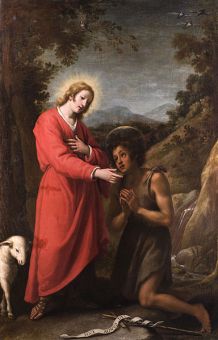
John the Baptist prepared the way for Christ both by announcing His immanent coming, and by calling people to conversion. John’s extreme asceticism illuminated consciences to common attachments which hinder people from receiving the Lord. His lonely, austere, desert living, provides a sharp contrast to our often-inordinate desire for luxury, status, and concern for keeping up with the Jones’. His fast of locusts and honey, casts light onto our indulgence in food and drink; and his camel-hair clothing convicts our consciences of secret vanity. Lastly, his rejection of fame and power set an example of 384px-Matteo_Rosselli_Jesus_and_John_the_Baptisttrue Christian discipleship. He rejected the title of Messiah for himself and insistently pointed to Jesus as the Christ. He spoke the truth to peasants, religious leaders, and even political leaders, despite the risk of arrest and even death. When the Lord finally came, he gracefully stepped to the side, saying “He must increase; I must decrease.” (Jn 3:30).
Matthew situates the beginning of Jesus’ ministry with the waning of John’s. Jesus had been baptized and spent 40 days in the desert fasting, praying, and being tempted. John had just been arrested and Jesus, His preparation finished, now began His work. He commenced by preaching the same message as John, “Repent, for the kingdom of heaven is at hand.” Only this time, the kingdom is not coming, but rather has come in the Person of Jesus Christ.

What is the kingdom of God? Put simply, it refers to God’s rule over the hearts of its citizens/children, and the peace and security they gain in return through union with Him. It’s a kingdom established through the free and reciprocal gift of love between God and those who respond. To accept the rule of God, we must first reject the rule of other monarchs. Thus, repentance is a necessary first step, in which we acknowledge the sins and desires that we have allowed to rule us, and we ask for God to be our liberator. The Lord’s kingdom is a monarchy, but one that governs free individuals. The Lord does not annex land through force, but He does liberate people who are enslaved and, through the merits and mercy of His Son, grant them citizenship. Moreover, this citizenship is more akin to adoption into a loving family than a mere nation-state.

Imagine Christ’s joy as He could finally roll up His sleeves and begin preaching the Gospel, healing the wounded, and most importantly – forgiving sins. Since the Fall of Adam and Eve, God had patiently waited for the time when we would be ready to receive Him, and He could heal all our wounds and strengthen us with His grace.

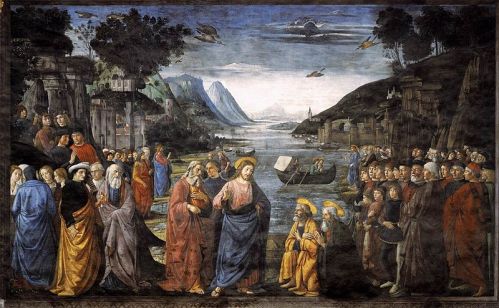
Jesus went to Galilee to begin gathering up God’s scattered and lost sheep. The havoc of disunity caused by human sin, would be undone through union in Christ. He rebuilt God’s people by building His Church. He first called two sets of brothers who had spent their days fishing, caring for their family, and a800px-The.Calling.of.the.First.Apostleswaiting the Messiah. They, like Christ, obeyed God in humble tasks of everyday life until He called them forth. When asked to follow Him, they immediately left the security of their routines and their community, to say Yes to the Lord and His will.
We can learn from this encounter how to prepare for, and respond to, the coming of the kingdom of God in our own lives. We can begin by answering the call of John the Baptist to repent. We can ask the Holy Spirit to reveal to us our sins and our blind spots. I can say from experience, He will. Next, we watch and wait. We live our daily lives open and receptive to God’s will. St. Thomas taught that “grace builds on nature.” This means that being a Christian doesn’t make us less ourselves or just robots following commands. Rather, grace makes us the best version of ourselves. It actually makes us more ourselves and raises our natural state in life to a super-natural level. Peter, Andrew, James, and John were all fishermen. In the kingdom of God, they become fishers of men.

The apostles model Christian discipleship, which is simply receptivity to the Lord in our daily lives. It means saying “yes”, and following wherever He leads. True peace, justice, and happiness come through Christ alone. Only He can free us from our worst enemy – our own sins, fears, weakness, and pride. Only He can provide security. When we experience the gift of being His disciples, we will understand John the Baptist’s passionate zeal for pointing others to the Lord as well.

Following Christ can look very ordinary on some days, and on others it can completely surprise you. Whatever might be holding you back when Christ says to you, “Come and see,” let it go. Drop your nets and set out after Him.

Consider:

  • Ask the Lord for a spirit of repentance. Invite the Holy Spirit to show you what, or who, comes between you and
  • Reflect on the Christ’s call “Come Follow ”
  • How has God called you to be faithful in your everyday life? In your family, at your job, in your community?
  • How has grace “built” on your nature. How has encountering Christ made you a better version of yourself? Where might Christ still want to work in your life?

Make a Resolution (Practical Application):

  • Begin each day this week by saying, “Yes Lord, I will follow You.” Repeat it throughout the day.


Follow bar

Additional Recommendations for Spiritual Reading:

*As an Amazon Associate I earn from qualifying purchases.

Watch & Wait, Look & See

Excerpt frTake Time For Him Book coverom Take Time for Him: Simple, Soulful Gospel Meditations to Ignite the Busy Person’s Spiritual Life  Get your own papercopy from Amazon!

Remember to rate and review it!

2nd Sunday of Ordinary Time

Gospel of John 1:29-34

Meditation Reflection:

John the Baptist_Tissot_Brooklyn Museum

The Voice in the Desert by James Tissot Brooklyn Museum

 How did John the Baptist know that Jesus was the Savior before He even said a word to him? You might be thinking: “Easy, the Holy Spirit revealed it to John in that moment”. While that’s true, what wasn’t easy was the receptivity John nurtured during the years leading up to that moment. What if he had been distracted by the heat or his hunger, or too busy talking to notice? John heard the Holy Spirit as Jesus approached because he had first spent years in the desert praying, waiting, and listening.

Accustomed to instant gratification and the fast pace of life, together with a heavily marketed atmosphere, we can easily develop a tendency to expect Christ to sell Himself to us and to make His pitch with immediate persuasion. Whether we question God’s existence, His nearness, or His willingness to help us, we often complain that God is silent or distant. Yet, we have to honestly ask ourselves, have we even sought God out? Have we taken even 5-10 minutes of silence a day to listen? Have we cracked open our Bible, His Word to us, to see if He might speak there? Maybe God is silent, or maybe His response is right there on the coffee table unopened. Have we waited on the Lord, or are we expecting an immediate result? Have we been receptive to the Lord’s prompting, or do we attempt to lead God and boss Him around, deaf to His guidance?

John the Baptist sought the Lord, venturing into the desert where he could encounter God away from the distractions of everyday life. He waited on God, fully expecting an answer by spending his time preparing through preaching repentance and baptizing. When the Savior came at last, John could receive Him and recognize Him as Lord because he was looking and listening.

It reminds me a little of family road trips. The kid engrossed in his iPhone or tablet misses extraordinary sights, or at the very least, out of the ordinary landscapes. The person vigilantly watching out the window however, can take in the beauty, appreciate the landscape, and spot the surprise spectacles. By the time he has shouted “look!” and the distracted child responds, the sight has passed. Moreover, at the end of the journey, the one focused on the tablet retains the same vision of the world as when he left home, whereas the one who looked out the window broadened his vision and experience.

If we feel like God is distant, we need simply to look out the window and reach out to Him in prayer. If we require His help, we need only to ask and listen. When we look for the Savior, we find Him. God does His part, and more. We need to make the effort to look up from our commonplace experience and distractions and seek Him.

Psalm 40 begins by singing,

I have waited, waited for the LORD,

and he stooped toward me and heard my cry.

What a beautiful expression. God has seen our suffering and heard our pleas. He stooped to become man and dwell among us, personally healing and strengthening us. When a person experiences the saving love of Christ, they cannot resist proclaiming it to others. Like the child shouting “look!”, they instinctively cry out “look!” as well; or as John proclaimed, “Behold! The Lamb of God”.

Everyone seeks happiness, security, and love. We can search for all these things online, in our careers, or the economy, but only Christ can deliver on His promises. Blessed Archbishop Fulton Sheen described John the Baptist as “no frivolous reed shaken by every breath of popular applause.” When we seek approval from others or from cultural standards, we become feeble like a reed. We sway at every idea, comment, or attack and easily break. Firmness of character and security of happiness can be found in Jesus Christ alone, who can provide peace and rewards of a supernatural level. It is the Lord, who provides Faith, Hope, and Love. It is His Holy Spirit who infuses us with His sevenfold gifts of Wisdom, Understanding, Counsel, Knowledge, Piety, Fortitude, and Fear of the Lord. If we desire the Spirit’s fruits of love, joy, peace, patience, kindness, goodness, faithfulness, and self- control, we need merely to invite the Lord into our soul to dwell and be receptive to the transformation He effects.

At the same time, to realize our need for a Savior, we must also acknowledge the reality of our sinfulness. The first step to seeking the Lord is to grapple with our need for Him and our own insufficiency. Sheen pointed out that, “Skepticism is never certain of itself, being less a firm intellectual position than a pose to justify bad behavior.” Some who seem to seek God, actually hide behind their questions in order to avoid moral change. Those who see the degrading effect their sin has on their life run to the water to be cleansed like those who came out to John the Baptist in droves. Those who encounter Christ’s mercy proclaim with John, “Now I have seen, and testify that he is the Son of God.” If you want to find out for yourself, respond to Christ’s invitation to “come and see” (Jn 1:39). You might just see something incredible!

Consider:

  • Where can you go to encounter the Lord?
    • In a quiet place for prayer in your home, Church or Eucharistic adoration? In the Scriptures or reading the lives of the saints? In visiting with a prayerful friend? By listening to Christian radio?
  • On the road trip of life, are you more like the child distracted by a tablet or the child looking out the window?
  • If you were to go out to the desert to see John the Baptist, what do you imagine it would be like? Would you want to receive the baptism of repentance? What would he exhort you to change in your life?
  • When has Christ “stooped toward you and heard your cry?” Did it fill you with peace and joy? Did you want to tell others?

Make a Resolution (Practical Application):

  • Watch, wait, and listen to the Lord this week by setting aside 5-10 minutes each day to seek Him in prayer, Scripture, or Christian

Follow bar

Additional Recommendations for Spiritual Reading:

*As an Amazon Associate I earn from qualifying purchases.

A Gift Well Received- Mary’s Immaculate Conception

Readings for the Solemnity of the Immaculate Conception of the Blessed Virgin Mary

Antolinez-inmaculada-bilbao public domain

Antolinez-immaculada-bilbao [public domain]

By a miracle of God, the Holy Spirit would overshadow Mary and Jesus Christ would be conceived in the womb of a virgin.  For this to happen, another miracle had to take place first.  The Son of God received His human nature from His Mother Mary, but since God and sin are incompatible it was necessary that she too be without the stain of sin. So today the Church prayerfully remembers and praises God for the other miraculous conception – Mary’s. Through His grace she was preserved from Original Sin from the moment of her conception.  Incredibly, this saving grace is the same grace merited on the Cross by Jesus which saves us, except that she received this gift from her beginning whereas we are cleansed from sin in Baptism.

Mary received this state of grace as a gift from God, but unlike Eve (and Adam), she remained faithful to God and this gift through every temptation.  Mary suffered difficulties, anxieties, troubles, danger, and excruciating emotional pain, especially at the foot of the Cross, yet she trusted God above all and surrendered always and completely to His will.

As we praise God today for His great love and mercy in the miraculous conception of the Blessed Virgin Mary, may we look to her for motherly guidance and love.  She is both our mother and our role model.  We are cleansed from sin in Baptism, may we strive to remain faithful to that gift, trusting in God and glorifying Him as Mary did, in every circumstance.

Consider:

  • God’s miracles are a fruit of His power, mercy, and love.  Consider the gift of Mary’s Immaculate Conception and the beauty of human nature in the fullness God created it to be.
  • Consider the miracle of your life and the great dignity God has given you.  Take a moment to thank God for the gift of His grace in your life and freedom from sin at your Baptism. Consider the fullness of life God desires for you which He makes possible through His grace, and teaches through His commands.
  • Sin appears as freedom and pleasure but in fact only degrades us.  Examine your conscience for the ways you have fallen to temptations and sin, especially since your Baptism. Go to the Sacrament of Confession this Advent Season to receive Christ’s healing grace and to begin anew.

Make a Resolution:

~ Written by Angela M. Jendro © 2019


Get your own published papercopy of this year’s guided meditations!

Hi Everyone!Take Time For Him Book cover

By God’s grace, I have finally published a book of guided Scripture meditations for this year!  Check out Take Time For Him: Simple, Soulful Gospel Meditations to Ignite the Busy Person’s Spiritual Life on Amazon!  

ORDER YOUR OWN COPY TO PRAY WITH!  Highlight passages you love and freely write notes and thoughts in the margins.  Keep on your shelf to look back and reflect on your year with the Lord.

This is my first book on Amazon, so please RATE and REVIEW it so more people can find it as they search for prayer tools.  If you feel moved to, please SHARE it on your social media page.

My hope is for us to grow in prayer together. I will be praying for you, and please pray for me!

Thank you all for your encouragement and requests over the years.  The idea came from a reader and each time I was tempted to quit the attempt, another reader would reach out with encouraging words at just the right moment.  This book is an effort to serve you better and to, through Christ, “continually offer up a sacrifice of praise to God.” (Hebrews 13:15 RSV)

May God embrace you in His Divine Love,

+Angela M. Jendro 


*I am also an amazon affiliate, so by clicking the link on this page I earn additional proceeds from the book.

Looking For a Savior

by Angela M. Jendro

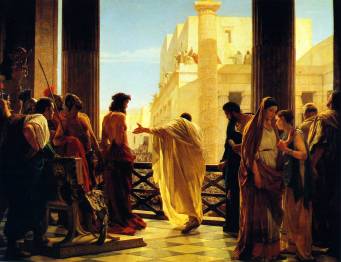
Ecce Homo by Antonio Ciseri

Gospel of Luke 21:5-19 (click here for the readings)

Meditation Reflection:

Oftentimes we imagine being a Christian means merely letting Jesus smooth out the rough edges of our lives to make it happier and more beautiful. The Jews made this mistake by imagining that in fulfilling the law and the prophets, the Messiah would merely restore the Davidic Kingdom to its former earthly glory. To be fair, the Incarnation of the Son of God liberated us at an unimaginable level. God’s merciful love exceeds anything we have experienced or could expect. He also exceeds all expectations of philosophy and the wisdom of the Greeks. The Jews experienced a taste of God’s powerful action and the Greeks touched on the heights of God’s wisdom. Jesus, the power and wisdom of God, makes both of these accessible to all and redirects our efforts toward an everlasting destination.

Christ counsels us to view this life as a pilgrimage and a battle. We develop our faith, hope, and love, on earth which will bring a deep sense of joy but will never create an earthly utopia. If we hope to find fullness here we will be sorely disappointed. Just look at the reactions of people to political news. Although presidents and congressmen have a great deal of power, they are not omnipotent. Moreover, their policies certainly affect our daily lives, but the transformation of hearts and the development of culture is something only Christ can do through His grace and His followers. All leaders have significant flaws and though they may do some measure of good, none can be our savior. No election can ever be the beginning of building a utopia or the end of the world, depending on your perspective. Our reaction ought to be proportionate – working diligently for the common good within our democratic system but relying on Christ alone for the salvation of souls and the spiritual elevation of our country. We can find relative happiness here, but for our joys to be lasting we need to direct them toward their true end – the heavenly kingdom. Besides, the most significant work is often done by everyday individuals serving those around them with Christian love, it just doesn’t get the same news press.

Christ promises to equip us for both the physical and the mental battle. As long as we live in the tension of sin and its effects, we will have to struggle against ourselves and others who oppose Christ’s kingdom, even family and friends. Nevertheless, Jesus, the Wisdom of God, provides the supernatural insights to answer the world’s mistaken propaganda or the pressures applied by those we care about. He also strengthens His disciples with supernatural perseverance to endure the physical suffering or possible martyrdom inflicted by worldly combatants.

As Catholics, we enjoy beautiful churches that express the glory of God. Rightly so, we adorn them with gorgeous art, precious metals, and the finest materials. We do this as an act of worship, as demonstrating concretely to ourselves and the world the value of God and of His sacrificial love. Christian churches are an icon, a sign pointing to a heavenly kingdom much more enduring. The magnificence of the sight of God will make all earthly analogies disappear. We ought to enjoy earthly icons of beauty, goodness, and truth in churches, nature, and most importantly in persons. At the same time, we need to daily recall to where they point and adjust our expectations and priorities accordingly.  We should still aim for greatness, justice, and perfection, but remember that it will come to fulfillment in the eternal kingdom where Christ reigns victorious.

Consider:

  • At the end of your life, what do you hope will endure from it afterward? Consider the lives you have and might still change, the love with which you imbue the world, the truths you fought to defend, the family relationships you have built.
  • Imagine your life from the perspective of entering heaven. Though all is certainly a grace, what would you be proud of? What would you regret? How might you live each day with more eternal purpose and significance?

Make a Resolution (Practical Application):

  • Begin each day by surrendering it to the Lord. Look for three opportunities each day to build the kingdom of God – by acts of mercy, service, defending truth, helping someone heal or find justice, sharing the good news of Christ, offering up personal disappointments or suffering as a sacrifice… At the end of the day write down the things that built the kingdom of God. Reflect on any missed opportunities and pray for the grace to act on them tomorrow.

Follow bar

~ Written by Angela Jendro © 2019 updated from Angela Lambert Jendro © 2016

Finding Perspective

by Angela M. Jendro
Fra_Angelico_Last_Judgment

Fra Angelico “The Last Judgment” (detail: Paradise)

32nd Sunday in Ordinary Time

Gospel Luke 20:27-38

Meditation Reflection:

As Christians, we profess a belief in life eternal with Christ in Heaven, yet we can sometimes operate in our daily lives forgetful of this mystery. Like the Sadducees we ask Christ silly questions about heaven. When we attach ourselves too much to earthly life, we fall into the trap of imagining heaven as merely an extension of the present but with a few more perks.

Jesus reminds us of the incomparable difference between our journey to God here, and union with God there. As St. Paul says: “But, as it is written,

     ‘What no eye has seen, nor ear heard,

     Nor the heart of man conceived,

     What God has prepared for those who love him,’” (I Corinthians 2:9 RSV).

Even the good things we experience here are merely a prelude to heaven. Here we experience a taste, there we will enjoy the feast.

Jesus proposes to the Sadducees that contemplating the life of the angels can provide some insight into this mystery. Like humans, angels are persons with rational intellects, free will, and the ability to love. Unlike humans they do not have bodies, are neither male nor female, and do not procreate. Each angel was individually created by God and is completely unique, so much so that some have compared it to being like different species from one another. Because they live in eternity, their choices are permanent. When God created them they each had the choice to either accept or reject God’s will for their life and His mission for them. Some said yes to God’s will and others rejected it. Those who rejected God’s will we call the fallen angels or demons. Human persons have more than one moment to choose or reject God, but that space of time does have limits. For us it ends when we die; at which moment our choice becomes permanent.

Consequently, the space of time in which we live on earth really is only a preparation for eternal life. During this short period, we either choose to grow our love for God or develop a disdain for Him. Only during our earthly lifespan can we develop and increase our capacity for God. At the moment of death the opportunity for change ends.

In addition, it’s our chance to aid others in their openness to heaven, even in its most basic form – the beginning of life itself. Whereas God created all of the angels at once, He creates human persons over a course of time and includes them in His work. As a result, openness to having children means openness to God’s creation of persons who will live eternally! For those called to spiritual motherhood or fatherhood, they contribute to this mystery as they minister to the birth and development of the child’s love for God which is also necessary for true life.

The Sadducees’ challenge to Christ with the hypothetical situation of a woman married seven times, merely exposed their ignorance of God. On earth marriage develops our capacity for love, self-gift, and sacrifice. It brings new life into the world as well as caring for the development of each family member. Marriage itself is not needed in heaven because no new life will be born there. It is the eternal life of those who already exist. Moreover, love will be perfected as we enjoy the perfect love of God and one another. The relationship of love experienced in marriage will remain a relationship of love in heaven. However, the title of husband or wife will be eclipsed by the fullness of the title son or daughter of God and sister and brother in Christ.

As the liturgical year comes to a close (Advent marks the beginning of the “New Year” in the Church), we contemplate the end times and remember that this experience of earthly life will eventually come to an end. We all get bogged down in our daily routine and anxious over matters that, if we considered our heavenly destination, shouldn’t really weigh us down. Moreover, we could make better use of our limited time if we consider things from an eternal perspective. This life is a preparation and an opportunity to participate in God’s work of spreading His kingdom. The more souls that come to accept His will and love on earth, the more that will join the wedding feast of love in Heaven for eternity.

Consider:

  • How does a heavenly perspective change your earthly perspective?
  • When feeling discouraged, remember that this life is a journey not the destination. Endless, secure happiness cannot be found here but the work to attain it in heaven can.
  • Through prayer, identify one area where you struggle to accept God’s will over your own.
  • Each angel has a mission from God. You also have a mission. How is God calling you to serve?
  • Consider first God’s vocational calling:
    • Is it to work for the salvation of your spouse through love and sacrifice and to possibly grow the human family by being open to life and to raising children in knowledge and love of the Lord?
    • Is it to administer the sacraments as a priest to bring eternal life to spiritual children?
    • Is it to spend your life in prayer and sacrifice for souls as a religious sister or brother?
    • Is it to devote your time and energy to God in a unique way as a single person, ready to do His will at every moment?
  • Consider next God’s occupational calling: How do you grow your love for God and develop it in others through your work?
    • Consider your special apostolate. Does God include you in His work of physical or emotional healing, protecting, providing, instruction of souls, encouragement, etc.?
    • How can you incorporate a heavenly perspective into your daily work? How do your daily activities and duties provide opportunities to detach from selfishness and develop greater love and compassion? How might you help others to heaven through your work?

Make a Resolution (Practical Application):

  • Begin each day by writing down the tasks, challenges, and opportunities you anticipate that day. Next to each, write one way it can be directed toward helping yourself and others to heaven. For example, will it grow a virtue or minimize a vice if tackled with the help of grace? Is it an opportunity to help others journey to God – either by giving them physical life, sustaining their life, healing, protecting, or developing an aspect of their soul?
  • Identify where your will is most at odds with God’s and do one thing each day to offset it. It could be a refusal or fear to do something God asks of you or an unwillingness to let go of something and trust God in the situation.
  • Pray the Serenity Prayer or the Suscipe of St. Ignatius each day.


~ Written by Angela Lambert Jendro © 2016 and edited © 2019

Follow bar

For additional reading on this topic here are some suggestions below:

They are linked to Amazon.  As a disclaimer, please know that I am an affiliate and do  make a percentage of sales.