Desert Decisions

Excerpt from Take Time For Him: Some More

by Angela M Jendro

Order your paperback or e-book from Amazon!

Order the kindle e-book (or paperback) to read the Christmas meditation, the meditation for Mary Mother of God, and to reflect on the meditations all year at your convenience.

1st Sunday of Lent

Read the Gospel of Mark 1:12-15

Meditation Reflection:

The transition from Christ’s hidden life to His public ministry began with His Baptism and then the temptation in the desert.  There, He decidedly chose the path of self-sacrifice over self-gain.

At the Incarnation Christ, though the Second Person of the Blessed Trinity, took on a human nature and humbly chose to fully live the human experience with all of its limitations and difficulties.

Who, though he was in the form of God, did not count equality with God a thing to be grasped, but emptied himself, taking the form of a servant, being born in the likeness of men. Philippians 2:6-7

As man, Jesus grew “in wisdom and stature” (Luke 2:52), obedient to His parents, embracing the temporal condition of human development.  He did not begin His public ministry until the age of thirty, which marked full manhood at the time and the transition to leadership roles.  It was also the age Levitical priests would enter the full service of the Lord (see Numbers 4:3, 30).

The commencement of His mission was preceded by temptation and trial.  He, like us, had to choose which trajectory His life would take.  In the desert, Satan enticed the Lord to direct His divine gifts to pampering His human nature.  Matthew (4:1-11) details the temptations specifically: bodily pleasure (bread), tremendous fame (leap from the temple pinnacle), and worldly power (all the kingdoms of the earth).  Satan forced the choice before the Lord: the immediacy of the visible world and self-gain without the Cross, or the work of establishing the invisible kingdom of God which would require self-immolation and suffering Crucifixion before rising again.

Each of us faces the same temptations and the same choice.  We can either use our God-given gifts to promote ourselves and worldly achievements or direct them to the Father’s will and the building up of His kingdom.

Lent provides a time to step into the desert with the Lord, to pray and fast, and to re-orient the trajectory of our lives.  As a Church, the People of God, we take 40 days each year to shed the illusion that we can live for both worlds or that we can have the kingdom without the Cross.

Through fasting, with the help of grace, we deny ourselves tempting pleasures to strengthen our will and remember that:

man shall not live by bread alone,

but by every word that proceeds from the mouth of God” (Matthew 4:4). 

Furthermore, it reveals the truth of just how attached we may be and loosens the hold that habit may have over us.  Fasting also unites us to the redemptive value Christ has placed on suffering through His own suffering and death.  In fact, on one occasion Jesus even said to His disciples that some demons “cannot be driven out by anything but prayer and fasting” (Mark 9:29).  Thus, through our Lenten fasting, we join our sacrifices to His, to cast out the demons in our lives with His help, so that we might share in His mission and thus share in the hope of His Resurrection.

Through prayer we draw closer to the Lord, that the invisible might become more visible and His grace might transform us.  Encountering Christ in the Scriptures, the Mass, the Rosary, the lives of the saints, Eucharistic Adoration, the Stations of the Cross, and other prayerful devotions, our love for Him is enkindled and our discipleship strengthened.

Finally, the Lenten practice of almsgiving moves us outside of ourselves through service toward others.  This can range from sharing your money with the poor to sharing a blanket with your child.  It also includes sharing your time with someone sorrowing, lonely, or sick. It begins with meeting the needs of your family then your co-workers or neighbors and friends, your local parish and community, and finally the world-wide needs of the Church.  Catholic Relief Service’s Operation Rice Bowl provides an opportunity as a family to make simpler meals during Lent and to donate the money saved to feed the hungry in poor areas of the world.

During Lent, we join Christ in the desert.  We withdraw from the immediate pleasures of the moment and usual temptations toward worldliness.  With that space we can draw nearer to Christ and the eternal, even more real, pleasures of the Heaven.  At the end of this purification we share in the joy of His resurrection at Easter.  Easter is the beginning of a new creation, and we hope to be a new, or renewed, creation Easter Sunday as well. Lent is a time to “repent and believe in the gospel” so that, transformed by grace, we may live in the Kingdom of God which is now at hand in Jesus Christ.

Consider:

  • Consider in prayer the deeper, truer, reality of the spiritual world.  Reflect on the illusory promises of pleasure, fame, and status compared with the enduring graces of Christian love, strength, and joy.
  • Ask Christ in prayer to reveal an attachment you may have, that up until now you have been blind to such as subtle forms of pride, vanity, greed, or pleasures.
  • Take time for gratitude.
  • Ask Mary to help you see the needs around you as she did at the Wedding at Cana.

Practical Application:

  • Swap out 15 minutes of media time for 15 minutes of prayer or silence.

All Rights Reserved © 2020 Angela M Jendro
Private v. Public

Excerpt from Take Time For Him: Some More

by Angela M Jendro

Order your paperback or e-book from Amazon!

Order the kindle e-book (or paperback) to read the Christmas meditation, the meditation for Mary Mother of God, and to reflect on the meditations all year at your convenience.

6th Sunday of Ordinary Time

Read the Gospel of Mark 1:40-45

Meditation Reflection:

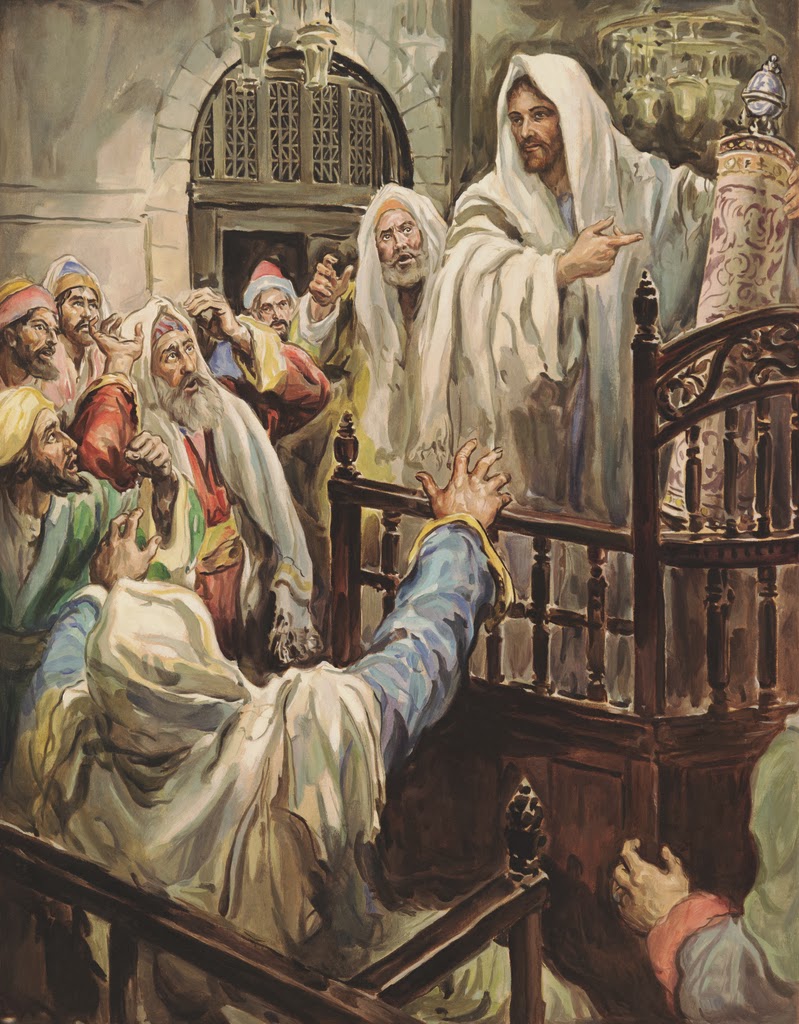
Encounter with Christ can seem paradoxical – both private and public, personal and communal, and silent or exclamatory. We experience the healing of Christ when we go to Him in the quiet solitude of personal pleading in faith to our Lord, whether in moments of private prayer or in approaching him through the sacraments, especially the Eucharist and Confession.  At the same time, love and gratitude from this experience overflow our hearts and almost compel us to share it. 

In addition, sometimes Jesus instructed people to tell of their experience, and at other times He bade them to be quiet.  Similarly, the Church sends out missionaries to preach the Gospel in every corner of the world, and at the same time relies on the cloistered prayer of contemplatives and hermits.  Our own duty to attend communal worship at Mass on Sunday, is fed by daily personal prayer all week, and vice versa.

In our own lives we may experience both calls too.  At times Jesus asks us to withdraw in quiet faithfulness, alone with Him and just a few close followers.  At other times, He calls us to publicly witness our faith to others in a visible way. 

How do we discern the difference? Listen. Just listen to the Holy Spirit Who guides the heart’s prayer and provides the words of witness.  The man in this passage couldn’t help but share his joy, it was too overwhelming to keep to himself.  Jesus did ask him to keep quiet because Jesus wanted it to be a personal not public miracle.  Yet, His personal miracles in our lives become public as our joy radiates. 

Consider:

  • How has Christ been working in your life? What are the small (or big) miracles?
  • Is Jesus calling you now into a time of quiet or of witness, or both?
  • How does taking time for personal prayer, make your Mass experience richer?
  • Spend time offering your plea to Christ like the leper in this passage, and time listening and receiving His healing touch.

Practical Application:

  • Read the lives of the saints this week – they offer real life examples of this paradoxical tension between silence and solitude, and courageous witness.

(If you don’t know who to read about, look up the saint of the day online)

All Rights Reserved © 2020 Angela M Jendro

Shining a Light into The Darkness

Excerpt from Take Time For Him: Some More

by Angela M Jendro

Order your paperback or e-book from Amazon!

Order the kindle e-book (or paperback) to read the Christmas meditation, the meditation for Mary Mother of God, and to reflect on the meditations all year at your convenience.

4th Sunday of Ordinary Time

Read the Gospel of Mark 1:21-28

Meditation Reflection:

Jesus casts out demons, He frees us from their lies and from the darkness of sin.  This is truly a gift and a great relief! Our present secular culture needs this gift.  Marked by the highest levels of anxiety and depression, the darkness from which these symptoms often proceed need to be cast out with the authority and light of Christ.

The great theologian Hans Urs von Balthasar (1905-1988), explored the relationship between darkness, sin, and anxiety in his work The Christian and Anxiety.  He noted, “The main effect of darkness is that it separates, isolates, makes lonely.”  Similarly, the darkness of sin separates the sinner from others, isolates him from God whose light he evades to continue in sin, resulting in dark loneliness.  In Exodus, the penultimate plague aptly signified the culmination of Pharaoh’s obstinate evasion of God, who had made Himself visibly manifest.  A darkness came over the Egyptians for three days, “a darkness to be felt” (Exodus 10:21) The dense, suffocating, darkness effected a social paralysis, symptomatic of their spiritual sickness. 

and there was thick darkness in all the land of Egypt three days; they did not see one another, nor did any rise from his place for three days; but all the people of Israel had light where they dwelt” (Exodus 10:22-23). 

Von Balthasar asserted that the loss of light signifies the loss of reality.  Without light we cannot see and therefore remain trapped by our imagination. Reflecting on Wisdom chapter 17, he wrote, “The wicked are afraid of Nothing, of nothing real.”  God is Reality.  His divine Name, Yahweh, which means “I Am”, revealed Him to be existence itself.  Therefore, to hide from His Light, to duck His Truth, means to retreat into an imaginary world of one’s own creation. It deprives us of the answers we need most of all – Who am I?  What is my purpose?  What is the meaning of life? How do I find happiness?  

Denial as a coping method may be alluring, but rarely helpful. For example, avoiding the truth about a physical illness provides a temporary relief and façade of healthiness.  However, the illness usually worsens without treatment and the anxiety one initially avoided only intensifies due to procrastinating the cure. In the same way, one can only self-soothe by justifying sin for so long before the underlying dread and pain of spiritual illness becomes too intense to deny.

Sin can become paralyzing.  Left untreated for too long it can feel insurmountable.  Satan, the “Accuser” as Jesus calls him, whispers fearful lies into the darkness to keep a person from reentering the light.  The demons of shame, despair, and distrust bind the sinner to his dark loneliness. 

Yet, into this darkness, Christ the Light broke through.  He “spoke with authority” because He spoke Truth, thereby dispelling lies.  His Light cast out the demons of darkness, His Truth cast out the Father of Lies, and His merciful love strengthened and healed so the sinner could become whole again.  How many miracles of Jesus demonstrate this!  The paralyzed man who could walk again.  The lepers, cast out from society, healed and able to rejoin their families.  The demoniacs freed and restored to their loved ones.  Christ’s light shone on prostitutes, tax collectors, and pagans.  He liberated them from a kingdom of degradation and made them citizens and children of His Kingdom of God. 

Christ continues to bring His light into the darkness through His Mystical Body the Church.  He invites us into His healing love, then His light begins to shine in us.  Wherever we are, that light shines simply by union with Him. 

Elizabeth Leseur (1866-1914), a devout Catholic living in an upper-class, atheistic, French society provides a concrete example of how to be a light in darkness.  Elisabeth and her husband Felix loved one another intensely and shared an inspiring intimacy of marital friendship. As a result, it pained her severely that he was an ardent atheist.  Her love for God and her love for Felix were both so deep, and yet she couldn’t share that deepest part of herself with the man she loved the most, nor see him receive the joys and graces she enjoyed as a Christian. 

She made it her apostolate to pray and sacrifice for his conversion and for their friends.  Most everyone in their society of friendship were intellectuals and anti-Catholic.  Her diary reveals how she prayerfully navigated ministering to them, bringing light to the darkness through her hidden interior life, her faithful exterior practices, her patient silence, and her readiness to speak boldly and intelligently for Christ if the moment necessitated it.  After her death, her husband discovered her secret diary.  The insights into her interior life, together with his experience of her daily love during their marriage, softened his heart and converted his soul.  He went from being a hardened atheist to later becoming a Catholic priest!

Elisabeth brought her light into the darkness and it freed the one she loved the most.  One of her resolutions in her diary can be instructive for us in the same effort.  In today’s Gospel Jesus spoke with authority and it struck people.  Elisabeth discovered the same thing in her own interactions.  She found that somehow her personal conviction of faith, was itself a strong testimony, strengthened more by authenticity and simple truth than by long explanations trying to persuade.  She wrote,

“Each time the conversation leads me to speak of faith, I will do so simply, but in a direct and firm way that will leave no doubt as to my convictions.  Cleverness is nothing in such things; I am struck with the fact that unbelievers have more sympathy with people of deep faith than with those of variable and utilitarian views.  These dear unbelievers attend more to those who are ‘intransigent’ regarding the Faith than to those who by subtlety and compromise hope to bring them to accept the Faith. And yet the bold statement must be made with the most intelligent sympathy and the liveliest and most delicate charity.”[i]

Our culture suffers under “a darkness that can be felt,” but Christ’s light shines into that darkness to cast it out and replace it with freedom. As St. John testified:

“In him was life, and the life was the light of men.  The light shines in the darkness, and the darkness has not overcome it.” John 1:4-5

May the light of Christ shine in and through us!


[i] Elisabeth Leseur, The Secret Diary of Elisabeth Leseur: The Woman Whose Goodness Changed Her Husband from Atheist to Priest, Sophia Institute Press, 2002.

Consider:

  • Are there shadows of darkness with which you struggle?  Bring them to prayer and expose them to the light of Christ in Scripture and the sacraments.
  • Compare who the world says that you are and what your worth is, with who Christ says that you are.  Which do you listen to more?  How might you strengthen Christ’s voice within you?
  • Spend 5 minutes of silent prayer, loving Christ and receiving His love.
  • How might you grow your relationship with Christ and let Him shine more brightly in your life?  How might you bring His warmth, love, and truth to those in your life?

Practical Application:

  • Resolve to pray for and develop a deeper love for Christ and to shine Him more brightly.
  • Pray the Prayer of St. Francis of Assisi daily.
  • Pray the Rosary.  Mary always purifies and strengthens our love for Jesus.

All Rights Reserved © 2020 Angela M Jendro

Have You Found What You Are Looking For?

Excerpt from Take Time For Him: Some More

by Angela M Jendro

Order your paperback or e-book from Amazon!

Order the kindle e-book (or paperback) to read the Christmas meditation, the meditation for Mary Mother of God, and to reflect on the meditations all year at your convenience.

2nd Sunday of Ordinary Time

Read the Gospel of John 1:35-42

Meditation Reflection:

Imagine what it must have been like for the apostles near the end of their lives, to remember back to the very beginning when they first met Jesus – before their zealous and arduous work as the leaders of Jesus’ Church, before they received the Holy Spirit at Pentecost, before Jesus’ astounding Resurrection, before His shocking suffering and death, before witnessing in amazement His teaching and miracles.  Back when they lived ordinary lives, as ordinary men, waiting upon the Lord in His silence.

The Lord had spoken to His People through prophets since His first revelation to Abraham.  They had enjoyed ongoing relationship with Him, even when they experienced the pain of God’s discipline.  Eventually however, their obstinance toward God grew so hardened that it caused God to withdraw His immanent presence from the Temple. Without God’s help the people fell captive to foreign nations and lived in exile.

Years later, King Cyrus of Persia issued an edict allowing the Jews to return to Jerusalem and even contributed funds to aid in the rebuilding of the Temple which had been destroyed.  Eventually some returned to Jerusalem, but God’s divine and immanent presence (which had remained upon the Ark of the Covenant from their time in the desert during the Exodus through its housing in the Temple until the Babylonian Exile), did not return to the Temple.  Although God anointed prophets to mediate His Word through this time, afterward God didn’t speak again until the Incarnation of Christ.

In consequence, the Jews endured about 400 years of divine silence.  During that time they clung to the words of God’s earlier prophets and to His Law given through Moses.  They considered God’s promises and kept hope that one day He, who is always faithful, would fulfill them. 

At long last, their hope for God’s Word and for renewed relationship enlivened with anticipation when John the Baptist appeared, as

“the voice of one crying in the wilderness:

 ‘Prepare the way of the Lord,

make his paths straight’”

(Mark 1:3; Isaiah 40:3).

The long silence finally broken, and the power of John’s prophecy excited some to speculate whether John was in fact the Messiah.

Both Messiah and Christ mean “anointed one.”  In the Old Testament, those God had appointed as either priest, prophet, or king would be anointed with oil.  Each were called in some way to mediate between God and the People, bestowed with a measure of God’s authority.  The priesthood of the Old Covenant foreshadowed the eternal priesthood of Jesus, who would offer Himself as the perfect sacrifice for the sins of all mankind.  The prophets mediated God’s word, preparing us for the incarnation of the Word of God, and later the indwelling of that Word in our souls through Baptism.  Finally, the role of king was to govern the people as a steward of God who is the true king.  Jesus came as king to reign not as a steward, but with the authority of God Himself.

“And they were all amazed, so that they questioned among themselves, saying, ‘What is this? A new teaching!’” Mark 1:27   “Why does this man speak thus? It is blasphemy! Who can forgive sins but God alone?” Mark 2:7

John the Baptist answered the Messianic speculation directly, stating, “I am not the Christ” (John 1:20). He too was waiting patiently upon the Lord.  He faithfully preached repentance, as God had asked of him, and baptized with water as a sign of readiness. 

Finally, the Holy Spirit revealed the Messiah to John – it was Jesus.  There, waiting expectantly, were St. Andrew and another disciple of John. Upon hearing his prophetic declaration, “Behold the Lamb of God,” they began following Jesus immediately, apparently without even saying a word.  When Jesus turned to ask them what they wanted, they expressed their desire to remain with Him.  They accepted Jesus’ invitation to come with Him, and in their encounter with the Person of Jesus, determined with conviction that He was in fact the Messiah.  In consequence, Andrew hurried to his brother to share the unbelievable news. 

That day had probably began like every other day: breakfast, work, prayer, routine.  In that moment however, they dropped everything to find Jesus.  Everything had changed.  In that first encounter, Jesus called Simon by name, and gave him a new name indicating his new role in the New Covenant. Simon would leave the normalcy of the life he knew, to be Peter, “Rock”, upon which Christ would build His Church.  Imagine the trust he must have had in the Lord to persevere in his discipleship through so many changes, so much confusion, and so much responsibility!  So much took place over the course of their lives, but it all began with dropping what they were doing when the time came, and going to find the Messiah. 

The Anointed One has come.  He heals wounds of sin and strengthens us with grace through His sacrifice on the Cross mediated to us in the Sacraments of Baptism, Confession, and the Eucharist. Jesus is the Word of God, who reveals God’s plan for our lives, our purpose, and His constant care. Jesus is king.  We enter His kingdom through Baptism and must work to allow His rule over our lives daily.

We have found the Messiah.”  There’s no more need to search, only to follow; to say yes to Jesus’ invitation “Come, and you will see.”

Christianity is not a consumer product, a happy drug, an interesting philosophy, or a social club.  Christianity is following Christ, the Anointed One of God, and staying with Him. None of us can imagine where it will lead, only follow one step at a time, waiting during times of silence, and acting when He calls our name.  Where it leads only the Lord knows, but it will certainly be an adventure and full of surprises.

Consider:

  • Spend a few minutes in silent prayer, just being in the presence of Christ.
  • When have you felt excitement about your faith like the apostles?
  • How has encountering Christ transformed you? In what ways has it changed the way you think, guided your actions, or changed your desires and priorities?
  • Prayerfully consider what mission Christ has for you.

Practical Application:

  • Take one step toward Christ every day. Follow Him in Scripture reading, works of love, or the sacraments.
  • Take 5 minutes of silence to rest in the Lord.

All Rights Reserved © 2020 Angela M Jendro

The Domestic Church

Excerpt from Take Time For Him: Some More

by Angela M Jendro

Order your paperback or e-book from Amazon!

Order the kindle e-book (or paperback) to read the Christmas meditation and to reflect on the meditations all year at your convenience.

Feast of the Holy Family

Read the Gospel of Luke 2:22-40

Meditation Reflection:

And when the time came for their purification according to the law of Moses, they brought him up to Jerusalem to present him to the Lord…and to offer a sacrifice according to what is said in the law of the Lord…” (vs. 22-25)

We often think of someone having a vocation to mean being called to priesthood or religious life.  However, during the Second Vatican Council, the Church emphasized that marriage and family life is also a holy vocation, and part of the universal call to holiness.  In fact, it described the family as the “domestic church” since children first learn of Christ from their parents and how to follow Him through a life of prayer and sacrificial service in the home.

“The family is, so to speak, the domestic church. In it parents should, by their word and example, be the first preachers of the faith to their children.” (Lumen Gentium n. 11)

God calls every person to a life of holiness with the grace to become a saint.  Daily prayer, sacrifice, and charitable service are not reserved for priests and nuns.  In fact, Pope St. John Paul II repeatedly emphasized the essential and foundational work of the family, especially in his papal encyclical Familiaris Consortio – The Role of the Christian Family in the Modern World. Consider his insights below regarding the noble mission of the family, the “Church in miniature” as he calls it. 

“Each family finds within itself a summons that cannot be ignored, and that specifies both its dignity and its responsibility: family, become what you are…the family has the mission to guard, reveal and communicate love, and this is a living reflection of and a real sharing in God’s love for humanity and the love of Christ the Lord the Church His bride.” (n. 17)

Beautiful words, but how does this ideal get realized amidst the messiness of everyday life?  Surprisingly, by way of that very messiness.  “God shows his love for us in that while we were yet sinners Christ died for us” (Romans 5:8). Spouses demonstrate this through their commitment to one another despite each other’s imperfections.  The daily interactions of patience and forbearance reveals God’s love which is always faithful.  Parents teach their children of God’s love through their sacrificial care and loving concern even when their child is at his or her worst.  Whether it’s a screaming baby, an embarrassing toddler tantrum in the store, the struggle to discipline and form good habits during childhood, or teenage rebellion, the inexhaustible love of a mother and father witness to the mystery of Christ’s love for us.  In turn, kids know early on their parents’ weaknesses as well.  As they mature, those limitations become even more evident.  Yet, the love and acceptance given precisely in this imperfect state is mutually formative.  Families live and work together on an intimate level that provides the opportunities needed to form habits of virtue.  The philosopher Aristotle said that virtue can only be acquired through practice.  Well, family life offers plenty of practice in the most important and most difficult virtues!

“Thus the home is the first school of Christian life and ‘a school for human enrichment.’ Here one learns endurance and the joy of work, fraternal love, generous – even repeated – forgiveness, and above all divine worship in prayer and the offering of one’s life (Catechism of the Catholic Church, no. 1657)

In addition to training up children in the way of the Lord through virtue, parents are also the first apostles of the Gospel to their kids and teach them Christian worship through participating in the faith together.  Mary and Joseph brought Jesus to the temple in accord with the prescriptions of the Law.  They exercised faithfully both personal prayer as well as communal. Christian parents can imitate their example by praying at home together daily, as well as faithfully attending Sunday Mass and actively participating in the sacramental life.  Moreover, in our present culture they witness their faith in Christ’s sacramental presence by prioritizing it amidst the myriad of competing activities and work that try to bully their way into the schedule.

New parents rightly invest time feeding their kids nutritious foods, taking them to activities such as sports or the arts, and working to ensure they are learning in school.  Nevertheless, as Christian parents, we must remember that our most important concern should be living as one baptized in Christ and raising our kids to be followers of Christ as well.  Something beautiful happens when this takes place, the kids who received faith from their parents, witness it back to them.  They become part of the Mystical Body of Christ which lifts one another up during trials and inspires to be even more prayerful.

“The family, like the Church, ought to be a place where the Gospel radiates.  In a family which is conscious of this mission, all the members evangelize and are evangelized.  The parents not only communicate the Gospel to their children, but from their children they can themselves receive the same Gospel as deeply lived by them.  And such a family becomes the evangelizer of many other families, and of the neighborhood of which it forms part.” (Pope Paul VI, Apostolic Exhortation Evangelii Nuntiandi, n. 71)

Jesus Christ became man and grew up in a family, in a town, and in a Church.  He knows first hand our struggles, our joys, and our anxieties. Contemplating the life of the Holy Family can bring focus to decisions about how to live in our lives.  Today’s Gospel highlights the number one priority – go to Church and bring our kids.  Love Christ and love each other as Christ loves you.

Consider:

  • No family is perfect, and that includes in practicing the faith.  What are the faith traditions you already have that you love, and what would you like to change or add to make Christ more present in your family routine?
  • What virtues have you acquired through your interactions with you family over the years?  What virtues would you like to grow in yet? 
  • Meditate on the family life of Jesus, Mary and Joseph at each stage of His life.

Practical Application:

  • Be intentional about your family prayer life and worship this week.  Whether attending Mass, meal prayers, or adding something new, make a plan to honor Christ in your family life.

© 2020 Angela M Jendro

* To receive these weekly posts automatically in your email just click the “follow” tab in the bottom right hand corner and enter your email address. You can also follow me @taketimeforhim on Twitter and Facebook.

Keeping Christ in Christmas & John the Baptist in Advent

Excerpt from Take Time For Him: Some More

by Angela M Jendro

Order your paperback or e-book from Amazon!

3rd Sunday of Advent

Read the Gospel of John 1:6-8, 19-28

Meditation Reflection:

For the second week in a row, we have a Gospel passage about John the Baptist.  John is considered the last, and greatest, of the prophets of the Old Covenant.  Jesus even said of him, “among those born of women there has risen no one greater than John the Baptist” (Matthew 11:11).   Yet, both John and Jesus proclaimed that the best was yet to come.  The Covenant of the Jewish people with God would be elevated inexpressibly in the New Covenant established in Jesus Christ.  Thus, Jesus finished his sentence with: “yet he who is least in the Kingdom of heaven is greater than he.

John the Baptist’s message of repentance and spiritual preparation for our salvation is at the heart of Advent.  In the weeks leading up to Christmas we evaluate how well we have been living as children of God, gifted with the grace of God dwelling in our midst and within our very souls.  It’s also a time to open ourselves to new possibilities and new challenges as disciples of Christ.  Thus, the message of John for repentance produces the necessary disposition for conversion. 

The image of John the Baptist, dressed in camel hair and eating locusts, preaching the message of repentance and authentic sorrow for sins, provides a stark contrast to the marketing images flooding us of jolly Santas, piles of presents, and delicious foods. I can understand why marketers find Santas and reindeer more appealing for sales than a desert ascetic speaking about sin.  People also feel increased pressures to prepare for Christmas by finding the perfect gifts within the time constraints of frantic schedules and limited budgets.  Nevertheless, the Gospel writers remind us that preparation for Christmas is ultimately preparation for the Incarnation of God our Savior.  He brings the gift of heaven, but we must prepare ourselves to receive that gift through repentance. 

The push to start Christmas sales has lamentably encroached on Thanksgiving but has completely replaced Advent in our culture.  It has become increasingly difficult to make the weeks leading up to Christmas a time of introspection, increased prayer, and sacrifice.  By the time Catholics celebrate Christmas on the Eve of Christmas day and for the two weeks following it, the rest of the culture has already moved on to New Year’s preparations and Valentine’s day.

So how can we balance living in the culture that we do and still honor the important process of conversion Advent is meant to procure?  We can no longer wait to buy a Christmas tree until December 23rd because there won’t be any left.  We can’t leave them up for the duration of the Liturgical Christmas season because the tree will be a fire hazard at that point, plus we will have missed our road side tree pick up provided by our garbage companies.  I have surrendered this battle and get a tree the weekend after Thanksgiving.  I also have to admit that I look forward to the Hallmark Christmas movies and, if possible, make a weekend of it with my mother and my daughter.  Black Friday deals make Christmas gifts more affordable although I am too exhausted on Cyber Mondays to get online after work.  However, I reserve some Christmas feasting for Christmas only.  I play Christmas music and keep my Christmas decorations out (with the exception of the live tree) for the duration of the liturgical Christmas season.  In my classroom at school I leave Christmas lights up in my room until Lent, reminding the kids that Jesus is the Light of the World. 

Spiritual sacrifice, examination of conscience, and remorse for sins is harder to find time for.  When my kids were little we would do Bible crafts and the kids had fun placing a felt ornament on our Jesse tree corresponding to a daily Scripture passage we would read.  Now that my kids are older, it’s harder to find a time we are all home to pray together.  As a busy mom, I appreciate that the Church offers practical advice regarding spiritual preparation during Advent, and oftentimes opportunities organized by the parish to help us.  Scripturally, spiritual preparation consists of prayer, fasting, and almsgiving.  Parishes often offer Advent reflections, retreats, and youth ministry events to facilitate more introspective prayer during this time.  We can add one of these events to our calendar just as we would any Christmas party invitation.  Fasting is especially difficult, with so many Christmas parties and cookie exchanges taking place, but consider fasting from something simple and achievable, so that even in those moments you are connected to Christ and honoring the preparation for His coming that He deserves.  I wouldn’t suggest giving up sweets altogether, but maybe you set a limit for yourself or give up something else that’s meaningful to you.  Almsgiving may be the one aspect of Advent that lingers in our culture as generosity during the Christmas season seems to be a sentiment that still resonates in people’s hearts.  Parishes, schools, offices, and neighborhoods band together for charitable causes and provide opportunities for us to give.  Let’s not forget that Christmas also provides less visible opportunities for giving, like keeping our eyes open for family members, neighbors, or colleagues who are lonely and inviting them to our homes.

Fasting and almsgiving can further be applied in our interactions with one another.  The increased social contact brings with it both joy and discord; providing many more opportunities for spiritual works of mercy.  Christmas get-togethers bring out the best and worst in people.  It provides opportunities to fast from gossip and to give encouragement; to fast from pettiness and to bear wrongs patiently, to fast from competitiveness and to give comfort.  When we encounter persons we find annoying, frustrating, or difficult to be around, we can reflect on the compassion of the Lord, who became man, for love of that same person.  When we are moved by the generosity and love of others towards ourselves, we can praise Christ as we tangibly experience His love in our own lives. 

Advent has become an uphill battle, but the view from the top makes climbing it worth all the effort.    This Advent I hope we can find a way to prepare our hearts and our lives for Christ a little more in some small way.  I hope we acknowledge and surrender to Him sins we need Him to heal.  Let’s demonstrate our authentic gratitude for his grace through prayer and acts of love.  Finally, let’s try to keep Christ in Christmas, and John the Baptist in Advent.

Consider:

  •  “Emmanuel” means God-with-us.  Consider the gift of the Incarnation, that God became man, and dwelt among us.
  • How has your heart and life opened to Christ over the years?  How has He dwelt more and more in your life?
  • Are there any areas of your life from which you keep Christ closed off?  Are there any places, people, or activities you wouldn’t feel comfortable having Christ present?
  • Reflect on the people you will encounter this season.  Consider them from Christ’s point of view.  How might you be the hands and heart of Christ to them in your interactions?

Practical Application:

  •  Choose one way this Advent to pray, fast, and give.
  • Put a church sponsored Advent or Christmas event on your calendar, then attend it.
  • Fast from gossip and critical remarks.
  • Intentionally give to Christ, above your regular tithing.  Choose a charity or a particular person and be generous to Jesus by being generous to them.

© 2020 Angela M Jendro

* To receive these weekly posts automatically in your email just click the “follow” tab in the bottom right hand corner and enter your email address. You can also follow me @taketimeforhim on Twitter and Facebook.


Making Room for Christ to Come

Excerpt from Take Time For Him: Some More

by Angela M Jendro

Order your paperback or e-book from Amazon!

2nd Sunday of Advent

Read the Gospel of Mark 1:1-8

Meditation Reflection:

It’s a good time of year for making room – in our closets, our homes, our schedules, and our lives for all the gifts, parties, and people that accompany Christmas. We live in a challenging culture for this.  Its obsession with stuff has gotten out of control, necessitating storage units just to hold the overflow. Rampant competitiveness in seemingly every area of life adds pressure to our schedule, forcing our waking hours to overflow into the late night and early mornings just to keep up.  You may be able to stay afloat in this atmosphere for a while, but the pressure and the pace are unsustainable without sacrificing more important things. In an effort to combat this, I regularly sort through our things and reassess our schedule of activities to ensure we can prioritize what matters.

Advent provides an opportunity for us to do the same thing in our spiritual lives. In anticipation of the greatest gift – Jesus Christ, the Son of God – we must make room in our souls, our schedules, and our lives.  Its a time to step back and make an honest examination of what occupies our hearts.  Much like when I hold up an old sweater and debate whether I will really wear it again or not, I must examine the things I spend time and energy on and ask if they are still worth it, or just taking up valuable space.

If it’s so difficult to let go of an old ratty sweater overrun with pills, how much more difficult to let go of old bad habits or frames of mind?  We hold on to useless or worn out things simply because we hate change and we love nostalgia.  We may rationalize that we will “use that someday” but we don’t even know all the “thats” we have anymore.  In truth, we simply don’t want to let go of something that’s been with us for so long.

Similarly, we resist honestly evaluating our priorities, bad habits and sins.  In some ways they can begin to feel like a part of our identity.  However, the process of decluttering our soul can be marvelously freeing and enable us to move forward in our lives.  The questions we must ask will vary as much as the clutter in our homes.  You may have to consider, “Am I a hard worker, or have I become a workaholic?” Or the opposite: “Do I have a healthy amount of down time in my life, or have I just become lazy?”  About attitudes one might ask “Am I someone who doesn’t get riled up about much, or am I just complacent?” or the opposite: “Am I someone who cares passionately about things, or do I make an idol out of causes or get too involved in other people’s business?” 

Outside perspective can help.  If you share a closet, garage, or home with someone, they will quickly tell you which items have been hogging space for no reason.   Loving family and friends can also offer valuable insight about your life.  They can more easily identify the ways you have grown as a person and the things that hold you back.  The Holy Spirit can also guide you if you ask.  He can enlighten your mind to see things from God’s perspective and soothe you with grace to let the lesser goods go.

After decluttering, the final preparations for Christmas celebrations involve cleaning.  Mineral build up on the faucet, sticky fingerprints and globs of ketchup on the refrigerator, half-finished projects that have become an eyesore or safety hazard, and dusty surfaces dull the beauty of our homes.  It takes time and sweat, but the shiny glean in every room renews our appreciation of God’s gifts and the warmth of home. In the same way, our virtues and gifts can dull from the challenges of everyday life.   Stepping back for a little introspection can help us reclaim those pieces of ourselves we love and let them shine again. 

During our Advent soul-work, we may find some things need to go, some things may be reasonable to keep, and some things may need a deep clean. Yet, at the end of the process our souls will glimmer with the beauty God has given us, and Christ will have more room to fill with the gift of His divine presence and peace.  

Consider:

  • Prayerfully list your priorities.  Where do God, work, family, friends, hobbies, and self-care rank?
  • Consider your schedule: How well do you balance time for God, time for taking care of yourself, time for helping others, and time to accomplish your work well?
  • Consider your possessions:  How well do your things represent your priorities?  Are there ways your possessions could better reflect what matters to you?
  • Consider your heart:  What occupies your desires most?  Be honest.  Then relate them back to your priority list.  Prayerfully ask the Holy Spirit to increase your desire for the Lord and for loving relationship with others, and to decrease your desire for what competes with them.
  • Consider your mind:  What occupies your thoughts?  What do you spend time learning about?  How well are you making time for introspection and spiritual growth?  Do you take the time to think of others or to identify your own needs?  What tends to distract you or consume your mind? How might you detach somewhat?

Practical Application:

  • Make room for Christ in your home, your schedule, and your heart.  Declutter your biggest horde, simplify your time commitments, and increase your prayer and spiritual reading by 10 minutes.
  • Do an examination of conscience and encounter Christ in the Sacrament of Reconciliation.

© 2020 Angela M Jendro

* To receive these weekly posts automatically in your email just click the “follow” tab in the bottom right hand corner and enter your email address. You can also follow me @taketimeforhim on Twitter and Facebook.


It’s Published! Volume 2 of Take Time for Him is ready on Amazon!

Check out this year’s collection of Sunday Gospel Meditations!

Take Time For Him: Some More is live on Amazon. Order your paperback or e-book now!

Thank you for everyone’s kind words and encouragement. Every time I thought about not writing this, one of you would reach out to me and share your appreciation for the first volume as you were reading it. This kept nudging me forward and confirming it must be God’s will. I hope He speaks in your hearts and embraces you in His profound love.

E-book

Love Beats the Deadline

Excerpt from Take Time for Him: Simple, Soulful Gospel Meditations to Ignite the Busy Person’s Spiritual Life  Get your own papercopy from Amazon!

Remember to rate and review it!

28th Sunday of Ordinary Time

Readings for Sunday’s Liturgy

Meditation Reflection: Matthew 22:1-14

Jesus often compares Heaven to a wedding feast. Weddings celebrate a sacred union in love of two persons. It means total gift of self and lifelong commitment.   Marriage best represents God’s invitation to relationship with us and His desire for mutual self-gift of mind, heart, and action.

God is both the almighty who existed before creation and exceeds our understanding, and the God Who sent His Son to become incarnate, walk the earth with us, and suffer and die for us. Even now His Holy Spirit dwells within us, and Christ is present to us in the Sacraments and His Mystical Body the Church. Moreover, our Trinitarian God has invited us through His Son into a participation of His self-giving love through a union akin to marriage.

Marriage begins with a wedding and weddings require enormous preparation – both for the event planning and for the relational development needed to become one. The Wedding of the Lamb, described in the book of Revelation, celebrates the fruit of this long process when our final union with Christ will become complete. Jesus has already opened the gates of Heaven for us and ascended there. For our part, our earthly pilgrimage from sinner to saint is our marriage prep. The kind of union the Trinitarian God intends for us is nothing short of total, relational, and loving. In consequence, our journey to the alter requires knowing Christ more deeply, trusting Him completely, and loving Him above all things. It means leaving behind our “single lives” for the gift of a shared life in the Father, Son, and Holy Spirit. Weddings can be draining but when the day arrives it’s all worth it. Similarly, Revelation 19:7-9 describes the joy of our long- awaited union as well:

Let us rejoice and be glad
     and give him glory.
For the wedding day of the Lamb has come,
     his bride has made herself ready.
She was allowed to wear
     a bright, clean linen garment.
(The linen represents the righteous deeds of the holy ones.)
Then the angel said to me, “Write this: Blessed are those who have been called to the wedding feast of the Lamb.”

Christ loves each and every person passionately. He pursues them, woos them, fights for them, and offers eternal union with Him in Heaven. In today’s Gospel however, He laments that not everyone says yes. They come up with excuses, put Him off, or avoid Him altogether. Eventually the door is shut. Harsh, you might say?

Jesus strikes at our complacency. We all too easily forget the gift of salvation, of our eternal destination, and our higher calling. The frenetic pace of life, the constant stream of tasks, or the allure of diversions become a dangerous siren call, singing that we are made for earth and we have all the time in the world.

However, every day we are one day closer to eternity. If we didn’t grow our love for the Lord, then we weakened it. Love needs ongoing nurturing. Relationships are work! Even a relationship with God.

Moreover, sometimes indecision is a decision. Deadlines are part of reality. If I stay undecided about my son playing basketball, eventually the registration closes. If I hem and haw about planning a family trip, eventually a year passes without travel and I have essentially said no. Lastly, if a couple is in a serious relationship of several years and one person drags his/her feet about marriage, eventually the other will need to move on from the relationship to find someone else to build a life with.

Thankfully Jesus waits patiently our entire life.  He reminds us today however, that death is the deadline. By that point we have said yes or no to the Lord and even our indecision reveals itself as a rejection of Christ.

But let’s not wait until the last moment.  I have heard people who put off kids, when they finally held their first in their arms say, “why did we wait so long?” Couples in love when they finally meet say “I wish I had met you sooner.” The more we love, the more we see how much greater it is than anything else we had previously thought to be more important. We will say the same of Christ – I wish I had let you in sooner.

We can ask ourselves, what holds us back from the wedding? What keeps me from union with the Lord? What do I need to do to prepare myself for this marriage? The King of Heaven and Earth has personally invited you. Drop everything, get dressed, and go!

Consider:

  • The Mass is a mystical participation in the eternal wedding feast of the Lamb in heaven.
    • What things or habits undermine getting to Mass or distract you during Mass?
      • Is it sleeping in, kids’ activities, running errands, going into work, exercising instead, watching news, or just relaxing?
    • What helps you enter more deeply into the Mass?
      • Getting to know the priest and parishioners so you feel more a part of the community, reading the Gospel ahead of time, learning about the Mass, participating as a musician, greeter, usher, or extraordinary minister of Holy Communion, writing down key points from the homily?
  • Imagine you were to enter Heaven today.
    • What aspects of your heart and character would Jesus praise you for, as clothing you in garments for the king?
    • What vices or attitudes would He ask you to change in order to be properly dressed?
  • The lives of the saints illustrate the transformation possible with the grace of God.  Each began like you and me, but through relationship with Christ they were made perfectly ready for heaven by the end of their life. If you were to appear in a book of the Lives of the Saints, what would it say? Where would it begin, and how would you like it to end?
  • We cannot perfect ourselves, but we can cooperate with the grace of Christ and let Him purify our hearts.  Take a moment to offer a prayer of surrender the Lord. Offer to Him all your struggles, worries, imperfections, and desires.
I am confident of this, that the one who began a good work in you will continue to complete it until the day of Christ Jesus.
Philippians 1:6

Make a Resolution (Practical Application):

  • Do one thing each day this week to prepare for the eternal wedding feast of heaven. Change out of one garment of vice or unforgiveness and put on a garment of virtue and love.  As St. Peter says:
Above all, let your love for one another be intense, because love covers a multitude of sins. (I Peter 4:8)
  • Resolve to attend Mass every Sunday and make the necessary arrangements for that to happen.
  • Spend five minutes with Christ when you first wake up, midday, and in the evening. Invite Him into your life right where you are at that moment.
  • Read about the life of a saint. You could research a saint whose personality, experiences, or work is like yours. You could also just read about the saint of the day. Catholicculture.org gives a nice summary. Click on the tab “liturgical year” then select “today”.
  • Learn more about the Mass. Attend a “teaching Mass” where the priest explains each of the parts as he celebrates it. Read a book about the Mass. Read The Lamb’s Supper” by Scott Hahn which is about the relationship between the Mass and Heaven based on the book of Revelation.

~ Written by Angela Jendro © 2019

* To receive these weekly posts automatically in your email just click the “follow” tab in the bottom right hand corner and enter your email address. You can also follow me @taketimeforhim on Twitter and Facebook.

Choosing between Adolescent Illusions or Adult Freedom

Excerpt from Take Time for Him: Simple, Soulful Gospel Meditations to Ignite the Busy Person’s Spiritual Life  Get your own papercopy from Amazon!

Remember to rate and review it!

27th Sunday of Ordinary Time

Readings for Sunday’s Liturgy

Meditation Reflection: Matthew 21:33-43

Spiritual growth, like physical and emotional development, must move from childhood and adolescence to reach mature adulthood. As our Heavenly Father, the Lord patiently endures our annoying behaviors of immaturity and lovingly guides us into adulthood. Unfortunately, just as some grown adults seem stuck in adolescent thinking and habits, so too many of us hold on to immature spiritual attitudes and resist the leadership of our Father, thus stunting our spiritual growth.

Weighed down by the effects of original sin, tempted by the Enemy and bolstered by our own pride, most often we substitute a false sense of entitlement and independence for rightful gratitude and obedience to God. Like the teen who begins to think his parents owe him everything he desires, or defies their rules with a sense of superiority, we can get stuck in the trap of demanding God’s goodness while denying His Lordship.

Pope Benedict XVI related this struggle to the original temptation of Adam and Eve, which he described as a denial of their “creatureliness” (In the Beginning). Having grown accustomed to the paradisiacal gift of their existence and the beautiful Garden, the Enemy introduced the idea of entitlement and ingratitude. Satan himself had refused to live in gratitude, preferring his own self-centered pride. He then enticed Adam and Eve to distrust God, deny their state as creatures, and become their own creators.

Called “the father of lies,” Satan lives in eternal anger at God who is reality itself (as revealed to Moses when He shared His Name – YHWH – “I AM”). The Enemy prefers his Illusions of entitled independence to a life of gift. However, illusions are just that – empty and unreal. Angry at God, he tries to recruit others to his side. He hates to see persons living in the joy of God’s love; therefore he proposed an alternative, distorted view of the Lord to Adam and Eve. He suggested that their experience was not in fact paradisiacal, but rather quite impoverished. To depend on God or obey His laws, he proposed, would be to accept slavery to a selfish and manipulative deity. 

In truth Satan was the selfish, manipulative one with a god-complex, whereas the Lord had been nothing but generous and truthful with Adam and Eve. Satan argued that contrary to their experience, freedom and happiness lay in rebellion rather than rightful relationship with the Lord. Rather than rebuking the serpent for such hateful lies, they thought about the serpent’s words and chose to reject what they knew about God from experience for the false hope of a more liberated life without God.

This same temptation infects each of us, their children, both from within our own rebellious hearts and the sly lies of the Enemy. Jesus’ parable tells of God’s care for us, providing everything we need. He rightly expects only His due, and yet we resist Him. God blesses us with every good thing, but envy looks outward and turns back to God in complaint that we don’t have more. Every week that God blesses us with life, He asks only for one day in return.  Moreover, as our loving Father, He doesn’t even ask that the day be spent in chores but rather that we rest and spend time with Him and our family. Yet, how often do we complain that setting aside work to worship the Lord is burdensome!

Consider also our prayers of entreaty for God to provide – a job, a home, possibly a spouse and children.  We praise God for a short while when He bestows these gifts, but soon begin to complain about them.  Even worse, we easily forget that they were even gifts at all and delude ourselves into thinking we have achieved them single-handedly. Confident now in our own abilities we fall into the destructive cycle of always grasping for more, never satisfied and never at rest, spiritually alone; producing the hell-ish existence that Satan hoped for us.

“Do not be deceived, my beloved brothers: all good giving and every perfect gift is from above, coming down from the Father of lights.” (James 1:16-17)

Today’s Gospel reiterates the theme of The Kingdom of God is at hand” (Luke 10:11). Christ has come and He invites every human person to relationship with Him. We must make a choice and take responsibility for the consequences like adults.

Moreover, we must examine or attitude toward those whom Jesus has sent with His authority to bring God’s truth to us. Jesus told His apostles that:

“Whoever listens to you listens to me. Whoever rejects you rejects me. And whoever rejects me rejects the one who sent me.” (Luke 10:16)

Jesus established the Church to preserve, protect, and promulgate His Word. When we feel like characterizing the moral law or Church teaching as oppressive rather than freeing, we can remember from whom that lie comes. We must decide if we trust God or tempting illusions.

Jesus invites us into mature relationship with the Lord. He offers the freedom and dignity of spiritual adulthood through the guidance of the Holy Spirit, Scripture, and the Church. He even provides the grace to transform our hearts from weakness to strength, from selfishness to self-gift, and from illusions to Truth.  He asks each and every one of us, “which do you choose”?

Consider:

  • Invite the Holy Spirit to guide you in a prayer of gratitude; to open your heart and mind as you reflect on every good thing that comes from God.
  • Consider where envy, greed, or pride distorts your perception and causes discontentment to fester.
  • Consider how an adult views freedom in contrast with an adolescent. Do you trust God’s guidance to be freeing, or do you prefer your own judgment or worldly wisdom?
  • How is the Lord visiting you today? What fruits is He asking for as produce of the gifts He has bestowed upon you? How might you put your gifts more at the service of God and others?

Make a Resolution (Practical Application):

  • Make a list of each of God’s gifts in your life.
    • For each gift, offer one fruit a day for each back to God. For example:
      • Your Job: Offer the fruit of Christian witness by refraining from vulgar language or joining in crude jokes. Be truthful where you are tempted to lie or exaggerate. Do one act of service for a co-worker. Be joyful for the day and refrain from complaint.  Refuse to begin or join gossip.
      • Your Family: Do one act of humble service for your spouse, children, or parents. Combat taking your spouse or parents for granted by recognizing them with a word of thanks or deed of kindness, out of gratitude their contributions.

~ Written by Angela Jendro © 2019

* To receive these weekly posts automatically in your email just click the “follow” tab in the bottom right hand corner and enter your email address. You can also follow me @taketimeforhim on Twitter and Facebook.