Finding Yourself

Excerpt frTake Time For Him Book coverom Take Time for Him: Simple, Soulful Gospel Meditations to Ignite the Busy Person’s Spiritual Life  Get your own papercopy from Amazon!

Remember to rate and review it!

13th Sunday of Ordinary Time

Readings for Sunday’s Liturgy

Meditation Reflection: Gospel of Matthew 10:37-42

I would think of this passage often when my kids were little. After finally getting them tucked into bed, just as I would sit down to finally relax, I would hear a little voice call out “Mooooooooom. I’m thirsty.” Fighting the frustration in my thoughts and body, I would remind myself, “And whoever gives only a cup of cold water to one of these little ones to drink…”

Following Christ means loving Him above all things, including all people, and most importantly above ourselves. If He were only a man this directive would be ridiculous and arrogant. Jesus gives this command because He is God. St. Augustine famously wrote in The City of God:

“There can only be two basic loves… the love of God unto the forgetfulness of self, or the love of self unto the forgetfulness and denial of God.”

As much as we may try to avoid this decision, the limits imposed on us by time and space force a choice. Sometimes it means a clear fork in the road, while at other times it may mean small daily sacrifices.

Discipleship applies to every vocation – priest, religious, married, and single. Priests and religious give a clear witness of total gift of self to God. Their remarkable vows and their counter-cultural lives attest to their faith in eternal life since they must sacrifice worldly goods for heavenly.  For example, a friend of mine who’s a nun, came by with three sisters to take some furniture I was giving away. That same day two workmen were at the house working on taping and mudding the basement that was being finished. As they came upstairs to take a break, they saw three nuns in full habit and me carrying a large bookshelf out of the house.  Imagine their surprise! One offered to help when he saw us struggle to lift it to the truck. Later one of the sisters asked him to help us tie down the furniture and he generously assisted. I have no doubts that will be a sight they remember forever, and a story they will tell for some time.

Married and single persons blend into society more since even non-believers marry or remain single.  However, it doesn’t take long for Christians to stand out even in these vocations. The disciple of Christ remains faithful to marriage vows even when the culture dismisses them.  Catholic families notoriously stand out as they tend to (though are not required to) exceed the usual one girl and one boy trend. Every mother I know who has more than three kids, has recounted to me rude comments made to them about the number of children they have.  These comments come from family members as well as complete strangers in places as random as the grocery store.  Openness to life necessitates losing your “life” to receive it back from Christ. It affects your body, your sleep, your emotions, your free time, your career choices, your travel, your finances, and so on. Once when I was congratulating a couple I know who were pregnant with their sixth child, the father conveyed his struggle that now they would have to get a 12-passenger van. Many a parent has lamented the min-van transition, but this step was tough for him to swallow. That is sacrifice. However, any mother or father will tell you, when you hold that baby in your arms you realize it’s completely worth it.

Finally, single persons stand out in their discipleship too. The Christian who lives chastely and temperately, puts others before themselves, and makes decisions prayerfully, shines a bright light in a culture that glamorizes promiscuity, partying, and self-advancement. They use their freedom to give of their time generously rather than selfishly. A single woman I know put it this way to me – she said that she was totally free for the Lord to call at any moment. Whereas others served God through their obligations to their family or religious order, she said, God needs some people who can be available any time anywhere.  I hadn’t thought of it like that before.  Of course she had to go to work and take care of her home, but she recognized that she had tremendously more “free” time and flexibility than the other vocations and intentionally chose to consecrate that time and freedom to God.

Discipleship comes at a cost but it’s a solid investment. Things of this world will always be insecure. Jobs can be lost, stock markets dive, beauty and health get marred by illness, and so on. Every investment we make in the Lord however will merit glory in heaven forever.  When I drag my tired body off the couch to give my thirsty daughter a cup of water at night, it remains treasured by God forever along with every sacrifice of love that we make.

We can’t be in two places at once and there will always be only 24 hours in a day. We must make choices. Jesus encourages us to be strong against temptations no matter where, or from whom, they come. He also sent the Holy Spirit to provide the gifts of fortitude and counsel we will need to make those decisions prayerfully and follow through on them courageously. He also gave us the gift of the Church to guide us and inspire us.

Jesus pointed out that you can tell a tree by its fruits. Even though self-love appears prudent, in our culture it has produced the highest levels of depression, “anger issues”, and suicide in history. Love of God above all things is only prudent from an eternal perspective, it requires faith. However it has produced thousands upon thousands of saints, the first mark of which is Joy.

Consider:

  • When have you chosen yourself over God? How did you rationalize it? How did you feel afterward?
  • When have you chosen God over yourself? How did God provide for you in that decision and bless you afterward?
  • Reflect on Jesus’ paradoxical words that we find ourselves in losing ourselves. Pope St. John Paul II expressed the same idea saying that we find self- fulfillment through self-gift. Others have expressed this phenomenon by saying that when they volunteered somewhere, they received more than they gave.
  • Who has been a witness to you by their Christian discipleship?  What struck you about them?
  • In what ways do you witness to Christ in your life? What makes it difficult? What makes it rewarding?
  • How can you practice works of mercy in your everyday life and your vocation?

Make a Resolution (Practical Application):

  • Pray for an increase in the Gifts of the Holy Spirit (Wisdom, Understanding, Counsel, Knowledge, Fortitude, Piety, and Fear of the Lord), and the grace needed to follow Christ
  • Intentionally practice one work of mercy each day this week. Do small things with great love for your family members, coworkers, friends, or neighbors.


Follow bar


Because of Your Name…

Excerpt frTake Time For Him Book coverom Take Time for Him: Simple, Soulful Gospel Meditations to Ignite the Busy Person’s Spiritual Life  Get your own papercopy from Amazon!

Remember to rate and review it!

12th Sunday of Ordinary Time

Readings for Sunday’s Liturgy

Meditation Reflection: Gospel of Matthew 10:26-33

Because of Christ’ Name, we suffer.  But by His Holy Name, we are saved.

If you remain lukewarm in your faith, keep it private, and compartmentalize it from the rest of your life, you will likely enjoy peace with the world.  If you proclaim Jesus to be a great teacher like Buddha, but refrain from calling Him God, people will respect you and your “spirituality.” If you acknowledge Christ as one way and not The Way, most people will put up with your belief, since they afford everyone a little bit of foolishness.

One problem…to proclaim a nice moral teacher who isn’t God and isn’t the Way, the Truth, and the Life, is not to proclaim Jesus Christ. As C.S. Lewis famously put it: Jesus claimed to be God, that means He is either a Liar (He knew He wasn’t God but said He was), a Lunatic (He wasn’t God but really believed He was), or Lord (He is God). The first two do not make for good moral teachers, the third deserves our worship and obedience.

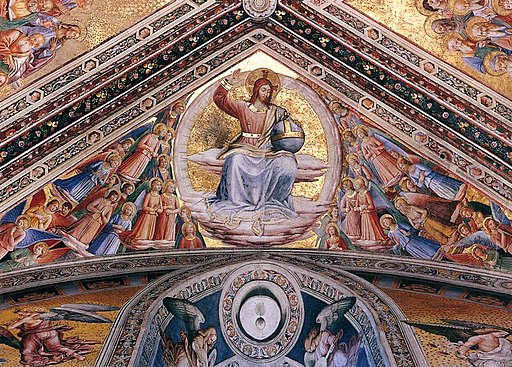
Fra_Angelico_-_Christ_the_Judge_-_WGA00679Jesus promises that “Everyone who acknowledges me before others I will acknowledge before my heavenly Father.” To do that however, we must proclaim the God Who became Man, that He is the fullness of Revelation – Divine Truth, the Savior of all mankind, and Love incarnate. To proclaim a myth of our own making, and worse to belittle Christ by using a weakened, distorted, version of Him as our inspiration, is to deny Christ. Jesus warns “But whoever denies me before others, I will deny before my heavenly Father.”

 To proclaim Christ takes serious guts, and I don’t’ just mean speaking about Christ. Simply living your faith in everyday life will incite criticism and even personal attacks by others.

If you go to Church every Sunday despite competing demands for your time, you may be accused of being too rigid or too zealous. Those who would prefer you prioritize them over God will accuse you of being uncharitable or having an unhealthy scrupulosity. Those whose own church attendance looks lackluster in comparison will more likely try to find fault with your devotion rather than to imitate it.

If you believe that Jesus is the Truth – the Word of God, prepare to be accused of intolerance, close-mindedness, and archaic thinking. Even if you do not “push your beliefs on others”, your simple rejection of the religion of Relativism will offend its many followers (note: Relativism states that there is no objective truth – except, paradoxically, Relativism. It maintains that there’s no real right or wrong, just subjective beliefs). Moreover, no matter how hard persons try to rationalize sins, their God-given consciences sense the truth and can’t help but react at reminders. People who want to live in darkness hate the light. It happens at every age. Teens who don’t drink or engage in pre-marital sex, get left out of parties and certain social groups. Adults who put God and family first, get left out of some events or opportunities at work, or in neighborhood gatherings.

It’s hard to follow Christ, especially when it means staying up at night with a newborn, while colleagues or friends fly off to sunny vacations. It takes humility to make time for Mass and soccer games, knowing others will “get ahead” in their career because of their willingness to work all hours and days.

And what do you get for your sacrifice and virtue? Consider, how did Cain react toward Abel? How did Joseph’s brothers treat his piety? You will be honored by God and those who are Godly, but you will be scorned by those of the world.

Jesus is the Truth, and Satan is the father of lies. Those who live by Truth will threaten those lies. In retaliation, just as Satan spread lies to Adam and Eve about God, and just as he continues to spread lies about Jesus, Satan will spread lies about Jesus’ followers too. We can feel helpless in these situations because it’s hard to defend ourselves when the other person fights dirty. Jesus knows our struggle and has experienced our pain.  Thus, He assures us beforehand to “Fear no one. Nothing is concealed that will not be revealed.” Jesus promises that the Truth will conquer in the end. It requires more patience, a lot of faith, and Holy Spirit courage though.

It’s hard to suffer unjust treatment and unwarranted animosity, especially when you are simply trying to live your own quiet Christian life.  Take heart however, people don’t get bothered by the lukewarm or the mediocre; whereas greatness is always challenged. The more you are treated like Christ (the real Christ, not the mythical nice guy in sandals), the more it means you are becoming Christ-like. So, as Pope St. John Paul II repeated again and again, “Be not afraid.” Let Christ’s love in you soften hearts, even if they scream at you first. Let the light of Christ radiate in you and cut through the darkness. As the prophet Jeremiah witnessed in today’s first reading (Jeremiah 20:11),

But the LORD is with me, like a mighty champion:

my persecutors will stumble, they will not triumph.”

Consider:

  • When did Jesus experience the most criticism and rejection? Consider how His mighty works of healing and love, were met with envy and anger by some of the Jews.
  • Consider the mystery of the Cross. Christ suffered out of love for us and was rejected. Yet He rose again to new life and brought about our salvation. How might we offer our pain and suffering from others’ rejections for their salvation, like Christ has done for us?
  • Reflect on a time when you “preferred darkness to light.” How did you rationalize your sin or your way of thinking? How did you react toward someone whose life shined a light on it?
  • Reflect on a time when you preferred light to darkness. When have you experienced joy and freedom when the Truth in someone else’s life freed you from a lie in your own?

Make a Resolution (Practical Application):

  • Each day this week, pray an Our Father or a Hail Mary for someone who is persecuting you.
  • Each day this week, pray Psalm 69.
  • Offer this prayer each day:
    • Lord, I don’t want my light to be so dim as to not make a difference.

      I beg You to make Your Divine Light shine through me with such radiance,

      That it frees with Your Truth, those held captive by lies,

      Guides those who are lost back to You,

      And lifts lonely discouraged souls with Your Love.

Follow bar

Finding True Love

Excerpt frTake Time For Him Book coverom Take Time for Him: Simple, Soulful Gospel Meditations to Ignite the Busy Person’s Spiritual Life  Get your own papercopy from Amazon!

Remember to rate and review it!

6th Sunday of Easter

Gospel of John 14:15-21 and the Sunday readings

Meditation Reflection:

Every human person yearns for love, intimacy, and understanding. We may not need to be loved or understood by everyone, but we desire that connection with at least one person and preferably a whole community. Without it, we suffer an oppressive loneliness leading to depression, anxiety, and confusion.

Given the rapid advances in communication, it would seem we should feel more connected than ever and therefore happier than ever. Yet, consider the high rate of depression and suicide in our culture, despite the unprecedented wealth and physical well-being compared to any other time in history. So, if we are relatively wealthy, healthy, and connected, why aren’t we happy?

Jesus reveals the answer in today’s Gospel passage.  The world offers superficial connection, defining love as self- gratification rather than self-gift. Self-centered love uses others to make oneself feel good or to advance one toward a personal goal. It might demonstrate a modicum of virtue, but only insofar as it provides personal reward. Intimate married love has been replaced with casual sex and pornography. Intimate family love through the gift of children has been replaced with pets (not that pets are bad, just that they are not kids). Intimacy of friendship or shared work carry some comradery, but disillusionment ensues when they are quickly exchanged for a personal advancement. All these experiences leave people feeling used and alone, rather than loved.

Pope Francis shed light on our pain by identifying the source of our wounds. He connected our pain with our disconnect from Truth and the experience of mercy. In his book, The Name of God is Mercy, he wrote,

“…humanity is wounded, deeply wounded. Either it does not know how to cure its wounds or it believes that it’s not possible to cure them. And it’s not just a question of social ills or people wounded by poverty, social exclusion, or one of the many slaveries of the third millennium.  Relativism wounds people too:  all things seem equal, all things appear the same…

Pope Francis identified relativism as a wound because it disables our ability to determine right from wrong and truth from error. Christ forbids us from judging other people because only He knows what is in their hearts. However, we must be able to make moral judgements about actions and choices.  It’s just as important to know the dangers of sin to the spiritual life, as it is to know the dangers of gravity when leaping from high places.  I tell my boys all the time, especially in the summer when they are careening down the hill on their bikes or scooters, “Force = Mass times Acceleration – think about how fast you are going, because you could get hurt badly!”  The same truth becomes even more important as they get older. Now that my oldest has his driving permit and is nearing his license, I try to curb the teenage boy’s “need for speed” with the same physics lesson. I’m not being judgmental; I’m being loving by teaching him the truth. The same applies to the spiritual life. Sin wounds, hurts, and can even kill.  The Truth of Christ is a saving gift.

In today’s Gospel Jesus teaches that Truth, Goodness, and Love are inseparable. Without truth and without virtue, we will miss out on love. Jesus said that He is the Truth (John 14:6), and those who love Him follow His commands. God is a relationship of three distinct Persons in one divine nature.

The three Persons of the Trinity share a unity that exceeds our understanding, but Jesus unveiled a glimpse of its experience. He speaks on numerous occasions of the unity of He and the Father. That unity comes from a relationship of love and obedience through an eternal self-gift. The Holy Spirit is described as the Love between the Father and the Son. For us to share in the intimate relationship of the Trinity, we must share in God’s love through the gift of the Holy Spirit.

In-the-World-Not-of-the-World-DESKTOPWhen we place our faith in Christ, He sends the Holy Spirit that we may live by His Truth, following His commands, and thereby grow in intimate love.  Jesus told the apostles,
I give you a new commandment: love one another. As I have loved you, so you also should love one another. This is how all will know that you are my disciples, if you have love for one another.” (John 13:34-35)

In other words, we must not only love in general but love like Christ – sacrificial, unconditional, and merciful. Merciful love means forgiveness, and it also means speaking the Truth instead of enabling someone in their self-deception or rationalization. It means never helping someone sin, but always helping them when they try to leave their sin.

To love in this way, we need supernatural grace which flows from the indwelling of the Holy Spirit. St. Cyril of Alexandria (c. AD 375 – 444), a bishop and Doctor of the Church, describes the Spirit’s transformative power in a beautiful way in a commentary he wrote on the Gospel of John:

“After Christ had completed his mission on earth, it still remained necessary for us to become sharers in the divine nature of the Word. We had to give up our own life and be so transformed that we would begin to live an entirely new kind of life that would be pleasing to God. This was something we could do only by sharing in the Holy Spirit…

Only by his own presence within us in this way could he give us confidence to cry out, Abba, Father, make it easy for us to grow in holiness and, through our possession of the all-powerful Spirit, fortify us invincibly against the wiles of the devil and the assaults of men.

It can easily be shown from examples both in the Old Testament and the New that the Spirit changes those in whom he comes to dwell; he so transforms them that they begin to live a completely new kind of life…

Does this not show that the Spirit changes those in whom he comes to dwell and alters the whole pattern of their lives? With the Spirit within them it is quite natural for people who had been absorbed by the things of this world to become entirely other-worldly in outlook, and for cowards to become men of great courage.”

The Holy Spirit infuses us with Divine Love which bears fruit in our lives. This love is so exceptional, that Jesus tells His disciples it will be evident to the world that they are His followers. The fruit of worldly love is loneliness, anxiety, and depression. The fruit of Christian love is intimacy with God and His followers, peace, and joy. Worldly wisdom wounds, but Christian wisdom heals. The great paradox of happiness, which Pope St. John Paul II re-iterated time and again, is that self-fulfillment can only be found in self-gift. Christians experience the intimacy of friendship in their shared vision of the Truth, the intimacy of true love in living their vocational call to sacramental married love, Holy Orders, vows of religious life, or the single vocation, and above all – the deepest, most intimate, abiding love of our Trinitarian God dwelling in our soul as His very own Temple. Happiness is loving and being loved, Truly.

Consider:

  • Consider the relationship between Truth and Love. Why is honesty necessary for relationship? How does honesty deepen intimacy?
  • Have you ever had to make a decision that required you to choose between worldly wisdom and Christian wisdom? Which did you follow and why? What were the results?
  • Consider the power of the Holy Spirit to transform us. Have you experienced spiritual healing, transformation, or love through the Holy Spirit? Have you witnessed it at work in another person?

Make a Resolution (Practical Application):

  • Grow in your relationship with Christ who is the Truth, by studying Scripture or studying the faith. Read a spiritual book, join a bible study, listen to Christian talk radio or podcasts, or visit with someone advanced in the faith who can teach you.
  • Invite the Holy Spirit to bear more fruits of love within you by connecting with Him in prayer and/or the sacraments. Add just 5-10 minutes of prayer to your day (or if possible, I highly recommend adding a daily Mass), and note the change in your reactions to others and to situations, or to the level of peace you feel amidst whatever is happening around

~ Written by Angela Jendro © 2019

* To receive these weekly posts automatically in your email just click the “follow” tab in the bottom right hand corner and enter your email address. You can also follow me @taketimeforhim on Twitter and Facebook.

We All Need a Loving Gatekeeper and Filter: Christ Our Good Shepherd

Excerpt frTake Time For Him Book coverom Take Time for Him: Simple, Soulful Gospel Meditations to Ignite the Busy Person’s Spiritual Life  Get your own papercopy from Amazon!

Remember to rate and review it!

4th Sunday of Easter

Gospel of John 10:1-10 and the Sunday readings

Meditation Reflection:

Quite often as a mom I feel like a gatekeeper. When my kids ask to go somewhere, I need to know where, with whom, and for how long before I approve. Technology plagues me with even more gate-keeping work: parent controls, ratings evaluations, and download or streaming restrictions. The ever-multiplying accounts, passwords, devices, programs, and updates can feel like an interminable game of whack-a-mole. Christmas and birthdays used to be fun, now they feel like a migraine-inducing tidal wave of gate-keeping duties while excited, impatient children complain as I set the perimeters that I am being too slow, and of course too controlling. I’ve at least developed a one-line response to save my overtaxed brain from responding to the myriad of “logical” arguments and pleas of trust from my young teens. “It’s as simple as this,” I say, “You shall not have unfiltered access to the internet.” The Church could consider adding that as the 11th Commandment for the modern era.

Let’s face it, even adults, as children of God, need filters. We too can be easily allured by promises of pleasure, freedom, status, or adventure from false advertisers; and I don’t just mean commercially.    Despite having everything, Adam and Eve fell prey to Satan’s proposition that God’s single rule (not to eat the fruit of the tree of knowledge of good and evil) was controlling and denying them fun out of selfish motivations. Satan continues to deceive us through similar false promises.

Christ the shepeherdJust as predators try to find ways to get around parents to manipulate children, spiritual “thieves and robbers” try to get around Christ to attack us, God’s children. First, they try to separate us from His influence by undermining our trust in Him, His Word, or His Church. Common attempts sound something like: “Christ’s teachings hold you back. If you want to get ahead in life you have to be willing to get your hands dirty”, or “It’s not that you are going against Christ’s teachings, you are just modernizing them.” In regards to those difficult passages in Scripture, the ones that really strike at your conscience, you will be urged to simply pass over them or interpret them in a more relaxed way – “Forgive others, yes, but forgive her?, I don’t think He meant that…” Jesus stresses that we must die to ourselves in this life and deny ourselves. Instead we rationalize that He only meant that symbolically, or at least in a modest way – like going on a diet or not aiming too high. Finally, the Church, Christ’s living voice of authority, is the clearest voice of our Shepherd and therefore the harshest recipient of worldly criticism.

We are children of God, in need of a loving gatekeeper. Christ’s commands, given through Scripture and the Church, can seem restrictive and controlling if we have an adolescent view. However, as we develop in spiritual maturity, we begin to appreciate the wisdom and the love underlying them.

When I’m tempted to brush off a Church teaching or a little pull at my conscience, I stop and recall that Christ loves me more than I love myself, and He is far wiser than me. Who am I going to trust? Any other false shepherd – whether secular culture, another person, or my own impulses – eventually drains rather than fills and proves a destructive, rather than uplifting force.

Christ, our Good Shepherd, leads to green pasture. He refreshes our souls and leads us beside peaceful waters (Psalm 23). Jesus lamented to St. Faustina that distrust on the part of souls causes Him the greatest pain.  As a mom of teens, I know what He means.   I want my kids to trust me too, and so I repeat the prayer He gave to St. Faustina, “Jesus I trust in You.”

Consider:

  • When have you been steered wrong – by others, by cultural norms, or by your own impulses? What was the reason? What did you learn?
  • When have you been steered right by Christ? How has His wisdom brought deeper joy and fullness of life, even amidst suffering, than these other voices?
    • Have you ever had to be the gatekeeper for loved ones? Consider the love it takes to be strong and the need for them to trust you.
  • How can you trust Christ more and listen to His voice more often? Could you attend Church more regularly? Could you invest more time into Christian friendships? Do you make time to study your Bible, read quality devotionals, or learn more about your faith?

Make a Resolution (Practical Application):

  • Choose one way to listen more to the voice of Christ this week.
    • Ideas: Add 10 minutes to your prayer time, pray the rosary in the car, listen to Christian radio, listen to Christian podcasts, read the daily Scriptures (these can be found at usccb.org), post inspirational Scripture quotes in places you will see them often, meet with a Christian friend.
  • Consider adding a filter, rating restrictions, or accountability software to your personal technology.


Follow bar

Walking With The Lord

Excerpt frTake Time For Him Book coverom Take Time for Him: Simple, Soulful Gospel Meditations to Ignite the Busy Person’s Spiritual Life  Get your own papercopy from Amazon!

Remember to rate and review it!

3rd Sunday of Easter

Gospel of Luke 24:13-35 and the Sunday Readings

Meditation Reflection:

 We are an Easter people.  Christians celebrate the Lord’s day on Sunday, the first day of the Jewish week, the day of Christ’s resurrection and the beginning of our new life in Him. The first day Christ rose from the dead, He visited His people, and He continues to visit us today. Like the disciples on the road to Emmaus, our journey of faith includes moments of inspiration and awe, as well as confusion and discouragement. At times, Christ’s teachings strike our hearts with the force of truth and His deeds inspire us to marvel at the miracles He works in our daily lives. At other times He seems hidden; or the Church, His Mystical Body, seems defeated by the world. Like Cleopas, we struggle to understand how the promise of freedom can be accomplished through suffering rather than political strength.

As disciples of Christ, we can sometimes grow too comfortable in our relationship with the Lord and forget His divine glory and transcendence. Christ meets us in our most vulnerable state. He makes Himself close to us, even in our humanity. At times, He veils His divinity, that we might approach Him. Yet, we need to remember that Christ is the Lord and that His immanence proceeds from His loving desire to relate to us. St. Paul proclaims this mystery to the Philippians when he writes,

“Have among yourselves the same attitude that is also yours in Christ Jesus,

Who, though he was in the form of God,

     did not regard equality with God something to be grasped.

     Rather, he emptied himself,

     taking the form of a slave,

     coming in human likeness;

     and found human in appearance,

     he humbled himself,

     becoming obedient to death, even death on a cross.”

Philippians 2:5-8

The Christian journey, like the Road to Emmaus, requires faith in the Person of Jesus Christ.  It means trusting Him who is both man and God. This means that we will have times of elation where our hearts burn within us, and times of confusion.  We must remember, as Isaiah prophesied:

“For my thoughts are not your thoughts,

nor are your ways my ways.” Isaiah 55:8

OLYMPUS DIGITAL CAMERAIn these moments, we can follow the example of the two disciples in today’s Gospel. First, they considered everything that had happened in fellowship together. We too should turn to Christian friends for spiritual guidance and comfort.

Second, they listened to Christ when He appeared, even though they didn’t realize it was Him at first. If we keep our hearts open as we do our daily duties, He can speak to us as well even without us realizing it at first. Third, Jesus turned them to Scripture to understand what had happened, and His Holy Spirit can open our minds to understand Scripture more deeply. Their bible-study walk with the Lord opened their minds to see God’s plan in a way they had not before. We too should try to get into our bibles, even reading a bible-study book or listening to Christian podcasts. Fourth, as the walk came to an end, Jesus did not push Himself on them. Rather He provided an opportunity for them to separate from Him politely by pretending to be going on. Thankfully, the two disciples invited Him in for dinner and pressed Him to stay. Christ makes Himself available to us, and even takes the initiative in our relationship, nevertheless He desires that we invite Him in further. Seemingly valid excuses will always present themselves to leave our Lord and go off to do something else. We must resist letting our Lord walk on without us and press Him to accompany us in each aspect of our day.

Finally, the disciples recognized Christ in the breaking of the bread. He made Himself known to them at Sunday Mass. The Church calls the Eucharist the “source and summit of our faith” because it is the Sacrament of Christ’s Real Presence – Body, Blood, Soul, and Divinity. The Son of God, who became incarnate, and “pitched his tent among us” (cf. John 1:14), continues to dwell with us in an immanent way in the Eucharist. He makes Himself available in every tabernacle, in every Catholic Church, around the world.  All we need to do, is come and break bread with Him.

Our Christian faith is not merely a philosophy. It’s an encounter with our Lord. Founded on relationship, our faith grows deeper through time spent with Him in the Eucharist, in conversation, in Scripture, and in our daily walk. Jesus suffered for us and with us. His Cross is a mystery we will revisit throughout our Christian journey. In times of confusion, we can take heart that He is near, He will bring understanding in His time, and that He is victorious.

Consider:

  • Reflect on what it means to be an Easter people. How does the joy of the Resurrection, shape your worldview?
  • When have you experienced the humility of Christ? When has He seemed especially near, compassionate, or merciful?
  • When has your faith required trust in the Person of Christ rather than human wisdom?
    • Have you ever been discouraged during a time of suffering when it appeared as if Christ remained silent or refused to act?
    • In retrospect, how did that suffering become a means of resurrection and freedom?
  • Imagine walking on the Road to Emmaus with Jesus. Who would be the Christian friend with you on the journey? What might you be saying to one another? What would your reaction be when He revealed Himself in the breaking of the Bread?
  • How might you walk with the Lord each day?

Make a Resolution (Practical Application):

  • Begin each day inviting Christ to walk with you and eat with you.
    • Think through your schedule for the day – offer each thing to the Lord. Pray for the grace to shine His light to all those you meet, offer your work as a sacrifice of praise, and pray for the graces needed to meet any challenging people or tasks ahead of you.
  • Visit the Lord in the breaking of the bread by spending time with Him at Eucharistic adoration, praying before Him in the tabernacle at your Church, or attending a daily Mass.
  • Make time for spiritual conversation with a Christian friend.


~ Written by Angela Jendro © 2019

* To receive these weekly posts automatically in your email just click the “follow” tab in the bottom right hand corner and enter your email address. You can also follow me @taketimeforhim on Twitter and Facebook.

Hard To Believe

Excerpt frTake Time For Him Book coverom Take Time for Him: Simple, Soulful Gospel Meditations to Ignite the Busy Person’s Spiritual Life  Get your own papercopy from Amazon!

Remember to rate and review it!

2nd Sunday of Easter – Divine Mercy Sunday

John 20:19-31 and the Sunday readings

Meditation Reflection:

Christ is risen, He has won victory over sin and death. As He said to the Father from the Cross, His redemptive work “is finished.”  Jesus has done His part, now we must do ours. When Jesus appeared to the apostles, He offered them Peace and forgiveness of sins; sending them out to extend His peace and forgiveness to the world.

Thomas missed the opportunity to encounter the risen Christ. However, the apostles shared the Good News with him and offered the peace and hope that Christ had shared with them. Thomas refused to accept it. He refused to accept the authoritative word of the apostles and refused the joy and graces of the resurrection. Despite the numerous prophecies of Jesus that this would happen, or Thomas’ witness of Jesus’ power to raise the dead (even very recently with Lazarus), and ignoring the unanimous testimony of his fellow apostles, Thomas demanded to see it for himself before he would submit.

St. John shares with us that Thomas was also called “Didymus”, or “twin.” How many of us could claim to be Thomas’ twin? We might be passionate about serving Christ, crying out “Let us also go to die with him” (John 11:16), but we struggle to resurrect with Christ. Maybe we can accept that He has poured out His mercy in the lives of others, but we need to see it to believe it to accept it for ourselves.

When we truly realize the gravity of sin, especially our own sin, our feelings of shame and regret can challenge our trust in Jesus. It’s easy to say, “Jesus died for our sins”; it’s much harder to believe “Jesus forgives me of this particular sin.” That shame and regret then spirals further, making it seem impossible to begin anew.  “There can be no fresh start for me”, we say, then fruitlessly endeavor to redeem ourselves or despair altogether and give up.

If you struggle with overcoming shame and self-doubt by accepting the mercy of Christ, you are not alone. Despite Thomas’ disbelief, Jesus mercifully appeared to him that he might believe and receive the gift of peace and life. In 1931 Jesus appeared to a humble Divine MercyPolish nun, St. Faustina, asking her to spread the message of His mercy anew. Jesus lamented to Faustina that distrust on the part of souls caused His greatest suffering. Jesus burns with love for us and sacrificed to save us, but we cannot be saved if we refuse His love and mercy. He appeared to her many times after that, with a message of mercy He wanted made known. He asked for an image to be painted of Him, with two rays coming forth from His side – white and red – representing the water and blood which poured out of His side from the Cross, and the words “Jesus I Trust in You” beneath. We receive Jesus’ redemptive mercy through the sacraments when we are washed in the waters of baptism and united to Him in the sacrament of His Body and Blood in the Eucharist. He also asked that a Feast of Mercy be instituted, to be a day of extraordinary graces and an opportunity for us to make an act of trust and abandon so that He could be free to pour out His transformative love.

St. John Paul II perceived the truth and wisdom of Jesus’ message to St. Faustina. He affirmed her sanctity when he canonized her in the year 2000 and established the requested Feast of Divine Mercy as the Sunday following Easter. St. John Paul II witnessed the misery and despair caused by atheism – promoted by communism in his youth, and consumerism in his older age. He worked tirelessly to the very end, to exhort us to trust in Jesus. Even when Parkinson’s reduced him to a wheelchair and frustrated his speech, he proclaimed the Good News that Christ loves us and can purify us.

I remember the last time I saw John Paul II. I attended a Wednesday audience at St. Peter’s in 2002. The formerly vibrant, strong, energetic, outdoorsy pope had to be wheeled out on stage. He personally delivered his message even though his words slurred making it difficult to understand, and bits of drool forced their way down his mouth. I remember thinking, “what courage, what humility, what determination!” No matter how hard his body fought against him, John Paul II proclaimed the Gospel of Christ with conviction. George Weigel fittingly titled JPII’s biography as Witness to Hope. Even on his death bed, thousands gathered outside the window to his room and millions (including me) held vigil while viewing it on TV.

St. John Paul II knew our struggle to accept Christ’s mercy and did everything he could to make that merciful love felt. Pope Francis also perceived this problem and called a Jubilee Year of Mercy (2016) to renew the message in a powerful and universal way.

Like Thomas, many of us want to see mercy to believe it. Jesus wants us to believe without seeing. Yet, He graciously gives us something akin to sight periodically, as He did for Thomas, condescending even further to meet our weakness. Moreover, the more we, His Mystical Body, show kindness to others, the more visible Christ’s mercy will be to the world.

Today, on this Feast of Divine Mercy, let us be strengthened by the witnesses of hope that Christ has sent to us. Let us take a leap of faith, and trust Christ with total abandon. He invites us to receive His mercy in the sacraments of Confession and Communion where His blood is poured out in our soul to free us from sin and free us to love.

Consider:

  • When have you experienced mercy?
    • In prayer or at church, did you experience the peace of Christ?
    • After Confession, have you experienced the feeling of joy?
    • Have you experienced emotional or material support from someone when you were in need?
  • Do you find it difficult to accept help from others? Why do you think that is?
  • Do you find it hard to accept unconditional love from Christ? Do you struggle with feelings of needing to earn His love or be perfect before you can be saved? Pray about what underlies that resistance:
    • Is it pride – you want to feel worthy of friendship with the Lord?
    • Is it despair – you don’t believe Christ can accept you as you are?
    • Is it past wounds that need healing – you have been denied mercy by others or your understanding of your dignity has been chipped away by abuse or patterns of toxic thinking?
  • Reflect on the freedom and joy of unconditional, merciful love.
    • Offer prayers of praise and thanksgiving if you have experienced this.
    • If you haven’t experienced it, consider the example of people you know who have. What do you notice about how it affects their perspective, their choices, their demeanor, and the quality of their life?
  • Who might you extend merciful love to? What relationships in your life have too many conditions?

Make a Resolution (Practical Application):

  • Each day this week, pray the words “Jesus I Trust in You,” multiple times throughout the day.
  • Read a psalm of praise each day, strengthening and proclaiming your belief in God’s love for you. (Try beginning with Psalm 139).
  • Resolve on one way to be a person of mercy each day. Decide on who, what, when, and where you can be an encounter with Christ’s merciful love to them.


~ Written by Angela Jendro © 2019

* To receive these weekly posts automatically in your email just click the “follow” tab in the bottom right hand corner and enter your email address. You can also follow me @taketimeforhim on Twitter and Facebook.


“He’s Not a Tame Lion”

Excerpt frTake Time For Him Book coverom Take Time for Him: Simple, Soulful Gospel Meditations to Ignite the Busy Person’s Spiritual Life  Get your own papercopy from Amazon!

Remember to rate and review it!

5th Sunday of Lent

Gospel of John 11:1-45

Meditation:

Jesus is reliable, but He’s not predictable. C.S. Lewis, in his fiction novel The Lion the Witch and the Wardrobe, illustrated this through his description of Aslan the lion (the Christ figure in his Narnia series).  When asked if Aslan is a safe lion, Mr. Beaver responds, “Course he isn’t safe. But he’s good.”   Jesus isn’t safe either. If you choose to follow Him, He will lead you down uncomfortable and even scary roads at times, He will purify sinful habits by detaching you from them, and He will transform you into the best version of yourself but one you couldn’t even have imagined. So, He’s not safe but His goodness means He can always be trusted.  Much like Psalm 23 assures,

“Even though I walk through the valley of the shadow of death,

     I will fear no evil, for you are with me;

     your rod and your staff comfort me.”

 Or as I say, “I would rather walk in darkness holding God’s hand, than in broad daylight by myself.”

A paradox presents itself regularly in discipleship. On the one hand, Jesus approaches us in the humblest and human of ways. Like the apostles and Mary, Martha, and Lazarus, He develops a true friendship with us, one of mutual love and abiding connection. In His nearness however, we can forget His Divine Lordship. As Lewis described, we might try to “domesticate” Him, expecting Christ to fit neatly into the limits of our reason. However, Christ is also God, and came to reveal that which includes, but also surpasses, natural reason. Moreover, some of Christ’s knowledge and power exceed even divine revelation and are known to God alone. In consequence, sometimes Jesus makes perfect sense, like the comfort of visiting your home.  Other times He speaks and acts in utterly surprising ways, like a person setting off to a foreign land.

Christ truly offers friendship, but it’s not a friendship of equals.  Similarly, Lewis writes of Aslan,

“He’ll be coming and going” [Mr. Beaver] had said. “One day you’ll see him and another you won’t. He doesn’t like being tied down–and of course he has other countries to attend to. It’s quite all right. He’ll often drop in. Only you mustn’t press him. He’s wild, you know. Not like a tame lion.”

How should we respond if we can’t really predict what Christ will do? When the path Christ takes seems imprudent, we can begin by saying it to Him in prayer, like the disciples who questioned going to Jerusalem since the Jews had just tried to kill Him. We can also bring it to a spiritual director or a spiritually wise friend. Sometimes God speaks to us through natural prudence, and other times He needs us to trust His supernatural prudence – which takes into account God’s will and God’s power. Like Thomas, we can press forward zealously, thinking if Christ wants to die I guess I’ll just die with Him.  We can surrender to Christ’s wisdom, trusting Who Christ is above our own understanding like Martha did. We can come to Jesus with our tears like Mary. She trusted Jesus and didn’t resent Him not being there, nevertheless, the situation was still sad and she poured her feelings out to Him. Whichever person you relate to more, the important thing is to turn toward Christ and not against Christ. He’s not “tame” but He is good.  If we allow Christ the freedom to be Himself, like a good friend ought to do, then we also allow within our own experience the possibility of being astounded beyond all expectations. Jesus raised Lazarus from the dead! This had NEVER been done before. No one could have expected it, and it became the event that solidified many followers and provoked His enemies to move forward with their plot to kill Him.

Of course, Jesus’ resurrection of Lazarus from the dead back to natural life, pointed to the resurrection of the dead to eternal life. In Jesus we are made NEW. Not refurbished but transformed. Grace builds on nature, a nature given by God and, through Christ, elevated by Him. Marveling at God’s superabundant grace which places us in an even higher state of being, Pope St. John Paul II copied this prayer in His journal (from the eleventh Sunday after Pentecost):

Almighty ever-living God, who in the abundance of your kindness surpass the merits and the desires of those who entreat you, pour out your mercy upon us to pardon what conscience dreads and to give what prayer does not dare to ask.

God wants to give more than we can even “dare to ask.” Knowing our sins we feel ashamed to think that we could be sons and daughters of a God so perfect and loving. Nevertheless, God wills it and Christ has made it possible.

Baptism changes us interiorly, putting us in relationship with God and orienting us toward Him. The Spirit sanctifies us through a daily working of grace in the circumstances of our lives. These transformations are nothing short of miraculous and the lives of the saints all witness to heroic virtue made possible by grace in the everyday lives of His followers.

The resurrection to new life after death will exceed our experience on earth beyond comparison.  God made the human person with both a body and a soul. In consequence the resurrected human person will retain their soul and their body.  However, just as the Spirit has transformed and elevated the soul, the Spirit will also transform and elevate the body.  St. Augustine, in The City of God, explained it this way:

For the [resurrected] body will not only be better than it was here even when in perfect health; it will also be better than those bodies which the first human beings had before they sinned… the first human beings were created in such a way that, if they had not sinned, they would not have been sundered from their bodies by death. Rather, they would have been granted the reward of immortality for maintaining their obedience, and would have lived eternally with their bodies. Further, the saints will at the resurrection possess those very bodies in which they have here labored; but their condition will then be such that no corruption or distress will befall their flesh, nor will their blessedness be marred by any sorrow or unhappiness.

Consider Jesus’ resurrected body. He kept the scars of His crucifixion, but not the various scars He may have accrued as an active little boy. Moreover, the scars caused Him no pain; they served to show the glory of His sacrificial love. Similarly, our resurrected bodies will be in perfect form, but they will still be our bodies, the ones we labored in sacrificial love for the Lord. For example, I really don’t need the scar from the apple core remover I fumbled as a child, but I would like to retain the scars from all the IV’s I endured during my pregnancies.

Another key difference described by both St. Paul and St. Augustine, is that the resurrected body will be maintained by the power of the Spirit. Adam and Eve had to eat for nourishment and relied on fruit from the tree of life to stave off decay and death.  Resurrected bodies will have the power to eat but will not have the necessity of eating, nor will they require fruit from the tree of life to live forever, since the Spirit will maintain their health. Earthly bodies require food, water, rest, etc.  Our heavenly bodies will be maintained by the power of the Spirit, so it no longer has a necessity, only enjoyment. Think about it, God holds our bodies in existence even now, couldn’t He do that in heaven too? The same God who created ex nihilo (out of nothing), can re-create from our earthly bodies, a heavenly one. St. Augustine explains it in this way:

Man will then not be earthly, but heavenly: not because his body, which was made of earth, will no longer be itself, but because, by heaven’s gift, it will have been made fit to dwell in heaven: not by losing its nature, but by changing its quality.

Authentic discipleship is full of risk, change, and surprise, but if we persevere in trusting our Lord, we can count on His goodness to surpass any expectations we had safely and comfortably made for ourselves.  Committing to your vocation (whether marriage or religious vows, priestly ordination, or consecrated single life), saying yes to a change of job or ministry, accepting children, accepting a call to move, losing a friend  or career or health, all can be used by Christ for our sanctification and be worked for good for the glory of God (cf Romans 8:28 and 2 Corinthians 12:7-10 ) as Jesus did with the death (and resurrection) of Lazarus.

We can’t control Jesus, but we can trust Him. We can’t fully understand all that He does, but He makes Himself near and present. We can’t hold Christ back, but we can hold on to Him in friendship. His determination inspires us like Thomas, deepens our theological understanding like Martha, moves us to tears like Mary, resurrects us like Lazarus, and more.

Consider:

  • Imagine the sorrow Mary and Martha felt at Lazarus’ passing, especially when Christ didn’t get there in time. Have you ever felt like Jesus was taking too long to answer your prayer?
  • Jesus wept. Consider how He feels your pain and has compassion on your suffering.
  • Imagine their surprise when Jesus said “Lazarus, come out,” and Lazarus did. Has Christ ever answered your prayer in a way you didn’t expect? Has He ever taken a situation that seemed like a loss and made it into something amazing?
  • Do you struggle with doubt or with trying to control Jesus by demanding things be a certain way? Consider C.S. Lewis’ description of Aslan as not a tame lion, and as not safe but good.

Make a Resolution (Practical Application):

  • Read a brief bio on the life of a saint each day. You can find them easily online or as an app.  Reading about a saint each day can inspire you with accounts of how Christ worked all things for good to a surprising end for them and can for you
  • Reach out to other Christians in your walk of life. Schedule a get together – whether coffee with a friend, a double date with your spouse and another Christian couple, host a gathering in your home, or join a group that’s already

~ Written by Angela Jendro © 2019

* To receive these weekly posts automatically in your email just click the “follow” tab in the bottom right hand corner and enter your email address. You can also follow me @taketimeforhim on Twitter and Facebook.

Additional Recommendations for Spiritual Reading:

*As an Amazon Associate I earn from qualifying purchases.

The Better Deal

March 27th, 2020

Today’s first reading from Wisdom 2:21-22,  reminds me of a quote by C.S. Lewis in his famous essay The Weight of Glory.  Both point to the truth repeated by every saint to us who wrestle with giving so much up for God – you feel like you are losing something but in fact you are being freed to receive so much more.

The crux of the problem is that we can’t understand the difference until we experience it, and we can’t experience it without making that leap of faith.  Thus Jesus says, “Come and see” . But to follow Jesus, we must leave our present location – it requires a movement and a decision.  When tempted to remain in the lesser pleasures we know, reflect on the deeper pleasures offered by God; or has Lewis puts it – exchange the mud pies for a beach vacation!

Wisdom 2:21-22

These were their thoughts, but they erred;
for their wickedness blinded them,
and they knew not the hidden counsels of God;
neither did they count on a recompense of holiness
nor discern the innocent souls’ reward. 

C.S. Lewis The Weight of Glory

It would seem Our Lord finds our desires not too strong, but too weak. We are half-hearted creatures, fooling around with drink and sex and ambition when infinite joy is offered us, like an ignorant child making mud pies in the slum because he cannot imagine what is meant by the offer of a holiday at sea.  We are too easily pleased.”


~ Written by Angela Jendro © 2020

Stating the Facts & Facing the Conclusions

Excerpt frTake Time For Him Book coverom Take Time for Him: Simple, Soulful Gospel Meditations to Ignite the Busy Person’s Spiritual Life  Get your own papercopy from Amazon!

Remember to rate and review it!

4th Sunday of Lent

Gospel of John 9:1-41 

Meditation:

Another long passage. Why? Two in a row?! Is it because it’s Lent, and the Church wants to test our patience? No, despite our ever-shortening attention spans, we still need to hear real stories of real people’s transformation in Christ.

John could only include a sliver of these experiences in his Gospel, so he reserved room for the most powerful or most instructive. His Gospel is not written as myth or legend, but as testimony. Jesus’ encounter with the Samaritan woman at the well taught us the surprising nature of the kingdom of God which we, like many of the Jews at the time, may find difficult to understand on a natural level. Jesus’ healing of the man born blind, testifies to the undeniable evidence of Jesus’ divine origin. Thus, discipleship of Christ cannot be sustained by natural reason alone, which is why believing in Him as merely a good moral teacher is not enough and not very effective. Rather, disciples follow Christ based on faith in Who He is. This faith may develop gradually over a period of time and interaction, like the Samaritan woman’s village with whom Jesus spent two days, or happen in a miraculous moment like the man born blind. Either way, the call of discipleship exceeds our understanding, and can only make sense if we believe that Jesus is truly God.

Discipleship begins with encounter and follows with witness. The man born blind witnessed to the facts about his healing without interpretation several times. The Pharisees refused to acknowledge the logical conclusion, so they tried to raise doubts about the premises. Finally, the exasperated man connected the dots for them and stated the real logical conclusion: He was born blind, now he is not blind; only God could have given him sight; God only blesses those whom He approves; therefore…Jesus is from God. For the Pharisees to reject Christ when the miracle was standing right in front of them, was to willingly choose blindness. God acts in our lives daily and has sent His only Son for our salvation. We have no more excuses for our ignorance. Christ can make the blind see, but we can also choose to be blind by our own obstinate will.

The Pharisees tried to pit Jesus against Moses, but Jesus is the fulfillment of God’s promise to send a new Moses. Moses received the Law from God and brought it to the people. Jesus is God and communicates the New Law from His own authority. He also, therefore, has the authority to correct any misinterpretations or misapplications of the Old Law.

God also promised, that someone from the line of David would always be king. As the New David, Jesus takes up the crown as eternal king. When God told the prophet Samuel to go to the house of Jesse and anoint one of his sons as the new king, Samuel expected the oldest to be chosen. Instead, God chose the youngest. This was such an unforeseen call, that David wasn’t even present at the visit but instead was tasked with tending the sheep. Just as God said to Samuel regarding David,

the LORD sees not as man sees; man looks on the outward appearance, but the LORD looks on the heart.” (1 Samuel 16:7 RSV), so the blind man gave witness to Jesus by his miraculous and supernatural sight. “One thing I do know is that I was blind and now I see…It is unheard of that anyone ever opened the eyes of a person born blind. If this man were not from God, he would not be able to do anything.”

 All Christians are called to bear witness to Christ, evidenced by His transformative power in their lives. How others react to that witness, brings to light their true state of soul. We all have an innate yearning for God. We sometimes avoid Him however to continue in some of our sins. Sometimes we feign ignorance, rationalize away Christ’s teaching, or discount the witness given by the lives of strong Christians we know, so we can avoid facing the truth about our attachments. We cannot hide any longer. Christ has come, His light has shone, and He continues to live and act through His Mystical Body the Church. He has given a New Law as our Eternal King. His expectations exceed our natural abilities and weakness, but His grace makes the Christian life possible.

The more our relationship with Christ develops, the more our faith will strengthen and our trust in Him will grow. Then, when the Christian life tests our minds and hearts, we will hopefully respond as St. Peter did, “Lord, to whom shall we go? You have the words of eternal life; we have come to believe and are convinced, that you are the Holy One of God.” (John 6:68-69) and to give witness as St. John does at the beginning of His Gospel: “the Word became flesh and dwelt among us, full of grace and truth; we have beheld his glory, glory as the only-begotten Son from the Father.” (John 1:14 RSV)

Consider:

  • Where would you consider yourself in your spiritual journey?
    • Initial Outreach – just beginning the search for God, curious about Jesus but unsure of whether to follow Him
    • Early Development – responding to Christ, learning His truths, forming convictions, developing Christian habits, shedding sinful habits, wavering but growing stronger
    • Disciple – follower of Christ, faith in Him and trust in Him above oneself, motivated by love and loyalty, allowing Christ full authority to transform you, witness of His life in you
  • If, like the man born blind, you were asked to testify about your encounter with Christ, what would you say? What would be the “facts” of the case, and what would be your conclusions?
  • How has the Christian witness of others strengthened your faith or moved you to make a serious change in your life?

Make a Resolution (Practical Application):

  • Each morning take five minutes of prayer to think about your day ahead and resolve to witness to Christ in one to three concrete
    • Consider in each aspect – home, work, recreation, family
    • Think of ways in each area you can live your Christian faith and witness to Christ by either your words or your actions.
    • Resolve on one thing to say or do in each area for the day.


~ Written by Angela Jendro © 2019

* To receive these weekly posts automatically in your email just click the “follow” tab in the bottom right hand corner and enter your email address. You can also follow me @taketimeforhim on Twitter and Facebook.

Additional Recommendations for Spiritual Reading:

*As an Amazon Associate I earn from qualifying purchases.

Abraham, Lent, and Covid-19

So Abraham called the name of that place The LORD will provide” (Genesis 22:14, RSV)

For all who are led by the Spirit of God are sons of God. For you did not receive the spirit of slavery to fall back into fear, but you have received the spirit of sonship.  When we cry, ‘Abba! Father!’ it is the Spirit himself bearing witness with our spirit that we are children of God, and if children, then heirs, heirs of God and fellow heirs with Christ, provided we suffer with him in order that we may also be glorified with him.” (Romans 8:14-17, RSV)

Meditation:

We keep hearing the phrase “unprecedented times” about this period in which we fight the Coronavirus together. The uncertainty and scale of the crisis can test our faith.  Many are asking, “What if I or a loved one gets sick?”  “What will I do while my business is closed or I am without work?”  Although this particular crisis is unprecedented, the experience of feeling our vulnerability and smallness is not.

Among the many examples of faith we could look to for a role model, I’d like to focus today on Abraham.  He faced a critical moment when it appeared as though he might lose everything.  However, he put all he possessed, and life itself, in God’s hands – from which he received it back and more. Abraham trusted God above everything. He proved the authenticity of his faith through his  willingness to sacrifice Isaac and at the same time trust that God would keep His promise to give many descendants through Isaac.

Abraham-and-the-starsAbraham’s faith was not blind or irrational.  Quite the opposite.  Abraham had a relationship with God, and he had faith in who God  is, and in God’s character.  St. Paul has a moving reflection on Abraham’s faith in his letter to the Hebrews chapter 11.  He proclaimed of Abraham that, “He considered that God was able to raise men even from the dead” (Heb. 11:19).

Abraham made a conscious decision based on his relationship with God, and he knew God to be truthful, loving, generous, and reliable.  He knew that God is the Creator, and we are His creatures.  Therefore God could ask Abraham to sacrifice Isaac and promise sons through Isaac at the same time, because even though it is impossible for humans, nothing is impossible for God.

In that critical moment, God’s actions also revealed incredible things about Him for us.  God revealed that He is faithful and loving.  He also revealed that He doesn’t desire arbitrary sacrifice and is not uncompassionate toward our suffering.  On that mountain, God showed that He doesn’t need things from us, instead He is the one who provides for us.  God Himself provided the sacrifice, His own beloved Son, on the Cross.  This further revealed God’s character as compassionate and merciful.  It also revealed the destructiveness of sin and His power to redeem us from it if we allow Him.  Thus, the true sacrifice He desires is to give up sin and to give in to His guidance and love.

During Lent we are called to withdraw into the desert with Jesus – to quiet distractions, battle sin, and build relationship with the Lord in prayer.  The Covid-19 pandemic has provided this desert experience at a new level.  Many of the things that usually distract us have been withdrawn for a time.  Time for deepening our relationship with God and our families has increased.  With fewer places to run, we are also more forced to face ourselves.  Stress has a way of revealing our vices and an imposed restrictions from government guidelines may unveil just how attached we might be to certain things.

This can be a time of fear, or a time of faith.  St. Paul urged that we must remember who God is – our Father, and who we are – His children.  If we truly believe this, as Abraham did and as Jesus made possible for us, then we should choose faith.  We are sons and daughters of the living God, heirs of heaven, what shall we fear?

St. Paul also added the hard truth about resurrection – to rise with Christ we must first suffer with Him.  We can try to avoid suffering and sacrifice but we will emerge from this pandemic and this Lent unchanged.  However, if we accept it with hearts of faith and trust, we will have gained far more than we lost. Lent is only for a time, and it ends with Easter.

For my part, I will try to use this time to offer a small daily post for prayer.  I’ll include a Scripture passage and a few thoughts.  I’d love if you would add your own reflections in the comments sections as a way for us to pray and reflect together 🙂 

Consider: – the three pillars of lent through the lens of our current situation

  • Prayer
    • Rosary walks – pray the rosary as you go for a walk outside.  You could listen to it on podcast, pray it with a friend, or by yourself.
    • Prayer of praise and worship – create a music playlist of praise and worship songs to listen to while at home or out walking.
    • The public celebration of the Mass has been suspended temporarily in many places.  Subscribe to receive the daily scripture readings from usccb.org or the Magnificat online and pray with them each day, or stream the Mass and participate in heart.
    • St. Joseph is the patron saint of departing souls.  Pray the St. Joseph pray each day or ask for his intercession for those who are dying.
    • Spend time with spiritual reading.  Get a good book about Jesus or the faith to nurture that relationship.
  • Fasting
    • Don’t horde supplies.
    • Simplify meals to reduce grocery shopping outings.
    • Offer up to Jesus intentionally, the loss of activities, events, or vacations you had planned on enjoying until they were cancelled.
    • Sacrifice some social media time
    • Consider other areas of your life or day that you could simplify for now
  • Almsgiving/charity toward neighbor
    • Begin with the persons in your home – make an effort to connect, eat meals together, be patient with one another, be forgiving, be flexible
    • Go through your things and set aside what you no longer use to donate to charity.  I highly recommend the Society of St. Vincent de Paul.
    • Follow the department of health’s guidelines about staying home , even though it’s hard, out of love for those who are vulnerable to Coronavirus and in solidarity with the health workers who are sacrificing so much
    • Ask Mother Mary and the Holy Spirit for eyes to see the needs around you as Mary did at the Wedding of Cana, and to go to Jesus to help them together.

Make a Resolution:

  • Choose one thing from each pillar to implement during this time.

Comment:

  • How has the coronavirus affected your lent?
  • What Scriptures have come to mind for you or encouragements during this?
  • What have you learned about yourself from this experience?

~ Written by Angela Jendro © 2020

* To receive these weekly posts automatically in your email just click the “follow” tab in the bottom right hand corner and enter your email address. You can also follow me @taketimeforhim on Twitter and Facebook.