Judas and the Limits of Divine Mercy

By Angela M Jendro

Whenever I teach on the topic of the Last Things (Death, Judgment, Heaven, and Hell), a student will inevitably ask about Judas. Despite having just emphasized that only God can judge hearts, they feel that somehow Judas must be an exception and we can at least judge him.  They also question if he might be an exception to Church teaching about hell – that although it does exist and you can go there, we do not definitively know the name of any specific person there.[i] Why doesn’t the Church admit that Judas is in hell? It canonizes saints and names particular people in heaven, why can’t it name Judas as not in heaven?

As Pope St. John Paul II said, “Damnation remains a real possibility, but it is not granted to us, without special divine revelation, to know which human beings are effectively involved in it.”[ii] The Church can only proclaim that which God has revealed for us to know.  The Lord revealed His judgment on Satan and the fallen angels, which is why we know they are in hell.[iii] However, though Christ lamented for Judas’ betrayal, saying it would be better if he had not been born (Matthew 26:24), He nevertheless refrained from declaring definitively that Judas was condemned there, and we cannot know if Judas repented (even of hanging himself) just before the moment of his death.[iv] 

Jesus said that He came not to condemn the world but to save it (John 12:47-49). Christ has done His part – He has gone to every possible length to save us.  Therefore, a person’s condemnation to hell is not Christ’s doing, but our own obstinate rejection of the Way, the Truth, and the Life (John 14:6) which He has offered.

His word is not only about sin however, but also about God’s unfathomable love and mercy – a mystery far beyond our understanding and too often foreign to our personal experience. As we struggle to accept the lengths of this reckless love[v], we look for some limit – and Judas seems to make sense.  Judas literally betrayed Jesus and directly participated in the sentencing of Christ to death.  Judas himself was so horrified by his sin, that in his painful grief and humiliating shame he took his own life.  Judas’ greatest failure, however, may not have been his betrayal of Christ to the chief priests, but his disbelief and distrust in the extent of Christ’s mercy.  In truth, the fact that the Church will not officially declare Judas to be in hell should be a source of hope for us, because as Jesus complained to St. Faustina in an apparition, so many of us commit the fault of disbelief and distrust in the limitlessness of His mercy too. 

Jesus appeared to the young polish nun, St. Faustina (1905-1938) many times to reemphasize this essential Gospel truth.  She obediently shared His messages with her confessor and wrote them in her Diary. In entry 50, on February 22, 1931, she recorded (Jesus’ words to her are in bold):

+ I desire that priests proclaim this great mercy of Mine towards souls of sinners. Let the sinner not be afraid to approach Me. The flames of mercy are burning Me clamoring to be spent; I want to pour them out upon these souls.

Jesus complained to me in these words, Distrust on the part of souls is tearing at My insides. The distrust of a chosen soul causes Me even greater pain; despite My inexhaustible love for them they do not trust Me.”[vi]
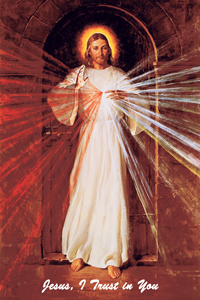
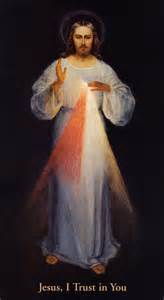
From a desire to make His mercy known and accepted more, Jesus asked Faustina to have an image painted which would illustrate this. The image consisted of Jesus in a white garment, and from His heart emanated two rays – one white and one red – symbolizing the water of baptism and the blood of His sacrifice. Beneath the image He wanted the words “Jesus, I trust in You” printed.[vii] In addition to the image, Jesus wanted the Sunday following Easter to be a Feast of Mercy.[viii] 

Pope St. John Paul II recognized the timeliness of this message and the importance of Faustina’s witness. He canonized her on Sunday April 30, 2000; making her the first saint of the new millennium as well as instituting the Feast of Divine Mercy Sunday to be celebrated the Sunday following Easter each year from then on. In his homily at her canonization, he affirmed,

“Divine Mercy reaches human beings through the heart of Christ crucified: ‘My daughter, say that I am love and mercy personified’, Jesus will ask Sr Faustina (Diary, p. 374). Christ pours out this mercy on humanity though the sending of the Spirit who, in the Trinity, is the Person-Love. And is not mercy love’s ‘second name’ (cf. Dives in misericordia, n. 7), understood in its deepest and most tender aspect, in its ability to take upon itself the burden of any need and, especially, in its immense capacity for forgiveness?”[ix]

Echoing the need for teaching divine mercy, Pope Francis called for a Holy Year of Mercy (Dec. 8, 2015 – Nov. 20, 2016).  In the book The Name of God is Mercy, Pope Francis articulated his concern with why more people do not turn to Christ in their need: “Because humanity is wounded, deeply wounded. Either it does not know how to cure its wounds or it believes that it’s not possible to cure them”[x] This helplessness is compounded by our wounded experiences. He observed that since many people in today’s selfish world haven’t experienced mercy in their own lives, they assume they won’t receive mercy from God.

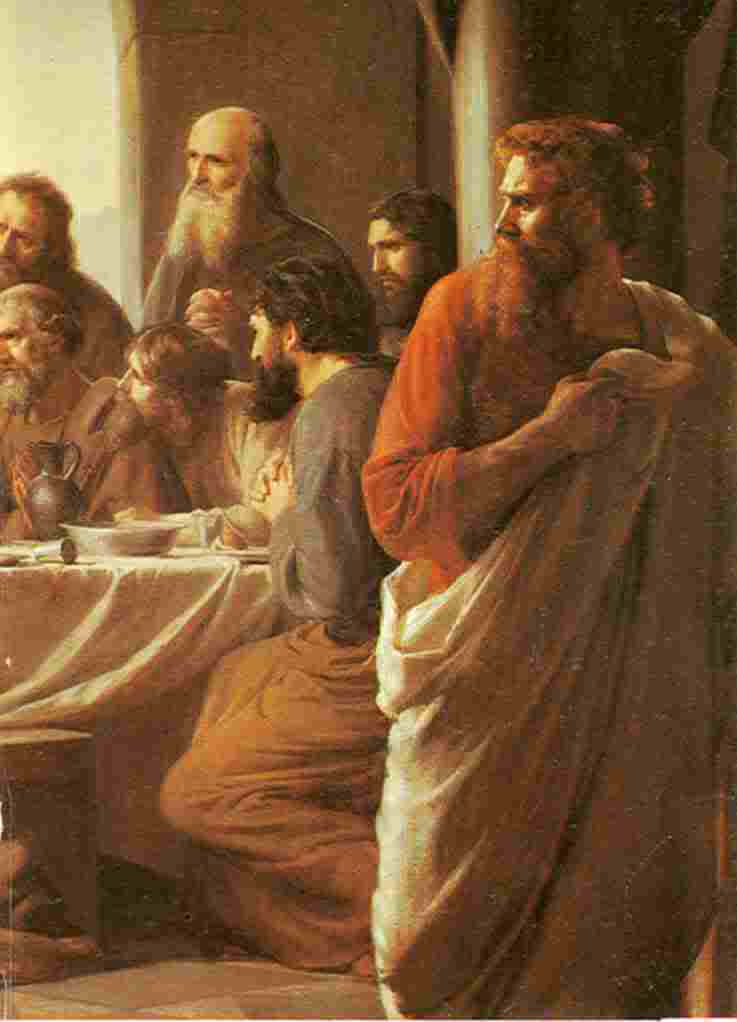
Consider Judas again.  He had judged Jesus without mercy, and now he judged himself the same way. In addition, when he returned to the chief priests and the elders heartbroken and repentant, they responded with utter coldness.  The great theologian Fr. Romano Guardini captured the anguish of the moment well in his book The Lord, writing:

“After the deed came repentance – an overwhelming recognition of all that was lost. But this consciousness could no longer alter the fait accompli that stared back at Judas from the cold faces of those he had served. Strangely heart-rending gesture of helplessness, this flinging down the silver in the temple sanctuary!”[xi]

In this light, consider how important Jesus’ exhortation to us is in Luke 6:36-38! If only Judas had obeyed Christ’s word, he wouldn’t have had to suffer so terribly from the awful effects of his judgmentalism.

“Be merciful, even as your Father is merciful. Judge not, and you will not be judged; condemn not, and you will not be condemned; forgive, and you will be forgiven; give, and it will be given you; good measure, pressed down, shaken together, running over, will be put into your lap. For the measure you give will be the measure you get back.”

Judgmentalism can quickly become a vicious cycle. Judas judged and condemned Jesus.  However, when he realized he had judged wrongly, he then turned and judged and condemned himself, but was again wrong.  Though not innocent, he judged himself beyond the limits of God’s forgiveness and condemned himself to death.  We can’t judge Judas either. Fr. Guardini warned:

“No, what came to the surface in all its terrible nakedness in Judas, existed as a possibility all around Jesus. Fundamentally not one of his followers had much cause to look down on Judas. Nor have we. Let us be perfectly clear about this. Betrayal of the divine touches us all.”[xii]

Imagine the emotional drama and utter pain when Judas “flung the coins” (Matthew 27:5).  Think of all the frustration – the mental and emotional struggle during his time with Jesus, trying to determine just who Jesus is.  First as a zealous and hopeful follower, then a disenchanted disciple angry that Jesus wouldn’t bend to his expectations. Next as a malicious betrayer helping put to death what he deemed at the moment a false messiah, only to finally realize Jesus’ innocence, but tragically still too narrow minded and hearted to realize the extent of the Messianic redemption meant even for him. 

We at least live in the age of the Church, in the age of grace. Judas’ betrayal – both in Jesus’ death and his own – occurred before the Resurrection, and more importantly, before Pentecost. Had any of the other apostles been as extreme as Judas in their passions, they too may have succumbed to a similar end.  No one can fathom the mercy of God – it’s literally beyond human understanding.  They needed the Holy Spirit to open their minds and hearts to what Christ had been teaching them all along. We rely on the same Holy Spirit to both inspire knowledge of our sins and compunction of heart, and to give us the supernatural courage to trust in divine mercy. This is why it’s essential that we practice mercy, so we can become more habituated (and therefore open) to God’s gift of mercy to us.

Let’s take a final look at Judas from the standpoint of what we do and don’t know.  What was his disposition of soul at death? When he saw the truth of Jesus’ innocence he repented.  What did he do when he saw the truth of Jesus’ mercy, when he saw him face to face at his judgment?  We do not know…  It would be so much more satisfying if we did, we want to know the end of this dramatic story! He could have accepted Jesus’ mercy, been purified (Purgatory), and entered heaven.  Or he could have doubled down in his despair or in his pride, refused to accept mercy, and excluded himself from heaven, which is the definition of hell. 

Our choices matter. It’s incredible to think about the power that God has given to us in the freedom of Love.  May we pray for a merciful heart, which is able to both give and receive mercy. Jesus proclaimed, “Repent and believe in the Gospel.” Repentance of sin and trust in the merciful love of God are meant to be inextricably united. As Jesus said to St. Catherine of Siena:“I do not wish the soul to consider her sins, either in general or in particular, without also remembering the Blood and the broadness of my Mercy.”[xiii]

In conclusion, although it’s natural for students to ask, “what about Judas?”, the truth is it’s between Judas and Jesus.  The more important question to ask is, “what about me?”. Thankfully for us there’s still time.


[i] CCC par. 1033 “To die in mortal sin without repenting and accepting God’s merciful love means remaining separated from him for ever by our own free choice. This state of definitive self-exclusion from communion with God and the blessed is called ‘hell.’” CCC par.1035 “The teaching of the Church affirms the existence of hell and its eternity.” CCC 1036 “The affirmations of Sacred Scripture and the teachings of the Church on the subject of hell are a call to the responsibility incumbent upon man to make use of his freedom in view of his eternal destiny. They are at the same time an urgent call to conversion: “Enter by the narrow gate; for the gate is wide and the way is easy, that leads to destruction, and those who enter by it are many. For the gate is narrow and the way is hard, that leads to life, and those who find it are few.”

[ii] Pope St. John Paul II Audience July 22, 1999. Vatican.va

[iii] Cf CCC par. 391-393

[iv] For Church teaching about suicide, see The Catechism of the Catholic Church, par. 2280-2283. Taking one’s own life is a serious sin. At the same time, the Church recognizes that “grave psychological disturbances, anguish, or grave fear of hardship, suffering, or torture, can diminish the responsibility of the one committing suicide” (par. 2282) It also encourages us that “We should not despair of the eternal salvation of persons who have taken their own lives. By ways known to him alone, God can provide the opportunity for salutary repentance. The Church prays for persons who have taken their own lives. The Church prays for persons who have taken their own lives” (2283).

[v] cf Dorothy Day, The Reckless Way of Love: Notes on Following Jesus”, ed. Carolyn Kurtz, Plough Publishing House, 2017.

[vi] Maria Faustina Kowalska, Divine Mercy in My Soul: Diary of Sister M. Faustina Kowalska. Marian Press, 2003.

[vii] Ibid. Diary entry 47

[viii][viii] Ibid. Diary entry 49

[ix] John Paul II, Homily at the Mass in St. Peter’s Square for the Canonization of Sr Maria Faustina Kowalska, 30 April, 2000. Vatican.va

[x] Pope Francis.  The Name of God is Mercy. Random House, 2016.

[xi] Romano Guardini, The Lord, Gateway Editions 1982, p. 410

[xii] Ibid. p. 411

[xiii] Catherine of Siena, The Dialogue, Edited by Richard J. Payne, Translated by Suzanne Noffke, O.P. Paulist Press, 1980.

Related Posts

© 2024 Angela M Jendro

*Scriptural texts, unless otherwise noted, are taken from The Holy Bible: Revised Standard Version Catholic Edition, (Oxford: Oxford University Press, 2004)

*Pray and Reflect with full guided prayer meditations on the Sunday Gospel reading in my book Take Time For Him and its series on Amazon and Kindle!

The Trap of Self-Reliance

Excerpt from Take Time For Him: Some More

by Angela M Jendro

Order your paperback or e-book from Amazon!

Order the kindle e-book (or paperback) to read the Christmas meditation, the meditation for Mary Mother of God, and to reflect on the meditations all year at your convenience.

2nd Sunday of Easter/Sunday of Divine Mercy

Read the Gospel of John 20:19-31

Meditation Reflection:

The Christian faith is neither a well-crafted myth nor a brilliant philosophy.  Rather, the Christian religion is based on eye-witness testimony of the resurrected Lord.

It began with the testimony of Mary Magdalene, who encountered the risen Christ in the morning when she went to His tomb and was subsequently sent by Him to tell the apostles.  They felt excited and a bit confused “for they did not yet understand the scripture that he had to rise from the dead” (John 20:9 NAB).   In the evening, Jesus appeared to them as well except for Thomas who wasn’t there.  Upon seeing Him with their own eyes they believed and rejoiced. 

When they shared their Good News with Thomas he refused belief until he could see it for himself.  Thomas had been willing to die with Christ (John 11:7-8, 16) but he couldn’t envision rising with Him. In consequence, his faith – though fiercely loyal – remained limited to his own personal experience. One week later however, Jesus showed mercy toward Thomas’ obstinate self-reliance, appearing to him in the flesh and so enabling Thomas to believe. 

We too can fall into the trap of self-reliance in matters of faith – limiting our belief to personal experience and rejecting the witness of Jesus’ apostles and His Church.  Our present culture tends toward “cafeteria Christianity”, meaning we pick and choose what we like and leave what we don’t.  We view doctrine as a buffet of ideas that we can take or leave according to our personal preferences and reasoning. 

Imagine Thomas saying to the other ten, “you have your truth and I have my truth, one is not better than the other.”  Yet, one is that Jesus is risen and the other is that Jesus is dead!  How could Jesus’ Church endure with such conflicting beliefs?  The same remains true today.  Capitulating to the attitude of an individualistic faith undermines Christ’s work.

Jesus chose to share His Truth and grace through the apostles’ witness (and their successors – the pope and bishops).  Their interpretation of Scripture and the power of their miracles came from the Holy Spirit bestowed on them by the Lord. At the final moment of Jesus’ death, He breathed His last and surrendered His Spirit to the Father.  On the evening of His resurrection, He breathed upon the Apostles, and gave them His Spirit and His authority:

“‘As the Father has sent me, even so I send you.’ And when he had said this, he breathed on them and said to them, ‘Receive the Holy Spirit. If you forgive the sins of any, they are forgiven; if you retain the sins of any, they are retained.’” John 20:21-23

Christianity is an encounter with the incarnate God who dwells within the very souls of His baptized disciples and makes them one Body.  Jesus is not a restauranteur who offers the world’s greatest buffet.  He is the Son of God who desires all persons to be united as a family in the Lord.  He therefore established a visible Church endowed with His invisible presence to guide and govern its members to His eternal kingdom.

Today, one week after Easter, we celebrate the inexhaustible, generous, mercy of Christ which He lavishes on all who will accept it. As He did for Thomas on this same day, Christ reaches down into the darkest parts of our souls, to our most acute failures and sins, to apply the healing balm of His Merciful Love poured out on the Cross for our salvation. Our Lord is a crucified Lord.  When He appeared to the apostles “He showed them His hands and His side” (John 20:20).  He did not choose, as Satan tempted Him to be in the desert, a king without the Cross.  Similarly, true disciples are crucified disciples.  They have died to self, and self-reliance, and live by the Holy Spirit in communion with the Church.

There’s no sin too great for Jesus to forgive. He only requires a repentant heart which chooses to trust in His love.  There’s also no weakness of faith He can’t strengthen, no doubt He can’t heal, and no question of doctrine He can’t explain to you – if you let Him.  And remember, He has given us the fellowship of the Apostles through both the Scriptures and the living voice of authority in His Church.

Jesus said, “Blessed are those who have not seen and yet believe” (John 20:29). Today’s Gospel passage concludes with John offering the same witness to us that was offered to Thomas. Today is the day to surrender to Christ in prayer every doubt you harbor and every limitation you place on faith.  Then, receive His mercy in daily prayer, immersion in the Scriptures, the Eucharist at Mass, and trying to learn the Church’s reasons for her doctrines.  In consequence, you too will become an eye-witness of the resurrected Christ to others.

Consider:

  • When buying a product online or hiring someone for a house project, how much credence to you give to people’s reviews?  How much credence to you give to the testimony about Jesus from the Apostles, the saints and martyrs, the Christians you know who testify to the Lord’s work in their lives?
  • It’s hard to trust someone you can’t see.  Do you make Christ visible to others in your life?  How might you witness the reality of His truth and mercy even more?
  • Reflect on the choice presented today: whether to sand stubbornly in self-reliance or enter the communion of the Body of Christ – His Church – and lean on one another.
  • Jesus told St. Faustina that His greatest pain is distrust on the part of souls in His mercy.  In his book, The Name of God is Mercy, Pope Francis observed that we fail to believe in Christ’s mercy because we have no experience of mercy in our lives and therefore believe no one – not even Christ – will help us.
    • To what extent has this been your experience? 
    • What makes it difficult to trust Christ? 
    • How might you extend mercy to the people in your daily life so they might believe in Christ’s mercy?

Practical Application:

  • Every time you feel helpless, turn to Christ in prayer and throw yourself at His mercy. Repeat the words He asked St. Faustina to have written under His image: “Jesus, I Trust In You.”
  • Do one work of mercy each day.

All Rights Reserved © 2020 Angela M Jendro

I highly recommend both the Diary of St. Faustina and The Name of God is Mercy .

A beautiful exemplar of Christ’s merciful love is Mother Teresa. I also recommend her book A Call to Mercy: Hearts to Love, Hands to Serve

Learning to Trust

Divine Mercy

Divine Mercy Sunday

Gospel John 20:19-31 NAB

On the evening of that first day of the week, when the doors were locked, where the disciples were, for fear of the Jews, Jesus came and stood in their midst and said to them, “Peace be with you.” When he had said this, he showed them his hands and his side. The disciples rejoiced when they saw the Lord. Jesus said to them again, “Peace be with you. As the Father has sent me, so I send you.” And when he had said this, he breathed on them and said to them, “Receive the Holy Spirit. Whose sins you forgive are forgiven them, and whose sins you retain are retained.” Thomas, called Didymus, one of the Twelve, was not with them when Jesus came. So the other disciples said to him, “We have seen the Lord.” But he said to them, “Unless I see the mark of the nails in his hands and put my finger into the nail marks and put my hand into his side, I will not believe.”

Now a week later his disciples were again inside and Thomas was with them. Jesus came, although the doors were locked, and stood in their midst and said, “Peace be with you.” Then he said to Thomas, “Put your finger here and see my hands, and bring your hand and put it into my side, and do not be unbelieving, but believe.” Thomas answered and said to him, “My Lord and my God!” Jesus said to him, “Have you come to believe because you have seen me? Blessed are those who have not seen and have believed.” Now Jesus did many other signs in the presence of his disciples that are not written in this book. But these are written that you may come to believe that Jesus is the Christ, the Son of God, and that through this belief you may have life in his name.

Meditation Reflection:

We spend so much time and money distracting and soothing ourselves from regret for our mistakes and fear of our mortality. Christ’s victory over sin and death opens the possibilities of a new beginning during this life and life eternal in the next. The Risen Christ finds the apostles in fear and brings them Peace. Thomas misses the opportunity for peace however because he refuses to believe his fellow apostles’ unanimous witness. Despite his own witness of Jesus’ many miracles and the reliability of the disciples’ account, he refuses to receive Christ’s peace without seeing the healed wounds of the Lord for himself. Christ would have been in His right to refuse such a demand but in His mercy He appears directly to Thomas so that his faith could be strengthened and he could receive the riches Christ had suffered to give to him.

Imagine the joy Jesus must have felt, having earned our salvation through such intense suffering, when He could then bestow upon His apostles the administration of His Kingdom which is none other than the forgiveness of sins. Every mother knows the relief of holding her newborn in her arms after a long pregnancy and birth. Jesus must have experienced a similar relief when He enjoyed our new life given through His loving sacrifice.

Pope St. John Paul II declared in 2000 at the canonization of St. Faustina, that today, the Sunday following Easter, be celebrated as Divine Mercy Sunday. Christ had appeared to St. Faustina, a simple uneducated nun from Poland, in the 1930s and spoke with her about His great desire to bestow His mercy on us. His message did not add anything new to the Gospel, however He re-emphasized His view to the modern world relaying to her His greatest pain which He identified as souls refusing to trust in His mercy. In the Diary of St. Faustina, (recorded at the request of her spiritual director), she relays these words of Jesus to her regarding today:

I desire that priests proclaim this great mercy of Mine towards souls of sinners.   Let the sinner not be afraid to approach Me. The flames of mercy are burning Me – clamoring to be spent; I want to pour them out upon these souls…Distrust on the part of souls is tearing at My insides.   The distrust of a chosen soul causes Me even greater pain; despite My inexhaustible love for them they do not trust Me. Even My death is not enough for them.” (par. 50)

Like Thomas, many of us struggle to trust Christ. We fail to have confidence in Jesus’ ability to change our lives and renew our souls. Using Pope Francis’ analogy, we treat Confession like a dry cleaner. We can imagine being showered off but not truly changed. In doing so we do not emulate humility but rather wastefulness.

Today we reflect on the mercy of Christ and ask that He increase our hope that we might trust in Him. The devil steals our joy, but Christ came to give us joy to the full. He not only forgives us, but enables us to live a supernatural life of virtue and peace. On the Feast of Mercy, God exhorts us in every way possible to receive His mercy, to give mercy, and to trust in Him. Let us pray for the grace to surrender the myth of perfection in exchange for the truth of sanctifying love.

Consider:

  • Reflect on the joy Christ feels when He can shower upon us the mercy He worked so hard to earn for us. Consider the mystery of a mother or father’s love that takes pleasure in sacrificing for their children.
  • Do you struggle with perfectionism? Do you struggle to accept Christ’s help because you feel unworthy of His love if you make mistakes or fall to sins? Do you feel you need to be holy all on your own?
    • Pelagianism, a heresy in the early Church, asserted that Christ came to set a good example for us but we have to live up to that example by our own efforts alone. The Church declared that the human will alone could not perfect itself but rather required supernatural grace. Do you try to perfect yourself to feel worthy of Christ’s love, or do you accept your worthiness of His love and so the possibility of being made perfect by Him?
  • How much do you need to see to believe? What evidence has Christ given you already that you ignore? What witness could you give to others about the reality of His presence?
  • Consider a time when you experienced the peace of Christ.

Make a Resolution (Practical Application):

  • Do one act of mercy for someone each day this week.
  • Do one act of mercy toward yourself each day this week.
  • Thank Christ each day for His gift of mercy. Make a gratitude list east day of His blessings.
  • Learn about St. Faustina and the Divine Mercy Chaplet, Image, and Feast Day.
  • Say the short prayer, “Jesus I Trust in You”, throughout the day.

Hard to Believe

by Angela Lambert

April 23rd, 2017; Divine Mercy Sunday

 Gospel of John 20:19-31

On the evening of that first day of the week, when the doors were locked, where the disciples were, for fear of the Jews, Jesus came and stood in their midst and said to them, “Peace be with you.” When he had said this, he showed them his hands and his side. The disciples rejoiced when they saw the Lord. Jesus said to them again, “Peace be with you. As the Father has sent me, so I send you.” And when he had said this, he breathed on them and said to them, “Receive the Holy Spirit. Whose sins you forgive are forgiven them, and whose sins you retain are retained.” Thomas, called Didymus, one of the Twelve, was not with them when Jesus came. So the other disciples said to him, “We have seen the Lord.” But he said to them, “Unless I see the mark of the nails in his hands and put my finger into the nail marks and put my hand into his side, I will not believe.”   Now a week later his disciples were again inside and Thomas was with them. Jesus came, although the doors were locked, and stood in their midst and said, “Peace be with you.” Then he said to Thomas, “Put your finger here and see my hands, and bring your hand and put it into my side, and do not be unbelieving, but believe.” Thomas answered and said to him, “My Lord and my God!” Jesus said to him, “Have you come to believe because you have seen me? Blessed are those who have not seen and have believed.” Now, Jesus did many other signs in the presence of his disciples that are not written in this book. But these are written that you may come to believe that Jesus is the Christ, the Son of God, and that through this belief you may have life in his name.

Meditation Reflection:

Christ is risen, He has won victory over sin and death.  As He said to the Father from the Cross, His redemptive work “is finished.”  Jesus has done His part, now we must do ours.  When Jesus appeared to the apostles, He offered them Peace and forgiveness of sins; sending them out to extend His peace and forgiveness to the world.

Thomas missed the opportunity to encounter the risen Christ.  However, the apostles shared the Good News with him and offered the peace and hope that Christ had shared with them.  Thomas refused to accept it.  He refused to accept the authoritative word of the apostles and refused the joy and graces of the resurrection. Despite the numerous prophecies of Jesus that this would happen, or Thomas’ witness of Jesus’ power to raise the dead (even very recently with Lazarus), and ignoring the unanimous testimony of his fellow apostles, Thomas demanded to see it for himself before he would submit.

St. John shares with us that Thomas was also called “Didymus”, or “twin.”  How many of us could claim to be Thomas’ twin? We might be passionate about serving Christ, crying out “Let us also go, that we may die with him” (John 11:16), but we struggle to resurrect with Christ.  Maybe we can accept that He has poured out His mercy in the lives of others, but we need to see it to believe it to accept it for ourselves.

When we truly realize the gravity of sin, especially our own sin, our feelings of shame and regret can challenge our trust in Jesus.  It’s easy to say, “Jesus died for our sins”; it’s much harder to believe “Jesus forgives me of this particular sin.”  That shame and regret then spirals further, making it seem impossible to begin anew.  “There can be no fresh start for me”, we say, then fruitlessly endeavor to redeem ourselves or despair altogether and give up.

If you struggle with overcoming shame and self-doubt by accepting the mercy of Christ, you are not alone.  Despite Thomas’ disbelief, Jesus mercifully appeared to him that he might believe and receive the gift of peace and life.  In 1931 Jesus appeared to a humble Polish nun, St. Faustina, asking her to spread the message of His mercy anew.  Jesus lamented to Faustina that distrust on the part of souls caused His greatest suffering.  Jesus burns with love for us and sacrificed to save us, but we cannot be saved if we refuse His love and mercy.  He appeared to her many times after that, with a message of mercy He wanted made known.  He asked for an image to be painted of Him, with two rays coming forth from His side – white and red – representing the water and blood which poured out of side from the Cross, and the words “Jesus I Trust in You” beneath.  We receive Jesus’ redemptive mercy through the sacraments when we are washed in the waters of baptism and united to Him in the sacrament of His Body and Blood in the Eucharist.  He also asked that a Feast of Mercy be instituted, to be a day of extraordinary graces and an opportunity for us to make an act of trust and abandon so that He could be free to pour out His transformative love.

St. John Paul II perceived the truth and wisdom of Jesus’ message to St. Faustina.  He affirmed her sanctity, canonizing her in 2000, and established the requested Feast of Divine Mercy as the Sunday following Easter. St. John Paul II witnessed the misery and despair caused by atheism – promoted by communism in his youth, and consumerism in his older age.  He worked tirelessly to the very end, to exhort us to trust in Jesus.  Even when Parkinson’s reduced him to a wheel chair and frustrated his speech, he proclaimed the Good News that Christ loves us and can transform us.  I remember the last time I saw John Paul II.  I attended a Wednesday audience at St. Peter’s in 2002.  The formerly vibrant, strong, energetic, outdoorsy pope, had to be wheeled out on stage.  He personally delivered his message even though his words slurred making it difficult to understand and bits of drool forced their way down his mouth.  I remember thinking, “what courage, what humility, what determination!”  No matter how hard his body fought against him, John Paul II proclaimed the Gospel of Christ with conviction.  George Weigel fittingly titled JPII’s biography as “Witness to Hope”.  Even on his death bed, thousands gathered outside the window to his room and millions (including me) held vigil while viewing it on TV.

St. John Paul II knew our struggle to accept Christ’s mercy and did everything he could to make that merciful love felt.  Pope Francis also perceives this problem and called a Jubilee Year of Mercy to renew the message in a powerful and universal way.  In his book The Name of God is Mercy, Pope Francis responds to the question “Why, in your opinion, is humanity so in need of mercy?” by relating this observation:

“—  Because humanity is wounded, deeply wounded.  Either it does not know how to cure its wounds or it believes that it’s not possible to cure them…  Humanity needs mercy and compassion.  Pius XII, more than half a century ago, said that the tragedy of our age was that it had lost its sense of sin, the awareness of sin.  Today we add further to the tragedy by considering our illness, our sins, to be incurable, things that cannot be healed or forgiven.  We lack the actual concrete experience of mercy. The fragility of our era is this, too:  we don’t believe that there is a chance for redemption; for a hand to raise you up; for an embrace to save you, forgive you, pick you up, flood you with infinite, patient, indulgent love; to put you back on your feet.  We need mercy.”


Like Thomas, many of us need to see mercy to believe it.  Jesus desires that we believe without seeing. Yet, He graciously touches our lives anyway as He did for Thomas, condescending even further to meet our weakness.

Today, on this Feast of Divine Mercy, let us be strengthened by the witnesses of hope that Christ has sent to us.  Let us take a leap of faith and trust Christ with abandon.  He invites us to receive His mercy in the sacraments of Confession and Communion where His blood His poured out in our soul to free us from sin and free us to love. Inspired by this love, He calls us to share the Good News with others and practice the works of mercy that they too might see His mercy through His Mystical Body, and believe.

Consider:

  • When have you experienced mercy?
    • In prayer or at church, did you experience the peace of Christ?
    • After Confession, have you experienced the feeling of joy?
    • Have you experienced emotional or material support from someone when you were in need?
  • Do you find it difficult to accept help from others?  Why do you think that is?
  • Do you find it hard to accept unconditional love from Christ?  Do you struggle with feelings of needing to earn His love or be perfect before you can be saved?  Pray about what underlies that resistance:
    • Is it pride – you want to feel worthy of friendship with the Lord?
    • Is it despair – you don’t believe Christ can accept you as you are?
    • Is it past wounds that need healing – you have been denied mercy by others or your understanding of your dignity has been chipped away by abuse or patterns of toxic thinking.
  • Reflect on the freedom and joy of unconditional, merciful love.
  • Offer prayers of praise and thanksgiving if you have experienced this.
  • If you haven’t experienced it, consider the example of people you know who have this exchange of love, or Christians who surrender to it in their relationship with Christ.  What do you notice about how it affects their perspective, their choices, their demeanor, and the quality of their life?
  • Who might you extend merciful love to?  What relationships have too many conditions?

Make a Resolution (Practical Application):

  • Each day this week, pray the words “Jesus I Trust in You,” multiple times throughout the day.
  • Read a psalm of praise each day, strengthening and proclaiming your belief in God’s love for you. (Try beginning with Psalm 139!)
  • Resolve on one way to be a person of mercy each day.  Decide on who, what, when, and where you can be an encounter with Christ’s merciful love to someone.  Works of Mercy

Related Posts:

Divine Mercy…Can you believe it?  (Divine Mercy Sunday 2016 Post)

Tough, Gentle Mercy

Hope…When Least Expected

Love and Mercy In Superabundance

Behold, I Make All Things New

~ Written by Angela Lambert © 2017

* To receive these weekly posts automatically in your email just click the “follow” tab in the bottom right hand corner and enter your email address.