Christian Conflict Resolution

by Angela (Lambert) Jendro

September 10, 2017; 23rd Sunday in Ordinary Time

 Gospel of Matthew 18:15-20 NAB

Jesus said to his disciples: “If your brother sins against you, go and tell him his fault between you and him alone. If he listens to you, you have won over your brother. If he does not listen, take one or two others along with you, so that ‘every fact may be established on the testimony of two or three witnesses.’ If he refuses to listen to them, tell the church. If he refuses to listen even to the church, then treat him as you would a Gentile or a tax collector. Amen, I say to you, whatever you bind on earth shall be bound in heaven, and whatever you loose on earth shall be loosed in heaven. Again, amen, I say to you, if two of you agree on earth about anything for which they are to pray, it shall be granted to them by my heavenly Father. For where two or three are gathered together in my name, there am I in the midst of them”

Meditation Reflection:

Incorporation into the Christian community means being adopted into a family.  This in turn means we have a greater responsibility toward our brothers and sisters in Christ.

Jesus knows families can struggle with dysfunctional ways of dealing with things – from gossip, to triangulating, to manipulation or passive aggressive tactics, and more.  As the head of the Christian family however, He provides us with clear instructions about the best way to love our brother or sister in difficult situations.

First, Jesus tells us to confront our loved one directly if they have hurt us in some way.  This means we cannot play the martyr, hope they read our mind, let it build up, or sweep it under the rug.  Jesus knows healthy relationships require honest communication and ongoing reconciliation.  We all sin and we all inevitably treat our loved ones unfairly or unkindly.  To move forward reconciliation is essential.  In our pride however, we sometimes don’t even realize we are hurting the one we love unless they tell us.  Jesus instructs, therefore, that Christian love should make the person aware of their sin.  The Church actually lists this as a Spiritual Work of Mercy called “admonish the sinner.”  It’s not meant to be mean or judgmental, but to help a person grow into Christian maturity.

If the person won’t listen, likely claiming that you are being unfair, then Jesus proposes you bring another witness or two.  The goal would be to open the person’s eyes to their sin so they can be healed and reconciliation can be restored.  Sometimes the perspective of a couple of people can help to establish with objectivity the truth of the situation.

It’s amazing how blind we are to our sinful attitudes and habits, especially toward our family!  Even when confronted, we hold on so tightly, and refuse to change.  We often rationalize, “This is how I am. My family should just love me unconditionally.”  However, because our family loves us unconditionally, we should try even harder to change because we want to give them the best version of ourselves not the worst.

In general, Jesus wants us to avoid the tornadic plague of gossip or the festering sore of passive aggressive retaliation.  He wants His family to be happy, healthy, and loving.  Direct communication and the ally of one or two close friends is usually enough for most problems.  However, there are some injustices which require wider assistance and, if not changed, are too destructive to let go on.  For instance, if a family member refuses to change his or her abusive behavior or treat an addiction, it needs to be brought to light for the whole community.  If the person still refuses to change, family members are sometimes forced to separate themselves from the person in order to protect themselves and others, and to, in love, withdraw from enabling the abuser or addict. It may seem extreme and even un-Christian, however Jesus came to conquer sin not to support it.  Paradoxically, separating from addicts or abusers can motivate change.  At the very least, it is a way of evangelizing.  It shows by your actions that the behavior is wrong.  Lastly, Jesus is teaching us that although we have a serious responsibility toward the souls of our Christian brothers and sisters, after we have gone through the process He laid out, we may feel sorrow for their situation but we are not responsible for their behavior.  At that point, we can have peace that we have done everything we could.  We must work tirelessly for the salvation of souls, but we must also know the limits placed on us by free will.

Thankfully, we can always be a blessing to others through prayer and sacrifice.  Even if we must separate from someone physically, financially, or even in communication, we can still pray for them.   Moreover, just as Jesus exhorted us to confront a person together, He also exhorts us to pray for others together.  As children of God, and heirs with Christ (Romans 8:17), our prayers come before Him with all the force and influence a son or daughter can have on their father, especially when they plead with him as a family.

In conclusion, the vocation of marriage plays an important role in the formation of this mindset and the practice of applying Christian love to all different kinds of situations.  In his encyclical Familaris Consortio, Pope St. John Paull II called the family the first “school” of Christian love, from which persons develop the Christian self-giving necessary for mature interaction with the world as adults.  He writes:

The family is the first and fundamental school of social living: as a community of love, it finds in self-giving the law that guides it and makes it grow. The self- giving that inspires the love of husband and wife for each other is the model and norm for the self-giving that must be practiced in the relationships between brothers and sisters and the different generations living together in the family. And the communion and sharing that are part of everyday life in the home at times of joy and at times of difficulty are the most concrete and effective pedagogy for the active, responsible and fruitful inclusion of the children in the wider horizon of society.

Familiaris Consortio par. 37

True love is more than an emotion.  It’s a decision to choose the good for one’s beloved.  The best course of action isn’t always easy and it isn’t always clear.  Thankfully, we are not alone in this.  We can look to Jesus and to our Christian family to show us the way.

Consider:

  •  Consider the gift of being God’s daughter or son.  Reflect on Jesus’ love for you as your Brother.
  • Consider how you handle conflict. What do you do well? What could you improve?
  • How might you apply Jesus’ instructions for resolving problems to a situation in your life?
  • When has someone shown “tough love” toward you? How did their loving honesty help you grow?
  • St. Padre Pio said, “Prayer is the best weapon we possess. It is the key that opens the heart of God.”   Consider the power of prayer.  Reflect on the gift of being able to actively fight for our brothers and sisters by praying for them to a God who loves us and will listen to us.

Make a Resolution (Practical Application):

  •  Apply Jesus’ process to a conflict in your life this week.
  • Resolve not to gossip this week.
  • Say a prayer every day for someone who bothers you.

Related Posts:

Finding Peace Amidst Division

Authentic Love

Getting the Last Word…But Making it a Blessing

~ Written by Angela Jendro © 2017

* To receive these weekly posts automatically in your email just click the “follow” tab in the bottom right hand corner and enter your email address.


He Shared In Our Suffering, And Carries Our Cross…Gospel Meditation for Palm Sunday

by Angela Lambert

April 9th, 2017; Palm Sunday

(For the longer version of today’s Gospel, click this link: Matthew 26:14-27:66)

Gospel of Matthew 27:11-54

Jesus stood before the governor, Pontius Pilate, who questioned him, “Are you the king of the Jews?” Jesus said, “You say so.” And when he was accused by the chief priests and elders, he made no answer. Then Pilate said to him, “Do you not hear how many things they are testifying against you?” But he did not answer him one word, so that the governor was greatly amazed. Now on the occasion of the feast the governor was accustomed to release to the crowd one prisoner whom they wished. And at that time they had a notorious prisoner called Barabbas. So when they had assembled, Pilate said to them, “Which one do you want me to release to you, Barabbas, or Jesus called Christ?” For he knew that it was out of envy that they had handed him over. While he was still seated on the bench, his wife sent him a message, “Have nothing to do with that righteous man. I suffered much in a dream today because of him.” The chief priests and the elders persuaded the crowds to ask for Barabbas but to destroy Jesus. The governor said to them in reply, “Which of the two do you want me to release to you?” They answered, “Barabbas!”

Pilate said to them, “Then what shall I do with Jesus called Christ?” They all said, “Let him be crucified!” But he said, “Why? What evil has he done?” They only shouted the louder, “Let him be crucified!” When Pilate saw that he was not succeeding at all, but that a riot was breaking out instead, he took water and washed his hands in the sight of the crowd, saying, “I am innocent of this man’s blood. Look to it yourselves.” And the whole people said in reply, “His blood be upon us and upon our children.” Then he released Barabbas to them, but after he had Jesus scourged, he handed him over to be crucified. Then the soldiers of the governor took Jesus inside the praetorium and gathered the whole cohort around him. They stripped off his clothes and threw a scarlet military cloak about him. Weaving a crown out of thorns, they placed it on his head, and a reed in his right hand. And kneeling before him, they mocked him, saying, “Hail, King of the Jews!” They spat upon him and took the reed and kept striking him on the head. And when they had mocked him, they stripped him of the cloak, dressed him in his own clothes, and led him off to crucify him. As they were going out, they met a Cyrenian named Simon; this man they pressed into service to carry his cross.

And when they came to a place called Golgotha — which means Place of the Skull —, they gave Jesus wine to drink mixed with gall. But when he had tasted it, he refused to drink. After they had crucified him, they divided his garments by casting lots; then they sat down and kept watch over him there. And they placed over his head the written charge against him: This is Jesus, the King of the Jews. Two revolutionaries were crucified with him, one on his right and the other on his left. Those passing by reviled him, shaking their heads and saying, “You who would destroy the temple and rebuild it in three days, save yourself, if you are the Son of God, and come down from the cross!” Likewise the chief priests with the scribes and elders mocked him and said, “He saved others; he cannot save himself. So he is the king of Israel! Let him come down from the cross now, and we will believe in him. He trusted in God; let him deliver him now if he wants him. For he said, ‘I am the Son of God.'” The revolutionaries who were crucified with him also kept abusing him in the same way.

From noon onward, darkness came over the whole land until three in the afternoon. And about three o’clock Jesus cried out in a loud voice, “Eli, Eli, lema sabachthani?” which means, “My God, my God, why have you forsaken me?” Some of the bystanders who heard it said, “This one is calling for Elijah.” Immediately one of them ran to get a sponge; he soaked it in wine, and putting it on a reed, gave it to him to drink. But the rest said, ‘Wait, let us see if Elijah comes to save him.” But Jesus cried out again in a loud voice, and gave up his spirit. And behold, the veil of the sanctuary was torn in two from top to bottom. The earth quaked, rocks were split, tombs were opened, and the bodies of many saints who had fallen asleep were raised. And coming forth from their tombs after his resurrection, they entered the holy city and appeared to many. The centurion and the men with him who were keeping watch over Jesus feared greatly when they saw the earthquake and all that was happening, and they said, “Truly, this was the Son of God!”

Meditation Reflection:

Sin has a price.  During Holy Week, we contemplate Christ’s sacrifice for our salvation; the reason He became man and dwelt among us.  Jesus’ journey to the Cross began with His Incarnation in Mary’s womb.  Certainly, He ranks as the greatest Teacher in history, but He is much much more than that.  Divine Truth could not save us, without the gift of grace to transform us.  As St. Paul taught, the Mosaic Law condemns us.  Since we know the truth, we are all the guiltier when we transgress it.  The Mosaic Law provided the gift of wisdom, but it could not fortify a soul to follow it.  The thousands upon thousands of sacrificial lambs began the process of atonement for sin, but only the Lamb of God could justify us before the Lord.

Jesus knew every detail of His Passion before it occurred.  His human nature agonized in the Garden of Gethsemane on the Eve of His crucifixion, even begging God that if it be His will, “to let this cup pass.”  Jesus willingly accepted His suffering and allowed Himself to be taken into custody, beaten, scourged, mocked, and crucified.  The Jews had tried to arrest Him several times before or stone Him for blasphemy, but to no avail.  They had no power of Jesus, only love and the cost for our redemption compelled Him forward.

Christ, though sinless Himself, entered into the messiness of our sinful human experience.  In doing so, He accomplished two things – first He redeemed us from our sins, and secondly, He drew near to comfort us in our struggles.  No one can say to the Lord, “you don’t understand, your God.”  Jesus experienced every humiliation that you and I suffer.  He grew up in poverty, His family had to flee persecution and live in exile for a period of time, the cultural elite looked down on Him and discounted His wisdom, He was often misunderstood – even by His closest companions, during His public ministry He had no home, some towns welcomed Him but others drove Him out of the city, on the hardest day of His life His friends fled and two betrayed Him, and at the end of His life it appeared that everything He had built was falling apart.  He experienced the fickle nature of human honors – being hailed as king as He entered Jerusalem with people waving palms shouting, “hosanna in the highest”, then the next day hearing the same crowd demand His execution shouting “crucify Him.”

When we cry out to God in our pain, weeping and begging as we ask “do you not see my suffering? Do you even care?”, we can be assured that He does, more than anyone else on this earth.  He became man so He could share in our suffering, carry our cross with us, and paying the price of our sins so we could live in the freedom of grace.  It may seem at times that God is silent, and we may struggle at His inaction.  Jesus experienced this too.  He asked in the Garden if there was another way.  On the Cross, He cried out “My God, My God, why have You forsaken Me.”  Yet, He maintained complete confidence in God’s love and mercy.  He surrendered to God’s will at each step.  Even His final cry was one of hope.  He was quoting Psalm 22 which begins in anguish but ends in confidence that God will save. Jesus knew that His death would bring resurrection, for all men.  In the same way, we can be confident that we are never alone in our suffering, and with any death we experience, God will bring from it resurrection to new life.

Consider:

  • Consider each of Jesus’ sufferings.
    • His agony in the Garden – taking upon Himself the weight of our sins, fighting the human impulse to flee pain, the apostles asleep in His hour of need, the betrayal by Judas
    • His condemnation by the Sadducees and then by Pilate.  Standing silent without retort.
    • Hearing the crowd reject Him, even though He had done nothing but show them love.  Hearing them demand His crucifixion.  The vicious envy of the Jewish leaders and the shallowness of the people in the crowd who were so easily influenced.
    • The bloody scourging, which bruised and tore His flesh and resulted in losing a great deal of blood.
    • The mocking of the guards and the crown of thorns.  Choosing to endure rather than to argue back or overpower them.
    • Carrying the heavy cross, after a sleepless night and so much blood loss.  Fighting the weakness of His body with each step, and the shock of pain with each fall under its weight.  The chaos of the crowds pressing in on Him.
    • The humiliation of being stripped of His clothes.
    • The brutal crucifixion.
  • Consider the cost of your sins.  In what ways do others pay a price for your sin?  Are there persons particularly affected by your impatience, envy, pride, competitiveness, desire for attention, gossip, or other shortcomings?
  • In what ways do you pay a price for the sins of others?  How can imitating Christ’s example of forgiveness lift someone up with whom you struggle?
  • Consider your darkest moments and your deepest pain.  Reflect on how Christ has shared that same experience and suffered the same emotions – anxiety, humiliation, rejection, loss.
  • Consider the immense, unconditional love that Christ has for you.  Consider the lengths to which He willingly went, to protect and save you – to give you life and joy to the fullest.

Make a Resolution (Practical Application):

  • Each day this week, ask Christ to show you someone who is suffering.  Comfort that person in some way, so as to offer comfort to Christ in His sufferings.

Related Posts:

The Easter Triduum…Entering the Mystery

Receiving Christ’s Gift Graciously…Gospel Meditation for Palm Sunday (2016)

~ Written by Angela Lambert © 2017

* To receive these weekly posts automatically in your email just click the “follow” tab in the bottom right hand corner and enter your email address.


Getting the Last Word…but Making it a Blessing

by Angela Lambert


February 18th, 2017; 7th Sunday of Ordinary Time

Gospel Matthew 5:38-48

Jesus said to his disciples: “You have heard that it was said, An eye for an eye and a tooth for a tooth. But I say to you, offer no resistance to one who is evil. When someone strikes you on your right cheek, turn the other one as well. If anyone wants to go to law with you over your tunic, hand over your cloak as well. Should anyone press you into service for one mile, go for two miles. Give to the one who asks of you, and do not turn your back on one who wants to borrow. “You have heard that it was said, You shall love your neighbor and hate your enemy. But I say to you, love your enemies and pray for those who persecute you, that you may be children of your heavenly Father, for he makes his sun rise on the bad and the good, and causes rain to fall on the just and the unjust. For if you love those who love you, what recompense will you have? Do not the tax collectors do the same? And if you greet your brothers only, what is unusual about that? Do not the pagans do the same? So be perfect, just as your heavenly Father is perfect.”

Meditation Reflection:

In 1981, Pope St. John Paul II was shot by a Turkish assassin Ali Agca.  The attempt occurred on the feast of Our Lady of Fatima and JPII credits Mary for “guiding the bullet” which just barely missed a major artery.  Even while in the ambulance, JPII voiced his forgiveness of the assassin.  Later after he had recovered, he visited Agca in prison and offered his forgiveness in person.  Agca had not offered an apology and only inquired as to why he wasn’t dead.  This encounter however had an impact and later when he was released from prison, Agca travelled to St. Peter’s to place roses on John Paul II’s tomb.

Forgiveness and love is the mark of Christ, and therefore the signifier of His followers.  John tells us that “God is Love.”  The term “perfect” means “full, or complete.” When Jesus refers to His Heavenly Father’s perfection therefore, He means that God’s love lacks nothing and is total.  By contrast, “even tax collectors” love their friends, but their love is imperfect because it is incomplete.  Total love includes those who love us and those who do not.

But how we can love someone who hates us or hurts us?  Does Jesus mean we must be friends with people who wish us harm or take advantage of us?  No.  Love is defined as “willing another person’s good.”  Thankfully, this does not require feelings of love, or even reciprocal friendship.  It doesn’t even mean trusting the person. It simply means choosing not to act in revenge or anger, and instead doing that which promotes the good of the other.  Thus, we can pray for our enemies, in which we petition God on their behalf for graces to be bestowed upon them.  We can speak kindly, act respectfully, and do the right thing toward others, not because they necessarily deserve it, but because it’s the kind of person we want to be.

Authentic love sometimes means tough love.  It can require choices that appear unloving but are in fact healthy boundaries.  Loving an addict for instance or someone with mental illness will require tough love, but will be more effective toward their health than enabling them in their sickness.  Disciplining children is tough love, but it helps the child grow in goodness.

Christ calls His followers to imitate His mercy.  This demand goes above and beyond natural strength and even natural wisdom or common sense.  It only makes sense considering the mystery of Christ’s suffering, death, and resurrection for our salvation, and it can only be accomplished with the aid of His divine grace.

Christ loved us while we were yet sinners.  He willed our good and worked for our salvation even when we were mired in sin and rejected Him.  As His disciples, we can work for the salvation of others, even when they too are mired in sin and working against us.

This can be tricky, but my mother offered me advice about these situations that I have found to be a guiding principle. When tempted to react vengefully when faced with difficult people and situations, she would say, “don’t let their behavior change who you are.”  Her wisdom strengthened my resolve and shed light on how to decide what to do.  No matter what others are doing or how low they sink, the truth is, if we just fire back we sink to their level too.  Jesus wants us to rise above, with the help of His grace and the light of His example.  Whether it transforms the other person or not, it will definitely transform us.

Loving our enemy is necessary to stop the cycle of violence, and our only hope for human unity.  When we are the ones caught up in it, we want to get the last word in or throw the last punch.  When we are the observer however, we just want it to stop.  As a mom, I get tired of hearing my kids bicker. Both claim it’s the other’s fault and point the finger at who started it.  Both go on and on and on, despite my attempts to break it up because they are obsessed with having the last word.  I wonder if God views our bickering in the same way.  Maybe the other person did start it, so what?  Why can’t we just stop?  No one can move on unless we do and everyone is miserable.

Loving our enemy is a supernatural virtue.  To cultivate charity, we need to connect to God and His stream of grace in prayer and the sacraments.  We must meditate on the Gospels to develop our sense of what Jesus would do.  We need to make time for fellowship with Christians walking the walk and learn from their insights and examples.  In this way, we can grow in love until it fills every gap in our heart and reaches the fullness of perfection like that of our Father in heaven.

Consider:

  • Who do you find easy to love and why?
  • Who do you find difficult to love? Who could you identify as your enemy?
    • In what way do they provoke you to strike back?
    • How might you react with love instead? How could you “will their good”?
  • Consider how we love our children even when they disobey, say hurtful things, or work against us. Do you ever feel anger toward your kids, but choose/will what’s good for them?
  • Consider God’s perspective as our Father and us as His children. How does He view our bickering, feuds, back-biting, and competitiveness?  What would He say to you about how you treat your brother or sister in Christ?
  • We can pick our friends but we can’t pick our family. Consider how loving our natural siblings can cultivate the virtues needed to love our spiritual siblings.
  • Read the story of St. Maria Goretti and reflect on her example of tough love, forgiveness, and the transformation it caused in her assailant.

Make a Resolution (Practical Application):

  • Pick one person who makes your life difficult.
    • 1) Begin each day with a sincere prayer for them. (not a list of all their flaws that God should fix, but rather for God’s blessing upon them!)
    • 2) Resolve each day this week to refrain from snide remarks to them or about them, gossip, or any kind of action that would anger or hurt them.
    • 3) Do one kind thing for them.


~ Written by Angela Lambert © 2017

* To receive these weekly posts automatically in your email just click the “follow” tab in the bottom right hand corner and enter your email address.


Keeping it Real

by Angela Lambert

20141130_175201795_ios

February 11th, 2017; 6th Sunday of Ordinary Time

Gospel of Matthew 5:20-22a, 27-28, 33-34a, 37

Jesus said to his disciples: “I tell you, unless your righteousness surpasses that of the scribes and Pharisees, you will not enter the kingdom of heaven.  “You have heard that it was said to your ancestors, You shall not kill; and whoever kills will be liable to judgment. But I say to you, whoever is angry with brother will be liable to judgment. “You have heard that it was said, You shall not commit adultery. But I say to you, everyone who looks at a woman with lust has already committed adultery with her in his heart. “Again you have heard that it was said to your ancestors, Do not take a false oath, but make good to the Lord all that you vow. But I say to you, do not swear at all. Let your ‘Yes’ mean ‘Yes,’ and your ‘No’ mean ‘No.’ Anything more is from the evil one.”

 Meditation Reflection:

Freedom in Christ, is founded on freedom from being fake.  We are masters at the false front.  By an early age most of us can pull off “I’m fine” to anyone who asks, no matter how untrue it may be.  Keeping up appearances, looking successful, and seeming to be more than we are occurs in every time period and culture.   Social media amplifies today’s version, as we can literally craft our public persona via selective posts and pictures.

We not only mask our imperfections, we often mask our sins as well.  From the back-handed compliment, to disparaging remarks prefaced by “God bless her soul, but…”, to shallow mantras like “You only live once” or “it’s not like it’s against the law”, we rationalize our viciousness in countless ways.  Like addicts, we deny we have a problem with sin and we excuse and blame our behavior on everyone and everything but ourselves.

Just has sobriety can only be achieved through facing reality, so human freedom from sin can only be wrought from an utter realness about ourselves.  When Moses asked God to reveal His Name, God responded that it is “YHWH” or “I AM”.  God revealed that He is.  God is being and existence.  Thus, union with God requires utter realness and authenticity.

C.S. Lewis writes about this mystery in a brilliantly imaginative way in his book “The Great Divorce.”  The divorce in this case refers to the divide between heaven and hell, and describes the process of purgation for those still travelling to heaven.  He describes inhabitants of hell, drawing from scriptural imagery, as phantoms.  On the opposite spectrum, he calls those in heaven “solid people.” The main character arrives at a gray bus stop, phantom-ish, and his journey toward heaven is one of becoming more solid – or more “real”.  To do this he must surrender all that he keeps false within himself.  I won’t give away more than that, as I highly recommend this read!  I will only offer this teaser – Lewis creates numerous characters whose struggle to move from ghostish versions of themselves to the authentic provides deep insight into the rationalizations with which most of us struggle, the pain of conversion, and the joy of authentic freedom.

In the Beatitudes, Jesus teaches us interior conversion and introspection.  In today’s Gospel passage, He directly calls us out on how we tip toe around the truth and avoid real virtue and, in consequence, real love and relationship.

How many times have we heard the excuse, “well, it’s not like I’ve killed anyone.  I’m a decent person.”  Yet, harboring anger can be deeply destructive and emerge in violence that might be more subtle, but no less real.  Passive-aggressive behaviors, online bullying, slander, gossip, critical remarks and callous attitudes prevent relationship and they hold us back from heaven.  Jesus states clearly, “I tell you, unless your righteousness surpasses that of the scribes and Pharisees, you will not enter the kingdom of heaven”  (MT 5:20) and “be perfect therefore, as your heavenly father is perfect” (MT 5:48)  A man who loves his wife, doesn’t look lustfully at other women.  A woman who loves her husband, doesn’t flirt with other men.  Does it matter whether or not it’s technically adultery?  Jesus calls out the dishonesty.  Either way, it certainly feels like cheating to the other spouse.  Why?  Because love is total, exclusive, and lifelong.  Our love for our spouse should mirror love for God. In fact, God created the first man and woman in the state of marriage because as two persons in a relationship of life-giving love, they imaged the Triune God.

Authenticity begins by simply letting our Yes be yes, and our No be no.  Drop the exaggerations and minimizations.  Leave the white lies.  Take down the false fronts.  It feels like going a day without make-up at first, but not forever.  As we become more at peace with ourselves, we become more comfortable in the truth.  Eventually the fake-ness we clung to in the past will feel like too much make-up, caked on, that you can’t wait to wash off at the end of the day.

Jesus wants us, not the façades we create.  He accepts us as we are and helps us become the truest version of ourselves.  When this happens, we can begin to experience the real relationship, and real love necessary for heaven.

Consider:

  • List your most common struggles in a day, then pray about what interior attitude or disposition underlies it.
    • consider the 7 capital sins for ideas (pride, envy, greed, anger, sloth, lust, and gluttony)
  • What is your most common/tempting rationalization?
  • In what ways have you grown in authenticity over the years? Reflect on how good it feels to be yourself.
  • Who is someone you can be completely yourself around; who knows the “real” you?
  • Consider how honesty is necessary for relationship.

Make a Resolution (Practical Application):

  • Tackle one rationalization this week.  Be direct with yourself and with God.  Name the struggle, occasions of temptation, and the rationalization you use.  Decide on how you will avoid the temptation or create a counter-mantra to repeat when you hear yourself rationalizing.
    • Example:
      • Daily struggle: Crabby toward your spouse and kids
      • Occasions of temptation: Getting out the door in the morning, right after a long day at work, or when interrupted during a project.
      • Rationalizations: “They’re my family and should love me unconditionally – this is just who I am”; “I work hard to care for my family, and it just means I will be stressed out”
      • Counter-mantras: “They’re my family – they deserve my best behavior”;  “I need to find balance in my life so I can be a peaceful person to my family”
      • Avoiding temptation – Begin the day 10 minutes earlier so you aren’t stressed about running late (even better, begin with a prayer!); create transition time between work and home – listen to Christian music on the drive and count your blessings so you arrive with a positive attitude; adjust expectations for completing projects – expect to get interrupted by kids and be grateful for them, try to include them in the project if possible


~ Written by Angela Lambert © 2017

* To receive these weekly posts automatically in your email just click the “follow” tab in the bottom right hand corner and enter your email address.


Tough, Gentle Mercy

by Angela Lambert


littleacts-of-kindness

October 29th, 2016; 31st Sunday in Ordinary Time

Gospel Luke 19:1-10

At that time, Jesus came to Jericho and intended to pass through the town. Now a man there named Zacchaeus, who was a chief tax collector and also a wealthy man, was seeking to see who Jesus was; but he could not see him because of the crowd, for he was short in stature. So he ran ahead and climbed a sycamore tree in order to see Jesus, who was about to pass that way. When he reached the place, Jesus looked up and said, “Zacchaeus, come down quickly, for today I must stay at your house.” And he came down quickly and received him with joy. When they all saw this, they began to grumble, saying, “He has gone to stay at the house of a sinner.” But Zacchaeus stood there and said to the Lord, “Behold, half of my possessions, Lord, I shall give to the poor, and if I have extorted anything from anyone I shall repay it four times over.” And Jesus said to him, “Today salvation has come to this house because this man too is a descendant of Abraham. For the Son of Man has come to seek and to save what was lost.”

Meditation Reflection:

As Jesus’ disciples, we too share in His mission to seek and save the lost.  During the Jubilee Year of Mercy, Pope Francis has exhorted us to be more proactive in this mission – to intentionally practice mercy daily through concrete actions and to make efforts to see those in need of help around us.  People who are lost, by definition, don’t know their way back home.  Thus, we need to seek them out, to find them where they are drifting, and to gently walk the journey back with them.

How do we do this?  It depends on the relationship and the situation.  The one consistent in every attempt however, is prayer.  Since we follow Christ, we must begin by listening to Him and letting Him lead.

Each person and each situation require prudence and a tailored response.  I can propose some general ideas and lessons I’ve learned, but every lost or drifting soul must be cared for on a prayerful and individual basis.

Seeking the lost begins at home with the people God has entrusted to us.  It’s much easier to dote on our children than to discipline them and to complain or criticize our parents or spouse than to gently correct them.  Yet, those closest to us can drift away and get lost if sins get left unchecked.  Although people make their own choices, we must do what we can to seek them out when they begin to pull away from God or goodness.

For parents, this means doing the work of discipline.  For young children, it teaches them self-control, right from wrong, and starts them off on the right track with good habits.  For teens, it can be trickier.  Their struggles are heavier, more embarrassing at times, and better hidden.  Discipline has to not only reform their habits but also their minds and hearts.  How to reach a child’s heart is a daunting task to attempt and one prone to failure, nevertheless we have a Christian and parental duty to try the best we can out of love.  We must endeavor to be bold, suck it up, and lovingly try to help them get back on track just as our heavenly Father does for us.

“But you spare all things, because they are yours, O LORD and lover of souls, for your imperishable spirit is in all things! Therefore you rebuke offenders little by little, warn them and remind them of the sins they are committing, that they may abandon their wickedness and believe in you, O LORD!”  Wisdom 11:26-12:2

When another adult in one’s family begins to stray, it requires just as much care and prudence.  It also requires greater understanding, compassion, and forgiveness on our part since we will likely be affected ourselves by their choices or we may struggle with feelings of disappointment or betrayal.  If we can be patient and prayerful however, knowing them so well can work in our favor to gently move them in a way that resonates with them personally.

Friends and acquaintances may be less open about their struggles but we can do small things to let them know we see they’re hurting and we are here to help.  Pray about whether to have a direct conversation or to indirectly point them through example, invitations, or suggestions.  Ask Mary to help you see their need and do what you can to meet it.  It may be material needs that can be met with physical gifts, emotional needs that can be met with a listening ear or a word of encouragement, loneliness which can be soothed through invitation to coffee or dinner, or spiritual need which might be aided by being brave enough to share your own faith openly with them or to pray with them.

little-acts-of-love-2

Consider:

  • When have you received merciful love? How did it change you?
  • How have the challenges you have faced enabled you to recognize the same struggle in others and better equipped to help?
  • Who do you find the most difficult to love and who do you find it easiest to care for?

Make a Resolution (Practical Application):

  • Pray for Christ to show you an opportunity to offer mercy to someone each day this week.Works of Mercy
  • Consider joining with others to help: volunteer at a crisis pregnancy center, lead a bible study, volunteer at a food shelf, organize meals for a neighbor or colleague who is sick…


~ Written by Angela Lambert © 2016

* To receive these weekly posts automatically in your email just click the “follow” tab in the bottom right hand corner and enter your email address.


How can God be both Justice and Mercy?

by Angela Lambert

justice-and-mercy

September 11th, 2016; 24th Sunday in Ordinary Time

Gospel Luke 15:1-32 NAB

Tax collectors and sinners were all drawing near to listen to Jesus, but the Pharisees and scribes began to complain, saying, “This man welcomes sinners and eats with them.” So to them he addressed this parable. “What man among you having a hundred sheep and losing one of them would not leave the ninety-nine in the desert and go after the lost one until he finds it? And when he does find it, he sets it on his shoulders with great joy and, upon his arrival home, he calls together his friends and neighbors and says to them, ‘Rejoice with me because I have found my lost sheep.’ I tell you, in just the same way there will be more joy in heaven over one sinner who repents than over ninety-nine righteous people who have no need of repentance.

“Or what woman having ten coins and losing one would not light a lamp and sweep the house, searching carefully until she finds it? And when she does find it, she calls together her friends and neighbors and says to them, ‘Rejoice with me because I have found the coin that I lost.’ In just the same way, I tell you, there will be rejoicing among the angels of God over one sinner who repents.”

Meditation Reflection:

Justice versus mercy.  How can God be both? And how can we imitate Him when we need to apply concretely a mystery that surpasses our understanding?

In this Gospel Christ illuminates something of this mystery.  First, we should remember that we live in a highly competitive culture.  Consequently, we feel justice – giving each person his or her due – is necessary to keep things “fair.”  Secondly, as St. Augustine pointed out in The City of God, if we are earthly-minded and focused on building the “city of man”, then we often find ourselves at war with one another as we vie for limited resources.

The resources and good in the “city of God” however, Augustine notes, are unlimited.  Moreover, rather than being reduced when given away they multiply, and rather than being limited to temporary gain, they last eternally.

Our human tendency to want justice applied to others but mercy applied to us, often relates more to our striving to build the city of man rather than the noble cause for justice itself.  Justice is important, and God is justice as well as mercy.  However, we have to be aware of our own prejudices and since we suffer the effects of original sin, we tend to rationalize our double-standard.

The truth is, when God weighs our own faults and violations of divine and natural law, none of us will be able to balance the scale and achieve a just state.  We know God cares about justice because for us to rightly spend eternity with Him, the scale had to be balanced and so He sent His only Son to suffer and die for our sake, to tip the scale for us.  By helping us reach a state of justice, He acted mercifully.

To even begin to understand something of this mystery, of the harmony between Justice and Mercy in God, Jesus uses comparisons we can relate to – a shepherd looking for a lost sheep and a woman searching for a coin.  In each case you or I may not have cared.  They care because they view the sheep and the coin as their belonging.  When lost, they were impoverished in some way and in finding it their possessions became complete.  We belong to God.  You or I may not care about a particular person but God does.  He views each human person as His own treasure, and to lose one results in a loss, and to regain that person creates completion.

To clarify and impress this on us further, Jesus follows with the Parable of the Prodigal Son (verses 11-32).  Whereas in our work life if an employee or colleague leaves it may be disappointing but that person can be replaced by a new hire and eventually life goes on.  We see this in every realm of society – politics, business, entertainment, sports – except one.  The family.  If a child rebels and leaves his or her family, there remains a hole and a lingering pain for as long as the child remains estranged.  The family cannot simply find a replacement and move on with life.  It will always feel like a loss and incomplete.

The relationship between justice and mercy therefore can only be understood in light of relationship.  In the parable of the prodigal son, the rebellious child left home and eventually experienced the reality of the choices he had made.  With the money gone, he finally received his due, and this provoked conversion.  When he returned home, repentant and interiorly changed, his father was ecstatic to incorporate him back into the family.  The older son, focused on the earthly resources, became bitter at the apparent injustice.  It wasn’t fair.  Had he viewed it from a spiritual perspective, he would have seen that he had become enrichened.  Rather than focusing on the fattened calf he felt he “lost” to the feast of his wayward brother, he ought to have focused on the brother he gained back.

The deeper we grow in love, the more we begin to understand God’s ways.  Rather than seeing him merely as a judge, we need to see that He is foremost a father.  He will do what it takes to keep his family together and to help His children flourish.  Fathers and mothers make countless material sacrifices for their children and oftentimes with joy.  From the outside others might rightly marvel at how this could be.  Those who have children however, know by experience the deeper sense of satisfaction and pleasure one gains from these acts.

When considering justice and mercy, Christ exhorts us to view it in light of being God’s possession, His children, and love.

Consider:

  • Consider the difference between being an employee or member in comparison to being someone’s child. As we mourn the loss of so many lives 15 years ago today, 9/11, we feel pain not because we lost so many skilled workers, but because we lost sons, daughters, mothers, and fathers.  We feel sorrow at tragedies around the world too, but there is a particular pain associated with losing “our own”.  Consider that God views every one of us in this way.  You are God’s own.  You are God’s child.
  • Consider how love moves one to mercy and the more loving persons are, the more merciful they become.
  • Consider how you felt when you received mercy or when you gave mercy.
  • Reflect on how justice and mercy relate with one another. Sometimes being just enables one to be merciful.
  • Spend 5 minutes in silent prayer, just gazing on God who is Justice and Mercy.

Make a Resolution (Practical Application):

  • Pray each day for the conversion of someone who has left the faith. If possible, reach out to him or her through acts of kindness and mercy.
  • In light of the parable of the prodigal son, forgive someone who has returned to you apologetically.
  • If there is someone who has made serious changes (for the better) in his or her life, pray about giving them a second chance and incorporating them back into your life.
  • Practice one corporal work of mercy and one spiritual work of mercy each day this week. Works of Mercy
  • Pray Pope Francis’ Year of Mercy Prayer.

*Additional meditations on forgiveness and mercy: https://taketimeforhim.com/2016/04/09/love-and-mercy-in-superabundance/

https://taketimeforhim.com/2016/04/02/divine-mercy-can-you-believe-it/

https://taketimeforhim.com/2016/03/12/the-life-changing-power-of-grace-and-mercy/

https://taketimeforhim.com/2015/12/12/prepare-for-the-coming-of-christs-mercy-by-giving-mercy/

~ Written by Angela Lambert © 2016

* To receive these weekly posts automatically in your email just click the “follow” tab in the bottom right hand corner and enter your email address.


Loving Confidence in Prayer

by Angela Lambert

Jesus teach prayerjesus-fasting-in-wilderness-desert

July 24th, 2016; 17th Sunday in Ordinary Time

Gospel of Luke 11:1-13 NAB

Jesus was praying in a certain place, and when he had finished, one of his disciples said to him, “Lord, teach us to pray just as John taught his disciples.” He said to them, “When you pray, say: Father, hallowed be your name, your kingdom come. Give us each day our daily bread and forgive us our sins for we ourselves forgive everyone in debt to us, and do not subject us to the final test.” And he said to them, “Suppose one of you has a friend to whom he goes at midnight and says, ‘Friend, lend me three loaves of bread, for a friend of mine has arrived at my house from a journey and I have nothing to offer him,’ and he says in reply from within, ‘Do not bother me; the door has already been locked and my children and I are already in bed. I cannot get up to give you anything.’ I tell you, if he does not get up to give the visitor the loaves because of their friendship, he will get up to give him whatever he needs because of his persistence. “And I tell you, ask and you will receive; seek and you will find; knock and the door will be opened to you. For everyone who asks, receives; and the one who seeks, finds; and to the one who knocks, the door will be opened. What father among you would hand his son a snake when he asks for a fish? Or hand him a scorpion when he asks for an egg? If you then, who are wicked, know how to give good gifts to your children, how much more will the Father in heaven give the Holy Spirit to those who ask him?”

Meditation Reflection:

Jesus Christ is the visible image of the invisible God.  “Whoever has seen Me has seen the Father” (John 14:9), He says. In contrast, pagan gods tended to be images of the visible traits of humankind.  Thus, they tended to mirror fallen man’s tendencies toward power, greed, lust, and narcissism.

This answered man’s nagging questions about the origins of good and evil but it also left him subject to the whims of unpredictable powers.  Be it Greek, Roman, or Babylonian gods, people tried to satiate the needs of their deities to avoid calamities and possibly manipulate them for favors.  This explains, for instance, why the Romans did not care who a person worshiped provided they did their part to appease the Roman gods too and why they blamed Christians for the fall of Rome.

This appeasement of the gods should not be mistaken for relationship.  It would be more apt to describe it as mutual manipulation.   In some places it spiraled into superstition bordering on the obsessive-compulsive.  For instance, some farmers would address one god for the successful tilling of soil, another for the planting of seed, another for the growth of the seed, another for the harvest, and so on.  Even well after the West became Christianized this practice proved difficult to root out since it had become so ingrained in the culture and in fallen man’s temptation to control rather than to trust.  In modern times, we must resist the secular attempt to lump Christianity with all of the other religions into one vague spirituality.  The history of pagan worship differs in an absolute way from Judeo-Christian worship. God has distinguished Himself from every other faith from the moment He revealed Himself to Abraham to the death and Resurrection of His Son and the sending of His Holy Spirit.

This difference is most notable in the way in which Christians pray.  Rather than the “multiplying of words” to appease or manipulate, Christian prayer is grounded in familial relationship.  When Jesus teaches the apostles to pray He shares with them His own prayer.  Through Baptism we become incorporated into the Mystical Body of Christ, receiving adoption and becoming children of God (see John 1:12, Galatians 3:26, Romans 8:15-16).  We cannot make ourselves someone’s child.  The intimacy and privilege of familial relationship comes to us as a gift – either through nature or through the will of the parents by adoption.  God has willfully adopted us and Christ has made that possible through His sacrifice. Thus, He teaches us to address God as Father and enter into a relationship of sonship or daughterhood with the Lord.  Consequently, we should begin prayer by simply meditating on the gift of God’s fatherhood and the reliable, selfless, pure love that it bestows.  Even one moment of contemplation of this sublime gift moves our hearts to praise God and so Jesus instructs our next words to be “hallowed be Your Name.”

In pagan practices, calling on gods by name provided connection and sometimes a power over them. This can be true to some extent even in our human relationships.  On the positive side, by knowing someone’s name a person can network, get in contact with him or her, or continue the relationship.  On the negative side, it can also mean identity theft, access to personal information for the purpose of fraud, etc.  Christ instructs His disciples to avoid these tendencies with God’s name.  God desires authentic relationship.  He knows every person’s hearts and He cannot be manipulated.  Thus, Jesus warns, “Not everyone who says to me, ‘Lord, Lord,’ will enter the kingdom of heaven, but only the one who does the will of my Father in heaven (MT 7:21)

As a result, authentic relationship with God recognizes Him as the true Good and petitions: “Your kingdom come.”  God ought to rule our lives, not the other way around.  How does God do this?  How does His kingdom of love, joy, and peace come to reign in our hearts?  Through the gift of the Holy Spirit.  Consequently, Jesus teaches us to ask God for our daily bread and explains directly after that God will always increase the Holy Spirit if we ask: “If you then, who are wicked, know how to give good gifts to your children, how much more will the Father in heaven give the Holy Spirit to those who ask him?”

Lastly, since sin and hatred are incompatible with God, Jesus tells us to give forgiveness and ask for forgiveness that we may be reconciled with God and one another.  Moreover, He encourages us to ask in advance for God to spare us from temptations which would be too much for us and lead to abandoning Him.

Should you be afraid of God’s response (or lack thereof) if you pray, Jesus reveals to us how God views our prayers so that we may be confident when we approach Him.  God is not an image of us, we are an image of Him.  Even though we may be lazy or slow to help others, God is not.  As a teenager I noticed the difference between my response to my parents requests and their response to mine.  If asked to run to the store or help with a chore, I might drag my feet, feel too tired, grumble, or say no.  If I needed something however, they always responded promptly and reliably.  When I became a mother I finally understood this phenomenon. (Even while writing this I have been interrupted with requests from my kids a dozen times!)  The difference was mature love.  The love of good parents is an image of the love of God – self-less, prompt, generous, and happy to help.  Hopefully as children of God, we can mature in our prayer so that our petitions move from the emotional demands of a toddler or elementary school child, to the respectful, humble, and grateful petition of an adult child confident in the relationship with his or her parents.

Consider:

  • Have you ever helped someone even when it was inconvenient and would rather have avoided it?  Have you done things for your kids you never would have imagined doing before you had them?
  • Consider the difference between asking your mom or dad for help as opposed to a friend or neighbor. What things might you ask of them that you wouldn’t from the others?
  • Reflect on God’s love as that of a perfect Father. Reflect on the loving gratitude that should emanate from this relationship.
  • Where do you need God’s kingdom to come more in your life? Where do you need His peace, joy, justice, love…?
  • Do you forgive others as you would have God forgive you? Are there any grudges you need to let go?  Are you quick to reconcile when someone apologizes?
  • Imagine how Christ must have looked while praying alone. Imagine you are one of the apostles, witnessing Him regularly taking time in solitude with the Lord.  What do you think moved them so much that they asked Him to teach them to pray in the same way?  Ask Christ to teach you to pray as He did too.
  • Pray for an increase in trust and a purified sight of God.

Make a Resolution (Practical Application):

  • Pray the Our Father slowly and meditatively each day this week.
  • Pray each day for an increase in trust.
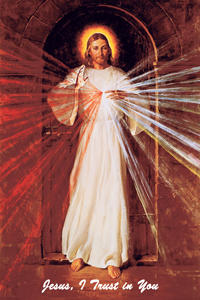
    • Maybe repeat the words given to St. Faustina by Christ to have written under His image: “Jesus I Trust in You.”
    • Or pray the words of the father who brought his son possessed by a mute spirit to Christ (MT 9:22-24) “But if you can do anything, have compassion on us and help us.” Jesus said to him, “‘If you can!’ Everything is possible to one who has faith.” Then the boy’s father cried out, “I do believe, help my unbelief!”
  • Each day be forgiving toward someone in the same way you would like God to be patient and forgiving toward you.
    • Ideas: The person who cuts you off in traffic, the colleague who annoyingly one-ups you, the child who throws a tantrum or acts ungratefully, the spouse who forgets something or acts irritably, the fast food employee who messes up your order…

~ Written by Angela Lambert © 2016

* To receive these weekly posts automatically in your email just click the “follow” tab in the bottom right hand corner and enter your email address.


Excuses, Excuses…Be Brave! Be Determined!

merciful father

June 26th, 2016; 13th Sunday in Ordinary Time

Gospel of Luke 9:51-62

When the days for Jesus’ being taken up were fulfilled, he resolutely determined to journey to Jerusalem, and he sent messengers ahead of him. On the way they entered a Samaritan village
to prepare for his reception there, but they would not welcome him because the destination of his journey was Jerusalem. When the disciples James and John saw this they asked, “Lord, do you want us to call down fire from heaven to consume them?” Jesus turned and rebuked them, and they journeyed to another village. As they were proceeding on their journey someone said to him, “I will follow you wherever you go.” Jesus answered him, “Foxes have dens and birds of the sky have nests, but the Son of Man has nowhere to rest his head.” And to another he said, “Follow me.” But he replied, “Lord, let me go first and bury my father.” But he answered him, “Let the dead bury their dead. But you, go and proclaim the kingdom of God.” And another said, “I will follow you, Lord, but first let me say farewell to my family at home.” To him Jesus said, “No one who sets a hand to the plow and looks to what was left behind is fit for the kingdom of God.”

 Meditation Reflection:

Being a Christian means following Christ, wherever and whenever He goes.  Full discipleship requires 100% commitment, not the made-to-order or pick and choose buffet we are accustomed to in our culture.  Consider Jesus’ own example.  He needed to journey to Jerusalem.  Notice the attitude He chose – resolution and determination.  Followers of Christ need the same resolution and determination.  In fact, St. Teresa of Avila, the great Spanish mystic, emphasized repeatedly the need for determination in order to advance in the spiritual life.

As Jesus journeyed, doing the Father’s will, those He encountered each had an opportunity to join Him.  The Samaritans received messengers from Christ but rejected the Lord before He even arrived when they learned accepting Christ meant surrendering their bitterness toward Jerusalem.

The next person took the initiative to seek Jesus and requested to be in His company.  Jesus, who knows the hearts of each one of us, warned the man that being near to Christ would bring spiritual security and comfort but not necessarily the feeling of physical security and comfort.

The next two men Jesus invited to follow Him, but both requested to do something else first.  Their requests seem valid and even noble.  In fact, burying the dead is a corporal work of mercy and honoring your father and mother is the 4th commandment. Is Jesus asking us to neglect our duties?  Does Christian discipleship excuse neglecting our families?  Does God contradict Himself?  No.  Do we sometimes rationalize our cowardice or weakness by twisting God’s commands against Him?  Yes.  Many of us (including myself!), often excuse our lack of time for prayer by pitting it against the active life of charity.  It sounds something like this: “I don’t have time to sit and pray because I need to do…which God would want me to do.”  A practical example would be, “I could sit and pray (a.k.a. do nothing) or work an extra hour to provide for my family, or do a load of laundry and dishes, or run an errand.  God wants me to care for my family, that is my prayer.”

Sometimes that might be the case.  But, in truth, there’s usually time for both.  In addition, without prayer, even our loving activities can tend to be more self-loving rather than other-loving. Jesus knew the hearts of the two men who wanted to return to their families before following Him.  Rather than contradicting His command that we love one another, especially our families, He may have been calling them out on their rationalizations.  It reminds me of when I gather my kids for family prayer.  My two boys will often try to get out of it by appealing to my earlier request that they get outside for awhile or they were just about to start a chore I had assigned earlier.  In reality, they had time for both those things before and after prayer, it just sounds like a better excuse.

Let’s face it, we have an inner desire for God and we may even have authentic zeal for discipleship, but we also struggle with attachments that hold us back.  The good news, is that if we open ourselves up to Christ in prayer, He will reveal those attachments to us and provide the grace to overcome them.  It requires resolution and determination, but with God all things are possible.

Consider:

  • Like the Samaritans, how many of us hold on to bitterness, anger, or un-forgiveness?  Prayerfully ask Christ to reveal if any of these are holding you back from following Him.  Pray for the grace to surrender it to the Lord.
  • Like the man who proclaimed he would follow Christ wherever He goes, consider why you are a Christian. Is your love for the Lord intermixed with some self-love as well?  Do you complain when you encounter trials?  Are you impatient or upset when you experience discomfort?
  • What rationalizations do you use to delay responding to Christ or to responding more generously? What rationalizations have you overcome on your spiritual journey?   How has that experience strengthened your will to follow the Lord?
  • A favorite book of mine called “The Fire Within” by Fr. Thomas Dubay provides some great steps for identifying and overcoming attachments. Prayerfully read my summary of Fr. Dubay’s steps and see if you can identify one attachment and make a plan for rooting it out.identifying attachments

Make a Resolution (Practical Application):

  • Each day this week thank God for one deterrent He has helped you overcome or from which He has freed you, and invite Him to reveal and free you from a current hindrance you may or may not realize you have.
  • Pray for an increase in resolution and determination. Choose one concrete thing you can do this week to apply it.  (e.g. pray 15 minutes each morning or evening, say something kind to your spouse when you want to say something critical, hug your child when you want to throw your hands up in exasperation, choose a daily Mass to attend and do what it takes to get there, go to Confession…)
  • Using Fr. Dubay’s steps, identify a current attachment and do one thing each day to root it out.

~ Written by Angela Lambert © 2016

* To receive these weekly posts automatically in your email just click the “follow” tab in the bottom right hand corner and enter your email address.

Why is There Suffering, and What is God Doing About It?…Gospel meditation for June 5th, 2016

by Angela Lambert

Jesus raises widow of Nain's son

June 5th, 2016; 10th Sunday in Ordinary Time

Gospel of Luke 7:11-17 NAB

Jesus journeyed to a city called Nain, and his disciples and a large crowd accompanied him. As he drew near to the gate of the city, a man who had died was being carried out, the only son of his mother, and she was a widow. A large crowd from the city was with her. When the Lord saw her, he was moved with pity for her and said to her, “Do not weep.” He stepped forward and touched the coffin; at this the bearers halted, and he said, “Young man, I tell you, arise!” The dead man sat up and began to speak, and Jesus gave him to his mother. Fear seized them all, and they glorified God, crying out “A great prophet has arisen in our midst,” and “God has visited his people.” This report about him spread through the whole of Judea and in all the surrounding region.

 Meditation Reflection:

Why is there evil in the world?  Why doesn’t God do anything about it? Some persons will answer that either God doesn’t exist or God doesn’t care.  Those persons willing to investigate the question further however, universally discover two things: human free will causes most evils and the person who has consistently done the most to alleviate suffering is God.  Utopian ideologies of the 19th and 20th centuries, endeavoring to eradicate evil through human efforts alone, all ended in countless deaths and totalitarian rule. Sin causes evil and only God can save us from ourselves.  Even death, God has revealed, did not originate with faulty genetics or evolution.  Sickness, death, toil, and pain entered the world through the original sin of Adam and Eve (Genesis 3; Romans 8:19-23).

God created human persons to experience Truth, Goodness, and Beauty.  He designed us to live in perfect friendship with Him and with each other in a unity of love and joy for eternity.    We all experience deep suffering at some point(s) in life.   The woman in this Gospel provides an example of both deep spiritual pain from losing her only son after having already lost her husband, as well as utter material destitution since she would have no legal rights to property or work without a husband or son.  Upon seeing this, Jesus is “moved with pity for her.” When we feel most vulnerable, most alone, and our hearts are breaking, we can look to this passage and take comfort in knowing that Christ is looking on us with pity.  Moreover, this pity moves Him to do something to alleviate our pain.  In this case, Jesus restored the man to life.  In doing so, He restored the woman’s life as well.  Although Christ does not always save those we love from earthly death, this miracle demonstrates His power and His love which brings new life in surprising and supernatural ways.  It also points to the hope that all will be made new in the resurrected life in the kingdom of God.

God became man to dwell among us (John 1:14) and to personally alleviate our suffering through His Word, His touch, and His sacrifice.  As the psalmist proclaims: “The LORD is near to the brokenhearted, and saves those who are crushed in spirit” (Ps. 34:18).  Moved with pity, Christ continues to reach directly into our hearts to dry our tears and heal our wounds. He anoints our wounds with grace through His sacraments, He dispels hurtful lies with His divine revelation, He forgives our sins in the sacrament of Confession and fortifies us with grace to overcome them, and He feeds us with His very own body and blood in the Eucharist.  Finally, He unites us as members of His body and extends His hand of mercy through His disciples operating under the direction and love of the Holy Spirit.

Does God care about our suffering?  Is He going to do anything about it?  Yes.  Quite a lot actually, if only you will allow Him.  Christ offers new life if we will accept it.  He offers healing if we turn to Him.  This is the witness of every Christian disciple.

Consider:

  •  Re-read the Gospel and imagine you are one of the persons present.
    • Consider the love of the mother for her only son. Consider her love for her husband as well.  The death of her son means the image of her husband is gone as well as their family together.  In addition, imagine you will now be destitute with no way to provide for yourself.  To your surprise, a man emerges from the crowd and gives your son, your family, your life, back to you.
    • Imagine you are one of the members of the crowd. Why might you be present and how might you be feeling toward the woman?  What would you think of Christ’s miracle?
    • Imagine Christ’s perspective. What does His response reveal about His heart and His character?
  • Consider the definition of pity. Dictionary.com defines it as: “sympathetic or kindly sorrow evoked by the suffering, distress, or misfortune of another, often leading one to give relief or aid or to show mercy.” The heart of Christ felt sorrow at the sight of the woman’s pain and it moved Him to help her.  Imagine Christ seeing you in your pain.  Consider His merciful look of pity which shares your sorrow and desires to bring you comfort.
  • Reflect on a time Christ comforted you or saved you when you were in dire need. Take time to appreciate all that He did and the incredible ways He acted in your life during that time.

Make a Resolution (Practical Application):

  • Begin each day with this prayer: “Lord show me the needs around me.  Move my heart with pity and enable me to show mercy to someone today.”
  • Surrender a pain to Christ to heal. Reach out to Him in His Word, His Sacraments, or His Church.  Spend 5 minutes of silence with Christ and your pain.
  • Make a gratitude list of the mercies Christ has shown you over the years and then each day.


~ Written by Angela Lambert © 2016

* To receive these weekly posts automatically in your email just click the “follow” tab in the bottom right hand corner and enter your email address.


Divine Mercy…Can you believe it?

by Angela Lambert

Divine Mercy

April 3rd, 2016; 2nd Sunday of Easter/ Divine Mercy Sunday

 Gospel John 20:19-31

On the evening of that first day of the week, when the doors were locked, where the disciples were, for fear of the Jews, Jesus came and stood in their midst and said to them, “Peace be with you.” When he had said this, he showed them his hands and his side. The disciples rejoiced when they saw the Lord. Jesus said to them again, “Peace be with you. As the Father has sent me, so I send you.” And when he had said this, he breathed on them and said to them, “Receive the Holy Spirit. Whose sins you forgive are forgiven them, and whose sins you retain are retained.” Thomas, called Didymus, one of the Twelve, was not with them when Jesus came. So the other disciples said to him, “We have seen the Lord.” But he said to them, “Unless I see the mark of the nails in his hands and put my finger into the nail marks and put my hand into his side, I will not believe.”

Now a week later his disciples were again inside and Thomas was with them. Jesus came, although the doors were locked, and stood in their midst and said, “Peace be with you.” Then he said to Thomas, “Put your finger here and see my hands, and bring your hand and put it into my side, and do not be unbelieving, but believe.” Thomas answered and said to him, “My Lord and my God!” Jesus said to him, “Have you come to believe because you have seen me? Blessed are those who have not seen and have believed.” Now Jesus did many other signs in the presence of his disciples that are not written in this book. But these are written that you may come to believe
that Jesus is the Christ, the Son of God, and that through this belief you may have life in his name.

Meditation Reflection:

We spend so much time and money distracting and soothing ourselves from regret for our mistakes and fear of our mortality.  Christ’s victory over sin and death opens the possibilities of a new beginning during this life and life eternal in the next.  The Risen Christ finds the apostles in fear and brings them Peace.  Thomas misses the opportunity for peace however because he refuses to believe his fellow apostles’ unanimous witness.  Despite his own witness of Jesus’ many miracles and the reliability of the disciples’ account, he refuses to receive Christ’s peace without seeing the healed wounds of the Lord for himself.  Christ would have been in His right to refuse such a demand but in His mercy He appears directly to Thomas so that his faith could be strengthened and he could receive the riches Christ had suffered to give to him.

Imagine the joy Jesus must have felt, having earned our salvation through such intense suffering, when He could then bestow upon His apostles the administration of His Kingdom which is none other than the forgiveness of sins.  Every mother knows the relief of holding her newborn in her arms after a long pregnancy and birth.  Jesus must have experienced a similar relief when He enjoyed our new life given through His loving sacrifice.

Pope St. John Paul II declared in 2000 at the canonization of St. Faustina, that today, the Sunday following Easter, be celebrated as Divine Mercy Sunday.  Christ had appeared to St. Faustina, a simple uneducated nun from Poland, in the 1930s and spoke with her about His great desire to bestow His mercy on us.  His message did not add anything new to the Gospel, however He re-emphasized His view to the modern world relaying to her His greatest pain which He identified as souls refusing to trust in His mercy.  In the Diary of St. Faustina, (recorded at the request of her spiritual director), she relays these words of Jesus to her regarding today:

I desire that priests proclaim this great mercy of Mine towards souls of sinners.  Let the sinner not be afraid to approach Me.  The flames of mercy are burning Me – clamoring to be spent; I want to pour them out upon these souls…Distrust on the part of souls is tearing at My insides.  The distrust of a chosen soul causes Me even greater pain; despite My inexhaustible love for them they do not trust Me.  Even My death is not enough for them.”  (par. 50)

Like Thomas, many of us struggle to trust Christ.  We fail to have confidence in Jesus’ ability to change our lives and renew our souls.  Using Pope Francis’ analogy, we treat Confession like a dry cleaner.  We can imagine being showered off but not truly changed.  In doing so we do not emulate humility but rather wastefulness.

Today we reflect on the mercy of Christ and ask that He increase our hope that we might trust in Him.  The devil steals our joy, but Christ came to give us joy to the full.  He not only forgives us, but enables us to live a supernatural life of virtue and peace. On the Feast of Mercy during the Jubilee of Mercy, God exhorts us in every way possible to receive His mercy, to give mercy, and to trust in Him.  Let us pray for the grace to surrender the myth of perfection in exchange for the truth of sanctifying love.

Consider:

  • Reflect on the joy Christ feels when He can shower upon us the mercy He worked so hard to earn for us. Consider the mystery of a mother or father’s love that takes pleasure in sacrificing for their children.
  • Do you struggle with perfectionism? Do you struggle to accept Christ’s help because you feel unworthy of His love if you make mistakes or fall to sins?  Do you feel you need to be holy all on your own?
    • Pelagianism, a heresy in the early Church, asserted that Christ came to set a good example for us but we have to live up to that example by our own efforts alone. The Church declared that the human will alone could not perfect itself but rather required supernatural grace.  Do you try to perfect yourself to feel worthy of Christ’s love, or do you accept your worthiness of His love and so the possibility of being made perfect by Him?
  • How much do you need to see to believe? What evidence has Christ given you already that you ignore?  What witness could you give to others about the reality of His presence?
  • Consider a time when you experienced the peace of Christ.

Make a Resolution (Practical Application):

  • Do one act of mercy for someone each day this week.
  • Do one act of mercy toward yourself each day this week.
  • Thank Christ each day for His gift of mercy. Make a gratitude list east day of His blessings.
  • Learn about St. Faustina and the Divine Mercy Chaplet, Image, and Feast Day.
  • Say the short prayer, “Jesus I Trust in You”, throughout the day.


~ Written by Angela Lambert © 2016

* To receive these weekly posts automatically in your email just click the “follow” tab in the bottom right hand corner and enter your email address.