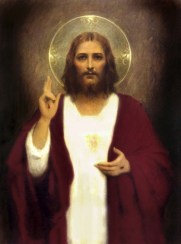
Finding Peace Amidst Division…Reaching out to Christ

by Angela (Lambert) Jendro

August 19th, 2017; 20th Sunday in Ordinary Time

Gospel of Matthew 15:21-28 NAB

At that time, Jesus withdrew to the region of Tyre and Sidon. And behold, a Canaanite woman of that district came and called out, “Have pity on me, Lord, Son of David! My daughter is tormented by a demon.” But Jesus did not say a word in answer to her. Jesus’ disciples came and asked him, “Send her away, for she keeps calling out after us.” He said in reply, “I was sent only to the lost sheep of the house of Israel.” But the woman came and did Jesus homage, saying, “Lord, help me.” He said in reply, “It is not right to take the food of the children and throw it to the dogs.” She said, “Please, Lord, for even the dogs eat the scraps that fall from the table of their masters.” Then Jesus said to her in reply, “O woman, great is your faith! Let it be done for you as you wish.” And the woman’s daughter was healed from that hour.

Meditation Reflection:

The evil of division, prejudice, and animosity between peoples entered the world with original sin.  When Adam and Eve introduced a rift between themselves and God, a rift began between the two of them as well.  It soon spread to their children Cain and Abel.  At the Tower of Babel the rift became complete with the separation of languages.

Some rifts begin with legitimate reasons.  A person, family, or community, treats another unjustly and fails to make amends.  The victim(s) retaliate to achieve justice for themselves or they separate themselves from the dangerous, unrepentant threat.

Other rifts arise from illegitimate reasons.  Prejudice based on sex, race, nationality, disability, religion, or even political positions can cause rifts and violence such as we have seen in the recent news.  Whether motivated by envy, greed, or lust for power, the perpetrators have two things in common – they blame someone or some group for their problems and do not value the dignity of every human life.

ISIS’ lust for power at the cost of genocidal murder, human trafficking, abuse of women, and indiscriminate terrorist attacks illustrates the evil of this sin at its worst.  They de-humanize groups of people in order to assert their own greedy, and lustful agenda.

In our own country, the bastion for human rights and equality, we too have struggled to maintain our value for all human life.  Abortion has been legal for over forty years, marginalizing all persons in the womb.  The child will be protected if he or she is wanted, but eliminated if blame can put on the child for any reason, even simple inconvenience.  Moreover, the pressure to abort children who may have disabilities dangerously erodes the protection of any person with a disability.  The definition of “life support” has become a topic of debate, not just about breathing tubes but even food and water.  In the last election, the problem of violent and visceral division between people of differing political views, as well as the ongoing division caused by sexism, surfaced for the world to see.  Lastly, the evil of racism reared its ugly head in Charlottesville, Virginia with messages of white supremacy and even deadly violence.

In today’s Gospel Jesus ignored the Canaanite woman in a seemingly cold manner.  On the surface it seems prejudiced or at the least nationalistic.  The Jews and Canaanites had been at odds for centuries.  She cries to him for help and He says nothing!  He only speaks to her when the apostles beg Him to quiet her down, not for any reason of compassion, but because her persistence had grown annoying.  Why would Jesus, who should be above such ethnic and religious animosity, have done this?

Jesus reveals that peace and reconciliation requires repentance and mercy by contrasting the hypocritical faith of some Pharisees, with the repentant faith of the Canaanite woman. The Jews had been entrusted with the supreme gift of God’s divine Revelation.  They had the burden and privilege of protecting this gift that they might be a light to rest of the world.  In consequence, they had the privilege of receiving the Messiah as children of God, but they also had greater fault whenever they rejected God.  In the passage just prior to this one, Jesus rebukes some Pharisees for their hypocritical practice of denying support for their parents by donating the money to the Temple.  Their false charity was exposed as actual injustice and a failure to follow the fourth commandment.  Jesus goes on to explain that what makes a person defiled is what comes from their heart, not what goes in to their mouth.  Thus, religious practices without heartfelt faith do not aid a person.

In contrast, Jesus’ very next encounter is with the Canaanite woman.  Whereas she does not belong to the heritage of the Jews, she demonstrates the heartfelt faith that Jesus describes.  God had instructed the Jews to remain separate from the Canaanites so as to protect them from being influenced by their evil practices.  In Deuteronomy 20:15-18 God warns them to destroy the Canaanites “that they may not teach you to do according to all their abominable practices which they have done in the service of their gods, and so to sin against the Lord your God.”  The Canaanite woman in this passage, acknowledged the pitifulness of her dignity which had been degraded by the immoral acts of her people and likely herself.  Nevertheless, her good heart recognized the Savior and pleaded in faith for His mercy.  In humility, and absolute trust in Him, she laid before Him her need.  She persisted despite being ignored, confident His compassion would win out.  When He compared her people to dogs she agreed with Him.  She acknowledged the truth of their sins. Sin not only offends God, but it degrades the sinner.    Nevertheless, she persisted that His mercy had the power to conquer the evil which plagued her daughter and the suffering that plagued her.

Jesus responds to the authenticity of her heart, exclaiming “O woman, great is your faith!”  Her honesty, repentance, and humility opened the door for Christ to shower His mercy upon her and usher in peace and reconciliation.

Sins of division and prejudice need healing.  God’s divine laws provide the structure for justice needed for peace.  Because of sin however, we can twist those laws to rationalize our sin.  Thus, conversion of heart is needed in addition to the conversion of actions.  This requires the saving grace of Christ.

“Called to beatitude but wounded by sin, man stands in need of salvation from God. Divine help comes to him in Christ through the law that guides him and the grace that sustains him” Catechism of the Catholic Church par. 1949

Christ came to restore the unity of the human family, making us sons and daughters of God by adoption through grace.  The Pharisees and the Canaanite woman illustrate our part in His work.  We must acknowledge our sin (MUCH easier said than done!), realize our need for Christ, and ask for His mercy.  Thankfully, He assures us His answer will always be yes.

Our country and our world need prayer more than ever.  This week, let us pray for reconciliation within broken relationships in our own lives and work toward peace within our families and communities, that God might bring reconciliation between peoples opposed to one another throughout the world.   May we all recognize the inherent dignity of every human person, called by God to live eternally as His son or daughter.

Consider:

  • Who do you find easy to value?  Who is it easy to love and why?
  • Who do you struggle to appreciate?  Who is most difficult to see as a child of God? Have you experienced or seen prejudice firsthand?
  • Consider how sin degrades a person, similar to the way sickness deteriorates a body.
  • How does healing and grace resemble medicinal healing?  Does it sometimes require distasteful medicine, or even amputation?
  • Consider why we must acknowledge sin and the need for help to begin healing.  Have you ever known someone who refused to acknowledge they were sick, even though it was apparent to their loved ones?  Or, knowing they were sick, refused to see a doctor?
  • Imagine yourself as the woman crying out to Jesus.  You know you have no right for Him to listen to you because you have rejected God for so many years.  Would you be tempted to say nothing out of fear of rejection?  Consider the courage it takes for you beg Him for mercy.  Imagine His eyes and His voice as He says to you with undeserved graciousness: “O woman, great is your faith! Let it be done for you as you wish.”

Make a Resolution (Practical Application):

  • Pray for, and work toward, peace with someone.  It could be by cultivating more peace in your encounters with your spouse and kids, apologizing and making amends with someone you have hurt or been unjust toward, removing slander or critical personal attacks from your social media and replacing them with positive acknowledgments, removing yourself from contentious and prejudiced conversations among coworkers or neighbors, or making peace with God by going to the Sacrament of Confession.

Related Posts:

Finding Fulfillment in Self-Gift

Getting the Last Word…but Making it a Blessing

How Can God be Both Justice and Mercy?

~ Written by Angela Jendro © 2017

* To receive these weekly posts automatically in your email just click the “follow” tab in the bottom right hand corner and enter your email address.


Preparing the Soil…Spiritual Receptivity

by Angela Lambert

July 16th, 2017; 15th Sunday Ordinary Time

Gospel of Matthew 13:1-23

On that day, Jesus went out of the house and sat down by the sea. Such large crowds gathered around him that he got into a boat and sat down, and the whole crowd stood along the shore. And he spoke to them at length in parables, saying:

 “A sower went out to sow. And as he sowed, some seed fell on the path, and birds came and ate it up. Some fell on rocky ground, where it had little soil. It sprang up at once because the soil was not deep, and when the sun rose it was scorched, and it withered for lack of roots. Some seed fell among thorns, and the thorns grew up and choked it. But some seed fell on rich soil, and produced fruit, a hundred or sixty or thirtyfold. Whoever has ears ought to hear.”

The disciples approached him and said, “Why do you speak to them in parables?” He said to them in reply, “Because knowledge of the mysteries of the kingdom of heaven has been granted to you, but to them it has not been granted. To anyone who has, more will be given and he will grow rich; from anyone who has not, even what he has will be taken away. This is why I speak to them in parables, because they look but do not see and hear but do not listen or understand. Isaiah’s prophecy is fulfilled in them, which says: You shall indeed hear but not understand, you shall indeed look but never see. Gross is the heart of this people, they will hardly hear with their ears, they have closed their eyes, lest they see with their eyes and hear with their ears and understand with their hearts and be converted, and I heal them. “But blessed are your eyes, because they see, and your ears, because they hear. Amen, I say to you, many prophets and righteous people longed to see what you see but did not see it, and to hear what you hear but did not hear it. “

Hear then the parable of the sower. The seed sown on the path is the one who hears the word of the kingdom without understanding it, and the evil one comes and steals away what was sown in his heart. The seed sown on rocky ground is the one who hears the word and receives it at once with joy. But he has no root and lasts only for a time. When some tribulation or persecution comes because of the word, he immediately falls away. The seed sown among thorns is the one who hears the word, but then worldly anxiety and the lure of riches choke the word and it bears no fruit. But the seed sown on rich soil is the one who hears the word and understands it, who indeed bears fruit and yields a hundred or sixty or thirtyfold.”

Meditation Reflection:

St. Paul tells us that “Jesus is the same yesterday, and today, and forever” (Hebrews 13:8).  So why does the Word of Christ set some people’s hearts on fire while others pass it by with apathy or disdain?  Does Jesus play favorites with who He invites to understand His message and who He lets go?  How does He choose to whom “knowledge of the mysteries of heaven is granted”?

Jesus’ answers in a surprising way – He is the sower who offers Himself to everyone; whether it takes root depends on us. We are responsible for the extent to which we receive His Word.

It reminds me of my kids’ proverbial complaint that I’m not fair.  Each one is certain that they have more chores than the others, and that they receive less than the others.  I remind them that it only appears that way because they see their work but don’t see the work their siblings do.  Either, because sometimes it occurs when they are not around, or because they just refuse to acknowledge it.  Similarly, the appearance of others receiving more stems from ingratitude and envy rather than a material difference.  It’s easy to fall into the same trap spiritually as God’s children.  God treats us all fairly, it’s our perception that tends to need adjustment.

Jesus’ parable illustrates the affect that attitude has on our faith.  For God’s Word to be sown in our hearts and transformative, we must be receptive.  Receptivity requires an attitude of gratitude, humility, and love. Resistance undermines the work God can do within us, and the fruit it can bear in our lives.

The seed that falls on the path has no effect because it’s met with apathy or hostility.  Consider the things that deaden our hearts or fuel them with anger towards God.  Certainly secular culture, infused with hedonistic consumerism, dulls our desire for God by distracting us with instant gratifications and claiming that God is irrelevant to society.  When things go wrong or we suffer however, our faith in God’s existence suddenly appears but only to blame Him.  Anger and apathy make relationship impossible with anyone.  Relationships require investment, interest, and openness.  Much like the futility of reasoning with someone who’s already discounted you, if we don’t care about God except to shake our fist at Him, nothing He says or does will be convincing.

The rocky soil illustrates faith rooted only in sentimentality and emotions.  It resembles the infatuation stage of a relationship.  During that time, the couple is enamored with one another and experience strong feelings that say their love will last forever.  Those feelings however, do not, as C.S. Lewis puts it, deliver on their promises.  Feelings, by nature, come and go.  Lasting love is a decision not an emotion.  The infatuation stage in our relationship with God may include powerful feelings of love for the Lord and the desire for holiness.   When a person encounters suffering or confusion, that love will either wither from shallowness, or go deeper to root down further in the soil.   Fair weather friends make for rocky relationships, and the same goes for our relationship with God.

For those who make it past luke-warmness, and deeper than mere emotions, thorns still threaten to choke out faith with worldly anxiety and desires.  To live in the world but not of the world, is no easy task.  Worry about our comfort, security, and what others think about us can quickly turn our gaze from God back to earth, crowding out room for His grace. We sit down to pray but our phone buzzes with a notification.  Worry or desire pulls us away from Scripture and back into our technology.  Social events fill up the calendar and we think we are too busy to go to Church.  We might tell ourselves that we just have to prioritize these worldly things for a time, and then we will be able to relax and give God our whole selves.  It tends to only be a trick we play on ourselves, like the carrot at the end of the stick – the donkey keeps walking but the carrot keeps moving at the same time he does.

A person who has found Christ, realizes that in Him they have everything.  A humble heart, open to the Lord, fills with gratitude as it receives grace upon grace.  Apathy turns to zeal, sentimentality to conviction, and the constant grasping after the next thing is replaced with spiritual fulfillment and peace.  In this rich soil, the soul begins to bear fruits of faith, hope, and love, along with joy, peace, patience, kindness, goodness, faithfulness, gentleness, and self-control (see Galatians 5:22-23).

When we find ourselves saying, “Why doesn’t God speak to me?  I pray but don’t hear anything?,” or “I just don’t feel like praying or going to Church, I don’t get anything out of it,” or “My life always feels so out of control no matter what I do, why can’t I ever just find peace?”; we can take a step back and evaluate the soil in our souls.  The Word of God has come to us in the flesh and remains with us, what can we do to better receive Him?  Begin with asking for His help.

Consider:

  • When do you struggle with feelings of not caring about God or your faith?  What or who fuels that hardening of heart, and what/who softens your heart toward God?
  • Despite my love for flowers and home-grown vegetables, I’m a terrible gardener because I’m not attentive enough about keeping things watered or clearing away weeds.  How can you be more attentive to the garden of your soul?  What does it need to be watered, and what weeds need clearing away?
  • Pray about how deeply your faith is rooted.  Is it guided primarily by emotions or by principle?  Consider how your relationship with God is similar to, or different than, your relationships with others.
  • Ask the Holy Spirit to reveal the thorns in your spiritual life.  Prayerfully consider what competes with your prayer time, Mass, your generosity with the Lord, or your openness to His teachings.  Ask for Christ to remove the thorns and replace them with greater love.
  • Mary exemplifies perfect receptivity to the Lord, rooted in deep love and enduring the hardest tribulations.  Ask for her intercession to soften your heart and to “open your eyes to see and your ears to hear” as she did.

Make a Resolution (Practical Application):

Work on preparing the soil for Christ:

  • If you need more gratitude: each night list 10 things you are thankful for from the day.
  • If you need more humility and detachment: Pray the Humility Prayer each day.
  • If you need more openness:  Read Scripture for 5 minutes each day.  It could be the daily readings (which can be found at http://usccb.org), a devotional, or simply opening up one of the Gospels (Matthew, Mark, Luke, or John).

Related Posts:

~ Written by Angela Lambert © 2017

* To receive these weekly posts automatically in your email just click the “follow” tab in the bottom right hand corner and enter your email address.


Putting your sweat and blood into it…

by Angela Lambert

June 18th,2017;  Solemnity of the Body and Blood of Christ

 Gospel of John 6:51-58

Jesus said to the Jewish crowds: “I am the living bread that came down from heaven; whoever eats this bread will live forever; and the bread that I will give is my flesh for the life of the world.” The Jews quarreled among themselves, saying, “How can this man give us his flesh to eat?” Jesus said to them, “Amen, amen, I say to you, unless you eat the flesh of the Son of Man and drink his blood, you do not have life within you. Whoever eats my flesh and drinks my blood has eternal life, and I will raise him on the last day. For my flesh is true food, and my blood is true drink. Whoever eats my flesh and drinks my blood remains in me and I in him. Just as the living Father sent me and I have life because of the Father, so also the one who feeds on me will have life because of me. This is the bread that came down from heaven. Unlike your ancestors who ate and still died, whoever eats this bread will live forever.”

Meditation Reflection:

Today we celebrate Christ’s gift of His Body and Blood.  Consider the meaning of giving our body to another.  Husband and wife express the intimacy and totality of their love in physical unity.  Every new life enters the world through the sacrificial gift of a mother, who offers her body and blood to her child.  Fathers invest their sweat and blood in their children as well in the myriad of ways they meet their children’s needs. How many dads have went to bed after a day of working to provide for their family, playing with their kids, building out part of the house to make room for more kids, or helping to finish their adult child’s basement saying, “my whole body hurts.”  Even friendship is demonstrated in physical sacrifice.  If you’ve ever called on friends to help you move, or been the friend who said yes to that call, you know what I mean!

The Son of God became man, in every way.  He invested His mind and heart, and His body and blood.  He desires nearness to us in the most intimate of ways.  Jesus spent thirty-three years living humbly, and bringing tangible, immanent love to those He encountered.  His sacrificial suffering and death of the Cross atoned for our sins, giving us new life as children of God for eternity.

Jesus instituted the Sacrament of the Eucharist for two reasons.  He established it as memorial so that His sacrifice on the Cross would be made present again every time the Mass is celebrated so that we might be nourished by its graces.  Secondly, because He wants to be as near to us as possible.  When we receive the Eucharist at Communion, Jesus offers Himself in the most intimate and loving way, like that of a husband and wife.  Through His Eucharistic presence, He continues to be with us in a tangible way.  Human beings need physical closeness, especially when we need comfort in sorrow or in expressions of love.  Jesus Christ is, and will forever continue to be, both God and man.  It’s easy to take His presence in the Eucharist for granted, especially when it requires the eyes and heart of faith.  Today we take time to reflect as a Church on the beautiful, and mysterious gift, to cherish our Lord, and to deepen our appreciation for the sweat and blood He puts into His love.

Consider:

  • Consider the many ways we express love physically.  Why is physical love so important?  How does it create intimacy in relationships?
  • Reflect on Christ’s physical expressions of love – during His hidden life, His public ministry, His sacrifice on the Cross, and His Eucharistic presence today.
  • This year the Solemnity of Christ’s Body and Blood falls on the same Sunday as Father’s day.  Consider the ways in which dad’s offer their bodies and blood for their families.

Make a Resolution (Practical Application):

  • Visit Christ at Church this week.  Spend time in prayer near the tabernacle, or at Eucharistic Adoration.
  • Make a physical sacrifice of love for someone this week, in appreciation of Christ’s physical sacrifice.


~ Written by Angela Lambert © 2017

* To receive these weekly posts automatically in your email just click the “follow” tab in the bottom right hand corner and enter your email address.


Real Super-Powers…Meditation on Pentecost

by Angela Lambert

June 4th, 2017 Pentecost

 (First Reading) Acts of the Apostles 2:1-11

When the time for Pentecost was fulfilled, they were all in one place together. And suddenly there came from the sky a noise like a strong driving wind, and it filled the entire house in which they were. Then there appeared to them tongues as of fire, which parted and came to rest on each one of them. And they were all filled with the Holy Spirit and began to speak in different tongues, as the Spirit enabled them to proclaim. Now there were devout Jews from every nation under heaven staying in Jerusalem. At this sound, they gathered in a large crowd, but they were confused because each one heard them speaking in his own language. They were astounded, and in amazement they asked, “Are not all these people who are speaking Galileans? Then how does each of us hear them in his native language? We are Parthians, Medes, and Elamites, inhabitants of Mesopotamia, Judea and Cappadocia, Pontus and Asia, Phrygia and Pamphylia, Egypt and the districts of Libya near Cyrene, as well as travelers from Rome, both Jews and converts to Judaism, Cretans and Arabs, yet we hear them speaking in our own tongues of the mighty acts of God.”

Meditation Reflection:

Not only is God’s kingdom surprising in nature, He empowers us to do surprising things.  Just when we think we have God figured out, that we have the rituals down and expectations met and relax into comfortable religion, He surprises us again.  Jesus’ requests can seem boring at times – Jesus had told the apostles not to depart from Jerusalem, but to wait for the gift of the Holy Spirit (Acts 1:4-5).  They waited 10 days, from the time Jesus ascended into heaven, before the Holy Spirit came.  Imagine if they had given up, gotten antsy, decided to re-interpret what Jesus said, or do things their own way.  Instead, they faithfully waited together, spending their time in prayer.

Their trust in Christ’s word produced great fruit.  They received the gift of the Holy Spirit and unexpected abilities.  They could speak in different languages despite never having learned them.  Peter, a fisherman, could understand Scripture at new depths and articulate the connection between the events of Christ’s life with the Old Testament prophecies.  In the Name of Jesus, the apostles healed many people, and by the authority given to them by Christ, began baptizing and forgiving sins.  On Pentecost day alone, about 3,000 people were baptized.  Christ’s kingdom had finally come and all who believed received freedom in the Spirit.

The Holy Spirit continues to be operative in the Church and in the souls of every baptized individual.  It’s easy to theorize about the Holy Spirit without realizing just how immanent and active He is.  If we open ourselves up to Him, we may be surprised at just how much He empowers us.  To make a modern analogy, consider our cultural love for super-heroes.  Most of them are humans with an added power which enables them to do super-natural things.   While super hero stories make for great entertainment (and t-shirts), the super powers of the Holy Spirit are real.  Real people have been given the power to turn away from addictions and sins to live in the freedom of Christian virtue.  Real people have forgiven hated enemies and found reconciliation.  People paralyzed by anxiety and fear have found peace.  People in sorrow or depression have found comfort and joy.

The lives of the saints evidence the super-heroic power of the Holy Spirit in generous souls.  Some have endured torture and martyrdom with boldness, singing hymns of praise as they were killed.  Others have plumbed great depths of Scripture and Theology.  Still others have been given the mystical gift of the stigmata, suffering with the wounds of Christ.

Recent saints such as Pope St. John Paul II, St. Mother Teresa of Calcutta, St. Gianna Molla, and St. Padre Pio show the myriad of ways the Holy Spirit works in persons of faith in every vocation and state in life.  Each of them needed super-natural fortitude to persevere through the trials they encountered.  Each needed infused faith to stay close to God when all seemed lost.  Each brought healing, mercy, and super-natural love to those God had placed in their lives.  And each was enabled by the Spirit to sacrifice their lives in a heroic way out of Christian love.  Every saint testifies that the heroic things they do come from the Holy Spirit.  They too marvel at the miracles wrought through them, because they know more than anyone their own limitations.

Although these examples seem extraordinary, the Church teaches that the Holy Spirit makes sainthood possible for each of us if we allow Him.  The Gifts and Fruits of the Holy Spirit transform us and allow us to live as sons and daughters of God.  The only thing holding us back, is resistance by our own self-will.  The more we surrender to the Holy Spirit the more operative He can be within us.  When I neglect prayer, even for industrious reasons, I see my natural self and how easily I become frustrated, impatient, selfish, anxious, unfocused, or short-tempered.  On the other hand, when I make time for prayer a priority, my whole day I experience fruits of the Spirit that make me the best version of myself, or you could say the “super-natural” version of myself.  When tempted to skip prayer “to get more done”, I ask myself, “What do my kids, students, family, and friends need more from me – peacefulness or a longer checklist”?  Paradoxically, when I make time for prayer, more actually gets done as well, or at least the most important things.

We are saved by the merits of Christ’s sacrifice on the Cross, but we are sanctified (which means to be made holy) through the Holy Spirit.  Christ sent the Spirit on Pentecost to continue His work of Redemption.  We are forgiven in Baptism, and we are transformed over the course of our lives more and more through the working of the Spirit within us.  Jesus proclaimed that His kingdom was not of this world, meaning it exceeds the natural.  With the gift of the Holy Spirit, He has enabled us to live in the freedom and truth of His kingdom – to live super-naturally.  Maybe we all love super-hero stories, because we sense in our hearts that we are all called to be super-heroes too.

Consider:

  • Our culture tries to compartmentalize faith to something reserved for Sundays, or reduce it to a natural level like a social club or charitable works.  Consider to what extent you are affected by this tendency.   Do you compartmentalize your faith or reduce it to a natural level?
  • Consider the living, real, Person of the Holy Spirit.  Reflect on the incredible gift of baptism that He dwells within your very soul.
  • When have you experienced the Gifts of the Holy Spirit in your soul?
    • Gifts of the Holy Spirit enable us to fight for our faith and follow Christ’s command to love as He did (which goes above and beyond natural love – thus requires super-natural help).
    • The 7 gifts of the Holy Spirit are: Wisdom, Understanding, Knowledge, Counsel, Fortitude, Piety, Fear of the Lord.
  • When have you seen the Fruits of the Holy Spirit in your life?
  • Jesus said that you can tell a tree by its fruits.  Similarly, when we are docile to the Holy Spirit and unite ourselves to Him through prayer, He bears fruits in us.
  • The Fruits of the Spirit can be found in Galatians 5:22-23: love, joy, peace, patience, kindness, generosity, faithfulness, gentleness, and self-control.
  • Simply by adding a few minutes of prayer each day, you could grow in each of these fruits.  Imagine if you added 10 minutes of prayer or more!  Imagine if you sprinkled a couple of minutes of prayer throughout your day, inviting the Spirit to bear fruit in you.

Make a Resolution (Practical Application):

  • Reflect on one Gift or Fruit of the Holy Spirit a day.  Pray for an increase in it and greater awareness of the Holy Spirit working in your soul.
  • Pray the Prayer to the Holy Spirit each day:
Come, Holy Spirit, fill the hearts of your faithful. And kindle in them the fire of your love. Send forth your Spirit and they shall be created. And you will renew the face of the earth. Lord, by the light of the Holy Spirit you have taught the hearts of your faithful. In the same Spirit help us to relish what is right and always rejoice in your consolation. We ask this through Christ our Lord. Amen.

Related Posts:

Holy Spirit Help Me!

The Most Marvelous Mystery! Gospel Meditation for the Solemnity of the Most Holy Trinity

Love and Mercy in Superabundance


~ Written by Angela Lambert © 2017

* To receive these weekly posts automatically in your email just click the “follow” tab in the bottom right hand corner and enter your email address.


Finding True Love

by Angela Lambert

May 21st, 2017; 6th Sunday Easter

Gospel of John 14:15-21

Jesus said to his disciples: “If you love me, you will keep my commandments. And I will ask the Father, and he will give you another Advocate to be with you always, the Spirit of truth, whom the world cannot accept, because it neither sees nor knows him. But you know him, because he remains with you, and will be in you. I will not leave you orphans; I will come to you. In a little while the world will no longer see me, but you will see me, because I live and you will live. On that day you will realize that I am in my Father and you are in me and I in you. Whoever has my commandments and observes them is the one who loves me. And whoever loves me will be loved by my Father, and I will love him and reveal myself to him.”

Meditation Reflection:

Every human person yearns for love, intimacy, and understanding.  We may not need to be loved or understood by everyone, but we desire that connection with at least one person and preferably a whole community.  Without it, we suffer an oppressive loneliness leading to depression, anxiety, and confusion.

Given the rapid advances in communication, it would seem we should feel more connected than ever and therefore happier than ever.  Yet, consider the high rate of depression and suicide in our culture, despite the unprecedented wealth and physical well-being compared to any other time in history.  So, if we are relatively wealthy, healthy, and connected, why aren’t we happy?

Jesus reveals the answer in today’s Gospel passage.  The world offers superficial connection, defining love as self-gratification rather than self-gift. Self-centered love uses others to make oneself feel good or to advance one toward a personal goal.  It might demonstrate a modicum of virtue, but only insofar as it provides personal reward.  Intimate married love has been replaced with casual sex and pornography.  Intimate family love through the gift of children has been replaced with pets (not that pets are bad, just that they are not kids).  Intimacy of friendship or shared work carry some comradery, but disillusionment ensues when they are quickly exchanged for a personal advancement.  All of these experiences leave people feeling used and alone, rather than loved.

Pope Francis sheds light on our pain by identifying the source of our wounds.  He connects our pain with our disconnect from Truth and the experience of mercy.  In his book, The Name of God is Mercy, he writes,

“…humanity is wounded, deeply wounded.  Either it does not know how to cure its wounds or it believes that it’s not possible to cure them.  And it’s not just a question of social ills or people wounded by poverty, social exclusion, or one of the many slaveries of the third millennium.  Relativism wounds people too:  all things seem equal, all things appear the same…  Pius XII, more than half a century ago, said that the tragedy of our age was that it had lost its sense of sin, the awareness of sin.  Today we add further to the tragedy by considering our illness, our sins, to be incurable, things that cannot be healed or forgiven.  We lack the actual concrete experience of mercy. The fragility of our era is this, too:  we don’t believe that there is a chance for redemption; for a hand to raise you up; for an embrace to save you, forgive you, pick you up, flood you with infinite, patient, indulgent love; to put you back on your feet.  We need mercy.”

Pope Francis calls relativism a wound because it disables our ability to determine right from wrong and truth from error.  Christ forbids us from judging other people because only He knows what is in their hearts.  However, we must be able to make moral judgements about actions and choices.  It’s just as important to know the dangers of sin to the spiritual life, as it is to know the dangers of gravity when leaping from high places.   I tell my boys all the time, especially in the summer when they are careening down the hill on their bikes or scooters, “Force = Mass times Acceleration –  think about how fast you are going, because you could get hurt badly!”  The same truth becomes even more important as they get older.  Now that my oldest has his driving permit and is nearing his license, I try to curb the teenage boy’s “need for speed” with the same physics lesson.  I’m not being judgmental, I’m being loving by teaching him the truth.  The same applies to the spiritual life.  Sin wounds, hurts, and can even kill.  The Truth of Christ is a saving gift.

In today’s Gospel Jesus teaches that Truth, Goodness, and Love are inseparable.  Without truth and without virtue, we will miss out on love.  Jesus said that He is the Truth (Jn 14:6), and those who love Him follow His commands.  God is a relationship of three distinct Persons in one divine nature.  The three Persons of the Trinity share a unity that exceeds our understanding, but Jesus unveiled a glimpse of its experience.  He speaks on numerous occasions of the unity of He and the Father. That unity comes from a relationship of love and obedience through an eternal self-gift.  The Holy Spirit is described as the Love between the Father and the Son. For us to share in the intimate relationship of the Trinity, we must share in God’s love through the gift of the Holy Spirit.

When we place our faith in Christ, He sends the Holy Spirit that we may live by His Truth, following His commands, and thereby grow in intimate love.  Jesus told the apostles,

I give you a new commandment: love one another. As I have loved you, so you also should love one another. This is how all will know that you are my disciples, if you have love for one another.” (John 13:34-35)

Christians must not only love, but love like Christ – sacrificial, unconditional, and merciful.  Merciful love means speaking the Truth instead of enabling someone in their self-deception or rationalization.  It means never helping someone sin, but always helping them when they try to leave their sin.

To love in this way, we need supernatural grace which flows from the indwelling of the Holy Spirit.  St. Cyril of Alexandria, a bishop and Doctor of the Church, describes the Spirit’s transformative power in a beautiful way in a commentary he wrote on the Gospel of John:

 “After Christ had completed his mission on earth, it still remained necessary for us to become sharers in the divine nature of the Word. We had to give up our own life and be so transformed that we would begin to live an entirely new kind of life that would be pleasing to God. This was something we could do only by sharing in the Holy Spirit…

Only by his own presence within us in this way could he give us confidence to cry out, Abba, Father, make it easy for us to grow in holiness and, through our possession of the all-powerful Spirit, fortify us invincibly against the wiles of the devil and the assaults of men.

 It can easily be shown from examples both in the Old Testament and the New that the Spirit changes those in whom he comes to dwell; he so transforms them that they begin to live a completely new kind of life…

Does this not show that the Spirit changes those in whom he comes to dwell and alters the whole pattern of their lives? With the Spirit within them it is quite natural for people who had been absorbed by the things of this world to become entirely other-worldly in outlook, and for cowards to become men of great courage.”

The Holy Spirit infuses us with Divine Love which bears fruit in our lives.  This love is so exceptional, that Jesus tells His disciples it will be evident to the world that they are His followers.  The fruit of worldly love is loneliness, anxiety, and depression.  The fruit of Christian love is intimacy with God and His followers, peace, and joy.  Worldly wisdom wounds, but Christian wisdom heals.  The great paradox of happiness, which Pope St. John Paul II re-iterated time and again, is that self-fulfillment can only be found in self-gift.  Christians experience the intimacy of friendship in their shared vision of the Truth, the intimacy of true love in living their vocational call to sacramental married love, Holy Orders, vows of religious life, or the single vocation, and above all – the deepest, most intimate, abiding love of our Trinitarian God dwelling in our soul as His very own Temple.    Happiness is loving and being loved, Truly.

Consider:

  •  Consider the relationship between Truth and Love.  Why is honesty necessary for relationship?  How does honesty deepen intimacy?
  • Have you ever had to make a decision that required you to choose between worldly wisdom and Christian wisdom?  Which did you follow and why?  What were the results?
  • Consider the power of the Holy Spirit to transform us.  Have you experienced spiritual healing, transformation, or love through the Holy Spirit?  Have you witnessed it at work in another person?

Make a Resolution (Practical Application):

  •  Grow in your relationship with Christ who is the Truth, by studying Scripture or studying the faith.  Read a spiritual book, join a bible study, listen to Christian talk radio or podcasts, or visit with someone advanced in the faith who can teach you.
  • Invite the Holy Spirit to bear more fruits of love within you by connecting with Him in prayer and/or the sacraments.  Add just 5-10 minutes of prayer to your day (or if possible, I highly recommend adding a daily Mass), and note the change in your reactions to others and to situations, or to the level of peace you feel amidst whatever is happening around you.

Related Posts:

~ Written by Angela Lambert © 2017

* To receive these weekly posts automatically in your email just click the “follow” tab in the bottom right hand corner and enter your email address.


We All Need a Loving Gate-Keeper and Filter…Christ the Good Shepherd

by Angela Lambert

May 7th, 2017 4th Sunday of Easter


Gospel of John 10:1-19

Jesus said: “Amen, amen, I say to you, whoever does not enter a sheepfold through the gate but climbs over elsewhere is a thief and a robber. But whoever enters through the gate is the shepherd of the sheep. The gatekeeper opens it for him, and the sheep hear his voice, as the shepherd calls his own sheep by name and leads them out. When he has driven out all his own, he walks ahead of them, and the sheep follow him, because they recognize his voice. But they will not follow a stranger; they will run away from him, because they do not recognize the voice of strangers.” Although Jesus used this figure of speech, the Pharisees did not realize what he was trying to tell them. So Jesus said again, “Amen, amen, I say to you, I am the gate for the sheep. All who came before me are thieves and robbers, but the sheep did not listen to them. I am the gate. Whoever enters through me will be saved, and will come in and go out and find pasture. A thief comes only to steal and slaughter and destroy; I came so that they might have life and have it more abundantly.”

Meditation Reflection:

Quite often as a mom, I feel like a gate-keeper.  Before my kids go somewhere I need to know with whom, who the parents are, and approve.  Technology plagues me even more, with parent controls, ratings evaluations, and restrictions. The ever-multiplying accounts, passwords, devices, programs, and updates can feel like an interminable game of whack-a-mole.  Christmas and birthdays used to be fun, now they feel like a migraine-inducing tidal wave of gate-keeping duties, with impatient children complaining as I set the perimeter that I am being too slow, and of course, too controlling.  I’ve at least developed a one-line response to save my overtaxed brain from responding to the myriad of “logical” arguments and pleas of trust from my young teens. “It’s as simple as this,” I say, “You will not have unfiltered access to the internet.”  The Church could consider adding that as the 11th Commandment for the modern era.

Let’s face it, even adults, as children of God, need filters.   We too can be easily allured by promises of pleasure, freedom, status, or adventure from false advertisers; and I don’t just mean commercially.    Despite having everything, Adam and Eve fell prey to Satan’s proposition that God’s single rule (not to eat the fruit of the tree of knowledge of good and evil) was controlling, and denying them fun out of selfish motivations.  Satan continues to deceive us through similar false promises.

Just as predators try to find ways to get around parents to manipulate children, spiritual “thieves and robbers” try to get around Christ to attack us, God’s children.  First, they try to separate us from His influence by undermining our trust in Him, His Word, or His Church.  Common attempts sound something like: “Christ’s teachings hold you back. If you want to get ahead in life you have to be willing to get your hands dirty”, or “It’s not that you are going against Christ’s teachings, you are just modernizing them.”  In regards to those difficult passages in Scripture, the ones that really strike at your conscience, you will be urged to simply pass over them or interpret them in a more relaxed way – “Forgive others, yes, but forgive my ex?, I don’t think He meant that…”  Jesus stresses that we must die to ourselves in this life and deny ourselves.  Instead we rationalize that He only meant that symbolically, or at least in a modest way – like going on a diet or not aiming too high. Finally, the Church, Christ’s living voice of authority, is the clearest voice of our Shepherd and therefore the harshest recipient of worldly criticism.

We are children of God, in need of a loving gate-keeper.  Christ’s commands, given through Scripture and the Church, can seem restrictive and controlling if we have an adolescent view.  However, as we develop in spiritual maturity, we begin to appreciate the wisdom and the love underlying them.  When I’m tempted to brush off a Church teaching or a little pull at my conscience, I stop and recall that Christ loves me more than I love myself, and He is far wiser than me.  Who am I going to trust?  Any other false shepherd – whether secular culture, another person, or my own impulses – eventually drains rather than fills and proves a destructive, rather than uplifting force.

Christ, our Good Shepherd, leads to green pasture. He refreshes our souls and leads us beside peaceful waters (Psalm 23).  Jesus lamented to St. Faustina that distrust on the part of souls causes Him the greatest pain.  As a mom of teens, I know what He means.   I want my kids to trust me too, and so I repeat the prayer He gave to St. Faustina, “Jesus I trust in You.”

Consider:

  •  When have you been steered wrong – by others, by cultural norms, or by your own impulses?  What was the reason?  What did you learn?
  • When have you been steered right by Christ?  How has His wisdom brought deeper joy and fullness of life, even amidst suffering, than these other voices?
  • Have you ever had to be the gate-keeper for loved ones?  Consider the love it takes to be strong and the need for them to trust you.
  • How can you trust Christ more and listen to His voice more often?  Could you attend Church more regularly?  Could you invest more time into Christian friendships?  Do you make time to study your Bible, read quality devotionals, or learn more about your faith?

Make a Resolution (Practical Application):

  •  Choose one way to listen more to the voice of Christ this week.
    • Ideas:  Add 10 minutes to your prayer time, pray the rosary in the car, listen to Christian radio, listen to Christian podcasts, read the daily Scriptures (these can be found at usccb.org), post inspirational Scripture quotes in places you will see them often, meet with a Christian friend.
  • Consider adding a filter, rating restrictions, or accountability software to your personal technology.

Related posts:

~ Written by Angela Lambert © 2017

* To receive these weekly posts automatically in your email just click the “follow” tab in the bottom right hand corner and enter your email address.


He Shared In Our Suffering, And Carries Our Cross…Gospel Meditation for Palm Sunday

by Angela Lambert

April 9th, 2017; Palm Sunday

(For the longer version of today’s Gospel, click this link: Matthew 26:14-27:66)

Gospel of Matthew 27:11-54

Jesus stood before the governor, Pontius Pilate, who questioned him, “Are you the king of the Jews?” Jesus said, “You say so.” And when he was accused by the chief priests and elders, he made no answer. Then Pilate said to him, “Do you not hear how many things they are testifying against you?” But he did not answer him one word, so that the governor was greatly amazed. Now on the occasion of the feast the governor was accustomed to release to the crowd one prisoner whom they wished. And at that time they had a notorious prisoner called Barabbas. So when they had assembled, Pilate said to them, “Which one do you want me to release to you, Barabbas, or Jesus called Christ?” For he knew that it was out of envy that they had handed him over. While he was still seated on the bench, his wife sent him a message, “Have nothing to do with that righteous man. I suffered much in a dream today because of him.” The chief priests and the elders persuaded the crowds to ask for Barabbas but to destroy Jesus. The governor said to them in reply, “Which of the two do you want me to release to you?” They answered, “Barabbas!”

Pilate said to them, “Then what shall I do with Jesus called Christ?” They all said, “Let him be crucified!” But he said, “Why? What evil has he done?” They only shouted the louder, “Let him be crucified!” When Pilate saw that he was not succeeding at all, but that a riot was breaking out instead, he took water and washed his hands in the sight of the crowd, saying, “I am innocent of this man’s blood. Look to it yourselves.” And the whole people said in reply, “His blood be upon us and upon our children.” Then he released Barabbas to them, but after he had Jesus scourged, he handed him over to be crucified. Then the soldiers of the governor took Jesus inside the praetorium and gathered the whole cohort around him. They stripped off his clothes and threw a scarlet military cloak about him. Weaving a crown out of thorns, they placed it on his head, and a reed in his right hand. And kneeling before him, they mocked him, saying, “Hail, King of the Jews!” They spat upon him and took the reed and kept striking him on the head. And when they had mocked him, they stripped him of the cloak, dressed him in his own clothes, and led him off to crucify him. As they were going out, they met a Cyrenian named Simon; this man they pressed into service to carry his cross.

And when they came to a place called Golgotha — which means Place of the Skull —, they gave Jesus wine to drink mixed with gall. But when he had tasted it, he refused to drink. After they had crucified him, they divided his garments by casting lots; then they sat down and kept watch over him there. And they placed over his head the written charge against him: This is Jesus, the King of the Jews. Two revolutionaries were crucified with him, one on his right and the other on his left. Those passing by reviled him, shaking their heads and saying, “You who would destroy the temple and rebuild it in three days, save yourself, if you are the Son of God, and come down from the cross!” Likewise the chief priests with the scribes and elders mocked him and said, “He saved others; he cannot save himself. So he is the king of Israel! Let him come down from the cross now, and we will believe in him. He trusted in God; let him deliver him now if he wants him. For he said, ‘I am the Son of God.'” The revolutionaries who were crucified with him also kept abusing him in the same way.

From noon onward, darkness came over the whole land until three in the afternoon. And about three o’clock Jesus cried out in a loud voice, “Eli, Eli, lema sabachthani?” which means, “My God, my God, why have you forsaken me?” Some of the bystanders who heard it said, “This one is calling for Elijah.” Immediately one of them ran to get a sponge; he soaked it in wine, and putting it on a reed, gave it to him to drink. But the rest said, ‘Wait, let us see if Elijah comes to save him.” But Jesus cried out again in a loud voice, and gave up his spirit. And behold, the veil of the sanctuary was torn in two from top to bottom. The earth quaked, rocks were split, tombs were opened, and the bodies of many saints who had fallen asleep were raised. And coming forth from their tombs after his resurrection, they entered the holy city and appeared to many. The centurion and the men with him who were keeping watch over Jesus feared greatly when they saw the earthquake and all that was happening, and they said, “Truly, this was the Son of God!”

Meditation Reflection:

Sin has a price.  During Holy Week, we contemplate Christ’s sacrifice for our salvation; the reason He became man and dwelt among us.  Jesus’ journey to the Cross began with His Incarnation in Mary’s womb.  Certainly, He ranks as the greatest Teacher in history, but He is much much more than that.  Divine Truth could not save us, without the gift of grace to transform us.  As St. Paul taught, the Mosaic Law condemns us.  Since we know the truth, we are all the guiltier when we transgress it.  The Mosaic Law provided the gift of wisdom, but it could not fortify a soul to follow it.  The thousands upon thousands of sacrificial lambs began the process of atonement for sin, but only the Lamb of God could justify us before the Lord.

Jesus knew every detail of His Passion before it occurred.  His human nature agonized in the Garden of Gethsemane on the Eve of His crucifixion, even begging God that if it be His will, “to let this cup pass.”  Jesus willingly accepted His suffering and allowed Himself to be taken into custody, beaten, scourged, mocked, and crucified.  The Jews had tried to arrest Him several times before or stone Him for blasphemy, but to no avail.  They had no power of Jesus, only love and the cost for our redemption compelled Him forward.

Christ, though sinless Himself, entered into the messiness of our sinful human experience.  In doing so, He accomplished two things – first He redeemed us from our sins, and secondly, He drew near to comfort us in our struggles.  No one can say to the Lord, “you don’t understand, your God.”  Jesus experienced every humiliation that you and I suffer.  He grew up in poverty, His family had to flee persecution and live in exile for a period of time, the cultural elite looked down on Him and discounted His wisdom, He was often misunderstood – even by His closest companions, during His public ministry He had no home, some towns welcomed Him but others drove Him out of the city, on the hardest day of His life His friends fled and two betrayed Him, and at the end of His life it appeared that everything He had built was falling apart.  He experienced the fickle nature of human honors – being hailed as king as He entered Jerusalem with people waving palms shouting, “hosanna in the highest”, then the next day hearing the same crowd demand His execution shouting “crucify Him.”

When we cry out to God in our pain, weeping and begging as we ask “do you not see my suffering? Do you even care?”, we can be assured that He does, more than anyone else on this earth.  He became man so He could share in our suffering, carry our cross with us, and paying the price of our sins so we could live in the freedom of grace.  It may seem at times that God is silent, and we may struggle at His inaction.  Jesus experienced this too.  He asked in the Garden if there was another way.  On the Cross, He cried out “My God, My God, why have You forsaken Me.”  Yet, He maintained complete confidence in God’s love and mercy.  He surrendered to God’s will at each step.  Even His final cry was one of hope.  He was quoting Psalm 22 which begins in anguish but ends in confidence that God will save. Jesus knew that His death would bring resurrection, for all men.  In the same way, we can be confident that we are never alone in our suffering, and with any death we experience, God will bring from it resurrection to new life.

Consider:

  • Consider each of Jesus’ sufferings.
    • His agony in the Garden – taking upon Himself the weight of our sins, fighting the human impulse to flee pain, the apostles asleep in His hour of need, the betrayal by Judas
    • His condemnation by the Sadducees and then by Pilate.  Standing silent without retort.
    • Hearing the crowd reject Him, even though He had done nothing but show them love.  Hearing them demand His crucifixion.  The vicious envy of the Jewish leaders and the shallowness of the people in the crowd who were so easily influenced.
    • The bloody scourging, which bruised and tore His flesh and resulted in losing a great deal of blood.
    • The mocking of the guards and the crown of thorns.  Choosing to endure rather than to argue back or overpower them.
    • Carrying the heavy cross, after a sleepless night and so much blood loss.  Fighting the weakness of His body with each step, and the shock of pain with each fall under its weight.  The chaos of the crowds pressing in on Him.
    • The humiliation of being stripped of His clothes.
    • The brutal crucifixion.
  • Consider the cost of your sins.  In what ways do others pay a price for your sin?  Are there persons particularly affected by your impatience, envy, pride, competitiveness, desire for attention, gossip, or other shortcomings?
  • In what ways do you pay a price for the sins of others?  How can imitating Christ’s example of forgiveness lift someone up with whom you struggle?
  • Consider your darkest moments and your deepest pain.  Reflect on how Christ has shared that same experience and suffered the same emotions – anxiety, humiliation, rejection, loss.
  • Consider the immense, unconditional love that Christ has for you.  Consider the lengths to which He willingly went, to protect and save you – to give you life and joy to the fullest.

Make a Resolution (Practical Application):

  • Each day this week, ask Christ to show you someone who is suffering.  Comfort that person in some way, so as to offer comfort to Christ in His sufferings.

Related Posts:

The Easter Triduum…Entering the Mystery

Receiving Christ’s Gift Graciously…Gospel Meditation for Palm Sunday (2016)

~ Written by Angela Lambert © 2017

* To receive these weekly posts automatically in your email just click the “follow” tab in the bottom right hand corner and enter your email address.


Stating the Facts & Facing the Conclusions

by Angela Lambert

March 26th, 2017; 4th Sunday of Lent

Gospel of John 9:1-41

As Jesus passed by He saw a man blind from birth. His disciples asked him, “Rabbi, who sinned, this man or his parents, that he was born blind?” Jesus answered, “Neither he nor his parents sinned; it is so that the works of God might be made visible through him. We have to do the works of the one who sent me while it is day. Night is coming when no one can work. While I am in the world, I am the light of the world.” When he had said this, he spat on the ground and made clay with the saliva, and smeared the clay on his eyes, and said to him, “Go wash in the Pool of Siloam” —which means Sent—. So he went and washed, and came back able to see. His neighbors and those who had seen him earlier as a beggar said, “Isn’t this the one who used to sit and beg?” Some said, “It is,” but others said, “No, he just looks like him.” He said, “I am.” So they said to him, “How were your eyes opened?” He replied, “The man called Jesus made clay and anointed my eyes and told me, ‘Go to Siloam and wash.’ So I went there and washed and was able to see.” And they said to him, “Where is he?” He said, “I don’t know.” They brought the one who was once blind to the Pharisees. Now Jesus had made clay and opened his eyes on a sabbath. So then the Pharisees also asked him how he was able to see. He said to them, “He put clay on my eyes, and I washed, and now I can see.” So some of the Pharisees said, “This man is not from God, because he does not keep the sabbath.” But others said, “How can a sinful man do such signs?” And there was a division among them. So they said to the blind man again, “What do you have to say about him, since he opened your eyes?” He said, “He is a prophet.” Now the Jews did not believe that he had been blind and gained his sight until they summoned the parents of the one who had gained his sight. They asked them, “Is this your son, who you say was born blind? How does he now see?” His parents answered and said, “We know that this is our son and that he was born blind. We do not know how he sees now, nor do we know who opened his eyes. Ask him, he is of age; he can speak for himself.” His parents said this because they were afraid of the Jews, for the Jews had already agreed that if anyone acknowledged him as the Christ, he would be expelled from the synagogue. For this reason his parents said, “He is of age; question him.” So a second time they called the man who had been blind and said to him, “Give God the praise! We know that this man is a sinner.” He replied, “If he is a sinner, I do not know. One thing I do know is that I was blind and now I see.” So they said to him, “What did he do to you? How did he open your eyes?” He answered them, “I told you already and you did not listen. Why do you want to hear it again? Do you want to become his disciples, too?” They ridiculed him and said, “You are that man’s disciple; we are disciples of Moses! We know that God spoke to Moses, but we do not know where this one is from.” The man answered and said to them, “This is what is so amazing, that you do not know where he is from, yet he opened my eyes. We know that God does not listen to sinners, but if one is devout and does his will, he listens to him. It is unheard of that anyone ever opened the eyes of a person born blind. If this man were not from God, he would not be able to do anything.” They answered and said to him, “You were born totally in sin, and are you trying to teach us?” Then they threw him out. When Jesus heard that they had thrown him out, he found him and said, “Do you believe in the Son of Man?” He answered and said, “Who is he, sir, that I may believe in him?” Jesus said to him, “You have seen him, the one speaking with you is he.” He said, “I do believe, Lord,” and he worshiped him. Then Jesus said, “I came into this world for judgment, so that those who do not see might see, and those who do see might become blind.” Some of the Pharisees who were with him heard this and said to him, “Surely we are not also blind, are we?” Jesus said to them, “If you were blind, you would have no sin; but now you are saying, ‘We see,’ so your sin remains.

 Meditation Reflection:

Another long passage.  Why?  Two in a row?  Is it because it’s Lent and the Church wants to test or patience?  No, despite our ever-shortening attention spans, we still need to hear real stories of real people’s transformation in Christ.

John could only include a sliver of these experiences in his Gospel, so he reserved room for the most powerful or most instructive.  His Gospel is not written as myth or legend, but as testimony.  Jesus’ encounter with the Samaritan woman at the well taught us the surprising nature of the kingdom of God which we, like many of the Jews at the time, may find difficult to understand on a natural level. Jesus’ healing of the man born blind, testifies to the undeniable evidence of Jesus’ divine origin.  Thus, discipleship of Christ cannot be sustained by natural reason alone, which is why believing in Him as merely a good moral teacher is not enough and not very effective.  Rather, disciples follow Christ based on faith in Who He is.  This faith may develop gradually over a period of time and interaction like the Samaritan woman’s village with whom Jesus spent two days, or happen in a miraculous moment like the man born blind.  Either way, the call of discipleship exceeds our understanding, and can only make sense if we believe that Jesus is truly God.

Discipleship, therefore, begins with encounter and follows with witness.  The man born blind stated the facts of the situation without interpretation several times.  The Pharisees refused to acknowledge the logical conclusion so they tried to raise doubts about the premises.  Finally, the exasperated man connected the dots for them and stated the logical conclusion. He was born blind, now he is not blind; only God could have given him sight ; God only blesses those whom He approves; therefore…Jesus is from God.  For the Pharisees to reject Christ when the miracle was standing right in front of them, was to willingly choose blindness.  God acts in our lives daily and has sent His only Son for our salvation.  We have no more excuses for our ignorance.

The Pharisees tried to pit Jesus against Moses, but Jesus is the fulfillment of God’s promise to send a new Moses.  Moses received the Law from God and brought it to the people.  Jesus is God, and communicates the New Law from His own authority.  He also, therefore, has the authority to correct any misinterpretations or mis-applications of the Old Law.

God also promised, that someone from the line of David would always be king.  As the New David, Jesus takes up the crown as eternal king.  When God told the prophet Samuel to go to the house of Jesse and anoint one of his sons as the new king, Samuel expected the oldest to be chosen.  Instead, God chose the youngest.  This was such an unforeseen call, that David wasn’t even present at the visit but instead was tasked with tending the sheep.  Just as God said to Samuel regarding David, “Not as man sees does God see, because man sees the appearance but the LORD looks into the heart” (1 Samuel 16:7), so the blind man gave witness to Jesus by his miraculous and supernatural sight.  One thing I do know is that I was blind and now I see…It is unheard of that anyone ever opened the eyes of a person born blind. If this man were not from God, he would not be able to do anything.”

All Christians are called to bear witness to Christ, evidenced by His transformative power in their lives.  How others react to that witness, brings to light their true state of soul.  We all have an innate yearning for God.  We sometimes avoid Him however to continue in some of our sins.  Sometimes we feign ignorance, rationalize away Christ’s teaching, or discount the witness given by the lives of strong Christians we know, so we can avoid facing the truth about our attachments.  We cannot hide any longer.  Christ has come, His light has shone, and He continues to live and act through His Mystical Body the Church.  He has given a New Law as our Eternal King.  His expectations exceed our natural abilities and weakness, but His grace makes the Christian life possible.

The more our relationship with Christ develops, the more our faith will strengthen and our trust in Him will grow.  Then, when the Christian life tests our minds and hearts, we will hopefully respond as St. Peter did, “Lord, to whom shall we go? You have the words of eternal life; and we have believed and have come to know, that you are the Holy One of God.” (John 6:68-69) and to give witness as St. John does at the beginning of His Gospel: “the Word became flesh and dwelt among us, full of grace and truth; we have beheld His glory, glory as the only-begotten Son from the Father.” (John 1:14)

Consider:

  • Where would you consider yourself in your spiritual journey?
    • Initial Outreach – just beginning the search for God, curious about Jesus but unsure of whether to follow Him
    • Early Development – responding to Christ, learning His truths, forming convictions, developing Christian habits, shedding sinful habits, wavering but growing stronger
    • Disciple – follower of Christ, faith in Him and trust in Him above oneself, motivated by love and loyalty, allowing Christ full authority to transform you, witness of His life in you
  • If, like the man born blind, you were asked to testify about your encounter with Christ, what would you say?  What would be the “facts” of the case, and what would be your conclusions?
  • How has the Christian witness of others strengthened your faith or moved you to make a serious change in your life?

Make a Resolution (Practical Application):

  • Each morning take five minutes of prayer to think about your day ahead, and resolve to  witness to Christ in one to three concrete ways.
    • Consider in each aspect – home, work, recreation, family time.
    • Think of ways in each area you can live your Christian faith and witness to Christ by either your words or your actions.
    • Resolve on one thing to say or do in each area for the day.
    • At the end of the day, reflect back on how you did.  Praise God for your successes, and where you failed ask for grace to do better tomorrow.

~ Written by Angela Lambert © 2017

* To receive these weekly posts automatically in your email just click the “follow” tab in the bottom right hand corner and enter your email address.


Hope…When Least Expected

by Angela Lambert

woman at well

March 19th, 2017; 3rd Sunday of Lent

Gospel of John 4:5-42

 Jesus came to a town of Samaria called Sychar, near the plot of land that Jacob had given to his son Joseph. Jacob’s well was there. Jesus, tired from his journey, sat down there at the well. It was about noon. A woman of Samaria came to draw water. Jesus said to her, “Give me a drink.” His disciples had gone into the town to buy food. The Samaritan woman said to him, “How can you, a Jew, ask me, a Samaritan woman, for a drink?” —For Jews use nothing in common with Samaritans.— Jesus answered and said to her, “If you knew the gift of God and who is saying to you, ‘Give me a drink, ‘ you would have asked him and he would have given you living water.” The woman said to him, “Sir, you do not even have a bucket and the cistern is deep; where then can you get this living water? Are you greater than our father Jacob, who gave us this cistern and drank from it himself with his children and his flocks?”

Jesus answered and said to her, “Everyone who drinks this water will be thirsty again; but whoever drinks the water I shall give will never thirst; the water I shall give will become in him a spring of water welling up to eternal life.” The woman said to him, “Sir, give me this water, so that I may not be thirsty or have to keep coming here to draw water.”

Jesus said to her, “Go call your husband and come back.” The woman answered and said to him, “I do not have a husband.  Jesus answered her, “You are right in saying, ‘I do not have a husband.’ For you have had five husbands, and the one you have now is not your husband. What you have said is true.” The woman said to him, “Sir, I can see that you are a prophet. Our ancestors worshiped on this mountain; but you people say that the place to worship is in Jerusalem.” Jesus said to her, “Believe me, woman, the hour is coming when you will worship the Father neither on this mountain nor in Jerusalem. You people worship what you do not understand; we worship what we understand, because salvation is from the Jews. But the hour is coming, and is now here, when true worshipers will worship the Father in Spirit and truth; and indeed the Father seeks such people to worship him. God is Spirit, and those who worship him must worship in Spirit and truth.” The woman said to him, “I know that the Messiah is coming, the one called the Christ; when he comes, he will tell us everything.” Jesus said to her, “I am he, the one speaking with you.”

At that moment his disciples returned, and were amazed that he was talking with a woman, but still no one said, “What are you looking for?” or “Why are you talking with her?” The woman left her water jar and went into the town and said to the people, “Come see a man who told me everything I have done. Could he possibly be the Christ?” They went out of the town and came to him. Meanwhile, the disciples urged him, “Rabbi, eat.” But he said to them, “I have food to eat of which you do not know.” So the disciples said to one another, “Could someone have brought him something to eat?” Jesus said to them, “My food is to do the will of the one who sent me and to finish his work. Do you not say, ‘In four months the harvest will be here’? I tell you, look up and see the fields ripe for the harvest. The reaper is already receiving payment and gathering crops for eternal life, so that the sower and reaper can rejoice together. For here the saying is verified that ‘One sows and another reaps.’ I sent you to reap what you have not worked for; others have done the work, and you are sharing the fruits of their work.”

Many of the Samaritans of that town began to believe in him because of the word of the woman who testified, “He told me everything I have done.” When the Samaritans came to him, they invited him to stay with them; and he stayed there two days. Many more began to believe in him because of his word, and they said to the woman, “We no longer believe because of your word; for we have heard for ourselves, and we know that this is truly the savior of the world.”

Meditation Reflection:

What a long passage.  Why?  Why does John give this much space in his Gospel to one woman’s conversion?  Jesus encountered multitudes of people during His brief public ministry.  John even gives a disclaimer at the end of his Gospel, apologizing that he could only include a handful of Jesus’ miracles, enough to make the point that He is the Son of God, because they were too innumerable to recount in written form.

The woman at the well’s encounter with Christ, models the process of conversion.  Jesus approached her when she least expected it.  She went to the well at noon, the worst time of the day, to avoid the other women.  Sin has a way of isolating us from others as we try to cover up our sins or rationalize our choices.

Jesus initiated the conversation.  He sought her.  He began with a request, but in fact desired to offer her healing and salvation.  Every Christian’s conversion begins with an encounter with Christ, and the experience of Him having sought us before we sought Him.  Discipleship is not a project, club, or philosophy.  It’s a response.  It’s a realization that what Christ asks of us, is in fact His invitation to receive from Him.

Next, He addressed her sins.  She skirted the issue, and even when confronted directly, she tried to distract Him with a theological debate.  By the end however, she felt relief and joy. From her encounter, she learned that the Christ, the anointed one of God, had come.  Moreover, He had come to her – despite her personal unfaithfulness, as well as the unfaithfulness of her people the Samaritans. Jesus revealed Himself as the Savior, come through the promise of the Jews, and at the same time for the salvation of all.

Imagine her hopelessness as she approached the well in the heat of the day.  Women of her time would view success as a good marriage and large family.  She had already had five husbands and given up on marriage altogether with the man she was living with. She had no friends and was excluded from the community of women.  There was no way back for her, and no opportunity going forward.

God gives surprisingly and super-abundantly.  Met with physical thirst, Jesus offered her the living waters of eternal life.  It took awhile for her to wrap her mind around what He was saying.  Eventually however, she recognized the work of God and ran to the people of her town to tell them.  She left her water jug, despite her physical thirst and needs.  She boldly told everyone of her experience, despite the shame of her reputation among them.

Her witness was so moving that they went to Jesus to see for themselves.  They too encountered Christ in an unexpected and surprising way – through the seemingly least religious woman in town.  By the end of their encounter however, they too were converted.

During Lent, Jesus comes to meet us in our shame and our thirst.  As a Church, we endeavor to hear Him through increased prayer and introspection.  We recall that He came to save us, while we were still sinners.  We remember that He first sought us, but we must respond.  Thankfully, He is patient.  Our transformation in Christ will become our witness, and our witness will bring Christ to others.  But first, we must set aside our tactics for avoiding our sins, and allow Christ to lead us through them.

Consider:

  • The woman went to the well at noon instead of morning because of shame:
    • What are you ashamed of? What do you hide from others?
  • Imagine meeting Jesus there.
    • Would you feel surprised? What excuses might you make?
  • Imagine Jesus calling you out on your sins.
    • What are your competing loves? Be honest.
  • How is Jesus the living water compared to these other “spouses”?
  • How are the other pleasures you seek temporary and always needing replenishing, whereas Christ’s joy is abiding?
  • Jesus offers her life, and commands her to sin no more.  Let Jesus confront your sin.  You too must choose. You cannot have both.

Make a Resolution (Practical Application):

  • When God confronted King David about his sin through the prophet Nathan, David responded by composing Psalm 51.  He acknowledged his sin, asked for forgiveness, and trusted God to transform his heart.
  • Do an examination of conscience this week.  If possible, meet Christ in the sacrament of Confession.

~ Written by Angela Lambert © 2017

* To receive these weekly posts automatically in your email just click the “follow” tab in the bottom right hand corner and enter your email address.


Lighting the Path and Seasoning the Journey…Because Blending in is Bland

by Angela Lambert


20160321_200727310_ios

February 5th, 2017; Fifth Sunday of Ordinary Time

Gospel Matthew 5:13-16

Jesus said to his disciples: “You are the salt of the earth. But if salt loses its taste, with what can it be seasoned? It is no longer good for anything but to be thrown out and trampled underfoot. You are the light of the world. A city set on a mountain cannot be hidden. Nor do they light a lamp and then put it under a bushel basket; it is set on a lampstand, where it gives light to all in the house. Just so, your light must shine before others, that they may see your good deeds and glorify your heavenly Father.”

Meditation Reflection:

People often complain that they need to see something to believe it.  Although faith requires going beyond sight, the seeds of faith can be planted through allowing others to see for themselves the work of Christ in our lives.  Authentic, Christian discipleship causes deep transformation.  This supernatural change witnesses in an evidentiary way, the reality of the Holy Spirit and the life of grace.

The first converts to Christianity were moved by the way Christians lived differently than everyone else.  In a callous, hedonistic culture, Christians treated one another with love and respect.  Christian men and women treated each other with kindness, dignity, and fidelity.  Slaves were considered brothers and sisters in Christ.  Martyrs sacrificed everything, joyfully, in witness to their belief in the resurrection.  The way martyrs faced their death so peacefully and courageously, converted many onlookers who could see plainly that the dying Christians were acting with a strength and calm that exceeded the limits of human nature.  Tertullian famously articulated this phenomenon saying, “The blood of the martyrs, is the seed of the Church” (197 A.D.).

As modern Christians, our lives ought to witness the reality of grace as well, by following Christ beyond our comfort zone.  Sometimes we can make our faith life a little too neat and tidy.  We make Sunday Mass a casual commitment, and parish fellowship a comfortable social club.  We might look to faith for comfort, but we don’t expect the impossible from God, and we ask that He not expect the impossible of us.

Although this sounds like a reasonable relationship, it doesn’t do much to reveal the life of grace or of the reality of God’s supernatural love and aid.  After teaching the Beatitudes, the heart of the New Law, Jesus followed up with this analogy to salt and light.  The journey of faith, though very personal, also has an evangelistic element; it’s a gift we both receive and give in return.  Christ urges us to follow the path of the Beatitudes to its end.  He’s honest that authentic discipleship will not blend in.  Simply living the Christian faith, is a witness to truths that others try to avoid, and can result in numerous pressures from others to be quiet.   Those pressures come in many forms – accusations of being overly zealous, judgmental, intolerant, or making one’ private faith public.  Secular culture continues to find ways to diminish the witness of faith and put a bushel basket over the light by re-defining religion as personal sentiment, and forbidding it to bear external fruit unless that fruit can be limited to, and labeled, secular humanitarianism.

At the same time, although Christ was persecuted by some, He was sought out by many others.  Jesus promised, “If you continue in My word, you are truly My disciples, and you will know the truth, and the truth will make you free” (John 8:31-32).   Blending in cannot transform us, and it cannot transform society.  Rather, discipleship can make us free and add freedom to our culture.  St. Paul told the Galatians, that the fruits of the Spirit are not of this world.  By drawing near to God in prayer, the Spirit bears fruits within Christians of divine love, joy, peace, patience, kindness, goodness, faithfulness, gentleness, and self-control (Galatians 5:22-23).  The world needs these fruits and hungers for them.  If we keep our faith in a box that we only take out on Sundays or Christmas, we put a bushel over the light of Christ and make it impotent, leaving the world to suffer rather than to offer it hope.

I love Jesus’ analogy to salt.  I love salt.  It’s so basic, but it makes everything taste so wonderful.  Our faith is the salt that makes life seasoned and enjoyable.  If we offer the world a bland form of our faith, what is the point?  We wouldn’t make anyone feel uncomfortable, but we would also deny them the chance to taste something remarkable.

Jesus is “the Way, the Truth, and the Life.”  He teaches us the path to follow and provides the necessary grace needed to make the journey.  When we live in relationship with Him, our life can’t help but radiate His peace, love, and wisdom.  If we can have the courage to follow Christ beyond our comfort zone, Christ promises that we can be a light for others to shine the truth they need to be free, and we can be the salt that seasons their life with His joy.

Consider:

  • What do you find comfortable about your Christian faith?  What’s easy or natural for you?
  • What do you find uncomfortable? What teachings seem “too much”?  In which areas of your life, or among which people, do you try to downplay your faith?
  • How might you live your faith more deeply or more authentically?
  • Reflect on the effect of salt and light. Fast from salt for a day and consider the difference without it.  Try functioning with only the aid of natural light rather than light bulbs.  How does it limit your work and your experience?
  • Consider each aspect of your day – home, work, activities, etc. Reflect on how you can live your faith in each place.

Make a Resolution (Practical Application):

  • At the beginning of each transition in your day, begin with a prayer for Christ to teach you, and help you, live as His disciple in that part of your life.
    • The prayer can be a spontaneous prayer of your own words, or a written prayer you recite at each transition. Ideas: Our Father, Glory Be, Hail Mary, Memorare, a verse from a Psalm, a prayer to the Holy Spirit, the Disciple prayer by Cardinal Newman, etc.  (I personally like the prayer of St. Thomas Aquinas: “Grant O Merciful God, that I may ardently desire, prudently examine, truthfully acknowledge, and perfectly accomplish, what is pleasing to Thee, for the praise and glory of Thy Name.)

Additional Links:

The Beatitudes: Climbing the Mountain of God by Way of the Valley of Humility

~ Written by Angela Lambert © 2017

* To receive these weekly posts automatically in your email just click the “follow” tab in the bottom right hand corner and enter your email address.