January 1st: Solemnity of the Blessed Virgin Mary, the Mother of God

theotokos

by Angela Jendro

Gospel Luke 2:16-21 NAB

The shepherds went in haste to Bethlehem and found Mary and Joseph, and the infant lying in the manger. When they saw this, they made known the message that had been told them about this child. All who heard it were amazed by what had been told them by the shepherds. And Mary kept all these things, reflecting on them in her heart. Then the shepherds returned, glorifying and praising God for all they had heard and seen, just as it had been told to them.  When eight days were completed for his circumcision, he was named Jesus, the name given him by the angel before he was conceived in the womb.

Meditation Reflection:

“Mary kept all these things, reflecting on them in her heart.”  When it comes to their children, mothers are contemplatives; they treasure and reflect on every little thing and never tire of gazing at their children in love.  I will never forget the first night I spent with my son in the hospital. The nurse urged me to sleep after an exhausting birth, but I couldn’t stop holding him and staring at him.  I was overcome with a love there is no vocabulary to describe, and in awe of this mystery beyond comprehension.  With each subsequent child, I experienced the same awe.  Moreover, rather than dividing my love, each child multiplied it by expanding my heart with love for each of them individually.

As Mary gazed with love on her child, she gazed not only on her son, but the Son of God.  Mary was the first person to contemplate the mystery that Jesus is both God and man, creator and savior, born to die that we might live.  She is the first to love Him with her whole heart and the only to have the privilege of loving Him with a mother’s heart.

When God the Son took on a human nature, He allowed Himself to become weak and vulnerable.  He experienced human development and the daily process of growth and maturation we all go through.  Mary and Joseph were not merely day care providers for Jesus.  They were the first disciples of Christ and lived their vocation as His family to the fullest.  As God, Jesus had all the divine attributes.  As man, He shared DNA with Mary, He adopted Mary and Joseph’s mannerisms, He received a formation within the context of His family.

Though He is both God and Man, Jesus is one Person.  As a result, since Mary is the mother of Jesus she is rightly called Mother of God.  This does not mean she is the origin of the Trinity.  However, we must remember that mothers are mothers of people, not merely bodies.  It would be strange to say that I am the mother of my son’s body but not the mother of my son the person.  In the same way, to bifurcate Mary’s motherhood as merely that of part of Jesus would be to bifurcate Jesus Himself.  Jesus is one Person, the Second Person of the Trinity, who, since the moment of His incarnation, is forever simultaneously both God and Man.

Mary revered our Lord as both.  She nurtured His human needs and she worshipped His divinity.  She, like Him, obeyed the Father in all things.  She was the first human to live fully God’s plan for all mankind – union with God of heart, mind, and will.  Moreover, she is the only human to love Him as her Son and to be loved by Him as His mother.

This deep, pure, motherly love of Mary extends to each one of us as well.  From the Cross, as Christ suffered and died for our redemption and rebirth, He entrusted Mary as mother to St. John.  In doing so, He gave all of us to her as her children.  In baptism, we are united to Christ as His Mystical Body.  In consequence, we are also united to Mary as our mystical Mother.  Rather than dividing her love, each person who accepts her as mother, multiplies her love and experiences the same tender attention she gives to each of her children.  Christ shares our nature, and He has also shared His Heavenly Father and His earthly Mother with us.  Through Christ we become adopted sons and daughters of God and cherished children of Mary.  Through Christ’s humble love to become our brother, He has invited us into His own family.

Mary is the mother of God because God became man.  Mothers never tire telling anyone who will listen about their children.  Moreover, mothers love their children simply for who they are, not merely what they do.  If we ask Mary, she will share with us about her Son and teach us how to love and follow Him for Who He is, and not merely what He can do for us.

“She is so full of love that no one who asks for her intercession is rejected, no matter how sinful he may be. The saints say that it has never been known since the world began that anyone had recourse to our Blessed Lady, with trust and perseverance, and was rejected.”

St. Louis de Montfort

Consider:

  • How has meeting someone’s mother taught you something new about a person?
  • What do you cherish about your mother’s love?
  • If you are a parent, consider the mystery of your love for your children.  Imagine Mary’s love for Jesus at each of the stages of growth your kids have experienced.
  • Adoptive parents repeatedly report that they love their adoptive kids as if they were theirs biologically.  Consider Mary’s motherly love for you as her adoptive child, whom she loves as her very own.
  • Reflect on Christ’s love for Mary as His mother.
    • Consider the deep feelings of admiration and appreciation He has for her.
    • Reflect on their relationship and connection as mother and son.
    • Consider the comfort and strength He drew from her during His public ministry, knowing He had one person who understood His mission and supported Him no matter what.

Make a Resolution (Practical Application):

  • This week, read and reflect on the words of Mary in Scripture.
  • Ask Mary to be your mother and go to her each day with your needs. Ask her to tell you about Jesus and teach you how to follow Him.
  • Pray a decade of the rosary each day.  Consider using the Scriptural rosary if you can.
    • (I have never prayed the rosary without experiencing some kind of grace.  Mary always brings us to Jesus.)
    • Pope St. John Paul II said, “To pray the Rosary is to hand over our burdens to the merciful hearts of Christ and His mother.”


~ Written by Angela Jendro© 2018

* To receive these weekly posts automatically in your email just click the “follow” tab in the bottom right hand corner and enter your email address.


Prepare for the Coming of Christ’s Mercy by Giving Mercy

3rd Sunday of Advent

Reflection by Angela (Lambert) Jendro


 Gospel Luke 3:10-18 NAB

The crowds asked John the Baptist, “What should we do?” He said to them in reply, “Whoever has two cloaks should share with the person who has none. And whoever has food should do likewise.” Even tax collectors came to be baptized and they said to him, “Teacher, what should we do?” He answered them, “Stop collecting more than what is prescribed.” Soldiers also asked him, “And what is it that we should do?” He told them, “Do not practice extortion, do not falsely accuse anyone, and be satisfied with your wages.” Now the people were filled with expectation, and all were asking in their hearts whether John might be the Christ. John answered them all, saying, “I am baptizing you with water, but one mightier than I is coming. I am not worthy to loosen the thongs of his sandals. He will baptize you with the Holy Spirit and fire. His winnowing fan is in his hand to clear his threshing floor and to gather the wheat into his barn, but the chaff he will burn with unquenchable fire.” Exhorting them in many other ways, he preached good news to the people.

Meditation Reflection:

 To prepare for Christ’s coming, John the Baptist offered practical advice:  God is Justice and Mercy, therefore practice justice and mercy in your everyday life.

To this end, the Church summarizes Jesus’ teaching on how to treat others into two categories of practical mercy: corporal and spiritual.  Corporal works of mercy care for the physical needs of others and the spiritual works of mercy care for those of the soul.  Advent offers a special opportunity to renew our commitment to practicing them in concrete ways on a regular basis.

Corporal Works of Mercy:

1)      Feed the hungry

2)      Give drink to the thirsty

3)      Clothe the naked

4)      Shelter the homeless

5)      Visit the sick

6)      Ransom the captive

7)      Bury the dead

Spiritual Works of

Mercy:

1)      Instruct the ignorant (teaching)

2)      Counsel the doubtful (encouraging someone struggling with the faith)

3)      Admonish sinners (having the courage to tell someone what they are doing is wrong)

4)      Bear wrongs patiently

5)      Forgive offenses willingly

6)      Comfort the afflicted

7)      Pray for the living and the dead

Each of these can be practiced in obvious ways of almsgiving, but they can also be practiced in some very ordinary ways if done with love and intentionality.  Feeding the hungry can mean going to the grocery store despite being tired (or wanting to do anything other than grocery shopping!).  Giving drink to the thirsty can be smiling when you really want to sigh in exasperation when your child asks for a cup of water or milk just as you are about to go to bed for the night.  Admonishing the sinner can mean doing the work of disciplining your children to teach them virtue when you would rather ignore the behavior and avoid the conflict.  It can also mean being honest with your friend when they are doing something wrong.  Burying the dead means making the time to attend a funeral even though you are busy.

Forgiving offenses willing and bearing wrongs patiently can be the most difficult.  They require surrendering bitterness and the desire for retaliation to offer patience and understanding instead.  Apply this to driving in traffic, shopping in a busy store, or putting up with annoying traits of your co-workers.  These things are much easier said than done.  Thankfully, Christ offers the grace we need to be a more merciful person.  He also teaches us in the Lord’s prayer that we will be forgiven insofar as we forgive others.

We all struggle with sin and a fallen nature.  Nevertheless, during Advent we recall the gift of the Incarnation and Christ’s redeeming power.  God made man and woman in His image.  He became man to restore that image by forgiving our sins and opening the possibility of becoming a new creation.  An early Church Father and bishop, St. Athanasius, described it beautifully in this way:

What, then, must God do? or what else was it right to do, but to renew again the grace by which they had been made after His Image, so that through it men might be able once more to know Him? But how could this have been done except by the coming of the very Image Himself of God, our Savior Jesus Christ?

The more we offer mercy the more we will receive mercy, and the more will become like God!

Consider:

  • If John the Baptist were to offer you advice, what would it be? (Would he see an injustice that you could correct or an opportunity for mercy you could take?)
  • Reflect on the mercy God and others have shown to you.  Offer God and those persons your gratitude.
  • Pray about the works of mercy and write a list of ways that you could incorporate them into your life.

Make a Resolution (Practical Application):

  • Do one work of mercy each day.
  • Offer a prayer for those who have shown you mercy.
  • Receive the sacrament of Confession.
  • Visit the Vatican website for the Jubilee of Mercy and read some of Pope Francis’ reflections:   http://www.im.va/content/gdm/en.html

* Image: Pope Francis embraces a patient at St. Francis of Assisi Hospital, where the pontiff addressed a group of recovering drug addicts, offering them a message of compassion and hope on July 24, 2013, in Rio de Janeiro. CNS photo

~ Written by Angela Jendro © 2018

* To receive these weekly posts automatically in your email just click the “follow” tab in the bottom right hand corner and enter your email address.


Making Straight the Path to Joy

by Angela (Lambert) Jendro

john the baptist

Gospel reflection for the 2nd week of Advent

Gospel of Luke 3:1-6 NAB

In the fifteenth year of the reign of Tiberius Caesar, when Pontius Pilate was governor of Judea, and Herod was tetrarch of Galilee, and his brother Philip tetrarch of the region of Ituraea and Trachonitis, and Lysanias was tetrarch of Abilene, during the high priesthood of Annas and Caiaphas, the word of God came to John the son of Zechariah in the desert. John went throughout the whole region of the Jordan, proclaiming a baptism of repentance for the forgiveness of sins, as it is written in the book of the words of the prophet Isaiah: A voice of one crying out in the desert: “Prepare the way of the Lord, make straight his paths.  Every valley shall be filled and every mountain and hill shall be made low. The winding roads shall be made straight, and the rough ways made smooth, and all flesh shall see the salvation of God.”

 Meditation Reflection:

 John the Baptist, the last and greatest of the prophets, gave us the final message from God regarding preparation for the promised Savior – Repent.  If we remain blind to our sins, we also fail to see our need for a savior.

Pope Benedict XVI, in his book In the Beginning, made the observation that our culture has replaced the word “sin” with more palatable (and less personal) terms like “non-standard” behavior.  By doing so, it removes personal responsibility for immoral behavior, often excusing it away by blaming anything other than the person.  As a result, the task for evangelization today he concludes, is to be brave enough to talk about sin.

Don’t worry, this won’t be a throwback to fire and brimstone preaching.  Recall the reason God asked for repentance – so we could receive healing and mercy.  You probably know of someone who did not want to go to the doctor so he or she kept insisting they weren’t sick.  Pretending to be healthy only caused their illness to worsen.  Similarly, if we do not face our spiritual illnesses they grow in strength and deadliness.

In The Dialogue of St. Catherine of Siena, she relates this advice from Christ regarding examining our souls:

I do not wish the soul to consider her sins, either in general or in particular, without also remembering the Blood and the broadness of my Mercy.”

Christ also revealed to St. Faustina that His greatest pain is when a soul refuses His mercy due to a lack of faith in His love and forgiveness.

The Holy Spirit convicts us of our sins so that we may turn to Christ for forgiveness and transformation.  It would be false modesty and possibly even the sin of pride or despair to willfully believe that Christ cannot or will not forgive you.  In the first reading for today from Baruch 5:1, God commands: “Jerusalem, take off your robe of mourning and misery; put on the splendor of glory from God forever.”  We must mourn our sins sincerely, then we must also accept the forgiveness and joy of God.

The Catechism defines sin in this way:

Sin is an offense against reason, truth, and right conscience; it is failure in genuine love for God and neighbor caused by a perverse attachment to certain goods. It wounds the nature of man and injures human solidarity. It has been defined as “an utterance, a deed, or a desire contrary to the eternal law.” Paragraph 1849

Sin usually means putting a lower good above a higher good – the order being God, Humans, Animals, Plants, Inanimate objects.  When we put objects before people, people before God, animals before people, or things before animals, we act in a “disordered” way.  In modern terms, our priorities are mixed up.  When examining your life consider your priorities not merely as standard or non-standard, but as faithful to God or sinful.

The Church identifies seven capital sins, or those sins that encompass most of the sins or vices we commit.  They include Pride, Avarice (Greed), Gluttony (Overindulgence), Envy, Wrath (Anger), Lust, and Sloth. Reading about each of these sins can be eye-opening.  Every time I teach on this subject, I find more ways they apply to me and have to go to Confession.  Self-knowledge however is the first step in the spiritual life.  Jesus begins the beatitudes with “Blessed are the poor in spirit”, meaning those who recognize their poverty before God and need for Him.  Then He says, “Blessed are those who mourn” meaning those who, in seeing their sinful state, grieve over their sins.  This is followed up by the promise that one day they will rejoice (just as God prophesied through Baruch). The beatitudes continue to build from there to purity of heart wherein one may see God and finally a state of peace wherein one enjoys living as God’s child.

Christ urges us to have the courage and humility to examine our consciences and our lives, to endure the unpleasant feelings so as to make it to the other side where we will have joy and peace.

Consider:

  •  Reflect on Christ’s mercy and His mercy toward you in particular.
  • Read about and reflect on the seven capital sins.
  • Read and reflect on the Beatitudes.  (Matthew 5:3-12)


Make a Resolution (Practical Application):

  •  Actively try to overcome a sin through prayer and practicing the opposite virtue.
    • (for example, to oppose gluttony intentionally fast from something you like; or to oppose sloth, get up 30 minutes earlier than usual)
  • Reflect on one beatitude a day.
  • Extend mercy to someone in gratitude for Christ’s mercy toward you.

The Simple Truth – Love

Love alone counts

by Angela (Lambert) Jendro

 November 3rd, 2018 31st Sunday in Ordinary Time

Gospel of Mark 12:28B-34 NAB

One of the scribes came to Jesus and asked him, “Which is the first of all the commandments?” Jesus replied, “The first is this: Hear, O Israel! The Lord our God is Lord alone! You shall love the Lord your God with all your heart, with all your soul, with all your mind, and with all your strength. The second is this: You shall love your neighbor as yourself. There is no other commandment greater than these.” The scribe said to him, “Well said, teacher. You are right in saying, ‘He is One and there is no other than he.’ And ‘to love him with all your heart, with all your understanding, with all your strength, and to love your neighbor as yourself’ is worth more than all burnt offerings and sacrifices.” And when Jesus saw that he answered with understanding, he said to him, “You are not far from the kingdom of God.”  And no one dared to ask him any more questions.

Meditation Reflection:

A couple of weeks into the school year, a new student of mine stopped by my room after the bell and asked, “How does a person become a saint?”.  As a religion teacher, my first thought went to if she was asking about the process of being canonized, but I stopped, thinking maybe she means on a more spiritual level – like the process of detachment from the world or the three stages of the spiritual life, then I stopped again as my mind jumped to other possibilities for the source of her question until I quit guessing in my mind altogether and simply said, “Why do you ask?  What is it you want to know?”

The Holy Spirit must have prompted me to ask instead of assume, because I never could have anticipated the beauty and simplicity of her answer.  In all sincerity, and with a beaming sweet smile on her face, she replied “because I want to be one!” “Ah” I said, “then it’s simple, love God with all your heart.”  “Really?!” she asked.  “Yep,” I said, that’s it.”

God, the Blessed Trinity, is a union of 3 Persons – Father, Son, and Holy Spirit.  He created human persons in His image as a union of persons in relationship of love with Him and with each other.  When we love God, we can’t help but love our neighbor whom we see as God’s image on earth and our brother or sister in Christ.

The answer is simple.  Jesus’ answer was simple.  It was the same command God had given in Deuteronomy over a thousand years before, and the mission He had given Adam and Eve at their creation.

We are the ones who make sainthood difficult.  We turn our eyes from the Beauty of God and prefer baser pleasures instead.  Because of our wounded nature, we worry that obedience to God will somehow restrict our freedom and deter us from our full potential.  This same self-assertion applies to our neighbor whom we view in light of our own pleasure or gain.  If he or she will add happiness or pleasure, we love them.  Otherwise, we tend to suspect them, like jealous siblings, worried that they will steal something from us, compete for the same resources and attention, or annoy us.

Thankfully, as we mature spiritually, we grow out of these childish concerns.  We understand that our Heavenly Father sets us high upon the rock in safety (Ps 27:5) fills our cup to overflowing (Ps 23), corrects the ones He loves as a Father does for His child (Proverbs3:12), and offers true freedom (John 8:32).  We also grow into a more adult relationship with our brothers and sisters in the Lord, realizing they are not a burden but a blessing. Moreover, filled with God’s love it necessarily overflows to others (cf 1 John 4:7)

Loving God means taking time for Him, in prayer and Scripture.  It means learning more about Him and deepening our understanding of His self-revelation.  It’s also the “simple raising of the heart and mind toward God” (CCC par. 2559) and the desires of love from deep within the soul.

As St. Therese of Lisieux, the Little Flower, put it:

“For me, prayer is a surge of the heart; it is a simple look turned toward heaven, it is a cry of recognition and of love, embracing both trial and joy”

The Christian disciple follows the example of Christ, who modelled and taught the way of Love – prayer and sacrificial works of mercy. His prayer life was so deep, His disciples asked Him to teach them how to pray, upon which He gave them the Our Father.  His merciful actions were so numerous John states at the end of His Gospel that if everything He did was written down, the whole world could not contain it (John 21:25).

Everyone searches for the key to happiness.  It’s simple, Love the Lord with all your heart:

“Find your delight in the Lord, and He will give you your heart’s desire” (Psalm 37:4)

 Consider:

  • Ask God for the grace to love Him with all your heart, soul, mind, and strength and to love your neighbor as Christ as loved you.
  • Reflect on Psalm 27:4 “One thing I ask of the LORD; this I seek: To dwell in the LORD’s house all the days of my life, To gaze on the LORD’s beauty, to visit his temple.”
  •  Imagine the people in your life – at work, in your neighborhood, driving on the highway, etc. – as your brother and sister.  What prayer might you have for them if they were family?  How might you see them more personally and with more compassion?
  • Consider this passage from St. Catherine of Siena’s Dialogue which describes how our hearts can be taken up, and on fire, with love for God. It is written from the perspective of God the Father speaking to her:
     No virtue can have life in it except from charity (love), and charity is nursed and mothered by humility.  You will find humility in the knowledge of yourself when you see that even your own existence comes not from yourself but from Me, for I loved you before you came into being.  And in My unspeakable love for you I willed to create you anew in grace.  So I washed you and made you a new creation in the blood that My only-begotten Son poured out with such burning love.

     This blood gives you knowledge of the truth when knowledge of yourself leads you to shed the cloud of selfish love.  There is no other way to know the truth.  In so knowing Me the soul catches fire with unspeakable love…”

Make a Resolution (Practical Application):

  • What sets your heart on fire with love for God?  Do that every day this week.
  • Pray one psalm a day, one chapter of a Gospel, or one chapter of Acts of the Apostles each day.
  • Choose someone from your daily life and imagine them as your brother or sister.  Pray for them by name and do something kind for them.

~ Written by Angela Jendro © 2018

* To receive these weekly posts automatically in your email just click the “follow” tab in the bottom right hand corner and enter your email address.


The Courage to Transcend Mediocrity…Gospel Meditation for Mark 10:17-30 for 28th Sunday

by Angela Lambert

Jesus and the Rich man

Gospel of Mark 10:17-30 NAB

As Jesus was setting out on a journey, a man ran up, knelt down before him, and asked him, “Good teacher, what must I do to inherit eternal life?” Jesus answered him, “Why do you call me good? No one is good but God alone. You know the commandments: You shall not kill; you shall not commit adultery; you shall not steal; you shall not bear false witness; you shall not defraud; honor your father and your mother.” He replied and said to him, “Teacher, all of these I have observed from my youth.” Jesus, looking at him, loved him and said to him, “You are lacking in one thing. Go, sell what you have, and give to the poor and you will have treasure in heaven; then come, follow me.” At that statement his face fell, and he went away sad, for he had many possessions. Jesus looked around and said to his disciples, “How hard it is for those who have wealth to enter the kingdom of God!” The disciples were amazed at his words. So Jesus again said to them in reply, “Children, how hard it is to enter the kingdom of God! It is easier for a camel to pass through the eye of a needle than for one who is rich to enter the kingdom of God.” They were exceedingly astonished and said among themselves, “Then who can be saved?” Jesus looked at them and said, “For human beings it is impossible, but not for God. All things are possible for God.” Peter began to say to him, “We have given up everything and followed you.” Jesus said, “Amen, I say to you, there is no one who has given up house or brothers or sisters or mother or father or children or lands for my sake and for the sake of the gospel who will not receive a hundred times more now in this present age: houses and brothers and sisters and mothers and children and lands, with persecutions, and eternal life in the age to come.”

Meditation Reflection:

Jesus is about to leave when the young man comes running to Him. The question must have been burning on his heart and he knew he had to get to Jesus and ask Him before He left. In every human soul, the question of eternal life singes until satisfied.

In his work, Pensees, the philosopher Pascal observed that we fill our lives with distractions just to avoid this very question. When we are quiet or alone, it surges up and must be dealt with. We realize the feebleness of our nature and our true vulnerability. We are then faced with the clear decision that either there is no God in which case I can live as I want but my life is meaningless, or there is a God and I can live forever but I must acknowledge His authority and live by His precepts.

Many of us make something of an effort. Like the rich young man, many of us modern religious persons live comfortable and fairly moral lives. We follow God’s rules while we pursue the average American dream. Yet, our hearts still burn for more. Thankfully, the man in the passage pushes Jesus on the issue. Jesus affirms that the man has done the minimum requirement for eternal life. So why isn’t he satisfied? This is why “Jesus, looking at him, loved him.” The man had opened his heart with a listening ear, courageous enough to seek out the answer rather than bury the discomfort. He asked Jesus that challenging question I have suggested in past posts – “Lord show me my blind spot.” And Jesus does, out of love.

Christ calls us beyond the minimum.

“You, therefore, must be perfect, as your heavenly Father is perfect” (Matthew 5:48)

The philosophical and theological definition of “perfect” is “full or complete.” This is why He tells the man he is “lacking” one thing only. Christ, God incarnate, is about to set out for a journey. He offers the man the opportunity to come follow Him. What a privilege! Yet to do this, he would have to leave everything behind – another fork in the road.

How many times do we turn down incredible opportunities to stay in our comfort zone?   We get sentimental or attached to any number of our possessions and it undermines our freedom to say yes to the gifts of Christ that come in the form of service opportunities, vocation, relationships, even careers we may end up finding more fulfilling but less lucrative. When we let fear, comfort, or greed hold even a small part of us back from God, we experience a nagging feeling of hunger because we are not quite full. It’s normal to feel this divided heart – a simultaneous desire for complete abandonment to God and the fullness of joy and peace that accompany it, and the safe visible comforts of a worldly success which give us a kind of safety net but leave us feeling a bit cowardly.

I appreciate that Jesus says it’s impossible for us to make this leap by human effort alone because it speaks to my own experience. Rather than being discouraged by my own failure, I find hope in Jesus’ words that “all is possible for God.” The difference between the Old and New Covenant, is that in the first God gave His saving truth but in the second He gave us the grace to live by that truth. The young man in this passage encountered Christ and saw His gaze of love. May we too be blessed to see this gaze of love for us and say yes to perfect fullness. It’s okay if we leave feeling sad. It’s difficult to give up attachments. We don’t actually know if the man in this passage is sad because he won’t give up his possessions or because he will. The important thing is that we respond to grace, confident in Christ’s promise that our “sadness will be turned to joy” (John 16:20).

Consider:

  • Do you avoid solitude or quiet? Do you have a nagging feeling inside? Do you know why? With the help of Christ, consider honestly what fears, comforts, or ambitions hold you back from following Him with complete freedom and abandonment.
  • When did you make a sacrifice for Christ that turned out to be a terrific blessing? What held you back at first? How did you overcome those inhibitions? How did Christ exceed your expectations?
    • (for example: when I personally felt called by Christ to stay home with my children I found it hard to leave my job and the feeling of achievement. However, I came to experience freedom from taking my identity in accomplishments and a fullness of love in my heart I had never imagined. When my kids were school aged and Christ called me back to teaching, I found it difficult to transition again. However, I have a richer experience at work than before because now it’s more fully in union with Christ and I am less pulled by earlier attachments. It has also enriched my relationship with my kids as God has purified me of attachments I had grown while at home with them.)

Make a Resolution (Practical Application):

  • Christ challenges that possessions hold us back. Give away a possession this week.
  • Choose one fear, comfort, or ambition that is holding you back from following Christ’s lead completely. Practice the opposite virtue and do concrete actions to detach yourself. Be sure to pray and ask for grace. You will need Christ to help. Talk with a Christian who knows and cares about you so they can offer ideas and perspective.
  • Thank God for His grace in your life. Make a list of His gifts and of all the fears He has already freed you from up to now.
  • If God’s providence creates the opportunity, have the courage and humility to encourage someone else with your witness about how God freed and fulfilled you.

~ Written by Angela (Lambert) Jendro © 2015

To receive these weekly posts automatically in your email just click the “follow” tab in the bottom right hand corner and enter your email address.


In the Image of God…Gospel Meditation for Mark 10:2-12 for the 27th Sunday

by Angela Jendro

Mary undoer of knots

27th Sunday in Ordinary Time

Gospel of Mark 10:2-12 NAB

The Pharisees approached Jesus and asked, “Is it lawful for a husband to divorce his wife?” They were testing him. He said to them in reply, “What did Moses command you?” They replied, “Moses permitted a husband to write a bill of divorce and dismiss her.” But Jesus told them, “Because of the hardness of your hearts he wrote you this commandment. But from the beginning of creation, God made them male and female. For this reason a man shall leave his father and mother and be joined to his wife, and the two shall become one flesh. So they are no longer two but one flesh. Therefore what God has joined together, no human being must separate.” In the house the disciples again questioned Jesus about this. He said to them, “Whoever divorces his wife and marries another commits adultery against her; and if she divorces her husband and marries another, she commits adultery.”

Meditation Reflection:

Pope Francis recently visited the United States for the purpose of supporting and building up the family. In a Wednesday audience, he summarized his message in this way, a reminder of God’s beautiful plan for humankind:

The humanism of the Bible presents this icon: the human couple, united and fruitful, placed by God in the garden of world, to cultivate it and to guard it.”

Scripture reveals that the family in fact represents most completely the image of God. Moreover, the image of a God who has revealed Himself to be a communion of Persons of life-giving love. Even though it was Jesus who revealed God’s Trinitarian nature, we can see the Trinity already foreshadowed in the Old Testament. The first instance being when God created humans in His own image. We read in Genesis 1:26-28,

Then God said: Let us make human beings in our image, after our likeness…God created mankind in his image; in the image of God he created them; male and female he created them. God blessed them and God said to them: Be fertile and multiply; fill the earth and subdue it.”

God, who is One, referred to Himself as “us” and created two persons, distinct yet one to be His image. The unity of man and woman as the image of God is again affirmed in Genesis 2:18-24 when man is not complete without the creation of woman. Although we may joke that a dog is man’s best friend, (and at times both men and women feel that way!), the truth is that we were made to be a communion of persons in life-giving love. Woman is created from man’s side, showing that though she is different than man, she is also of the same nature and of equal dignity.

“The LORD God said: It is not good for the man to be alone. I will make a helper suited to him.After creating each of the kinds of animals however, “none proved to be a helper suited to the man. So the LORD God cast a deep sleep on the man, and while he was asleep, he took out one of his ribs and closed up its place with flesh. The LORD God then built the rib that he had taken from the man into a woman. When he brought her to the man, the man said: “This one, at last, is bone of my bones and flesh of my flesh; This one shall be called ‘woman,’ for out of man this one has been taken.” That is why a man leaves his father and mother and clings to his wife, and the two of them become one body.”

Because the family is the icon of the Trinity and therefore of God Himself, it makes sense that it has suffered the most from Satan’s attacks and from the effects of original sin. The unity between man and woman has been harmed and the joy of openness to life undermined. Sometimes we can feel so far of a distance from our nature at creation that it seems like God’s revelation about ourselves in Genesis is just a dream. Rather than unity, we more often see power struggles, selfishness, adultery, use and abuse, and so on. In addition, the gift of fruitfulness has now been categorized as a health problem, worthy of universal “preventative care” as part of women’s health.

After the Fall of Adam and Eve however, God promised a Redeemer. In Genesis 3:15, called the protoevangelium, or “First Good News”, God says to the snake, “I will put enmity between you and the woman, and between your offspring and hers; They will strike at your head, while you strike at their heel.” At the incarnation, “the Word became flesh and dwelt among us”(John 1:14). He brought us truth, healing, love, and redemption. Through Christ we now know the fullness of God’s revelation and we have access to the graces needed to become re-made in His likeness.

In today’s Gospel, Jesus juxtaposes the two possible views toward marriage: a skepticism based on the reality of sin, or a hopefulness based on the reality of redemption. Jesus has not given up on marriage and the family, He has come to redeem it. It is the very image of our Trinitarian God.

One of my favorite images right now is “Mary Undoer of Knots.” St. Paul calls Jesus the “New Adam” because by Christ’s obedience He untied the knot of Adam’s disobedience. Likewise, Mary is the New Eve, whose fiat, or Yes to God untied the knot of Eve’s “No”. Sometimes I feel like life is a knotted up ball of a mess and I feel overwhelmed and powerless. It’s then that I look at the image of Mary undoer of knots and I surrender my life back over to our Blessed Mother and Christ, confident that if I am patient, they will undo the knots, one at a time.

Consider:

  • Consider your own feelings regarding marriage and family.
    • What makes you feel discouraged? Surrender it to Christ and pray for Him to redeem it.
    • What makes you feel hopeful? Think of a couple you know who seem to be truly united in love, who will each other’s good and have Christ at the center of their relationship.
  • How might you image the Trinity more in your own family? In what ways do you bring harmony and unity in your family? In what ways do you undermine unity? (usually we all do both!)
  • Reflect on how authentic love is life-giving and creative. Sometimes this produces human life but even when that isn’t a possibility it still expresses itself in ways that are creative and constructive. Consider the phrase “a labor of love.” When we love something we can’t help but express and share it.

Make a Resolution (Practical Application):

~ Written by Angela (Lambert) Jendro © 2015 and updated © 2018

* You can receive weekly emails of these posts by following our website.  Just click on the small blue tab in the bottom right hand corner that says “follow” and enter your email address.

* These Sunday meditations are intended to engage the heart and imagination in prayer and include a practical application (resolutions) to your daily life. In our presentation on prayer I offer a more detailed discussion of ways to pray with Scripture that can take 5 minutes, 15 minutes, or half an hour and vary in depth depending on your time-frame and prayer goals.  


To Serve is to Reign…Gospel Meditation for Mark 9:30-37

by Angela Jendro

pope-francis-hugging-disabled-childpope-selfie

25th  Sunday in Ordinary Time

Gospel of Mark 9:30-37 NAB

Jesus and his disciples left from there and began a journey through Galilee, but he did not wish anyone to know about it. He was teaching his disciples and telling them, “The Son of Man is to be handed over to men and they will kill him, and three days after his death the Son of Man will rise.” But they did not understand the saying, and they were afraid to question him. They came to Capernaum and, once inside the house, he began to ask them, “What were you arguing about on the way?” But they remained silent. They had been discussing among themselves on the way who was the greatest. Then he sat down, called the Twelve, and said to them, “If anyone wishes to be first, he shall be the last of all and the servant of all.” Taking a child, he placed it in the their midst, and putting his arms around it, he said to them, “Whoever receives one child such as this in my name, receives me; and whoever receives me, receives not me but the One who sent me.”

Meditation Reflection:

This week, a student of mine asked me why a woman cannot be the pope. This question, and its underlying one – why a woman can’t be a priest, gets asked every year. I myself wrestled with this question when I was in college. I’m glad I pursued the answered because there are beautiful theological reasons. Oftentimes however, what we are really asking is why a woman can’t hold what seems to be the highest and most powerful position in the Church. This seems sexist, unfair, and therefore not Christ-like. The apostles in today’s passage viewed leadership in Christ’s kingdom in a similar way. They were arguing along the way about who would have the highest position, the most power and prestige. If Christ’s kingdom resembled worldly kingdoms that would have been an appropriate question. Jesus corrects them in a pointed way. As God says in Isaiah 55:8 “‘For My thoughts are not your thoughts, nor are your ways My ways.” Jesus had just taught the apostles that the Son of Man, the Messiah, would have to suffer and be killed. Rather than considering that they might be called to follow in His footsteps they wonder who will take leadership afterward. Jesus clarifies what He means by His kingdom. His words would have been surprising to the apostles and they are still surprising to us today.

It’s hard to truly believe Jesus when He teaches that “Whoever receives one child such as this in my name, receives me; and whoever receives me, receives not me but the One who sent me.” We would rather believe that discipleship means visible worldly greatness. The world looks at the papacy and sees position and power. However, beginning with Pope Gregory the Great in the 6th century, the title the pope has used for himself has been “the servant of the servants of God.” Discipleship of Christ means following the path of humility and self-sacrifice, the same path Christ took. What can be more humble and self-sacrificing than caring for a small child, especially if you are its mother or father? This path of humility is open to all with equal opportunity. Some might even say that women have an unequal and greater opportunity since we alone have the ability to carry in our wombs new life at its most vulnerable stage.

Every Christian can become a saint if he or she cooperates with the grace of Christ. The Second Vatican Council used the phrase “the universal call to holiness” to describe the doctrine that God desires everyone to have perfect union with Him. The opportunity is equal, it’s or response which is unequal. Teresa of Avila said that what prevents individuals from experiencing greater depths of prayer and union with God is a lack of generosity, courage, and humility.

I wasn’t asked by Christ to be pope, but I was asked to be a mother and a teacher. In the world’s eyes there is nothing notable about my position except that I maybe “wasted” some of my talents and opportunities that I could have used for wealth and power instead. My eyes are on a different prize though. I don’t want to be the one in power, I want to be Jesus’ disciple. All I ask is that He say to me one day, “Well done my good and faithful servant.” I may not be the servant of the servants of God, but I accept being the servant of those He “put His arm around” and placed in my care.

Consider:

  • Who has God placed in your care? How has this made you grow in humility?
  • When do you feel tempted by worldly prestige?
  • Consider how you prioritize your life. How might Christ re-order your priorities? Ask for His help and grace.

Make a Resolution (Practical Application):

  • Write out your priorities – look at where you spend your time and money. Pray about it each day this week and ask Christ to show you where you are doing well and where you need to change.
  • Pope Francis visited the U.S. for the world meeting of families. Read one of his speeches or homilies from when he was here. Consider how he shares Christ’s values as it pertains to family and discipleship. [A couple of my favorite sources: vatican.va (vatican website) and zenit.org (Catholic news agency)]

~ Written by Angela (Lambert) Jendro © 2015; updated  © 2018

* These Sunday meditations are intended to engage the heart and imagination in prayer and include a practical application (resolutions) to your daily life. In our presentation on prayer I offer a more detailed discussion of ways to pray with Scripture that can take 5 minutes, 15 minutes, or half an hour and vary in depth depending on your time-frame and prayer goals.  


Communication and Relationships

Reflection by Angela Jendro

Jesus heals two blind men, an apostle behind him. Mosaic (6th)

September 9th, 2018; 23rd Sunday in Ordinary Time

Gospel of Mark 7:31-37 NAB

Again Jesus left the district of Tyre and went by way of Sidon to the Sea of Galilee, to the district of the Decapolis. And people brought to him a deaf man who had a speech impediment and begged him to lay his hand on him. He took him off by himself away from the crowd. He put his finger into the man’s ears and, spitting, touched his tongue; then he looked up to heaven and groaned, and said to him, “Ephphatha!”— that is, “Be opened!” — And immediately the man’s ears were opened, his speech impediment was removed, and he spoke plainly. He ordered them not to tell anyone. But the more he ordered them not to, the more they proclaimed it. They were exceedingly astonished and they said, “He has done all things well. He makes the deaf hear and the mute speak.”

Meditation Reflection:

People brought to Him a deaf man who had a speech impediment and begged Him to lay His hand on him.”  To have begged Christ, they must have loved the man dearly.  Begging implies a kind of poverty and desperation.  It can be hard enough to ask for help sometimes, but to beg can seem too humiliating to do.  Jesus responds with such personal attention and care that it seems He too shares their concern that the man’s speech and hearing be restored.

This passage underscores the centrality of our relational nature – both our relationship with others and with God.  Relationship depends upon communication.  Clearly the people in this passage had communicated their love to the man through their actions and their expressions.  However, they begged Christ to remove the barrier of deafness and the speech impediment so that they might share words with the man and receive them in return.

Truthful words can communicate our inner thoughts and feelings, a sharing of ourselves that can only be known if we choose to share it with others.  Christ healed the man by restoring his ability to communicate and therefore enabling him to enjoy more freedom to relate to those he loved.  Jesus went even further by connecting the man to God Himself.  He took the man aside, physically touched him, and opened his ears to hear and his tongue to speak – both bodily and spiritually.  Jesus, the Word of God, became man that we might have relationship with God.  We can only know God’s inner thoughts and feelings if He chooses to share them with us verbally.  Jesus is God’s incarnate communication.  He desires to restore all of us to relationship with Him and with others.  If we humble ourselves to beg Him to open our ears and free our tongues, He gives us hope in this passage that He will unite us at a deeper level than we can imagine to God and those we love.

If God is a dialogical unity, a being in relation, the highest creature made in his image and likeness reflects this constitution; thus he is called to fulfill himself in dialogue, in conversation, in encounter.” — Benedict XVI, Trinity Sunday, Genoa, May 18, 2008.

Consider:

  • Jesus healed the man by touching him and praying for him.  Consider the power of human touch, words, and prayer.
  • Do you struggle with either hearing God or with speaking to God? Do you offer general prayers or do you really communicate with the Lord?  How might you open yourself up to deeper communication with God?
  • Is there a person you struggle communicating with?  Why do you think that is?  How might you repair the relationship and soften the communications?
  • Consider the power of words to build up or break down a relationship.  When was a time that someone’s words made a significant and positive difference in your life?

Make a Resolution (Practical Application):

  • Which Scripture passage do you love the most?  Write it down and post it where you will see it every day.
  • Read one psalm a day.  They are God’s words to you and beautiful words of prayer back to God.
  • If there is someone you struggle with, place the relationship before God and beg Him to bless it.
  • Intentionally think about the words you use each day this week.  Ask Christ for self-control to guard against harsh, critical words.  Ask the Holy Spirit to provide you with the right words to say to each person you meet in your day.

~ Written by Angela Lambert-Jendro © 2015

Trust – And the Leap of Faith

Reflection on John 6:60-69

Giusto di Gand Joos Van Wassenhove Instituzione delleucarestia (from commons.wikipedia.org)

by Angela Jendro

August 25th, 2018; 21st Sunday in Ordinary Time

Gospel of John 6:60-69 NAB

Many of Jesus’ disciples who were listening said, “This saying is hard; who can accept it?”
Since Jesus knew that his disciples were murmuring about this, he said to them, “Does this shock you? What if you were to see the Son of Man ascending to where he was before? It is the spirit that gives life, while the flesh is of no avail. The words I have spoken to you are Spirit and life. But there are some of you who do not believe.” Jesus knew from the beginning the ones who would not believe and the one who would betray him. And he said, “For this reason I have told you that no one can come to me unless it is granted him by my Father.” As a result of this, many of his disciples returned to their former way of life and no longer accompanied him. Jesus then said to the Twelve, “Do you also want to leave?” Simon Peter answered him, “Master, to whom shall we go? You have the words of eternal life. We have come to believe and are convinced that you are the Holy One of God.”

Meditation Reflection:

The psalmist exhorts us to “Taste and see the goodness of the Lord” (Psalm 34).  He does not say, “see then taste”.  Rather than requiring scientific evidence to support the miracle of the Eucharist before receiving it, Christ pleads with us to believe in Him and receive the Eucharist after which we will see its power to give life.  Belief in the Eucharist should not be predicated upon whether it satisfies our natural reason or whether or not we feel like it.  Instead, Christ’s word alone, His teaching as Lord and Savior of the world forms the basis for belief in the supernatural miracle of the Real Presence of Christ in the Eucharist.  Because of its supernatural quality, it necessarily exceeds our natural experience and reasoning.  This makes it difficult for any person to believe in such a transformation based on merely human experience.

The Catechism discusses this common problem, writing:

The first announcement of the Eucharist divided the disciples, just as the announcement of the Passion scandalized them: ‘This is a hard saying; who can listen to it?’ (Jn 6:60) The Eucharist and the Cross are stumbling blocks.  It is the same mystery and it never ceases to be an occasion of division.  ‘Will you also go away?’ (Jn 6:61):  The Lord’s question echoes through the ages, as a loving invitation to discover that only He has ‘the words of eternal life’ (Jn 6:68) and that to receive in faith the gift of His Eucharist is to receive the Lord Himself.”

In this passage the followers of Christ divide between those who “returned to their former way of life” where their faith wasn’t challenged and those who, with Peter, can only say “We have come to believe and are convinced that You are the Holy one of God.” The passage seems to indicate that everyone present experienced confusion and found Christ’s teaching difficult to accept.  Many of us share this same experience.  We follow Christ and marvel at His actions in our life.  Then we come to a point where one of His teachings, whether in Scripture or through His Church, seems too difficult.  We are tempted to rationalize that no one could really believe it and then go on living as we were. Christ challenges us to respond instead like Peter by putting our trust in Him.  If we are convinced that Jesus is the Christ, then we should be convinced that everything He says and promises is true.

Consider:

  • What makes you convinced that Jesus is God and Savior?  Are you convinced?
  • What teaching of Christ do you struggle with the most?  Do you follow Christ always or only when it makes sense to your natural reason?
  • Which is more reliable – Christ’s wisdom or your own? Why?
  • Do you find it hard to believe in the real presence of Christ in the Eucharist?  If yes, why?  If no, why not?  If you have a deep belief in the Eucharist, consider how you might share that belief with someone else.  Pray for a providential moment.

Make a Resolution (Practical Application):

  • Faith is a gift.  Pray each day this week for an increase in the gift of faith.  You could share the prayer of the man in Mark 9:24 who said to Christ, “Lord I believe, help my unbelief.”
  • Make an effort to deepen your belief in the Eucharist.  Spend time praying at Church or adoration, go to a daily Mass, read about the Eucharist in the Catechism http://www.vatican.va/archive/ccc_css/archive/catechism/p2s2c1a3.htm, read John 6 again, read about Eucharistic miracles. Ask the Holy Spirit to enlighten your mind and heart.

~ Written by Angela Jendro © 2018 (edited from original post Aug. 23rd, 2015)

A Meal and An Encounter

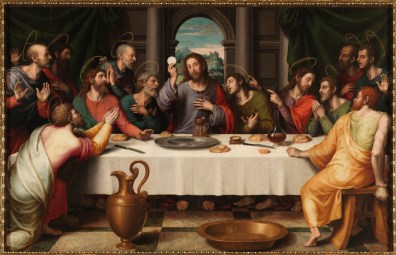
Last Supper

August 19th, 2018 20th Sunday of Ordinary Time

Gospel of John 6:51-58 NAB

Jesus said to the crowds: “I am the living bread that came down from heaven; whoever eats this bread will live forever; and the bread that I will give is my flesh for the life of the world.” The Jews quarreled among themselves, saying, “How can this man give us his flesh to eat?” Jesus said to them, “Amen, amen, I say to you, unless you eat the flesh of the Son of Man and drink his blood, you do not have life within you. Whoever eats my flesh and drinks my blood has eternal life, and I will raise him on the last day. For my flesh is true food, and my blood is true drink. Whoever eats my flesh and drinks my blood remains in me and I in him. Just as the living Father sent me and I have life because of the Father, so also the one who feeds on me will have life because of me. This is the bread that came down from heaven. Unlike your ancestors who ate and still died, whoever eats this bread will live forever.”

Meditation Reflection:

When I have old friends over for dinner, it is never merely a meal.  It’s always a highly anticipated event, an encounter with people I dearly love at a deep level.  It’s an exchange of conversation flavored by our shared history, values, and mutual respect.  When I have new friends over for dinner, it’s never merely a meal either.  It too is an encounter, a sharing of ourselves and opening up to discover common values as well as the excitement of hearing a person’s different perspective or experiences.

The great modern theologian, Fr. Romano Guardini (1885-1968), made the beautiful insight that the Mass too is both a meal and an encounter (from his book Meditations before Mass).  He reflected that Christ made this connection when He referred to Himself in the passage above as both “bread” (meal) and as “come down from heaven” (encounter).  In the Mass Christ invites us to a dinner He has prepared that we might both be nourished by the food and refreshed in spirit by the personal encounter with Him either as a new or old friend.

Deep friendship is one of the greatest pleasures one can experience in life. Even the philosopher Aristotle considered it one of the highest virtues.  To find someone who shares the same “vision of the Truth” as C.S. Lewis put it, is a real joy.  Scripture reminds us that “Faithful friends are beyond price” (Sirach 6:15) and we all know that for something to be expensive it must be rare.  To spend time with that friend in person is even more delightful.  To have that kind of friendship in marriage can result in an exchange of love and unity at the very depths of our humanness.

Christ desires this kind of friendship and union with each of us.  That is why the image of a wedding feast is used to represent the culmination of the Christian life.  Christ the bridegroom and the Church His bride are united body and soul in the Eucharist.  Celebrating the Lord’s Supper presents the opportunity to encounter Christ at every level, from the surprises of a new friendship to the deepest and most intimate of long relationships.  The more dinners, the more the friendship can develop.

Consider:

  • Who is your closest friend?  How did the friendship develop?
  • How would you describe your friendship with Christ?  How has it developed?
  • Consider the role of meals in developing friendships.  Whether it is as simple as coffee, drinks, lemonade, cookies, grilling, eating out, or cooking a full meal, or family dinners.  How does food somehow enrich the experience and open people up to each other?
  • Consider why Christ would desire to be present to you in Person, in the flesh, in the context of a meal.  Consider how personal it is and bonding.  Also consider the addition of other people – how does eating with others add to the experience?

Make a Resolution (Practical Application):

  • Next Mass, approach the Lord’s Supper the way you would a dinner with a close friend.  Prepare yourself for the encounter and treat it with the same attention and respect you would give your dinner guest or host.
  • On the way up the aisle to receive the Eucharist try to push away any distracting thoughts.  Reflect on the real presence of Christ in the Eucharist.  After receiving Christ, try to remain silent and focus on Him for a few minutes before talking, singing, or thinking of anything else.
  • Offer hospitality to someone.  Make them dinner and treat them as if they were Christ Himself visiting your home.

*revised edition; first posted 8/16/15

~ Written by Angela Jendro © 2018

* To receive these weekly posts automatically in your email just click the “follow” tab in the bottom right hand corner and enter your email address.