The Relevance of Ritual

Excerpt frTake Time For Him Book coverom Take Time for Him: Simple, Soulful Gospel Meditations to Ignite the Busy Person’s Spiritual Life  Get your own papercopy from Amazon!

Remember to rate and review it!

Feast of the Presentation of the Lord

Gospel of Luke 2:22-40

Meditation Reflection:

 “This is my life, my dream, my job, or my kids.” How quickly we can turn receiving a gift from God, to jealously withholding it for our personal plans. Worship and even ritual provide opportunities to keep this wily attitude in check and remind us of the purpose God has for them all.

The Presentation in the Temple is a religious practice of the Jews that began with the establishment of the Levitical priesthood. The firstborn son of the family had been designated by God to serve as priest, but when it changed to the tribe of Levi serving as priests, families would “redeem” the son from service by exchanging something. This offering provided for the Levites, whose priesthood allowed for more consistency in religious practices.

The image of the Presentation also serves as a reminder that our lives are not our own, and neither are our children’s, or any “baby” (be that a work, talent, or ministry, etc.) we possess. Everything belongs to God and ought to be offered back to Him. Our natural lives are a gift from the Creator, and our supernatural lives came at a cost paid by our Savior. The practice of reminding ourselves periodically in a formal or intentional way can help curb our tendency to grasp at things.

Organized religion often gets derided in the media and cultural conversation, even by some Christians. Yet, Joseph, Mary, and Jesus participated faithfully in the Jewish religion. Though an exceptional family, they never asked to be an exception to the rules. When Jesus instituted the New Covenant, He maintained formal worship through the Mass and the sacramental life. God doesn’t need our worship, we need it. We need to offer ourselves and our work to Him, to praise Him with gratitude and make supplication for our needs.

Making time for sacrament preparation can prove difficult for busy people and families. Whether it’s classes for Baptism, First Communion, Confirmation, or Matrimony, the Church provides a process of preparation that, though time consuming, orients our lives in Christ in an essential way.

Presentation of Jesus_Fra_Bartolomeo_Wikimedia

Fra Bartolomeo Wikimedia

Through these experiences, God can surprise us. Mary and Joseph presented Jesus like any Jewish couple would. The day had personal significance for them like any parents, but they didn’t stand out in the crowd. Nevertheless, this encounter with God in ritual yielded spiritual insights and fruits.

First, God blessed Simeon and Anna – two people who had faithfully sought God in prayer their whole lives and came to Him in the Temple regularly. Their example encourages us to persevere in the practice of our faith, even when it seems dry.

Secondly, Simeon’s prophecy articulated the nature of Mary’s vocation to motherhood, especially motherhood to Christ. Every mother and father looks at their infant and wonders who he or she will grow up to be, and seeing how special their child is, senses the child will be amazing. Simeon confirmed that Jesus would be a glory for Israel. However, he also warned that Jesus would experience conflict and rejection. Similarly, as children get older parents know the pain of seeing their child accepted by some but ignored or ridiculed by others. Finally, Simeon predicted a sword would pierce Mary’s heart too. Her Son is the Sacrifice for our Salvation, and she felt His pain in her own heart, like every mother and father who suffers to see their child in pain.

It’s especially difficult to surrender to God’s plan when we or our loved one must suffer. Jesus promised that to be His follower we must take up our cross and follow Him. This also entails allowing our loved one to take up their cross too. We can’t prevent every suffering nor ought we dissuade them from a sacrifice to which God is calling them (like Peter when he rebuked Jesus for saying He must die). We can however share the burden like Simon of Cyrene and be present to them like Mary and John.

Much of discipleship consists in the humdrum of regular prayer, work, and worship: starting the day with a Gospel reading and meditation, going about the tasks of your workday, attending Mass on Sunday, volunteering in the parish, and celebrating the sacraments with loved ones.

Aspects of worship may feel at times monotonous, but they are in fact irreplaceable touchstones with God; reminders that we and all that we love belong to Him. Moreover, in these moments, like Mary and Joseph at the Presentation, you may find yourself surprised by the Spirit.

Consider:

  • Imagine the rhythm of daily life for Jesus, Mary, and Joseph as faithful Jews.
  • How does the rhythm of daily prayer, Sunday worship, and liturgical seasons provide a needed framework for your faith life?
  • How might you enter more deeply into prayer or the sacramental life of the Church?
  • What has God entrusted to you as your “baby” or “babies”? Offer it back to Him in prayer and dedicate it to His plans by His graces with the cooperation of your work.

Make a Resolution (Practical Application):

  • If you are still forming the habit of regular prayer or church attendance, resolve to attend Mass every Sunday and pray every day. Decide where, when, and how.
  • Offer your life, your work, and your loved ones to God in prayer each day this week.

©Angela M Jendro 2019

Follow bar


Additional Recommendations for Spiritual Reading:

*As an Amazon Associate I earn from qualifying purchases.

Christ’s Kingdom Come

Excerpt frTake Time For Him Book coverom Take Time for Him: Simple, Soulful Gospel Meditations to Ignite the Busy Person’s Spiritual Life  Get your own papercopy from Amazon!

Remember to rate and review it!

3rd Sunday of Ordinary Time

Gospel of Matthew 12:12-23

Meditation Reflection:

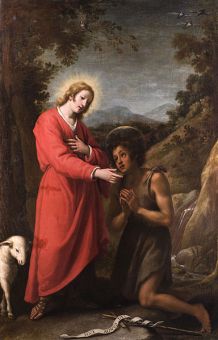
John the Baptist prepared the way for Christ both by announcing His immanent coming, and by calling people to conversion. John’s extreme asceticism illuminated consciences to common attachments which hinder people from receiving the Lord. His lonely, austere, desert living, provides a sharp contrast to our often-inordinate desire for luxury, status, and concern for keeping up with the Jones’. His fast of locusts and honey, casts light onto our indulgence in food and drink; and his camel-hair clothing convicts our consciences of secret vanity. Lastly, his rejection of fame and power set an example of 384px-Matteo_Rosselli_Jesus_and_John_the_Baptisttrue Christian discipleship. He rejected the title of Messiah for himself and insistently pointed to Jesus as the Christ. He spoke the truth to peasants, religious leaders, and even political leaders, despite the risk of arrest and even death. When the Lord finally came, he gracefully stepped to the side, saying “He must increase; I must decrease.” (Jn 3:30).
Matthew situates the beginning of Jesus’ ministry with the waning of John’s. Jesus had been baptized and spent 40 days in the desert fasting, praying, and being tempted. John had just been arrested and Jesus, His preparation finished, now began His work. He commenced by preaching the same message as John, “Repent, for the kingdom of heaven is at hand.” Only this time, the kingdom is not coming, but rather has come in the Person of Jesus Christ.

What is the kingdom of God? Put simply, it refers to God’s rule over the hearts of its citizens/children, and the peace and security they gain in return through union with Him. It’s a kingdom established through the free and reciprocal gift of love between God and those who respond. To accept the rule of God, we must first reject the rule of other monarchs. Thus, repentance is a necessary first step, in which we acknowledge the sins and desires that we have allowed to rule us, and we ask for God to be our liberator. The Lord’s kingdom is a monarchy, but one that governs free individuals. The Lord does not annex land through force, but He does liberate people who are enslaved and, through the merits and mercy of His Son, grant them citizenship. Moreover, this citizenship is more akin to adoption into a loving family than a mere nation-state.

Imagine Christ’s joy as He could finally roll up His sleeves and begin preaching the Gospel, healing the wounded, and most importantly – forgiving sins. Since the Fall of Adam and Eve, God had patiently waited for the time when we would be ready to receive Him, and He could heal all our wounds and strengthen us with His grace.

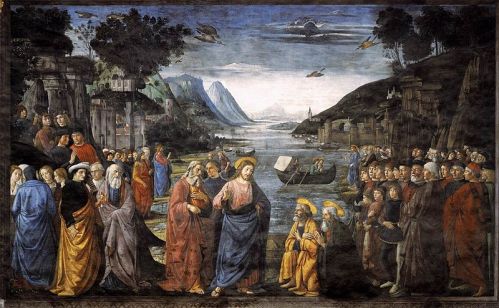
Jesus went to Galilee to begin gathering up God’s scattered and lost sheep. The havoc of disunity caused by human sin, would be undone through union in Christ. He rebuilt God’s people by building His Church. He first called two sets of brothers who had spent their days fishing, caring for their family, and a800px-The.Calling.of.the.First.Apostleswaiting the Messiah. They, like Christ, obeyed God in humble tasks of everyday life until He called them forth. When asked to follow Him, they immediately left the security of their routines and their community, to say Yes to the Lord and His will.
We can learn from this encounter how to prepare for, and respond to, the coming of the kingdom of God in our own lives. We can begin by answering the call of John the Baptist to repent. We can ask the Holy Spirit to reveal to us our sins and our blind spots. I can say from experience, He will. Next, we watch and wait. We live our daily lives open and receptive to God’s will. St. Thomas taught that “grace builds on nature.” This means that being a Christian doesn’t make us less ourselves or just robots following commands. Rather, grace makes us the best version of ourselves. It actually makes us more ourselves and raises our natural state in life to a super-natural level. Peter, Andrew, James, and John were all fishermen. In the kingdom of God, they become fishers of men.

The apostles model Christian discipleship, which is simply receptivity to the Lord in our daily lives. It means saying “yes”, and following wherever He leads. True peace, justice, and happiness come through Christ alone. Only He can free us from our worst enemy – our own sins, fears, weakness, and pride. Only He can provide security. When we experience the gift of being His disciples, we will understand John the Baptist’s passionate zeal for pointing others to the Lord as well.

Following Christ can look very ordinary on some days, and on others it can completely surprise you. Whatever might be holding you back when Christ says to you, “Come and see,” let it go. Drop your nets and set out after Him.

Consider:

  • Ask the Lord for a spirit of repentance. Invite the Holy Spirit to show you what, or who, comes between you and
  • Reflect on the Christ’s call “Come Follow ”
  • How has God called you to be faithful in your everyday life? In your family, at your job, in your community?
  • How has grace “built” on your nature. How has encountering Christ made you a better version of yourself? Where might Christ still want to work in your life?

Make a Resolution (Practical Application):

  • Begin each day this week by saying, “Yes Lord, I will follow You.” Repeat it throughout the day.


Follow bar

Additional Recommendations for Spiritual Reading:

*As an Amazon Associate I earn from qualifying purchases.

Watch & Wait, Look & See

Excerpt frTake Time For Him Book coverom Take Time for Him: Simple, Soulful Gospel Meditations to Ignite the Busy Person’s Spiritual Life  Get your own papercopy from Amazon!

Remember to rate and review it!

2nd Sunday of Ordinary Time

Gospel of John 1:29-34

Meditation Reflection:

John the Baptist_Tissot_Brooklyn Museum

The Voice in the Desert by James Tissot Brooklyn Museum

 How did John the Baptist know that Jesus was the Savior before He even said a word to him? You might be thinking: “Easy, the Holy Spirit revealed it to John in that moment”. While that’s true, what wasn’t easy was the receptivity John nurtured during the years leading up to that moment. What if he had been distracted by the heat or his hunger, or too busy talking to notice? John heard the Holy Spirit as Jesus approached because he had first spent years in the desert praying, waiting, and listening.

Accustomed to instant gratification and the fast pace of life, together with a heavily marketed atmosphere, we can easily develop a tendency to expect Christ to sell Himself to us and to make His pitch with immediate persuasion. Whether we question God’s existence, His nearness, or His willingness to help us, we often complain that God is silent or distant. Yet, we have to honestly ask ourselves, have we even sought God out? Have we taken even 5-10 minutes of silence a day to listen? Have we cracked open our Bible, His Word to us, to see if He might speak there? Maybe God is silent, or maybe His response is right there on the coffee table unopened. Have we waited on the Lord, or are we expecting an immediate result? Have we been receptive to the Lord’s prompting, or do we attempt to lead God and boss Him around, deaf to His guidance?

John the Baptist sought the Lord, venturing into the desert where he could encounter God away from the distractions of everyday life. He waited on God, fully expecting an answer by spending his time preparing through preaching repentance and baptizing. When the Savior came at last, John could receive Him and recognize Him as Lord because he was looking and listening.

It reminds me a little of family road trips. The kid engrossed in his iPhone or tablet misses extraordinary sights, or at the very least, out of the ordinary landscapes. The person vigilantly watching out the window however, can take in the beauty, appreciate the landscape, and spot the surprise spectacles. By the time he has shouted “look!” and the distracted child responds, the sight has passed. Moreover, at the end of the journey, the one focused on the tablet retains the same vision of the world as when he left home, whereas the one who looked out the window broadened his vision and experience.

If we feel like God is distant, we need simply to look out the window and reach out to Him in prayer. If we require His help, we need only to ask and listen. When we look for the Savior, we find Him. God does His part, and more. We need to make the effort to look up from our commonplace experience and distractions and seek Him.

Psalm 40 begins by singing,

I have waited, waited for the LORD,

and he stooped toward me and heard my cry.

What a beautiful expression. God has seen our suffering and heard our pleas. He stooped to become man and dwell among us, personally healing and strengthening us. When a person experiences the saving love of Christ, they cannot resist proclaiming it to others. Like the child shouting “look!”, they instinctively cry out “look!” as well; or as John proclaimed, “Behold! The Lamb of God”.

Everyone seeks happiness, security, and love. We can search for all these things online, in our careers, or the economy, but only Christ can deliver on His promises. Blessed Archbishop Fulton Sheen described John the Baptist as “no frivolous reed shaken by every breath of popular applause.” When we seek approval from others or from cultural standards, we become feeble like a reed. We sway at every idea, comment, or attack and easily break. Firmness of character and security of happiness can be found in Jesus Christ alone, who can provide peace and rewards of a supernatural level. It is the Lord, who provides Faith, Hope, and Love. It is His Holy Spirit who infuses us with His sevenfold gifts of Wisdom, Understanding, Counsel, Knowledge, Piety, Fortitude, and Fear of the Lord. If we desire the Spirit’s fruits of love, joy, peace, patience, kindness, goodness, faithfulness, and self- control, we need merely to invite the Lord into our soul to dwell and be receptive to the transformation He effects.

At the same time, to realize our need for a Savior, we must also acknowledge the reality of our sinfulness. The first step to seeking the Lord is to grapple with our need for Him and our own insufficiency. Sheen pointed out that, “Skepticism is never certain of itself, being less a firm intellectual position than a pose to justify bad behavior.” Some who seem to seek God, actually hide behind their questions in order to avoid moral change. Those who see the degrading effect their sin has on their life run to the water to be cleansed like those who came out to John the Baptist in droves. Those who encounter Christ’s mercy proclaim with John, “Now I have seen, and testify that he is the Son of God.” If you want to find out for yourself, respond to Christ’s invitation to “come and see” (Jn 1:39). You might just see something incredible!

Consider:

  • Where can you go to encounter the Lord?
    • In a quiet place for prayer in your home, Church or Eucharistic adoration? In the Scriptures or reading the lives of the saints? In visiting with a prayerful friend? By listening to Christian radio?
  • On the road trip of life, are you more like the child distracted by a tablet or the child looking out the window?
  • If you were to go out to the desert to see John the Baptist, what do you imagine it would be like? Would you want to receive the baptism of repentance? What would he exhort you to change in your life?
  • When has Christ “stooped toward you and heard your cry?” Did it fill you with peace and joy? Did you want to tell others?

Make a Resolution (Practical Application):

  • Watch, wait, and listen to the Lord this week by setting aside 5-10 minutes each day to seek Him in prayer, Scripture, or Christian

Follow bar

Additional Recommendations for Spiritual Reading:

*As an Amazon Associate I earn from qualifying purchases.

Can’t Wait to Start: Feast of the Baptism of the Lord

Excerpt frTake Time For Him Book coverom Take Time for Him: Simple, Soulful Gospel Meditations to Ignite the Busy Person’s Spiritual Life  Get your own papercopy from Amazon!


Remember to rate and review it!


Gospel of Matthew 3:13-17

Meditation:

 When Jesus humbled Himself to become man, He took upon Himself every human experience. This included long years of painstaking maturation and living in obedience to His parents. Jesus refused short cuts. He accepted the hard road of the heavy burden of sin for us. He experienced the vulnerability of an infant in the womb, the work of human learning and growth, the struggle of every pre-teen to obey their parents even though they feel old enough to be independent, and obedient service to his daily work as a carpenter, the Jewish prayers and observances, 250px-Baptism-of-Christ-xx-Francesco-Albanand His responsibilities toward His parents. He could have come down from heaven as a mature thirty-year-old of nobility, but instead began at the beginning, and walked the human journey in poverty with us to the end. At last, the time had come for Him to begin His public work of preaching, healing, and establishing the Church.
If you have ever had to wait a long time to start a work you are passionate about you know how it feels. Whether it’s enduring years and years of education to prepare you for your career, waiting decades to be old enough to have a family of your own and find the right person to have it with, saving up for a long period of time to venture out to your favorite travel spots, the wait took perseverance and patience. Remember how it seemed like ages before you could drive or turned 18 and had the privileges of being an adult?

Jesus’ Baptism marked His entry into public life. John was correct that Jesus didn’t need to be baptized since Jesus was perfect. However, Jesus didn’t have to do anything for us really, He chose to for our redemption. Therefore, He entered the waters not as a sinful man Himself, but on behalf of sinful mankind who He would liberate through His death and resurrection. Thus He began His ministry by pointing to its end – the Cross. Blessed Archbishop Fulton Sheen describes the connection in his book, The Life of Christ, by saying:

The baptism of the Jordan was a prelude to the baptism of which He would later speak, the baptism of his Passion…Thus his baptism of water looked forward to his baptism of blood…In the waters of the Jordan he was identified with sinners; in the baptism of his Death, he would bear the full burden of their guilt…

The Cross must have been looming up in his thoughts now with increasing vividness. It was no afterthought in his mind. He was temporarily immersed in the waters of the Jordan only to emerge again. So would he be immersed by the death on the Cross and the burial in the tomb, only to emerge triumphantly in the Resurrection.

Jesus entered the water as the Son of Man, but He was also the Son of God. His divinity had been veiled since the Epiphany, but at His Baptism the Father and the Holy Spirit visibly showed their oneness in Christ’s mission, since as a Trinity all three Persons acted together. The Father sent the Son, and “the Spirit was anointing him not just for teaching, but for redeeming.” As an analogy, consider a son delivering Tupperware packed meals, home-made artwork, and some supplies to a neighbor who is ill. Although he trucked it over, the gifts were from the whole family and each had offered something to the care basket.

Baptism is such an incredible sacrament. It washes away ALL prior sin and its punishments. A person arises from the water truly a new person with a new start. Even more, this isn’t only a debt free launch like the gift of a college education to a young adult whose parents generously paid the bill. It’s like starting out with a treasure in the bank. Baptism bestows the life of the Trinity dwelling within us, making us sons and daughters of God, heirs of Heaven, and infused with spiritual gifts of Faith, Hope, Charity, and many other virtues.

This gift came at a cost, and Christ paid that price. Thus baptism was both a joyful anticipation of the greatest moment in history – our Redemption, and at the same time a hastening to the Cross. However, Jesus burned with a passion to heal us out of His immense love, especially for the poorest of the poor. Sheen’s insight into the symbol of the dove supports this:

The dove was the symbol of gentleness and peacefulness, but above all it was the type of sacrifice possible to the lowliest people.

Whenever a Hebrew thought of a lamb or a dove, they immediately thought of a sacrifice for sin. Therefore, the Spirit descending upon Our Lord was for them a symbol of submission to sacrifice.

Gentle, Peaceful, Poor in Spirit, Sacrificial. This describes Christ’s love for us, and our call as baptized Christians. Baptism gives us an amazing start to life in Christ. We have all the means and no debt. But this gift is meant to be invested, like the parable of talents. Parents who put their kid through college do so in hopes that their child will get to pursue their dream or at least earn a position that can afford them a stable income, not so the child can come back home and remain jobless indefinitely with no aspirations. Baptism launches us into the life of grace, one that is meant to be lived like Christ’s – from God and for others. Christian discipleship leads to the Cross, but we can approach it with the same passion and strength as Christ did, knowing that our sacrifice united to His can bring salvation to the souls of those still suffering under the pains of sin and error.

Jesus didn’t need to be baptized but thank God He did! Jesus walks with us through every experience, knowing exactly how we feel. Moreover, He has the power to redeem every failure, heal every wound, dispel every lie, comfort every sorrow, and lift us up in grace.

Consider:

  • What is something you had to wait or work for, for many years? How might Christ have felt when He finally began His public ministry?
  • Where are you at in your spiritual maturation? As you grow in your faith, how might you assume more responsibility and leadership roles within your church?
  • Reflect on the gift of Baptism. Consider the freedom bestowed by Jesus’ sacrifice. Meditate on the indwelling of the Trinity in your soul and the transformation that takes place through His grace.
  • How might you respond to the grace you have been given? What crosses and sacrifices can you carry with Christ for the salvation of souls?

Make a Resolution (Practical Application):

  • Jesus shared in our human experience. Throughout your day, consider how Jesus can relate to each aspect of your life. For example, Jesus probably began His day with prayer, ate some breakfast, worked on his carpentry projects and deadlines, looked forward to lunch, had customers he enjoyed and customers who were difficult, had friendships,
  • Find a way to take more initiative in spreading the faith. Whether leading prayer in your family, volunteering at church, or speaking positively about God in casual
  • If you have a present struggle, intentionally offer it to Christ in union with His sacrifice for the salvation of souls.


Follow bar


The Universal Search for God

Feast of the Ephiphany

Take Time For Him Book cover

Excerpt from Take Time For Him: Simple, Soulful Gospel Meditations to Ignite the Busy Person’s Spiritual Life (click to order your own copy from Amazon!  Remember to rate it and leave a review!)

Gospel of Matthew 2:1-12

Meditation Reflection:

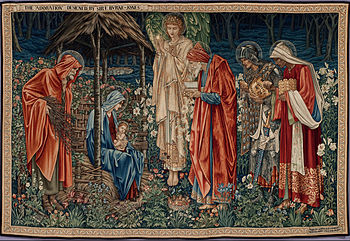
Epiphany means “the manifestation of the divine.” God manifested the 350px-Edward_Burne-Jones_-_The_Adoration_of_the_Magi_-_Google_Art_Project.jpgSavior to the world: from the poor Jewish shepherds to the wise Magi from the East. All human persons seek God, whether they call their search one for the divine or not. It may begin as a movement toward God’s Goodness through the conscience, toward His Truth through the pursuit of wisdom, or toward His Beauty through captivation by His creation or art. It may be through a search for meaning or to answer the tug at the heart that whispers “there’s more to life than this.”

Even those who deny God’s existence, still witness to the reality of the spiritual world. Our pets don’t ponder, and they don’t wrestle with questions about whether God exists. Those who develop a direct antagonism for religion expressed in a defiant atheism, still reveal that they have grappled with the search, a search that requires spiritual pondering, evidenced by their conclusion. In addition, true atheism expresses a negative despair, rather than a fulfillment of life or joy. If God’s nonexistence were true, shouldn’t it satiate our nature rather than leaving us feeling depressed? If we are merely animals, shouldn’t we be content with food, security, and a nap? Why even address the question at all? And yet we are not content with the same things as our pets and we all experience this question in our hearts.

On the other hand, those who seemingly ignore the search due to idling in the superficial pleasures of the world, also reveal something of the human person’s natural inclination toward God. If a child shirked healthy food and exercise in favor of foods that pleasure the palette and sedentary entertainment, his body’s natural development would be harmed, evidenced by less development than normal and increased sickness. Similarly, those who neglect the healthy development of the soul suffer similar emotional and spiritual deformation, which evidences the reality of the soul and its needs.

The birth of Christ fulfilled the desire of all humankind. God created us with the capacity for love, destined for eternal life, and union with the divine. The Jews tasted this through His revelation in the Old Covenant and His many signs and miracles. The Gentiles also sensed this through their observations of creation and philosophy. As a result, the Jewish shepherds learned of Christ’s birth by the appearance of angels, and the magi from the East learned of Him through sighting a new star. Although the journey may begin in different places and a person may traverse by different means, nevertheless, all converge on Christ.

In addition to the universal search for God, humankind evidences a universal desire for redemption. Blessed Cardinal John Henry Newman noted that we sense the eternal law in our conscience, as well as the pang of guilt for transgressing that law so many times and the feeling of helplessness to be able to perfect ourselves. For instance, we look to psychology, television, news, science, and nutrition, to discover the explanation as to why we do what we know we should not do. After finding an explanation we seek the cure – again through self-help guides or better diet. And yet we continue to feel guilt and unrest. We continue in behaviors we know are self-destructive and negative. We need a savior.

False gods and false prophets have always offered easy cures in exchange for their own personal gain, but those quick fixes always came up short. Similar to marketing scams, they do more to manipulate the person’s wound rather than heal it.

Christ operates differently. He received no personal gain, but instead He came poor and died poor. He lived a hidden life for thirty years and avoided vainglory by never staying too long in one place during His public ministry and often commanding those He healed to tell no one. Rather than lengthen His life, it was shortened. He proved on the Cross that He did not come to take from us, but to give selflessly and unconditionally to us.

“For you know the gracious act of our Lord Jesus Christ, that for your sake he became poor although he was rich, so that by his poverty you might become rich.” 2 Corinthians 8:9

Jesus is the Savior we yearn for and there is no gimmick. He did not come to manipulate; He did not offer false hopes or promises. He is the Way, the Truth, and the Life, who offers pure, loving, relationship. He alone satiates our search and nourishes our development. The magi searched for God and found Him. Jesus promises us as well, that all who seek Him shall find Him. Hopefully we, like the Magi, can have the courage to venture out in search of the Lord. Contemplating this mystery, Blessed Archbishop Fulton Sheen observed “No one who ever meets Christ with a good will returns the same way he came”.

Consider:

  • Reflect on your journey to God. What “pointed” you toward Him, like the star did for the Magi?
  • Has your search for God grown lax at times? How did your spiritual life atrophy afterward?
  • How might you reinvigorate your search for God? Could you increase your search through prayer, reading of Scripture, studying the faith, or fellowship with friends of faith?
  • Consider the gift of our savior. How has Christ freed and healed you? What do you need Him to free you from, or heal you of today?

Make a Resolution (Practical Application):

  • Choose one way to reinvigorate your search for God
    • Ideas: Read a chapter of a Gospel each day; Read a book about Christ by an inspiring author, make time to visit with a Christian friend about the Lord, join a Bible study, read the lives of the saints and learn from their pursuit of Christ, talk with your family about Christ…

Additional Recommendations for Spiritual Reading:

*As an Amazon Associate I earn from qualifying purchases.


Follow bar

Joseph’s Steady Leadership When Faced With “It’s Complicated”

4th Sunday of Advent

Take Time For Him Book cover

Excerpt from Take Time For Him: Simple, Soulful Gospel Meditations to Ignite the Busy Person’s Spiritual Life (click to order your own copy from Amazon!  Remember to rate it and leave a review!)

Gospel of Matthew 1:18-24

Meditation Reflection:

Immanuel: God-with-us! We no longer must suffer alone, weak and afraid. The Lord has come and brought with Him the comfort, strength, and peace of His holy presence dwelling in our souls and working in the world with His transforming grace.

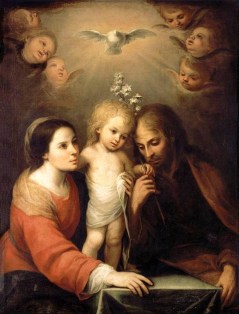
We experience something of this peace and strength in family life. Being with our parents makes us feel secure HolyFamilybyGutierrez_wikipediaand protected. Being with our children brings us joy and comfort. The Holy Family experienced this at a supernatural level through Christ and have extended an invitation into their family as spiritual sons and daughters. Jesus’ saving work began with the cooperation of Mary and Joseph. Mary’s fiat, her “yes”, made the Incarnation possible and therefore the redemption of all mankind. Joseph’s fiat, his “yes”, made the Holy Family possible.
Joseph acted on faith when He accepted the role of earthly father over Jesus despite the surprising and shocking form in which He was conceived. His decision to take Jesus and Mary into his home and make them His own family was the fruit of God’s grace in concert with his virtues. This required serious discernment and prayer, both of which he models for all Christians.

Joseph was a just, or righteous man. This does not mean he was without sin whatsoever, but it did mean he consistently strove for virtue, followed the Mosaic Law, and lived his faith. Early Christian writings not included in the Bible, such as the Protoevangelium of James, indicate that Mary’s parents consecrated her to God and so she would serve God in the temple and take a vow of virginity. As a result, she grew up in the Temple from the age of 3 until she was of marrying age. It was a Jewish practice that at that point she would be entrusted to the care of a guardian who would protect her and would respect her vow of virginity by taking a vow of celibacy himself. Oftentimes this would be a man who was older and widowed. Some think this explains why Joseph had died by the time of Jesus’ public ministry. According to the Protoevangelium of James, from among the men who wished to take Mary as their wife, Joseph was chosen as Mary’s husband by a miraculous sign. After such a holy betrothal, imagine his surprise, confusion, and disillusionment, when he learned she was pregnant before they lived together in marriage. His response to the situation is so admirable, strong, and level- headed. He’s a model for anyone who must make difficult decisions in complicated and emotional situations.

Let’s examine what he did. Joseph made a prudent decision, based on who he was and his faith. Purity and honor being important virtues, he decided he could not take her into his home as his wife. (At the time, betrothal was a solemn contract with the weight of marriage but preceded living together as husband and wife). At the same time, he was a compassionate and merciful man. Matthew tells us Joseph was “unwilling” to expose her to shame. I imagine he had plenty of men and women urging him to exact the full measure of the Jewish law against her, to publicly humiliate her, and to get sweet revenge for embarrassing him. Joseph would not. He was unwilling. Joseph made an intentional decision to do the right thing, quietly. In the RSV translation, it says he “resolved to send her away quietly.” To be resolved indicates a decision made with prudence, strength of will, and determination, intentionally detached from pettiness and emotion.

Joseph focused on how to thoughtfully and prayerfully do the next right thing. Because of this, God guided his discernment. The RSV translation says, “But as he considered this, behold an angel of the Lord appeared to him”. The word “considered” is important. The spiritual life is ultimately one of love, fidelity, and receptivity. We are followers of God, not leaders of God. God guided Joseph’s considerations for his family, just as God guides every father who will invite the Lord into his discernment. When God spoke, Joseph faithfully and lovingly followed through with God’s will.

Immanuel: God-with-us. How might we as mothers and fathers invite God to be with us in our families and our decision-making? How might we say yes to the Father and welcome His Son? How might we accept the family that God has entrusted to us, rather than the one we imagine for ourselves? God works in surprising and shocking ways. This Advent, taking a moment to consider who we are and what we believe, may St. Joseph pray for us to have the kind of steady and faith-filled approach to life’s complications that he did.

Consider:

  • Joseph’s yes made it possible for Jesus to have a family. Consider what a gift it was for him to grow up with Mary as His mom and Joseph as His foster-father.
  • Consider Joseph’s prayerful leadership. How might you imitate St. Joseph’s discernment in your own life?
  • Do you take time to “consider” things and “resolve” to follow through?
    • What things, habits, or people undermine that, urging you to react immediately and emotionally?
    • What things, habits, or people could help you develop deeper consideration and stronger resolve?
  • Ask Joseph to lead you and your family, as He did for Jesus and Mary. Pray for his protection, guidance, and love.

Make a Resolution (Practical Application):

  • Teresa of Avila and numerous other saints recommend devotion to St. Joseph and credit his powerful intercession for answers to their prayers. I too can attest to this from my own life. This week ask St. Joseph to pray for you and for your family.
  • Do you know someone who is like St. Joseph? Spend more time with that person and learn from his example. Take him to coffee and ask him lots of questions and take his advice.
  • Surrender a complicated decision to the Lord in quiet prayer. Consider who you are, what our Christian faith says about the situation, and resolve to do the next right thing with the help of the Holy Spirit.

Additional Recommendations for Spiritual Reading:

*As an Amazon Associate I earn from qualifying purchases.


Follow bar

The Man Who Changed the World, And Can Change Me

3rd Sunday of Advent

Take Time For Him Book cover

Excerpt from Take Time For Him: Simple, Soulful Gospel Meditations to Ignite the Busy Person’s Spiritual Life (click to order your own copy from Amazon!  Remember to rate it and leave a review!)

Gospel of Matthew 11:2-11

Meditation Reflection:

Jesus is the Christ for all mankind, and His coming marks the very climax and axis of history; everything prior had been preparing for this moment, and everything after would be altered – transformed by His liberating grace. Blessed Archbishop Fulton Sheen, in his book Life of Christ, observed:

“What separates Christ from all men is that first he was expected…A second distinguishing fact is that once he appeared, he struck history with such impact that he split it in two, dividing it into two periods: one before his coming, the other after it. Buddha did not do this, nor any of the great Indian philosophers.   Even those who deny God must date their attacks upon Him, A.D. so and so, or so many years after His coming.”

Jesus was expected. In addition to the hundreds of prophecies in the Old Testament (all which Jesus fulfilled, a statistical near impossibility), Archbishop Sheen further asserts that prophecies pointing to Christ can also be discerned from the Romans, Greeks, and even the Chinese. Sheen explains the logic behind this universal prescience:

Automobile manufacturers tell their customers when to expect a new model. If God sent anyone from Himself, or if He came Himself with a vitally important message for all men, it would seem reasonable that He would first let men know when His messenger was coming, where He would be born, where He would live, the doctrine He would teach…

In consequence, when John the Baptist sent his followers to inquire of Jesus as to whether He was the awaited Messiah, Jesus responded by citing His works, which even at the beginning of His public ministry, already fulfilled a host of long-awaited prophecies.

John the Baptist is considered the last of the Old Testament prophets. “Testament” means “Covenant” and John represents the fullness of God’s covenant with Israel, at its height and its end. This end, however, was not an eradication but rather a new beginning. Jesus made this clear when He said, “Do not think that I came to abolish the law or the prophets; I have come not to abolish but to fulfill” (Matthew 5:17). John’s mission to prepare the way for the messiah also prepared the way for the New Covenant, one which fulfills and exceeds the Old to such an extent that the “least in the kingdom of heaven” will exceed the “greatest” in the old.

Up to this point, since the Fall of Adam and Eve, all of humanity suffered under the weight of sin, guilt, discord, injustice, flight from God, failure, and death. God’s preparation took time and patience to ready the human heart to receive His incarnate Son. God began small but personal. He began by initiating a relationship with one man, Abraham, and his family. Through that relationship, God revealed key aspects of His character – His truthfulness, fidelity, power, and love. Later, God formed Abraham’s descendants into a nation when He freed them from slavery in Egypt to be a free people, gave them a mighty prophet and leader – Moses, Laws to govern them – written by the finger of God, and the promised land where they could nurture their hope for a new garden of paradise. Finally, God allowed them to become a formal kingdom and promised a man from the line of king David would always be on their throne. Nevertheless, even the chosen people of God had to struggle along without the aid of supernatural grace. They knew the law and yet failed to follow it. They knew where to find happiness yet chased after futile and false pleasures. Their unified kingdom split and eventually their sin caused them to be conquered and scattered by foreign invaders.

With the incarnation of Christ, the painful wait for a redeemer had finally come to an end. The angels could sing at His birth,

Glory to God in the highest,

     and on earth peace to those on whom his favor rests” (Luke 2:14).

As Isaiah prophesied:

The people who walked in darkness

     have seen a great light” (Isaiah 9:1),

and Jesus proclaimed of Himself, “I am the light of the world. Whoever follows me will not walk in darkness, but will have the light of life” (John 8:12). With the advent of Christ came the advent of grace and the possibility of transformation, strengthening, and healing. Now every person can confidently face the trials of life. St. Paul boldly testifies from his own experience, “I can do all things in him who strengthens me” (Philippians 4:13, RSV).

Being the light of the world is no small thing. We rely on it more than we realize. For example, at my son’s basketball tournament one day, the lights in the entire complex went out. At first the deafening noise became instantly silenced as we all felt startled. Within seconds however, iPhone flashlights lit up the gymnasium and kids began laughing, chatting, and shooting hoops while they waited. I grew up in a time before iPhone flashlights, when sudden darkness meant an indeterminate amount of time searching for a source of light, hoping someone had a lighter or flashlight stored somewhere. Whereas I felt a bit unnerved when the gymnasium went dark, the kids weren’t all that worried because their fears were instantly assuaged. Kids today experience a blessed security by always having a light source on them and around them constantly. I thought of the gift of Christ’s light within us, which even though it’s often taken for granted, it still provides an underlying sense of peace and security as it permeates our culture and our consciousness. Prior to Christ, like prior to the iPhone, that light was more difficult to come by and less stable.

We are beyond blessed to be living “in the year of the Lord” (Anno Domini, or A.D.). We live in an age of grace where Christ has made possible the forgiveness of our sins, peace in our souls, and the sight of God Himself, made visible in His Son.

Christ has come, and it has changed everything. This is why belief in Christ, as the Son of God made man, our Redeemer, has endured for over 2,000 years and persuaded peoples over the entire earth in every culture. Jesus changes us and we are witnesses to it.

Consider:

  • How has Jesus changed your life? In what way(s) are you different now than before?
  • Consider the impact Christ has had on the world. Reflect on His power to transform hearts, minds, and lives in every place and in every
  • Reflect on Christ being the Light of the World. Consider how light provides sight, warmth, peace, and protection.
  • Jesus, the Word of God through Whom all things were made, is also man. He is related to all of us as our brother.
  • Consider how the most important moment in history hinged on the “yes” of Mary.
  • Consider the things God has done through you because of your “yes” to Him.

Make a Resolution (Practical Application):

  • Each day this week, share the gift of Christ’s light with another person. It can be through word or deed. (remember the works of mercy)
  • Pray and work for the conversion of someone you know. Pray for Christ to enter his or her life and to change it

*For posts directly to your email click the FOLLOW tab!  You can also follow me on Facebook or Twitter @ taketimeforhim

Additional Recommendations for Spiritual Reading:

*As an Amazon Associate I earn from qualifying purchases.

A Gift Well Received- Mary’s Immaculate Conception

Readings for the Solemnity of the Immaculate Conception of the Blessed Virgin Mary

Antolinez-inmaculada-bilbao public domain

Antolinez-immaculada-bilbao [public domain]

By a miracle of God, the Holy Spirit would overshadow Mary and Jesus Christ would be conceived in the womb of a virgin.  For this to happen, another miracle had to take place first.  The Son of God received His human nature from His Mother Mary, but since God and sin are incompatible it was necessary that she too be without the stain of sin. So today the Church prayerfully remembers and praises God for the other miraculous conception – Mary’s. Through His grace she was preserved from Original Sin from the moment of her conception.  Incredibly, this saving grace is the same grace merited on the Cross by Jesus which saves us, except that she received this gift from her beginning whereas we are cleansed from sin in Baptism.

Mary received this state of grace as a gift from God, but unlike Eve (and Adam), she remained faithful to God and this gift through every temptation.  Mary suffered difficulties, anxieties, troubles, danger, and excruciating emotional pain, especially at the foot of the Cross, yet she trusted God above all and surrendered always and completely to His will.

As we praise God today for His great love and mercy in the miraculous conception of the Blessed Virgin Mary, may we look to her for motherly guidance and love.  She is both our mother and our role model.  We are cleansed from sin in Baptism, may we strive to remain faithful to that gift, trusting in God and glorifying Him as Mary did, in every circumstance.

Consider:

  • God’s miracles are a fruit of His power, mercy, and love.  Consider the gift of Mary’s Immaculate Conception and the beauty of human nature in the fullness God created it to be.
  • Consider the miracle of your life and the great dignity God has given you.  Take a moment to thank God for the gift of His grace in your life and freedom from sin at your Baptism. Consider the fullness of life God desires for you which He makes possible through His grace, and teaches through His commands.
  • Sin appears as freedom and pleasure but in fact only degrades us.  Examine your conscience for the ways you have fallen to temptations and sin, especially since your Baptism. Go to the Sacrament of Confession this Advent Season to receive Christ’s healing grace and to begin anew.

Make a Resolution:

~ Written by Angela M. Jendro © 2019


Keeping Christ in Christmas, and John the Baptist in Advent

2nd Sunday of Advent

Take Time For Him Book cover

Excerpt from Take Time For Him: Simple, Soulful Gospel Meditations to Ignite the Busy Person’s Spiritual Life (click to order your own copy from Amazon!  Remember to rate it and leave a review!)

Gospel of Matthew 3:1-12

Meditation Reflection:

 The image of John the Baptist, dressed in camel hair and eating locusts, preaching the message of repentance and authentic sorrow for sins, provides a stark contrast to the marketing images flooding us of jolly Santas, piles of presents, and delicious foods. I can understand why marketers find Santa and reindeer more appealing for sales than a desert ascetic speaking about sin, but the ubiquitous advertising easily obscures the serious spiritual work we are meant to do. People also feel ever more pressure to prepare for Christmas by finding the perfect gifts within the time constraints of frantic schedules and limited budgets. Nevertheless, the Gospel writers remind us that preparation for Christmas is ultimately preparation for the Incarnation of God our Savior. He brings the gift of heaven, but we must prepare ourselves to receive that gift through repentance.

The push to start Christmas sales has lamentably encroached on Thanksgiving and even cast a shadow over Halloween.  Even worse, it has completely usurped Advent in our culture, making it seem nearly impossible in the four weeks leading up to Christmas to make time for introspection, increased prayer, and sacrifice. On the flip side, by the time Catholics celebrate Christmas on the Eve of Christmas day and for the two weeks following it, the rest of the culture has already moved on and we feel we are celebrating alone.

So how can we balance living in the culture that we do, and still honor the important process of conversion Advent is meant to procure? We can no longer wait to buy a Christmas tree until December 23rd because there won’t be any left. We can’t leave them up for the duration of the Liturgical Christmas season because the tree will be a fire hazard at that point, plus we will have missed our road-side tree pick up provided by our garbage companies. Each person must determine how to be “in the world but not of the world” (cf. 1 John 2) in their own situation. For myself, I have surrendered the Christmas tree battle and get one the weekend after Thanksgiving. I love Christmas trees, and if I’m going to go to all the work of decorating it with the kids, I want it to last as long as possible! I also must admit that I look forward to the Hallmark Christmas movies that start up on Thanksgiving and, if possible, make a weekend of it during Advent with my mother and my daughter. Black Friday deals make Christmas gifts more affordable although I am too exhausted on Cyber Mondays to get online after work. However, I reserve some Christmas feasting for the real Christmas season. I play Christmas music all the way to the Epiphany even though secular stations have returned to their normal broadcasting. I keep my Christmas decorations out (except for the live tree). In my classroom at school I leave Christmas lights up in my room until Lent, reminding the kids that Jesus is the Light of the World.

Amidst the early holiday cheer and parties however, spiritual sacrifice, examination of conscience, and remorse for sins is harder to carve time for, and yet the most important. When the kids were little, I would do Bible crafts and the kids had fun placing a felt ornament on our Jesse tree corresponding to a daily Scripture passage we would read. Now that my kids are older, it’s harder to find a time we are all home to pray together. As a busy mom, I appreciate that the Church offers practical advice regarding spiritual preparation during Advent, and oftentimes opportunities organized by the parish to help us. Scripturally, spiritual preparation consists of prayer, fasting, and almsgiving. Parishes often offer Advent reflections, retreats, and youth ministry events to facilitate more introspective prayer during this time. I would recommend adding one of these events to your calendar just as you would any Christmas party invitation.

Fasting during advent is especially difficult, with so many Christmas parties and cookie exchanges taking place, but consider fasting from something simple and achievable, so that even during the celebration, you remain connected to Christ and honor the preparation for His coming that He deserves. I wouldn’t suggest giving up sweets altogether, but maybe you set a limit for yourself or give up something else that’s meaningful to you, especially something you tend to overindulge in. Maybe you decide you will only have one adult beverage at the Christmas party or one desert, or you resolve to bite your tongue when tempted to gossip about a coworker of family member.

Almsgiving may be the one aspect of Advent that lingers in our culture as generosity during the Christmas season seems to be a sentiment that still resonates in people’s hearts. Parishes, schools, offices, and neighborhoods band together for charitable causes and provide opportunities for us to give. We can participate with a spirit of giving to Christ who says, “Whatever you did for one of these least brothers of mine, you did it for me” (Matthew 25:40). Let’s not forget that Christmas also provides less visible opportunities for giving, like keeping our eyes open for family members, neighbors, or colleagues who are lonely and inviting them to our homes.

Fasting and almsgiving can further be applied in our interactions with one another. Christmas get-togethers bring out the best and the worst in people. The heightened social contact creates situations for enjoyable fellowship but also tense discord. Here we can practice the spiritual works of mercy. We can fast from gossip and give encouragement, fast from pettiness and bear wrongs patiently, fast from competitiveness and offer warmth. When we encounter someone, we find annoying, frustrating, or difficult to be around, we can reflect on the compassion of the Lord, who became man, for love of that same person. When we are moved by the generosity and love of others towards ourselves, we can praise Christ as we tangibly experience His love in our own lives.

Advent has become an uphill battle, but the view from the top makes climbing it worth all the effort it took to get there. This Advent I hope you can find a way to prepare your heart and your life for Christ a little more in some small way. I hope you experience the peace from repenting of sin to receive His generous healing. Let’s demonstrate our authentic gratitude for his grace through prayer and acts of love. Let’s try to keep Christ in Christmas, and John the Baptist in Advent.

Consider:

  • “Emmanuel” means God-with-us. Consider the gift of the Incarnation, that God became man, and dwelt among
  • How has your heart and life opened to Christ over the years? How has He dwelt more and more in your life?
  • Are there any areas of your life from which you keep Christ closed off? Are there any places, people, or activities you wouldn’t feel comfortable having Christ present?
  • Reflect on the people you will encounter this season. Consider them from Christ’s point of view. How might you be the hands and heart of Christ to them in your interactions?

Make a Resolution (Practical Application):

  • Choose one way this Advent to pray, fast, and
  • Put a church sponsored Advent or Christmas event on your calendar, then attend
  • Fast from gossip and critical
  • Intentionally give to Christ, above your regular Choose a charity or a particular person and be generous to Jesus by being generous to them.

*For posts directly to your email click the FOLLOW tab!  You can also follow me on Facebook or Twitter @ taketimeforhim

Additional Recommendations for Spiritual Reading:

*As an Amazon Associate I earn from qualifying purchases.