That Others May See More of Christ In You

Excerpt from Take Time For Him: Some More

by Angela M Jendro

Order your paperback or e-book from Amazon!

Order the kindle e-book (or paperback) to read the Christmas meditation, the meditation for Mary Mother of God, and to reflect on the meditations all year at your convenience.

4th Sunday of Ordinary Time

Read the Gospel of John 12:20-33

Meditation Reflection:

Someone may say to you one day, “[Your Name], I would like to see Jesus.”  Imagine that for a moment and take it in.  A person looking to you with a hopeful and somewhat anxious expression, addressing you by name, and depending on you to connect them to Christ.

“Why me?” you might say.  In a secular culture void of God, searching souls see Christ from a distance and feel more at a loss to find their way to Him than you may think.  Your relationship with Jesus, and their relationship with you, may be the bridge they need.

Yet, to be Christ’s light and love in the world, to be a bridge, demands a serious choice which will decide the trajectory of your whole life.  Jesus made this choice, and so must each of His followers.  The choice – to live for yourself or to live for the Lord, to build a life of your own making or to build the kingdom of God.

A grain of wheat, in and of itself, is small and insignificant – enough to feed only a bird. Yet, within it lies tremendous potential – enough to feed human persons.  The movement from potential to actuality however begins with death.  If a grain were a conscious soul with a mind and will, it would see before it a decision:

  1. Go on living as a seed for itself, unchanged and comfortable.
  2. Surrender itself to the Creator, be broken apart in death and then transformed into something new and quite different from its experience as a seed.

Although the second option sounds scary, to grow and change also entails being lifted up from the ground, becoming tall stalks of wheat, and finally, maturing to the point where it can be picked as harvest for others.  The first choice may be easier, but the second adds so much more meaning to its life.

As Jesus’ Hour approached – His Passion and Death, He came to the final crossroads of His decision.  He had said Yes to the Father when He agreed to become man at the incarnation, He had said No to Satan’s temptations in the desert, and now as His ultimate sacrifice approached He weighed His decision aloud for His disciples to hear and one day imitate. 

Jesus didn’t want to suffer but He did want to save us. So, what was He really to do?  Christ’s magnanimous love refused to live for Himself, so He chose the path to the Cross.  He chose to die that He might be lifted up – on the Cross and in His Resurrection – and thereby bear fruit that gives all mankind who plucks it eternal life.

To be Christ’s disciples, we need to be nourished by Him first. Under the appearance of wheat bread in the host, He gives His very Body, Blood, Soul, and Divinity to us in the Eucharist.  With this union and grace, He begins His work transforming our souls, if we let Him.

He starts by breaking down sin and selfishness.  Dying to ourselves marks the first stage of development.  Thus prayer, fasting, and almsgiving facilitate this process by putting God first, denying ourselves pleasures, and opening ourselves up to the poor around us. 

From this death to self however, which no doubt is painful, emerges transformation.  Sin and self at bay, Christ is more free to build virtues within us and to grow authentic Christian love.  The process snowballs positively as the greater one loves, the easier sacrifice becomes.  In full Christian development, love is so perfected that it, like Christ, can’t bear to choose pleasure or comfort over love of God and neighbor. We experience something of this in human loves between parent and child, spouses, or dear friends.  In loving relationships, giving of one’s self or possessions is felt to be an opportunity rather than a burden.

In this fifth week of Lent, you may be feeling the pain of perseverance in the commitments you made Ash Wednesday.  However, the more weak you feel on your own, the more reliant you become on Christ and His grace to support you.  Have hope, we are past the midpoint!  Just as there can be no Easter Sunday without Good Friday, we can’t truly feast until we’ve fasted.  The more we enter in to Lent, the more joy we will experience during Easter.  

Like Jesus, we might pray to the Father:

“Now is my soul troubled. And what shall I say? ‘Father, save me from this hour’? No, for this purpose I have come to this hour.” (v.27)

We choose death to self because we desire life in Christ – which we know to be much happier, peaceful, and fulfilling than anything we could construct for ourselves.  We don’t die for its own sake but rather to receive greater life. 

Jesus teaches, “If any one serves me, he must follow me; and where I am, there shall my servant be also” (v.26). In consequence, as we approach Holy Week we endeavor to be with our Lord wherever He is – at the Last Supper on Holy Thursday, at the Cross on Good Friday, waiting in anticipation Holy Saturday, and rejoicing in His Resurrection on Easter Sunday.

If we persevere and remain near to Christ, those near to us can be blessed by His Presence too. Our lived discipleship might drive out the lies of Satan with Christ’s Truth.  You could be a witness that Christ brings true happiness to someone disillusioned by the world’s false promises.  Your unconditional love could drive out the lie that someone is only as valuable as they are useful.  Your forgiveness could cast out the temptation of despair with the truth of mercy. 

Christ’s saving love draws everyone to Himself.  If we allow ourselves to be conformed to Him, we just might be that bridge to Christ for someone’s salvation, or that stalk of wheat which they pluck to receive our Lord for the first time.

Consider:

  • Meditate on the words, “we would like to see Jesus.”  Make this your prayer to the Holy Spirit and spend 5 minutes in silent prayer listening.
  • Consider Christ’s gift of self for you.  Pray about how you might give more of yourself to Him and to others.
  • How does your life witness your faith to others, and in what ways do you sometimes hide your faith?
    • Are you a joyful or a gloomy Christian?
    • In conversations, does your speech reflect your Christian values or do you participate in gossip or vulgar jokes.
    • Do you speak about your church or priest with respect or are you overly critical?
    • Do you reach out to persons at work or in your neighborhood who seem to be friendless or having a tough time, or are you too focused on your own life?
    • Do you greet people with a smile? (one of Mother Teresa’s common suggestions)

Practical Application:

  • Invite someone to Mass or Bible Study with you this week.
  • Pray with someone this week.
  • Intentionally greet each person with a smile, even if you don’t feel like it.
  • Pray the Stations of the Cross.  Meditatively be with Christ at each step. 

All Rights Reserved © 2020 Angela M Jendro

Restoring the Sacred

Excerpt from Take Time For Him: Some More

by Angela M Jendro

Order your paperback or e-book from Amazon!

Order the kindle e-book (or paperback) to read the Christmas meditation, the meditation for Mary Mother of God, and to reflect on the meditations all year at your convenience.

3rd Sunday of Lent

Read the Gospel of John 2:13-25

Meditation Reflection:

Is nothing sacred? That’s how it feels sometimes in our culture.  From the vulgarity prevalent in speech, the disappearance of courteous manners, and the dissolution of Sunday rest, to the dismantling of laws which protect the rights of the unborn, the promotion of euthanasia, and the disrespect for the institution of marriage – nothing seems off-limits.

Jesus felt the same way in this Gospel passage.  He acted in outrage at the disrespect shown to the most sacred place on earth.  The Temple in Jerusalem was where God’s unique and immanent presence had dwelt.  God’s presence had been upon the Ark of the Covenant since the time of the Exodus and remained in the Temple from the time of King Solomon to the Babylonian Exile.  The Lord had promised Solomon:

“Now the word of the LORD came to Solomon, ‘Concerning this house which you are building, if you will walk in my statutes and obey my ordinances and keep all my commandments and walk in them, then I will establish my word with you, which I spoke to David your father. And I will dwell among the children of Israel, and will not forsake my people Israel.’”  I Kings 6:11-13

Upon finishing the Temple and dedicating it to the Lord, the priests placed the Ark in the center of the Temple in the Holy of Holies.  God, true to His word, dwelt there.

“And when the priests came out of the holy place, a cloud filled the house of the LORD, so that the priests could not stand to minister because of the cloud; for the glory of the LORD filled the house of the LORD.” I Kings 8:10-11

This did not mean the Israelites thought the Ark could “contain” God, who is transcendent and infinite.  It was nevertheless, His immanent and particular presence. Unfortunately, over time they abused their relationship with God.  On the one hand, they knew with God in their midst no one could defeat them, and this is admirable faith.  However, over time they spiraled downward in their sins and so payed lip service to God, expecting Him to maintain His protection over them, while at the same time living in defiance of His laws. 

After much prodding by God through His prophets for their words and actions to align, the people remained obstinate, so God took His presence from the Temple (Ezekiel 10) and left them to their own devices.  They were quickly conquered by the Babylonians and exiled.  In the same way, when we refuse Christ’s grace and mercy, ignoring His calls to conversion, we find ourselves overcome by our sin and feeling exiled from the comfort of God’s peace.

Eventually the Jews were allowed to return and rebuild the Temple.  Although it became a place to offer sacrifice again, God’s immanent presence upon the Temple had not yet returned.  When He finally did enter the temple, it wasn’t as a cloud descending.  Rather, far beyond expectation or imagination, God’s presence returned in His incarnate Son!

Unfortunately on this day that God came to the Temple, He found shady business transactions where there should have been reverent preparation for prayer.  He’d had enough and kicked them out. 

After His Ascension into Heaven, Jesus established His ongoing immanent presence in the Temple of His followers through Baptism and nourishes those followers with His Real Presence in the Eucharist. Let’s not become too complacent in our faith, but rather live as if we are in the presence of God – because we are.

Consider:

  • Like the Israelites, it’s easy for us to begin taking God’s gifts and presence for granted.  In what areas has reverence for God slipped a bit in your life? What “tables” would Jesus overturn if He spent the day with you?  How might you restore sacredness there?
  • Are there areas of your life where you pay lip service to God? What habits do you persist in that don’t correspond to God’s ways?
  • How might you live more authentically as a baptized Christian – a Temple of Holy Spirit, a Light of Christ, a child of God?
    • In the media you consume
    • In the work you do
    • In your friendships
    • In your prayer life
    • In your priorities and goals

Practical Application:

  • Take concrete steps to restore the sacred in one area of your life. 
    • Arrive at Mass 5 minutes early, or read the Scriptures ahead of time so you can better prepare
    • Delete any social media accounts, music, or channels that are inconsistent with your Christian calling
    • Make a plan as to how you will avoid break room gossip or crude jokes
    • Develop greater sensitivity toward the dignity of life by contacting your local crisis pregnancy center or nursing home and helping them with a need
    • Restore the sacred in your marriage by doing something intentional to deepen your relationship and show your appreciation, cut out habits of disrespect.

All Rights Reserved © 2020 Angela M Jendro
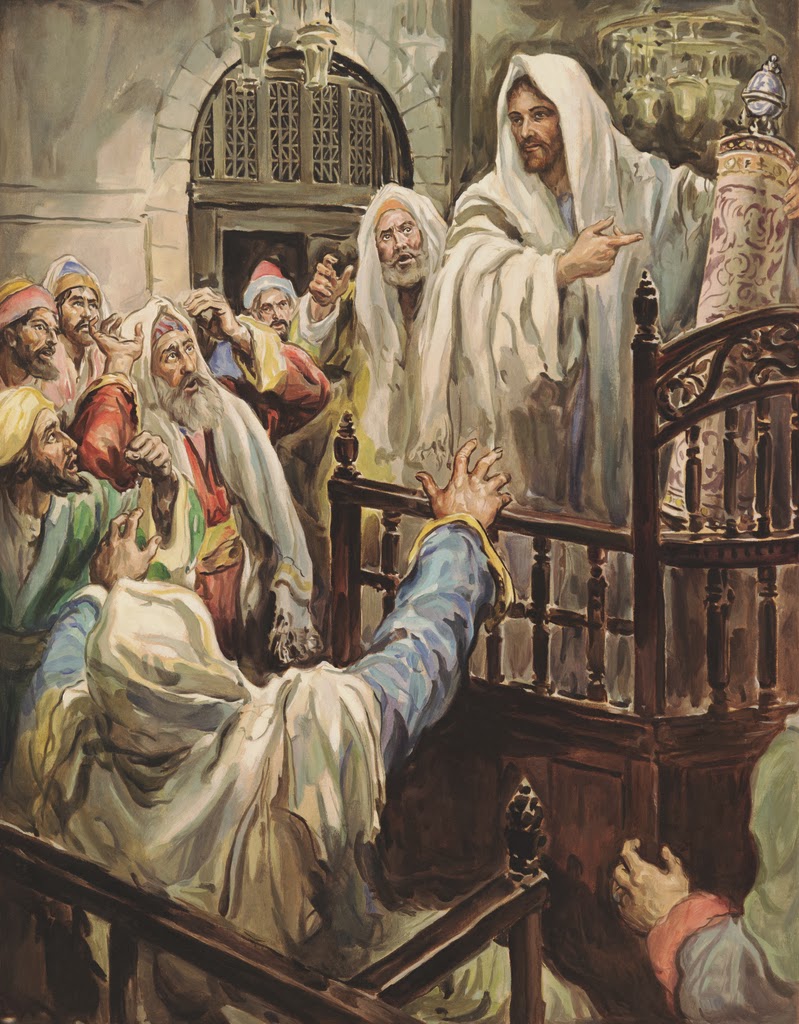
I Can’t Believe My Eyes

Excerpt from Take Time For Him: Some More

by Angela M Jendro

Order your paperback or e-book from Amazon!

Order the kindle e-book (or paperback) to read the Christmas meditation, the meditation for Mary Mother of God, and to reflect on the meditations all year at your convenience.

2nd Sunday of Lent

Read the Gospe1 of Mark 9:2-10

Meditation Reflection:

I can’t believe my eyes!  Peter, James, and John must surely have thought this at the Transfiguration. They would again – though for a different reason – at the Cross; and again at the sight of the risen Lord. There, at the Transfiguration, Jesus’ divinity and Messianic promise radiated unveiled in glory.  Despite the awe inspired by this divine theophany, they struggled to understand what Jesus later meant by rising from the dead.

The Apostles believed Jesus to be the Messiah and remained with Him through the entire three-year tenure of His public ministry.  Nevertheless, they often underestimated Christ, and despite the innumerable miracles they witnessed firsthand, regularly regressed to earthly problem solving without calculating the supernatural aid of their divine Master.  Consider the storm on the sea in which they were sure they would drown while Jesus lay asleep (Mark 4:35-41), or their concern over forgetting to bring bread on their voyage even though Jesus had just multiplied loaves and fish on two different occasions for the multitudes (Mark 8:14-21). 

People often say, “I’ll believe it when I see it.” Yet, despite witnessing miracle after miracle in our own lives, we continue to worry anyhow.  Jesus could very well say to many of us, “Having eyes do you not see, and having ears do you not hear? And do you not remember?” (Mark 8:18).  

Every disciple of Christ struggles to move from the immediacy of the visible world, to consistent sight of the even deeper reality of the invisible world.  Discipleship requires the movement of grace and the Holy Spirit to enable us to follow the Lord where He leads, even though it may mystify and surprise us.  As God reminds us in Isaiah 55:8-9:

For My thoughts are not your thoughts,      neither are your ways My ways, says the Lord.  For as the heavens are higher than the earth,      so are my ways higher than your ways     and my thoughts than your thoughts.”

During Lent we take a step back to evaluate just how deep our faith really goes.  For example, do you seek first the kingdom of God and His righteousness, trusting wholeheartedly that if you do so He will provide for everything else (Matthew 6:33)?   Or do you hedge your bets, keeping up worldly-minded safety nets in case God doesn’t come through for you?

These attachments hold us back from full freedom in the Lord.  Like the apostles, we worry about things like bread and tents (financial and physical security), when Christ has provided everything we need and more…including life itself and a room in His Father’s house. As we contemplate the awesome, sacrificial love of Christ, we are challenged to invite Him more fully into every aspect of our lives.  Certainly He has proven that we can trust Him – the man that died and rose again for us, the man who is also God! 

So, consider: What limits do you place on God? Where are the boundaries of your faith? Do you trust God to secure your eternal home, but doubt with matters related to your earthly one?  Sometimes the visible world can seem more real than the invisible.  The immediacy and demands of each day’s tasks can beguile our imagination into feeling as if God is remote and unrelated to the day’s needs, at least in any concrete or practical way. However, God is Lord of Heaven and Earth. 

Abraham believed this to his very core.  He trusted God to be Who He claimed to be.  His faith was so confident that he raised his knife to sacrifice his only beloved son and his only hope of a legacy, believing God could raise Isaac from the dead if need be. St. Paul described Abraham’s magnanimous faith in his letter to the Hebrews saying:

By faith Abraham, when he was tested, offered up Isaac, and he who had received the promises was ready to offer up his only son, of whom it was said ‘Through Isaac shall your descendants be named.’  He considered that God was able to raise men even from the dead; hence he did receive him back, and this was a symbol.” (Hebrews 11:17-19).

The eyes of faith see the visible and the invisible.  They “understand that the world was created by the word of God, so that what is seen was made out of things which do not appear” (Hebrews 11: 3).  Faith trusts that God is who He says He is, and who He has shown Himself to be time and again.  Yes, it exceeds our understanding, because for us many things are impossible, but “with God, all things are possible” (Matthew 19:26). 

As we journey through Lent, may we place our trust more fully in Jesus Christ. Maybe by the end, we will be somewhat closer to the confidence St. Paul expressed in his letter to the Romans:

“If God is for us, who is against us? He who did not spare his own Son but gave him up for us all, will he not also give us all things with him?” Romans 8:31-32

Consider:

  • Sarah conceived Isaac despite being barren and past the natural age.  God did this because Sarah believed in the power and faithfulness of God.  “She considered Him faithful Who had promised” (Hebrews 11: 11).
  • Consider God’s faithfulness.  How has God been there for you when it counted?  How has He answered prayers in a way you didn’t expect?  How has He brought good out of a bad situation?
  • Consider God’s generosity. Ask the Holy Spirit to help you look back on the day, week, year, and course of your life and see God’s blessings.  Then spend a few minutes in prayers of gratitude.
  • Entrust your cares to Christ. Make a list of your worries or of what’s weighing on your heart and surrender them to Him.

Practical Application:

  • Pray the Act of Faith, Divine Praises, Serenity Prayer, or Suscipe Prayer each day this week.
  • Make a gratitude list each day.

All Rights Reserved © 2020 Angela M Jendro

Private v. Public

Excerpt from Take Time For Him: Some More

by Angela M Jendro

Order your paperback or e-book from Amazon!

Order the kindle e-book (or paperback) to read the Christmas meditation, the meditation for Mary Mother of God, and to reflect on the meditations all year at your convenience.

6th Sunday of Ordinary Time

Read the Gospel of Mark 1:40-45

Meditation Reflection:

Encounter with Christ can seem paradoxical – both private and public, personal and communal, and silent or exclamatory. We experience the healing of Christ when we go to Him in the quiet solitude of personal pleading in faith to our Lord, whether in moments of private prayer or in approaching him through the sacraments, especially the Eucharist and Confession.  At the same time, love and gratitude from this experience overflow our hearts and almost compel us to share it. 

In addition, sometimes Jesus instructed people to tell of their experience, and at other times He bade them to be quiet.  Similarly, the Church sends out missionaries to preach the Gospel in every corner of the world, and at the same time relies on the cloistered prayer of contemplatives and hermits.  Our own duty to attend communal worship at Mass on Sunday, is fed by daily personal prayer all week, and vice versa.

In our own lives we may experience both calls too.  At times Jesus asks us to withdraw in quiet faithfulness, alone with Him and just a few close followers.  At other times, He calls us to publicly witness our faith to others in a visible way. 

How do we discern the difference? Listen. Just listen to the Holy Spirit Who guides the heart’s prayer and provides the words of witness.  The man in this passage couldn’t help but share his joy, it was too overwhelming to keep to himself.  Jesus did ask him to keep quiet because Jesus wanted it to be a personal not public miracle.  Yet, His personal miracles in our lives become public as our joy radiates. 

Consider:

  • How has Christ been working in your life? What are the small (or big) miracles?
  • Is Jesus calling you now into a time of quiet or of witness, or both?
  • How does taking time for personal prayer, make your Mass experience richer?
  • Spend time offering your plea to Christ like the leper in this passage, and time listening and receiving His healing touch.

Practical Application:

  • Read the lives of the saints this week – they offer real life examples of this paradoxical tension between silence and solitude, and courageous witness.

(If you don’t know who to read about, look up the saint of the day online)

All Rights Reserved © 2020 Angela M Jendro

Shining a Light into The Darkness

Excerpt from Take Time For Him: Some More

by Angela M Jendro

Order your paperback or e-book from Amazon!

Order the kindle e-book (or paperback) to read the Christmas meditation, the meditation for Mary Mother of God, and to reflect on the meditations all year at your convenience.

4th Sunday of Ordinary Time

Read the Gospel of Mark 1:21-28

Meditation Reflection:

Jesus casts out demons, He frees us from their lies and from the darkness of sin.  This is truly a gift and a great relief! Our present secular culture needs this gift.  Marked by the highest levels of anxiety and depression, the darkness from which these symptoms often proceed need to be cast out with the authority and light of Christ.

The great theologian Hans Urs von Balthasar (1905-1988), explored the relationship between darkness, sin, and anxiety in his work The Christian and Anxiety.  He noted, “The main effect of darkness is that it separates, isolates, makes lonely.”  Similarly, the darkness of sin separates the sinner from others, isolates him from God whose light he evades to continue in sin, resulting in dark loneliness.  In Exodus, the penultimate plague aptly signified the culmination of Pharaoh’s obstinate evasion of God, who had made Himself visibly manifest.  A darkness came over the Egyptians for three days, “a darkness to be felt” (Exodus 10:21) The dense, suffocating, darkness effected a social paralysis, symptomatic of their spiritual sickness. 

and there was thick darkness in all the land of Egypt three days; they did not see one another, nor did any rise from his place for three days; but all the people of Israel had light where they dwelt” (Exodus 10:22-23). 

Von Balthasar asserted that the loss of light signifies the loss of reality.  Without light we cannot see and therefore remain trapped by our imagination. Reflecting on Wisdom chapter 17, he wrote, “The wicked are afraid of Nothing, of nothing real.”  God is Reality.  His divine Name, Yahweh, which means “I Am”, revealed Him to be existence itself.  Therefore, to hide from His Light, to duck His Truth, means to retreat into an imaginary world of one’s own creation. It deprives us of the answers we need most of all – Who am I?  What is my purpose?  What is the meaning of life? How do I find happiness?  

Denial as a coping method may be alluring, but rarely helpful. For example, avoiding the truth about a physical illness provides a temporary relief and façade of healthiness.  However, the illness usually worsens without treatment and the anxiety one initially avoided only intensifies due to procrastinating the cure. In the same way, one can only self-soothe by justifying sin for so long before the underlying dread and pain of spiritual illness becomes too intense to deny.

Sin can become paralyzing.  Left untreated for too long it can feel insurmountable.  Satan, the “Accuser” as Jesus calls him, whispers fearful lies into the darkness to keep a person from reentering the light.  The demons of shame, despair, and distrust bind the sinner to his dark loneliness. 

Yet, into this darkness, Christ the Light broke through.  He “spoke with authority” because He spoke Truth, thereby dispelling lies.  His Light cast out the demons of darkness, His Truth cast out the Father of Lies, and His merciful love strengthened and healed so the sinner could become whole again.  How many miracles of Jesus demonstrate this!  The paralyzed man who could walk again.  The lepers, cast out from society, healed and able to rejoin their families.  The demoniacs freed and restored to their loved ones.  Christ’s light shone on prostitutes, tax collectors, and pagans.  He liberated them from a kingdom of degradation and made them citizens and children of His Kingdom of God. 

Christ continues to bring His light into the darkness through His Mystical Body the Church.  He invites us into His healing love, then His light begins to shine in us.  Wherever we are, that light shines simply by union with Him. 

Elizabeth Leseur (1866-1914), a devout Catholic living in an upper-class, atheistic, French society provides a concrete example of how to be a light in darkness.  Elisabeth and her husband Felix loved one another intensely and shared an inspiring intimacy of marital friendship. As a result, it pained her severely that he was an ardent atheist.  Her love for God and her love for Felix were both so deep, and yet she couldn’t share that deepest part of herself with the man she loved the most, nor see him receive the joys and graces she enjoyed as a Christian. 

She made it her apostolate to pray and sacrifice for his conversion and for their friends.  Most everyone in their society of friendship were intellectuals and anti-Catholic.  Her diary reveals how she prayerfully navigated ministering to them, bringing light to the darkness through her hidden interior life, her faithful exterior practices, her patient silence, and her readiness to speak boldly and intelligently for Christ if the moment necessitated it.  After her death, her husband discovered her secret diary.  The insights into her interior life, together with his experience of her daily love during their marriage, softened his heart and converted his soul.  He went from being a hardened atheist to later becoming a Catholic priest!

Elisabeth brought her light into the darkness and it freed the one she loved the most.  One of her resolutions in her diary can be instructive for us in the same effort.  In today’s Gospel Jesus spoke with authority and it struck people.  Elisabeth discovered the same thing in her own interactions.  She found that somehow her personal conviction of faith, was itself a strong testimony, strengthened more by authenticity and simple truth than by long explanations trying to persuade.  She wrote,

“Each time the conversation leads me to speak of faith, I will do so simply, but in a direct and firm way that will leave no doubt as to my convictions.  Cleverness is nothing in such things; I am struck with the fact that unbelievers have more sympathy with people of deep faith than with those of variable and utilitarian views.  These dear unbelievers attend more to those who are ‘intransigent’ regarding the Faith than to those who by subtlety and compromise hope to bring them to accept the Faith. And yet the bold statement must be made with the most intelligent sympathy and the liveliest and most delicate charity.”[i]

Our culture suffers under “a darkness that can be felt,” but Christ’s light shines into that darkness to cast it out and replace it with freedom. As St. John testified:

“In him was life, and the life was the light of men.  The light shines in the darkness, and the darkness has not overcome it.” John 1:4-5

May the light of Christ shine in and through us!


[i] Elisabeth Leseur, The Secret Diary of Elisabeth Leseur: The Woman Whose Goodness Changed Her Husband from Atheist to Priest, Sophia Institute Press, 2002.

Consider:

  • Are there shadows of darkness with which you struggle?  Bring them to prayer and expose them to the light of Christ in Scripture and the sacraments.
  • Compare who the world says that you are and what your worth is, with who Christ says that you are.  Which do you listen to more?  How might you strengthen Christ’s voice within you?
  • Spend 5 minutes of silent prayer, loving Christ and receiving His love.
  • How might you grow your relationship with Christ and let Him shine more brightly in your life?  How might you bring His warmth, love, and truth to those in your life?

Practical Application:

  • Resolve to pray for and develop a deeper love for Christ and to shine Him more brightly.
  • Pray the Prayer of St. Francis of Assisi daily.
  • Pray the Rosary.  Mary always purifies and strengthens our love for Jesus.

All Rights Reserved © 2020 Angela M Jendro

Lighting the Path and Seasoning the Journey Because Blending In is Bland

Excerpt frTake Time For Him Book coverom Take Time for Him: Simple, Soulful Gospel Meditations to Ignite the Busy Person’s Spiritual Life  Get your own papercopy from Amazon!

Remember to rate and review it!

5th Sunday of Ordinary Time

Gospel of Matthew 5:13-16

Meditation Reflection:

 People often complain they need to see something to believe it. Although faith requires going beyond sight, the seeds of faith can be planted through allowing others to see for themselves the work of Christ in our lives. Authentic, Christian discipleship causes deep transformation. This supernatural change witnesses in an evidentiary way, the reality of the Holy Spirit and the life of grace.

The first converts to Christianity were moved by the way Christians lived differently than everyone else. Amidst a callous, hedonistic culture, Christians treated one another with love and respect. Christian marriages were marked by mutual kindness and fidelity. Slaves were considered brothers and sisters in Christ. Martyrs sacrificed everything joyfully in witness to their belief in the resurrection. The way martyrs faced their death so peacefully and courageously, converted many onlookers who could plainly see that the dying Christians were acting with a strength and calm that exceeded the limits of human nature. Tertullian famously articulated this phenomenon saying, “The blood of the martyrs, is the seed of the Church” (197 A.D.).

As modern Christians, our lives ought to witness the reality of grace as well, by following Christ beyond our comfort zone. Sometimes we can make our faith life a little too neat and tidy. We make Sunday Mass a casual commitment, and parish fellowship a comfortable social club. We might look to faith for comfort, but we don’t expect the impossible from God, and we ask that He not expect the impossible of us.

Although this sounds like a reasonable relationship, it doesn’t do much to reveal the life of grace, or the reality of God’s supernatural love and aid. After teaching the Beatitudes, the heart of the New Law, Jesus followed up with this analogy to salt and light. The journey of faith, though very personal, also has an evangelistic element; it’s a gift we both receive and give in return. Christ urges us to follow the path of the Beatitudes to its end. He’s right that authentic discipleship will not blend in. Simply living the Christian faith, is a witness to truths that others try to avoid, resulting in numerous pressures from others to be quiet. Those pressures come in many forms – accusations of being overly zealous, judgmental, intolerant, or making one’ private faith public. Secular culture continues to find ways to diminish the witness of faith and put a bushel basket over the light by re-defining religion as personal sentiment and forbidding it to bear external fruit unless that fruit can be limited to, and labeled as, secular humanitarianism.

At the same time, although Christ was persecuted by some, He was also sought out by many others. Jesus promised, “If you continue in my word, you are truly my disciples, and you will know the truth, and the truth will make you free” (John 8:31-32 RSV). Genuine discipleship can transform us and transform society, adding freedom to both. St. Paul told the Galatians, that the fruits of the Spirit are not of this world. By drawing near to God in prayer, the Spirit bears fruits within Christians of divine love, joy, peace, patience, kindness, goodness, faithfulness, gentleness, and self-control (Galatians 5:22-23). The world needs these fruits and hungers for them. If we keep our faith in a box that we only take out on Sundays or Christmas, we put a bushel over the light of Christ and make it impotent, leaving the world to suffer rather than to offer it hope.

I love Jesus’ analogy to salt. Maybe because I love salt on everything! It’s so basic, but it makes everything taste so wonderful. Our faith is the salt that makes life seasoned and enjoyable. If we offer the world a bland form of our faith, what is the point? We wouldn’t make anyone feel uncomfortable, but we would also deny them the chance to taste something remarkable.

Jesus is “the Way, the Truth, and the Life.” He teaches us the path to follow and provides the necessary grace needed to make the journey. When we live in relationship with Him, our life can’t help but radiate His peace, love, and wisdom. If we can have the courage to follow Christ beyond our comfort zone, Christ promises that we can be a light for others shining the truth they need to be free, and the salt that seasons their life with His joy.

Consider:

  • What do you find comfortable about your Christian faith? What’s easy or natural for you?
  • What do you find uncomfortable? What teachings seem “too much”? In which areas of your life, or among which people, do you try to downplay your faith?
  • How might you live your faith more deeply or more authentically?
  • Reflect on the effect of salt and light. Fast from salt for a day and consider the difference without it. Try functioning with only the aid of natural light rather than light bulbs. How does it limit your work and your experience?
  • Consider each aspect of your day – home, work, activities, etc. Reflect on how you can live your faith in each

Make a Resolution (Practical Application):

  • At the beginning of each transition in your day, begin with a prayer for Christ to teach you, and help you, live as His disciple in that part of your
    • The prayer can be a spontaneous prayer of your own words, or a written prayer you recite at each transition. Ideas: Our Father, Glory Be, Hail Mary, Memorare, a verse from a Psalm, a prayer to the Holy Spirit, the Disciple prayer by Cardinal Newman,
    • I personally like the prayer of St. Thomas Aquinas: “Grant O Merciful God, that I may ardently desire, prudently examine, truthfully acknowledge, and perfectly accomplish, what is pleasing to Thee, for the praise and glory of Thy Name”

Follow bar

~ Written by Angela M. Jendro © 2019

Additional Recommendations for Spiritual Reading:

*As an Amazon Associate I earn from qualifying purchases.

Shining a Light into The Darkness


by Angela (Lambert) Jendro


January 27th, 2018 4th Sunday in Ordinary Time

Gospel of Mark 1:21-28 NAB

Then they came to Capernaum, and on the sabbath Jesus entered the synagogue and taught. The people were astonished at his teaching, for he taught them as one having authority and not as the scribes. In their synagogue was a man with an unclean spirit; he cried out, “What have you to do with us, Jesus of Nazareth? Have you come to destroy us? I know who you are—the Holy One of God!” Jesus rebuked him and said, “Quiet! Come out of him!” The unclean spirit convulsed him and with a loud cry came out of him. All were amazed and asked one another, “What is this? A new teaching with authority. He commands even the unclean spirits and they obey him.” His fame spread everywhere throughout the whole region of Galilee.

Meditation Reflection:

Jesus casts out demons with the power and authority of God Himself.  He frees us from their lies and from the darkness of sin.  This is truly a gift and a great relief.

Our present secular culture needs this gift.  Marked by the highest levels of anxiety and depression, the darkness from which these symptoms often proceed need to be cast out with the authority and light of Christ.

The great theologian Hans Urs von Balthasar (1905-1988), explored the relationship between darkness, sin, and anxiety in his work The Christian and Anxiety (Ignatius Press).  He notes,

The main effect of darkness is that it separates, isolates, makes lonely.”

Similarly, the darkness of sin separates the sinner from others, isolates him from God whose light he evades to continue in sin, resulting in dark loneliness.  In Exodus, the penultimate plague aptly describes the culmination of Pharaoh’s obstinate evasion of God, who had made Himself visibly manifest.  A darkness came over the Egyptians for three days, “a darkness to be felt” (Exodus 10:21) The dense, suffocating, darkness effected a social paralysis, symptomatic of their spiritual sickness.

and there was thick darkness in all the land of Egypt three days; they did not see one another, nor did any rise from his place for three days; but all the people of Israel had light where they dwelt.”

Von Balthasar further wrote that the loss of light signifies the loss of reality.  Without light we cannot see and therefore remain trapped by our imagination. Reflecting on Wisdom chapter 17, he writes, “The wicked are afraid of Nothing, of nothing real.”  God is Reality.  His divine Name, Yahweh, which means “I Am”, revealed Him to be existence itself.  Therefore, to hide from His Light, to duck His Truth, means to retreat into an imaginary world of one’s own creation.  In addition, it deprives us of the answers we need most of all – Who am I?  What is my purpose?  What’s the meaning of life? How do I find happiness?

Like living in denial of a physical illness,  one can only self-soothe by justifying sin for so long before the underlying dread and pain of spiritual illness becomes too intense to leave untreated.

Sin can become paralyzing.  Moreover Satan, the “Accuser” as Jesus calls him, whispers fearful lies into the darkness so as to keep a person from reentering the light.  The demons of shame, despair, and distrust bind the sinner to his dark loneliness.

And into this darkness, Christ the Light came.  He “spoke with authority” because he spoke Truth, thereby dispelling lies.  His Light cast out the demons of darkness, His Truth cast out the Father of Lies, and His merciful love strengthened and healed so that the sinner might become whole again.  How many miracles of Jesus demonstrate this!  The paralyzed man who could walk again.  The lepers, cast out from society, healed and able to rejoin their families.  The demoniacs freed and restored to their loved ones.  Christ’s light shone on prostitutes, tax collectors, and pagans.  He liberated them from a kingdom of degradation and made them citizens and children of His Kingdom of God.

Christ continues to bring His light into the darkness through His Mystical Body the Church.  He invites us into His healing love, then His light begins to shine in us.  Wherever we are, that light shines simply by union with Him.

Elizabeth Leseur (1866-1914), a devout Catholic living in an upper-class, atheistic, French society provides a concrete example of how to be a light in darkness.  Elisabeth and her husband Felix loved one another intensely and shared an inspiring intimacy of marital friendship. As a result, it pained her severely that he was an ardent atheist.  Her love for God and her love for Felix were both so deep, and yet she couldn’t share that deepest part of herself with the man she loved the most, nor see him receive the joys and graces she enjoyed as a Christian.

She made it her apostolate to pray and sacrifice for his conversion and for their friends.  Most everyone in their society of friendship were intellectuals and anti-Catholic.  Her diary reveals how she prayerfully navigated ministering to them, bringing light to the darkness through her hidden interior life, her faithful exterior practices, her patient silence, and her readiness to speak boldly and intelligently for Christ if the moment necessitated it.  After her death, her husband discovered her secret diary.  The insights into her interior life, together with his experience of her daily love during their married life, softened his heart and converted his soul.  He went from being a hardened atheist to late becoming a Catholic priest!

Elisabeth brought her light into the darkness and it freed the one she loved the most.  One of her resolutions in her diary, can be instructive for us in the same effort.  In today’s Gospel Jesus spoke with authority and it struck people.  Elisabeth discovered the same thing in her own interactions.  She found that somehow her personal conviction of faith, was itself a strong testimony, strengthened more by authenticity and simple truth than by long explanations trying to persuade.  She writes,

“Each time the conversation leads me to speak of faith, I will do so simply, but in a direct and firm way that will leave no doubt as to my convictions.  Cleverness is nothing in such things; I am struck with the fact that unbelievers have more sympathy with people of deep faith than with those of variable and utilitarian views.  These dear unbelievers attend more to those who are ‘intransigent’ regarding the Faith than to those who by subtlety and compromise hope to bring them to accept the Faith. And yet the bold statement must be made with the most intelligent sympathy and the liveliest and most delicate charity.” The Secret Diary of Elisabeth Leseur; Sophia Institute Press

Our culture suffers under “a darkness that can be felt,” but Christ’s light shines into that darkness to cast it out and replace it with freedom.

“In Him was life, and the life was the light of men.  The light shines in the darkness, and the darkness has not overcome it.” John 1:4-5

May the light of Christ shine in us!

Consider:

  • Are there shadows of darkness with which you struggle?  Bring them to prayer and expose them to the light of Christ in Scripture and the sacraments.
  • Compare who the world says that you are and what your worth is, with who Christ says that you are.  Which do you listen to more?  How might you strengthen Christ’s voice within you?
  • Spend 5 minutes of silent prayer, loving Christ and receiving His love.
  • How might you grow your relationship with Christ and let Him shine more brightly in your life?  How might you bring His warmth, love, and truth to those in your life?

Make a Resolution (Practical Application):

  • Resolve to pray for and develop a deeper love for Christ and to shine Him more brightly.
  • Pray the Prayer of St Francis of Assisi daily. 
  • Pray the Rosary.  Mary always purifies and strengthens our love for Jesus.

Related Posts:

~ Written by Angela Jendro © 2018

* To receive these weekly posts automatically in your email just click the “follow” tab in the bottom right hand corner and enter your email address.


Lighting the Path and Seasoning the Journey…Because Blending in is Bland

by Angela Lambert


20160321_200727310_ios

February 5th, 2017; Fifth Sunday of Ordinary Time

Gospel Matthew 5:13-16

Jesus said to his disciples: “You are the salt of the earth. But if salt loses its taste, with what can it be seasoned? It is no longer good for anything but to be thrown out and trampled underfoot. You are the light of the world. A city set on a mountain cannot be hidden. Nor do they light a lamp and then put it under a bushel basket; it is set on a lampstand, where it gives light to all in the house. Just so, your light must shine before others, that they may see your good deeds and glorify your heavenly Father.”

Meditation Reflection:

People often complain that they need to see something to believe it.  Although faith requires going beyond sight, the seeds of faith can be planted through allowing others to see for themselves the work of Christ in our lives.  Authentic, Christian discipleship causes deep transformation.  This supernatural change witnesses in an evidentiary way, the reality of the Holy Spirit and the life of grace.

The first converts to Christianity were moved by the way Christians lived differently than everyone else.  In a callous, hedonistic culture, Christians treated one another with love and respect.  Christian men and women treated each other with kindness, dignity, and fidelity.  Slaves were considered brothers and sisters in Christ.  Martyrs sacrificed everything, joyfully, in witness to their belief in the resurrection.  The way martyrs faced their death so peacefully and courageously, converted many onlookers who could see plainly that the dying Christians were acting with a strength and calm that exceeded the limits of human nature.  Tertullian famously articulated this phenomenon saying, “The blood of the martyrs, is the seed of the Church” (197 A.D.).

As modern Christians, our lives ought to witness the reality of grace as well, by following Christ beyond our comfort zone.  Sometimes we can make our faith life a little too neat and tidy.  We make Sunday Mass a casual commitment, and parish fellowship a comfortable social club.  We might look to faith for comfort, but we don’t expect the impossible from God, and we ask that He not expect the impossible of us.

Although this sounds like a reasonable relationship, it doesn’t do much to reveal the life of grace or of the reality of God’s supernatural love and aid.  After teaching the Beatitudes, the heart of the New Law, Jesus followed up with this analogy to salt and light.  The journey of faith, though very personal, also has an evangelistic element; it’s a gift we both receive and give in return.  Christ urges us to follow the path of the Beatitudes to its end.  He’s honest that authentic discipleship will not blend in.  Simply living the Christian faith, is a witness to truths that others try to avoid, and can result in numerous pressures from others to be quiet.   Those pressures come in many forms – accusations of being overly zealous, judgmental, intolerant, or making one’ private faith public.  Secular culture continues to find ways to diminish the witness of faith and put a bushel basket over the light by re-defining religion as personal sentiment, and forbidding it to bear external fruit unless that fruit can be limited to, and labeled, secular humanitarianism.

At the same time, although Christ was persecuted by some, He was sought out by many others.  Jesus promised, “If you continue in My word, you are truly My disciples, and you will know the truth, and the truth will make you free” (John 8:31-32).   Blending in cannot transform us, and it cannot transform society.  Rather, discipleship can make us free and add freedom to our culture.  St. Paul told the Galatians, that the fruits of the Spirit are not of this world.  By drawing near to God in prayer, the Spirit bears fruits within Christians of divine love, joy, peace, patience, kindness, goodness, faithfulness, gentleness, and self-control (Galatians 5:22-23).  The world needs these fruits and hungers for them.  If we keep our faith in a box that we only take out on Sundays or Christmas, we put a bushel over the light of Christ and make it impotent, leaving the world to suffer rather than to offer it hope.

I love Jesus’ analogy to salt.  I love salt.  It’s so basic, but it makes everything taste so wonderful.  Our faith is the salt that makes life seasoned and enjoyable.  If we offer the world a bland form of our faith, what is the point?  We wouldn’t make anyone feel uncomfortable, but we would also deny them the chance to taste something remarkable.

Jesus is “the Way, the Truth, and the Life.”  He teaches us the path to follow and provides the necessary grace needed to make the journey.  When we live in relationship with Him, our life can’t help but radiate His peace, love, and wisdom.  If we can have the courage to follow Christ beyond our comfort zone, Christ promises that we can be a light for others to shine the truth they need to be free, and we can be the salt that seasons their life with His joy.

Consider:

  • What do you find comfortable about your Christian faith?  What’s easy or natural for you?
  • What do you find uncomfortable? What teachings seem “too much”?  In which areas of your life, or among which people, do you try to downplay your faith?
  • How might you live your faith more deeply or more authentically?
  • Reflect on the effect of salt and light. Fast from salt for a day and consider the difference without it.  Try functioning with only the aid of natural light rather than light bulbs.  How does it limit your work and your experience?
  • Consider each aspect of your day – home, work, activities, etc. Reflect on how you can live your faith in each place.

Make a Resolution (Practical Application):

  • At the beginning of each transition in your day, begin with a prayer for Christ to teach you, and help you, live as His disciple in that part of your life.
    • The prayer can be a spontaneous prayer of your own words, or a written prayer you recite at each transition. Ideas: Our Father, Glory Be, Hail Mary, Memorare, a verse from a Psalm, a prayer to the Holy Spirit, the Disciple prayer by Cardinal Newman, etc.  (I personally like the prayer of St. Thomas Aquinas: “Grant O Merciful God, that I may ardently desire, prudently examine, truthfully acknowledge, and perfectly accomplish, what is pleasing to Thee, for the praise and glory of Thy Name.)

Additional Links:

The Beatitudes: Climbing the Mountain of God by Way of the Valley of Humility

~ Written by Angela Lambert © 2017

* To receive these weekly posts automatically in your email just click the “follow” tab in the bottom right hand corner and enter your email address.


Hope in Christ in Times of Darkness

by Angela Lambert

light-in-dark

October 9th, 2016 28th Sunday in Ordinary Time

Gospel Luke 17:11-19 NAB

As Jesus continued his journey to Jerusalem, he traveled through Samaria and Galilee. As he was entering a village, ten lepers met him. They stood at a distance from him and raised their voices, saying, “Jesus, Master! Have pity on us!” And when he saw them, he said, “Go show yourselves to the priests.” As they were going they were cleansed. And one of them, realizing he had been healed, returned, glorifying God in a loud voice; and he fell at the feet of Jesus and thanked him. He was a Samaritan. Jesus said in reply, “Ten were cleansed, were they not? Where are the other nine? Has none but this foreigner returned to give thanks to God?” Then he said to him, “Stand up and go; your faith has saved you.”

Meditation Reflection:

On His way to Jerusalem, where He would be rejected and killed for our sins, Jesus encountered ten lepers.  Since leprosy is highly contagious those who suffered with its physical harms additionally suffered from social isolation and rejection as well, banished to stay separate from healthy people.  When the lepers saw Jesus they called out because they could not approach in their condition.  Jesus’ instructions to show themselves to the priests required them to make an act of faith and hope.  Faith believes God’s words and hope acts upon those promises before necessarily seeing them.   At that time, if someone believed they had been healed from leprosy, they had to show themselves to the priests for examination before being cleared to reenter the community.  The lepers did not question Jesus’ command but did as He instructed before they had been healed.  They acted with hope based on belief in Jesus and His words.  As they walked in hope, they were cured.

The virtues of faith and hope direct one toward the highest of all virtues – charity.  Charity is the love of God above all things and love of neighbor out of love for God.  Only one leper demonstrated this higher virtue.  Jesus, who knows the hearts of all men, indicated that the man who returned had a deeper and more fruitful faith than the other nine.  Why?  He returned to Jesus to say thank you.

Consider how many of us quickly forget God’s miraculous work in our lives shortly after the crisis is over. We fall back into our regular routines and grow complacent or even complain about mundane things. Even worse, when the next crisis upsets our lives, we sometimes forget God’s power and fall to discouragement and negativity.  How can we avoid this common mistake?

A simple thank you and a disposition of gratitude express, as well as develop, the essential virtues of the spiritual life. Every day, and many times throughout the day, we have to choose our attitude.  We regularly experience the temptation to succumb to negativity, skepticism, disgust, and even despair.  Our present culture, especially during the current election cycle, presents seemingly constant negative and depressing messages.  From mainstream news to social media to conversations at work, the temptation to view the state of our nation in an overly negative light and give up in despair is constant.  However, with faith in Christ’s promise and hope in His transformative love, we can work through this crisis with the aid of the Holy Spirit and supernatural grace.

If everything depended on us alone, then discouragement and despair would be a sensible response. Take for example the Gospel passage.  The lepers would have considered their future to consist merely of painful physical deterioration and utter loneliness. Their lives took a completely new trajectory when they encountered Christ.  This surprising, unexpected event, liberated them their illness and gave them new hope for their future.

Propping up hope that man can save himself, then deepening discouragement at the realization that we can’t, are two common ways the devil tries to lead us away from the Lord.  We can benefit from doing a daily attitude check and remembering that when we encounter Christ, surprising, unexpected things can happen and change our lives and our world.

A favorite author of mine and Catholic historian, Christopher Dawson, wrote an essay entitled “The Six Ages of the Church” which gives me perspective for our current situation as a Church and as a nation.   In this essay he proposed that throughout the course of its 2000 year history, the Church has (and continues) to experience a cycle of three stages: crisis, response, and flourishing. With each challenge the Church experiences setbacks and loss.  In response, new apostolates arise and face the challenge resulting in a time of flourishing and achievement.  The next crisis sets the Church back again but new responses emerge again as well, and so on and so forth.

Viewing history from this perch inspires hope as we consider every age poses its challenges and Christians have felt the same confusion, disillusionment, and fear that we do.  Yet, in every age the Holy Spirit worked in the hearts of God’s people and inspired them with new ways to meet those challenges, adapt, and overcome.

light-2

This cycle applies to our individual lives as well.  We will encounter challenges that leave us feeling confused and helpless.  Nevertheless, if we call out to Jesus and walk forward in faith and hope, He will transform our lives and we will indeed flourish.  During times of peace, the challenge is to remain grateful and to return to the Lord, remembering that He is the source of our health.  We are always dependent on Him.  During times of crisis, we need to remember God’s power to transform, possibly even through us.  Thanksgiving, counting our blessings, and confidently surrendering to the Lord should be our daily response.  No matter what our crisis – individually, locally, or nationally – there are always things for which to be grateful and always hope for renewal.  As St. Paul says in 1 Thessalonians 5: 18 In all circumstances, give thanks,
for this is the will of God for you in Christ Jesus.”

Consider:

  • Reflect back on times that God helped you through a difficulty.  Consider the feelings you experienced beforehand and the joy afterward.
  • Consider how your faith, hope, and charity have grown over the years. How have your encounters with Christ in your daily life deepened your convictions?
  • When do you feel discouraged, pessimistic, and negative? What areas of your life are particularly vulnerable to this attitude?  How might you change your perspective?  What might you be overlooking or taking for granted in the situation?  How might you make a positive difference in it?
  • If you have children, consider what kind of formation they will need to be Christian leaders in our present culture. What virtues could you help them develop?  What persons or saints could you point them to for inspiration?  How might you nurture and develop their faith and their conscience?  How can you teach by example in your own life?

Make a Resolution (Practical Application):

  • Make a gratitude list. Each day reflect and thank God for three things from that day.
  • Do one thing this week to make a positive contribution or change where you are usually negative.
    • (examples: bring a treat for everyone to a meeting you would rather avoid and choose to smile; pray for our leaders each day this week; tell someone thank you each day for something; if you don’t like the music at church, volunteer your musical talents; if you don’t like what your spouse cooks for dinner, cook something yourself for everyone; if you keep having negative encounters with your child, proactively plan an activity or time together that will be positive; etc.)
  • Reduce discouraging messages this week (either via media or negative friends), and increase encouraging messages (read Scripture, listen to uplifting music or inspiring biographies).

*note of thanks to reader Carl Cadwallader for the topic suggestion of hope in Christ in times of darkness.

light-shine

~ Written by Angela Lambert © 2016

* To receive these weekly posts automatically in your email just click the “follow” tab in the bottom right hand corner and enter your email address.