4th Sunday of Lent: Scripture Readings
Food For Thought
*excerpt from Take Time For Him: Remain In His Love
Meditation Reflection: Luke 15:1-3,11-32
We often live in denial of ours sins and this can make it easy to imagine God as loving since we see ourselves entitled to His affections. However, when our hearts are really struck by the realization of a failure, when shame settles in our stomach at our weakness or self-centeredness, we can mistakenly assume God views us as a failure too and wants nothing to do with us. Jesus corrected this false view by describing God’s unconditional love in His Parable of the Prodigal Son, also known as the Parable of the Merciful Father.

Return of the Prodigal Son By Rembrandt
In this parable, the father had freely given his sons everything he could – life, love, nurturing, and even inheritance of his estate. The first son responded with obedience, loyalty, and service. The second son responded with ingratitude, an entitlement attitude, and complacency. When he arrogantly wished his father dead and demanded his future inheritance, his father not only allowed him to leave but also gifted to him the undeserved future inheritance. Mistaking license for freedom, the son lived foolishly for pleasure and self-gratification. Eventually however his funds ran out and the difficult times that followed revealed the short-sightedness of his choices. The glamour of evil wore off when he found himself desperate enough to take a job caring for pigs (considered unclean by the Jews) and even more desperate when he felt tempted by his insatiable hunger to ask for some of their slop but was denied. As he hit rock bottom, he finally realized the generosity and goodness of his father.
Some Christians take their faith for granted. The spiritual gifts they had enjoyed from the sacraments, living in Christian fellowship, and possibly growing up in a Christian home seem less glamorous and more restrictive than worldliness. At first, missing mass on Sunday to sleep in, put in an extra day at work, travel, or any number of things might not seem that big of a deal. Next, spending time with worldly friends begins to outweigh Christian friends. As seeming independence and success increase, a person may feel he or she no longer needs God. They too mistake license for freedom and, taking their gifts from God, leave.
Over time however they begin to experience life without grace. The absence of God’s peace, the kindness of His followers, the richness of Scriptures wanes and they begin to hunger. When hard times hit, without that spiritual connection to God, a person finds themselves starving and desperate. Where can one turn for help? A person who uses others, finds themselves being used by others. Alcohol or drugs lose their ability to satiate and only make matters worse if not out of control. All former numbing mechanisms – shopping, eating, gaming, gambling, travelling, even over-working cannot help but rather become enslaving.
When one hits rock bottom, crawling back to God can seem unthinkable and disingenuous. How could you ask God for help now when you so brazenly rejected Him earlier or slothfully let Him fall by the wayside. Don’t you deserve to be miserable? Maybe God is saying “I told you so”?
 Jesus tells us otherwise. Our pride imagines God reacting this way. Jesus reveals that God is watching the horizon, waiting hopefully, and running to embrace us when we return. The father in this parable doesn’t accept the demotion suggested by his son. He embraces him, and raises him back to the dignity he had left behind; transforming him from servant of pigs to a son of the father.
The older son’s jealousy reveals a hint of the same mistaken view as the younger son. Although he made the loyal choice, he still considered his brother’s prodigal lifestyle as glamorous. As a result, it appears to him that his brother was rewarded for leaving so disrespectfully and rewarded for returning so degraded. However, the father and the younger son know the terrible poverty, anxiety, and shame his choices had brought upon him. The older son, though working in the fields all those years, also enjoyed the peace and dignity of living as his father’s son. He did not experience the “glamour” of debauchery nor did he have the impoverishment of it either.
God loves us as a merciful father. He pours out blessings in our lives even if we will eventually take them for granted. A little time on our own however and we realize how much we rely on God’s supernatural aid and relationship. He assures us that He is waiting anxiously for our return, running to meet us if we come back to Him and offering us the peace and protection of His home.
+ Reflect on the father in the parable looking out at the horizon and seeing his son in the distance. Consider how God is waiting for you with the same longing.
+ Have you ever fallen for worldly deceptions? How did they turn out differently than what you first expected?
+ How does your dignity as God’s son or daughter outweigh and outshine the false beauty of the world?
Practical Application:
+ Read Psalm 51 each day this week.
+ Return to God in the sacrament of Confession.
This reflection is an excerpt from Take Time For Him: Remain in His Love available in ebook or paperback. Order a copy and don’t miss a single week!


Order the new set of guided meditations for this year’s Sunday Gospels!
© 2021 Angela M Jendro
 termed it.
 Seeing Christ so transformed, Peter, John, and James didn’t know what to think or do. Peter offered to pitch tents for everyone, not comprehending what was happening, but trying to at least offer some kind of service.
  ministry, the Spirit led Him into the desert for a time of preparation first – to fast, pray, and face temptation. In the same way, the Holy Spirit periodically draws us away from the noise of life and the distractions of the senses to be able to connect with God in a deeper interior way. In some cases, we choose to place ourselves in quiet reflection by going on a retreat or planning a weekend of solitude. At other times, the circumstances of life create that solitude for us.
 Moreover, Jesus teaches that all any of us can do is the will of the Father, the results are in God’s hands not our own. This works both ways – when we seemingly do great works and when we seemingly fail. In Thursday’s Gospel reading from Mark 4:1-20 Jesus told the parable of the Sower and the Seed. As a teacher and mother this is one of my favorite passages. Jesus, and His servants, have the responsibility to sow the seeds of the Gospel wherever God sends them. How those seeds grow depends on the soil, or the disposition, of the receiver. Jesus’ words quite often fell on hearts that were hardened toward Him or too distracted by greed or anxiety. Why should we be surprised if we experience the same thing? Sometimes Jesus’ words fell on generous hearts and the Holy Spirit was able to work wonders through His followers. Again, can we really take all the credit when our work bears rich fruit? Some of the credit belongs to the person of faith willing to “hear the word of God and keep it” (Luke 11:28). Thus, Jesus places higher honor on two foreigners over God’s own children the Israelites because they were willing to do something in response to God’s word. Finally, credit ultimately belongs to God. In Friday’s Gospel from Mark 4:26-32 Jesus reflected on how a farmer plants seeds and harvests the crops but the entire process of growth in between should be attributed to the mystery of God’s work in nature.

 *excerpt from
  from Egypt and time in the desert, John the apostle testified to seeing the glory of God return in the flesh through His only Son. After Moses had a direct encounter with God on Mount Sinai, his face shone so brightly it startled the people and had to be veiled. John’s beautiful proclamation expresses a similar effect emanating from his very soul.
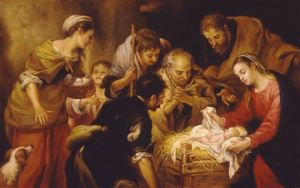 has come to us, and the only thing necessary on our part is to believe in Him and receive Him. From Israelite shepherds to foreign wise men, Christ drew all mankind to His saving presence.
 Take Time For Him