Patience

by Angela (Lambert) Jendro


June 24th, 2018 Feast of the Birth of St. John the Baptist

Gospel of Luke 1:57-66, 80 NAB

When the time arrived for Elizabeth to have her child she gave birth to a son. Her neighbors and relatives heard that the Lord had shown his great mercy toward her, and they rejoiced with her. When they came on the eighth day to circumcise the child, they were going to call him Zechariah after his father, but his mother said in reply, “No. He will be called John.” But they answered her, “There is no one among your relatives who has this name.” So they made signs, asking his father what he wished him to be called. He asked for a tablet and wrote, “John is his name,” and all were amazed. Immediately his mouth was opened, his tongue freed, and he spoke blessing God. Then fear came upon all their neighbors, and all these matters were discussed throughout the hill country of Judea. All who heard these things took them to heart, saying, “What, then, will this child be?” For surely the hand of the Lord was with him. The child grew and became strong in spirit, and he was in the desert until the day of his manifestation to Israel.

Meditation Reflection:

Gazing upon a newborn baby, we encounter the mystery of life as we wonder as St. John’s family did, “What then will this child be?”.  Babies are full of potential, their lives completely ahead of them.  Teens and adults grapple with the question again, “What will I do with my life?”  Many of the joys and sorrows of parents correspond to what unfolds as the answer.

Waiting to see requires patience.  Children grow year by year, one stage at a time.  Their personality and character develop and blossom organically.  Discovering God’s plan means patiently waiting, hoping, and praying.

God too is patient.  He cares for us always, at every moment.  From the creation of Adam and Eve, to the Incarnation of His Son, to the end of time – God patiently guides the unfolding of human history in the lives of each individual, each of which are His sons and daughters. Moreover, He guides Salvation history, by which He redeems and heals mankind from the original sin of the Fall and every personal sin committed by individuals thereafter.

Every day since Adam and Eve first turned away from Him by sin, God has faithfully and steadfastly lead us toward salvation.  In His mercy He pours out His grace upon us.  Even when we rebel, and turn away, He waits patiently for our return.  Of course, God is everywhere so we can’t leave Him physically, but we can leave Him spiritually.  Thus, returning to God means a turning of heart – repentance.  God is far more patient than we are. We want everything immediately, at the least by two days or less with free shipping!  God’s work however can take days, weeks, years, decades, and even a lifetime.

St. John the Baptist was the last of the prophets and the precursor to Christ.  His birth was indeed special.  His family waited years to see his role in God’s plan, but the Jewish people had waited hundreds of years for his day, and humanity thousands of years.  John the Baptist proclaimed with fervor God’s faithfulness.  He announced the coming of the Lamb of God Who would take away our sin.  Thus, God kept His promise to save mankind by sending His only Son.  We need only do our part to receive that salvation, as John the Baptist zealously repeated and Jesus exhorted – repent and believe.

Consider:

  • God has a plan for you and for your life.  Pray for patience and openness to the Holy Spirit as it unfolds daily.
  • Is there anything for which you are impatient right now?  Have you complained to God, demanding your prayer to be answered in two days or less like Amazon?
  • Consider God’s faithfulness in your life.  Take a moment to recall His blessings today, this week, this year, and over your lifetime.
  • Imagine your family asking in amazement after your birth “What, then, will this child be?”.  Consider the wonderful things, with God’s help, that you have done with your life so far.  Consider what you might do with the Lord in your life today and into the future also.  How might you become more loving and Christ-like toward others and make an impact in their lives?

Make a Resolution (Practical Application):

  • Intentionally offer each day to the Lord in prayer.  At the close of the day, reflect back on the good you were able to do with God’s grace, and for the moments you failed pray that you might be more receptive to His guidance tomorrow.


~ Written by Angela Jendro © 2018

* To receive these weekly posts automatically in your email just click the “follow” tab in the bottom right hand corner and enter your email address.


Blood Relatives

by Angela (Lambert) Jendro


June 3rd, 2018 4th Feast of the Most Holy Body and Blood of Christ

Gospel of Mark 14:12-16, 22-26 NAB

On the first day of the Feast of Unleavened Bread, when they sacrificed the Passover lamb, Jesus’ disciples said to him, “Where do you want us to go and prepare for you to eat the Passover?” He sent two of his disciples and said to them, “Go into the city and a man will meet you, carrying a jar of water. Follow him. Wherever he enters, say to the master of the house, ‘The Teacher says, “Where is my guest room where I may eat the Passover with my disciples?”‘ Then he will show you a large upper room furnished and ready. Make the preparations for us there.” The disciples then went off, entered the city, and found it just as he had told them; and they prepared the Passover. While they were eating, he took bread, said the blessing, broke it, gave it to them, and said, “Take it; this is my body.” Then he took a cup, gave thanks, and gave it to them, and they all drank from it. He said to them, “This is my blood of the covenant, which will be shed for many. Amen, I say to you, I shall not drink again the fruit of the vine until the day when I drink it new in the kingdom of God.” Then, after singing a hymn, they went out to the Mount of Olives.

Meditation Reflection:

At the Mount of Olives, on the night before His death, Jesus prayed in the Garden of Gethsemane.  His final prayer to the Father begged for us to be one in Jesus, as Jesus is one with the Father. Considering the sublime and mysterious unity of the Blessed Trinity, what a profound request!   Christ invites us into their eternal bond of love and union of mind and will, and He asks the Father to make it possible.

“I pray not only for them, but also for those who will believe in me through their word, so that they may all be one, as you, Father, are in me and I in you, that they also may be in us, that the world may believe that you sent me. And I have given them the glory you gave me, so that they may be one, as we are one, I in them and you in me, that they may be brought to perfection as one, that the world may know that you sent me, and that you loved them even as you loved me. John 17:20-23 NAB

 Jesus asserts that He gave us His glory that we might be one with Him, and therefore also one with the Father.  How did He do this?  What does He mean?

The Eucharist.  Jesus had just given His apostles His Eucharistic Body, Blood, Soul, and Divinity.  Every time we receive Christ in the Eucharist, we become one in Him, sharers in His glory.

When we eat regular bread and wine our bodies digest them into smaller component parts so that the nutrients within can be absorbed by the cells for energy, growth, repair, etc.  Thus, after an hour or so, the toast you ate for breakfast is no longer toast but simply part of you.

In the Eucharist, the opposite process takes place.  Rather than being incorporated into our body, we become incorporated into Christ’s Body.  We become constituent parts which build up, energize, and repair and the Mystical Body of Christ – the Church.  Thus, our nutritional value (love of God and neighbor) edifies the whole body, and our toxins (sin) harm it.

In addition, think about our inherent investment in “blood relatives.”  We take pride in their accomplishments and feel shame in their failures, even if our physical ancestral connection is our only tie. Christ has made the family of the Church blood relatives through His own Body and Blood.  We take pride in the virtue of the Saints and feel deeply hurt and saddened when a Christian falls into a terrible sin like we’ve seen with the recent clergy abuse scandal.

In addition, knowing the genetic history of our blood relatives can be enlightening since their strengths are our strengths and their weaknesses our weaknesses.   Jesus became our blood relative at the Incarnation and willingly accepted the weakness of our human nature.  In return however, He bestowed on us something of the strength and glory of His divine nature.  When we receive Him in the Eucharist, we are strengthened by His Real Presence, by deeper union with His Body, Blood, Soul, and Divinity, we become grafted onto Him and elevated by His relation to us.

“But how can this be?” you might ask.  It’s a mystery.  We know it’s true because Jesus said “This is My Body, this is My Blood…”  and He promised, and warned, in John 6:51-53:

I am the living bread that came down from heaven; whoever eats this bread will live forever; and the bread that I will give is my flesh for the life of the world.” The Jews quarreled among themselves, saying, “How can this man give us [his] flesh to eat?” Jesus said to them, “Amen, amen, I say to you, unless you eat the flesh of the Son of Man and drink his blood, you do not have life within you.

Although certainly a sublime mystery, on what grounds can a Christian believer doubt that God Who created everything out of nothing couldn’t change bread and wine into His Real Presence?  Recall in Genesis that God created by speaking: “Then God said: Let there be light, and there was light. Genesis 1:3.  God created with a Word, and that Word of God is the Son – Jesus Christ.  In addition, if God could daily provide miraculous bread to feed the Israelites during their journey through the desert to the Promised Land, why wouldn’t He provide bread from Heaven for our even more difficult journey through the desert of temptations and suffering in this life on our journey to Heaven?

Today, on the Feast of the Body and Blood of Christ, we meditate on the unimaginable gift of love bestowed on us in the Eucharist by which we become one with Jesus, and through Him one with God and neighbor.

Consider:

  • Consider the special union of love in families which is both a physical and spiritual union.  Reflect on the union of love between Christ and His disciples physically and spiritually in the Eucharist.
  • Consider how you feel when you eat healthy foods and get enough rest.  How might receiving the Eucharist more often boost your spiritual energy and health as well?
  • Reflect on the humility and intimacy of Christ’s love for you.  He became man – sharing in your human nature, lived an earthly life for 33 years – sharing your experiences, and continues to be physically present to you in the Eucharist today where you can be near to Him in prayer and one with Him when you receive Him at Mass.
  • Consider how spending time with family can keep you grounded and more who you really are.  Reflect on how time with Christ purifies your perspective and grounds you as well.

Make a Resolution (Practical Application):

  • Arrive at Mass 5 minutes early to prepare your heart and mind for receiving Christ in the Eucharist, and/or stay for 5 minutes after Mass to pray and thank Christ for receiving Him in the Eucharist.
  • Spend 30 minutes with Christ in prayer at Eucharistic Adoration.

Related Posts:

~ Written by Angela Jendro © 2018

* To receive these weekly posts automatically in your email just click the “follow” tab in the bottom right hand corner and enter your email address.


Living in the Mystery of Divine Love

by Angela (Lambert) Jendro


May 27th, 2018 The Solemnity of the Most Holy Trinity

Gospel of Matthew 28:16-20 NAB

The eleven disciples went to Galilee, to the mountain to which Jesus had ordered them. When they all saw him, they worshiped, but they doubted. Then Jesus approached and said to them, “All power in heaven and on earth has been given to me. Go, therefore, and make disciples of all nations, baptizing them in the name of the Father, and of the Son, and of the Holy Spirit, teaching them to observe all that I have commanded you. And behold, I am with you always, until the end of the age.”

Meditation Reflection:

The mystery of the Trinity is so sublime, any words of reflection feel like an injustice to so majestic and beautiful a reality.  The revelation of the inmost reality of God, His very essence, so far exceeds the scope of our limited human experience any attempt to imagine or explain Gods’ Triune nature feels inadequate and even irreverent.

Nevertheless, Christ revealed this ineffable mystery to us and commanded the apostles to preach this Truth to the whole world. In consequence, with the utmost humility, we ought to contemplate this essential mystery of the Christian faith.  Even though we can never understand it fully, we must revere that which Christ desired us to know and imitate.

The perfect union of mind, will, and love exists only in the union of the three Persons of the Blessed Trinity.  Remarkably, Christ invites us into that divine relationship and makes it possible through His example and grace.

At the Incarnation, in an act of supreme humility, the Son, sent by the Father, became one with humankind by taking on our nature.  In doing so, He demonstrated for us concretely how to align our will with God’s and how to exercise divine love toward God and neighbor.  At every turn, Jesus remarked that He had come to do the Father’s will.  Even in His agony in the Garden of Gethsemane, His human will resisted the impending Cross, but resigned “Father, if you are willing, take this cup away from me; still, not my will but yours be done” (Luke 22:42).  During the first thirty years of His life, Jesus even obeyed the will of Mary and Joseph and followed all the prescriptions of the Mosaic Law (Luke 2:51).

This flies in stark contrast to our highly individualistic culture, fixated on self-assertion.  The fruits of the opposing ideologies bear the same contrast.  Despite all the attempts to do away with any limits – personal and relational, definitions, and even the laws of human nature, our secular culture seems to only sink deeper into depression, anxiety, loneliness, and slavery to addictions.  Rather than creating unity in freedom, violence and vitriol dominate public discourse.

Jesus illuminated the freedom and supreme joy that springs from self-giving love. He began by modelling it for us.  St. Paul exhorts us to follow Christ’s example, Who, instead of asserting His rights as the divine Son, instead:

did not regard equality with God something to be grasped. Rather, He emptied Himself, taking the form of a slave, coming in human likeness; and found human in appearance, He humbled Himself, becoming obedient to death, even death on a cross. Because of this, God greatly exalted Him and bestowed on Him the name that is above every name”  Philippians 2: 5-9

Rather than usurp the authority of Mary and Joseph (the only teen who really was smarter than His parents), He obeyed them and respected God’s ordering in the family.  Jesus didn’t have to offer sacrifice in the Temple because He had never sinned, but He chose to because He wanted to share in our suffering.  Jesus didn’t have to die, but He wanted to walk every dark corner of human existence so that He might shine His eternal light there and conquer even the most evil oppressors of His beloved.

He challenges us to do the same.

“I give you a new commandment: love one another. As I have loved you, so you also should love one another. This is how all will know that you are my disciples, if you have love for one another.” John 13:34-35


unless a grain of wheat falls to the ground and dies, it remains just a grain of wheat;  but if it dies, it produces much fruit.” John 12:24


“Whoever wishes to come after Me must deny himself, take up his cross, and follow Me. For whoever wishes to save his life will lose it, but whoever loses his life for My sake will find it.” Matthew 16:24-25

First, we must seek union of mind, will, and heart with God.  It means surrendering our adolescent pride which thinks we know better than our Heavenly Father, and our foolish rebellions against His guidance and “rules”.  When we allow ourselves to be taught by God and developed under His authority, we mature and blossom like a child who assents to his parents loving care through the turbulent periods of growth into adulthood.  No adult looks back and says, “I wish my parents had been more weak and let me raise myself.” Often, the opposite is true.

Aided by divine grace and the gift of the Holy Spirit, the maturing soul increasingly appreciates the depth of God’s love and comes to see His Wisdom.  At 15 many kids consider their parents’ rules overbearing and their views outmoded.  At 25 they begin to thank their parents for those rules and see the wisdom in their advice.

As God’s love fills the soul more and more, His fruits also begin to run over.  St. Paul lists the fruits of the Spirit as, “love, joy, peace, patience, kindness, generosity, faithfulness, gentleness, [and] self-control” (Galatians 5:22-23).  These enable one to work for unity of love with others.  If trying to align our mind and heart with God, who is Perfect, is so hard, how much more difficult to accomplish mutual respect with imperfect humans! Impossible.  Thankfully, Christ assures us that what is impossible for man is possible for God (Matthew 19:26).

Union of mind and will can only be achieved in mutual love.  Forced submission through violence or manipulation is not union, only domination. Union is a coming together of the two into one whereas domination is assertion of one to the disappearance of the other.

Authentic union can only be achieved through divine grace.  No political system, media blast, educational model, or diet can produce the mysterious reality found in the Christian union of mind, will, and heart, in freedom, joy, and love. The only place we can experience the peace we long for is in the Mystical Body of Christ, of which Christ is the Head.   United in Christ, however, we exercise all the diversity of personality given to us by our marvelously creative Father while at the same time working toward the same end in perfect harmony and mutual respect.

There’s no greater happiness than true love, and no greater love than that between the Father, the Son, and the Holy Spirit.  The Lord invites us into that love and into His blessed happiness.  The Father sent the Son, the Son redeemed us and sent the Holy Spirit, the Holy Spirit sanctifies us and fills us with the love of God, and we are then sent to share that saving love with others.  What an incredible mystery!

Consider:

  • Take a few minutes to simply rest in the presence of the Triune God.
    • Consider in awe the immensity of love between the Father, Son, and Holy Spirit.  Consider how you are a fruit of God’s love.
    • Consider how the closer you have become with the Lord, the more purified your love has become for your neighbor.
  • Consider how the fruits of the Spirit produce loving union in human relationships as well.
    • What often undermines developing a mutual understanding or working in alignment? (pride, anxiety, fear, stubbornness, hate, selfishness, over-ambition, self-assertion, etc.)
    • Contrast these with the fruits of the spirit: love, joy, peace, patience, kindness, generosity, faithfulness, gentleness, and self-control.
  • Christ is the Head of the Mystical Body, and we are its members (I Corinthians 12). Consider times or ways in which you try to be the head and lead Christ, rather than the other way around.

Make a Resolution (Practical Application):

  • Make the sign of the Cross slowly and thoughtfully as a prayer to the Triune God at the beginning and end of the day.
  • Exercise the fruits of the Spirit to bring greater unity in your family.

~ Written by Angela Jendro © 2018

* To receive these weekly posts automatically in your email just click the “follow” tab in the bottom right hand corner and enter your email address.


Being Lifted Up With Christ By Serving With Christ

by Angela (Lambert) Jendro


May 13th, 2018 Ascension of the Lord and 7th Sunday of Easter

Gospel of Mark 16:15-20 NAB

Jesus said to his disciples: “Go into the whole world and proclaim the gospel to every creature. Whoever believes and is baptized will be saved; whoever does not believe will be condemned. These signs will accompany those who believe: in my name they will drive out demons, they will speak new languages. They will pick up serpents with their hands, and if they drink any deadly thing, it will not harm them. They will lay hands on the sick, and they will recover.” So, then the Lord Jesus, after he spoke to them, was taken up into heaven and took his seat at the right hand of God. But they went forth and preached everywhere, while the Lord worked with them and confirmed the word through accompanying signs.

Meditation Reflection:

Today as a Church we remember Christ’s Ascension into Heaven when He returned to His rightful glory.  Jesus our king had left the comfort and majesty of His throne, to battle sin and death for His subjects, which could only be accomplished as one of us.  He entered the war zone at the Incarnation. The Son of God Who is infinite in His divinity accepted the burden of the limitations our human nature.  In addition, as if human kingship wouldn’t already be a far cry from His experience as Divine king, He chose instead the most difficult circumstances in human society – poverty and social rejection.

Our king is someone Who walks among His people, rolls up His sleeves and works side by side with us in our most difficult struggles.  He doesn’t stand aloof but rather He invites us into His own glory.  When He became our Brother by human nature, He raised us to His brothers and sisters in His divinity.  Though we do not become God, we do participate in His divinity and our nature is elevated above its usual limitations.  How?  After His Ascension Jesus sent His Spirit Who dwells in the souls of all the baptized and enables them to share in the work of Christ and become His Mystical Body.

In addition to opening the gates of Heaven for us, Jesus modelled the way.  His glory began with His self-emptying (the fancy theological word for it is kenosis) and so our final glory requires this same emptying of self, service of others, and humble obedience to the Father’s will. St. Paul describes it beautifully in his letter to the Philippians:

“If there is any encouragement in Christ, any solace in love, any participation in the Spirit, any compassion and mercy, complete my joy by being of the same mind, with the same love, united in heart, thinking one thing. Do nothing out of selfishness or out of vainglory; rather, humbly regard others as more important than yourselves, each looking out not for his own interests, but [also] everyone for those of others.

 Have among yourselves the same attitude that is also yours in Christ Jesus, Who, though he was in the form of God, did not regard equality with God something to be grasped. Rather, he emptied himself, taking the form of a slave, coming in human likeness; and found human in appearance, he humbled himself, becoming obedient to death, even death on a cross. Because of this, God greatly exalted him and bestowed on him the name that is above every name, that at the name of Jesus every knee should bend, of those in heaven and on earth and under the earth, and every tongue confess that Jesus Christ is Lord, to the glory of God the Father.”  Philippians 2:1-11 NAB

Jesus took on the hardest and lowest jobs.  He was born in a barn, lived as a refugee in Egypt for the first years of His life, grew up with manual labor as His “career”, and walked wherever He travelled.  During the three years of His public ministry He faced rejection by His own townspeople who tried to throw Him off a cliff, the Pharisees and Sadducees plotted against Him even though He is the Word of God they supposedly protected, His own friends betrayed Him, and He died with an unjust conviction under false claims in the most humiliating and torturous way the Romans had contrived – naked on a Cross.  The night before His death, He prepared His apostles to reign in His stead by washing their feet – the most disgusting task which would traditionally be assigned to whomever was lowest on the totem pole – of the servants the slaves and of the slaves the foreign slaves.

So, who wants to reign with Christ? Doesn’t this sound fun?! If Christ’s life ended on the Cross, then NO.  Absolutely Not!  But it didn’t.  Because He humbled Himself, the Father exalted Him above every name and at His Name, every knee should bend.  Jesus rose from the dead and 40 days later He ascended to unmatched glory in Heaven.  He assures us that if we follow Him, the way will be hard, but it will culminate in unending joy.

“The greatest among you must be your servant. Whoever exalts himself will be humbled; but whoever humbles himself will be exalted.” Matthew 23: 11-12 NAB

Christian disciples share in the mystery of Jesus’ Royal Poverty.  Rather than looking side to side to see what everyone else is doing, we look up and down – up to Christ in glory and to His will, and down to where we might humbly serve.  If we keep our glance up and down, down and up, we will discover harmony within the tension of humble service and risen glory – the royal poverty that can only be found by abiding in the One who accomplished it – Jesus Christ.

So, let us wait in eager anticipation for the coming of the Holy Spirit on Pentecost (next Sunday).  He empowers us to serve and to reign, to obey and to be glorified.  He empowers us to love.  Love puts the beloved before oneself, and experiences joy at every sacrifice.  The Holy Spirit is the love of the Father and Son, and He pours their love into our hearts with such generosity that as it overflows all selfishness and pride pours over the edges with it.  The deepest happiness is love – both given and received.  We have received the greatest of loves from Christ our Lord and Brother and His Spirit gifts us with the same love for Christ and our fellow brothers and sisters in Him.

Consider:

  • Meditate on the love of Christ who desired to become your Brother.  What does it mean to be a brother? What does it mean to be His brother or sister in return?
  • Today is Mother’s Day.  Consider the Christ-like love of motherhood: sacrifice of one’s bodily comfort, unconditional and personal love, the acceptance of humble tasks like changing diapers, the intercession for her children with relentless prayers. Consider your own mother’s love expressed in humble service toward you.  Offer a prayer of thanksgiving and blessing for her.
  • Ask Christ how you might empty yourself more.  To what are you still attached? What holds you back from following Him?  What task feels too low to take up, or what feels too good to give up?
  • Pray for greater faith and hope.  Humbling ourselves is a tremendous risk.  We live in a competitive culture of self-assertion.  If we don’t exalt ourselves, we will be overrun if God doesn’t exalt us.  Pray for the grace to step out in faith that we need only humble ourselves, and God will take care of the exalting.
  • How much do you look side to side – comparing yourself to others or the standards of the world?  How might you look up and down more in those situations?

Make a Resolution (Practical Application):

  • Each day this week acknowledge someone’s humble, loving service and thank them.
  • Each day look up in prayer, then down for an opportunity to serve, then offer that service back up to the Lord as a sacrifice of praise or intercession for someone.  Try to do it in the morning, midday, and evening.  Even every hour if you can.

Related Posts:


~ Written by Angela Jendro © 2018

* To receive these weekly posts automatically in your email just click the “follow” tab in the bottom right hand corner and enter your email address.


Remaining in the Joy of Love

by Angela (Lambert) Jendro


May 6th, 2018 6th Sunday of Easter

Gospel of John 15:9-17 NAB

Jesus said to his disciples: “As the Father loves me, so I also love you. Remain in my love. If you keep my commandments, you will remain in my love, just as I have kept my Father’s commandments and remain in his love. “I have told you this so that my joy may be in you and your joy might be complete. This is my commandment: love one another as I love you. No one has greater love than this, to lay down one’s life for one’s friends. You are my friends if you do what I command you. I no longer call you slaves, because a slave does not know what his master is doing. I have called you friends, because I have told you everything I have heard from my Father. It was not you who chose me, but I who chose you and appointed you to go and bear fruit that will remain, so that whatever you ask the Father in my name he may give you. This I command you: love one another.”

Meditation Reflection:

Here in this passage, Jesus tells you directly, “I love you.”

How much you might ask?  What kind of love?  The term is thrown about loosely these days and unfortunately often conditional.  The popular children’s books Guess How Much I Love You? (by Sam McBratney) and I Love You to the Moon and Back (by Amelia Hepworth) attempt to describe the greatest possible love a person could have for another, making them beloved stories for parents and children.   Jesus too attempts to describe the greatest possible love He could have for you – “As the Father loves me, so I also love you.”  As the Father loves Jesus!  To the moon and back is quiet a distance, but the Father loves infinitely, totally, purely, passionately, and eternally.  Jesus has this love for you!

And He invites you to remain in His love.  How wonderful it is to remain in the sun after a long winter, to linger on the beach past sunset during a vacation, or to relax at home with your significant other or your best friend after a busy week.  Relationship with Christ means soaking up the warmth and brightness of His light, lingering on the beauty of His Word in Scriptures, His presence in the Sacraments, and His presence in your heart.  It means enjoying being with Him in activity and in the quiet of home.

Making time to rest in these things can be hard however.  Our schedules fill quickly to overflowing and the pull of work and achievement rushes us away from the joy we desire.  These same distractions work our souls into a frenzy and tempt us to set Christ to the side until we “get everything done first.”

However, experience proves that making the time to step back from activity for rest and relaxation actually increases overall productivity.  Skimping on sleep and vacation days frazzles our nerves, dulls our judgment, and kills our creativity.  Refreshing ourselves on the other hand gives us the energy to approach our work with our best selves and often provides new inspiration.

Remaining in Jesus’ love requires stepping away for time alone with Him.  Just like we need sleep and food every day, we need prayer every day.  Resting in the Lord for 30 minutes will refresh your soul and provide the spiritual energy to approach everything in your schedule with Christ’s companionship and aid.

In addition, it will grow our love and each stage of love brings out our best selves at ever deeper levels.  First, love makes us joyful, energetic, and generous. Think of newlyweds or those newly in love. They’re easy to spot by their glow, their bubbling joy, and their extra energy.  They see all the best in each other and look forward to every little opportunity to demonstrate their love.  When we abide in Christ’s love, that same excitement bubbles up and we look for ways to demonstrate our love for Him in even the smallest of details.  Moreover, just as young love relates everything back to their beloved (sometimes obnoxiously so to those around them!), Christian love sees Christ in every person they encounter and every event of their day.  This love then imbues their activity, bearing even richer fruit and produces works of charity towards those around them.

As the love grows deeper and the relationship develops history together with time, the commitment and concern for one another becomes apparent in a couple’s intimate knowledge of each other and patient forgiveness.  As relationship with Christ develops it runs deeper as well.  We get to know Him more intimately and experience His patient forgiveness with a heart of respect and gratitude.  This can’t help but extend to our neighbor as an opportunity to show Christ the love and commitment He has shown us.

Finally, perfect love sacrifices joyfully and immediately for the beloved.  “No one has greater love than this, to lay down one’s life for one’s friends.”  I’ve experienced this as a mother as have most parents – I wouldn’t stop to think for even a split second if I had to lay down my life for my child.  Christ chose to become man and He chose to lay down His life on the Cross for us.  Although He suffered immensely every step of the way to Calvary and for the three hours nailed to the Cross, He didn’t consider even for a split second walking away at the expense of our salvation. How can we give Him anything less than our entire selves and our whole lives in return?

When we abide in His love, we abide in Him, His love for us, and His love for others.  In this relationship of reciprocal love, He assures us that “Whatever you ask the Father in My Name He will give you.”  If we love authentically, for what would we ask other than to increase our love for the Lord, to become better disciples, and for the things Jesus wants for us.  Moreover, we will see others with the heart of Jesus and desire the blessings He desires for them.

As the Father loves the Son, the Son loves us; and as the Son loves us, we are to love one another.  Jesus wants us to share in His ministry, to share in His love for us and others.  Therefore, when we abide in Him, whatever we ask in His Name, He will give because He wants us to bear fruit in His work.

So today, let us remain in Jesus’ love for us.  May He “lead us beside still waters and restore our souls” (Psalm 23:2-3).  Then, may that joyous love overflow into every detail of our day and every encounter with Christ in those we meet.

Consider:

  • Meditate on Jesus words “so I also love you.”  Jesus is Truth and His words are true.  He loves you as you truly are, to your very core.
  • Consider the joy inherent in love.  Even in the midst of trials or suffering, it remains and even increases when that suffering is for the person loved.
  • Pray for the gift of seeing Christ in others.  Ask for His love for them to be poured into your heart as well.

Make a Resolution (Practical Application):

  • Pray Psalm 23 each day.
  • Do intentional acts of love toward Jesus throughout the day by acts of love toward others.  For instance, Christ is forgiving toward us, but we never have the opportunity to be forgiving toward Him back.  Be forgiving toward someone else today as an act of loving forgiveness for Jesus.  Jesus is so generous with us, but what could we give Him that wasn’t already a gift from Him?  In consequence, be generous with someone today as an act of generosity toward Christ.

~ Written by Angela Jendro © 2018

* To receive these weekly posts automatically in your email just click the “follow” tab in the bottom right hand corner and enter your email address.


Lent – That Others May See More of Jesus In Us

by Angela (Lambert) Jendro


March 18th, 2018 5th Sunday of Lent

Gospel of John12:20-33 NAB

Some Greeks who had come to worship at the Passover Feast came to Philip, who was from Bethsaida in Galilee, and asked him, “Sir, we would like to see Jesus.” Philip went and told Andrew; then Andrew and Philip went and told Jesus. Jesus answered them, “The hour has come for the Son of Man to be glorified. Amen, amen, I say to you, unless a grain of wheat falls to the ground and dies, it remains just a grain of wheat; but if it dies, it produces much fruit. Whoever loves his life loses it, and whoever hates his life in this world will preserve it for eternal life. Whoever serves me must follow me, and where I am, there also will my servant be. The Father will honor whoever serves me. “I am troubled now. Yet what should I say? ‘Father, save me from this hour’? But it was for this purpose that I came to this hour. Father, glorify your name.” Then a voice came from heaven, “I have glorified it and will glorify it again.” The crowd there heard it and said it was thunder; but others said, “An angel has spoken to him.” Jesus answered and said, “This voice did not come for my sake but for yours. Now is the time of judgment on this world; now the ruler of this world will be driven out. And when I am lifted up from the earth, I will draw everyone to myself.” He said this indicating the kind of death he would die.

Meditation Reflection:

Someone may say to you, “[Your Name], I would like to see Jesus.”  Imagine that for a moment and take it in.  A person looking to you with a hopeful and somewhat anxious expression, addressing you by name, and depending on you to connect them to Christ.

“Why me?” you might say.  Yet, in a secular culture void of God, searching souls see Christ from a distance and feel more at a loss to find their way to Him than you may think.  Thus, your relationship with Jesus, and their relationship with you, provides the bridge they need.

Yet, to be Christ’s light and love in the world, to be a bridge, demands a serious choice which will decide the trajectory of your whole life.  Jesus made this choice, and so must each of His followers.

The choice – to live for yourself or to live for the Lord, to build a life of your own making or to build the kingdom of God.

A grain of wheat, in and of itself, is small and insignificant – enough to feed only a bird. Yet, within it lies tremendous potential – enough to feed human persons.  The movement from potential to actuality however begins with death.

If a grain were a conscious soul with a mind and will, it would see before it a decision:

  1. Go on living as a seed for itself, unchanged and comfortable.
  2. Surrender itself to the Creator, be broken apart in death and then transformed into something new and quite different from its experience as a seed.

Although the second option sounds scary, to grow and change also entails being lifted up from the ground, becoming tall stalks of wheat, and finally, maturing to the point where it can be picked as harvest for others.  The first choice may be easier, but the second adds so much more meaning to its life.

As Jesus’ “Hour” approached, He came to the final crossroads of His decision.  He had said Yes to the Father when He agreed to become man at the incarnation, He said No to Satan in the desert when offered the kingdoms of the world without the Cross, and now as His final suffering and death approached He weighed His decision aloud for His disciples to hear and one day follow.

Jesus didn’t want to suffer but He did want to save us. So what was He really to do?  Christ’s magnanimous love refused to live for Himself, and so chose the path to the Cross.  He chose to die that He might be lifted up – on the Cross and in His Resurrection – and thereby bear fruit that gives all mankind who plucks it life eternal.

As Christ’s disciples, we first must receive life from our Lord who has become our spiritual bread.  Under the appearance of wheat bread in the host, He gives His very Body, Blood, Soul, and Divinity to us in the Eucharist.  With this union and grace, we then are asked to allow Him to transform our souls.

He begins by breaking down sin and selfishness.  Dying to ourselves marks the first stage of development.  Thus prayer, fasting, and almsgiving facilitate this process by putting God first, denying ourselves pleasures, and opening ourselves up to the poor around us.

From this death to self however, which no doubt is painful, emerges transformation.  Sin and self at bay, Christ is more free to build virtues within us and to grow authentic Christian love.  The process snowballs positively as the greater one loves, the easier sacrifice becomes.  In full Christian development, love is so perfected that it, like Christ, can’t bear to choose pleasure or comfort over love of God and neighbor. We experience something of this in human loves between parent and child, spouses, or dear friends.  In loving relationships, giving of one’s self or possessions is felt to be an opportunity rather than a burden.

In this fifth week of Lent, you may be feeling the pain of perseverance in the commitments you made Ash Wednesday.  However, the more weak you feel on your own, the more reliant you become on Christ and His grace to support you.  Have hope, we are past the midpoint!  Just as there can be no Easter Sunday without Good Friday, we can’t truly feast until we’ve fasted.  The more we enter in to Lent, the more joy we will experience during Easter.

Like Jesus, we might pray to the Father:

“I am troubled now. Yet what should I say? ‘Father, save me from this hour’? But it was for this purpose that I came to this hour.”

We choose death to self because we desire life in Christ – which we know to be much happier, peaceful, and fulfilling than anything we could construct for ourselves.  We don’t die for its own sake but rather to receive greater life.

Jesus teaches, “Whoever serves me must follow me, and where I am, there also will my servant be.”  In consequence, as we approach Holy Week we endeavor to be with our Lord wherever He is – at the Last Supper on Holy Thursday, at the Cross on Good Friday, waiting in anticipation Holy Saturday, and rejoicing in His Resurrection on Easter Sunday.

If we persevere and remain near to Christ, those near to us can be blessed by His Presence too. Our lived discipleship might drive out the lies of Satan with Christ’s Truth.  You can be a witness that Christ brings true happiness to someone disillusioned by the world’s false promises.  Your unconditional love can drive out the lie that someone is only as valuable as they are useful.  Your forgiveness can drive away the temptation of despair with the truth of mercy.

Christ’s saving love draws everyone to Himself.  If we allow ourselves to be conformed to Him, we just might be that bridge to Christ for someone’s salvation, or that stalk of wheat which they pluck to receive our Lord for the first time.

Consider:

  • Meditate on the words, “we would like to see Jesus.”  Make this your prayer to the Holy Spirit and spend 5 minutes in silent prayer listening.
  • Consider Christ’s gift of self for you.  Pray about how you might give more of yourself to Him and to others.
  • In what ways does your life witness your faith to others?  In what ways do you hide your faith?
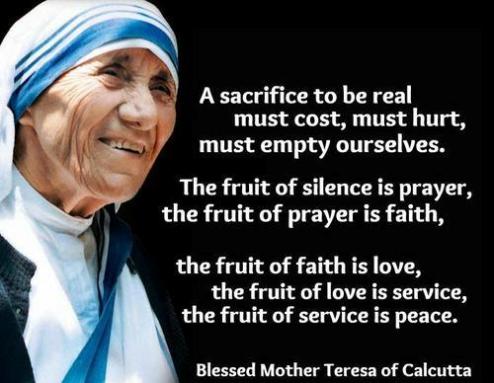
    •  Are you a joyful or a gloomy Christian? Do you greet people with a smile? (one of Mother Teresa’s common suggestions)
    • In conversations, does your speech reflect your Christian values or do you participate in gossip or vulgar jokes.
    • Do you speak about your church or priest with respect or are you overly critical?
    • Do you reach out to persons at work or in your neighborhood who seem to be friendless or having a tough time, or are you too focused on your own life?

 Make a Resolution (Practical Application):


~ Written by Angela Jendro © 2018

* To receive these weekly posts automatically in your email just click the “follow” tab in the bottom right hand corner and enter your email address.


The Peace of Christ

By Angela (Lambert) Jendro

February 4th, 2018 5th Sunday in Ordinary Time

Gospel of Mark 1:29-39 NAB

On leaving the synagogue Jesus entered the house of Simon and Andrew with James and John. Simon’s mother-in-law lay sick with a fever. They immediately told him about her. He approached, grasped her hand, and helped her up. Then the fever left her and she waited on them. When it was evening, after sunset, they brought to him all who were ill or possessed by demons. The whole town was gathered at the door. He cured many who were sick with various diseases, and he drove out many demons, not permitting them to speak because they knew him.
Rising very early before dawn, he left and went off to a deserted place, where he prayed. Simon and those who were with him pursued him and on finding him said, “Everyone is looking for you.” He told them, “Let us go on to the nearby villages that I may preach there also. For this purpose have I come.” So he went into their synagogues, preaching and driving out demons throughout the whole of Galilee.

Meditation Reflection:

Everyone encounters suffering in some form.  Whether physical sickness, the sickness of a loved one, spiritual or emotional sickness from Satan’s lies and those of the secular culture, the pain of divorce or the loss of a job, or just the “drudgery” of life Job complained of in the first reading (Job 7:1).  Even worse, underlying every difficulty is the grating anxiety to find an escape, and the fearful suspicion there may not be one.

Science, medicine, psychology, exercise, achievements, and vacations can only provide a partial remedy.  Escapes into addiction only worsen the problem.

It has always stuck me how many times Jesus says, “Peace be with you” together with His admonition to “Be not afraid.”  Jesus, both man and God, has experienced our suffering and even our anxiety.  He has compassion for our weakness and reaches out with His divine power to save us.  As David proclaimed in today’s Psalm,

He heals the brokenhearted
and binds up their wounds.
Psalm 147:3

Jesus, the Word of God, through whom all things came to be (John 1:3), came to heal the wounds of sin and restore us to wholeness.  Moreover, because God always gives in abundance, Jesus imparted gifts upon us even greater than those lost by Adam and Eve (CCC, par. 420).

Jesus Christ not only heals the brokenhearted, He embraces them in His own Divine Love.  The lonely He makes children of God and their souls His dwelling place.  A Christian can never be truly lonely, since they only need to look interiorly to find their Lord.  In addition, each Christian is incorporated into Christ’s Mystical Body the Church, and shares in the stream of grace that runs through it, and connects us one to another.  Any suffering you endure can be offered up as a grace and blessing for someone else, and vice versa.   Christ therefore transforms the “drudgery” of daily work by making even the smallest task, if done in love, a noble and efficacious participation in His work of redemption.

Even death no longer hangs over us as a futile end.  In Christ it has become the consummation of our earthly service, and the commencement of our heavenly reward.  The longing for God which begins here, finds it’s fulfillment and joy in eternity; much like a wedding marks the transition from the growing love of engagement, to the total union of marriage.  Thus, heaven is described by God as a wedding feast in the book of Revelation:

Let us rejoice and be glad and give him glory.

For the wedding day of the Lamb has come,

his bride has made herself ready.

She was allowed to wear a bright, clean linen garment.” – The linen represents the righteous deeds of the holy ones.

Then the angel said to me, “Write this: Blessed are those who have been called to the wedding feast of the Lamb.”

Revelation 19:7-9

No wonder “the whole town was gathered at the door” in today’s Gospel.  Jesus is the savior every human person longs for and needs.  He gives freely and abundantly.   May we seek Him out for ourselves, and also bring Him to others in need of His healing.

Simon Peter said to Jesus, “Everyone is looking for you.”  His words remain true today and in every age.

Consider:

  • Take a few minutes to lay your burdens and anxieties before Christ in prayer.  Approach Him with trusting faith to help you.
  • Take a few minutes to bring the burdens and anxieties of those you love before Christ.
  • Consider the difference between the temporary or partial relief you find in natural comforts, compared to the fullness of the peace of Christ found in prayer.

Make a Resolution (Practical Application):

Like the people in Simon Peter’s town, seek out Christ.   Choose one concrete way to encounter Him each day this week.

  • Ideas: Take 5 minutes for silent prayer, visit Christ in Eucharistic Adoration, spend 10 minutes with Christ in Scripture, attend a daily Mass, read about the life of a saint or one of their writings, make time to visit a Christian friend who always seems to make Christ visible to you.

~ Written by Angela Jendro © 2018

* To receive these weekly posts automatically in your email just click the “follow” tab in the bottom right hand corner and enter your email address.


Shining a Light into The Darkness


by Angela (Lambert) Jendro


January 27th, 2018 4th Sunday in Ordinary Time

Gospel of Mark 1:21-28 NAB

Then they came to Capernaum, and on the sabbath Jesus entered the synagogue and taught. The people were astonished at his teaching, for he taught them as one having authority and not as the scribes. In their synagogue was a man with an unclean spirit; he cried out, “What have you to do with us, Jesus of Nazareth? Have you come to destroy us? I know who you are—the Holy One of God!” Jesus rebuked him and said, “Quiet! Come out of him!” The unclean spirit convulsed him and with a loud cry came out of him. All were amazed and asked one another, “What is this? A new teaching with authority. He commands even the unclean spirits and they obey him.” His fame spread everywhere throughout the whole region of Galilee.

Meditation Reflection:

Jesus casts out demons with the power and authority of God Himself.  He frees us from their lies and from the darkness of sin.  This is truly a gift and a great relief.

Our present secular culture needs this gift.  Marked by the highest levels of anxiety and depression, the darkness from which these symptoms often proceed need to be cast out with the authority and light of Christ.

The great theologian Hans Urs von Balthasar (1905-1988), explored the relationship between darkness, sin, and anxiety in his work The Christian and Anxiety (Ignatius Press).  He notes,

The main effect of darkness is that it separates, isolates, makes lonely.”

Similarly, the darkness of sin separates the sinner from others, isolates him from God whose light he evades to continue in sin, resulting in dark loneliness.  In Exodus, the penultimate plague aptly describes the culmination of Pharaoh’s obstinate evasion of God, who had made Himself visibly manifest.  A darkness came over the Egyptians for three days, “a darkness to be felt” (Exodus 10:21) The dense, suffocating, darkness effected a social paralysis, symptomatic of their spiritual sickness.

and there was thick darkness in all the land of Egypt three days; they did not see one another, nor did any rise from his place for three days; but all the people of Israel had light where they dwelt.”

Von Balthasar further wrote that the loss of light signifies the loss of reality.  Without light we cannot see and therefore remain trapped by our imagination. Reflecting on Wisdom chapter 17, he writes, “The wicked are afraid of Nothing, of nothing real.”  God is Reality.  His divine Name, Yahweh, which means “I Am”, revealed Him to be existence itself.  Therefore, to hide from His Light, to duck His Truth, means to retreat into an imaginary world of one’s own creation.  In addition, it deprives us of the answers we need most of all – Who am I?  What is my purpose?  What’s the meaning of life? How do I find happiness?

Like living in denial of a physical illness,  one can only self-soothe by justifying sin for so long before the underlying dread and pain of spiritual illness becomes too intense to leave untreated.

Sin can become paralyzing.  Moreover Satan, the “Accuser” as Jesus calls him, whispers fearful lies into the darkness so as to keep a person from reentering the light.  The demons of shame, despair, and distrust bind the sinner to his dark loneliness.

And into this darkness, Christ the Light came.  He “spoke with authority” because he spoke Truth, thereby dispelling lies.  His Light cast out the demons of darkness, His Truth cast out the Father of Lies, and His merciful love strengthened and healed so that the sinner might become whole again.  How many miracles of Jesus demonstrate this!  The paralyzed man who could walk again.  The lepers, cast out from society, healed and able to rejoin their families.  The demoniacs freed and restored to their loved ones.  Christ’s light shone on prostitutes, tax collectors, and pagans.  He liberated them from a kingdom of degradation and made them citizens and children of His Kingdom of God.

Christ continues to bring His light into the darkness through His Mystical Body the Church.  He invites us into His healing love, then His light begins to shine in us.  Wherever we are, that light shines simply by union with Him.

Elizabeth Leseur (1866-1914), a devout Catholic living in an upper-class, atheistic, French society provides a concrete example of how to be a light in darkness.  Elisabeth and her husband Felix loved one another intensely and shared an inspiring intimacy of marital friendship. As a result, it pained her severely that he was an ardent atheist.  Her love for God and her love for Felix were both so deep, and yet she couldn’t share that deepest part of herself with the man she loved the most, nor see him receive the joys and graces she enjoyed as a Christian.

She made it her apostolate to pray and sacrifice for his conversion and for their friends.  Most everyone in their society of friendship were intellectuals and anti-Catholic.  Her diary reveals how she prayerfully navigated ministering to them, bringing light to the darkness through her hidden interior life, her faithful exterior practices, her patient silence, and her readiness to speak boldly and intelligently for Christ if the moment necessitated it.  After her death, her husband discovered her secret diary.  The insights into her interior life, together with his experience of her daily love during their married life, softened his heart and converted his soul.  He went from being a hardened atheist to late becoming a Catholic priest!

Elisabeth brought her light into the darkness and it freed the one she loved the most.  One of her resolutions in her diary, can be instructive for us in the same effort.  In today’s Gospel Jesus spoke with authority and it struck people.  Elisabeth discovered the same thing in her own interactions.  She found that somehow her personal conviction of faith, was itself a strong testimony, strengthened more by authenticity and simple truth than by long explanations trying to persuade.  She writes,

“Each time the conversation leads me to speak of faith, I will do so simply, but in a direct and firm way that will leave no doubt as to my convictions.  Cleverness is nothing in such things; I am struck with the fact that unbelievers have more sympathy with people of deep faith than with those of variable and utilitarian views.  These dear unbelievers attend more to those who are ‘intransigent’ regarding the Faith than to those who by subtlety and compromise hope to bring them to accept the Faith. And yet the bold statement must be made with the most intelligent sympathy and the liveliest and most delicate charity.” The Secret Diary of Elisabeth Leseur; Sophia Institute Press

Our culture suffers under “a darkness that can be felt,” but Christ’s light shines into that darkness to cast it out and replace it with freedom.

“In Him was life, and the life was the light of men.  The light shines in the darkness, and the darkness has not overcome it.” John 1:4-5

May the light of Christ shine in us!

Consider:

  • Are there shadows of darkness with which you struggle?  Bring them to prayer and expose them to the light of Christ in Scripture and the sacraments.
  • Compare who the world says that you are and what your worth is, with who Christ says that you are.  Which do you listen to more?  How might you strengthen Christ’s voice within you?
  • Spend 5 minutes of silent prayer, loving Christ and receiving His love.
  • How might you grow your relationship with Christ and let Him shine more brightly in your life?  How might you bring His warmth, love, and truth to those in your life?

Make a Resolution (Practical Application):

  • Resolve to pray for and develop a deeper love for Christ and to shine Him more brightly.
  • Pray the Prayer of St Francis of Assisi daily. 
  • Pray the Rosary.  Mary always purifies and strengthens our love for Jesus.

Related Posts:

~ Written by Angela Jendro © 2018

* To receive these weekly posts automatically in your email just click the “follow” tab in the bottom right hand corner and enter your email address.


Keeping Christ in Christmas and John the Baptist in Advent

by Angela (Lambert) Jendro


December 16th, 2017 3rd Sunday in Advent

Gospel of Matthew 22:15-21 NAB

A man named John was sent from God. He came for testimony, to testify to the light, so that all might believe through him. He was not the light, but came to testify to the light.

And this is the testimony of John. When the Jews from Jerusalem sent priests and Levites to him to ask him, “Who are you?” He admitted and did not deny it, but admitted, “I am not the Christ.” So they asked him, “What are you then? Are you Elijah?” And he said, “I am not.” “Are you the Prophet?” He answered, “No.” So they said to him, “Who are you, so we can give an answer to those who sent us? What do you have to say for yourself?” He said: “I am the voice of one crying out in the desert, ‘make straight the way of the Lord,'” as Isaiah the prophet said.” Some Pharisees were also sent. They asked him, “Why then do you baptize if you are not the Christ or Elijah or the Prophet?” John answered them, “I baptize with water; but there is one among you whom you do not recognize, the one who is coming after me, whose sandal strap I am not worthy to untie.” This happened in Bethany across the Jordan, where John was baptizing.

Meditation Reflection:

For the second week in a row, we have another Gospel passage about John the Baptist.  John is considered the last, and greatest, of the prophets of the Old Covenant.  Jesus even said of him, “among those born of women there has been none greater than John the Baptist” (Matthew 11:11).   However, both John and Jesus proclaim that even the most magnificent of what has been so far, pales in comparison to the coming of the incarnate God and to His indwelling in the souls of the baptized. Thus, Jesus finishes his sentence with: “yet the least in the Kingdom of heaven is greater than he.”

John the Baptist’s message of repentance and spiritual preparation for our salvation is at the heart of Advent.  The weeks leading up to Christmas we evaluate how well we have been living as children of God, gifted with the grace of God dwelling in our midst and within our very souls.  It’s also a time to open ourselves to new possibilities and new challenges as disciples of Christ.  Thus, the message of John for repentance produces the necessary disposition for conversion.

Last year I wrote about the challenge of keeping John the Baptist in Advent.  I’d like to repost that below.  John prepared the way of the Lord, and he can help us do the same.

*********************************************************************************************

The image of John the Baptist, dressed in camel hair and eating locusts, preaching the message of repentance and authentic sorrow for sins, provides a stark contrast to the marketing images flooding us of jolly Santas, piles of presents, and delicious foods. I can understand why marketers find Santas and reindeer more appealing for sales than a desert ascetic speaking about sin.  People also feel increased pressures to prepare for Christmas by finding the perfect gifts within the time constraints of frantic schedules and limited budgets.  Nevertheless, the Gospel writers remind us that preparation for Christmas is ultimately preparation for the Incarnation of God our Savior.  He brings the gift of heaven, but we must prepare ourselves to receive that gift through repentance.

The push to start Christmas sales has lamentably encroached on Thanksgiving and even cast a shadow over Halloween.  However, it has completely replaced Advent in our culture.  It has become increasingly difficult to make the weeks leading up to Christmas a time of introspection, increased prayer, and sacrifice.  By the time Catholics celebrate Christmas on the Eve of Christmas day and for the two weeks following it, the rest of the culture has already moved on.

So how can we balance living in the culture that we do and still honor the important process of conversion Advent is meant to procure?  We can no longer wait to buy a Christmas tree until December 23rd because there won’t be any left.  We can’t leave them up for the duration of the Liturgical Christmas season because the tree will be a fire hazard at that point, plus we will have missed our road side tree pick up provided by our garbage companies.  I have surrendered this battle and get a tree the weekend after Thanksgiving.  I also have to admit that I look forward to the Hallmark Christmas movies and, if possible, make a weekend of it with my mother and my daughter.  Black Friday deals make Christmas gifts more affordable although I am too exhausted on Cyber Mondays to get online after work.  However, I reserve some Christmas feasting for Christmas.  I play Christmas music during the liturgical Christmas season and keep my Christmas decorations out (with the exception of the live tree).  In my classroom at school I leave Christmas lights up in my room until Lent, reminding the kids that Jesus is the Light of the World.

Spiritual sacrifice, examination of conscience, and remorse for sins is harder to find time for.  When the kids were little we would do Bible crafts and the kids had fun placing a felt ornament on our Jesse tree corresponding to a daily Scripture passage we would read.  Now that my kids are older, it’s harder to find a time we are all home to pray together.

As a busy mom, I appreciate that the Church offers practical advice regarding spiritual preparation during Advent, and oftentimes opportunities organized by the parish to help us.  Scripturally, spiritual preparation consists of prayer, fasting, and almsgiving.  Parishes often offer Advent reflections, retreats, and youth ministry events to facilitate more introspective prayer during this time.  We can add one of these events to our calendar just as we would any Christmas party invitation.  Fasting is especially difficult, with so many Christmas parties and cookie exchanges taking place, but consider fasting from something simple and achievable, so that even in those moments you are connected to Christ and honoring the preparation for His coming that He deserves.  I wouldn’t suggest giving up sweets altogether, but maybe you set a  limit for yourself or give up something else that’s meaningful to you.  Almsgiving may be the one aspect of Advent that lingers in our culture as generosity during the Christmas season seems to be a sentiment that still resonates in people’s hearts.  Parishes, schools, offices, and neighborhoods band together for charitable causes and provide opportunities for us to give.  We can participate with a spirit of giving to Christ who says, “Whatever you do for the least of these you do unto Me.”  Let’s not forget that Christmas also provides less visible opportunities for giving, like keeping our eyes open for family members, neighbors, or colleagues who are lonely and inviting them to our homes.

Fasting and almsgiving can further be applied in our interactions with one another.  The increased social contact brings with it both joy and discord; providing many more opportunities for spiritual works of mercy.  Christmas get-togethers bring out the best and worst in people.  It provides opportunities to fast from gossip and to give encouragement; to fast from pettiness and to bear wrongs patiently, to fast from competitiveness and to give comfort.  When we encounter persons we find annoying, frustrating, or difficult to be around, we can reflect on the compassion of the Lord, who became man, for love of that same person.  When we are moved by the generosity and love of others towards ourselves, we can praise Christ as we tangibly experience His love in our own lives.

Advent has become an uphill battle, but the view from the top makes climbing it worth all the effort.    This Advent I hope we can find a way to prepare our hearts and our lives for Christ a little more in some small way.  I hope we acknowledge and surrender to Him sins we need Him to heal.  Let’s demonstrate our authentic gratitude for his grace through prayer and acts of love.  Finally, let’s try to keep Christ in Christmas, and John the Baptist in Advent.

Consider:

  • “Emmanuel” means God-with-us.  Consider the gift of the Incarnation, that God became man, and dwelt among us.
  •  How has your heart and life opened to Christ over the years?  How has He dwelt more and more in your life?
  • Are there any areas of your life from which you keep Christ closed off?  Are there any places, people, or activities you wouldn’t feel comfortable having Christ present?
  • Reflect on the people you will encounter this season.  Consider them from Christ’s point of view.  How might you be the hands and heart of Christ to them in your interactions?

Make a Resolution (Practical Application):

  • Choose one way this Advent to pray, fast, and give.
  • Put a church sponsored Advent or Christmas event on your calendar, then attend it.
  •  Fast from gossip and critical remarks.
  • Intentionally give to Christ, above your regular tithing.  Choose a charity or a particular person, and be generous to Jesus by being generous to them.

~ Written by Angela Jendro © 2017

* To receive these weekly posts automatically in your email just click the “follow” tab in the bottom right hand corner and enter your email address.


Where Truth & Love Reign

by Angela (Lambert) Jendro

 love one another

November 26th, 2017 Solemnity of Christ the King

Gospel of Matthew 25:31-46 NAB

Jesus said to his disciples: “When the Son of Man comes in his glory, and all the angels with him, he will sit upon his glorious throne, and all the nations will be assembled before him. And he will separate them one from another, as a shepherd separates the sheep from the goats. He will place the sheep on his right and the goats on his left. Then the king will say to those on his right, ‘Come, you who are blessed by my Father. Inherit the kingdom prepared for you from the foundation of the world. For I was hungry and you gave me food, I was thirsty and you gave me drink, a stranger and you welcomed me, naked and you clothed me, ill and you cared for me, in prison and you visited me.’ Then the righteous will answer him and say, ‘Lord, when did we see you hungry and feed you, or thirsty and give you drink? When did we see you a stranger and welcome you, or naked and clothe you? When did we see you ill or in prison, and visit you?’ And the king will say to them in reply, ‘Amen, I say to you, whatever you did for one of the least brothers of mine, you did for me.’ Then he will say to those on his left, ‘Depart from me, you accursed, into the eternal fire prepared for the devil and his angels. For I was hungry and you gave me no food, I was thirsty and you gave me no drink, a stranger and you gave me no welcome, naked and you gave me no clothing, ill and in prison, and you did not care for me.’ Then they will answer and say, ‘Lord, when did we see you hungry or thirsty or a stranger or naked or ill or in prison, and not minister to your needs?’ He will answer them, ‘Amen, I say to you, what you did not do for one of these least ones, you did not do for me.’ And these will go off to eternal punishment, but the righteous to eternal life.”

Meditation Reflection:

At first glance, this passage can seem a little harsh.  We like to imagine a more sentimental Jesus, gently escorting every person to eternal pleasure, not a rigid judge calculating our deeds and sending some to eternal suffering.

Jesus is king and judge, but as He often reminded His followers – His kingdom is not of this world. When pressed by Pilate to explain further, Jesus answered “I came into the world for this, to bear witness to the truth; and all who are on the side of truth listen to my voice” (John 18:37).

We, like Pilate, may ask “Truth? What is that?” (John 18:38).

Truth is Reality.  As Pope Benedict XVI often said in his writings, it means acknowledging that God is the Creator and we are creatures.  The laws of nature that govern the health of our soul are as real and concrete as the laws that govern the health our body.

The truth is also that God is love and we are made in His image.  Though weakened by sin, we have been re-made by Christ and transformed by His grace to image God’s love again.  Thus, St. John can say,

My dear friends, let us love one another, since love is from God and everyone who loves is a child of God and knows God.  Whoever fails to love does not know God, because God is love…as long as we love one another God remains in us and His love comes to its perfection in us.” 1John 4:7-8,12

So if the Truth is that God is love and we are love, what does that mean on an everyday level?  How does that look?  How does it translate to our schedules?

Pope St. John Paul II defined love clearly and simply: it is self-gift.  Thus the paradox of human happiness he concluded, is that we find fulfillment for ourselves in giving of ourselves.

This means fighting the pull of self-centeredness and mere consumerism.  We have to turn our attention from acquiring things, to giving of ourselves.  Should we try to over-complicate the matter or pay mere lip service, Jesus states clearly the fruits of authentic love: feeding the hungry, clothing the naked, visiting the sick or imprisoned…

Jesus is Truth and Love.  No one can pretend to be something they are not when standing before Him.  Those who love will rejoice to be fully united with the King of Love.  Confident in His mercy, they will say yes to His transforming grace which will free them from any remaining pulls of worldliness or selfishness so they can be free to fully enter the Communion of Saints and Angels in union with God.  Those who prefer the Kingdom of Self will refuse to enter the Kingdom of Self-Gift, preferring to be alone.

We see this in an analogous way during the holidays.  Time with family requires a sacrifice of time, generosity of food and travel, hospitality, patience, and attentiveness toward others.  The more we love our family, the easier those things become, so much so we may even look forward to those opportunities as a gift of service that brings us joy.  The less we love, the more burdensome they seem, so much so a person may choose to remain alone on the holiday rather than deal with it all.

It’s not so much that Jesus will come to decide who “gets” to go to Heaven and who doesn’t, since He came to offer Redemption to all.  It’s more the case that He will come as Judge of the Truth about our decision to accept or reject His saving grace in our hearts.  The world might say, “show me the money,” but Jesus will say, “Show me your love.”

Life is short, eternity is long.  We must begin EVERY day with prayer – even just 5-10 minutes and go to Mass EVERY Sunday, to unite ourselves to the source of Love and Grace.  From this union with Christ, fruits of His Spirit of love will permeate the actions and decisions of our day (see Galatians 5:22-23). If we first love God above all things, we will then love our neighbor as ourselves because we will see God’s image in them and desire as Christ does to mend its wounds of sin that their God-given dignity and glory might shine more gloriously.

Sound too simplistic?  Give it a try.  Compare a day began with 10 minutes of prayer and a day without.  I can attest that I am a far more loving person with prayer and a far more frazzled impatient person without it.  See how your week goes after attending Sunday Mass.  Try going to one daily Mass in addition and notice the fruits that follow in your interactions with others that day.

Consider:

  • Consider how love makes work or service less burdensome.
  • Consider how selfishness undermines relationship and causes discord in your family, friendships, and work.
  • Consider how Christ’s love and grace has transformed you.  How has He changed you for the better over the years?  How has His Spirit changed the way you think and act? What are areas of your life that still need transformation?
  • When have you experienced self-fulfillment/happiness through self-gift?  How might you continue to give of yourself to those in your daily life?
  • Take a moment for gratitude, to thank Christ for the sins that He has conquered so far in you.  Then take a moment for petition, asking Christ to conquer those sins that still remain.  Finally, take a moment for intercession, praying for those in need of healing that Christ might conquer the sins burdening them.
  • Close your eyes and imagine the joy of Heaven.  Imagine Christ coming in all His glory, shining brighter than the sun, smiling, and holding out His hand for you to join Him.

Make a Resolution (Practical Application):

  • Begin every day this week with 5-10 minutes of prayer.  Read the Scriptures, thank God, surrender your day to Christ, spend a couple of minutes in silence.
  • Intentionally practice one corporal and one spiritual Works of Mercy a day.
  • Read about the life of a saint who is similar to you in some way to learn from his or her example.  You can research “patron saint of__________” to find someone with an affinity to your work or your struggle.  You could also try researching someone with your same vocation such as married, single, or religious. You can find saints who were young or old, men or women, from small towns or big cities, were well educated and travelled or simple and hidden.  You may also like to research a saint who shares your name.

~ Written by Angela Jendro © 2017

* To receive these weekly posts automatically in your email just click the “follow” tab in the bottom right hand corner and enter your email address.