Strength in the Lord

By Angela Jendro

Excerpt from Lenten Journey: Through the Desert to the Eternal Spring by Angela Jendro

Download to your pdf reader or print.  Free Will Offering

1st Sunday of Lent

Gospel Luke 4:1-13 NAB

Filled with the Holy Spirit, Jesus returned from the Jordan and was led by the Spirit into the desert for forty days, to be tempted by the devil. He ate nothing during those days, and when they were over he was hungry. The devil said to him, “If you are the Son of God, command this stone to become bread.” Jesus answered him, “It is written,

One does not live on bread alone.

Then he took him up and showed him all the kingdoms of the world in a single instant. The devil said to him, “I shall give to you all this power and glory; for it has been handed over to me, and I may give it to whomever I wish. All this will be yours, if you worship me.” Jesus said to him in reply, “It is written:

You shall worship the Lord, your God,

and him alone shall you serve.

Then he led him to Jerusalem, made him stand on the parapet of the temple, and said to him, “If you are the Son of God, throw yourself down from here, for it is written:

He will command his angels concerning you, to guard you,

and:

With their hands they will support you,

lest you dash your foot against a stone.

Jesus said to him in reply,

“It also says,

You shall not put the Lord, your God, to the test.

When the devil had finished every temptation, he departed from him for a time.


 Meditation Reflection:

Directly after Jesus’ Baptism, the inauguration of His transition from His Hidden Life in Nazareth to His public ministry, the Spirit led Him into the desert for a time of preparation first – to fast, pray, and face temptation. In the same way, the Holy Spirit periodically draws us away from the noise of life and the distractions of the senses to be able to connect with God in a deeper interior way. In some cases, we choose to place ourselves in quiet reflection by going on a retreat or planning a weekend of solitude. At other times, the circumstances of life create that solitude for us.

It reminds me of standing ankle-deep in the waves of the ocean on the beach. As the water cascades over my feet it carries with it a flurry of sand, shells, sea-weed, and teems with life and energy. Then it recedes, drawing back everything it had just placed before me. Even the sand around my feet recedes leaving me only two small mounds beneath my arches.

Times of solitude can feel lonely and a little barren like the desert. However, they can be opportunities for prayer and preparation for the next mission God has for us when the water will return, replenished and shimmering.

The devil of course hates for us to follow Christ and he especially despises when we build the kingdom of God. He therefore attempts to derail us in any way possible. He prevents us from God’s work in a myriad of ways tailored to our own personal weaknesses. The devil distracts us with physical pleasures and the lie that if we don’t satisfy our body’s whims and desires, we will die, or at least be so miserable it’s not worth living.

During Lent, we face this lie and temptation, strengthening or will over our body and seeking joy in the Lord by giving up sweets, pop, alcohol, snacking, over-sleeping, staying up too late, etc., and replacing them with added prayer or spiritual exercises.

Another tactic favored by the devil is to redirect the trajectory of our work by aiming our talents at building the kingdom of self rather than the kingdom of God. He tempted Jesus with an enticement of kingship without the cross. Similarly, Satan attempts to promise us success and happiness without the suffering of the cross, if only we would exchange our faith in God for faith in ourselves.

Lastly, if we thwart both pitfalls through strength of faith and love, the devil makes his last attack by twisting God’s own words and attempting to skew our relationship with the Lord. The devil hates the Church because Christ empowered it with His authority to preach truth and correctly interpret Scripture by the power of the Holy Spirit, as well as the grace of Christ to live it. If we listen to the Holy Spirit through Christ’s Church the devil loses his power to trick us “and will depart for a time”.

If we pay careful attention, we can learn the tricks of the devil in our own lives. St. Ignatius of Loyola began to notice this too and developed rules of discernment that have become a classic in the Christian life. Ask the Holy Spirit to help you grow in self-knowledge and provide the grace to overcome temptation so as to live in the freedom of the kingdom of God and work unhindered for His glory.

 Consider:

  • Spend some time in prayer reflecting on your average day. Consider what things unnecessarily slow you down, distract you, make you late, frustrate your work, or prevent you from getting started on something.   Implement a plan to combat one of them.
  • Consider the three categories of temptations from the Gospel today and how each one applies to you. This Lent build strength by combatting the pleasure that has a hold over you, the suffering you are trying to avoid or the status you are trying to achieve, and grow in knowledge of your faith to protect you from the deceptions of the devil.
  • Look back on your life and reflect on how God prepared you before raising you up for something. How did you feel beforehand and after? Have you experienced deeper and richer faith after a time of solitude or difficulty?

Make a Resolution (Practical Application):

  • Commit to a Lenten resolution even if you fail at it periodically. Give something up and/or do something extra to strengthen your relationship with Christ and weaken your relationship with sin.
  • Read (or listen to the audiobook) C.S. Lewis’ Screwtape Letters. It’s short, entertaining, and enlightening. It’s a satirical work which features letters from an experienced demon to a lesser experienced one about how to tempt humans.
  • Listen to Fr. Timothy Gallagher’s podcasts on St. Ignatius’ discernment of spirits. He presents Ignatius’s ideas in an understandable and relatable way. (discerninghearts.com)

~ Written by Angela Jendro © 2019

* To receive these weekly posts automatically in your email just click the “follow” tab in the bottom right hand corner and enter your email address.

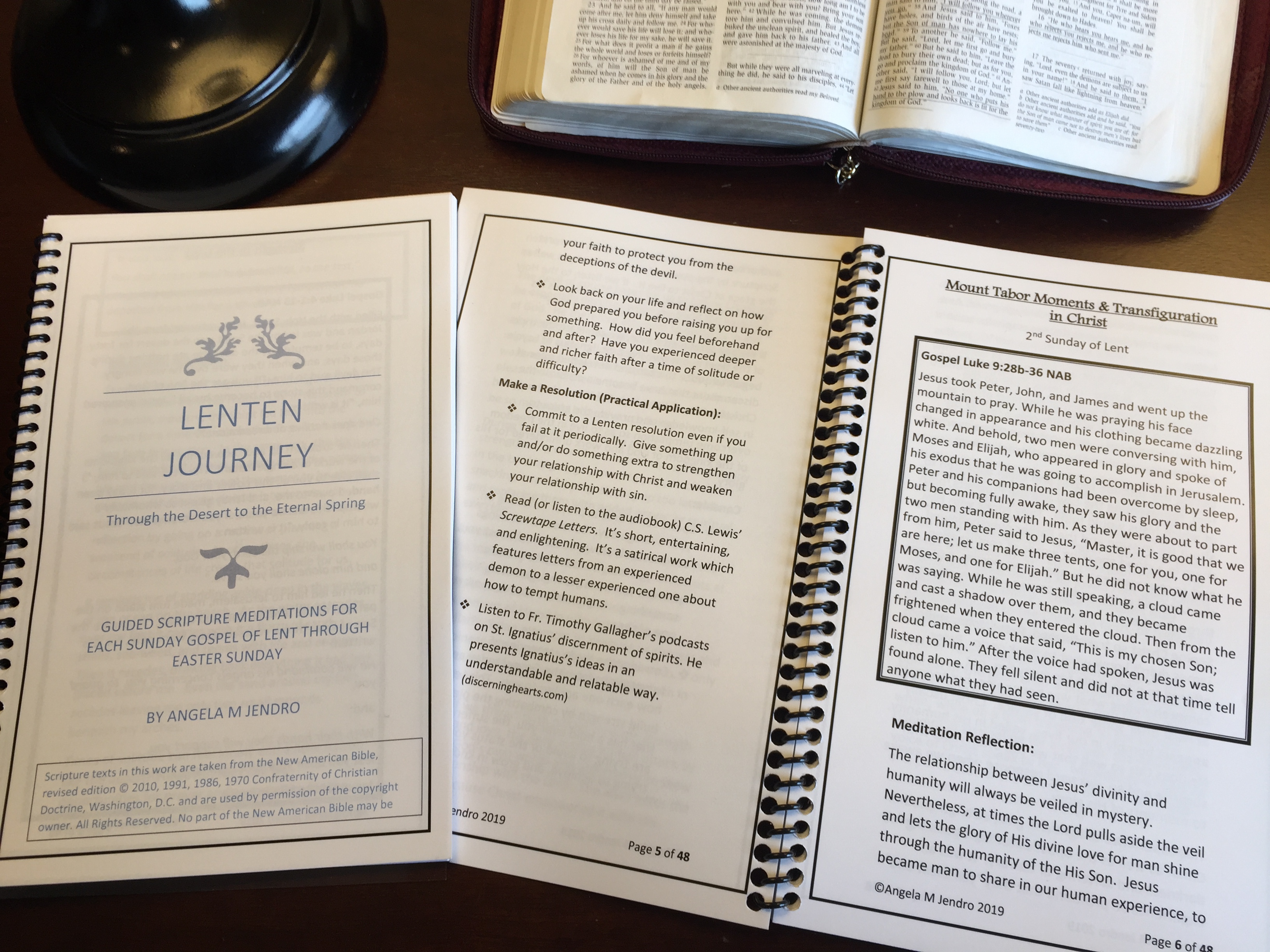
New Book – Lenten Journey: Through the Desert to the Eternal Spring by Angela Jendro


Lenten Journey_Through the Desert to the Eternal Spring by Angela M Jendro

Make a spiritual pilgrimage this Lent with guided meditations on theLenten Journey pic Sunday Gospels by Angela M Jendro, complete with real life applications and ideas for translating your meditation into action.
  • Download for free to your pdf reader for easy access on the go, or print to paper to make your handwritten notes.
  • No price for e-book,  Free Will Offering accepted via Paypal and/or Prayers for the author 🙂


For printed booklet – visit our Online store tab or purchase below:


Printed Booklet – Lenten Journey: Through the Desert to the Eternal Spring

Free shipping within the U.S. 48 pages Guided Scripture meditatins for each Sunday of Lent through Holy Week and Easter Sunday. Encounter Christ in a new way with reflections that relate to your daily life, considerations to take to prayer, and ideas for concrete application.

$15.00


Mercy – The Freedom of Love

by Angela (Lambert) Jendro

7th Sunday in Ordinary Time

Gospel of Luke 6:27-38 NAB

Jesus said to his disciples: “To you who hear I say, love your enemies, do good to those who hate you, bless those who curse you, pray for those who mistreat you. To the person who strikes you on one cheek, offer the other one as well, and from the person who takes your cloak, do not withhold even your tunic. Give to everyone who asks of you, and from the one who takes what is yours do not demand it back. Do to others as you would have them do to you. For if you love those who love you, what credit is that to you? Even sinners love those who love them. And if you do good to those who do good to you, what credit is that to you? Even sinners do the same. If you lend money to those from whom you expect repayment, what credit is that to you? Even sinners lend to sinners, and get back the same amount. But rather, love your enemies and do good to them, and lend expecting nothing back; then your reward will be great and you will be children of the Most High, for he himself is kind to the ungrateful and the wicked. Be merciful, just as your Father is merciful.

“Stop judging and you will not be judged. Stop condemning and you will not be condemned. Forgive and you will be forgiven. Give, and gifts will be given to you; a good measure, packed together, shaken down, and overflowing, will be poured into your lap. For the measure with which you measure will in return be measured out to you.”

Meditation Reflection:

We most experience love, when we experience mercy. Love expresses itself the deepest in forgiveness, in patience with another’s faults or inadequacies, in tender care during times of physical or emotional weakness, in the desire for one to have even more than they deserve. God is Love (1John 4:8), and His incarnate Son revealed God by His mercy – through the humility to share our burdens, through His tender touch of healing, through His words of Truth, and through His suffering and death on the Cross for the forgiveness of our sins.

Jesus gave the New Commandment to “Love one another as I have loved you”(John 13:34) and exhorted us to “be merciful as your heavenly Father is merciful,” (Luke 6:36) instructing that we will be judged by how much we loved saying “whatever you did to the least of these you did it to Me” (Matthew 25:40). As Jesus’ disciples therefore, we too are called to reveal the Father’s love through lives of mercy.

Mercy doesn’t mean enabling sin or saying that abusive behavior is okay. Rather, mercy requires that we acknowledge sin as sin, otherwise we could not forgive. Mercy acknowledges human limitations and chooses to bend down and humbly meet the person where they’re at. Entitlement is not mercy but justice. Giving someone their due is simply what’s owed. That’s why Jesus doesn’t find it particularly extraordinary. It’s precisely within the context of justice however, that mercy can be freely given – and it’s the freedom of the giving that is the essence of love. Mercy means giving someone what isn’t their due. As Pope Francis asserted:

“[Justice and mercy] are not two contradictory realities, but two dimensions of a single reality that unfolds progressively until it culminates in the fullness of love.” Misericordiae Vultus April 11, 2015 [1]

Jesus teaches us how to love by teaching us how to show mercy. As the Mystical Body of Christ, He is the Head and we are the Body. Each person will have to face judgment, but the judge is Jesus Christ. Oftentimes, we want justice for others but mercy for ourselves. Jesus reminds us that we cannot be hypocrites. The measure we apply to others will be the measure we receive. We can’t have it both ways. Either we all receive mercy, or we all receive strict justice.

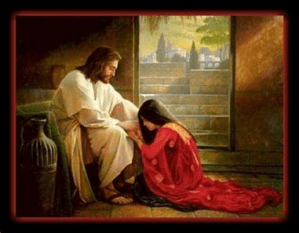
The more we have received mercy, the more we love to give it in return. Those who have come to terms with the reality of their own sin and had the courage to bring them before the Lord in Confession and receive His forgiveness and healing, then see others in the same light with eyes of tenderness and a thirst for their salvation too. Sin is suffering, even if it seems pleasurable or glamorous at the time. It always results in a degradation of the human person and the painful feelings that accompany that reality. Only the person who has not received mercy sits in judgment, wanting justice and not realizing that sin can be its own punishment. In Luke chapter 7, Jesus dined with a Pharisee. While there a sinful woman entered and washed his feet with her tears. Jesus explained to the astonished lawyer, that those who have been forgiven much love much.

There’s nothing timid about mercy. It doesn’t mean being a pushover or a relativist. Mercy requires the greatest strength of character, more than we even have on our own. Authentic mercy in its real application in your daily life toward the people in your life, takes grace. Only the love of Christ in our souls can fructify into the kind of patient, resilient, self-sacrificing, love that Jesus expects of His disciples.

Even Mother Teresa testified that she and her sisters could not do the kind of work they did every day without prayer and the graces that flowed from it. Serving the poorest of the poor in India was her calling, but she often taught that each of us is called to show the same kind of love in our families and neighborhoods.

Let us make our homes real places of love so that we can overcome any hatreds. Love begins at home – everything depends on how we love one another at home. Do not be afraid to love until it hurts, because this is how Jesus loved.” Mother Teresa Thirsting for God: Daily Meditations ed. By Angelo D. Scolozzi, M.C. III.O.

A beautiful example of just such love, can be found in the life of Elisabeth Leseur (1866-1914). Her husband, who was the love of her life, was also an ardent atheist. Their circle of friends in the upper level of society in France shared his rationalist distaste for faith and Catholicism in particular. Nevertheless, her character and love drew their affections and even the desire for her guidance. In the end, her husband Felix had a conversion to faith and became a Catholic priest after her death. He credited her example, prayers, and suffering on his behalf for his change of heart. Her patience, calm, generosity, and love went so deep that in her greatest trials it proved supernatural to him. He writes of her during her final illness,

When, having left her in the afternoon, I returned home in the evening, I was aware, as I approached her bed, of a calmness in her welcoming smile that would have been impossible in myself. For my own part, I knew well what kind of an invalid – intolerable to myself and to others – I would have been, instead of the source of serenity that she was to all around her; and I bowed down before the grandeur of the spirit that sustained and uplifted her.” The Secret Diary of Elisabeth Leseur

When I asked my students how they see Christian love in their home the answers they gave were revealing. One girl said she appreciated how her mother made a nice dinner every night, even though it was a long day at work. In addition, she noticed that her mom would often call her dad and ask him to pick something up on his way home and he always did. These little acts of kindness resonated with her. Other students commented on how much it meant to have a listening ear, help studying for a test, a ride to activities, and words of encouragement. All of these little daily things added up to lot for them.

I still remember today, several decades after the fact, an act of mercy on my own mother’s part. She had just had the (white) carpet cleaned. We ordered pizza for dinner and when the doorbell rang I answered it. Excitedly I ran up the stairs with the pizza, tripped, and the whole thing fell face flat on the newly cleaned white carpet. I stopped breathing. The natural reaction should have been to scream or be angry. Instead, my mother calmly stated, “accidents happen.” I knew this acceptance of my clumsiness was mercy. In consequence, when one of my children or students makes a similar bumble, I react with patience and mercy because when I was in their place that is what I received.

Jesus wants to shake us out of our pettiness and call us to magnanimity. Rather than bickering siblings, He exhorts us to mature into loving, giving, adults. There’s no need to point fingers, Jesus sees and He will judge. We only need to focus on the measure He will use to judge us by. The more generous we can be on earth the more generous He can be with us in Heaven. Moreover, the more we can be patient and kind in response to the daily annoyances we encounter, the more we can reveal the Father’s love. Our culture can be highly critical and competitive. Gentle love and merciful kindness is sorely needed and a true testament of the reality of grace.

Consider:

  • When have you experienced mercy? Did you receive forgiveness? Tender loving care when you were ill? A hand up when you were down or starting out?
  • How can you show mercy in your home through acts of love? Where could you add patience and understanding? What are your loved ones shortcomings and how could you be merciful in their weakness? How can you be of service – what are the daily needs in your home?
  • Oftentimes judgment expresses itself as gossip, slander, and detraction. Consider how you could avoid participating in gossip or try to withhold critical comments about others. Think of someone you find most easy to criticize and think of an equal number of things you could compliment them about.

Make a Resolution (Practical Application):

  • Thank God each day for the mercy He has shown to you. Think about the events of the day and be specific if you can.
  • Do something kind, loving, or of service each day toward those in your everyday life. Look for opportunities to show patience.
  • Read about the life of a saint and their example of practical mercy and love in the circumstances of their life.

~ Written by Angela Jendro © 2018

* To receive these weekly posts automatically in your email just click the “follow” tab in the bottom right hand corner and enter your email address.

[1] http://w2.vatican.va/content/francesco/en/apost_letters/documents/papa-francesco_bolla_20150411_misericordiae-vultus.html

Let Go and Let God

Fourth Sunday of Ordinary Time

Gospel Luke 4:21-30

Jesus began speaking in the synagogue, saying: “Today this Scripture passage is fulfilled in your hearing.” And all spoke highly of him and were amazed at the gracious words that came from his mouth. They also asked, “Isn’t this the son of Joseph?” He said to them, “Surely you will quote me this proverb, ‘Physician, cure yourself,’ and say, ‘Do here in your native place the things that we heard were done in Capernaum.’” And he said, “Amen, I say to you, no prophet is accepted in his own native place. Indeed, I tell you, there were many widows in Israel in the days of Elijah when the sky was closed for three and a half years and a severe famine spread over the entire land. It was to none of these that Elijah was sent, but only to a widow in Zarephath in the land of Sidon. Again, there were many lepers in Israel during the time of Elisha the prophet; yet not one of them was cleansed, but only Naaman the Syrian.” When the people in the synagogue heard this, they were all filled with fury. They rose up, drove him out of the town, and led him to the brow of the hill on which their town had been built, to hurl him down headlong. But Jesus passed through the midst of them and went away.

Meditation Reflection:

Most of us have had the unfortunate experience of Christ in this passage.  All too often so-called friends or groups of admirers show their fickle nature by turning on us at the first instance we upset them, let them down, don’t meet all of their expectations, or they simply become distracted by something else.  The home-town crowd listening to Jesus turned from amazement at His gracious words to anger, impelling them to hurl Him down a cliff in what seems like a moment.

The daily Gospel readings this past week shed light on the situation however, that can help sooth our disillusionment.  Jesus responded to both praise and rejection with the same calm demeanor.  He knows human nature and refrains from getting worked up about the opinion of the masses.  His mission is to do the will of the Father not to poll focus groups.  Moreover, Jesus teaches that all any of us can do is the will of the Father, the results are in God’s hands not our own.  This works both ways – when we seemingly do great works, and when we seemingly fail.  

In Thursdays Gospel reading from Mark 4:1-20 Jesus told the parable of the Sower and the Seed.  As a teacher and mother this is one of my favorite passages.  Jesus, and His servants, have the responsibility to sow the seeds of the Gospel wherever God sends.  How those seeds grow depends on the soil, or the disposition, of the receiver.  Jesus’ words quite often fell on hearts that were hardened toward Him or too distracted by greed or anxiety.  Why should we be surprised if we experience the same thing?  Sometimes Jesus’ words fell on generous hearts and the Holy Spirit was able to work wonders through His followers.  Again, can we really take all the credit when our work bears rich fruit? Some of the credit belongs to the person of faith willing to “hear the word of God and obey it” (Lk 11:28).  Thus, Jesus places higher honor on two foreigners over God’s own children the Israelites because they were willing to do something in response to God’s word.  Finally, credit ultimately belongs to God.  In Friday’s Gospel from Mark 4:26-32 Jesus reflected on how a farmer plants seeds and harvests the crops but the entire process of growth in between is due to the mystery of God’s work in nature.

This Gospel should give us peace that God is in control.  He opens people’s ears to hear and eyes to see if He chooses.  He decides which persecutions He will allow toward His servants and which He won’t.  In this Gospel Jesus calmly and effortlessly passed through the angry crowd, demonstrating God’s total control over the situation.  During His Passion however, the Father allowed His Son to be taken by the angry crowd in the Garden of Gethsemane and eventually crucified.  Yet, by the power of God Jesus also rose from the dead.  

Disciples of Christ can take comfort in Jesus’ words He so often speaks:  “Peace be with you” and “Be not afraid”.  We can let go and let God because our only task is to do the will of the Father and let Him bring our work to fruition.  We have the joy of being His instrument, but the music played through us belongs to Him.

Consider:

 Have you ever had an experience like Christ’s where a friend or an acquaintance turned on you?  What did it teach you about relying on the opinion of others?
 How much do you worry about what other people think of you?
 Do you trust your children to God or do you put all the pressure for their good on yourself?
 In John 15:1-5 Jesus asserts that our fruitfulness depends upon our connection to Him.  

“I am the true vine, and my Father is the vine grower. He takes away every branch in me that does not bear fruit, and everyone that does he prunes so that it bears more fruit. You are already pruned because of the word that I spoke to you. Remain in me, as I remain in you. Just as a branch cannot bear fruit on its own unless it remains on the vine, so neither can you unless you remain in me. I am the vine, you are the branches. Whoever remains in me and I in him will bear much fruit, because without me you can do nothing.


o How often do you begin your work with prayer?  
o Do you pray for the people in your life?  
o Do you pray for God to guide little decisions and everyday tasks in addition to the larger ones? 
o How has bringing things to prayer enrichened your experience or the outcome?    

Make a Resolution (Practical Application):

 Whatever your work may be, take time in prayer to surrender it to Christ each day.  Ask for Him to guide the process as well as the outcome. 
 Choose a time in the middle of your day to connect with Christ.  Decide on when, where, and how – even if it’s as simple as 5 minutes of silent prayer or reading Scripture at your desk during lunch.

~ Written by Angela (Lambert) Jendro © 2016; edited © 2018 Angela Jendro

Do You Have Skin In The Game?

Third Sunday in Ordinary Time

Gospel Luke 1:1-4; 4:14-21

Since many have undertaken to compile a narrative of the events that have been fulfilled among us, just as those who were eyewitnesses from the beginning and ministers of the word have handed them down to us, I too have decided, after investigating everything accurately anew, to write it down in an orderly sequence for you, most excellent Theophilus, so that you may realize the certainty of the teachings you have received.

Jesus returned to Galilee in the power of the Spirit, and news of him spread throughout the whole region. He taught in their synagogues and was praised by all. He came to Nazareth, where he had grown up, and went according to his custom into the synagogue on the sabbath day. He stood up to read and was handed a scroll of the prophet Isaiah. He unrolled the scroll and found the passage where it was written: The Spirit of the Lord is upon me, because he has anointed me to bring glad tidings to the poor. He has sent me to proclaim liberty to captives and recovery of sight to the blind, to let the oppressed go free, and to proclaim a year acceptable to the Lord. Rolling up the scroll, he handed it back to the attendant and sat down, and the eyes of all in the synagogue looked intently at him. He said to them, “Today this Scripture passage is fulfilled in your hearing.

Meditation Reflection:

Fables and epic stories begin with something along the lines of “Once upon a time” or “A long long time ago, in a galaxy far away…”  Biographies on the other hand begin with concrete dates, places, and people.  The Christian faith differs from other religions because it is not a mythical fable rooted in the imagination instead of history, nor is it merely comprised of the accumulation of man’s wisdom in his search for God.  Rather, it is founded on eyewitness of God made man – Jesus Christ; on the testimony of men and women’s experience encountering God in His search for us.  St. Luke begins his Gospel as a biography not a story.  He underscores his intent to present the research he has compiled through his investigations in an orderly way.  The historical reality of Jesus, His place of origin, death under Pontius Pilate, the respect He gained from multitudes of people, and the numerous witnesses of His miracles are written of not only by the Gospel writers but secular historians of the time as well such as the Jewish historian Flavius Josephus.

The apostles believed in Jesus because of what they saw as did many of the first followers of Christ.  Their faith centered on the climatic event of the Resurrection and seeing Jesus for the 40 days leading up to His ascension into heaven.  When choosing someone to replace Judas, for instance, the apostles required that the candidates be men who had followed Jesus from His Baptism through His Ascension and that the person had been a witness of the Resurrected Christ.  The early Christians did not preach a “spirituality” or self-help plan and Christ is not our universal imaginary friend.  The early Christians died for their belief in the reality of Christ and His promise of resurrection.  Their willingness to sacrifice everything this life has to offer proved their belief in the promises of Christ in Heaven.  The apostles and martyrs had nothing worldly to gain from their belief and their supernatural deeds of heroism, courage, sacrifice, and love served as a potent witness of the authenticity of their testimony.

Jesus brings “glad tidings to the poor” because He freed captives, healed the blind and lame, comforted the sorrowful, and gave eternal life to those willing to accept His love.  He then gave this same power to His apostolic Church through His Holy Spirit.  Read Acts of the Apostles, also authored by Luke, to see the evident power of God at work through the apostles and their successors.

The mission of Christ to free and heal continues in His Church today.  St. Paul writes in his first letter the Corinthians:

Now you are Christ’s body, and individually parts of it. Some people God has designated in the church
to be, first, apostles; second, prophets; third, teachers; then, mighty deeds; then gifts of healing, assistance, administration, and varieties of tongues.
(I Corinthians 12:28)

Every Christian is called to witness to Christ.  The early Christians demonstrated their belief by how much they were willing to risk for their faith.  The same applies for us as Christians today.  Blessed Cardinal John Henry Newman (1801-1890) challenged in his sermon Venture of Faith that we consider how “Christian” we really are by weighing our faith by how much we risk for it:

Consider for an instant. Let every one who hears me ask himself the question, what stake has he in the truth of Christ’s promise? How would he be a whit the worse off, supposing (which is impossible), but, supposing it to fail? We know what it is to have a stake in any venture of this world. We venture our property in plans which promise a return; in plans which we trust, which we have faith in. What have we ventured for Christ? What have we given to Him on a belief of His promise? The Apostle said, that he and his brethren would be of all men most miserable, if the dead were not raised. Can we in any degree apply this to ourselves? We think, perhaps, at present, we have some hope of heaven; well, this we should lose of course; but after all, how should we be worse off as to our present condition? A trader, who has embarked some property in a speculation which fails, not only loses his prospect of gain, but somewhat of his own, which he ventured with the hope of the gain. This is the question, What have we ventured? I really fear, when we come to examine, it will be found that there is nothing we resolve, nothing we do, nothing we do not do, nothing we avoid, nothing we choose, nothing we give up, nothing we pursue, which we should not resolve, and do, and not do, and avoid, and choose, and give up, and pursue, if Christ had not died, and heaven were not promised us. I really fear that most men called Christians, whatever they may profess, whatever they may think they feel, whatever warmth and illumination and love they may claim as their own, yet would go on almost as they do, neither much better nor much worse, if they believed Christianity to be a fable.

 Every Christian risks something because Christ transforms us which requires breaking things down as well as building things up.   That risk may be something material or it may be immaterial.  It may mean putting family before career or taking a risk in your career to reach for greatness.  It may mean taking the risk of emotional vulnerability, making connections with people, surrendering fear, or accepting the truth of your worth in God’s eyes.  When united to Christ, He will do great things in you and through you.  Each person has gifts from the Spirit and they vary. Today’s Gospel reminds us of the mighty deeds of Christ, witnessed by many, and continued today.  Let us pray for the courage to take a leap of faith and trust in the power and love of Christ.

Consider:

  • Consider the great things Christ has done in and through you.
  • Consider the great things Christ could do in and through you if you let Him.  Reflect on what holds you back and prayerfully surrender it to Christ.
  • Reflect on how Christ has set you free, opened your eyes, and brought you glad tidings.

Make a Resolution (Practical Application):

  • Pray each day for God to work in you.
  • Pray each day for God to work through you.  When given the opportunity, take the risk to follow the prompting of the Holy Spirit.
  • Read Acts of the Apostles.


~ Written and updated by Angela Jendro © 2018

* To receive these weekly posts automatically in your email just click the “follow” tab in the bottom right hand corner and enter your email address.


Making Straight the Path to Joy

by Angela (Lambert) Jendro

john the baptist

Gospel reflection for the 2nd week of Advent

Gospel of Luke 3:1-6 NAB

In the fifteenth year of the reign of Tiberius Caesar, when Pontius Pilate was governor of Judea, and Herod was tetrarch of Galilee, and his brother Philip tetrarch of the region of Ituraea and Trachonitis, and Lysanias was tetrarch of Abilene, during the high priesthood of Annas and Caiaphas, the word of God came to John the son of Zechariah in the desert. John went throughout the whole region of the Jordan, proclaiming a baptism of repentance for the forgiveness of sins, as it is written in the book of the words of the prophet Isaiah: A voice of one crying out in the desert: “Prepare the way of the Lord, make straight his paths.  Every valley shall be filled and every mountain and hill shall be made low. The winding roads shall be made straight, and the rough ways made smooth, and all flesh shall see the salvation of God.”

 Meditation Reflection:

 John the Baptist, the last and greatest of the prophets, gave us the final message from God regarding preparation for the promised Savior – Repent.  If we remain blind to our sins, we also fail to see our need for a savior.

Pope Benedict XVI, in his book In the Beginning, made the observation that our culture has replaced the word “sin” with more palatable (and less personal) terms like “non-standard” behavior.  By doing so, it removes personal responsibility for immoral behavior, often excusing it away by blaming anything other than the person.  As a result, the task for evangelization today he concludes, is to be brave enough to talk about sin.

Don’t worry, this won’t be a throwback to fire and brimstone preaching.  Recall the reason God asked for repentance – so we could receive healing and mercy.  You probably know of someone who did not want to go to the doctor so he or she kept insisting they weren’t sick.  Pretending to be healthy only caused their illness to worsen.  Similarly, if we do not face our spiritual illnesses they grow in strength and deadliness.

In The Dialogue of St. Catherine of Siena, she relates this advice from Christ regarding examining our souls:

I do not wish the soul to consider her sins, either in general or in particular, without also remembering the Blood and the broadness of my Mercy.”

Christ also revealed to St. Faustina that His greatest pain is when a soul refuses His mercy due to a lack of faith in His love and forgiveness.

The Holy Spirit convicts us of our sins so that we may turn to Christ for forgiveness and transformation.  It would be false modesty and possibly even the sin of pride or despair to willfully believe that Christ cannot or will not forgive you.  In the first reading for today from Baruch 5:1, God commands: “Jerusalem, take off your robe of mourning and misery; put on the splendor of glory from God forever.”  We must mourn our sins sincerely, then we must also accept the forgiveness and joy of God.

The Catechism defines sin in this way:

Sin is an offense against reason, truth, and right conscience; it is failure in genuine love for God and neighbor caused by a perverse attachment to certain goods. It wounds the nature of man and injures human solidarity. It has been defined as “an utterance, a deed, or a desire contrary to the eternal law.” Paragraph 1849

Sin usually means putting a lower good above a higher good – the order being God, Humans, Animals, Plants, Inanimate objects.  When we put objects before people, people before God, animals before people, or things before animals, we act in a “disordered” way.  In modern terms, our priorities are mixed up.  When examining your life consider your priorities not merely as standard or non-standard, but as faithful to God or sinful.

The Church identifies seven capital sins, or those sins that encompass most of the sins or vices we commit.  They include Pride, Avarice (Greed), Gluttony (Overindulgence), Envy, Wrath (Anger), Lust, and Sloth. Reading about each of these sins can be eye-opening.  Every time I teach on this subject, I find more ways they apply to me and have to go to Confession.  Self-knowledge however is the first step in the spiritual life.  Jesus begins the beatitudes with “Blessed are the poor in spirit”, meaning those who recognize their poverty before God and need for Him.  Then He says, “Blessed are those who mourn” meaning those who, in seeing their sinful state, grieve over their sins.  This is followed up by the promise that one day they will rejoice (just as God prophesied through Baruch). The beatitudes continue to build from there to purity of heart wherein one may see God and finally a state of peace wherein one enjoys living as God’s child.

Christ urges us to have the courage and humility to examine our consciences and our lives, to endure the unpleasant feelings so as to make it to the other side where we will have joy and peace.

Consider:

  •  Reflect on Christ’s mercy and His mercy toward you in particular.
  • Read about and reflect on the seven capital sins.
  • Read and reflect on the Beatitudes.  (Matthew 5:3-12)


Make a Resolution (Practical Application):

  •  Actively try to overcome a sin through prayer and practicing the opposite virtue.
    • (for example, to oppose gluttony intentionally fast from something you like; or to oppose sloth, get up 30 minutes earlier than usual)
  • Reflect on one beatitude a day.
  • Extend mercy to someone in gratitude for Christ’s mercy toward you.

Appreciating the Advent of Christ

Guided reflection: by Angela Jendro

1st Sunday in Advent

Gospel Luke 21:25-28, 34-36 NAB

 Jesus said to his disciples: “There will be signs in the sun, the moon, and the stars, and on earth nations will be in dismay, perplexed by the roaring of the sea and the waves. People will die of fright in anticipation of what is coming upon the world, for the powers of the heavens will be shaken. And then they will see the Son of Man coming in a cloud with power and great glory. But when these signs begin to happen, stand erect and raise your heads because your redemption is at hand. “Beware that your hearts do not become drowsy from carousing and drunkenness and the anxieties of daily life, and that day catch you by surprise like a trap. For that day will assault everyone who lives on the face of the earth. Be vigilant at all times and pray that you have the strength to escape the tribulations that are imminent and to stand before the Son of Man.”

 Meditation Reflection:

 Today marks the first Sunday of Advent, a word which means “coming” and therefore a time of preparation for the coming of Christ at Christmas.  The nativity scene of Jesus as a baby in a manger may be quaint, but it has nevertheless had world-changing and life-changing effects.  The incarnation of Christ stands as the axis of history.  When the Son of God became man, He raised the dignity of human nature higher than that of the angels.  No other creature shares such intimacy with God!  In consequence, life after the coming of Christ looks radically different than before – both in terms of history and in terms of our personal encounter with Him.

The early Christians expressed the significance of this by affirming the intrinsic dignity of every human person from the moment of conception. In the Didache, one of the first “catechisms” or statements of faith possibly dating before A.D. 100, it is written: “you shall not murder a child by abortion nor kill that which is begotten.”  Contrary to the Roman practice of infanticide, Christians believed that every stage of human life was sacred, including that of the child in the womb, because it experienced union with Christ who took up our humanity at the moment of His conception in Mary’s womb.  Consequently, human value is not subject to one’s usefulness, accomplishments, or convenience.  Rather, every human has inherent value because he or she enjoys the dignity of union with God.  The Catechism of the Catholic Church summarizes the Christian belief in this way:

The Word became flesh to make us “partakers of the divine nature”:78 “For this is why the Word became man, and the Son of God became the Son of man: so that man, by entering into communion with the Word and thus receiving divine sonship, might become a son of God.”79 “For the Son of God became man so that we might become God.”80 “The only–begotten Son of God, wanting to make us sharers in his divinity, assumed our nature, so that he, made man, might make men gods.”81  CCC par 460

Despite secular attempts to downplay the impact of Christ, our calendar retains the mark of His coming.  Modern attempts to replace B.C. (before Christ) with B.C.E. (before the common era) and A.D. (Anno Domini – in the year of our Lord) with C.E. (common era) still doesn’t change the fact that the “common era” is counted from before and after the coming of Christ.  In fact, the coming of Christ has changed history universally to an extent unmatched by any other person, empire, or movement.

Jesus tells us to “Beware that your hearts do not become drowsy from carousing and drunkenness and the anxieties of daily life, and that day catch you by surprise like a trap.”  During Advent we take a step back to readjust our perspective.  Unfortunately, the craze leading up to Christmas tempts us to step backward rather than forward.  We can too easily become either stressed by the anxieties of Christmas celebrations or distracted by feasting and consumerism that we forget the impact and gift of Christ in our lives.  God became man, that we might become God.  Advent is a time to reflect on this mystery and invite Christ to bring to perfection this good work that He has begun in us.

I am confident of this, that the one who began a good work in you will continue to complete it until the day of Christ Jesus. Philippians 1:6 NAB

 Consider:

  • Reflect on the inestimable dignity you have in Christ.  How might you align your view of yourself with God’s view of you?
  • Consider the gift of God becoming man.  How does this deepen your feeling of confidence and security knowing that God has united Himself with our very nature?
  •  God’s intimacy through Christ is startling and should have a startling effect on your life.  Thank God for how He has transformed your heart and your life.  Invite Him to transform it even more.


Make a Resolution (Practical Application):

  • Each day this week, thank Christ for His closeness to you.  Keep it present to your mind by wearing a cross or carrying a scripture verse in your pocket.
  •   Pray for the unborn and for greater appreciation for the sacredness of life from conception to natural death.
  • Identify one way that you don’t live up to the dignity Christ has given you.  Resolve to act or be treated in the way you ought to be, as a son or daughter of God.


Christian, recognize your dignity and, now that you share in God’s own nature, do not return to your former base condition by sinning. Remember who is your head and of whose body you are a member. Never forget that you have been rescued from the power of darkness and brought into the light of the Kingdom of God.” [St. Leo the Great, Sermo 22 in nat. Dom., 3:PL 54,192C.] CCC 1691

~ Written by Angela Jendro © 2018

* To receive these weekly posts automatically in your email just click the “follow” tab in the bottom right hand corner and enter your email address.

The Simple Truth – Love

Love alone counts

by Angela (Lambert) Jendro

 November 3rd, 2018 31st Sunday in Ordinary Time

Gospel of Mark 12:28B-34 NAB

One of the scribes came to Jesus and asked him, “Which is the first of all the commandments?” Jesus replied, “The first is this: Hear, O Israel! The Lord our God is Lord alone! You shall love the Lord your God with all your heart, with all your soul, with all your mind, and with all your strength. The second is this: You shall love your neighbor as yourself. There is no other commandment greater than these.” The scribe said to him, “Well said, teacher. You are right in saying, ‘He is One and there is no other than he.’ And ‘to love him with all your heart, with all your understanding, with all your strength, and to love your neighbor as yourself’ is worth more than all burnt offerings and sacrifices.” And when Jesus saw that he answered with understanding, he said to him, “You are not far from the kingdom of God.”  And no one dared to ask him any more questions.

Meditation Reflection:

A couple of weeks into the school year, a new student of mine stopped by my room after the bell and asked, “How does a person become a saint?”.  As a religion teacher, my first thought went to if she was asking about the process of being canonized, but I stopped, thinking maybe she means on a more spiritual level – like the process of detachment from the world or the three stages of the spiritual life, then I stopped again as my mind jumped to other possibilities for the source of her question until I quit guessing in my mind altogether and simply said, “Why do you ask?  What is it you want to know?”

The Holy Spirit must have prompted me to ask instead of assume, because I never could have anticipated the beauty and simplicity of her answer.  In all sincerity, and with a beaming sweet smile on her face, she replied “because I want to be one!” “Ah” I said, “then it’s simple, love God with all your heart.”  “Really?!” she asked.  “Yep,” I said, that’s it.”

God, the Blessed Trinity, is a union of 3 Persons – Father, Son, and Holy Spirit.  He created human persons in His image as a union of persons in relationship of love with Him and with each other.  When we love God, we can’t help but love our neighbor whom we see as God’s image on earth and our brother or sister in Christ.

The answer is simple.  Jesus’ answer was simple.  It was the same command God had given in Deuteronomy over a thousand years before, and the mission He had given Adam and Eve at their creation.

We are the ones who make sainthood difficult.  We turn our eyes from the Beauty of God and prefer baser pleasures instead.  Because of our wounded nature, we worry that obedience to God will somehow restrict our freedom and deter us from our full potential.  This same self-assertion applies to our neighbor whom we view in light of our own pleasure or gain.  If he or she will add happiness or pleasure, we love them.  Otherwise, we tend to suspect them, like jealous siblings, worried that they will steal something from us, compete for the same resources and attention, or annoy us.

Thankfully, as we mature spiritually, we grow out of these childish concerns.  We understand that our Heavenly Father sets us high upon the rock in safety (Ps 27:5) fills our cup to overflowing (Ps 23), corrects the ones He loves as a Father does for His child (Proverbs3:12), and offers true freedom (John 8:32).  We also grow into a more adult relationship with our brothers and sisters in the Lord, realizing they are not a burden but a blessing. Moreover, filled with God’s love it necessarily overflows to others (cf 1 John 4:7)

Loving God means taking time for Him, in prayer and Scripture.  It means learning more about Him and deepening our understanding of His self-revelation.  It’s also the “simple raising of the heart and mind toward God” (CCC par. 2559) and the desires of love from deep within the soul.

As St. Therese of Lisieux, the Little Flower, put it:

“For me, prayer is a surge of the heart; it is a simple look turned toward heaven, it is a cry of recognition and of love, embracing both trial and joy”

The Christian disciple follows the example of Christ, who modelled and taught the way of Love – prayer and sacrificial works of mercy. His prayer life was so deep, His disciples asked Him to teach them how to pray, upon which He gave them the Our Father.  His merciful actions were so numerous John states at the end of His Gospel that if everything He did was written down, the whole world could not contain it (John 21:25).

Everyone searches for the key to happiness.  It’s simple, Love the Lord with all your heart:

“Find your delight in the Lord, and He will give you your heart’s desire” (Psalm 37:4)

 Consider:

  • Ask God for the grace to love Him with all your heart, soul, mind, and strength and to love your neighbor as Christ as loved you.
  • Reflect on Psalm 27:4 “One thing I ask of the LORD; this I seek: To dwell in the LORD’s house all the days of my life, To gaze on the LORD’s beauty, to visit his temple.”
  •  Imagine the people in your life – at work, in your neighborhood, driving on the highway, etc. – as your brother and sister.  What prayer might you have for them if they were family?  How might you see them more personally and with more compassion?
  • Consider this passage from St. Catherine of Siena’s Dialogue which describes how our hearts can be taken up, and on fire, with love for God. It is written from the perspective of God the Father speaking to her:
     No virtue can have life in it except from charity (love), and charity is nursed and mothered by humility.  You will find humility in the knowledge of yourself when you see that even your own existence comes not from yourself but from Me, for I loved you before you came into being.  And in My unspeakable love for you I willed to create you anew in grace.  So I washed you and made you a new creation in the blood that My only-begotten Son poured out with such burning love.

     This blood gives you knowledge of the truth when knowledge of yourself leads you to shed the cloud of selfish love.  There is no other way to know the truth.  In so knowing Me the soul catches fire with unspeakable love…”

Make a Resolution (Practical Application):

  • What sets your heart on fire with love for God?  Do that every day this week.
  • Pray one psalm a day, one chapter of a Gospel, or one chapter of Acts of the Apostles each day.
  • Choose someone from your daily life and imagine them as your brother or sister.  Pray for them by name and do something kind for them.

~ Written by Angela Jendro © 2018

* To receive these weekly posts automatically in your email just click the “follow” tab in the bottom right hand corner and enter your email address.


Communication and Relationships

Reflection by Angela Jendro

Jesus heals two blind men, an apostle behind him. Mosaic (6th)

September 9th, 2018; 23rd Sunday in Ordinary Time

Gospel of Mark 7:31-37 NAB

Again Jesus left the district of Tyre and went by way of Sidon to the Sea of Galilee, to the district of the Decapolis. And people brought to him a deaf man who had a speech impediment and begged him to lay his hand on him. He took him off by himself away from the crowd. He put his finger into the man’s ears and, spitting, touched his tongue; then he looked up to heaven and groaned, and said to him, “Ephphatha!”— that is, “Be opened!” — And immediately the man’s ears were opened, his speech impediment was removed, and he spoke plainly. He ordered them not to tell anyone. But the more he ordered them not to, the more they proclaimed it. They were exceedingly astonished and they said, “He has done all things well. He makes the deaf hear and the mute speak.”

Meditation Reflection:

People brought to Him a deaf man who had a speech impediment and begged Him to lay His hand on him.”  To have begged Christ, they must have loved the man dearly.  Begging implies a kind of poverty and desperation.  It can be hard enough to ask for help sometimes, but to beg can seem too humiliating to do.  Jesus responds with such personal attention and care that it seems He too shares their concern that the man’s speech and hearing be restored.

This passage underscores the centrality of our relational nature – both our relationship with others and with God.  Relationship depends upon communication.  Clearly the people in this passage had communicated their love to the man through their actions and their expressions.  However, they begged Christ to remove the barrier of deafness and the speech impediment so that they might share words with the man and receive them in return.

Truthful words can communicate our inner thoughts and feelings, a sharing of ourselves that can only be known if we choose to share it with others.  Christ healed the man by restoring his ability to communicate and therefore enabling him to enjoy more freedom to relate to those he loved.  Jesus went even further by connecting the man to God Himself.  He took the man aside, physically touched him, and opened his ears to hear and his tongue to speak – both bodily and spiritually.  Jesus, the Word of God, became man that we might have relationship with God.  We can only know God’s inner thoughts and feelings if He chooses to share them with us verbally.  Jesus is God’s incarnate communication.  He desires to restore all of us to relationship with Him and with others.  If we humble ourselves to beg Him to open our ears and free our tongues, He gives us hope in this passage that He will unite us at a deeper level than we can imagine to God and those we love.

If God is a dialogical unity, a being in relation, the highest creature made in his image and likeness reflects this constitution; thus he is called to fulfill himself in dialogue, in conversation, in encounter.” — Benedict XVI, Trinity Sunday, Genoa, May 18, 2008.

Consider:

  • Jesus healed the man by touching him and praying for him.  Consider the power of human touch, words, and prayer.
  • Do you struggle with either hearing God or with speaking to God? Do you offer general prayers or do you really communicate with the Lord?  How might you open yourself up to deeper communication with God?
  • Is there a person you struggle communicating with?  Why do you think that is?  How might you repair the relationship and soften the communications?
  • Consider the power of words to build up or break down a relationship.  When was a time that someone’s words made a significant and positive difference in your life?

Make a Resolution (Practical Application):

  • Which Scripture passage do you love the most?  Write it down and post it where you will see it every day.
  • Read one psalm a day.  They are God’s words to you and beautiful words of prayer back to God.
  • If there is someone you struggle with, place the relationship before God and beg Him to bless it.
  • Intentionally think about the words you use each day this week.  Ask Christ for self-control to guard against harsh, critical words.  Ask the Holy Spirit to provide you with the right words to say to each person you meet in your day.

~ Written by Angela Lambert-Jendro © 2015

A Meal and An Encounter

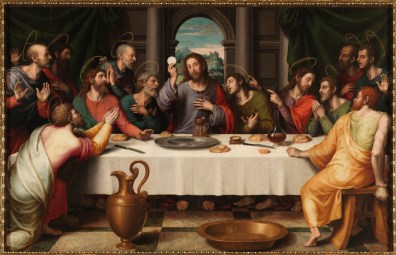
Last Supper

August 19th, 2018 20th Sunday of Ordinary Time

Gospel of John 6:51-58 NAB

Jesus said to the crowds: “I am the living bread that came down from heaven; whoever eats this bread will live forever; and the bread that I will give is my flesh for the life of the world.” The Jews quarreled among themselves, saying, “How can this man give us his flesh to eat?” Jesus said to them, “Amen, amen, I say to you, unless you eat the flesh of the Son of Man and drink his blood, you do not have life within you. Whoever eats my flesh and drinks my blood has eternal life, and I will raise him on the last day. For my flesh is true food, and my blood is true drink. Whoever eats my flesh and drinks my blood remains in me and I in him. Just as the living Father sent me and I have life because of the Father, so also the one who feeds on me will have life because of me. This is the bread that came down from heaven. Unlike your ancestors who ate and still died, whoever eats this bread will live forever.”

Meditation Reflection:

When I have old friends over for dinner, it is never merely a meal.  It’s always a highly anticipated event, an encounter with people I dearly love at a deep level.  It’s an exchange of conversation flavored by our shared history, values, and mutual respect.  When I have new friends over for dinner, it’s never merely a meal either.  It too is an encounter, a sharing of ourselves and opening up to discover common values as well as the excitement of hearing a person’s different perspective or experiences.

The great modern theologian, Fr. Romano Guardini (1885-1968), made the beautiful insight that the Mass too is both a meal and an encounter (from his book Meditations before Mass).  He reflected that Christ made this connection when He referred to Himself in the passage above as both “bread” (meal) and as “come down from heaven” (encounter).  In the Mass Christ invites us to a dinner He has prepared that we might both be nourished by the food and refreshed in spirit by the personal encounter with Him either as a new or old friend.

Deep friendship is one of the greatest pleasures one can experience in life. Even the philosopher Aristotle considered it one of the highest virtues.  To find someone who shares the same “vision of the Truth” as C.S. Lewis put it, is a real joy.  Scripture reminds us that “Faithful friends are beyond price” (Sirach 6:15) and we all know that for something to be expensive it must be rare.  To spend time with that friend in person is even more delightful.  To have that kind of friendship in marriage can result in an exchange of love and unity at the very depths of our humanness.

Christ desires this kind of friendship and union with each of us.  That is why the image of a wedding feast is used to represent the culmination of the Christian life.  Christ the bridegroom and the Church His bride are united body and soul in the Eucharist.  Celebrating the Lord’s Supper presents the opportunity to encounter Christ at every level, from the surprises of a new friendship to the deepest and most intimate of long relationships.  The more dinners, the more the friendship can develop.

Consider:

  • Who is your closest friend?  How did the friendship develop?
  • How would you describe your friendship with Christ?  How has it developed?
  • Consider the role of meals in developing friendships.  Whether it is as simple as coffee, drinks, lemonade, cookies, grilling, eating out, or cooking a full meal, or family dinners.  How does food somehow enrich the experience and open people up to each other?
  • Consider why Christ would desire to be present to you in Person, in the flesh, in the context of a meal.  Consider how personal it is and bonding.  Also consider the addition of other people – how does eating with others add to the experience?

Make a Resolution (Practical Application):

  • Next Mass, approach the Lord’s Supper the way you would a dinner with a close friend.  Prepare yourself for the encounter and treat it with the same attention and respect you would give your dinner guest or host.
  • On the way up the aisle to receive the Eucharist try to push away any distracting thoughts.  Reflect on the real presence of Christ in the Eucharist.  After receiving Christ, try to remain silent and focus on Him for a few minutes before talking, singing, or thinking of anything else.
  • Offer hospitality to someone.  Make them dinner and treat them as if they were Christ Himself visiting your home.

*revised edition; first posted 8/16/15

~ Written by Angela Jendro © 2018

* To receive these weekly posts automatically in your email just click the “follow” tab in the bottom right hand corner and enter your email address.