Excerpt fr om Take Time for Him: Simple, Soulful Gospel Meditations to Ignite the Busy Person’s Spiritual Life Get your own papercopy from Amazon!
Remember to rate and review it!
4th Sunday of Lent
Gospel of John 9:1-41
Meditation:
Another long passage. Why? Two in a row?! Is it because it’s Lent, and the Church wants to test our patience? No, despite our ever-shortening attention spans, we still need to hear real stories of real people’s transformation in Christ.
John could only include a sliver of these experiences in his Gospel, so he reserved room for the most powerful or most instructive. His Gospel is not written as myth or legend, but as testimony. Jesus’ encounter with the Samaritan woman at the well taught us the surprising nature of the kingdom of God which we, like many of the Jews at the time, may find difficult to understand on a natural level. Jesus’ healing of the man born blind, testifies to the undeniable evidence of Jesus’ divine origin. Thus, discipleship of Christ cannot be sustained by natural reason alone, which is why believing in Him as merely a good moral teacher is not enough and not very effective. Rather, disciples follow Christ based on faith in Who He is. This faith may develop gradually over a period of time and interaction, like the Samaritan woman’s village with whom Jesus spent two days, or happen in a miraculous moment like the man born blind. Either way, the call of discipleship exceeds our understanding, and can only make sense if we believe that Jesus is truly God.
Discipleship begins with encounter and follows with witness. The man born blind witnessed to the facts about his healing without interpretation several times. The Pharisees refused to acknowledge the logical conclusion, so they tried to raise doubts about the premises. Finally, the exasperated man connected the dots for them and stated the real logical conclusion: He was born blind, now he is not blind; only God could have given him sight; God only blesses those whom He approves; therefore…Jesus is from God. For the Pharisees to reject Christ when the miracle was standing right in front of them, was to willingly choose blindness. God acts in our lives daily and has sent His only Son for our salvation. We have no more excuses for our ignorance. Christ can make the blind see, but we can also choose to be blind by our own obstinate will.
The Pharisees tried to pit Jesus against Moses, but Jesus is the fulfillment of God’s promise to send a new Moses. Moses received the Law from God and brought it to the people. Jesus is God and communicates the New Law from His own authority. He also, therefore, has the authority to correct any misinterpretations or misapplications of the Old Law.
God also promised, that someone from the line of David would always be king. As the New David, Jesus takes up the crown as eternal king. When God told the prophet Samuel to go to the house of Jesse and anoint one of his sons as the new king, Samuel expected the oldest to be chosen. Instead, God chose the youngest. This was such an unforeseen call, that David wasn’t even present at the visit but instead was tasked with tending the sheep. Just as God said to Samuel regarding David,
“the LORD sees not as man sees; man looks on the outward appearance, but the LORD looks on the heart.” (1 Samuel 16:7 RSV), so the blind man gave witness to Jesus by his miraculous and supernatural sight. “One thing I do know is that I was blind and now I see…It is unheard of that anyone ever opened the eyes of a person born blind. If this man were not from God, he would not be able to do anything.”
All Christians are called to bear witness to Christ, evidenced by His transformative power in their lives. How others react to that witness, brings to light their true state of soul. We all have an innate yearning for God. We sometimes avoid Him however to continue in some of our sins. Sometimes we feign ignorance, rationalize away Christ’s teaching, or discount the witness given by the lives of strong Christians we know, so we can avoid facing the truth about our attachments. We cannot hide any longer. Christ has come, His light has shone, and He continues to live and act through His Mystical Body the Church. He has given a New Law as our Eternal King. His expectations exceed our natural abilities and weakness, but His grace makes the Christian life possible.
The more our relationship with Christ develops, the more our faith will strengthen and our trust in Him will grow. Then, when the Christian life tests our minds and hearts, we will hopefully respond as St. Peter did, “Lord, to whom shall we go? You have the words of eternal life; we have come to believe and are convinced, that you are the Holy One of God.” (John 6:68-69) and to give witness as St. John does at the beginning of His Gospel: “the Word became flesh and dwelt among us, full of grace and truth; we have beheld his glory, glory as the only-begotten Son from the Father.” (John 1:14 RSV)
Consider:
- Where would you consider yourself in your spiritual journey?
- Initial Outreach – just beginning the search for God, curious about Jesus but unsure of whether to follow Him
- Early Development – responding to Christ, learning His truths, forming convictions, developing Christian habits, shedding sinful habits, wavering but growing stronger
- Disciple – follower of Christ, faith in Him and trust in Him above oneself, motivated by love and loyalty, allowing Christ full authority to transform you, witness of His life in you
- If, like the man born blind, you were asked to testify about your encounter with Christ, what would you say? What would be the “facts” of the case, and what would be your conclusions?
- How has the Christian witness of others strengthened your faith or moved you to make a serious change in your life?
Make a Resolution (Practical Application):
- Each morning take five minutes of prayer to think about your day ahead and resolve to witness to Christ in one to three concrete
- Consider in each aspect – home, work, recreation, family
- Think of ways in each area you can live your Christian faith and witness to Christ by either your words or your actions.
- Resolve on one thing to say or do in each area for the day.
~ Written by Angela Jendro © 2019
| * To receive these weekly posts automatically in your email just click the “follow” tab in the bottom right hand corner and enter your email address. You can also follow me @taketimeforhim on Twitter and Facebook. |
Additional Recommendations for Spiritual Reading:
*As an Amazon Associate I earn from qualifying purchases.
-
From the Depths of our Hearts: Priesthood, Celibacy and the Crisis of the Catholic Church by Pope Benedict XVI and Robert Cardinal Sarah
-
I just finished reading this book and loved it! I found it inspiring for my own discipleship in addition to a greater appreciation for the priesthood.
-
- Lent and Easter Wisdom from Fulton J. Sheen: Daily Scripture and Prayers Together With Sheen’s Own Words (Lent & Easter Wisdom)
- The Way of the Cross: meditations on the Stations of the Cross by Fulton Sheen
- Ignatius Catholic Bible: Revised Standard Version, Burgundy, Zipper Duradera (this is the bible I use for my personal prayer. I love it)
- Abandonment to Divine Providence by Jean Pierre de Caussade (a spiritual classic, my absolute favorite)
- The Practice of the Presence of God by Brother Lawrence
- Interior Freedom by Jacques Philippe
- The Life of Christ by Fulton Sheen
- The Way of Perfection: Study Edition [includes Full Text of St. Teresa of Avila’s Work, Translated by Kieran Kavanaugh, OCD]
- The C. S. Lewis Signature Classics: An Anthology of 8 C. S. Lewis Titles: Mere Christianity, The Screwtape Letters, Miracles, The Great Divorce, The … The Abolition of Man, and The Four Loves
- Fulton Sheen: Remade for Happiness: Achieving Life’s Purpose through Spiritual Transformation
 One reason may be because the woman at the well’s encounter with Christ models the process of conversion. Jesus approached her when she least expected it. She went to the well at noon, the worst time of the day, to avoid the other women. Sin has a way of isolating us from others as we try to cover up our sins or protect our rationalizations.
 om
om  tempting the starving Christ with bread. He waited until Jesus was at the end of His fast when He would be tired, hungry, and physically weak. Similarly, the devil tries to exacerbate our problems when we are worn out and vulnerable. How many of us have failed to pray in the morning because we didn’t want to give up the comfort of sleep? When have you missed Mass because it would be an inconvenience or it was cold outside? Are there times when putting your feet up, having a beer or glass of wine, and watching tv took precedence over interacting with your spouse or kids at the end of a long workday (especially when kids require discipline or help with homework)? How many opportunities do we miss simply because it’s uncomfortable or we are too lazy? Unless we overcome our own slothful inertia, we cannot be strong enough to be the salt of the earth that Jesus needs from His disciples.
 After overcoming our desires for pleasure and comfort, the next hurdle is fame and ambition. Satan loves to stroke our ego and promote the lie that the measure of our worth is measured by our success. Yet, our Lord chose a life of humility and rejected some of the apostles’ notions that His kingdom would bring them worldly notoriety. God works the most through the small and the weak. St. Paul even states that in our weakness God’s power is brought to perfection (I Corinthians 2:12). Until we curb our own ambitions, we won’t be free to work for God’s ambitions.
 prepare for His mission, we too spend 40 days praying and fasting to prepare for receiving the graces He won for us by His death and Resurrection at Easter. Christ offers the grace of Redemption to every person; however we cannot be redeemed unless we accept that grace through repentance of our sins and placing our faith in Christ. This means change – which is why we try to give up something during Lent and/or add prayer or works of mercy to our daily routine during this time.


 can only be wrought from an utter realness about ourselves. When Moses asked God to reveal His Name, God responded that it is “YHWH” or “I AM”. God revealed that He is. God is being and existence, He is the source of all that is real. Thus, union with God requires utter realness and authenticity.

 om
om 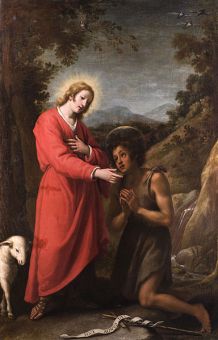 true Christian discipleship. He rejected the title of Messiah for himself and insistently pointed to Jesus as the Christ. He spoke the truth to peasants, religious leaders, and even political leaders, despite the risk of arrest and even death. When the Lord finally came, he gracefully stepped to the side, saying “He must increase; I must decrease.” (Jn 3:30).
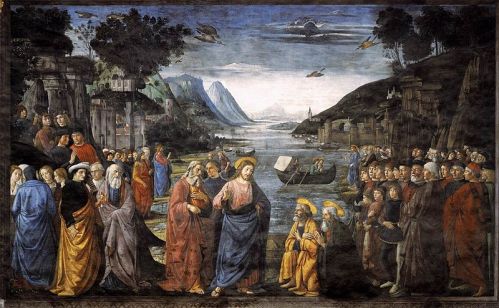 waiting the Messiah. They, like Christ, obeyed God in humble tasks of everyday life until He called them forth. When asked to follow Him, they immediately left the security of their routines and their community, to say Yes to the Lord and His will.

 Take Time For Him