Encountering Christ Through Your Life…Gospel Meditation for Sunday July 3rd, 2016

by Angela Lambert

pope francis and refugees

Pope Francis welcomes a group of Syrian refugees after landing at Ciampino airport in Rome following a visit at the Moria refugee camp in the Greek island of Lesbos, April 16. Filippo Monteforte / Pool via Reuters

July 3rd, 2016; 14th Sunday in Ordinary Time

Gospel of Luke 10:1-12, 17-20 NAB

At that time the Lord appointed seventy-two others whom he sent ahead of him in pairs to every town and place he intended to visit. He said to them, “The harvest is abundant but the laborers are few; so ask the master of the harvest to send out laborers for his harvest. Go on your way; behold, I am sending you like lambs among wolves. Carry no money bag, no sack, no sandals;
and greet no one along the way. Into whatever house you enter, first say, ‘Peace to this household.’ If a peaceful person lives there, your peace will rest on him; but if not, it will return to you. Stay in the same house and eat and drink what is offered to you, for the laborer deserves his payment. Do not move about from one house to another. Whatever town you enter and they welcome you, eat what is set before you, cure the sick in it and say to them, ‘The kingdom of God is at hand for you.’ Whatever town you enter and they do not receive you, go out into the streets and say, ‘The dust of your town that clings to our feet, even that we shake off against you.’ Yet know this: the kingdom of God is at hand. I tell you, it will be more tolerable for Sodom on that day than for that town.”

The seventy-two returned rejoicing, and said, “Lord, even the demons are subject to us because of your name.” Jesus said, “I have observed Satan fall like lightning from the sky. Behold, I have given you the power to ‘tread upon serpents’ and scorpions and upon the full force of the enemy and nothing will harm you. Nevertheless, do not rejoice because the spirits are subject to you,
but rejoice because your names are written in heaven.”

Meditation Reflection:

Jesus desires personal relationship with each human person.  At the same time, no man is an island, and therefore Jesus encounters persons within the context of their lives. Our experiences and choices, together with our relationships with others, form the framework through which we receive and respond to Christ.

Our personal encounter with Christ may begin with a personally appointed disciple of His, sent ahead of Him.  For some, a certain preparation may be needed before Christ’s visit will be fruitful.  Someone whose heart is hardened toward God by experiences of pain or falsehood may need their demons cast out so Christ can fully enter.  In some cases, this happens in a literal way through the name of Jesus and the authority granted by Him.  In other cases, it happens in a more analogous way through the softening of a heart by the experience of Christian love, the opening of a mind through seeds of truth, or the reception of mercy in a time of need.  An otherwise weak soul, may find the courage to say yes to Christ after being inspired by the bravery of another.  A proud soul may see the beauty of meekness through the gentle joy of colleague.  Our perception of God can be obscured by our experiences in life – either of prosperity or pain – but it can also be clarified by our experiences in life, especially through encounters with other Christians.

Christ call us to proclaim the kingdom of God to others and He equips us with the supernatural power and grace to do so.  The good news of the Lord’s presence and mercy is proclaimed through a myriad of ways and tailored to the individuals who will receive it.  God may call you to witness through your example, through your choices, through works of mercy, through your patience and kindness, through your prayers and sacrifices, or through words of teaching, encouragement, conviction, or comfort.  Conversions continue to take place even in surprising places.  Peter Leithart, writer for First Things magazine, reports in his article “Islamicization of Europe or Christianization of Islam?”, that many Muslim refugees migrating into Europe from Iraq, Afghanistan, Pakistan, and central Asia have been converting to Christianity and requesting baptism by the droves.  The article cites a variety of reasons for this phenomena but ultimately individuals in need have encountered Christ through the Christians who have aided them which sparked openness to Christianity and a desire for Christ.

The kingdom of God, which is none other than union with God, begins here on earth at the crucial crossroads of the human will.  The seventy-two sent out by Christ recounted their exhilaration at being able to cast out demons.  The devil seems oppressively powerful, yet at the simple name of Jesus, he is conquered.  Unfortunately, a simple “no” by the human will can shut Jesus out.  Relationship requires the reciprocal good will of two people.  Christ loves us, but if we do not love Him in return there can be no friendship.  As Christian disciples, we must pray to be His missionaries laboring in His harvest and take care to not turn others away by their encounter with us.  We should also not become discouraged if even after great feats people in our lives still reject God.    Ultimately, that is between them and God.  The stakes are high – heaven! – so let’s pray that we can open hearts to receive the Lord for all of eternity.

Consider:

  •  Consider how Christ has sent messengers ahead of Him to you.
    • Who brought to you His truth, sacraments, love, or compassion?
    • How did it increase your faith or clarify your understanding of Christ?
  • Consider how you are a messenger of Christ – to your family, your colleagues, your neighbors, and your friends.
    • In what ways to you demonstrate Christ’s love and truth to them?
    • In what ways could you improve your Christian witness?
  • Reflect on your receptivity. How open are you to the Word of God in Scripture, through His Church, through others?  What hinders you and what helps you?
  • Reflect on Christian evangelization occurring in Europe by reading Peter Leithart’s article:First Things. “Islamicization of Europe or Christianization of Islam?”

Make a Resolution (Practical Application):

  •  Each day prayerfully and intentionally decide on one person with whom you will share Christ.  Prayerfully decide how and when you will do it. (e.g. saying a kind word to someone who annoys you at work, praying with your children together before bed, doing something loving toward your spouse, forgiving someone in need of mercy, etc.)
  • Reach out to someone who has been instrumental in your own conversion and thank him or her. It could be as simple as an email, text, hand-written note, or phone call.

~ Written by Angela Lambert © 2016

* To receive these weekly posts automatically in your email just click the “follow” tab in the bottom right hand corner and enter your email address.


Excuses, Excuses…Be Brave! Be Determined!

merciful father

June 26th, 2016; 13th Sunday in Ordinary Time

Gospel of Luke 9:51-62

When the days for Jesus’ being taken up were fulfilled, he resolutely determined to journey to Jerusalem, and he sent messengers ahead of him. On the way they entered a Samaritan village
to prepare for his reception there, but they would not welcome him because the destination of his journey was Jerusalem. When the disciples James and John saw this they asked, “Lord, do you want us to call down fire from heaven to consume them?” Jesus turned and rebuked them, and they journeyed to another village. As they were proceeding on their journey someone said to him, “I will follow you wherever you go.” Jesus answered him, “Foxes have dens and birds of the sky have nests, but the Son of Man has nowhere to rest his head.” And to another he said, “Follow me.” But he replied, “Lord, let me go first and bury my father.” But he answered him, “Let the dead bury their dead. But you, go and proclaim the kingdom of God.” And another said, “I will follow you, Lord, but first let me say farewell to my family at home.” To him Jesus said, “No one who sets a hand to the plow and looks to what was left behind is fit for the kingdom of God.”

 Meditation Reflection:

Being a Christian means following Christ, wherever and whenever He goes.  Full discipleship requires 100% commitment, not the made-to-order or pick and choose buffet we are accustomed to in our culture.  Consider Jesus’ own example.  He needed to journey to Jerusalem.  Notice the attitude He chose – resolution and determination.  Followers of Christ need the same resolution and determination.  In fact, St. Teresa of Avila, the great Spanish mystic, emphasized repeatedly the need for determination in order to advance in the spiritual life.

As Jesus journeyed, doing the Father’s will, those He encountered each had an opportunity to join Him.  The Samaritans received messengers from Christ but rejected the Lord before He even arrived when they learned accepting Christ meant surrendering their bitterness toward Jerusalem.

The next person took the initiative to seek Jesus and requested to be in His company.  Jesus, who knows the hearts of each one of us, warned the man that being near to Christ would bring spiritual security and comfort but not necessarily the feeling of physical security and comfort.

The next two men Jesus invited to follow Him, but both requested to do something else first.  Their requests seem valid and even noble.  In fact, burying the dead is a corporal work of mercy and honoring your father and mother is the 4th commandment. Is Jesus asking us to neglect our duties?  Does Christian discipleship excuse neglecting our families?  Does God contradict Himself?  No.  Do we sometimes rationalize our cowardice or weakness by twisting God’s commands against Him?  Yes.  Many of us (including myself!), often excuse our lack of time for prayer by pitting it against the active life of charity.  It sounds something like this: “I don’t have time to sit and pray because I need to do…which God would want me to do.”  A practical example would be, “I could sit and pray (a.k.a. do nothing) or work an extra hour to provide for my family, or do a load of laundry and dishes, or run an errand.  God wants me to care for my family, that is my prayer.”

Sometimes that might be the case.  But, in truth, there’s usually time for both.  In addition, without prayer, even our loving activities can tend to be more self-loving rather than other-loving. Jesus knew the hearts of the two men who wanted to return to their families before following Him.  Rather than contradicting His command that we love one another, especially our families, He may have been calling them out on their rationalizations.  It reminds me of when I gather my kids for family prayer.  My two boys will often try to get out of it by appealing to my earlier request that they get outside for awhile or they were just about to start a chore I had assigned earlier.  In reality, they had time for both those things before and after prayer, it just sounds like a better excuse.

Let’s face it, we have an inner desire for God and we may even have authentic zeal for discipleship, but we also struggle with attachments that hold us back.  The good news, is that if we open ourselves up to Christ in prayer, He will reveal those attachments to us and provide the grace to overcome them.  It requires resolution and determination, but with God all things are possible.

Consider:

  • Like the Samaritans, how many of us hold on to bitterness, anger, or un-forgiveness?  Prayerfully ask Christ to reveal if any of these are holding you back from following Him.  Pray for the grace to surrender it to the Lord.
  • Like the man who proclaimed he would follow Christ wherever He goes, consider why you are a Christian. Is your love for the Lord intermixed with some self-love as well?  Do you complain when you encounter trials?  Are you impatient or upset when you experience discomfort?
  • What rationalizations do you use to delay responding to Christ or to responding more generously? What rationalizations have you overcome on your spiritual journey?   How has that experience strengthened your will to follow the Lord?
  • A favorite book of mine called “The Fire Within” by Fr. Thomas Dubay provides some great steps for identifying and overcoming attachments. Prayerfully read my summary of Fr. Dubay’s steps and see if you can identify one attachment and make a plan for rooting it out.identifying attachments

Make a Resolution (Practical Application):

  • Each day this week thank God for one deterrent He has helped you overcome or from which He has freed you, and invite Him to reveal and free you from a current hindrance you may or may not realize you have.
  • Pray for an increase in resolution and determination. Choose one concrete thing you can do this week to apply it.  (e.g. pray 15 minutes each morning or evening, say something kind to your spouse when you want to say something critical, hug your child when you want to throw your hands up in exasperation, choose a daily Mass to attend and do what it takes to get there, go to Confession…)
  • Using Fr. Dubay’s steps, identify a current attachment and do one thing each day to root it out.

~ Written by Angela Lambert © 2016

* To receive these weekly posts automatically in your email just click the “follow” tab in the bottom right hand corner and enter your email address.

Paradoxes of Discipleship

by Angela Lambert

carrying-the-cross-daily1

June 19th, 2016; 12th Sunday in Ordinary Time

Gospel of Luke 9:18-24

Once when Jesus was praying by himself, and the disciples were with him, he asked them, “Who do the crowds say that I am?” They said in reply, “John the Baptist; others, Elijah; still others, ‘One of the ancient prophets has arisen.’” Then he said to them, “But who do you say that I am?” Peter said in reply, “The Christ of God.” He scolded them and directed them not to tell this to anyone. He said, “The Son of Man must suffer greatly and be rejected by the elders, the chief priests, and the scribes, and be killed and on the third day be raised.” Then he said to all, “If anyone wishes to come after me, he must deny himself and take up his cross daily and follow me. For whoever wishes to save his life will lose it, but whoever loses his life for my sake will save it.”

 Meditation Reflection:

Often we feel burdened by the frenetic pace of life, even the endless duties of Christian service for our loved ones.  We can easily feel that we do not have time to “just sit and pray.”  As a result we rationalize that our work is our prayer and God wants more from us than mere words.  These thoughts carry quite a bit of merit given their truth.  Nevertheless, they do not abnegate our responsibility to spend time alone with God.  Who could really say he or she has more work to do than the Son of God did during His time on earth?  Who of us can dare say our service cannot wait while we pray alone with God but Christ’s could?  Even Mother Teresa, known for her tireless works of charity, spent several hours in prayer every morning before beginning her service for the poorest of the poor. Angelo Comastri, Archbishop of Loreto, attested to her insistence on the necessity of prayer first, describing his encounter with her in this way:

“She looked at me with two clear and piercing eyes. Then she asked me: «How many hours do you pray a day?» I was surprised by such a question and tried to defend myself by saying: «Mother, I expected you to speak about charity, to invite me to love the poor more. Why do you ask me how many hours I pray?» Mother Teresa took my hands and held them tightly in her own as if she wanted to pass on to me what she had in her heart; then she told me in confidence: «My child, without God we are too poor to be able to help the poor! Remember: I am only a poor woman who prays. When I pray, God puts His Love into my heart and so I can love the poor. By praying!http://www.vatican.va/jubilee_2000/magazine/documents/ju_mag_01091997_p-18_en.html

Time alone with God, especially time spent in silent contemplation or meditation may feel like you are doing nothing whereas in truth an incredible amount is being accomplished in the depths of your soul by God.  In prayer, God fills our souls supernaturally with grace which enables us to know, love, and serve Him in ways we could not without this aid.  For instance, those who had encountered Christ but had not spent time alone with Him like the apostles, had fairly good guesses about Christ’s identity, nevertheless they were wrong.  Peter, however, having dedicated Himself to following Christ and remaining near to Him, was enabled by the Holy Spirit to correctly determine the truth about Jesus.

Moreover, when spending time alone with Christ in silence, He reveals more of Himself to us as well as His mission for us.  After Peter perceived Jesus as the “Christ,” which means “Anointed One,” referring to the long awaited Messiah or “Son of Man” from earlier prophecies, Jesus next revealed the Christ would suffer, die, and be raised to life.  This would not have been the kind of glory the apostles were expecting from their leader.  Without grace, they must have questioned why they chose to follow someone who predicted He would seemingly fail in such a painful way.  He also promised a resurrection but this too would be hard to put in one’s trust without grace.  If that weren’t enough, Jesus went on to disclose an even harder truth: “If anyone wishes to come after me, he must deny himself and take up his cross daily and follow me.”  Self-denial? Intense suffering?  No marketing agent would put that on a billboard!

We can only make that kind of sacrifice aided by grace to trust that our Lord who suffered, died, and was raised to eternal life in Heaven, will raise us to eternal glory with Him if we endure the suffering and death to our worldly ambitions and sinful attachments on earth.  You only live once so the risk is big.  If Heaven isn’t for real, you won’t have a second chance at the pleasures or the fame the world has to offer.  Time alone with Christ must be a necessity for disciples.  Who do some secular people say Christ is?  A crutch for the weak, a glorified imaginary friend, an old superstition.  Who do disciples of Christ discover He is?  A trusted friend, a vigilant protector, a source of peace, a spring of joy.

In time alone with the one we love, Christ gifts us with the faith, hope, and love necessary to believe and act on His admonition: “For whoever wishes to save his life will lose it, but whoever loses his life for my sake will save it.”  For example, when in prayer, I felt Jesus call me to the vocation of motherhood, it took some grace and adjustment.  I was young and had more ambitious ideas of how to serve the Lord.  In time alone with Him at adoration however, He revealed to me that I had made some good guesses about the Christian life, but they were still very tainted by a worldly lens.  In time I came to see from His perspective.  I came to have faith but next I needed the hope and love to act on this call, which He provided through more time spent with Him.  I spent my 20’s at home raising my three kids, while my worldly peers pursued careers, partied, and travelled.  From a secular view, I had “no life”.  Sometimes, it even felt like that.  However, I had posted on my refrigerator John 15:13 “Greater love has no man than this, that a man lay down his life for his friends.” When tempted by the worldly lens that I had wasted my talents, I would spend time in prayer.  Without fail, I would walk away each time with the view of the greatness of my mission as a disciple and I felt unworthy of such an honor.  15 years later, I can see concrete examples of how in losing my life Christ saved it.  I can’t articulate the work He has done in my soul through my experience as a mother and my time alone with Christ in the home with my kids for 10 years.  I’m not saying that is His will for everyone.  It was however His will for me and in retrospect I can see why.  When I had finally become truly comfortable with my mission at home (and even homeschooling!) I was called to go out of the home, enroll my kids in school, and be a teacher again.  When this became absolutely clear I cried uncontrollably for an hour.  What had begun as a sacrifice became a sacrifice to surrender.  Christ blessed me however through ways only He can and through His Mystical Body, with the opportunity for all of my kids to attend the school at which I teach so we could still be together in some way during the day. I still rely on Christ to provide the faith, courage, and love to choose His will over the immediate visible rewards that come from my will and already I am seeing the fruits of His next call.

Our utilitarian culture measures worth by achievement.  Love however simply desires connection and time together.  Love bears fruits of good works, but its greatest joy is simply enjoying the nearness and attention of the beloved.  You are Christ’s beloved.  Your love should bear fruit of loving works, but Jesus’ greatest joy is time spent near Him, enjoying His presence.  As Mother Teresa advised, spend time alone with the Lord, and He will pour the love you need in your heart to carry your cross.  Paradoxically, you may find your cross to be your greatest blessing and that in losing your life for the Lord, it will be saved.

Consider:

  •  Consider how much time you spend alone with Christ.
    • What keeps you from making time for silent prayer and listening?
    • How has silent prayer with the Lord deepened your faith?
  • Consider the paradox that no matter how busy we are, if we make time for Christ somehow everything else still gets done.
  • With whom do you enjoy spending time together? Do you take joy in his or her presence even if nothing is being “accomplished”?  Do you know and love each other more deeply as a result?
  • If you have teens, consider the time you spend driving in the car. Often that space of time where you are simply alone in the quiet of the vehicle is when they open up about what’s on their minds or in their hearts.  What is it about a dedicated space of time that cannot be interrupted by tasks that opens people up to one another?
    • Consider how this relates to our relationship with the Lord. How many of us encounter Him during times when we have nowhere else we could go?  What if we simply carved out that time intentionally each day?
  • How has Christ deepened your faith, strengthened your trust, and made you more loving because of your relationship with Him?
  • Have you ever “died to something” in your life only to find that in fact Christ liberated you through it? Have you given something only to find you were given more in return?
  • What might Christ be asking you to surrender today? How might Christ value your contributions more than you do?  Pray for Him to reveal His view of your life and purify your own lens.

Make a Resolution (Practical Application):

  • Spend an additional 15 minutes a day this week alone with Jesus.
  • Visit Jesus at adoration one time this week.
  • Read about Christ in the Gospels or a spiritual book. One suggestion would be “Jesus of Nazareth” by Pope Benedict XVI.
  • Take 5 minutes for silent prayer a day.
  • Listen to Christian music once a day – while driving, walking, getting ready etc.
  • Listen to the song “How He Loves Us” by David Crowder Band

~ Written by Angela Lambert © 2016

* To receive these weekly posts automatically in your email just click the “follow” tab in the bottom right hand corner and enter your email address.


Why is There Suffering, and What is God Doing About It?…Gospel meditation for June 5th, 2016

by Angela Lambert

Jesus raises widow of Nain's son

June 5th, 2016; 10th Sunday in Ordinary Time

Gospel of Luke 7:11-17 NAB

Jesus journeyed to a city called Nain, and his disciples and a large crowd accompanied him. As he drew near to the gate of the city, a man who had died was being carried out, the only son of his mother, and she was a widow. A large crowd from the city was with her. When the Lord saw her, he was moved with pity for her and said to her, “Do not weep.” He stepped forward and touched the coffin; at this the bearers halted, and he said, “Young man, I tell you, arise!” The dead man sat up and began to speak, and Jesus gave him to his mother. Fear seized them all, and they glorified God, crying out “A great prophet has arisen in our midst,” and “God has visited his people.” This report about him spread through the whole of Judea and in all the surrounding region.

 Meditation Reflection:

Why is there evil in the world?  Why doesn’t God do anything about it? Some persons will answer that either God doesn’t exist or God doesn’t care.  Those persons willing to investigate the question further however, universally discover two things: human free will causes most evils and the person who has consistently done the most to alleviate suffering is God.  Utopian ideologies of the 19th and 20th centuries, endeavoring to eradicate evil through human efforts alone, all ended in countless deaths and totalitarian rule. Sin causes evil and only God can save us from ourselves.  Even death, God has revealed, did not originate with faulty genetics or evolution.  Sickness, death, toil, and pain entered the world through the original sin of Adam and Eve (Genesis 3; Romans 8:19-23).

God created human persons to experience Truth, Goodness, and Beauty.  He designed us to live in perfect friendship with Him and with each other in a unity of love and joy for eternity.    We all experience deep suffering at some point(s) in life.   The woman in this Gospel provides an example of both deep spiritual pain from losing her only son after having already lost her husband, as well as utter material destitution since she would have no legal rights to property or work without a husband or son.  Upon seeing this, Jesus is “moved with pity for her.” When we feel most vulnerable, most alone, and our hearts are breaking, we can look to this passage and take comfort in knowing that Christ is looking on us with pity.  Moreover, this pity moves Him to do something to alleviate our pain.  In this case, Jesus restored the man to life.  In doing so, He restored the woman’s life as well.  Although Christ does not always save those we love from earthly death, this miracle demonstrates His power and His love which brings new life in surprising and supernatural ways.  It also points to the hope that all will be made new in the resurrected life in the kingdom of God.

God became man to dwell among us (John 1:14) and to personally alleviate our suffering through His Word, His touch, and His sacrifice.  As the psalmist proclaims: “The LORD is near to the brokenhearted, and saves those who are crushed in spirit” (Ps. 34:18).  Moved with pity, Christ continues to reach directly into our hearts to dry our tears and heal our wounds. He anoints our wounds with grace through His sacraments, He dispels hurtful lies with His divine revelation, He forgives our sins in the sacrament of Confession and fortifies us with grace to overcome them, and He feeds us with His very own body and blood in the Eucharist.  Finally, He unites us as members of His body and extends His hand of mercy through His disciples operating under the direction and love of the Holy Spirit.

Does God care about our suffering?  Is He going to do anything about it?  Yes.  Quite a lot actually, if only you will allow Him.  Christ offers new life if we will accept it.  He offers healing if we turn to Him.  This is the witness of every Christian disciple.

Consider:

  •  Re-read the Gospel and imagine you are one of the persons present.
    • Consider the love of the mother for her only son. Consider her love for her husband as well.  The death of her son means the image of her husband is gone as well as their family together.  In addition, imagine you will now be destitute with no way to provide for yourself.  To your surprise, a man emerges from the crowd and gives your son, your family, your life, back to you.
    • Imagine you are one of the members of the crowd. Why might you be present and how might you be feeling toward the woman?  What would you think of Christ’s miracle?
    • Imagine Christ’s perspective. What does His response reveal about His heart and His character?
  • Consider the definition of pity. Dictionary.com defines it as: “sympathetic or kindly sorrow evoked by the suffering, distress, or misfortune of another, often leading one to give relief or aid or to show mercy.” The heart of Christ felt sorrow at the sight of the woman’s pain and it moved Him to help her.  Imagine Christ seeing you in your pain.  Consider His merciful look of pity which shares your sorrow and desires to bring you comfort.
  • Reflect on a time Christ comforted you or saved you when you were in dire need. Take time to appreciate all that He did and the incredible ways He acted in your life during that time.

Make a Resolution (Practical Application):

  • Begin each day with this prayer: “Lord show me the needs around me.  Move my heart with pity and enable me to show mercy to someone today.”
  • Surrender a pain to Christ to heal. Reach out to Him in His Word, His Sacraments, or His Church.  Spend 5 minutes of silence with Christ and your pain.
  • Make a gratitude list of the mercies Christ has shown you over the years and then each day.


~ Written by Angela Lambert © 2016

* To receive these weekly posts automatically in your email just click the “follow” tab in the bottom right hand corner and enter your email address.


Christ’s gift and a Mother’s gift…Gospel meditation for the Solemnity of the Most Holy Body and Blood of Christ

by Angela Lambert

eucharist and crowd

May 29th, 2016; The Solemnity of the Most Holy Body and Blood of Christ

 Gospel of Luke 9:11b-17 NAB

Jesus spoke to the crowds about the kingdom of God, and he healed those who needed to be cured. As the day was drawing to a close, the Twelve approached him and said, “Dismiss the crowd so that they can go to the surrounding villages and farms and find lodging and provisions; for we are in a deserted place here.” He said to them, “Give them some food yourselves.” They replied, “Five loaves and two fish are all we have, unless we ourselves go and buy food for all these people.” Now the men there numbered about five thousand. Then he said to his disciples, “Have them sit down in groups of about fifty.” They did so and made them all sit down. Then taking the five loaves and the two fish, and looking up to heaven, he said the blessing over them, broke them, and gave them to the disciples to set before the crowd. They all ate and were satisfied. And when the leftover fragments were picked up, they filled twelve wicker baskets.

Meditation Reflection:

Christ loves us with His whole being.  He became man that He might personally uplift our hearts with His truth, extend His hand to heal our wounds, and feed us with His own Body and Blood.  Mothers have the privilege of experiencing this kind of self-gift.  A mother literally shares her body with her child and shares in Christ’s pain at his or her birth.  A mother continues to feed her infant with her own body and tend to the constant needs of her newborn.  As her child grows a mother does everything she possibly can to care for the child’s physical, emotional, and intellectual development.  Mothers take joy when their kids eat and grow, when they can comfort and guide them, and when they can make sure their child knows how loved he or she is.

Christ urges us to trust Him and His love as well.  He soothes us in our worries assuring us of His care:

“Therefore I tell you, do not be anxious about your life, what you shall eat or what you shall drink, nor about your body, what you shall put on.  Is not life more than food, and the body more than clothing?  Look at the birds of the air they neither sow nor reap nor gather into barns, and yet your heavenly Father feeds them.  Are you not of more value than they?…But seek first His kingdom and His righteousness, and all these things shall be yours as well.” Matthew 6: 25-33)

Today’s Gospel confirms that Jesus cares about our needs, even the basic ones like what’s for dinner. Moreover, He can provide in surprising ways since He can do the miraculous.  The crowd of thousands ate their fill after having spent the day in a deserted place listening to Christ speak about the kingdom.  So many times we try to cure ourselves or numb the pain in ways that only turn out to be self-destructive and leave us hungering.  Instead, we should try reaching out to Christ in prayer and receiving the cure for all our pain in His Eucharistic Body and Blood.

Jesus heals our hearts and frees us from the lies that we allow to burden us.  He forgives our sins and gives us a new start with the grace and hope to be better.  He fortifies us with His strength to persevere and He gently provides rest for our soul with His peace.  He does all of this personally, directly, through His incarnate and immanent presence in the Eucharist.  Christ gave His Body and Blood on the Cross to give birth to our new life.  He instructed us to take and eat of this same Body and Blood which He made the sacrifice of the New Covenant.    The Son of God became man that He might dwell among us and apply His grace to our soul.  Today we honor the gift of His Body and Blood through which He feeds us superabundantly, strengthens us, comforts us, and nourishes our growth.  Through the gift of His most holy Body and Blood, we receive life.  Moreover, He continues to provide this gift that we might grow in health and maturity to the fullness of Christian life in the kingdom of God.

Consider:

  • Imagine you are one of the person’s in the crowd listening to Jesus speak about the kingdom of God and curing all those who needed it.
    • What would you hear Jesus say?
    • From what would He heal you?
    • How might His Truth and His touch free you?
    • Consider how you have this very opportunity at the Mass – to hear Christ preach about the Kingdom through His priest and to touch you through His Eucharistic presence.
  •  Consider how a mother gives of her body for her child.  A mother’s love tends to be a complete self – gift.  Consider how the gift of her very body and blood, given in love,  is a unique way to give of her whole self in imitation of Christ.

Make a Resolution (Practical Application):

  • Reflect on the gift of Christ’s most holy Body and Blood on the Cross and in the Eucharist each day this week.
  • Attend a daily Mass this week in addition to the Sunday Mass.
  • Give Christ your own Body through a physical sacrifice. Cheerfully offer Christ your labor of service for your family or work, look for a providential opportunity to serve Christ with your physical efforts, offer your sickness or suffering, or prayerfully consider something to fast from each day.


~ Written by Angela Lambert © 2016

* To receive these weekly posts automatically in your email just click the “follow” tab in the bottom right hand corner and enter your email address.


Holy Spirit, Help Me!…Gospel Meditation for the Feast of Pentecost

by Angela Lambert

20150913_234534244_iOS 20150920_001542533_iOS


May 15th, 2016; Pentecost

Gospel of John 14:15-16, 23b-26 NAB

Jesus said to his disciples: “If you love me, you will keep my commandments. And I will ask the Father, and he will give you another Advocate to be with you always. “Whoever loves me will keep my word, and my Father will love him, and we will come to him and make our dwelling with him. Those who do not love me do not keep my words; yet the word you hear is not mine but that of the Father who sent me. “I have told you this while I am with you. The Advocate, the Holy Spirit whom the Father will send in my name, will teach you everything and remind you of all that I told you.

 Meditation Reflection:

Christ’s greatest gift to us – the first fruit of all of His suffering, death, and resurrection, the first thing He asks the Father on our behalf from His throne in Heaven – is the indwelling of the Holy Spirit.  In the gift of the Holy Spirit we experience the mystery of the Trinity.  God is one and therefore the Spirit makes Christ present in our soul along with the Father.  At the same time, God is three Persons, and therefore Jesus explains that He must ascend to Heaven so that the Spirit may descend upon us.  Because Christ merited the forgiveness of our sins, His Spirit could begin His work of cleansing us and sanctifying us.  The Spirit applies the healing balm of Christ’s sacrifice to the wounds of our sins and works as fast as we will allow to help us regain spiritual health and freedom.

The Spirit is the primary mover in our conversion.  He prompts us to turn to God, provides the strength to actually make the conversion, sanctifies our souls with the grace of Baptism and the sacraments, then guides the ongoing process of union with Christ.  At the same time, the Spirit requires our cooperation.  We can hasten or hinder His work.  It reminds me of trying to clean the house with my three kids.  Granted, a mother has to come to peace with a certain level of mess if she ever wants to survive motherhood.  At the same time, order and cleanliness lend beauty and peace to a home.  During those times when I attempt to clean everything up and restore order to the house my kids’ cooperation (or lack there of) unavoidably determines the success and timeframe of my effort.  When my kids were little I felt like a gerbil running in it’s wheel.  As soon as I cleaned up one mess I would turn around to find my kids had made another.  If I stopped to read with them or take them outside where they couldn’t mess up the house, I couldn’t clean it up either.   As they got a little older I could finally kick them outside to play while I cleaned inside or “quarantine” off rooms one by one from the kids as they were cleaned.  Still, work was often slowed by needs for water or snacks, complaints and fighting, etc.  My kids are now at an age where these challenges remain but they are old enough to pitch in and help. Our life is busier with activities and the house gets neglected by our rush in and out.  As a result, on days where we are all home I will tell the kids “We all have to work together for one hour and we can get everything back in order.”  I remind them that I can no longer do it on my own and I need their help.  I am amazed at how the house can turn around so fast when everyone pitches in.  That’s not to say that I don’t take the opportunity to clean when they are all away from the house and I can get things done uninterruptedly.  However, I’ve learned that I have to employ their help on a more regular basis with the schedule of the new stage we’re in.

Similarly, the Holy Spirit can work in our souls to the extent that we cooperate.  When our faith is still immature we tend to act like little kids – creating one mess after another.  We may feel like progress is slow and that God isn’t doing very much.  However, we need to be honest about our expectations.  Every parent who has ever stayed at home with the kids knows how hard they work all day with nothing visible to show for it.  The other parent may leave for work and return with the house looking the same or worse than when they left.  However, what’s not reflected in that picture is the hundreds of other messes cleaned up constantly, the love and nurturing that took place, and the work at developing a child’s heart and mind.  The Spirit works in our souls in a similar way – drawing our minds up to God, comforting us in our sorrows, forming our conscience, encouraging us, and cleaning up our constant messes.

As we mature in the faith we become less of a hindrance to the Spirit and He works more efficiently in our soul.  As we become less attached to sin the messes slow (some) and the Spirit can make greater progress teaching us about Christ and deepening our love.

Finally, the mature Christian cooperates with the Holy Spirit in the work of following Christ and grows quickly in union with God.  The Sacrament of Confirmation celebrates this as we receive an increase in the Holy Spirit and prepare to be soldiers of Christ, contributors to the faith we have received.

It’s natural for children to depend on their parents more heavily when they are young.  It’s also an expectation that they contribute to family life as they get older.  The Holy Spirit makes us adopted sons and daughters of the Lord.  Through His indwelling we experience the nurturing necessary for sanctification and mature love of God.  Moreover, He blesses us with gifts to strengthen and nurture the faith of others.

May we all this Pentecost, reflect on the gracious work of God in our lives, that others may say of us as the crowd did in Acts 2:11“we hear them speaking in our own tongues of the mighty acts of God.”

Consider:

  • Consider your cooperation with the Holy Spirit.
    • Ask the Holy Spirit to show you habitual sins you struggle with and pray for His help to overcome them.
    • Consider how you can grow in virtue so that the Holy Spirit can act even more powerfully within you. The virtue of purity especially increases the Holy Spirit.
  • Christ calls the Holy Spirit the “Paraclete.” Consider each of the meanings of Paraclete – “advocate”, “intercessor”, “teacher, “helper”, “comforter”.
    • When has the Holy Spirit advocated on your behalf? Consider the sins you have been freed from because the Holy Spirit advocated for you before the Father.  Consider a time when you need the Holy Spirit to advocate for you in the heart of another person.
    • The Spirit intercedes for us and teaches us how to pray.  Thank the Holy Spirit for His prayers on your behalf.  Spend 5 minutes of silent prayer just letting the Holy Spirit speak for you to God.
    • Ask the Holy Spirit to open your mind and heart to God’s word in Scripture. Ask Him to help you see God’s truth in the events of your daily life.  Ask the Holy Spirit to reveal Christ to you.
    • Consider a time the Holy Spirit gave you profound peace when you were suffering and in pain. Invite the Holy Spirit to bring His comfort now and for the grace to turn to Him first.
  • Paul tells us in I Corinthians 12 that the Spirit bestows different gifts upon Christians for the upbuilding of the whole body. Read I Corinthinas 12 and pray about what your gift is and how you can put it at the service of Christ.

Make a Resolution (Practical Application):

  • Each day this week ask the Holy Spirit to open your eyes to the presence of Christ, to your sins, and to God’s will.
  • Determine one way to grow in the virtue of purity and do it each day this week.
  • Ask the Holy Spirit for the opportunity to serve God with the gifts He has given you. Then take that opportunity each day.
  • Each day, take a minute to praise God for His mighty works in your life.


~ Written by Angela Lambert © 2016

* To receive these weekly posts automatically in your email just click the “follow” tab in the bottom right hand corner and enter your email address.


Longing For Nearness to the One We Love…Scripture Meditation for the Solemnity of the Ascension of Christ

by Angela Lambert

laudario_ascension_detail_sm

May 8th, 2016; Feast of the Ascension

A reading from Acts of the Apostles 1:1-11 (NAB)

In the first book, Theophilus, I dealt with all that Jesus did and taught until the day he was taken up, after giving instructions through the Holy Spirit to the apostles whom he had chosen. He presented himself alive to them by many proofs after he had suffered, appearing to them during forty days and speaking about the kingdom of God. While meeting with them, he enjoined them not to depart from Jerusalem, but to wait for “the promise of the Father about which you have heard me speak; for John baptized with water, but in a few days you will be baptized with the Holy Spirit.” When they had gathered together they asked him, “Lord, are you at this time going to restore the kingdom to Israel?” He answered them, “It is not for you to know the times or seasons that the Father has established by his own authority. But you will receive power when the Holy Spirit comes upon you, and you will be my witnesses in Jerusalem, throughout Judea and Samaria, and to the ends of the earth.” When he had said this, as they were looking on, he was lifted up, and a cloud took him from their sight. While they were looking intently at the sky as he was going, suddenly two men dressed in white garments stood beside them. They said, “Men of Galilee, why are you standing there looking at the sky? This Jesus who has been taken up from you into heaven will return in the same way as you have seen him going into heaven.”

 Meditation Reflection:

Jesus spent forty days with the apostles before ascending to Heaven.  During that time He proved He wasn’t a hallucination or a ghost.  He ate with them, spoke with them, embraced them, and even let Thomas put his finger in the wound mark in His side.  Having finished preparing the apostles to lead on earth, Christ ascended to reign in glory by the Father’s right hand in Heaven.  The apostles were left staring at the sky wondering what to do next.  Christ gave them instructions to wait and promised to send the Holy Spirit who would teach them all they needed and so God could dwell not merely with them as He had been the last few years, but within them.  Two angels appear assuring them Christ would return and the apostles then waited in hope and longing.

The twelve experienced a tension every Christian in love with Christ faces.  They belonged to two worlds – their hearts remained with Christ but their bodies remained on earth.  Christians are not dualists however.  Christ remained present in a real and substantial way with His Church and His followers dwell with Him in Heaven even while on this earthly sojourn just in an incomplete way.  St. Augustine expressed this beautifully in a sermon that is read today in the Office of Readings:

For just as He remained with us even after His ascension, so too we are already in heaven with Him, even though what is promised us has not yet been fulfilled in our bodies.  Christ is now exalted above the heavens, but He still suffers on earth all the pain that we, the members of His body have to bear…Why do we on earth not strive to find rest with Him in heaven even now, through faith, hope, and love that unites us to Him?  While in heaven He is also with us; and we while on earth are with Him.”  St. Augustine – sermon; office of readings for the Solemnity of the Ascension of the Lord

Christ didn’t abandon us when He ascended but rather He enabled Himself to be even closer to us.  Through the indwelling of the Trinity, made possible through Baptism by the suffering, death, resurrection, and ascension of Christ, He is no longer limited by space and time as He was when He walked the earth.  During His public ministry, Christ often longed to stay at a place and continue His work, but had to move on to bring the Gospel to other.  Now, reigning in Heaven and dwelling in His followers, He can be nearer to us than ever.  Suffering with us, comforting us, rejoicing with us.

Moreover, St. Paul teaches that the Church is the Mystical Body of Christ with Christ as the head and His members as His body.  As a result we truly experience the grace and love of the Lord run through our veins and He experiences our joys and sufferings as well.  Every member of the body matters and every pain is endured by the whole body.  Stub a toe or break even a finger and everything seems to be affected.  Moreover, it seems as though when we have pain our brain can barely see past it without intentional effort.  Paul knew this reality intimately since Christ personally accused Paul of persecuting Him when he was persecuting the Christians.  In the same way, the health of the mind and the health of the body have a positive effect on all the members.  Making time to simply eat right, exercise some, get rest, and feed the mind energizes the whole person.

It may feel like a huge chasm between earth and heaven, but the only canyon separating the two is sin.  Because of Christ’s Paschal Mystery which merited Redemption for us, every person who seeks Him can find Him and everyone who wishes to remain in Him can do so through membership in His Mystical Body.  The sacraments provide a real and substantial connection between heaven and earth, the invisible and the visible, the perfect and the trainees.

Even the smallest separation can be intensely painful however depending upon the degree of love.  For instance, the more Teresa of Avila experienced union with Christ, despite having extraordinary gifts of rapture and brief moments of spiritual ecstasy, the more painful it became to endure everyday life without the intimate vision of the Lord.  Many saints speak of the same longing and even viewed death as a gift, their marriage to the Lord being fulfilled by crossing the threshold of their home together.

Our union with Christ will be fulfilled in heaven but it begins now.  We can be with Him as much as we allow Him to dwell within us and as much as we seek Him out in prayer and Sacraments.  Moreover, in this Year of Mercy, we are reminded that “whatsoever you do to the least of these, you do unto Me.”  Mother Teresa sought the Lord she loved in the poorest of the poor.  If you miss Christ and want to be near Him, you will find Him dwelling within you and in the poor around you, even those in your own home or workplace.

Consider:

  •  In what ways do you experience the beginning of heaven here on earth? (Remember heaven is union with God, joy and peace in His presence, enjoying the fellowship of loved ones…)
  • In what ways is heaven still distant?
  • Have you ever experienced the bittersweet pain of being physically apart from someone you love for a time? How did that distance deepen your relationship?  How did it feel when it was over and you could be together?
    • Consider your relationship with Christ in the same way. You can talk, relate, and love each other, but there remains a longing for being together in both body and spirit and being able to see each other.
    • Consider how the sacraments provide a real experience of heaven touching earth, of physically being near to the one you love.

Make a Resolution (Practical Application):

  • Spend time with Christ in prayer each day or at daily Mass.
  • Intentionally look for Christ in those around you. Seek His face in the poor (especially the spiritually poor).  Do one act of love and kindness toward Christ through one of His members.
  • Each day begin by recalling: “This isn’t heaven. I have to wait.  But the more Christ dwells in me, the more heavenly this earth will be.”

~ Written by Angela Lambert © 2016

* To receive these weekly posts automatically in your email just click the “follow” tab in the bottom right hand corner and enter your email address.


New and Improved: This Upgrade is Worth the Price!…Gospel Meditation for John 13:31-35

by Angela Lambert

new-improved

March 24th, 2016; 5th Sunday in Easter

Gospel of John 13: 31-33A; 34-35

When Judas had left them, Jesus said, “Now is the Son of Man glorified, and God is glorified in him. If God is glorified in him, God will also glorify him in himself, and God will glorify him at once. My children, I will be with you only a little while longer. I give you a new commandment: love one another. As I have loved you, so you also should love one another. This is how all will know that you are my disciples, if you have love for one another.”

 Meditation Reflection:

As consumers we regularly hear the pitch “new and improved” for every product from toothpaste to vehicles. Oftentimes we consider this prospective as something positive.  Every time Apple comes out with a new iPhone my kids work to convince me of its superiority over the one I already own.  However, though a new car, new appliances, or new clothes seems appealing, learning a new technology seems more work than its worth unless the benefits are considerable.  This attitude spills over into my spiritual life as well.  I appreciate when God simply keeps things running smoothly as they are.  When offered something new, though it sounds exciting, it also sounds like a lot of work.  “New” has the allure of surprise and opportunity, but it also has the anxiety of unfamiliarity, making mistakes during the learning process, discomfort of discerning how to act in new situations, and the fear of the unknown.  Today’s Gospel recounts the inauguration of the “New” Covenant.  A savvy consumer would ask “how is it new” and “is it worth the price”?

During the Last Supper, Christ’s Passion begins with the betrayal by Judas.  Thus, when Judas leaves to execute his plans, Jesus speaks to the other disciples about the New Covenant being inaugurated that night. A covenant refers to a solemn agreement between God and man.  God had made these types of agreements in the past with Noah, Abraham, Moses, and David.  His New Covenant differs in that God does not make a covenant with Jesus, but rather Jesus is God who makes the covenant with us.  His covenant with Abraham extended to Abraham’s family, the covenant with Moses extended to a nation, and the covenant with David extended to a kingdom.  Now the covenant with the apostles extends to all of humanity.

A marketing executive might take issue with Christ’s assertion that He gives a “new” commandment however when He instructs us to love one another.  Jews treasured a passage in Deuteronomy as the heart of the Old Covenant.  It’s called the Shema (see Deuteronomy 6:4-9).  Jesus Himself referenced it in His teaching:

Mark 12:28–30
And one of the scribes came up and heard them disputing with one another, and seeing that he answered them well, asked him, “Which commandment is the most important of all?” Jesus answered, “The most important is, ‘Hear, O Israel: The Lord our God, the Lord is one. And you shall love the Lord your God with all your heart and with all your soul and with all your mind and with all your strength.’ The second is this: ‘You shall love your neighbor as yourself.’ There is no other commandment greater than these.

Jesus’ “new” commandment sounds very similar – to love.  Is this false advertising?  The difference may seem slight on the surface but upon closer investigation it transcends the old model to a remarkable degree.  Jesus doesn’t eliminate the old, but he does present a new and improved model.  In the new version Christ adds the stipulation, “As I have loved you, so you also should love one another.”  Christ sets a new standard as His love will be demonstrated in humble service marked by suffering, sacrifice, and agony.  Put that on a billboard.  Any buyers?

A faith that’s merely a get rich quick scheme – prosperity, reward, and status at no cost – is not the Gospel.

“[Paul and Barnabas] strengthened the spirits of the disciples and exhorted them to persevere in the faith, saying, “It is necessary for us to undergo many hardships to enter the kingdom of God.” Acts 14:22

Why does it have to be so hard?  Human nature.  As much as we idolize change in our culture, in practice we avoid it.  Change as simple as healthy living often gets abandoned because of the sacrifice and discomfort one experiences in the beginning.  Those who have made the change can attest that they feel more energetic, more happy, and it would be painful to go back to their bad habits.  However one only experiences this feeling if one perseveres through the initial pain of re-habituating one’s body and one’s lifestyle.  Similarly, to love as Christ loved will feel uncomfortable and painful in the beginning.  It means re-habituating one’s whole lifestyle – the measuring standard must be readjusted and priorities re-evaluated.  Many give up after a short while.  However, those who persevere can attest that this new lifestyle makes one feel deeper joy, peace, and energy than before and it would be painful to return to their former habits.

At the present human free will presents a tension between sin and grace which means we suffer – both interiorly as we wrestle between love of self and love of God, and exteriorly as we suffer from the sinful choices of ourselves and others.

Christ’s Paschal Mystery offers hope in that it did not end on the Cross but rather at the Resurrection and Ascension into Heaven.  Eventually, our conversion will be complete and we will have interior peace.  At some point this world will come to an end and those who choose love will spend eternity together with each other and with God.

Oftentimes I just want God to restore things to how they used to be.  Much like the Jews, who expected God would save them by restoring Israel to its former glory as a kingdom under David’s reign.  God’s love exceeds our imagination though and most of the time His answer is not to go back but to offer something new and improved.  St. John recounts in the book of Revelation:

Then I, John, saw a new heaven and a new earth. The former heaven and the former earth had passed away…I heard a loud voice from the throne saying, “Behold, God’s dwelling is with the human race. He will dwell with them and they will be his people and God himself will always be with them as their God. He will wipe every tear from their eyes, and there shall be no more death or mourning, wailing or pain, for the old order has passed away.” The One who sat on the throne said, “Behold, I make all things new.”  (see Revelation 21:1-5)

We can be confident that the time, discomfort, and sacrifice will be worth it for this upgrade and Christ will be there to help.

Consider:

  • Recall a time when you kicked a bad habit or developed a healthy habit. How long did it take?  How did it feel afterward?
  • What healthy spiritual habits have you developed? Consider the work it took to establish them and the fruits you enjoy as a result.
  • What spiritual habits do you need to develop? How might you begin work on one today?
  • Consider what it means to love as Christ loved. In each circumstance below, can you think of a time that you either extended that kind of love to another or received that kind of love from someone else?
    • Humble service
    • Self-sacrifice
    • Suffering for someone’s good
    • Rejoicing at elevating someone else
    • Forgiveness and mercy, even toward an enemy

Make a Resolution (Practical Application):

  • Exchange a bad spiritual habit for a good spiritual habit.  Make a plan: decide which habit to address and how to develop it.  When, where, and how will you achieve it?  Remember to pray for grace as you do!
  • Opportunities to love as Christ loved are present every day in family life.
    • Intentionally practice Christ-like love toward family members today.
    • Spend some time each day reading a little bit of Pope Francis’ new apostolic exhortation “The Joy of Love”, especially the chapters pertaining to family life.

~ Written by Angela Lambert © 2016

* To receive these weekly posts automatically in your email just click the “follow” tab in the bottom right hand corner and enter your email address.


Divine Mercy…Can you believe it?

by Angela Lambert

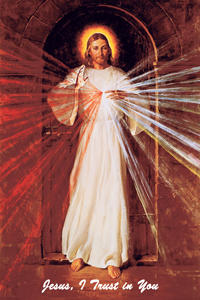
Divine Mercy

April 3rd, 2016; 2nd Sunday of Easter/ Divine Mercy Sunday

 Gospel John 20:19-31

On the evening of that first day of the week, when the doors were locked, where the disciples were, for fear of the Jews, Jesus came and stood in their midst and said to them, “Peace be with you.” When he had said this, he showed them his hands and his side. The disciples rejoiced when they saw the Lord. Jesus said to them again, “Peace be with you. As the Father has sent me, so I send you.” And when he had said this, he breathed on them and said to them, “Receive the Holy Spirit. Whose sins you forgive are forgiven them, and whose sins you retain are retained.” Thomas, called Didymus, one of the Twelve, was not with them when Jesus came. So the other disciples said to him, “We have seen the Lord.” But he said to them, “Unless I see the mark of the nails in his hands and put my finger into the nail marks and put my hand into his side, I will not believe.”

Now a week later his disciples were again inside and Thomas was with them. Jesus came, although the doors were locked, and stood in their midst and said, “Peace be with you.” Then he said to Thomas, “Put your finger here and see my hands, and bring your hand and put it into my side, and do not be unbelieving, but believe.” Thomas answered and said to him, “My Lord and my God!” Jesus said to him, “Have you come to believe because you have seen me? Blessed are those who have not seen and have believed.” Now Jesus did many other signs in the presence of his disciples that are not written in this book. But these are written that you may come to believe
that Jesus is the Christ, the Son of God, and that through this belief you may have life in his name.

Meditation Reflection:

We spend so much time and money distracting and soothing ourselves from regret for our mistakes and fear of our mortality.  Christ’s victory over sin and death opens the possibilities of a new beginning during this life and life eternal in the next.  The Risen Christ finds the apostles in fear and brings them Peace.  Thomas misses the opportunity for peace however because he refuses to believe his fellow apostles’ unanimous witness.  Despite his own witness of Jesus’ many miracles and the reliability of the disciples’ account, he refuses to receive Christ’s peace without seeing the healed wounds of the Lord for himself.  Christ would have been in His right to refuse such a demand but in His mercy He appears directly to Thomas so that his faith could be strengthened and he could receive the riches Christ had suffered to give to him.

Imagine the joy Jesus must have felt, having earned our salvation through such intense suffering, when He could then bestow upon His apostles the administration of His Kingdom which is none other than the forgiveness of sins.  Every mother knows the relief of holding her newborn in her arms after a long pregnancy and birth.  Jesus must have experienced a similar relief when He enjoyed our new life given through His loving sacrifice.

Pope St. John Paul II declared in 2000 at the canonization of St. Faustina, that today, the Sunday following Easter, be celebrated as Divine Mercy Sunday.  Christ had appeared to St. Faustina, a simple uneducated nun from Poland, in the 1930s and spoke with her about His great desire to bestow His mercy on us.  His message did not add anything new to the Gospel, however He re-emphasized His view to the modern world relaying to her His greatest pain which He identified as souls refusing to trust in His mercy.  In the Diary of St. Faustina, (recorded at the request of her spiritual director), she relays these words of Jesus to her regarding today:

I desire that priests proclaim this great mercy of Mine towards souls of sinners.  Let the sinner not be afraid to approach Me.  The flames of mercy are burning Me – clamoring to be spent; I want to pour them out upon these souls…Distrust on the part of souls is tearing at My insides.  The distrust of a chosen soul causes Me even greater pain; despite My inexhaustible love for them they do not trust Me.  Even My death is not enough for them.”  (par. 50)

Like Thomas, many of us struggle to trust Christ.  We fail to have confidence in Jesus’ ability to change our lives and renew our souls.  Using Pope Francis’ analogy, we treat Confession like a dry cleaner.  We can imagine being showered off but not truly changed.  In doing so we do not emulate humility but rather wastefulness.

Today we reflect on the mercy of Christ and ask that He increase our hope that we might trust in Him.  The devil steals our joy, but Christ came to give us joy to the full.  He not only forgives us, but enables us to live a supernatural life of virtue and peace. On the Feast of Mercy during the Jubilee of Mercy, God exhorts us in every way possible to receive His mercy, to give mercy, and to trust in Him.  Let us pray for the grace to surrender the myth of perfection in exchange for the truth of sanctifying love.

Consider:

  • Reflect on the joy Christ feels when He can shower upon us the mercy He worked so hard to earn for us. Consider the mystery of a mother or father’s love that takes pleasure in sacrificing for their children.
  • Do you struggle with perfectionism? Do you struggle to accept Christ’s help because you feel unworthy of His love if you make mistakes or fall to sins?  Do you feel you need to be holy all on your own?
    • Pelagianism, a heresy in the early Church, asserted that Christ came to set a good example for us but we have to live up to that example by our own efforts alone. The Church declared that the human will alone could not perfect itself but rather required supernatural grace.  Do you try to perfect yourself to feel worthy of Christ’s love, or do you accept your worthiness of His love and so the possibility of being made perfect by Him?
  • How much do you need to see to believe? What evidence has Christ given you already that you ignore?  What witness could you give to others about the reality of His presence?
  • Consider a time when you experienced the peace of Christ.

Make a Resolution (Practical Application):

  • Do one act of mercy for someone each day this week.
  • Do one act of mercy toward yourself each day this week.
  • Thank Christ each day for His gift of mercy. Make a gratitude list east day of His blessings.
  • Learn about St. Faustina and the Divine Mercy Chaplet, Image, and Feast Day.
  • Say the short prayer, “Jesus I Trust in You”, throughout the day.


~ Written by Angela Lambert © 2016

* To receive these weekly posts automatically in your email just click the “follow” tab in the bottom right hand corner and enter your email address.


The Easter Triduum…Entering the Mystery

by Angela Lambert


Burial_of_Jesus_-_Carl_Heinrich_Bloch

During Holy Week we celebrate and reverence Christ’s Paschal Mystery – His Suffering, Death, and Resurrection.  To enter more deeply into this mystery the Church walks in the footsteps of Christ and the Apostles through special liturgies rich with extraordinary practices that recall and connect us in a unique way to the events beginning at the Last Supper and culminating in finding the empty tomb.  These liturgies are called the “Easter Triduum.”  The USCCB (United States Conference of Catholic Bishops) describe it in this way:

The summit of the Liturgical Year is the Easter Triduum—from the evening of Holy Thursday to the evening of Easter Sunday.  Though chronologically three days, they are liturgically one day unfolding for us the unity of Christ’s Paschal Mystery. The single celebration of the Triduum marks the end of the Lenten season, and leads to the Mass of the Resurrection of the Lord at the Easter Vigil. The liturgical services that take place during the Triduum are: 1. Mass of the Lord’s Supper (Holy Thursday) 2. Good Friday of the Lord’s Passion 3. Mass of the Resurrection of the Lord.


What do we mean by Paschal Mystery?  It recalls the sacrifice of the Israelites during the last plague in Egypt.  God told Moses to instruct the Israelites to sacrifice an unblemished lamb, spread its blood on the door posts, then cook the meat and eat it.  Then, when the angel of death came to take the firstborn son of every Egyptian it would Pass-over the homes marked with the blood of the lamb.  Every year at that time the Israelites would recall this event and enter into it through celebrating the Passover.  This was the meal Jesus celebrated at His Last Supper and to which He gave new meaning.

Whereas we ratify contracts today through signatures and notaries, in Old Testament times agreements were formalized in covenants and ratified with blood.  At the Last Supper Jesus instituted the New Covenant ratified in His own blood.  He chose the Passover sacrifice, which celebrated freedom from slavery in Egypt and death by Pharaoh, to reveal the fullness of the covenant through Him, which would free us from slavery to sin and eternal death.  The blood which would be poured out to ratify this agreement would be His own and the sacrificial lamb, finite in its ability to atone for sin, would be replaced with His own perfect sacrifice of infinite value.

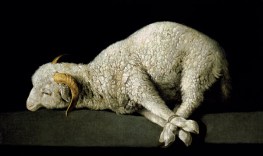
Bishop Barron reflected on this mystery using a painting entitled Angus Dei by Zurbaran saying:zurbaran agnus dei

“Holy Week, our time of Passover preparation, calls us to meditate on our unblemished Paschal lamb. This is not to be confused with the cuddly lambs that greet us in the store aisles when we do our Easter basket shopping. The truth of what awaits the Paschal lamb is harsh. Our Lord himself must have seen many similar lambs, awaiting their moment of sacrifice in the temple. As I mentioned in a previous review of Dr. Brant Pitre’s book, “Jesus and the Jewish Roots of the Eucharist,” we see a description of thousands of unblemished lambs sacrificed in the temple; an event that is hard to imagine, if one gives permission to the imagination to wonder about the harsh sights, sounds and smells. A moderate amount of blood has a distinct smell that is hard to forget, so much blood must have been overwhelming. The bloody sacrifice of thousands of lambs conjures a scene that even Quentin Tarantino would have difficulty recreating.

But what about the “Agnus Dei”? This lamb is different. He is here to remind us of the one sacrifice that is necessary for mankind. The sacrifice that is to pay a debt that he does not owe for we, who owe a debt we cannot pay. Zurbarán has captured this calm moment, of the unblemished lamb, legs bound and prepared for sacrifice. All we must do is follow the story that we know is to come. As Pitre said in his book, “That’s what happens to Passover lambs. They don’t make it out alive.” [p. 164]…”


At the Mass of the Lord’s Supper on Holy Thursday we contemplate the actions and words of Christ when He instituted the New Covenant.   Christ changed the bread and wine into His own Body and Blood that we too might eat of the Paschal Lamb and receive the gift of freedom from God.

Eucharist and cross

“Then he took the bread, said the blessing, broke it, and gave it to them, saying, “This is my body, which will be given for you; do this in memory of me.” 20And likewise the cup after they had eaten, saying, “This cup is the new covenant in my blood, which will be shed for you.” Luke 22:19-20


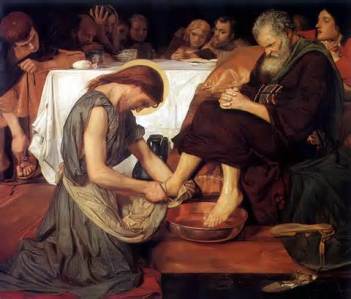
To change bread and wine into His Real Presence, without a change in appearance, required a supernatural act.  As a result, Christ also instituted the priesthood on that holy night.  Jesus commanded the apostles to “do this in remembrance of Me.” Christ’s words, as the Logos, the divine Word of God, differ from ours.  Whereas my words may or may not have an impact, Christ effects what He says.  In Genesis 1, God said “Let there be light” and there was, along with everything else He created.  When Christ says “do this”, He empowered His apostles to repeat the same miracle.  Christ is the eternal priest who offers His one sacrifice to the Father over and over again for us.  He does this through His priests whom He has consecrated and enabled through the Sacrament of Holy Orders.  In preparation for this office, Jesus began the evening by demonstrating the nature of power in His kingdom.  He washed the feet of the disciples.  Washing the feet of infants is adorable, they’re sweet and pudgy.  The feet of teenagers however become smelly and the feet of grown men who wear sandals, well…

Greatness in Christ’s kingdom is marked by humility, sacrifice, and service.  Below I’ll list the events of each day during the Triduum along with sacred art to illustrate some of the events.  Take time to contemplate some of them and consider how to more closely be yoked to Christ.


Holy Thursday: Celebrates the night of the Lord’s Supper

  • Jesus washing the feet of Peter and the apostles


Jesus washes Peter's feet


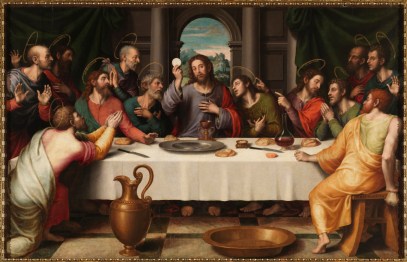
  • Passover celebration where Christ institutes the Eucharist and establishes the priesthoodLast Supper


  • Jesus’ agony in the Garden of Gethsemane

agony in the garden

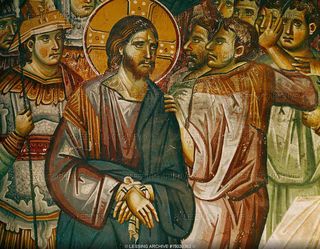
  • Jesus’ betrayal by Judas

betrayal

  • Jesus is arrested and put on trial before the Sanhedrin

Jesus' trial

Good Friday: Called “Good” because Jesus merits our redemption through His suffering and death.

Day of Fasting and Abstinence – No meat, only eat one regular meal or two small meals Veneration of the Cross

Events:

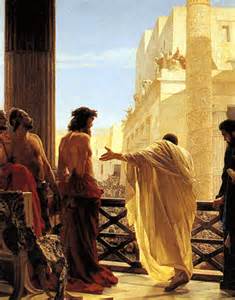
  • Jesus appears before Pilate

Jesus and Pilate

  • Jesus is scourged

Jesus scourging


  • The Carrying of the Cross

carrying cross

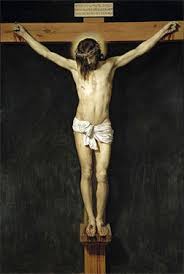
  • The Crucifixion

Jesus crucifixion

  • Christ’s death and burial

sorrowful mother

Holy Saturday:

  • Jesus in the tomb
  • Time of emptiness and waiting

The Easter Vigil:  Most ancient practice in the Church – began Saturday evening and ended at daybreak Easter Sunday  “Mother of all vigils”

It consists of four general parts:

1. The Service of Light

In a suitable place outside the Church, a “blazing fire” ( rogus ardens) is to be prepared so that the people may gather around it and experience the flames dispelling the darkness and lighting up the night. Thus do the beauty of the fire, its warmth and its light, draw the liturgical assembly together. EV no.8


The Paschal Candle, which will be used to light the baptismal candles throughout the year is also lit from this fire and placed by the sanctuary during Easter.

paschal candle

2. The Liturgy of the Word

This consists of nine readings which give an overview of God’s work of salvation – from His creation of man and woman in the image and likeness of God, their fall to sin, then God’s efforts to restore us through covenants and promises which came to fulfillment in  Christ.


7 readings from the Old Testament  • Story of Creation (Genesis 1 and 2) •  Abraham and Isaac (Genesis 22) • The crossing of the Red Sea (Exodus 14 and 15) • The prophet Isaiah proclaiming God’s love (Isaiah 54) • Isaiah’s exhortation to seek God (Isaiah 55) • A passage from Baruch about the glory of God (Baruch 3 and 4) • A prophecy of Ezekiel (Ezekiel 36) 2 readings from the New Testament. • Saint Paul on being baptized into Jesus Christ (Rom 6) • The Gospel of Luke about the empty tomb discovered on Easter morning (Luke 24:121).

3. Christian Initiation

Catechumens (adults who have not been baptized) and candidates (adults baptized in a non-Catholic Christian faith) receive the sacraments of initiation and are received into the fullness of the Catholic Church.  Candidates receive Confirmation and Catechumens receive both Baptism and Confirmation.

4. Liturgy of the Eucharist.

The reception of the Body, Blood, Soul, and Divinity of the Crucified and Risen Lord

Christ is Risen!

peter and john

Octave of Easter: Easter Sunday to the following Sunday (now Divine Mercy Sunday); each day celebrated with special solemnity

Easter Season: lasts from Easter Sunday to Pentecost (50 days)

~ Written by Angela Lambert © 2016

* To receive these weekly posts automatically in your email just click the “follow” tab in the bottom right hand corner and enter your email address.