Excerpt fr om Take Time for Him: Simple, Soulful Gospel Meditations to Ignite the Busy Person’s Spiritual Life Get your own papercopy from Amazon!
Remember to rate and review it!
The Ascension of the Lord
Acts of the Apostles 1:1-11 and the Sunday Readings
Meditation Reflection
Christ is so humble in His Incarnation that we, like the apostles in today’s passage, can forget the awesome reality of His divinity. For most of His earthly life, Jesus chose to veil His divinity. He humbly lived among us as one of us, choosing a life of poverty and sacrifice. Even when condemned to crucifixion, He told Pilate that He was not powerless in the situation (cf. John 18:36). Jesus chose to be sacrificed to save us. He could have saved Himself, as those taunting Him urged, or defended Himself as Pilate suggested, but love kept Him on the Cross. Christ came down from heaven to be a ransom for our sins.  At the completion of His mission however, He ascended back to heaven to reign in glory as the Son of God. Because of His humility during His earthly life, we overlook at times His divine dignity and His rightful place in Heaven. Beyond anything we could have imagined, He promised to prepare a place for us there as well!
Jesus kept surprising His apostles and He continues to surprise us. They imagined the savior as someone who would overpower their persecutors and restore things to how they used to be during the best time in Jewish history. It took a while for them to accept that He would die and rise again.
Confused and scattered at His crucifixion, they rejoiced in awe at His resurrection. Overwhelmed with joy that Christ was alive, and excited by His show of power they still imagined that they would enjoy the booty of His victory in an earthly kingdom. “Finally”, they must have thought, “now He will bring to fruition all our hopes and desires.” Thus, they ask, “Lord, are you at this time going to restore the kingdom to Israel?”
Jesus did not come to stay on earth however, but to bring us back to Heaven. He does not put new wine into old wine skins (Matthew 9:14-17). His kingdom exceeds our imagination. The experience the Jews had under King David provided a foretaste and glimpse of the kingdom of God. Jesus reveals that God has much more in store for us.
In order to receive the Holy Spirit and begin their new life in Christ, they had to let go of their previous hopes and plans. To rule in the Kingdom of God meant to surrender worldly power for the power of the Holy Spirit. The Spirit transforms lives with saving grace, Truth, peace, and love. No other nation or religion has had the same universal, enduring, transformative effect, of the Christian faith. The only explanation for this miracle is the Holy Spirit.
Jesus makes all things new (Revelation 21:5). As we celebrate the Ascension of Christ into heaven, we let go of our desires for Jesus to make things how they used to be, or how we wish them to be. Christ’s physical absence grieved the apostles and we too can be grieved by the absence of tangible comfort and security. However, by letting Jesus ascend to Heaven, they received Him back even more intimately and powerfully in their very souls on Pentecost when they received the Holy Spirit.
Christian discipleship means sharing in Christ’s death that we might also share in His resurrection. But it doesn’t stop there. Discipleship means accepting the unanticipated, unimaginable “new” that Jesus has for us. He wants so much more for us than we can plan and blesses us with so much more than we deserve. By surrendering our grip on control in our Christian walk, we get to live in the freedom of gift. There are no words to describe this freedom and joy other than surprise; or as John puts it: “From his fulness have we all received, grace upon grace” (John 1:16 RSV).
Consider:
- When has God surprised you? How have His plans for your life exceeded your own expectations?
- In what areas of your life do you struggle to surrender control? Consider what underlies your resistance. Is it fear of the unknown or of change, distrust, lack of faith, perfectionism, pride and the desire to accomplish things yourself, or vanity and concern for what others will think?
- Reflect on your life from the point of view of the kingdom of God rather than the kingdom of earth. Re- value wealth and status from this perspective. What is truly valuable? What is true greatness?
- Consider God’s love for you. He has prepared a place for you, provided the Way, opened the gates, and given you the Holy Spirit and the Church to guide you and empower you. He has done everything in His mighty power to be with you and shower His love upon you. What can you do to be with Him and love Him in return?
Make a Resolution (Practical Application):
- Each day this week, be open to God’s surprises. In the morning, offer your day to God and surrender control to Him. In the evening, reflect back on the day and recount when you were resistant or when He surprised you.
~ Written by Angela Jendro © 2019
| * To receive these weekly posts automatically in your email just click the “follow” tab in the bottom right hand corner and enter your email address. You can also follow me @taketimeforhim on Twitter and Facebook. |
 When we place our faith in Christ, He sends the Holy Spirit that we may live by His Truth, following His commands, and thereby grow in intimate love. Jesus told the apostles,
 Polish nun, St. Faustina, asking her to spread the message of His mercy anew. Jesus lamented to Faustina that distrust on the part of souls caused His greatest suffering. Jesus burns with love for us and sacrificed to save us, but we cannot be saved if we refuse His love and mercy. He appeared to her many times after that, with a message of mercy He wanted made known. He asked for an image to be painted of Him, with two rays coming forth from His side – white and red – representing the water and blood which poured out of His side from the Cross, and the words “Jesus I Trust in You” beneath. We receive Jesus’ redemptive mercy through the sacraments when we are washed in the waters of baptism and united to Him in the sacrament of His Body and Blood in the Eucharist. He also asked that a Feast of Mercy be instituted, to be a day of extraordinary graces and an opportunity for us to make an act of trust and abandon so that He could be free to pour out His transformative love.
![Cima_da_Conegliano,_God_the_Father Attributed to Cima da Conegliano [Public domain]](https://taketimeforhim.com/wp-content/uploads/2019/10/cima_da_conegliano_god_the_father-attributed-to-cima-da-conegliano-public-domain.jpg?w=401&h=311)

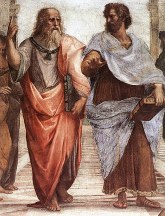 philosopher Aristotle, in his famous book on Ethics, defined virtue as a habit of doing the good. He taught that a person only acquires a virtue after having chosen it regularly over a long period of time and in many circumstances. For instance, if I tell the truth once, it doesn’t make me a truthful person. To say that I have the virtue of honesty means I have told the truth regularly for many years. As Jesus points out in this passage, a person’s character is shown as much, if not more so, in the small matters as in the larger ones. A truthful person will be pained by lying, even in small exaggerations. On the other hand, a person who lies easily about daily matters to avoid responsibility or make things easier, will certainly lie when the stakes are much higher.


 lm Sunday
 Take Time For Him