How to Be Happy For Others and Like It

Excerpt fromTake Time for Him: Simple, Soulful Gospel Meditations to Ignite the Busy Person’s Spiritual Life  Get your own papercopy from Amazon!

Remember to rate and review it!

25th Sunday of Ordinary Time

Readings for Sunday’s Liturgy

Meditation Reflection: Matthew 20:1-16

The kingdom of Heaven, from which Jesus came, far exceeds any social construct we observe on earth.  Here our relationships, from the inter-national to the personal, become skewed due to our two greatest weaknesses – pride and envy.

It’s childish really. Parents and elementary school teachers tire from the petty cases brought to them over and again throughout the day by children seeking “justice.” Moreover, in family life it can spiral out of control as one act of pride or envy against another is fought with counter measures of pride and envy and so on. Something is borrowed or stolen depending on who you ask, something gets taken in retaliation, and the then the yelling ensues. Someone gets knocked over by accident and retaliates with an intentional shove. Rather than accept their own guilt for their personal bad reaction, kids try to pass on blame and push parents to the classic question, “Who started it?” As everyone points fingers and clamor for justice, the poor mom and dad beg the kids to settle down and just be merciful with one another.

St. Paul tells us, “Love is patient, love is kind…” In other words, love tries to be understanding instead of over-reacting. Love shows compassion toward weakness, even weakness of character. Love is generous rather than miserly. Love doesn’t look out for #1, it looks out for the beloved.

Jesus’ parable of the landowner and day laborers illustrates the striking difference between our natural inclination and experience in contrast to the attitude characteristic of the kingdom of Heaven. When I hear this parable, I know that I shouldn’t agree with the laborers who were upset, but I can’t help empathizing with their feeling of disappointment, and even injustice. I hate to admit that even thoughts of, “why weren’t the guys the landowner found in the afternoon not there in the morning?” Even worse, my imagination considers multiple reasons they were late, all being their own fault or the result of vice. However, Jesus knows our fallen thoughts, so He includes important details in the parable to counter such accusations.  Thus, prior to hiring the last crew at 5:00, He asked them why they had been standing there idle all day. They responded with an innocent explanation – no one had hired them. “Exposed!”, as my kids would say. My thoughts reveal a childish attitude of rivalry rather than a mature disposition of love.

But what about the unfair pay? And why did the landowner pay the last men first in front of everyone else? Every parent knows if you plan to treat one kid and not the others on a particular day, at least keep it on the down-low. You spontaneously stop for DQ with one of your sons on the way home from a baseball game? Only a rookie parent would fail to have the ice cream finished being eaten and all evidence thrown away in an inconspicuous garbage before entering the house. Never mind that you make a point to treat the other kids individually too at various times. If one kid walks in the house with a half-eaten blizzard, mutinous anarchy erupts.

One stray DQ napkin, and the moment the door to the van opens the other kids point and yell “What?!  You went without us? Unfair!!!” Their envious rivalry takes all spontaneity out of love. On the surface, the laborers’ disappointment seems fair, however Jesus revealed that it stems from envy. Next to pride, envy is the most cited root of the many social and personal ills discussed in the Catechism.

Jesus invites us to consider a different way of thinking, living, and being. To imagine a kingdom free of pride, envy, ambition, lust, and selfishness we must think of it in terms of love. Not the fluffy, emotional kind of love. Rather, courageous and deep love which wills the good of the other and finds joy in sacrifice if it means enriching or healing the beloved. Jesus compares His relationship with us to the love a groom has for his bride, willing to give everything even at a sacrifice, and with great joy. He compares our interconnection with one another to a body united to Him as its head. Thus, one person’s pain is shared by everyone, and one person’s gain is rejoiced in by everyone.

Consider the parable again from Christ’s perspective.  The men the landowner found late in the day were aimless, anxious, and in danger of starvation. If they did not work that day, they would not have a day’s wage and would be unable to provide for themselves and their families. They owned no land to provide them with some kind of security. They had no annual salary, health insurance, or any kind of future protection. They lived day to day, always uncertain about tomorrow. The first men hired physically toiled longer, but they also had the peace of mind that at least for that day they would have a wage and therefore food. Moreover, there’s a certain dignity related to putting in a hard day’s work. If those without work were strangers, it would be easier to rationalize competitiveness.  Imagine however that the ones hired later are your sons or daughters, or close friends. It would be hard to truly enjoy your wage knowing how worried you might be that they only worked a few hours that day and would earn too little to eat enough on. Upon seeing your beloved child or friend provided a full day’s wage, you would rejoice with them as well as enjoy your own wage more because your friend received the same.  You would also rejoice that they had the opportunity to be productive and their work valued.

Jesus invites us all into His Kingdom. He finds us standing idle, looking for meaning and purpose, waiting for Truth and Mercy. He promises a generous wage for working for Him – the gift of enduring love, authentic meaning, and eternal happiness with Him. If we love our neighbor, we will feel pained seeing them still standing idle, wasting the day, impoverished and anxious.  We would want the same reward for them that we received from Christ no matter when they joined His crew. In fact, to have labored with the Lord, is a gift in and of itself.

Consider:

  • Consider how quickly we tend to assume the worst about a person. When have you misjudged someone’s intentions or situation? How might you see others through the lens of love rather than rivalry?
  • Consider the dignity of work. When have you put in a hard day’s work and loved it? Why does it feel good to be productive?
  • Consider the joy connected to laboring out of love. Which tasks would seem ridiculous to take pleasure in if you didn’t love the person?
  • Consider the contrast between envy and love. Envy becomes angry at another’s blessings; love rejoices when another is blessed. Envy competes for what it believes to be limited resources or opportunities. Love understands that God can bless everyone.

Make a Resolution (Practical Application):

  • Combat envy with the opposite virtues of contentedness and gratitude. Do one thing each day this week to nurture contentedness and express gratitude.

~ Written by Angela Jendro © 2019

* To receive these weekly posts automatically in your email just click the “follow” tab in the bottom right hand corner and enter your email address. You can also follow me @taketimeforhim on Twitter and Facebook.

Following the Leader: Christian Discipleship and Leadership

Excerpt from Take Time for Him: Simple, Soulful Gospel Meditations to Ignite the Busy Person’s Spiritual Life  Get your own papercopy from Amazon!

Remember to rate and review it!

21st Sunday of Ordinary Time

Readings for Sunday’s Liturgy

Meditation Reflection: Gospel of Matthew 16: 13-20

Generally speaking, our culture loathes the word “authority.” It appears to undermine our values of autonomy, self- expression, independence, and freedom.  Moreover, the idea of monarch-rule seems archaic and undemocratic. In consequence, our cultural norms and assumptions can hinder our understanding and appreciation of the Kingdom of God.

God’s Chosen People first became a kingdom under Saul, then famously David. David’s authority however came from God. He was chosen by God and anointed king by God’s prophet Samuel. In addition, David’s success as a leader corresponded with his fidelity to the Lord.

The Kingdom of Israel served as a glimpse or foreshadowing of the Kingdom Jesus would establish. However Jesus, the New David, did not begin His reign by assigning authoritative positions to protect the physical security of His people, lands, and finances. Instead, He assigned authority to leaders He wished to protect the souls of His people, the Truth He came to reveal, and the path He opened for our salvation. These positions he assigned to Peter, the first pope and His steward/vicar on earth, and the twelve apostles and their successors the bishops.

The Pope, like David, is a human being. This means he will falter at times, sin, and struggle with human limitations. We must be careful however, not to project our cultural norm on our understanding of his role. Our leaders our voted upon to represent our views. They operate at a natural human level, with the responsibility to protect our physical security, rights, lands, and commerce. The Pope’s position, begun with Peter, has a different role. Christ chose Peter. Christ bestowed His authority upon Peter to be Christ’s representative, not the representative of popular opinion. Lastly, no matter what the pope’s natural gifts or limitations may be, the Holy Spirit empowered Peter and his successors to always be able to answer questions about the divinely revealed faith with certainty of truth by supernaturally empowering them to discern correctly answers about Christ. The first controversial question is recorded in Acts of the Apostles. The apostles held a council to address the question of whether Gentiles needed to be circumcised along with baptism or not. Peter was given the grace by Christ to know the answer was no to circumcision.

Moreover, the Pope is called to shepherd people on the way to salvation which means he also has the authority to make rules for His spiritual children that he believes will be important for their development. This resembles a family structure more so than a political one. I am grateful to God to live in our democracy. In my opinion, despite its flaws, it’s still the best, and most free, country in the world. Nevertheless, I don’t run my family like a democracy. If decisions were made by vote we would eat doughnuts every morning, live way outside our means, and discipline would devolve to mob rule.  Much to my children’s chagrin, our family is run as a monarchy. Though they push against the rules, we have much more peace, justice, and love as a result. In this monarchy, God is our king, and my husband and I are His stewards.

At times, my kids have accused me of being either overly strict or overly protective when I said no to something they wanted to do. To encourage me to soften, they would make life difficult for me, then add “no one really cares Mom, it’s not that big of a deal.” Even though I felt for them, and in a secular culture what they said was true, I also knew I had to hold the line because, at the end of the day, I would be held responsible before God.  So, I often respond to them, “I have to do what’s right for you, because it’s my responsibility and I will have to answer to God one day.” And when I fail to hold the line, and am a weak parent, I ask God for forgiveness and the grace to be stronger.

So, contrary to our cultural norms and assumptions, I have seemingly Medieval parenting methods to my children.  Yet, as parents we all know that raising kids to be mature adults is different than running a nation-state. Kids need us to exercise our authority, especially in decisions that they are too young to make. We are in a better position to discern what is safe from what is too risky, truth from lie, and wisdom from folly. Of course, unlike Christ we are not all-knowing, so oftentimes we need the Holy Spirit to guide us in our position and enable  us by His grace to make the right choices.

Discipleship means that Christ is our king. We can embrace this monarchy because our king is also our loving, self- sacrificing, and divine Savior.  As king, He chose to bestow His authority upon some of His subjects to govern for Him on earth and promised to safeguard it until the end of the world.

Upon Peter, and every pope thereafter, He bestowed the authority to say who Christ is, and gave them the supernatural ability to be correct. The role of pope is to preserve, protect, and promulgate the Deposit of Faith given by Christ. In addition, when confusion over Christ’s revelation occurs, for the sake of unity someone must be the authority that determines which response is correct and which is false. During the first councils of the early church the question of whether Jesus is God, Man, or both was a long, heated, argument. If determined as a vote, our doctrine would be that of Arius’ interpretation – Jesus was only a man but the highest possible one.  The pope recognized Athanasius’ response as the true one – that Jesus is both God and man.

In the vocation of marriage, Jesus bestows His authority on mothers and fathers over their children. Thus, as children we have an obligation to obey our parents. And as parents, we have the responsibility of exercising our authority in a Christian manner.  It’s not always easy.  When kids are fighting I would rather just yell “stop bickering” (which is never really effective), than get up, intervene, and if necessary, impose consequences for bad behavior. Crafting Christian rules takes time and effort, both of which are in short supply. Enforcing the rules with appropriate consequences means suffering the rebuffs and anger of resistant kids. As kids get older, knowing what decision to make in given circumstances becomes even more difficult.  They require even more prayer and the inspiration of the Holy Spirit.

Nevertheless, we can find peace and confidence in our divine monarch, Jesus Christ. He reigns in our souls with supernatural power and grace.  Despite our natural limitations, He transforms us into one Body, one family in God. His Holy Spirit guides us – enlightening our minds, strengthening our wills, and inflaming our hearts with love. Our unity in Christ can be seen visibly in the family and in the Church. Our trust is not in ourselves, but in Him who enables us to complete the mission He entrusted to us.

Consider:

  • To what extent does Jesus reign in your heart and in your life? When do you let Him lead, and when do you resist His commands?
  • Our culture tends to value being a leader over a follower. How does this influence our discipleship? Do we value being followers or wish only to lead?
  • In what ways has Christ appointed you His steward? In your vocation – who has He entrusted to your care? In your occupation – who or what has He entrusted to you and what fruit do you think He expects to see from it? In His Creation – what does He ask of you for its care?
  • How do you respond to the authority of Christ’s vicar on earth, the pope? Do you accept his guidance on matters of faith and morals, or do you resist? Is your faith strong enough to see not just the human, visible reality of the Church, but the divine, invisible reality as well? What has made this either easier or harder for you?
  • Consider the relationship between authority and unity. How are the two related and necessary?

Make a Resolution (Practical Application):

  • If there’s a teaching of the faith that you presently ignore, begin practicing it instead and try to learn more about why the Church teaches it.
  • Each morning look ahead at the day. Invite Christ to lead you in each aspect, and for the grace to follow. Even if you are called to lead others, let Christ lead you first.
    • Examples:
      • If you make a to-do list at work or home, prayerfully consider first how Christ would prioritize the items rather than how you want to prioritize them.
      • What expectations would Christ want to see in your family? Are there any that need greater implementation?
      • What expectations does Christ have for you at work? Do you honor Him by respectful, honest, and edifying language, free from vulgarity or slander? Do you honor Him in action through diligence in your work and mercy towards your co- workers?
  • Pray the Suscipe prayer by St. Ignatius or the Serenity Prayer.

~ Written by Angela Jendro © 2019

Follow bar

When Your Work for Christ Feels Sabotaged

Excerpt frTake Time For Him Book coverom Take Time for Him: Simple, Soulful Gospel Meditations to Ignite the Busy Person’s Spiritual Life  Get your own papercopy from Amazon!

Remember to rate and review it!

16th Sunday of Ordinary Time

Readings for Sunday’s Liturgy

Meditation Reflection: Gospel of Matthew 13:24-43

weeds and wheatThese parables have been a rock of hope for me as a mother and teacher. I feel like I put so much time and effort into carefully forming my children and students in the faith only to be discouraged by the worldly attitudes that apparently pop up overnight like the weeds in Jesus’ first parable. Like the servants I exclaim with surprise, Lord did we not sow good seed in your field, where have the weeds come from?  One day we’re listening to Christian music in the car, and the next the kids are streaming explicit rap music on Spotify. Whereas before the kids couldn’t wait to read bible stories together, suddenly, they start dragging their feet and complaining. The values of prayer, service, and modesty now seem to be riddled with competing values of constant activity and entertainment – from sports to social media to video games, the goal of making lots of money, and popular clothing styles that degrade their God-given dignity.

For most people these weeds pop up as they near middle school and intensify in high school. Developmentally, kids sense their need to become independent and separate from mom and dad.  Unfortunately, the culture they reach out to for acceptance is riddled with weeds of atheism, hedonism, consumerism, a degraded definition of personhood, and individualism. The less Christian our culture has become, and the more virulently anti-Christian it has grown to be, the more it feels like our contribution as formators (whether as parents, teachers, aunts & uncles, youth ministers, counselors etc.) is as small as a mustard seed in comparison.

Woman praying by Barbara Jackson pixabay_comWhen I feel this surprise and frustration I’m encouraged by Jesus’ lack of surprise and calm confidence.  Jesus expected the weeds. He knows they didn’t come from us (well, maybe some of them – none of us are perfect yet!). He advises us to persevere with confidence because the mustard seed of our work, the hidden leaven of our efforts toward their formation, will grow with supernatural grace. In the end, Christ will be victorious, and the weeds will be separated out and tossed aside.  As St. Paul declared to the Philippians:
I am confident of this, that the one who began a good work in you will continue to complete it until the day of Christ Jesus.  Philippians 1:6

St. Monica (331 AD – 387 AD) and St. Augustine (354 AD – 430 AD) provide the perfect example of this. St. Monica raised Augustine Catholic and prayed for him and her pagan husband diligently. Nevertheless, as Augustine got older, his experience at school and within the culture rooted weeds of pride and vain ambition. He abandoned the Catholic faith altogether deeming it unintelligent and unappealing. Instead he pursued the spiritual in a cult called Manichaeism and worked toward advancing his career as a rhetorician in Rome.

Monica, left behind at their home in North Africa, cried torrents of tears for her son’s conversion. At the time Augustine spent his workday developing a rich lifestyle, and his free time partying and living with a woman he wasn’t married to. Nevertheless, Monica persevered. When Augustine had still lived in North Africa, she had endeavored to connect him with any priest or bishop she could find who would be willing to speak with him about the faith and try to convince him of the errors of Manichaeism. When Augustine ran away from home (he snuck out on a boat for Rome and only told his mother after the fact) she increased her prayer and sacrifice.  Augustine credits his mother’s sacrificial prayers for his eventual conversion.

Augustine would eventually be intrigued and persuaded by the preaching of a bishop, but it would be St. Ambrose in Milan. Ambrose’s teaching was a turning point and God continued to lead Augustine toward the truth. He eventually saw the errors in Manichaeism and the falsehoods at its foundation. He also encountered stories of lives of the saints as well as the example of the conversion of one of his colleagues, both of which stung at his conscience to convert as well. Eventually he made the turn, was baptized, and lived a reformed life becoming a bishop and one of the greatest saints and doctors of the Church.

After pulling the weeds in Augustine, God harvested all that intelligence, passion, and skill for the building up of His kingdom. At the end of Monica’s life she even had a beautiful mystical experience in prayer together with Augustine.

Afterward, she expressed to Augustine the feeling St. Paul did in Philippians, that God had brought to completion the good work He had entrusted to her. Moved by her love and faith, her husband had been baptized before his death.  Once her son was secured in Christ, she felt at rest and died shortly after.

St. Augustine’s youth resembles that of our own youth today. Even though his Confessions (the book he wrote about his conversion) was written in the 5th century, it resembles our own age in a remarkable way. We can take heart, as Monica did, that God’s work won’t go unharvested and to persevere in prayer and sacrifice.

It reminds me of the classic scenario where a child has one parent who only promises what he or she can deliver on and provides for the seemingly small but daily sacrifices the child needs, while the other parent neglects the daily work and present needs but compensates with big promises that they never keep. At the time, the big talker overshadows the real gifts the child is receiving. However, in time, the truth gets revealed and the value of those real gifts outshines the shadow of the imagined gifts.

The Truth is true. Eventually, the world’s false promises come up empty and Christ’s promises prove real. Hopefully some of our kids and loved ones will trust in Christ and resist the weeds to begin with, and they will experience the peace of Christ permeate their life early on.  Some of our loved ones will be more lured by the weeds and may experiment with the glamour of the worldly values. Yet, even this may lead them back to Christ as they begin to feel the anxiety and degradation that it produces.

For your part, keep on planting good seed. Keep praying, teaching, role modeling, and working on your own conversion. Elisabeth Leseur (1866-1914) did just that, and shortly after her death her atheist husband became Catholic, and later a Dominican priest! In her journal, Elisabeth wrote,

“Whatever suffering this [isolation of faith] entails, I offer for the souls who are so dear to me. Nothing is lost, not one grief or one tear.”

She was right. Like St. Monica, God blessed her tears and sacrifice with a rich harvest of the seeds she had planted and the leaven of her charity. Jesus said that “the righteous will shine like the sun in the kingdom of their Father.” Elisabeth’s husband Felix testified to this saying of her life, especially in her final years as she was bedridden from illness:

She did indeed uplift all who surrounded or approached her, and it was a strange thing to see this woman, so modest, so humble of heart, condemned to practical immobility, shedding around her far and wide the light of her great influence.

One friend of theirs (also an atheist) said of Elizabeth after her death:

Some beings are a light toward which all turn who need light to live by!

The culture may feel louder and stronger but persevere. Have hope in Christ and battle for your loved ones with prayer, sacrifice, and kindness. We already know the winning side and it’s Christ!

Consider:

  • How have you planted seeds of faith in others? How might you continue to do that in similar or new ways?
  • How can you add leaven to the dough through Christian acts of love? What are common situations in your daily life that offer opportunities for patience, gentleness, strength, or forgiveness?
  • Who has planted seeds of faith in you? Consider how they have grown over time and with age and experience.
  • What weeds of worldliness are growing alongside the wheat in you?
  • What are the present challenges against the faith in your family and friendships? How might you entrust them to Christ and battle with prayers and sacrifices?

Make a Resolution (Practical Application):

  • When confronted with frustration this week, turn to Christ with a prayer (such as Philippians 1:6), or battle by praying a rosary (St. Padre Pio called it his weapon because of its power against Satan and for conversion of souls), or asking the prayers of the guardian angels or a favorite saint.
  • Read about the lives of St. Augustine and St. Monica.
  • If you know someone who has made it to the other side of a struggle you are currently in, reach out to them and listen to their story to gain greater hope.

~ Written by Angela Jendro © 2019

Follow bar


Share your thoughts or experiences in the comments to build each other up in hope!

Putting Your Sweat and Blood Into It

Excerpt frTake Time For Him Book coverom Take Time for Him: Simple, Soulful Gospel Meditations to Ignite the Busy Person’s Spiritual Life  Get your own papercopy from Amazon!

Remember to rate and review it!

Solemnity of the Body and Blood of Christ

Readings for this Sunday’s Liturgy

Meditation Reflection: Gospel of John 6:51-58

Today we celebrate Christ’s gift of His Body and Blood. Consider the meaning of giving your body to another. Husband and wife express the intimacy and totality of their love in physical unity.  Every new life enters the world through the sacrificial gift of a mother, who offers her body and blood to her child. Fathers invest their sweat and blood in their children as well in the myriad of ways they meet their children’s needs. How many dads have gone to bed after a day of working to provide for their family, playing with their kids, building out part of the house to make room for more kids, or helping to finish their adult child’s basement saying, “my whole-body hurts!”? Even friendship is demonstrated in physical sacrifice. If you’ve ever called on friends to help you move or been the friend who said yes to that call, you know what I mean!

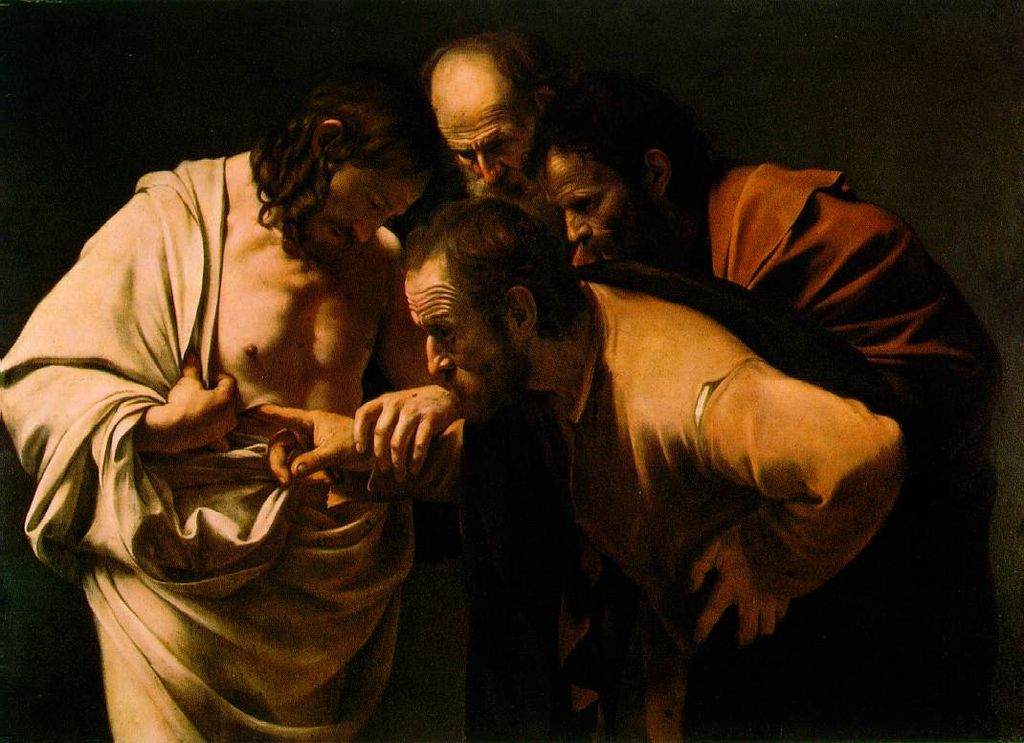
Caravaggio ThomasThe Son of God became man, in every way. He invested His mind and heart, and His body and blood. He desires nearness to us in the most intimate of ways. Jesus spent thirty-three years living humbly, and bringing tangible, immanent love to those He encountered.  His sacrificial suffering and death of the Cross atoned for our sins, giving us new life as children of God for eternity.
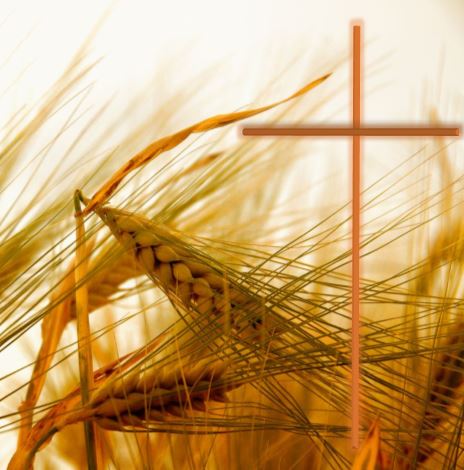
grain of wheatJesus instituted the Sacrament of the Eucharist for two reasons.  He established it as a memorial so that His sacrifice on the Cross would be made present again every time the Mass is celebrated so that we might be nourished by its graces. Secondly, because He wants to be as near to us as possible. When we receive the Eucharist at Communion, Jesus offers Himself in the most intimate and loving way, like that of a husband and wife. Through His Eucharistic presence, He continues to be with us in a tangible way.
Human beings need physical closeness, especially when we need comfort in sorrow or in expressions of love. Jesus Christ is, and will forever continue to be, both God and man. It’s easy to take His presence in the Eucharist for granted, especially when it requires the eyes and heart of faith. Today we take time to reflect as a Church on the beautiful and mysterious gift of Christ’s Body and Blood, to cherish our Lord, and to deepen our appreciation for the sweat and blood He puts into His love.

Consider:

  • Consider the many ways we express love physically. Why is physical love so important? How does it create intimacy in relationships?
  • Reflect on Christ’s physical expressions of love – during His hidden life, His public ministry, His sacrifice on the Cross, and His Eucharistic presence today.
  • This year the Solemnity of Christ’s Body and Blood falls the week before Father’s Day and some year’s it lands on Father’s Day. Consider the ways in which dad’s offer their bodies and blood for their family.

Make a Resolution (Practical Application):

  • Visit Christ at Church this week. Spend time in prayer near the tabernacle, or at Eucharistic
  • Make a physical sacrifice of love for someone this week, in appreciation of Christ’s physical sacrifice.

Follow bar


Finding Fulfillment in Self-Gift

Excerpt frTake Time For Him Book coverom Take Time for Him: Simple, Soulful Gospel Meditations to Ignite the Busy Person’s Spiritual Life  Get your own papercopy from Amazon!

Remember to rate and review it!

Solemnity of the Most Holy Trinity

Readings for this Sunday’s Liturgy

Meditation Reflection:

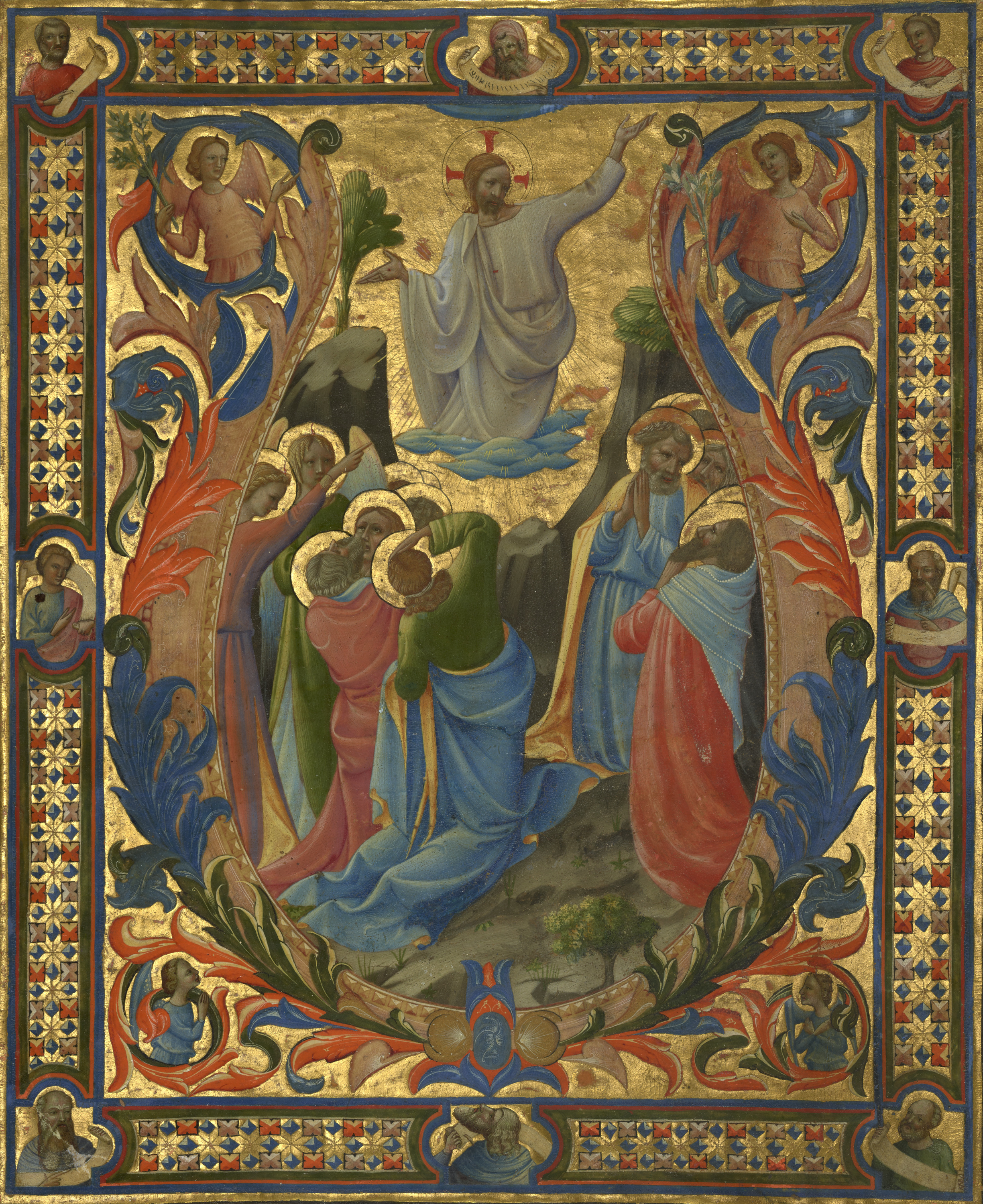
Trinity Consider for a moment this incredible fact: we are made in the image and likeness of the Trinitarian God. Although God’s essence exceeds our understanding, He has nevertheless chosen to reveal His nature to us and even given us an experience of it imprinted on our own human nature.
So what did God reveal about Himself?

God has revealed that He is Love (1 John 4:8) and that He is Father, Son, and Holy Spirit (Matthew 28:19).  From the Father, we observe that God is creative. From the Holy Spirit, we observe His immanent might and love operative in our souls.  And from the Son, we learn that God’s creative, mighty, love, is sacrificial.

What does this mean for you and me?

We live in a culture that forms us to be autonomous, independent, and self-seeking.  Humanitarian works and acts of kindness may be valued to the extent that they make life more pleasant in general, but not to the extent that it requires personal sacrifice – a real loss of some kind.

Human happiness does come through self-realization and self-fulfillment, but not in the way our culture defines those terms. The Trinity is a relationship of three divine Persons in mutual self-gift and love.  This means that, as creatures made in the image of the Trinity, we achieve self-fulfillment through self-giving love. It’s a paradox, but one that Christ emphasized over and over in both His teachings and His life.

“For whoever would save his life will lose it, and whoever loses his life for my sake, will find it.”  (Matthew 16:25 RSV)

Christian discipleship means living and being as Christ. In his book, Introduction to Christianity, Pope Benedict XVI described Jesus’ mission as being from the Father, for us. In other words, he says, Jesus’ whole “being itself is service”. Avoid imagining Jesus as just a nice guy, however. Pope Benedict isn’t referring to volunteering more. He means that Jesus’ whole existence is one of relationship, and a relationship of service. Thus, Christian discipleship transforms us from self- centered lives, to God and others-centered lives.

To be God-centered, from God and for others as Christ was, requires a radically different worldview than our secular culture. Pope St. John Paul II, as he examined God’s words in Genesis asserted that this relational character lies at the heart of our nature and our happiness.  He wrote:

When God-Yahweh said, It is not good that the man should be alone,” (Genesis 2:18) he affirmed that “alone,” man does not completely realize this essence.  He realizes it only by existing “with someone”– and even more deeply and completely – by existing “for someone.”     (Pope St. John Paul II. “General Audience of January 9, 1980.” The Theology of the Body: Human Love in the Divine Plan. Pauline Books and Media, 1997)

He’s not saying that we must become slaves with no individual identity. Rather, he’s saying that men and women find self-fulfillment through self-gift. Self-gift, by definition, means giving yourself to someone. It means we find happiness in loving sacrifice.

St. Mother Teresa said that everyone has an opportunity to love as Christ did, and therein find happiness. To find that someone we simply need to look around us.  As we celebrate the Blessed Trinity today, let us celebrate the gift of relational love. Mary always perceived the needs of others around her, let us pray for her intercession to see opportunities for self-gift around us as well, even when it requires personal sacrifice.

Consider:

  • Consider the eternal relationship of love between the Father, the Son, and the Holy Spirit.
  • Imagine the joy of heaven, where the saints share in that relationship of love.
  • Reflect in a prayer of gratitude for each experience of loving relationship God has gifted you with.
  • Pray for reconciliation in relationships that need healing.

Make a Resolution (Practical Application):

  • Each day this week, find one way to concretely show love to another person.  Ask for Mary’s intercession.

~ Written by Angela Jendro © 2019

Follow bar

The Ascension of Christ & the Surprising Nature of the Kingdom of God

Excerpt frTake Time For Him Book coverom Take Time for Him: Simple, Soulful Gospel Meditations to Ignite the Busy Person’s Spiritual Life  Get your own papercopy from Amazon!

Remember to rate and review it!

The Ascension of the Lord

Acts of the Apostles 1:1-11 and the Sunday Readings

Meditation Reflection

Christ is so humble in His Incarnation that we, like the apostles in today’s passage, can forget the awesome reality of His divinity.  For most of His earthly life, Jesus chose to veil His divinity.  He humbly lived among us as one of us, choosing a life of poverty and sacrifice. Even when condemned to crucifixion, He told Pilate that He was not powerless in the situation (cf. John 18:36). Jesus chose to be sacrificed to save us. He could have saved Himself, as those taunting Him urged, or defended Himself as Pilate suggested, but love kept Him on the Cross. Christ came down from heaven to be a ransom for our sins. Ascension of Christ_ Getty ImagesAt the completion of His mission however, He ascended back to heaven to reign in glory as the Son of God. Because of His humility during His earthly life, we overlook at times His divine dignity and His rightful place in Heaven. Beyond anything we could have imagined, He promised to prepare a place for us there as well!

Jesus kept surprising His apostles and He continues to surprise us. They imagined the savior as someone who would overpower their persecutors and restore things to how they used to be during the best time in Jewish history. It took a while for them to accept that He would die and rise again.

Confused and scattered at His crucifixion, they rejoiced in awe at His resurrection. Overwhelmed with joy that Christ was alive, and excited by His show of power they still imagined that they would enjoy the booty of His victory in an earthly kingdom. “Finally”, they must have thought, “now He will bring to fruition all our hopes and desires.” Thus, they ask, “Lord, are you at this time going to restore the kingdom to Israel?”

 Jesus did not come to stay on earth however, but to bring us back to Heaven. He does not put new wine into old wine skins (Matthew 9:14-17). His kingdom exceeds our imagination. The experience the Jews had under King David provided a foretaste and glimpse of the kingdom of God. Jesus reveals that God has much more in store for us.

In order to receive the Holy Spirit and begin their new life in Christ, they had to let go of their previous hopes and plans. To rule in the Kingdom of God meant to surrender worldly power for the power of the Holy Spirit. The Spirit transforms lives with saving grace, Truth, peace, and love.  No other nation or religion has had the same universal, enduring, transformative effect, of the Christian faith. The only explanation for this miracle is the Holy Spirit.

Jesus makes all things new (Revelation 21:5). As we celebrate the Ascension of Christ into heaven, we let go of our desires for Jesus to make things how they used to be, or how we wish them to be. Christ’s physical absence grieved the apostles and we too can be grieved by the absence of tangible comfort and security. However, by letting Jesus ascend to Heaven, they received Him back even more intimately and powerfully in their very souls on Pentecost when they received the Holy Spirit.

Christian discipleship means sharing in Christ’s death that we might also share in His resurrection. But it doesn’t stop there. Discipleship means accepting the unanticipated, unimaginable “new” that Jesus has for us. He wants so much more for us than we can plan and blesses us with so much more than we deserve. By surrendering our grip on control in our Christian walk, we get to live in the freedom of gift. There are no words to describe this freedom and joy other than surprise; or as John puts it: “From his fulness have we all received, grace upon grace” (John 1:16 RSV).

Consider:

  • When has God surprised you? How have His plans for your life exceeded your own expectations?
  • In what areas of your life do you struggle to surrender control? Consider what underlies your resistance.  Is it fear of the unknown or of change, distrust, lack of faith, perfectionism, pride and the desire to accomplish things yourself, or vanity and concern for what others will think?
  • Reflect on your life from the point of view of the kingdom of God rather than the kingdom of earth. Re- value wealth and status from this perspective. What is truly valuable? What is true greatness?
  • Consider God’s love for you. He has prepared a place for you, provided the Way, opened the gates, and given you the Holy Spirit and the Church to guide you and empower you. He has done everything in His mighty power to be with you and shower His love upon you. What can you do to be with Him and love Him in return?

Make a Resolution (Practical Application):

  • Each day this week, be open to God’s surprises. In the morning, offer your day to God and surrender control to Him. In the evening, reflect back on the day and recount when you were resistant or when He surprised you.


~ Written by Angela Jendro © 2019

* To receive these weekly posts automatically in your email just click the “follow” tab in the bottom right hand corner and enter your email address. You can also follow me @taketimeforhim on Twitter and Facebook.

Finding True Love

Excerpt frTake Time For Him Book coverom Take Time for Him: Simple, Soulful Gospel Meditations to Ignite the Busy Person’s Spiritual Life  Get your own papercopy from Amazon!

Remember to rate and review it!

6th Sunday of Easter

Gospel of John 14:15-21 and the Sunday readings

Meditation Reflection:

Every human person yearns for love, intimacy, and understanding. We may not need to be loved or understood by everyone, but we desire that connection with at least one person and preferably a whole community. Without it, we suffer an oppressive loneliness leading to depression, anxiety, and confusion.

Given the rapid advances in communication, it would seem we should feel more connected than ever and therefore happier than ever. Yet, consider the high rate of depression and suicide in our culture, despite the unprecedented wealth and physical well-being compared to any other time in history. So, if we are relatively wealthy, healthy, and connected, why aren’t we happy?

Jesus reveals the answer in today’s Gospel passage.  The world offers superficial connection, defining love as self- gratification rather than self-gift. Self-centered love uses others to make oneself feel good or to advance one toward a personal goal. It might demonstrate a modicum of virtue, but only insofar as it provides personal reward. Intimate married love has been replaced with casual sex and pornography. Intimate family love through the gift of children has been replaced with pets (not that pets are bad, just that they are not kids). Intimacy of friendship or shared work carry some comradery, but disillusionment ensues when they are quickly exchanged for a personal advancement. All these experiences leave people feeling used and alone, rather than loved.

Pope Francis shed light on our pain by identifying the source of our wounds. He connected our pain with our disconnect from Truth and the experience of mercy. In his book, The Name of God is Mercy, he wrote,

“…humanity is wounded, deeply wounded. Either it does not know how to cure its wounds or it believes that it’s not possible to cure them. And it’s not just a question of social ills or people wounded by poverty, social exclusion, or one of the many slaveries of the third millennium.  Relativism wounds people too:  all things seem equal, all things appear the same…

Pope Francis identified relativism as a wound because it disables our ability to determine right from wrong and truth from error. Christ forbids us from judging other people because only He knows what is in their hearts. However, we must be able to make moral judgements about actions and choices.  It’s just as important to know the dangers of sin to the spiritual life, as it is to know the dangers of gravity when leaping from high places.  I tell my boys all the time, especially in the summer when they are careening down the hill on their bikes or scooters, “Force = Mass times Acceleration – think about how fast you are going, because you could get hurt badly!”  The same truth becomes even more important as they get older. Now that my oldest has his driving permit and is nearing his license, I try to curb the teenage boy’s “need for speed” with the same physics lesson. I’m not being judgmental; I’m being loving by teaching him the truth. The same applies to the spiritual life. Sin wounds, hurts, and can even kill.  The Truth of Christ is a saving gift.

In today’s Gospel Jesus teaches that Truth, Goodness, and Love are inseparable. Without truth and without virtue, we will miss out on love. Jesus said that He is the Truth (John 14:6), and those who love Him follow His commands. God is a relationship of three distinct Persons in one divine nature.

The three Persons of the Trinity share a unity that exceeds our understanding, but Jesus unveiled a glimpse of its experience. He speaks on numerous occasions of the unity of He and the Father. That unity comes from a relationship of love and obedience through an eternal self-gift. The Holy Spirit is described as the Love between the Father and the Son. For us to share in the intimate relationship of the Trinity, we must share in God’s love through the gift of the Holy Spirit.

In-the-World-Not-of-the-World-DESKTOPWhen we place our faith in Christ, He sends the Holy Spirit that we may live by His Truth, following His commands, and thereby grow in intimate love.  Jesus told the apostles,
I give you a new commandment: love one another. As I have loved you, so you also should love one another. This is how all will know that you are my disciples, if you have love for one another.” (John 13:34-35)

In other words, we must not only love in general but love like Christ – sacrificial, unconditional, and merciful. Merciful love means forgiveness, and it also means speaking the Truth instead of enabling someone in their self-deception or rationalization. It means never helping someone sin, but always helping them when they try to leave their sin.

To love in this way, we need supernatural grace which flows from the indwelling of the Holy Spirit. St. Cyril of Alexandria (c. AD 375 – 444), a bishop and Doctor of the Church, describes the Spirit’s transformative power in a beautiful way in a commentary he wrote on the Gospel of John:

“After Christ had completed his mission on earth, it still remained necessary for us to become sharers in the divine nature of the Word. We had to give up our own life and be so transformed that we would begin to live an entirely new kind of life that would be pleasing to God. This was something we could do only by sharing in the Holy Spirit…

Only by his own presence within us in this way could he give us confidence to cry out, Abba, Father, make it easy for us to grow in holiness and, through our possession of the all-powerful Spirit, fortify us invincibly against the wiles of the devil and the assaults of men.

It can easily be shown from examples both in the Old Testament and the New that the Spirit changes those in whom he comes to dwell; he so transforms them that they begin to live a completely new kind of life…

Does this not show that the Spirit changes those in whom he comes to dwell and alters the whole pattern of their lives? With the Spirit within them it is quite natural for people who had been absorbed by the things of this world to become entirely other-worldly in outlook, and for cowards to become men of great courage.”

The Holy Spirit infuses us with Divine Love which bears fruit in our lives. This love is so exceptional, that Jesus tells His disciples it will be evident to the world that they are His followers. The fruit of worldly love is loneliness, anxiety, and depression. The fruit of Christian love is intimacy with God and His followers, peace, and joy. Worldly wisdom wounds, but Christian wisdom heals. The great paradox of happiness, which Pope St. John Paul II re-iterated time and again, is that self-fulfillment can only be found in self-gift. Christians experience the intimacy of friendship in their shared vision of the Truth, the intimacy of true love in living their vocational call to sacramental married love, Holy Orders, vows of religious life, or the single vocation, and above all – the deepest, most intimate, abiding love of our Trinitarian God dwelling in our soul as His very own Temple. Happiness is loving and being loved, Truly.

Consider:

  • Consider the relationship between Truth and Love. Why is honesty necessary for relationship? How does honesty deepen intimacy?
  • Have you ever had to make a decision that required you to choose between worldly wisdom and Christian wisdom? Which did you follow and why? What were the results?
  • Consider the power of the Holy Spirit to transform us. Have you experienced spiritual healing, transformation, or love through the Holy Spirit? Have you witnessed it at work in another person?

Make a Resolution (Practical Application):

  • Grow in your relationship with Christ who is the Truth, by studying Scripture or studying the faith. Read a spiritual book, join a bible study, listen to Christian talk radio or podcasts, or visit with someone advanced in the faith who can teach you.
  • Invite the Holy Spirit to bear more fruits of love within you by connecting with Him in prayer and/or the sacraments. Add just 5-10 minutes of prayer to your day (or if possible, I highly recommend adding a daily Mass), and note the change in your reactions to others and to situations, or to the level of peace you feel amidst whatever is happening around

~ Written by Angela Jendro © 2019

* To receive these weekly posts automatically in your email just click the “follow” tab in the bottom right hand corner and enter your email address. You can also follow me @taketimeforhim on Twitter and Facebook.

Hard To Believe

Excerpt frTake Time For Him Book coverom Take Time for Him: Simple, Soulful Gospel Meditations to Ignite the Busy Person’s Spiritual Life  Get your own papercopy from Amazon!

Remember to rate and review it!

2nd Sunday of Easter – Divine Mercy Sunday

John 20:19-31 and the Sunday readings

Meditation Reflection:

Christ is risen, He has won victory over sin and death. As He said to the Father from the Cross, His redemptive work “is finished.”  Jesus has done His part, now we must do ours. When Jesus appeared to the apostles, He offered them Peace and forgiveness of sins; sending them out to extend His peace and forgiveness to the world.

Thomas missed the opportunity to encounter the risen Christ. However, the apostles shared the Good News with him and offered the peace and hope that Christ had shared with them. Thomas refused to accept it. He refused to accept the authoritative word of the apostles and refused the joy and graces of the resurrection. Despite the numerous prophecies of Jesus that this would happen, or Thomas’ witness of Jesus’ power to raise the dead (even very recently with Lazarus), and ignoring the unanimous testimony of his fellow apostles, Thomas demanded to see it for himself before he would submit.

St. John shares with us that Thomas was also called “Didymus”, or “twin.” How many of us could claim to be Thomas’ twin? We might be passionate about serving Christ, crying out “Let us also go to die with him” (John 11:16), but we struggle to resurrect with Christ. Maybe we can accept that He has poured out His mercy in the lives of others, but we need to see it to believe it to accept it for ourselves.

When we truly realize the gravity of sin, especially our own sin, our feelings of shame and regret can challenge our trust in Jesus. It’s easy to say, “Jesus died for our sins”; it’s much harder to believe “Jesus forgives me of this particular sin.” That shame and regret then spirals further, making it seem impossible to begin anew.  “There can be no fresh start for me”, we say, then fruitlessly endeavor to redeem ourselves or despair altogether and give up.

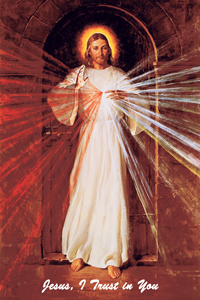
If you struggle with overcoming shame and self-doubt by accepting the mercy of Christ, you are not alone. Despite Thomas’ disbelief, Jesus mercifully appeared to him that he might believe and receive the gift of peace and life. In 1931 Jesus appeared to a humble Divine MercyPolish nun, St. Faustina, asking her to spread the message of His mercy anew. Jesus lamented to Faustina that distrust on the part of souls caused His greatest suffering. Jesus burns with love for us and sacrificed to save us, but we cannot be saved if we refuse His love and mercy. He appeared to her many times after that, with a message of mercy He wanted made known. He asked for an image to be painted of Him, with two rays coming forth from His side – white and red – representing the water and blood which poured out of His side from the Cross, and the words “Jesus I Trust in You” beneath. We receive Jesus’ redemptive mercy through the sacraments when we are washed in the waters of baptism and united to Him in the sacrament of His Body and Blood in the Eucharist. He also asked that a Feast of Mercy be instituted, to be a day of extraordinary graces and an opportunity for us to make an act of trust and abandon so that He could be free to pour out His transformative love.

St. John Paul II perceived the truth and wisdom of Jesus’ message to St. Faustina. He affirmed her sanctity when he canonized her in the year 2000 and established the requested Feast of Divine Mercy as the Sunday following Easter. St. John Paul II witnessed the misery and despair caused by atheism – promoted by communism in his youth, and consumerism in his older age. He worked tirelessly to the very end, to exhort us to trust in Jesus. Even when Parkinson’s reduced him to a wheelchair and frustrated his speech, he proclaimed the Good News that Christ loves us and can purify us.

I remember the last time I saw John Paul II. I attended a Wednesday audience at St. Peter’s in 2002. The formerly vibrant, strong, energetic, outdoorsy pope had to be wheeled out on stage. He personally delivered his message even though his words slurred making it difficult to understand, and bits of drool forced their way down his mouth. I remember thinking, “what courage, what humility, what determination!” No matter how hard his body fought against him, John Paul II proclaimed the Gospel of Christ with conviction. George Weigel fittingly titled JPII’s biography as Witness to Hope. Even on his death bed, thousands gathered outside the window to his room and millions (including me) held vigil while viewing it on TV.

St. John Paul II knew our struggle to accept Christ’s mercy and did everything he could to make that merciful love felt. Pope Francis also perceived this problem and called a Jubilee Year of Mercy (2016) to renew the message in a powerful and universal way.

Like Thomas, many of us want to see mercy to believe it. Jesus wants us to believe without seeing. Yet, He graciously gives us something akin to sight periodically, as He did for Thomas, condescending even further to meet our weakness. Moreover, the more we, His Mystical Body, show kindness to others, the more visible Christ’s mercy will be to the world.

Today, on this Feast of Divine Mercy, let us be strengthened by the witnesses of hope that Christ has sent to us. Let us take a leap of faith, and trust Christ with total abandon. He invites us to receive His mercy in the sacraments of Confession and Communion where His blood is poured out in our soul to free us from sin and free us to love.

Consider:

  • When have you experienced mercy?
    • In prayer or at church, did you experience the peace of Christ?
    • After Confession, have you experienced the feeling of joy?
    • Have you experienced emotional or material support from someone when you were in need?
  • Do you find it difficult to accept help from others? Why do you think that is?
  • Do you find it hard to accept unconditional love from Christ? Do you struggle with feelings of needing to earn His love or be perfect before you can be saved? Pray about what underlies that resistance:
    • Is it pride – you want to feel worthy of friendship with the Lord?
    • Is it despair – you don’t believe Christ can accept you as you are?
    • Is it past wounds that need healing – you have been denied mercy by others or your understanding of your dignity has been chipped away by abuse or patterns of toxic thinking?
  • Reflect on the freedom and joy of unconditional, merciful love.
    • Offer prayers of praise and thanksgiving if you have experienced this.
    • If you haven’t experienced it, consider the example of people you know who have. What do you notice about how it affects their perspective, their choices, their demeanor, and the quality of their life?
  • Who might you extend merciful love to? What relationships in your life have too many conditions?

Make a Resolution (Practical Application):

  • Each day this week, pray the words “Jesus I Trust in You,” multiple times throughout the day.
  • Read a psalm of praise each day, strengthening and proclaiming your belief in God’s love for you. (Try beginning with Psalm 139).
  • Resolve on one way to be a person of mercy each day. Decide on who, what, when, and where you can be an encounter with Christ’s merciful love to them.


~ Written by Angela Jendro © 2019

* To receive these weekly posts automatically in your email just click the “follow” tab in the bottom right hand corner and enter your email address. You can also follow me @taketimeforhim on Twitter and Facebook.


Get your own published papercopy of this year’s guided meditations!

Hi Everyone!Take Time For Him Book cover

By God’s grace, I have finally published a book of guided Scripture meditations for this year!  Check out Take Time For Him: Simple, Soulful Gospel Meditations to Ignite the Busy Person’s Spiritual Life on Amazon!  

ORDER YOUR OWN COPY TO PRAY WITH!  Highlight passages you love and freely write notes and thoughts in the margins.  Keep on your shelf to look back and reflect on your year with the Lord.

This is my first book on Amazon, so please RATE and REVIEW it so more people can find it as they search for prayer tools.  If you feel moved to, please SHARE it on your social media page.

My hope is for us to grow in prayer together. I will be praying for you, and please pray for me!

Thank you all for your encouragement and requests over the years.  The idea came from a reader and each time I was tempted to quit the attempt, another reader would reach out with encouraging words at just the right moment.  This book is an effort to serve you better and to, through Christ, “continually offer up a sacrifice of praise to God.” (Hebrews 13:15 RSV)

May God embrace you in His Divine Love,

+Angela M. Jendro 


*I am also an amazon affiliate, so by clicking the link on this page I earn additional proceeds from the book.

Why Pray If God Already Knows?

Cima_da_Conegliano,_God_the_Father Attributed to Cima da Conegliano [Public domain]

Attributed to Cima da Conegliano [Public domain]

29th Sunday Ordinary Time

Gospel of Luke 18:1-8

Meditation Reflection:

If God is all-good, all-loving, all-knowing, and all-powerful, why should we pray? Wouldn’t it be better to only offer prayers of thanksgiving or praise? If we pray for someone or for something, are we not assuming we can change God’s mind and that to change His mind means there’s something lacking in His divine providence?

Questions such as these arise in many human hearts. Jesus addresses it in this passage and points us toward some reasons we ought to pray, and more boldly, to pray for specific intentions. The great theologian Thomas Aquinas addressed these questions as well in the Summa Theologica (II.II.Q.83) Newadvent.org and offers some clear questions and answers for us to contemplate.

In article 2, “Whether it is becoming to pray,” he addresses this objection:

Objection 1: It would seem that it is unbecoming to pray. Prayer seems to be necessary in order that we may make our needs known to the person to whom we pray. But according to Matthew 6:32, “Your Father knoweth that you have need of all these things.” Therefore it is not becoming to pray to God.”

This seems like a valid argument and even cites Scripture. If God knows what I need anyway, and certainly He knows it better than me, why should I pray at all? I myself have felt a little silly at times praying for intentions as I imagined God saying, “I know this already, move on.”

Yet, Jesus instructs us to pray for our daily bread (Matthew 6:11), to call out to God day and night (Luke 18:7), that whatever we ask in prayer shall be given to us (MT 18:19, MT 21:22, MK 11:24JN 14:13, JN 15:7 and many more). Moreover, St. Paul says to pray without ceasing (1 Timothy 5:17). So why does God want us to pray for things if He already knows our needs?

Aquinas’ response provides insight for us:

“Reply to Objection 1. We need to pray to God, not in order to make known to Him our needs or desires but that we ourselves may be reminded of the necessity of having recourse to God’s help in these matters.”

First, we pray because we need to see the connection between our needs and God’s provisions. If we don’t pray, we often take God’s gifts for granted or assume they resulted merely from chance, good luck, or our own efforts. Through prayer, especially through persevering prayer, our disposition changes and we realize our total reliance on God’s graciousness.

Secondly, because of the transformative effect petitioning God can have on our faith and our relationship with God, sometimes God wills that something happens only if we pray for it. Aquinas puts it this way: “Divine providence disposes not only what effects shall take place, but also from what causes and in what order these effects shall proceed.” (II.II.Q.83A.2)

Aquinas points out that God’s divine providence desires not only certain good effects, but the prior causes of those effects as well.  In other words, part of God’s plan for providing, may include someone having prayed for it first. Thus, He may provide a particular thing only if you pray for it because He wills that it be caused by your prayers!

If we ought to pray, then for what should we pray and for what shouldn’t we pray? For example, early in my faith journey I was surprised at how God answered prayers and I noticed something. I usually prayed for a particular solution to a problem, whereas God saw the problem itself and provided a much more creative and profound solution than I could have imagined. As a result, I try to refine my prayers of petition to presenting the problem to the Lord and trusting in Him to provide the resolution rather than telling God how it ought to be solved. Thus, my faith deepens as I see Him at work in His way rather than merely a response to my requested logistics.

Aquinas offers insights into a couple of common questions in this regard that are helpful. In Article 5 he presents this objection: “Now according to Romans 8:26, “we know not what we should pray for as we ought.” Therefore we ought not to ask for anything definite when we pray(Obj.1). The objector in this case cites Scripture correctly but draws the wrong conclusion. It’s true that our prayers are often misguided, like my earlier example. Nevertheless, as Aquinas points out, Scripture also says, that the Holy Spirit will enable us to pray as we ought. He writes, “Although man cannot by himself know what he ought to pray for, “the Spirit,” as stated in the same passage, “helpeth our infirmity,” since by inspiring us with holy desires, He makes us ask for what is right. Hence our Lord said (John 4:24) that true adorers “must adore . . . in spirit and in truth”(Reply 1)

God is a patient and kind guide. He accepts the true prayers of our hearts no matter how bungled the words we use to express them. In addition, the more we invite the Holy Spirit to direct our prayer, the deeper and more authentic our prayers become.

In Article 6, Aquinas tackles the even harder question of whether we ought to pray for temporal things, i.e. the needs of our earthly well-being. He makes an insightful distinction between prayers for our needs verses disordered wants, “order” being the key word. When it comes to praying for specific things we ought to petition God, but to have them appropriately prioritized. For example, of highest importance would be those needs relevant to the salvation our souls, the souls of those we love, and the advancement of God’s kingdom. Next in order would be our daily needs – food, clothing, shelter, friendship, etc. Last would be our wants (for example, “If you feel like treating me Lord,_____would be awesome!”)

Prayer is not a letter to Santa. It’s not a childish wish list. Prayer is relational. We converse with God and deepen our relationship as our loving Father listens to our needs and provides for them. We converse with the saints and with each other as we unite in prayer before the Lord for a petition. Thus we see the beauty of the Christian family and experience a deepening of unity with the people of God as we rely on each other’s prayers as well as our own. God wills our good, and He also wills at times for that good to come through prayer. As a mother I often anticipate my children’s needs, but I appreciate when they humbly ask and acknowledge the connection between their need and my generosity. God loves us dearly and provides so many things for which we never even asked or dreamed. Yet, He desires to partner with us and to bring about good through our cooperating efforts both in action and in prayer and sacrifice.

Consider:

  • Have you ever tried to struggle with something on your own for a long time before finally asking God for help? Were you surprised at how quickly He helped you once you asked?
  • Pray to the Lord for the needs of your soul. What sins do you need His grace to overcome? What virtues do you desire to grow? What desires would you like the Lord to give you?
  • Pray to the Lord for the needs of the souls of those you love. With what are they struggling? Where do they need conversion? What holy desires do they need from the Holy Spirit?
  • Pray for the needs of the souls of you enemies. Pray for conversion in their hearts and gifts of grace. Pray for blessings in their lives.
  • Pray for your needs – material, physical, emotional, relational.
  • Pray for your wants from a spirit of joy in God’s generosity.


Make a Resolution (Practical Application):

  • Make a prayer intention list in your prayer journal. Write the date or make a check mark next to the ones He answers. (remember some might be answered soon others may require time and perseverance)
  • Pray a prayer of surrender each day to God’s divine providence and openness to what surprises He may send you.


Follow bar
