How can God be both Justice and Mercy?

by Angela Jendro

24th Sunday in Ordinary Time

Gospel Luke 15:1-32 NAB

Tax collectors and sinners were all drawing near to listen to Jesus, but the Pharisees and scribes began to complain, saying, “This man welcomes sinners and eats with them.” So to them he addressed this parable. “What man among you having a hundred sheep and losing

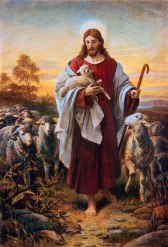
490px-Bernhard_Plockhorst_-_Good_Shephard

by Bernhard Plockhorst

one of them would not leave the ninety-nine in the desert and go after the lost one until he finds it? And when he does find it, he sets it on his shoulders with great joy and, upon his arrival home, he calls together his friends and neighbors and says to them, ‘Rejoice with me because I have found my lost sheep.’ I tell you, in just the same way there will be more joy in heaven over one sinner who repents than over ninety-nine righteous people who have no need of repentance.

“Or what woman having ten coins and losing one would not light a lamp and sweep the house, searching carefully until she finds it? And when she does find it, she calls together her friends and neighbors and says to them, ‘Rejoice with me because I have found the coin that I lost.’ In just the same way, I tell you, there will be rejoicing among the angels of God over one sinner who repents.”

Then he said, “A man had two sons, and the younger son said to his father, ‘Father give me the share of your estate that should come to me.’ So the father divided the property between them. After a few days, the younger son collected all his belongings and set off to a distant country where he squandered his inheritance on a life of dissipation.  When he had freely spent everything, a severe famine struck that country, and he found himself in dire need. So he hired himself out to one of the local citizens who sent him to his farm to tend the swine. And he longed to eat his fill of the pods on which the swine fed, but nobody gave him any. Coming to his senses he thought, ‘How many of my father’s hired workers have more than enough food to eat, but here am I, dying from hunger. I shall get up and go to my father and

552px-Rembrandt_Harmensz_van_Rijn_-_Return_of_the_Prodigal_Son_-_Google_Art_Project

Return of the Prodigal Son By Rembrandt

I shall say to him, “Father, I have sinned against heaven and against you. I no longer deserve to be called your son; treat me as you would treat one of your hired workers.”’ So he got up and went back to his father. While he was still a long way off, his father caught sight of him, and was filled with compassion. He ran to his son, embraced him and kissed him. His son said to him, ‘Father, I have sinned against heaven and against you; I no longer deserve to be called your son.’ But his father ordered his servants, ‘Quickly bring the finest robe and put it on him; put a ring on his finger and sandals on his feet. Take the fattened calf and slaughter it. Then let us celebrate with a feast, because this son of mine was dead, and has come to life again; he was lost, and has been found.’ Then the celebration began. Now the older son had been out in the field and, on his way back, as he neared the house, he heard the sound of music and dancing.  He called one of the servants and asked what this might mean. The servant said to him, ‘Your brother has returned and your father has slaughtered the fattened calf because he has him back safe and sound.’ He became angry,
and when he refused to enter the house, his father came out and pleaded with him. He said to his father in reply, ‘Look, all these years I served you and not once did I disobey your orders; yet you never gave me even a young goat to feast on with my friends. But when your son returns, who swallowed up your property with prostitutes, for him you slaughter the fattened calf.’ He said to him, ‘My son, you are here with me always; everything I have is yours. But now we must celebrate and rejoice, because your brother was dead and has come to life again; he was lost and has been found.’”

Meditation Reflection:

Justice versus mercy. How can God be both? And how can we imitate Him when we need to apply concretely a mystery that surpasses our understanding?

In this Gospel Christ illuminates something of this mystery. First, we should remember that we live in a highly competitive culture. Consequently, we feel justice – giving each person his or her due – is necessary to keep things “fair.” Secondly, as St. Augustine pointed out in The City of God, if we are earthly-minded and focused on building the “city of man”, then we often find ourselves at war with one another as we vie for limited resources.

The resources and goods in the “city of God” however, Augustine notes, are unlimited. Moreover, rather than being reduced when given away they multiply, and rather than being limited to temporary gain, they last eternally.

Our human tendency to want justice applied to others but mercy applied to us, often relates more to our striving to build the city of man rather than the noble cause for justice itself. Justice is important, and God is justice as well as mercy. However, we have to be aware of our own prejudices and since we suffer the effects of original sin, we tend to rationalize our double-standard.

The truth is, when God weighs our own faults and violations of divine and natural law, none of us will be able to balance the scale and achieve a just state. We know God cares about justice because for us to rightly spend eternity with Him, the scale had to be balanced and so He sent His only Son to suffer and die for our sake, to tip the scale for us. By helping us reach a state of justice, He acted mercifully.

To even begin to understand something of this mystery, of the harmony between Justice and Mercy in God, Jesus uses comparisons we can relate to – a shepherd looking for a lost sheep and a woman searching for a coin. In each case you or I may not have cared. They care because they view the sheep and the coin as their belonging. When lost, they were impoverished in some way and in finding it their possessions became complete. We belong to God. You or I may not care about a particular person but God does. He views each human person as His own treasure, and to lose one results in a loss, and to regain that person creates completion.

To clarify and impress this on us further, Jesus follows with the Parable of the Prodigal Son (verses 11-32). Whereas in our work life if an employee or colleague leaves it may be disappointing but that person can be replaced by a new hire and eventually life goes on. We see this in every realm of society – politics, business, entertainment, sports – except one, the family. If a child rebels and leaves his or her family, there remains a hole and a lingering pain for as long as the child remains estranged. The family cannot simply find a replacement and move on with life. It will always feel like a loss and incomplete.

The relationship between justice and mercy therefore can only be understood in light of relationship. In the parable of the prodigal son, the rebellious child left home and eventually experienced the reality of the choices he had made. With the money gone, he finally received his due, and this provoked conversion. When he returned home, repentant and interiorly changed, his father was ecstatic to incorporate him back into the family. The older son, focused on the earthly resources, became bitter at the apparent injustice. It wasn’t fair. Had he viewed it from a spiritual perspective, he would have seen that he had become enrichened. Rather than focusing on the fattened calf he felt he “lost” to the feast of his wayward brother, he ought to have focused on the brother he regained.

The deeper we grow in love, the more we begin to understand God’s ways. Rather than seeing him merely as a judge, we need to see that He is foremost a father. He will do what it takes to keep his family together and to help His children flourish. Fathers and mothers make countless material sacrifices for their children and oftentimes with joy. From the outside others might rightly marvel at how this could be. Those who have children however, know by experience the deeper sense of satisfaction and pleasure one gains from these acts.

When considering justice and mercy, Christ exhorts us to view it in light of being God’s possession, His children, and love.

Consider:

  • Consider the difference between being an employee in comparison to being someone’s child. You are God’s own. You are God’s child.
  • Consider how love moves one to mercy and the more loving persons are, the more merciful they become.
  • Consider how you felt when you received mercy or when you gave mercy.
  • Reflect on how justice and mercy relate with one another. Sometimes being just enables one to be merciful.
  • Spend 5 minutes in silent prayer, just gazing on God who is Justice and Mercy.

Make a Resolution (Practical Application):

  • Pray each day for the conversion of someone who has left the faith. If possible, reach out to him or her through acts of kindness and mercy.
  • In light of the parable of the prodigal son, forgive someone who has returned to you apologetically.
  • If there is someone who has made serious changes (for the better) in his or her life, pray about giving them a second chance and incorporating them back into your life.
  • Practice one corporal work of mercy and one spiritual work of mercy each day this week.


~ Written by Angela Jendro © 2019

Follow bar

Following Christ At All Costs

by Angela M. Jendro

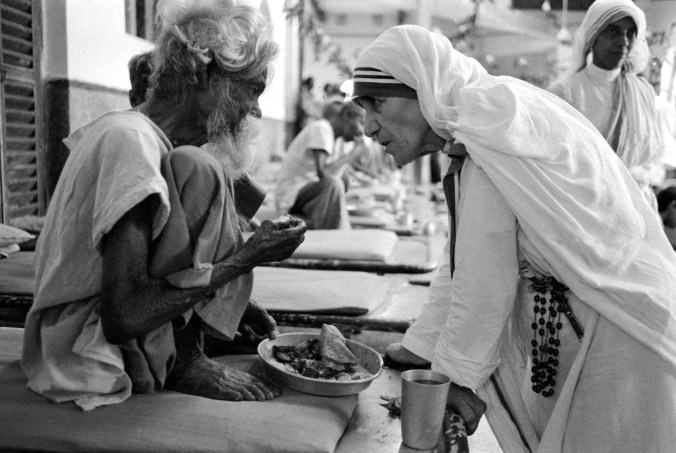
Mother Teresa and the poor in Calcutta, India in October, 1979.

Mother Teresa and the poor in Calcutta, India in October, 1979. Jean-Claude Francolon | Gamma-Rapho | Getty Images

23rd Sunday of Ordinary Time

Gospel Luke 14:25-33 NAB

Great crowds were traveling with Jesus, and he turned and addressed them, “If anyone comes to me without hating his father and mother, wife and children, brothers and sisters, and even his own life, he cannot be my disciple. Whoever does not carry his own cross and come after me cannot be my disciple. Which of you wishing to construct a tower does not first sit down and calculate the cost to see if there is enough for its completion? Otherwise, after laying the foundation and finding himself unable to finish the work the onlookers should laugh at him and say, ‘This one began to build but did not have the resources to finish.’ Or what king marching into battle would not first sit down and decide whether with ten thousand troops he can successfully oppose another king advancing upon him with twenty thousand troops? But if not, while he is still far away, he will send a delegation to ask for peace terms. In the same way, anyone of you who does not renounce all his possessions cannot be my disciple.”

Meditation Reflection:

How can Christ, whose new commandment to us was to “love one another as I have loved you” simultaneously ask that we hate our family members? As we celebrate the feast day of St. Mother Teresa this week, we can look to her example to illuminate this paradox. Jesus’ challenge that “whoever does not carry his own cross and come after Me cannot be my disciple” proved a difficult task and one that required great love, detachment, and grace for Mother Teresa who left her home, her family, and even her beloved convent to serve the poorest of the poor in the streets in India. Jesus rightly warns to count the cost before we set out on a project lest we find ourselves giving up midway. Discipleship calls for a total gift of self, in response to the Lord who made the ultimate gift of self for us through His Incarnation, Death, and Resurrection.

In a perfect world, or at least in heaven, loves do not compete with one another and we aren’t painfully pulled in opposing directions. In our current fallen state however, we come to crossroads where we must choose between two loves. It’s one thing to forsake the love of a material good or a sinful habit, but the hardest love to forsake is that of someone with whom we have a relationship but refuses to share us with Christ and gives us an ultimatum.

This ultimatum may not sound as direct as “it’s me or Christ!” but it will likely pit some aspect of following Christ against something the person wants of you. Following Christ results in a life of sacrifice that’s counter-cultural. Authentic Christians don’t blend in and that bothers people who don’t want to stir the waters. Living your faith, even quietly, can prick the conscience of another and result in lashing out to ease his or her own angst. Similar to Jesus, Christians offer love unconditionally to others. Unfortunately, the same is not always true on the other end and the painful choice between following Christ or making the person you care about happy must be made.

This choice takes as many forms as there are relationships. For a teen it can be a couple breaking up because one chooses purity over promiscuity or being left out of social gatherings because of a refusal to drink. For a young adult it can be a person choosing the religious life despite the discouragement of parents, or moving away from family and friends for a service they are called to by Christ. For parents it can mean getting the silent treatment from a child because you refuse to condone their wrong behavior. For a spouse it can mean suffering the anger of the other because one refuses to compromise living out his or her faith to appease the other’s sin. No one wants a rift in their family – whether between parents, children, or spouses. At the same time not everything is in our control except our own decision to follow the Lord. Navigating these situations can be confusing and spiritual direction should be sought to sort out how to authentically love in particular situations.

Mother Teresa desired to follow Christ and to give her whole life in love to Him. First it meant leaving her family to join the Sisters of Loreto as a nun and serve in India as a teacher. Next, she received her “call within a call” to go out into the streets and serve the poorest of the poor. She was happy as a nun and asked Jesus if she could just serve Him more devoutly in the way she already was. Each time however He repeated His request for her to satiate His thirst for souls by ministering to the poor and destitute. He would ask her each time, “Wouldst thou refuse Me?”

Mother Teresa felt torn between two loves. Her love for the other sisters, her students, and her life in the convent was certainly a noble love, but discipleship called her to follow Christ to a place that meant she would have to choose between the two. Ultimately, Mother Teresa could not surrender her love for Jesus to anything else and so she gave up and gave in to the Lord. As she followed Christ, Mother Teresa surrendered everything to Him – material goods, physical comforts, family, and even the convent walls. She went into the most destitute streets with nothing but a sari and a passion for Jesus.

Contrary to cultural demands, Christians cannot compartmentalize their faith. We are followers of Christ at church, at home, at work, when alone, or when with friends. We have to be prepared that some people, even some we for whom we care deeply, may not tolerate our discipleship and choose to leave us. In these instances, we can look to Christ for the grace and grit to carry our cross, a cross which He promises will end in a resurrection.

This Sunday, may we count the cost and, with the grace of Christ, decide to follow Him to the end. The joy of Mother Teresa, and the light of love and mercy her life became, serves as a witness for us of the glorious destination of discipleship – a project worth completing!

Consider:

  • Are you a disciple of Christ? If the answer is yes, what moves you to love Him and to follow Him? If the answer is no or not yet, what attracts you about Christ or piques your curiosity?
  • In what ways has discipleship caused you to live counter-culturally? Has it strained any of your relationships?
  • How has carrying your cross produced resurrections and blessings in your life? What have been some of the fruits of your discipleship?
  • What cross are you carrying right now? In what way does it resemble Jesus’ cross? How does it bring you closer to Him as you share in His experience?
  • It feels good to accomplish something hard that required grit and perseverance. Consider how it will feel to “finish the race” as St. Paul says, and to have followed Christ (with the help of His grace) to the end.

Make a Resolution (Practical Application):

Follow bar

The Fork In The Road For Every Christian

by Angela Jendro

fork in the road

20th Sunday in Ordinary Time

Gospel Luke 12:49-53 NAB

Jesus said to his disciples: “I have come to set the earth on fire, and how I wish it were already blazing! There is a baptism with which I must be baptized, and how great is my anguish until it is accomplished! Do you think that I have come to establish peace on the earth?  No, I tell you, but rather division. From now on a household of five will be divided, three against two and two against three; a father will be divided against his son and a son against his father, a mother against her daughter and a daughter against her mother, a mother-in-law against her daughter-in-law and a daughter-in-law against her mother-in-law.”

Meditation Reflection:

Imagine someone else saying the same words as Jesus did.  You might accuse them of not being very Christian.  Isn’t Jesus the Prince of Peace?  Isn’t He the nicest guy there ever was?  Aren’t Christians supposed to be nice people? Yet, Jesus exclaimed with great passion His eagerness to set the world ablaze.  This doesn’t seem to fit the sandal-wearing, nice, historical moral teacher image our culture likes to portray Jesus as.

fire pic

Jesus does bring peace, but not a superficial conciliation. He came to defeat sin and redeem mankind, accomplished through His own baptism of the Cross, one that caused Him great “anguish until it is accomplished.Fire purifies and destroys.  Christ came to set fire to sin, to destroy its corrupting influence in our lives, and to make room for life in God.  That battle begins within ourselves and extends to sin outside ourselves.  Purification can burn, but at the end of the process one feels liberated and empowered. To ignite this fire and make our purification possible, Christ knew He had to suffer and die first – something that caused Him distress as He waited in anticipation.

As disciples of Christ, we share in both His rewards and His suffering.  Christ’s words about causing division seem shocking.  Isn’t He supposed to bring unity and harmony? Jesus offers unity, but not everyone accepts it.  Note that although Jesus often ate with sinners, not every sinner chose to eat with Him and several found His witness challenging enough that they tried to silence Him altogether by crucifying Him.

I often quote G.K. Chesterton who said, “The Christian ideal has not been tried and found wanting. It’s been found difficult; and left untried.”  At the fork in the road therefore, where one mfork in the road 2ust choose the path of discipleship or the path of least resistance, Christians must resolve and accept that as they walk to the left after Christ, some of their closest companions may walk to the right instead and their paths will separate.  Although Christians, like Christ, ought to keep the door open to those friendships, oftentimes living our faith can mean losing some relationships.  Jesus is Goodness, Truth, and Love.  Yet, He was rejected by many.  As we strive to be more Christ-like, we have to prepare ourselves for the same experience.

Even in the Old Testament, authentic prophets consistently experienced rejection and suffering.  The community they came to help change would pressure them to conform instead.  When God’s prophets refused, they found themselves exiled or running from death threats.  The first reading for this Sunday’s liturgy provides an evocative image of this from the life of Jeremiah:

“And so they took Jeremiah and threw him into the cistern of Prince Malchiah…There was no water in the cistern, only mud, and Jeremiah sank into the mud.” Jeremiah 38:6

stuck in the mud

This image strikes me because of the several analogous experiences I can think of in my own life.  Jeremiah acts in truth and love only to be thrown into a pit.  The mud makes the image even better as a symbol of the depressive reality of ones you love rejecting Christ (and you) in favor of persisting in their sins.  When Jeremiah “sank into the mud,” I am reminded of the feeling of helplessness and despair that can discourage me in these moments. Thankfully, Jeremiah did not remain in the mud forever, Jesus’ death was followed by His resurrection, and God will lift us up too.  David expresses this in Psalm 40:2

“The LORD heard my cry. He drew me out of the pit of destruction, out of the mud of the swamp; he set my feet upon a crag; he made firm my steps.”

Walking the path of discipleship may take you down a different road than some of the persons you love.  You might experience the pain of division and loss, not because you didn’t invite them along but because they refuse to come with you.  This fork in the road can come in many different forms at different times in our lives.  Choosing between following Christ and following someone we love is as painful as fire.

Our contemporary culture adds even more pressure.  It seems more rare these days to find people who can be friends even though they have different views and beliefs. Instead, the attitude appears to be that one must condone the decisions of another or they can’t be friends.

Discipleship may be difficult but in the end Christ conquers all.  He can provide the guidance to achieve the tricky balance of loving others without condoning sin, as well as the humility to be receptive to the hard truth about our own sins a Christian friend might challenge.  Every person must make a choice and, praise be to Christ, He provides us with the grace and the guts we will need to follow Him no matter the cost.

Have you had a similar experience?  If you’d be willing to share, write a short account of your fork in the road in the comment section below!

that you and I may be mutually encouraged by one another’s faith, yours and mine. Romans 1:12

Consider:

  •  How has Christ set your heart on fire?
    • How has He purified it?
    • How has that purification made you more zealous and joyful?
  • Has living out your Christian faith ever caused you to experience persecution from persons you care about?
    • In what ways did it feel like you were sinking into a pit of mud?
    • In what ways did God lift you up from the pit and set you on rock?
  • Who are your true friends who accept you as you are, complete with respect for your beliefs?
  • Have you ever been the one doing the persecuting or rejecting? Consider why we find it difficult to be around people who challenge us to be better simply by the way they are living their own lives.
  • Are there persons with whom you struggle to be an authentic Christian around? Do you live your faith at work or out with friends, or do you hide it so they won’t think differently about you?

Make a Resolution (Practical Application):

  • Pray Psalm 40 each day this week.
  • Resolve to let your faith be seen in some small way, especially in a place where you usually lack the courage. (e.g. wearing a cross necklace, having a small crucifix or rosary on your desk, writing favorite bible verses on notecards and placing them in places you will see – whether in your work space or at home, walking away from conversations that disparage the faith or other persons, etc.)

~ Written by Angela Jendro © 2019

Follow bar


Eyes Wide Open

Ascension of Christ_ Getty Images

Ascension of Christ: Getty Images

by Angela M Jendro

 19th Sunday in Ordinary Time

Gospel of Luke 12:35-40 NAB

“Jesus said to His disciples: ‘Gird your loins and light your lamps and be like servants who await their master’s return from a wedding, ready to open immediately when he comes and knocks. Blessed are those servants whom the master finds vigilant on his arrival. Amen, I say to you, he will gird himself, have them recline at table, and proceed to wait on them. And should he come in the second or third watch and find them prepared in this way, blessed are those servants. Be sure of this: if the master of the house had known the hour when the thief was coming, he would not have let his house be broken into. You also must be prepared, for at an hour you do not expect, the Son of Man will come.’”

Meditation Reflection:

Jesus emphasized the need for disciples to be vigilant. According to Wordbook, vigilant means to be “carefully observant or attentive; on the lookout for possible danger.” Discipleship can suffer from the same waning of enthusiasm as any of our other noble goals. How many New Year’s diets or exercise plans end by February? How many books are left only partially read? How many friendships or relationships wither from slow neglect? Jesus exhorts us to head off dangers to our faith by being aware and making efforts to protect ourselves from them. Discipleship requires the same perseverance, effort, and watchfulness as anything else we hope to accomplish and maintain.

Similarly, the same strategies to keep healthy habits can be applied to discipleship. For instance, to achieve the goal of getting in shape, partnering with a friend for accountability will greatly increase your chance of success. Discipleship requires fellowship as well. We need faith-filled friends to keep us accountable, inspire us to be better, and keep us in the habit of prayer and worship. To achieve the goal of developing your mind through reading, you will need to choose a time, place, and frequency or it will never happen. Forming a book club can also provide that boost of a deadline to motivate you. Similarly, to grow nearer to Christ you will need to read Scripture regularly. The same pitfalls apply here so being vigilant about sticking to a routine will be important and joining a bible study could be motivating.

The synonym for vigilance illuminates the essence of discipleship as well: “open-eyed.” Thus, Jesus exhorts us to keep our eyes of faith open to judge things from the perspective of faith rather than the world. In Hebrews 1:1, St. Paul defines faith as: “the assurance of things hoped for, the conviction of things not seen” (RSV). He goes on to illustrate this with the example of Abraham who left for a land God promised without any sight of it beforehand – no map, no appraisal or inspection, no google images – only God’s word. Moreover, after having received a son despite he and Sarah’s old age, Abraham was willing to sacrifice Isaac at God’s command. Imagine the paradox presented to Abraham. God had promised Abraham many descendants through Isaac, and yet God also asked Abraham to sacrifice Isaac. How could both of these things be true at the same time? Abraham could find no assurance in natural reason or human experience and power. Abraham merited the title Father of Faith by his response. St. Paul relates, “[Abraham] considered that God was able to raise men even from the dead; hence, figuratively speaking, he did receive him back” (Hebrews 11:19 RSV). Abraham had confidence that God is all-powerful and that God keeps His promises. He didn’t limit God to our human experience. He trusted God and proved his conviction when he risked everything to be obedient to the Lord.

How can we imitate the vigilant, open-eyed faith of Abraham? Every day we need to open our eyes through prayer. We need to ask for the gift of faith and trust. We must stay sharp through fellowship with faithful Christians and spiritual reading. We need to deepen our trust through developing our relationship with Christ and receiving His grace in the sacraments. Finally, many saints and spiritual writers suggest doing an examination of conscience every night. Look back on the day and evaluate your choices. When did you show love for God and for others? What temptations did you overcome? What inspirations of the Holy Spirit did you follow? Secondly, where did you lean on your own understanding instead of God’s? When did you relax into thinking and acting like a child of the world rather than a child of God? What choices were motivated by a lack of faith, hope, or charity? Ask God for forgiveness and an increase in grace to do better the next day.

Even if the end of the day doesn’t work for you, try to at least be more introspective throughout the day. Jesus warned “Be sure of this, if the master of the house had known the hour when the thief was coming, he would not have let his house be broken into.” Sins can make little strongholds in our soul if we are not vigilant in identifying them and putting them before the Lord for healing. We never know when we will be attacked by temptation and sometimes it can be very subtle. By developing a habit of staying alert we will be better prepared to avoid or overcome them.

If we vigilantly live in faith, our hearts will be stay open to receive Christ and to respond to the promptings of His Spirit. A habit of holiness characteristic of the saints is their awareness of God’s presence and activity throughout their day. They also witness fidelity to the Spirit when called to serve in a way that makes no sense from a practical perspective unless God is real, all-powerful, and keeps His promises. Like Abraham, the Father of Faith, they have confidence that if God is asking then God will provide. If therefore we seek first His kingdom, we can be assured that everything else will be taken care of (Matthew 6:33), and quite often in ways we could not have foreseen.

Consider many people’s demand to “see it to believe it.” Yet, Jesus says “Come, and you will see” (John 1:39) Faith means walking with Christ, and in that walk your experience will confirm the faith you embarked upon. It entails some risk which is why encouragement from other believers’ experiences is an essential part of vigilance. I still struggle to patiently trust God, but at the same time I have seen God act so many times in my life that I can say I believe it because I’ve seen it. I just need to recall those times to strengthen my faith when it’s difficult. Consider how often in the Scriptures it exhorts the audience to recall a mighty work of God in the past to keep them strong in the present.

I have seen God provide over and again, always in unexpected ways, and just at the right time. He has done this at every level – family, relationships, work, finances, and health. Even though it’s easier to trust the wisdom of the world or our own strength which we can see right before us, we ought to vigilantly keep our eyes open to the wisdom and strength of our loving God which is far more reliable. He is coming, and it will be a day of great rejoicing we won’t want to miss!

Consider:

  • Reflect on what practices have deepened your faith and helped you grow as a disciple of Christ.
  • Consider where you need further growth. Pray about how you could be more vigilant in that area.
  • Meditate on the words Jesus told St. Faustina to have written below His image: “Jesus I trust in You.”
  • Reflect with gratitude on a time(s) when God came through for you in a surprising or powerful way.
  • Is there a part of your life that needs more trust in Jesus? Pray for an increase in faith and hope.

Make a Resolution (Practical Application):

  • Choose one way to be more vigilant in your faith life. Share your goal with someone who will encourage you and keep you accountable.
  • Pray the short prayer, “Jesus I trust in You” several times each day.
  • Pray Psalm 27 each day this week.

~ Written by Angela Jendro © 2019

Follow bar

Suggested Reading: 

Abandonment to Divine Providence by Fr. Jean Pierre de Caussade

33 Days to Merciful Love: by Fr. Michael Gaitley

Catholic Bible: Revised Standard Version, Compact Edition


How to Pray Like Christ

by Angela Jendro

Lord, teach us to pray

17th Sunday in Ordinary Time

Gospel of Luke 11:1-13 NAB

Jesus was praying in a certain place, and when he had finished, one of his disciples said to him, “Lord, teach us to pray just as John taught his disciples.” He said to them, “When you pray, say: Father, hallowed be your name, your kingdom come. Give us each day our daily bread and forgive us our sins for we ourselves forgive everyone in debt to us, and do not subject us to the final test.” And he said to them, “Suppose one of you has a friend to whom he goes at midnight and says, ‘Friend, lend me three loaves of bread, for a friend of mine has arrived at my house from a journey and I have nothing to offer him,’ and he says in reply from within, ‘Do not bother me; the door has already been locked and my children and I are already in bed. I cannot get up to give you anything.’ I tell you, if he does not get up to give the visitor the loaves because of their friendship, he will get up to give him whatever he needs because of his persistence. “And I tell you, ask and you will receive; seek and you will find; knock and the door will be opened to you. For everyone who asks, receives; and the one who seeks, finds; and to the one who knocks, the door will be opened. What father among you would hand his son a snake when he asks for a fish? Or hand him a scorpion when he asks for an egg? If you then, who are wicked, know how to give good gifts to your children, how much more will the Father in heaven give the Holy Spirit to those who ask him?”

Meditation Reflection:

Jesus Christ is the visible image of the invisible God. “Whoever has seen Me has seen the Father” (John 14:9), He says. In contrast, pagan gods tended to be images of the visible traits of humankind. Thus, they tended to mirror fallen man’s tendencies toward power, greed, lust, and narcissism. This answered man’s nagging questions about the origins of good and evil but it also left him subject to the whims of unpredictable powers. Be it Greek, Roman, or Babylonian gods, people tried to satiate the needs of their deities to avoid calamities and possibly manipulate them for favors. This explains, for instance, why the Romans did not care who a person worshipped provided they did their part to appease the Roman gods too and why they blamed Christians for the fall of Rome.

This appeasement of the gods should not be mistaken for relationship. It would be more apt to describe it as mutual manipulation. In some places it spiraled into superstition bordering on the obsessive-compulsive. For instance, some farmers would address one god for the successful tilling of soil, another for the planting of seed, another for the growth of the seed, another for the harvest, and so on. Even well after the West became Christianized this practice proved difficult to root out since it had become so ingrained in the culture and in fallen man’s temptation to control rather than to trust.

In modern times, we must fight the secular attempt to lump Christianity with other religions into one vague spirituality. The history of pagan worship differs in an absolute way from Judeo-Christian worship. God distinguished Himself from every other faith from the moment He revealed Himself to Abraham to the death and Resurrection of His Son and the sending of His Holy Spirit.

This difference is most notable in the way in which Christians pray. Rather than the “multiplying of words” to appease or manipulate, Christian prayer is grounded in familial relationship. When Jesus teaches the apostles to pray, He shares with them His praying togetherown prayer. Through Baptism we become incorporated into the Mystical Body of Christ, receiving adoption and becoming children of God (see John 1:12, Galatians 3:26, Romans 8:15-16). We cannot make ourselves someone’s child. The intimacy and privilege of familial relationship comes to us as a gift – either through nature or through the will of the parents by adoption. God has willfully adopted us, and Christ has made that possible through His sacrifice. Thus, He teaches us to address God as Father and enter into a relationship of sonship or daughterhood with the Lord. Consequently, we should begin prayer by simply meditating on the gift of God’s fatherhood and the reliable, selfless, pure love that it bestows. Even one moment of contemplation of this sublime gift moves our hearts to praise God and so Jesus instructs our next words to be “hallowed be Your Name.”
In pagan practices, calling on gods by name provided connection and sometimes a power over them. This can be true to some extent even in our human relationships. On the positive side, by knowing someone’s name a person can network, get in contact with him or her, or continue the relationship. On the negative side, it can also mean identity theft, access to personal information for the purpose of fraud, etc. Christ instructs His disciples to avoid these tendencies with God’s name. God desires authentic relationship. He knows every person’s hearts and He cannot be manipulated. Thus, Jesus warns, “Not everyone who says to me, ‘Lord, Lord,’ will enter the kingdom of heaven, but only the one who does the will of my Father in heaven (MT 7:21)

As a result, authentic relationship with God recognizes Him as the true Good and petitions: “Your kingdom come.” God ought to rule our lives, not the other way around. How does God do this? How does His kingdom of love, joy, and peace come to reign in our hearts? Through the gift of the Holy Spirit. Consequently, Jesus teaches us to ask God for our daily bread and explains directly after that God will always increase the Holy Spirit if we ask: “If you then, who are wicked, know how to give good gifts to your children, how much more will the Father in heaven give the Holy Spirit to those who ask him?”

Lastly, since sin and hatred are incompatible with God, Jesus tells us to give forgiveness and ask for forgiveness that we may be reconciled with God and one another. Moreover, He encourages us to ask in advance for God to spare us from temptations which would be too much for us and lead to abandoning Him.

Should you be afraid of God’s response (or lack thereof) if you pray, Jesus revealed how the Father views our prayers so we may approach Him with confidence. God is not an image of us, we are an image of Him. Even though we may be lazy or slow to help others, God is not. As a teenager I noticed the difference between my response to my parents requests and their response to mine. If asked to run to the store or help with a chore, I might drag my feet, feel too tired, grumble, or say no. If I needed something however, they always responded promptly and reliably. When I became a mother I finally understood this phenomenon. (Even while writing this I have been interrupted with requests from my kids a dozen times!) The difference was mature love. The love of good parents is an image of the love of God – self-less, prompt, generous, and happy to help. Hopefully as children of God, we can mature in our prayer so that our petitions move from the emotional demands of a toddler or elementary school child, to the respectful, humble, and grateful petition of an adult child confident in the relationship with his or her parents.

Consider:

  • Have you ever helped someone even when it was inconvenient and would rather have avoided it? Have you done things for your kids you never would have imagined doing before you had them?
  • Consider the difference between asking your mom or dad for help as opposed to a friend or neighbor. What things might you ask of them that you wouldn’t from the others?
  • Reflect on God’s love as that of a perfect Father. Reflect on the loving gratitude that should emanate from this relationship.
  • Where do you need God’s kingdom to come more in your life? Where do you need His peace, joy, justice, love…?
  • Do you forgive others as you would have God forgive you? Are there any grudges you need to let go? Are you quick to reconcile when someone apologizes?
  • Imagine how Christ must have looked while praying alone. Imagine you are one of the apostles, witnessing Him regularly taking time in solitude with the Lord. What do you think moved them so much that they asked Him to teach them to pray in the same way? Ask Christ to teach you to pray as He did too.
  • Pray for an increase in trust and a purified sight of God.

Make a Resolution (Practical Application):

  • Pray the Our Father slowly and meditatively each day this week.
  • Pray each day for an increase in trust.
    • Maybe repeat the words given to St. Faustina by Christ to have written under His image: “Jesus I Trust in You.”
    • Or pray the words of the father who brought his son possessed by a mute spirit to Christ (MT 9:22-24) “But if you can do anything, have compassion on us and help us.” Jesus said to him, “‘If you can!’ Everything is possible to one who has faith.” Then the boy’s father cried out, “I do believe, help my unbelief!”
  • Each day be forgiving toward someone in the same way you would like God to be patient and forgiving toward you.
    • Ideas: The person who cuts you off in traffic, the colleague who annoyingly one-ups you, the child who throws a tantrum or acts ungratefully, the spouse who forgets something or acts irritably, the fast food employee who messes up your order…

~ Written by Angela (Lambert) Jendro © 2016 edited © 2019

Follow bar

Recommended books on prayer:

(with links to Amazon)


Excuses, Excuses…Be Brave! Be Determined!

13th Sunday in Ordinary Time

Gospel of Luke 9:51-62

When the days for Jesus’ being taken up were fulfilled, he resolutely determined to journey to Jerusalem, and he sent messengers ahead of him. On the way they entered a Samaritan village to prepare for his reception there, but they would not welcome him because the destination of his journey was Jerusalem. When the disciples James and John saw this they asked, “Lord, do you want us to call down fire from heaven to consume them?” Jesus turned and rebuked them, and they journeyed to another village. As they were proceeding on their journey someone said to him, “I will follow you wherever you go.” Jesus answered him, “Foxes have dens and birds of the sky have nests, but the Son of Man has nowhere to rest his head.” And to another he said, “Follow me.” But he replied, “Lord, let me go first and bury my father.” But he answered him, “Let the dead bury their dead. But you, go and proclaim the kingdom of God.” And another said, “I will follow you, Lord, but first let me say farewell to my family at home.” To him Jesus said, “No one who sets a hand to the plow and looks to what was left behind is fit for the kingdom of God.”

Meditation Reflection:

Being a Christian means following Christ, wherever and whenever He goes. Full discipleship requires 100% commitment, not the made-to-order or pick and choose buffet we are accustomed to in our culture. Consider Jesus’ own example. He needed to journey to Jerusalem. Notice the attitude He chose – resolution and determination. Followers of Christ need the same resolution and determination. In fact, St. Teresa of Avila, the great Spanish mystic and doctor of the Church, emphasized repeatedly the need for determination in order to advance in the spiritual life.

As Jesus journeyed, doing the Father’s will, those He encountered each had an opportunity to join Him. The Samaritans received messengers from Christ but rejected the Lord before He even arrived when they learned accepting Christ meant surrendering their bitterness toward Jerusalem.

The next person took the initiative to seek Jesus and requested to be in His company. Jesus, who knows the hearts of each one of us, warned the man that being near to Christ would bring spiritual security and comfort but not necessarily the feeling of physical security and comfort.

The next two men Jesus invited to follow Him, but both requested to do something else first. Their requests seem valid and even noble. In fact, burying the dead is a corporal work of mercy and honoring your father and mother is the 4th commandment. Is Jesus asking us to neglect our duties? Does Christian discipleship excuse neglecting our families? Does God contradict Himself? No. Do we sometimes rationalize our cowardice or weakness by twisting God’s commands against Him? Yes. Many of us (including myself!), often excuse our lack of time for prayer by pitting it against the active life of charity. It sounds something like this: “I don’t have time to sit and pray because I need to do…which God would want me to do.” A practical example would be, “I could ‘just’ sit and pray, or work an extra hour to provide for my family, or do a load of laundry and dishes, or run an errand. God wants me to care for my family, that is my prayer.”

Sometimes that might be the case. But, in truth, there’s usually time for both. In addition, without prayer, even our loving activities can tend to be more self-loving rather than other-loving. Jesus knew the hearts of the two men who wanted to return to their families before following Him. Rather than contradicting His command that we love one another, especially our families, He may have been calling them out on their rationalizations. It reminds me of when I gather my kids for family prayer. My two boys will often try to get out of it by appealing to my earlier request that they get outside for awhile or they were just about to start a chore I had assigned. In reality, they had time for both those things before and after prayer, it just sounds like a better excuse.

Let’s face it, we have an inner desire for God and we may even have authentic zeal for discipleship, but we also struggle with attachments that hold us back. The good news is that if we open ourselves up to Christ in prayer, He will reveal those attachments to us and provide the grace to overcome them. It requires resolution, determination, and being honest with ourselves, but with God all things are possible.

Consider:

  • Like the Samaritans, how many of us hold on to bitterness, anger, or un-forgiveness? Prayerfully ask Christ to reveal if any of these are holding you back from following Him. Pray for the grace to surrender it to the Lord.
  • Like the man who proclaimed he would follow Christ wherever He goes, consider why you are a Christian. Is your love for the Lord intermixed with some self-love as well? Do you complain when you encounter trials? Are you impatient or upset when you experience discomfort?
  • What rationalizations do you use to delay responding to Christ or to responding more generously? What rationalizations have you overcome on your spiritual journey?   How has that experience strengthened your will to follow the Lord?
  • A favorite book of mine called “The Fire Within” by Fr. Thomas Dubay provides some great steps for identifying and overcoming attachments. Prayerfully read my summary of Fr. Dubay’s steps and see if you can identify one attachment and make a plan for rooting it out: identifying attachments

Make a Resolution (Practical Application):

  • Each day this week thank God for one deterrent He has helped you overcome or from which He has freed you, and invite Him to reveal and free you from a current hindrance you may or may not realize you have.
  • Pray for an increase in resolution and determination. Choose one concrete thing you can do this week to apply it. (e.g. pray 15 minutes each morning or evening, say something kind to your spouse when you want to say something critical, hug your child when you want to throw your hands up in exasperation, choose a daily Mass to attend and do what it takes to get there, go to Confession…)
  • Using Fr. Dubay’s steps, identify a current attachment and do one thing each day to root it out.identifying attachments


~ Written by Angela Lambert Jendro © 2016; edited and updated © 2019

* To receive these weekly posts automatically in your email just click the “follow” tab in the bottom right hand corner and enter your email address.


New Book – Lenten Journey: Through the Desert to the Eternal Spring by Angela Jendro


Lenten Journey_Through the Desert to the Eternal Spring by Angela M Jendro

Make a spiritual pilgrimage this Lent with guided meditations on theLenten Journey pic Sunday Gospels by Angela M Jendro, complete with real life applications and ideas for translating your meditation into action.
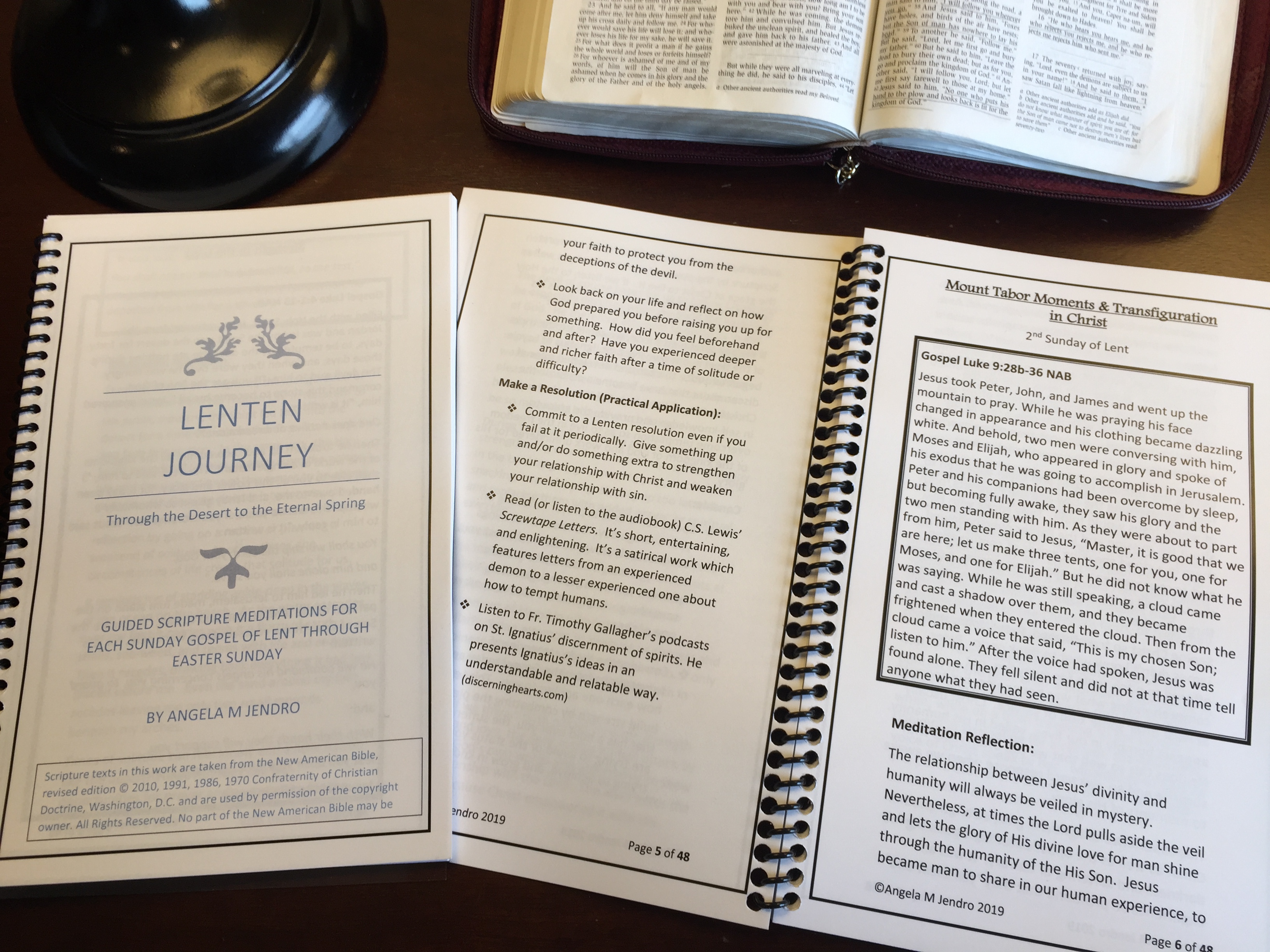
  • Download for free to your pdf reader for easy access on the go, or print to paper to make your handwritten notes.
  • No price for e-book,  Free Will Offering accepted via Paypal and/or Prayers for the author 🙂


For printed booklet – visit our Online store tab or purchase below:


Printed Booklet – Lenten Journey: Through the Desert to the Eternal Spring

Free shipping within the U.S. 48 pages Guided Scripture meditatins for each Sunday of Lent through Holy Week and Easter Sunday. Encounter Christ in a new way with reflections that relate to your daily life, considerations to take to prayer, and ideas for concrete application.

$15.00


Who Me?!

by Angela Jendro

yqhih

5th Sunday in Ordinary Time

Gospel Luke 5:1-11 NAB

While the crowd was pressing in on Jesus and listening to the word of God, he was standing by the Lake of Gennesaret. He saw two boats there alongside the lake; the fishermen had disembarked and were washing their nets. Getting into one of the boats, the one belonging to Simon, he asked him to put out a short distance from the shore. Then he sat down and taught the crowds from the boat. After he had finished speaking, he said to Simon, “Put out into deep water and lower your nets for a catch.” Simon said in reply, “Master, we have worked hard all night and have caught nothing, but at your command I will lower the nets.” When they had done this, they caught a great number of fish and their nets were tearing. They signaled to their partners in the other boat to come to help them. They came and filled both boats so that the boats were in danger of sinking. When Simon Peter saw this, he fell at the knees of Jesus and said, “Depart from me, Lord, for I am a sinful man.” For astonishment at the catch of fish they had made seized him and all those with him, and likewise James and John, the sons of Zebedee, who were partners of Simon. Jesus said to Simon, “Do not be afraid; from now on you will be catching men.” When they brought their boats to the shore, they left everything and followed him.

Meditation Reflection:

I often find myself torn between two emotions. Like Simon Peter my encounter with Christ leaves me astonished with a strong desire to leave everything and follow Him so I can hang on His every word and witness His great works. I want to call out “Pick me! Pick me!” At the same time, when Christ actually calls me to follow Him and participate in His mission, I feel so ridiculous because of my smallness that all I can say is “Who me? Really? Are you certain? Uh oh…” It’s one thing to watch Christ, it’s completely another to be invited to work side by side with Him. I don’t mind blending into the crowd of admirers, but I know what Christ can do through His followers and I feel foolishly unqualified.

Every Christian who has encountered Christ and heard His call struggles with the same emotions. Pick up any account of the life of a saint and they articulate the same tension. Don’t mistake their words for false modesty. The saints knew precisely the greatness of God and their own ineptitude. The only difference is that they had the humility and courage to say yes to God anyway.

Today’s first and second reading give us two such examples. Isaiah (6:1-8) reacts to seeing the glory of the Lord with fear due to his own sinfulness and feelings of being unworthy. God doesn’t disagree with him because Isaiah’s response is appropriate and true. Rather God heals Isaiah and enables him to serve God by having an angel touch Isaiah’s mouth with an ember from God’s altar.   Isaiah’s first words of “Woe is me I am doomed” change to “Here I am, send me”. St. Paul recounts having a similar experience (1 Corinthians 15:1-11). He humbly acknowledges that he of all people has no right to be called an apostle because he began by persecuting the Church. I have to think that not a day went by that Paul did not recall being present at St. Stephen’s martyrdom as a witness on the side of the persecutors. To accept Christ’s call to serve as an apostle had to have required great humility on Paul’s part and a deep trust in the mercy of Christ. Paul was willing to change teams and look like a fool by accepting a leadership position because He decided to say yes to Christ anyway.

Fr. Francis Fernandez-Carvajal, author of many works on the spiritual life, notes that the devil often tries to discourage us from great aspirations by tricking us with false humility. Drawing from Teresa of Avila, he writes in his book Through Wind and Waves,

St. Teresa of Avila, after stressing that the struggle for holiness is grounded on God’s help, and hence the importance of being humble, warns of the danger of a false humility that is short on desire and low in aspirations. The saint says regarding true humility: ‘It is necessary that we know what this humility is like. I believe that the devil harms people who practice prayer and prevents them from advancing by causing them to misunderstand humility. He makes it appear to us that it’s pride to have great desires and want to imitate the saints and long to be martyrs. Then he tells us or causes us to think that since we are sinners the deeds of the saints are for our admiration, not our imitation.’ This false humility leads to spiritual mediocrity, so opposed to the true Christian vocation.”

Although we legitimately feel unworthy, answering Christ’s call demonstrates faith and trust in the merciful love of God. Shrinking from service because of our smallness is not humble it’s mediocre, and mediocrity is not the response to grace that Christ deserves.

Christ calls every Christian to share in His work of saving souls. It’s natural to respond with an astonished “Who, me?!” However, as Pope St. John Paul II exhorted us, we should cling to Christ’s words “Be not afraid”. Push aside the temptation of false humility and step forward in faith to say as Isaiah did, “Here I am, send me”.

Consider:

  • When, like Peter or Isaiah, have you been astonished by Christ?
  • What is Christ asking of you today?
  • What fears or insecurities are holding you back?
  • Do you believe Christ will do great things through you or do you doubt His mercy?

Make a Resolution (Practical Application):

  • Each day this week ask Christ in prayer, “What do you want of me today? Here I am, send me.”
  • Pray the litany of humility prayer each day. It asks Christ to deliver us from the desires and fears that tend to become extreme in us and prevent us from freedom in following Christ.
O Jesus! meek and humble of heart, Hear me.

From the desire of being esteemed, Deliver me, Jesus.

From the desire of being loved, Deliver me, Jesus.

From the desire of being extolled, Deliver me, Jesus.

From the desire of being honored, Deliver me, Jesus.

From the desire of being praised, Deliver me, Jesus.

From the desire of being preferred to others, Deliver me, Jesus.

From the desire of being consulted, Deliver me, Jesus.

From the desire of being approved, Deliver me, Jesus.

From the fear of being humiliated, Deliver me, Jesus.

From the fear of being despised, Deliver me, Jesus.

From the fear of suffering rebukes, Deliver me, Jesus.

From the fear of being calumniated, Deliver me, Jesus.

From the fear of being forgotten, Deliver me, Jesus.

From the fear of being ridiculed, Deliver me, Jesus.

From the fear of being wronged, Deliver me, Jesus.

From the fear of being suspected, Deliver me, Jesus.

That others may be loved more than I, Jesus, grant me the grace to desire it.

That others may be esteemed more than I, Jesus, grant me the grace to desire it.

That, in the opinion of the world, others may increase and I may decrease, Jesus, grant me the grace to desire it.

That others may be chosen and I set aside Jesus, grant me the grace to desire it.

That others may be praised and I unnoticed, Jesus, grant me the grace to desire it.

That others may be preferred to me in everything, Jesus, grant me the grace to desire it.

That others may become holier than I, provided that I may become as holy as I should, Jesus, grant me the grace to desire it.

Rafael Cardinal Merry del Val (1865-1930),
Secretary of State for Pope Saint Pius X


~ Written by Angela (Lambert) Jendro © 2016

* To receive these weekly posts automatically in your email just click the “follow” tab in the bottom right hand corner and enter your email address.


Let Go and Let God

Fourth Sunday of Ordinary Time

Gospel Luke 4:21-30

Jesus began speaking in the synagogue, saying: “Today this Scripture passage is fulfilled in your hearing.” And all spoke highly of him and were amazed at the gracious words that came from his mouth. They also asked, “Isn’t this the son of Joseph?” He said to them, “Surely you will quote me this proverb, ‘Physician, cure yourself,’ and say, ‘Do here in your native place the things that we heard were done in Capernaum.’” And he said, “Amen, I say to you, no prophet is accepted in his own native place. Indeed, I tell you, there were many widows in Israel in the days of Elijah when the sky was closed for three and a half years and a severe famine spread over the entire land. It was to none of these that Elijah was sent, but only to a widow in Zarephath in the land of Sidon. Again, there were many lepers in Israel during the time of Elisha the prophet; yet not one of them was cleansed, but only Naaman the Syrian.” When the people in the synagogue heard this, they were all filled with fury. They rose up, drove him out of the town, and led him to the brow of the hill on which their town had been built, to hurl him down headlong. But Jesus passed through the midst of them and went away.

Meditation Reflection:

Most of us have had the unfortunate experience of Christ in this passage.  All too often so-called friends or groups of admirers show their fickle nature by turning on us at the first instance we upset them, let them down, don’t meet all of their expectations, or they simply become distracted by something else.  The home-town crowd listening to Jesus turned from amazement at His gracious words to anger, impelling them to hurl Him down a cliff in what seems like a moment.

The daily Gospel readings this past week shed light on the situation however, that can help sooth our disillusionment.  Jesus responded to both praise and rejection with the same calm demeanor.  He knows human nature and refrains from getting worked up about the opinion of the masses.  His mission is to do the will of the Father not to poll focus groups.  Moreover, Jesus teaches that all any of us can do is the will of the Father, the results are in God’s hands not our own.  This works both ways – when we seemingly do great works, and when we seemingly fail.  

In Thursdays Gospel reading from Mark 4:1-20 Jesus told the parable of the Sower and the Seed.  As a teacher and mother this is one of my favorite passages.  Jesus, and His servants, have the responsibility to sow the seeds of the Gospel wherever God sends.  How those seeds grow depends on the soil, or the disposition, of the receiver.  Jesus’ words quite often fell on hearts that were hardened toward Him or too distracted by greed or anxiety.  Why should we be surprised if we experience the same thing?  Sometimes Jesus’ words fell on generous hearts and the Holy Spirit was able to work wonders through His followers.  Again, can we really take all the credit when our work bears rich fruit? Some of the credit belongs to the person of faith willing to “hear the word of God and obey it” (Lk 11:28).  Thus, Jesus places higher honor on two foreigners over God’s own children the Israelites because they were willing to do something in response to God’s word.  Finally, credit ultimately belongs to God.  In Friday’s Gospel from Mark 4:26-32 Jesus reflected on how a farmer plants seeds and harvests the crops but the entire process of growth in between is due to the mystery of God’s work in nature.

This Gospel should give us peace that God is in control.  He opens people’s ears to hear and eyes to see if He chooses.  He decides which persecutions He will allow toward His servants and which He won’t.  In this Gospel Jesus calmly and effortlessly passed through the angry crowd, demonstrating God’s total control over the situation.  During His Passion however, the Father allowed His Son to be taken by the angry crowd in the Garden of Gethsemane and eventually crucified.  Yet, by the power of God Jesus also rose from the dead.  

Disciples of Christ can take comfort in Jesus’ words He so often speaks:  “Peace be with you” and “Be not afraid”.  We can let go and let God because our only task is to do the will of the Father and let Him bring our work to fruition.  We have the joy of being His instrument, but the music played through us belongs to Him.

Consider:

 Have you ever had an experience like Christ’s where a friend or an acquaintance turned on you?  What did it teach you about relying on the opinion of others?
 How much do you worry about what other people think of you?
 Do you trust your children to God or do you put all the pressure for their good on yourself?
 In John 15:1-5 Jesus asserts that our fruitfulness depends upon our connection to Him.  

“I am the true vine, and my Father is the vine grower. He takes away every branch in me that does not bear fruit, and everyone that does he prunes so that it bears more fruit. You are already pruned because of the word that I spoke to you. Remain in me, as I remain in you. Just as a branch cannot bear fruit on its own unless it remains on the vine, so neither can you unless you remain in me. I am the vine, you are the branches. Whoever remains in me and I in him will bear much fruit, because without me you can do nothing.


o How often do you begin your work with prayer?  
o Do you pray for the people in your life?  
o Do you pray for God to guide little decisions and everyday tasks in addition to the larger ones? 
o How has bringing things to prayer enrichened your experience or the outcome?    

Make a Resolution (Practical Application):

 Whatever your work may be, take time in prayer to surrender it to Christ each day.  Ask for Him to guide the process as well as the outcome. 
 Choose a time in the middle of your day to connect with Christ.  Decide on when, where, and how – even if it’s as simple as 5 minutes of silent prayer or reading Scripture at your desk during lunch.

~ Written by Angela (Lambert) Jendro © 2016; edited © 2018 Angela Jendro

Do You Have Skin In The Game?

Third Sunday in Ordinary Time

Gospel Luke 1:1-4; 4:14-21

Since many have undertaken to compile a narrative of the events that have been fulfilled among us, just as those who were eyewitnesses from the beginning and ministers of the word have handed them down to us, I too have decided, after investigating everything accurately anew, to write it down in an orderly sequence for you, most excellent Theophilus, so that you may realize the certainty of the teachings you have received.

Jesus returned to Galilee in the power of the Spirit, and news of him spread throughout the whole region. He taught in their synagogues and was praised by all. He came to Nazareth, where he had grown up, and went according to his custom into the synagogue on the sabbath day. He stood up to read and was handed a scroll of the prophet Isaiah. He unrolled the scroll and found the passage where it was written: The Spirit of the Lord is upon me, because he has anointed me to bring glad tidings to the poor. He has sent me to proclaim liberty to captives and recovery of sight to the blind, to let the oppressed go free, and to proclaim a year acceptable to the Lord. Rolling up the scroll, he handed it back to the attendant and sat down, and the eyes of all in the synagogue looked intently at him. He said to them, “Today this Scripture passage is fulfilled in your hearing.

Meditation Reflection:

Fables and epic stories begin with something along the lines of “Once upon a time” or “A long long time ago, in a galaxy far away…”  Biographies on the other hand begin with concrete dates, places, and people.  The Christian faith differs from other religions because it is not a mythical fable rooted in the imagination instead of history, nor is it merely comprised of the accumulation of man’s wisdom in his search for God.  Rather, it is founded on eyewitness of God made man – Jesus Christ; on the testimony of men and women’s experience encountering God in His search for us.  St. Luke begins his Gospel as a biography not a story.  He underscores his intent to present the research he has compiled through his investigations in an orderly way.  The historical reality of Jesus, His place of origin, death under Pontius Pilate, the respect He gained from multitudes of people, and the numerous witnesses of His miracles are written of not only by the Gospel writers but secular historians of the time as well such as the Jewish historian Flavius Josephus.

The apostles believed in Jesus because of what they saw as did many of the first followers of Christ.  Their faith centered on the climatic event of the Resurrection and seeing Jesus for the 40 days leading up to His ascension into heaven.  When choosing someone to replace Judas, for instance, the apostles required that the candidates be men who had followed Jesus from His Baptism through His Ascension and that the person had been a witness of the Resurrected Christ.  The early Christians did not preach a “spirituality” or self-help plan and Christ is not our universal imaginary friend.  The early Christians died for their belief in the reality of Christ and His promise of resurrection.  Their willingness to sacrifice everything this life has to offer proved their belief in the promises of Christ in Heaven.  The apostles and martyrs had nothing worldly to gain from their belief and their supernatural deeds of heroism, courage, sacrifice, and love served as a potent witness of the authenticity of their testimony.

Jesus brings “glad tidings to the poor” because He freed captives, healed the blind and lame, comforted the sorrowful, and gave eternal life to those willing to accept His love.  He then gave this same power to His apostolic Church through His Holy Spirit.  Read Acts of the Apostles, also authored by Luke, to see the evident power of God at work through the apostles and their successors.

The mission of Christ to free and heal continues in His Church today.  St. Paul writes in his first letter the Corinthians:

Now you are Christ’s body, and individually parts of it. Some people God has designated in the church
to be, first, apostles; second, prophets; third, teachers; then, mighty deeds; then gifts of healing, assistance, administration, and varieties of tongues.
(I Corinthians 12:28)

Every Christian is called to witness to Christ.  The early Christians demonstrated their belief by how much they were willing to risk for their faith.  The same applies for us as Christians today.  Blessed Cardinal John Henry Newman (1801-1890) challenged in his sermon Venture of Faith that we consider how “Christian” we really are by weighing our faith by how much we risk for it:

Consider for an instant. Let every one who hears me ask himself the question, what stake has he in the truth of Christ’s promise? How would he be a whit the worse off, supposing (which is impossible), but, supposing it to fail? We know what it is to have a stake in any venture of this world. We venture our property in plans which promise a return; in plans which we trust, which we have faith in. What have we ventured for Christ? What have we given to Him on a belief of His promise? The Apostle said, that he and his brethren would be of all men most miserable, if the dead were not raised. Can we in any degree apply this to ourselves? We think, perhaps, at present, we have some hope of heaven; well, this we should lose of course; but after all, how should we be worse off as to our present condition? A trader, who has embarked some property in a speculation which fails, not only loses his prospect of gain, but somewhat of his own, which he ventured with the hope of the gain. This is the question, What have we ventured? I really fear, when we come to examine, it will be found that there is nothing we resolve, nothing we do, nothing we do not do, nothing we avoid, nothing we choose, nothing we give up, nothing we pursue, which we should not resolve, and do, and not do, and avoid, and choose, and give up, and pursue, if Christ had not died, and heaven were not promised us. I really fear that most men called Christians, whatever they may profess, whatever they may think they feel, whatever warmth and illumination and love they may claim as their own, yet would go on almost as they do, neither much better nor much worse, if they believed Christianity to be a fable.

 Every Christian risks something because Christ transforms us which requires breaking things down as well as building things up.   That risk may be something material or it may be immaterial.  It may mean putting family before career or taking a risk in your career to reach for greatness.  It may mean taking the risk of emotional vulnerability, making connections with people, surrendering fear, or accepting the truth of your worth in God’s eyes.  When united to Christ, He will do great things in you and through you.  Each person has gifts from the Spirit and they vary. Today’s Gospel reminds us of the mighty deeds of Christ, witnessed by many, and continued today.  Let us pray for the courage to take a leap of faith and trust in the power and love of Christ.

Consider:

  • Consider the great things Christ has done in and through you.
  • Consider the great things Christ could do in and through you if you let Him.  Reflect on what holds you back and prayerfully surrender it to Christ.
  • Reflect on how Christ has set you free, opened your eyes, and brought you glad tidings.

Make a Resolution (Practical Application):

  • Pray each day for God to work in you.
  • Pray each day for God to work through you.  When given the opportunity, take the risk to follow the prompting of the Holy Spirit.
  • Read Acts of the Apostles.


~ Written and updated by Angela Jendro © 2018

* To receive these weekly posts automatically in your email just click the “follow” tab in the bottom right hand corner and enter your email address.