To Serve is to Reign…Gospel Meditation for Mark 9:30-37

by Angela Jendro

pope-francis-hugging-disabled-childpope-selfie

25th  Sunday in Ordinary Time

Gospel of Mark 9:30-37 NAB

Jesus and his disciples left from there and began a journey through Galilee, but he did not wish anyone to know about it. He was teaching his disciples and telling them, “The Son of Man is to be handed over to men and they will kill him, and three days after his death the Son of Man will rise.” But they did not understand the saying, and they were afraid to question him. They came to Capernaum and, once inside the house, he began to ask them, “What were you arguing about on the way?” But they remained silent. They had been discussing among themselves on the way who was the greatest. Then he sat down, called the Twelve, and said to them, “If anyone wishes to be first, he shall be the last of all and the servant of all.” Taking a child, he placed it in the their midst, and putting his arms around it, he said to them, “Whoever receives one child such as this in my name, receives me; and whoever receives me, receives not me but the One who sent me.”

Meditation Reflection:

This week, a student of mine asked me why a woman cannot be the pope. This question, and its underlying one – why a woman can’t be a priest, gets asked every year. I myself wrestled with this question when I was in college. I’m glad I pursued the answered because there are beautiful theological reasons. Oftentimes however, what we are really asking is why a woman can’t hold what seems to be the highest and most powerful position in the Church. This seems sexist, unfair, and therefore not Christ-like. The apostles in today’s passage viewed leadership in Christ’s kingdom in a similar way. They were arguing along the way about who would have the highest position, the most power and prestige. If Christ’s kingdom resembled worldly kingdoms that would have been an appropriate question. Jesus corrects them in a pointed way. As God says in Isaiah 55:8 “‘For My thoughts are not your thoughts, nor are your ways My ways.” Jesus had just taught the apostles that the Son of Man, the Messiah, would have to suffer and be killed. Rather than considering that they might be called to follow in His footsteps they wonder who will take leadership afterward. Jesus clarifies what He means by His kingdom. His words would have been surprising to the apostles and they are still surprising to us today.

It’s hard to truly believe Jesus when He teaches that “Whoever receives one child such as this in my name, receives me; and whoever receives me, receives not me but the One who sent me.” We would rather believe that discipleship means visible worldly greatness. The world looks at the papacy and sees position and power. However, beginning with Pope Gregory the Great in the 6th century, the title the pope has used for himself has been “the servant of the servants of God.” Discipleship of Christ means following the path of humility and self-sacrifice, the same path Christ took. What can be more humble and self-sacrificing than caring for a small child, especially if you are its mother or father? This path of humility is open to all with equal opportunity. Some might even say that women have an unequal and greater opportunity since we alone have the ability to carry in our wombs new life at its most vulnerable stage.

Every Christian can become a saint if he or she cooperates with the grace of Christ. The Second Vatican Council used the phrase “the universal call to holiness” to describe the doctrine that God desires everyone to have perfect union with Him. The opportunity is equal, it’s or response which is unequal. Teresa of Avila said that what prevents individuals from experiencing greater depths of prayer and union with God is a lack of generosity, courage, and humility.

I wasn’t asked by Christ to be pope, but I was asked to be a mother and a teacher. In the world’s eyes there is nothing notable about my position except that I maybe “wasted” some of my talents and opportunities that I could have used for wealth and power instead. My eyes are on a different prize though. I don’t want to be the one in power, I want to be Jesus’ disciple. All I ask is that He say to me one day, “Well done my good and faithful servant.” I may not be the servant of the servants of God, but I accept being the servant of those He “put His arm around” and placed in my care.

Consider:

  • Who has God placed in your care? How has this made you grow in humility?
  • When do you feel tempted by worldly prestige?
  • Consider how you prioritize your life. How might Christ re-order your priorities? Ask for His help and grace.

Make a Resolution (Practical Application):

  • Write out your priorities – look at where you spend your time and money. Pray about it each day this week and ask Christ to show you where you are doing well and where you need to change.
  • Pope Francis visited the U.S. for the world meeting of families. Read one of his speeches or homilies from when he was here. Consider how he shares Christ’s values as it pertains to family and discipleship. [A couple of my favorite sources: vatican.va (vatican website) and zenit.org (Catholic news agency)]

~ Written by Angela (Lambert) Jendro © 2015; updated  © 2018

* These Sunday meditations are intended to engage the heart and imagination in prayer and include a practical application (resolutions) to your daily life. In our presentation on prayer I offer a more detailed discussion of ways to pray with Scripture that can take 5 minutes, 15 minutes, or half an hour and vary in depth depending on your time-frame and prayer goals.  


Trust – And the Leap of Faith

Reflection on John 6:60-69

Giusto di Gand Joos Van Wassenhove Instituzione delleucarestia (from commons.wikipedia.org)

by Angela Jendro

August 25th, 2018; 21st Sunday in Ordinary Time

Gospel of John 6:60-69 NAB

Many of Jesus’ disciples who were listening said, “This saying is hard; who can accept it?”
Since Jesus knew that his disciples were murmuring about this, he said to them, “Does this shock you? What if you were to see the Son of Man ascending to where he was before? It is the spirit that gives life, while the flesh is of no avail. The words I have spoken to you are Spirit and life. But there are some of you who do not believe.” Jesus knew from the beginning the ones who would not believe and the one who would betray him. And he said, “For this reason I have told you that no one can come to me unless it is granted him by my Father.” As a result of this, many of his disciples returned to their former way of life and no longer accompanied him. Jesus then said to the Twelve, “Do you also want to leave?” Simon Peter answered him, “Master, to whom shall we go? You have the words of eternal life. We have come to believe and are convinced that you are the Holy One of God.”

Meditation Reflection:

The psalmist exhorts us to “Taste and see the goodness of the Lord” (Psalm 34).  He does not say, “see then taste”.  Rather than requiring scientific evidence to support the miracle of the Eucharist before receiving it, Christ pleads with us to believe in Him and receive the Eucharist after which we will see its power to give life.  Belief in the Eucharist should not be predicated upon whether it satisfies our natural reason or whether or not we feel like it.  Instead, Christ’s word alone, His teaching as Lord and Savior of the world forms the basis for belief in the supernatural miracle of the Real Presence of Christ in the Eucharist.  Because of its supernatural quality, it necessarily exceeds our natural experience and reasoning.  This makes it difficult for any person to believe in such a transformation based on merely human experience.

The Catechism discusses this common problem, writing:

The first announcement of the Eucharist divided the disciples, just as the announcement of the Passion scandalized them: ‘This is a hard saying; who can listen to it?’ (Jn 6:60) The Eucharist and the Cross are stumbling blocks.  It is the same mystery and it never ceases to be an occasion of division.  ‘Will you also go away?’ (Jn 6:61):  The Lord’s question echoes through the ages, as a loving invitation to discover that only He has ‘the words of eternal life’ (Jn 6:68) and that to receive in faith the gift of His Eucharist is to receive the Lord Himself.”

In this passage the followers of Christ divide between those who “returned to their former way of life” where their faith wasn’t challenged and those who, with Peter, can only say “We have come to believe and are convinced that You are the Holy one of God.” The passage seems to indicate that everyone present experienced confusion and found Christ’s teaching difficult to accept.  Many of us share this same experience.  We follow Christ and marvel at His actions in our life.  Then we come to a point where one of His teachings, whether in Scripture or through His Church, seems too difficult.  We are tempted to rationalize that no one could really believe it and then go on living as we were. Christ challenges us to respond instead like Peter by putting our trust in Him.  If we are convinced that Jesus is the Christ, then we should be convinced that everything He says and promises is true.

Consider:

  • What makes you convinced that Jesus is God and Savior?  Are you convinced?
  • What teaching of Christ do you struggle with the most?  Do you follow Christ always or only when it makes sense to your natural reason?
  • Which is more reliable – Christ’s wisdom or your own? Why?
  • Do you find it hard to believe in the real presence of Christ in the Eucharist?  If yes, why?  If no, why not?  If you have a deep belief in the Eucharist, consider how you might share that belief with someone else.  Pray for a providential moment.

Make a Resolution (Practical Application):

  • Faith is a gift.  Pray each day this week for an increase in the gift of faith.  You could share the prayer of the man in Mark 9:24 who said to Christ, “Lord I believe, help my unbelief.”
  • Make an effort to deepen your belief in the Eucharist.  Spend time praying at Church or adoration, go to a daily Mass, read about the Eucharist in the Catechism http://www.vatican.va/archive/ccc_css/archive/catechism/p2s2c1a3.htm, read John 6 again, read about Eucharistic miracles. Ask the Holy Spirit to enlighten your mind and heart.

~ Written by Angela Jendro © 2018 (edited from original post Aug. 23rd, 2015)

A Meal and An Encounter

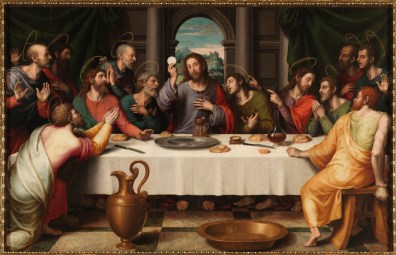
Last Supper

August 19th, 2018 20th Sunday of Ordinary Time

Gospel of John 6:51-58 NAB

Jesus said to the crowds: “I am the living bread that came down from heaven; whoever eats this bread will live forever; and the bread that I will give is my flesh for the life of the world.” The Jews quarreled among themselves, saying, “How can this man give us his flesh to eat?” Jesus said to them, “Amen, amen, I say to you, unless you eat the flesh of the Son of Man and drink his blood, you do not have life within you. Whoever eats my flesh and drinks my blood has eternal life, and I will raise him on the last day. For my flesh is true food, and my blood is true drink. Whoever eats my flesh and drinks my blood remains in me and I in him. Just as the living Father sent me and I have life because of the Father, so also the one who feeds on me will have life because of me. This is the bread that came down from heaven. Unlike your ancestors who ate and still died, whoever eats this bread will live forever.”

Meditation Reflection:

When I have old friends over for dinner, it is never merely a meal.  It’s always a highly anticipated event, an encounter with people I dearly love at a deep level.  It’s an exchange of conversation flavored by our shared history, values, and mutual respect.  When I have new friends over for dinner, it’s never merely a meal either.  It too is an encounter, a sharing of ourselves and opening up to discover common values as well as the excitement of hearing a person’s different perspective or experiences.

The great modern theologian, Fr. Romano Guardini (1885-1968), made the beautiful insight that the Mass too is both a meal and an encounter (from his book Meditations before Mass).  He reflected that Christ made this connection when He referred to Himself in the passage above as both “bread” (meal) and as “come down from heaven” (encounter).  In the Mass Christ invites us to a dinner He has prepared that we might both be nourished by the food and refreshed in spirit by the personal encounter with Him either as a new or old friend.

Deep friendship is one of the greatest pleasures one can experience in life. Even the philosopher Aristotle considered it one of the highest virtues.  To find someone who shares the same “vision of the Truth” as C.S. Lewis put it, is a real joy.  Scripture reminds us that “Faithful friends are beyond price” (Sirach 6:15) and we all know that for something to be expensive it must be rare.  To spend time with that friend in person is even more delightful.  To have that kind of friendship in marriage can result in an exchange of love and unity at the very depths of our humanness.

Christ desires this kind of friendship and union with each of us.  That is why the image of a wedding feast is used to represent the culmination of the Christian life.  Christ the bridegroom and the Church His bride are united body and soul in the Eucharist.  Celebrating the Lord’s Supper presents the opportunity to encounter Christ at every level, from the surprises of a new friendship to the deepest and most intimate of long relationships.  The more dinners, the more the friendship can develop.

Consider:

  • Who is your closest friend?  How did the friendship develop?
  • How would you describe your friendship with Christ?  How has it developed?
  • Consider the role of meals in developing friendships.  Whether it is as simple as coffee, drinks, lemonade, cookies, grilling, eating out, or cooking a full meal, or family dinners.  How does food somehow enrich the experience and open people up to each other?
  • Consider why Christ would desire to be present to you in Person, in the flesh, in the context of a meal.  Consider how personal it is and bonding.  Also consider the addition of other people – how does eating with others add to the experience?

Make a Resolution (Practical Application):

  • Next Mass, approach the Lord’s Supper the way you would a dinner with a close friend.  Prepare yourself for the encounter and treat it with the same attention and respect you would give your dinner guest or host.
  • On the way up the aisle to receive the Eucharist try to push away any distracting thoughts.  Reflect on the real presence of Christ in the Eucharist.  After receiving Christ, try to remain silent and focus on Him for a few minutes before talking, singing, or thinking of anything else.
  • Offer hospitality to someone.  Make them dinner and treat them as if they were Christ Himself visiting your home.

*revised edition; first posted 8/16/15

~ Written by Angela Jendro © 2018

* To receive these weekly posts automatically in your email just click the “follow” tab in the bottom right hand corner and enter your email address.


Hard but Satisfying Work…Gospel Meditation John 6:24-35

by Angela Jendro
Fra_Angelico_coronation of Mary

Fra Angelico – Coronation of Mary

August 5th, 2018; 18th Sunday in Ordinary Time

(updated and edited from post August 2nd, 2015)

Gospel of John 6: 24-35 NAB

When the crowd saw that neither Jesus nor his disciples were there, they themselves got into boats and came to Capernaum looking for Jesus. And when they found him across the sea they said to him, “Rabbi, when did you get here?” Jesus answered them and said, “Amen, amen, I say to you, you are looking for me not because you saw signs but because you ate the loaves and were filled. Do not work for food that perishes but for the food that endures for eternal life, which the Son of Man will give you. For on him the Father, God, has set his seal.” So they said to him, “What can we do to accomplish the works of God?” Jesus answered and said to them, “This is the work of God, that you believe in the one he sent.” So they said to him, “What sign can you do, that we may see and believe in you? What can you do? Our ancestors ate manna in the desert, as it is written: He gave them bread from heaven to eat.” So Jesus said to them, “Amen, amen, I say to you, it was not Moses who gave the bread from heaven; my Father gives you the true bread from heaven. For the bread of God is that which comes down from heaven and gives life to the world.” So they said to him, “Sir, give us this bread always.” Jesus said to them, “I am the bread of life; whoever comes to me will never hunger, and whoever believes in me will never thirst.”

Meditation Reflection:

Jesus instructs us to “work for the food that endures for eternal life.” The people responded wisely  by asking a follow up question, which in modern language could be phrased “tell us the job description.” The task seems simple enough – “believe in the one God sent.”

How is believing in Christ work though? If believing in Christ were merely an intellectual assent then it wouldn’t be much work at all. However, believing in Christ means believing He is the Savior sent to transform our hearts and lives. This requires not merely an assent of the intellect, but the arduous work of aligning our will with His, and allowing Him to change our lives. Consider the life changing “yes” of Mary, Joseph, the Apostles, all the saints, and the transformation in lives of people you know who have accepted Christ and follow Him intentionally.

In his famous book, What’s Wrong with the World, G.K. Chesterton astutely states the reason why so many people forsake believing in Christ and the reward that comes with it. He writes,

“The Christian ideal has not been tried and found wanting; it has been found difficult and left untried.”

Jesus does not say “I am the bread of life who will force feed you”. Rather, He states that those who come to Him will never hunger. Still, you may ask, how hard is it to come to Christ? Well, how hard is it to make it to Mass every Sunday? How difficult is it to attend one or more daily masses a week? How hard is it to find 30 minutes to pray with Scripture? How hard is it to listen, with your full attention, to your child, spouse, or friend in need? How difficult is it to turn to Christ in prayer when you are feeling anxious, frustrated, or angry rather than escaping through t.v., drinking, or shopping?

Coming to Christ and believing in Him is work, but like any job it gets easier as you get the hang of it. Imagine the career satisfaction you could experience in a job with that kind of reward. We all want happiness and we go to great lengths to achieve it. Christ promises that if we are wise enough to put all of our efforts toward relationship with Him, we will be guaranteed an abiding happiness we can find nowhere else.

Consider:

  • In your daily life, what is the biggest challenge to seeking Christ?
  • What do you hunger for most? How do you try to fill that hunger? How long does it last before feeling hungry again?
  • When was a time you experienced delight, satisfaction, peace, or happiness from God?

Make a Resolution (Practical Application):

  • Choose one way to come to Christ this week that has been difficult in the past. (wake up 30 minutes early to pray, spend 10 minutes with each of your kids, download a bible app to your phone, attend a daily Mass, make a holy hour at adoration)
  • Start a gratitude journal for God’s gifts to you each day. Before bed think back on your day and identify God’s grace at work in your heart and life.
  • The next time you feel anxious, frustrated, or angry, stop and sit in silence with God for 5 minutes. Find a quiet spot (even if it’s your car or bedroom), set a timer, and just turn your heart and ears toward God. Gently push away distractions and be in God’s presence. Let Christ fill your hunger and soothe your thirst.

~ Written by Angela Jendro © 2018


Blood Relatives

by Angela (Lambert) Jendro


June 3rd, 2018 4th Feast of the Most Holy Body and Blood of Christ

Gospel of Mark 14:12-16, 22-26 NAB

On the first day of the Feast of Unleavened Bread, when they sacrificed the Passover lamb, Jesus’ disciples said to him, “Where do you want us to go and prepare for you to eat the Passover?” He sent two of his disciples and said to them, “Go into the city and a man will meet you, carrying a jar of water. Follow him. Wherever he enters, say to the master of the house, ‘The Teacher says, “Where is my guest room where I may eat the Passover with my disciples?”‘ Then he will show you a large upper room furnished and ready. Make the preparations for us there.” The disciples then went off, entered the city, and found it just as he had told them; and they prepared the Passover. While they were eating, he took bread, said the blessing, broke it, gave it to them, and said, “Take it; this is my body.” Then he took a cup, gave thanks, and gave it to them, and they all drank from it. He said to them, “This is my blood of the covenant, which will be shed for many. Amen, I say to you, I shall not drink again the fruit of the vine until the day when I drink it new in the kingdom of God.” Then, after singing a hymn, they went out to the Mount of Olives.

Meditation Reflection:

At the Mount of Olives, on the night before His death, Jesus prayed in the Garden of Gethsemane.  His final prayer to the Father begged for us to be one in Jesus, as Jesus is one with the Father. Considering the sublime and mysterious unity of the Blessed Trinity, what a profound request!   Christ invites us into their eternal bond of love and union of mind and will, and He asks the Father to make it possible.

“I pray not only for them, but also for those who will believe in me through their word, so that they may all be one, as you, Father, are in me and I in you, that they also may be in us, that the world may believe that you sent me. And I have given them the glory you gave me, so that they may be one, as we are one, I in them and you in me, that they may be brought to perfection as one, that the world may know that you sent me, and that you loved them even as you loved me. John 17:20-23 NAB

 Jesus asserts that He gave us His glory that we might be one with Him, and therefore also one with the Father.  How did He do this?  What does He mean?

The Eucharist.  Jesus had just given His apostles His Eucharistic Body, Blood, Soul, and Divinity.  Every time we receive Christ in the Eucharist, we become one in Him, sharers in His glory.

When we eat regular bread and wine our bodies digest them into smaller component parts so that the nutrients within can be absorbed by the cells for energy, growth, repair, etc.  Thus, after an hour or so, the toast you ate for breakfast is no longer toast but simply part of you.

In the Eucharist, the opposite process takes place.  Rather than being incorporated into our body, we become incorporated into Christ’s Body.  We become constituent parts which build up, energize, and repair and the Mystical Body of Christ – the Church.  Thus, our nutritional value (love of God and neighbor) edifies the whole body, and our toxins (sin) harm it.

In addition, think about our inherent investment in “blood relatives.”  We take pride in their accomplishments and feel shame in their failures, even if our physical ancestral connection is our only tie. Christ has made the family of the Church blood relatives through His own Body and Blood.  We take pride in the virtue of the Saints and feel deeply hurt and saddened when a Christian falls into a terrible sin like we’ve seen with the recent clergy abuse scandal.

In addition, knowing the genetic history of our blood relatives can be enlightening since their strengths are our strengths and their weaknesses our weaknesses.   Jesus became our blood relative at the Incarnation and willingly accepted the weakness of our human nature.  In return however, He bestowed on us something of the strength and glory of His divine nature.  When we receive Him in the Eucharist, we are strengthened by His Real Presence, by deeper union with His Body, Blood, Soul, and Divinity, we become grafted onto Him and elevated by His relation to us.

“But how can this be?” you might ask.  It’s a mystery.  We know it’s true because Jesus said “This is My Body, this is My Blood…”  and He promised, and warned, in John 6:51-53:

I am the living bread that came down from heaven; whoever eats this bread will live forever; and the bread that I will give is my flesh for the life of the world.” The Jews quarreled among themselves, saying, “How can this man give us [his] flesh to eat?” Jesus said to them, “Amen, amen, I say to you, unless you eat the flesh of the Son of Man and drink his blood, you do not have life within you.

Although certainly a sublime mystery, on what grounds can a Christian believer doubt that God Who created everything out of nothing couldn’t change bread and wine into His Real Presence?  Recall in Genesis that God created by speaking: “Then God said: Let there be light, and there was light. Genesis 1:3.  God created with a Word, and that Word of God is the Son – Jesus Christ.  In addition, if God could daily provide miraculous bread to feed the Israelites during their journey through the desert to the Promised Land, why wouldn’t He provide bread from Heaven for our even more difficult journey through the desert of temptations and suffering in this life on our journey to Heaven?

Today, on the Feast of the Body and Blood of Christ, we meditate on the unimaginable gift of love bestowed on us in the Eucharist by which we become one with Jesus, and through Him one with God and neighbor.

Consider:

  • Consider the special union of love in families which is both a physical and spiritual union.  Reflect on the union of love between Christ and His disciples physically and spiritually in the Eucharist.
  • Consider how you feel when you eat healthy foods and get enough rest.  How might receiving the Eucharist more often boost your spiritual energy and health as well?
  • Reflect on the humility and intimacy of Christ’s love for you.  He became man – sharing in your human nature, lived an earthly life for 33 years – sharing your experiences, and continues to be physically present to you in the Eucharist today where you can be near to Him in prayer and one with Him when you receive Him at Mass.
  • Consider how spending time with family can keep you grounded and more who you really are.  Reflect on how time with Christ purifies your perspective and grounds you as well.

Make a Resolution (Practical Application):

  • Arrive at Mass 5 minutes early to prepare your heart and mind for receiving Christ in the Eucharist, and/or stay for 5 minutes after Mass to pray and thank Christ for receiving Him in the Eucharist.
  • Spend 30 minutes with Christ in prayer at Eucharistic Adoration.

Related Posts:

~ Written by Angela Jendro © 2018

* To receive these weekly posts automatically in your email just click the “follow” tab in the bottom right hand corner and enter your email address.


Being Lifted Up With Christ By Serving With Christ

by Angela (Lambert) Jendro


May 13th, 2018 Ascension of the Lord and 7th Sunday of Easter

Gospel of Mark 16:15-20 NAB

Jesus said to his disciples: “Go into the whole world and proclaim the gospel to every creature. Whoever believes and is baptized will be saved; whoever does not believe will be condemned. These signs will accompany those who believe: in my name they will drive out demons, they will speak new languages. They will pick up serpents with their hands, and if they drink any deadly thing, it will not harm them. They will lay hands on the sick, and they will recover.” So, then the Lord Jesus, after he spoke to them, was taken up into heaven and took his seat at the right hand of God. But they went forth and preached everywhere, while the Lord worked with them and confirmed the word through accompanying signs.

Meditation Reflection:

Today as a Church we remember Christ’s Ascension into Heaven when He returned to His rightful glory.  Jesus our king had left the comfort and majesty of His throne, to battle sin and death for His subjects, which could only be accomplished as one of us.  He entered the war zone at the Incarnation. The Son of God Who is infinite in His divinity accepted the burden of the limitations our human nature.  In addition, as if human kingship wouldn’t already be a far cry from His experience as Divine king, He chose instead the most difficult circumstances in human society – poverty and social rejection.

Our king is someone Who walks among His people, rolls up His sleeves and works side by side with us in our most difficult struggles.  He doesn’t stand aloof but rather He invites us into His own glory.  When He became our Brother by human nature, He raised us to His brothers and sisters in His divinity.  Though we do not become God, we do participate in His divinity and our nature is elevated above its usual limitations.  How?  After His Ascension Jesus sent His Spirit Who dwells in the souls of all the baptized and enables them to share in the work of Christ and become His Mystical Body.

In addition to opening the gates of Heaven for us, Jesus modelled the way.  His glory began with His self-emptying (the fancy theological word for it is kenosis) and so our final glory requires this same emptying of self, service of others, and humble obedience to the Father’s will. St. Paul describes it beautifully in his letter to the Philippians:

“If there is any encouragement in Christ, any solace in love, any participation in the Spirit, any compassion and mercy, complete my joy by being of the same mind, with the same love, united in heart, thinking one thing. Do nothing out of selfishness or out of vainglory; rather, humbly regard others as more important than yourselves, each looking out not for his own interests, but [also] everyone for those of others.

 Have among yourselves the same attitude that is also yours in Christ Jesus, Who, though he was in the form of God, did not regard equality with God something to be grasped. Rather, he emptied himself, taking the form of a slave, coming in human likeness; and found human in appearance, he humbled himself, becoming obedient to death, even death on a cross. Because of this, God greatly exalted him and bestowed on him the name that is above every name, that at the name of Jesus every knee should bend, of those in heaven and on earth and under the earth, and every tongue confess that Jesus Christ is Lord, to the glory of God the Father.”  Philippians 2:1-11 NAB

Jesus took on the hardest and lowest jobs.  He was born in a barn, lived as a refugee in Egypt for the first years of His life, grew up with manual labor as His “career”, and walked wherever He travelled.  During the three years of His public ministry He faced rejection by His own townspeople who tried to throw Him off a cliff, the Pharisees and Sadducees plotted against Him even though He is the Word of God they supposedly protected, His own friends betrayed Him, and He died with an unjust conviction under false claims in the most humiliating and torturous way the Romans had contrived – naked on a Cross.  The night before His death, He prepared His apostles to reign in His stead by washing their feet – the most disgusting task which would traditionally be assigned to whomever was lowest on the totem pole – of the servants the slaves and of the slaves the foreign slaves.

So, who wants to reign with Christ? Doesn’t this sound fun?! If Christ’s life ended on the Cross, then NO.  Absolutely Not!  But it didn’t.  Because He humbled Himself, the Father exalted Him above every name and at His Name, every knee should bend.  Jesus rose from the dead and 40 days later He ascended to unmatched glory in Heaven.  He assures us that if we follow Him, the way will be hard, but it will culminate in unending joy.

“The greatest among you must be your servant. Whoever exalts himself will be humbled; but whoever humbles himself will be exalted.” Matthew 23: 11-12 NAB

Christian disciples share in the mystery of Jesus’ Royal Poverty.  Rather than looking side to side to see what everyone else is doing, we look up and down – up to Christ in glory and to His will, and down to where we might humbly serve.  If we keep our glance up and down, down and up, we will discover harmony within the tension of humble service and risen glory – the royal poverty that can only be found by abiding in the One who accomplished it – Jesus Christ.

So, let us wait in eager anticipation for the coming of the Holy Spirit on Pentecost (next Sunday).  He empowers us to serve and to reign, to obey and to be glorified.  He empowers us to love.  Love puts the beloved before oneself, and experiences joy at every sacrifice.  The Holy Spirit is the love of the Father and Son, and He pours their love into our hearts with such generosity that as it overflows all selfishness and pride pours over the edges with it.  The deepest happiness is love – both given and received.  We have received the greatest of loves from Christ our Lord and Brother and His Spirit gifts us with the same love for Christ and our fellow brothers and sisters in Him.

Consider:

  • Meditate on the love of Christ who desired to become your Brother.  What does it mean to be a brother? What does it mean to be His brother or sister in return?
  • Today is Mother’s Day.  Consider the Christ-like love of motherhood: sacrifice of one’s bodily comfort, unconditional and personal love, the acceptance of humble tasks like changing diapers, the intercession for her children with relentless prayers. Consider your own mother’s love expressed in humble service toward you.  Offer a prayer of thanksgiving and blessing for her.
  • Ask Christ how you might empty yourself more.  To what are you still attached? What holds you back from following Him?  What task feels too low to take up, or what feels too good to give up?
  • Pray for greater faith and hope.  Humbling ourselves is a tremendous risk.  We live in a competitive culture of self-assertion.  If we don’t exalt ourselves, we will be overrun if God doesn’t exalt us.  Pray for the grace to step out in faith that we need only humble ourselves, and God will take care of the exalting.
  • How much do you look side to side – comparing yourself to others or the standards of the world?  How might you look up and down more in those situations?

Make a Resolution (Practical Application):

  • Each day this week acknowledge someone’s humble, loving service and thank them.
  • Each day look up in prayer, then down for an opportunity to serve, then offer that service back up to the Lord as a sacrifice of praise or intercession for someone.  Try to do it in the morning, midday, and evening.  Even every hour if you can.

Related Posts:


~ Written by Angela Jendro © 2018

* To receive these weekly posts automatically in your email just click the “follow” tab in the bottom right hand corner and enter your email address.


Remaining in the Joy of Love

by Angela (Lambert) Jendro


May 6th, 2018 6th Sunday of Easter

Gospel of John 15:9-17 NAB

Jesus said to his disciples: “As the Father loves me, so I also love you. Remain in my love. If you keep my commandments, you will remain in my love, just as I have kept my Father’s commandments and remain in his love. “I have told you this so that my joy may be in you and your joy might be complete. This is my commandment: love one another as I love you. No one has greater love than this, to lay down one’s life for one’s friends. You are my friends if you do what I command you. I no longer call you slaves, because a slave does not know what his master is doing. I have called you friends, because I have told you everything I have heard from my Father. It was not you who chose me, but I who chose you and appointed you to go and bear fruit that will remain, so that whatever you ask the Father in my name he may give you. This I command you: love one another.”

Meditation Reflection:

Here in this passage, Jesus tells you directly, “I love you.”

How much you might ask?  What kind of love?  The term is thrown about loosely these days and unfortunately often conditional.  The popular children’s books Guess How Much I Love You? (by Sam McBratney) and I Love You to the Moon and Back (by Amelia Hepworth) attempt to describe the greatest possible love a person could have for another, making them beloved stories for parents and children.   Jesus too attempts to describe the greatest possible love He could have for you – “As the Father loves me, so I also love you.”  As the Father loves Jesus!  To the moon and back is quiet a distance, but the Father loves infinitely, totally, purely, passionately, and eternally.  Jesus has this love for you!

And He invites you to remain in His love.  How wonderful it is to remain in the sun after a long winter, to linger on the beach past sunset during a vacation, or to relax at home with your significant other or your best friend after a busy week.  Relationship with Christ means soaking up the warmth and brightness of His light, lingering on the beauty of His Word in Scriptures, His presence in the Sacraments, and His presence in your heart.  It means enjoying being with Him in activity and in the quiet of home.

Making time to rest in these things can be hard however.  Our schedules fill quickly to overflowing and the pull of work and achievement rushes us away from the joy we desire.  These same distractions work our souls into a frenzy and tempt us to set Christ to the side until we “get everything done first.”

However, experience proves that making the time to step back from activity for rest and relaxation actually increases overall productivity.  Skimping on sleep and vacation days frazzles our nerves, dulls our judgment, and kills our creativity.  Refreshing ourselves on the other hand gives us the energy to approach our work with our best selves and often provides new inspiration.

Remaining in Jesus’ love requires stepping away for time alone with Him.  Just like we need sleep and food every day, we need prayer every day.  Resting in the Lord for 30 minutes will refresh your soul and provide the spiritual energy to approach everything in your schedule with Christ’s companionship and aid.

In addition, it will grow our love and each stage of love brings out our best selves at ever deeper levels.  First, love makes us joyful, energetic, and generous. Think of newlyweds or those newly in love. They’re easy to spot by their glow, their bubbling joy, and their extra energy.  They see all the best in each other and look forward to every little opportunity to demonstrate their love.  When we abide in Christ’s love, that same excitement bubbles up and we look for ways to demonstrate our love for Him in even the smallest of details.  Moreover, just as young love relates everything back to their beloved (sometimes obnoxiously so to those around them!), Christian love sees Christ in every person they encounter and every event of their day.  This love then imbues their activity, bearing even richer fruit and produces works of charity towards those around them.

As the love grows deeper and the relationship develops history together with time, the commitment and concern for one another becomes apparent in a couple’s intimate knowledge of each other and patient forgiveness.  As relationship with Christ develops it runs deeper as well.  We get to know Him more intimately and experience His patient forgiveness with a heart of respect and gratitude.  This can’t help but extend to our neighbor as an opportunity to show Christ the love and commitment He has shown us.

Finally, perfect love sacrifices joyfully and immediately for the beloved.  “No one has greater love than this, to lay down one’s life for one’s friends.”  I’ve experienced this as a mother as have most parents – I wouldn’t stop to think for even a split second if I had to lay down my life for my child.  Christ chose to become man and He chose to lay down His life on the Cross for us.  Although He suffered immensely every step of the way to Calvary and for the three hours nailed to the Cross, He didn’t consider even for a split second walking away at the expense of our salvation. How can we give Him anything less than our entire selves and our whole lives in return?

When we abide in His love, we abide in Him, His love for us, and His love for others.  In this relationship of reciprocal love, He assures us that “Whatever you ask the Father in My Name He will give you.”  If we love authentically, for what would we ask other than to increase our love for the Lord, to become better disciples, and for the things Jesus wants for us.  Moreover, we will see others with the heart of Jesus and desire the blessings He desires for them.

As the Father loves the Son, the Son loves us; and as the Son loves us, we are to love one another.  Jesus wants us to share in His ministry, to share in His love for us and others.  Therefore, when we abide in Him, whatever we ask in His Name, He will give because He wants us to bear fruit in His work.

So today, let us remain in Jesus’ love for us.  May He “lead us beside still waters and restore our souls” (Psalm 23:2-3).  Then, may that joyous love overflow into every detail of our day and every encounter with Christ in those we meet.

Consider:

  • Meditate on Jesus words “so I also love you.”  Jesus is Truth and His words are true.  He loves you as you truly are, to your very core.
  • Consider the joy inherent in love.  Even in the midst of trials or suffering, it remains and even increases when that suffering is for the person loved.
  • Pray for the gift of seeing Christ in others.  Ask for His love for them to be poured into your heart as well.

Make a Resolution (Practical Application):

  • Pray Psalm 23 each day.
  • Do intentional acts of love toward Jesus throughout the day by acts of love toward others.  For instance, Christ is forgiving toward us, but we never have the opportunity to be forgiving toward Him back.  Be forgiving toward someone else today as an act of loving forgiveness for Jesus.  Jesus is so generous with us, but what could we give Him that wasn’t already a gift from Him?  In consequence, be generous with someone today as an act of generosity toward Christ.

~ Written by Angela Jendro © 2018

* To receive these weekly posts automatically in your email just click the “follow” tab in the bottom right hand corner and enter your email address.


Love and Work – The Good Shepherd Who Loves His Job

by Angela (Lambert) Jendro

good-shepherd.jpg

 January 27th, 2018 4th Sunday in Ordinary Time

Gospel of John 20:19-31 NAB

Jesus said: “I am the good shepherd. A good shepherd lays down his life for the sheep. A hired man, who is not a shepherd and whose sheep are not his own, sees a wolf coming and leaves the sheep and runs away, and the wolf catches and scatters them. This is because he works for pay and has no concern for the sheep. I am the good shepherd, and I know mine and mine know me, just as the Father knows me and I know the Father; and I will lay down my life for the sheep. I have other sheep that do not belong to this fold. These also I must lead, and they will hear my voice, and there will be one flock, one shepherd. This is why the Father loves me, because I lay down my life in order to take it up again. No one takes it from me, but I lay it down on my own. I have power to lay it down, and power to take it up again. This command I have received from my Father.”

Meditation Reflection:

Consider the common exchange at first introduction.  After sharing our name, the usual question to follow is “what do you do?”  Why?  Since our work occupies most of our day it reveals something of our values, our unique personality and talents, and it shapes us over time.

I’m a wife, mom, and teacher.  In consequence, I value family and the development of persons.   I also have a knack for explaining things and a zany side that works well with kids.  My roles have shaped me too.  After teaching for so many years, I catch myself conversing in a Socratic way in every day conversation.  Before sharing something, I ask if the person happens to know the answer.  As they talk, I ask more questions.  By the end, I might recommend a book or article to read.  At the grocery checkout or fast food restaurant, I can’t help but see teen employees as students (of course, sometimes they are!).  I catch myself gently guiding them as they navigate taking my order.  Even when I try to just relax, the teacher comes out in me.  At the beach with my children, some teens started arguing and inappropriate words rose above the hum of swimmers.  Without even thinking I marched over to these young men much taller than me and, in my loud authoritative teacher voice, told them their behavior was inappropriate and needed to be taken elsewhere.  The other teens who had circled around to see the altercation looked at me with wide eyes expressing the warning “you are crazy lady!”.  The mom in me is here to stay too.  I was at a Master’s class and one of my classmates had a runny nose and cough, and no Kleenex.  As I took notes and listened to the lecture I grabbed Kleenex out of my purse and passed it down.  She laughed and afterward said, “I should have known you’d have Kleenex with you.  You’re such a mom.”

In today’s Gospel, Jesus identified Himself as the Good Shepherd.  It reveals that He values the care of His flock with nurturing and protective love.  He lives with them, guides them, feeds them, and protects them at all costs.  Moreover, His Sheep belong to Him.  The hired hand works transitionally – for the day and for income.  He may be providing for a family or saving for a pasture of sheep of his own, but the flock he watches temporarily is not his love.  In consequence he won’t risk anything for it.

Like a shepherd compared to sheep, Jesus’ dignity and nature is far above ours.  Yet He loves us intimately and personally.  He lives with us and cares for even the smallest details of our lives.

Pope Francis emphasizes this as well in his Apostolic Exhortation Gaudete et Exsultate:

the Lord is ever mindful of you; he never forgets you. So it makes sense to ask him to shed light on the smallest details of your life, for he sees them all.” par. 153

Jesus’ love is also total which is why He lays down His very life for us.

I lay down my life and take it up again.  No one takes it from Me.  I lay it down on my own.”

Before His Ascension into Heaven, Jesus entrusted His flock to Peter.

“Jesus said to Simon Peter, ‘Simon, son of John, do you love Me more than these?’ He said to Him, “Yes, Lord; You know that I love You.’  He said to him, ‘Feed My lambs.’  A second time He said to him, ‘Simon, son of John, do  you love Me?’ He said to Him, “Yes, Lord; You know that I love You.’  He said to him, ‘Tend My sheep.’”  John 21:15-16

Each Christian at baptism receives a mission from God, a flock to tend – the persons Christ has placed in your life and your care.  It includes your family, co-workers, and the particular ministry to which God has called you.  The flock remains the Lord’s so we must first unite our heart to His in prayer.  In doing so, He pours out His love into us, from which we receive the generosity and joy to serve.  He opens our eyes to see others with the love in which He sees them, and to see their needs as He does, down to the smallest detail.

Pope Francis writes:

The important thing is that each believer discern his or her own path, that they bring out the very best of themselves, the most personal gifts that God has placed in their hearts…We are called to be witnesses, but there are many actual ways of bearing witness.” (Gaudete et Exsultate par. 11)

Each saint is a mission, planned by the Father to reflect and embody, at a specific moment in history, a certain aspect of the Gospel.” (par. 19)

Holiness is about loving our Good shepherd and in turn loving the sheep whose care He shares with us.  Wherever God has placed us, we can witness Him to others through our sacrificial love.  After learning to trust Jesus’ little shepherd, they may take a leap of faith and trust the Good Shepherd Himself.

Consider:

  • Reflect on Christ’s love for you, down to the smallest detail of your life.  Take a moment to lay your worries and your hopes before Him and to rest in His care.
  • Pray for your little flocks.  Who has Christ placed in your life?  How might you serve them in love and joy?
  • Meditate on the love of Mary, who cares for everyone who belongs to her Son and consecrated her whole life to His mission.

Make a Resolution (Practical Application):

  • Pray Psalm 23 each day this week.
  • Pray the Chaplet of Divine Mercy for an increase of Trust in Christ’s Merciful Love.
  • Read the Biography of Blessed Stanly Rother – an American priest who returned to his mission in Guatamela to die with his people so they wouldn’t die without him. https://relevantradio.com/2018/04/homegrown-holiness-american-priest-on-the-path-to-sainthood/

How do you love your flock?  Share in the comments!

Related Posts:

~ Written by Angela Jendro © 2018

* To receive these weekly posts automatically in your email just click the “follow” tab in the bottom right hand corner and enter your email address.


“You Are Witnesses of These Things”

by Angela (Lambert) Jendro


April 15th, 2018 3rd Sunday of Easter

Gospel of Luke 24:35-48

The two disciples recounted what had taken place on the way, and how Jesus was made known to them in the breaking of bread. While they were still speaking about this, he stood in their midst and said to them, “Peace be with you.” But they were startled and terrified and thought that they were seeing a ghost. Then he said to them, “Why are you troubled? And why do questions arise in your hearts? Look at my hands and my feet, that it is I myself. Touch me and see, because a ghost does not have flesh and bones as you can see I have.” And as he said this, he showed them his hands and his feet. While they were still incredulous for joy and were amazed, he asked them, “Have you anything here to eat?” They gave him a piece of baked fish; he took it and ate it in front of them.  He said to them, “These are my words that I spoke to you while I was still with you, that everything written about me in the law of Moses and in the prophets and psalms must be fulfilled.” Then he opened their minds to understand the Scriptures. And he said to them, “Thus it is written that the Christ would suffer and rise from the dead on the third day and that repentance, for the forgiveness of sins, would be preached in his name to all the nations, beginning from Jerusalem. You are witnesses of these things.”

Meditation Reflection:

Christ’s parting words summon every disciple to be a witness of their encounter with Him and of God’s merciful love.

In our frenzied culture many people vacillate from anxious stress to temporary escape through superficial pleasures.  In contrast, disciples of Christ rest in His Peace and rejoice in all circumstances (I Thessalonians 5:18).

When others wonder if anything can be true or lasting, Christians make decisions with confidence knowing that Jesus is the Way, the Truth, and the Life and that He has a plan for their lives.  Although choices may not be easy, Christ’s disciples can look to His teachings, His Church, and to the Holy Spirit to guide them and “open their minds to understand the Scriptures.”

Worried about the future or how to find meaning in life, many turn to psychics, gurus, ideologies, pop culture, or other general spiritualties.  In contrast, Christians encounter Jesus – who is alive and real, and therefore has the power to truly act in their lives on their behalf. They know that everything will be okay, because Jesus has conquered death and made them adopted children of the Father.  They experience the deepest kind of meaning in their lives because they believe that every act of love and kindness will reverberate into eternity.  Wealth, status, beauty, health, fame, and honor can all be taken away in a moment against one’s will.  Faith, hope, love, goodness, joy, and peace cannot – as so many martyrs have witnessed in the past and continue to today.

Our witness requires speaking about our faith.  We need to “always be prepared to make a defense to anyone who calls you to account for the hope that is in you” as St. Peter instructed (I Peter 3:15).  This means immersing ourselves in Scriptures and prayer and making an effort to keep learning more about our faith.  In this way, we can then pass on our faith to our children and stand up for the truth in society.

Our encounter with Christ is also witnessed in our silence.  I once had the opportunity to attend a private Mass at the Vatican with Pope St. John Paul II in 2001 along with about 20 other people.  When we entered the chapel, Pope John Paul was kneeling in prayer.  His silent conversation with the Lord was so real it was palpable.  When Moses returned from Mount Sinai the people knew he had encountered God because “his face had become radiant while he spoke with the Lord” (Exodus 34:29).  People often say of new mothers or new couples, that they are “glowing”.  Love has a way of doing that. When we encounter Christ in prayer daily, when we walk with him throughout the day, we too glow with His love.  Imaginary myths or wishful thinking cannot produce this kind of radiance.

Finally, Christ becomes visible to others through His work from within us.  If I came home and the house were a mess, I wouldn’t believe my husband if he said that he had hired a maid.  If, however, I returned home, and all the dishes were clean, the floors vacuumed, laundry washed, and surfaces dusted, I would believe his word without having met the person because their work would be evidence of their existence.  In the same way, if we tell others of Christ’s redeeming grace but remain the same mess of sin and confusion, it may be hard for them to believe.  However, when we tell them of how Christ transformed us, and they see our anger replaced with love, envy replaced with gratitude and contentment, and selfishness replaced with loving relationship, His grace will be evident to them in a real way.

In the Beatitudes, Jesus said, “Blessed are the pure of heart, for they shall see God” (Matthew 5:8).  God is here.  He is real.  We struggle to see because we are blinded by things – pleasure, over-ambition, anxiety, fear, anger, greed, and other distractions.  The more we cooperate with Christ to remove these obstacles the more easily we will see God, and the more easily others will see Him in us.

Consider:

  • Who do you know that seems to “glow” with love for Christ?  Who seems to radiate His Peace?
  • When have you experienced the peace of Christ?
  • When have you found Jesus’ words to be true?
  • How might you become more pure of heart?  What obstacles blur your vision?  How might you grow your love for the Lord?

Make a Resolution (Practical Application):

  • Try to keep Christ present in your heart throughout the day.  Spend 10 minutes in prayer every morning, pause for a prayer midday, and close with 5 minutes of prayer in the evening.
  • Learn more about the faith by joining a bible study, attending Faith Formation at your parish, or reading a book about the faith with a group of Christian friends.

Related Posts:

~ Written by Angela Jendro © 2018

* To receive these weekly posts automatically in your email just click the “follow” tab in the bottom right hand corner and enter your email address.


The Trap of Stubborn Self-Reliance

by Angela (Lambert) Jendro

April 8th, 2018 2nd Sunday of Easter, Divine Mercy Sunday

Gospel of John 20:19-31 NAB

On the evening of that first day of the week, when the doors were locked, where the disciples were, for fear of the Jews, Jesus came and stood in their midst and said to them, “Peace be with you.” When he had said this, he showed them his hands and his side. The disciples rejoiced when they saw the Lord. Jesus said to them again, “Peace be with you. As the Father has sent me, so I send you.” And when he had said this, he breathed on them and said to them, “Receive the Holy Spirit. Whose sins you forgive are forgiven them, and whose sins you retain are retained.”

Thomas, called Didymus, one of the Twelve, was not with them when Jesus came. So the other disciples said to him, “We have seen the Lord.” But he said to them, “Unless I see the mark of the nails in his hands and put my finger into the nail marks and put my hand into his side, I will not believe.”

Now a week later his disciples were again inside and Thomas was with them. Jesus came, although the doors were locked, and stood in their midst and said, “Peace be with you.” Then he said to Thomas, “Put your finger here and see my hands, and bring your hand and put it into my side, and do not be unbelieving, but believe.” Thomas answered and said to him, “My Lord and my God!” Jesus said to him, “Have you come to believe because you have seen me? Blessed are those who have not seen and have believed.”

Now Jesus did many other signs in the presence of his disciples that are not written in this book. But these are written that you may come to believe that Jesus is the Christ, the Son of God, and that through this belief you may have life in his name.

Meditation Reflection:

The Christian faith is neither a well-crafted myth nor a brilliant philosophy.  Rather, the Christian religion is based on eye witness testimony of the resurrected Lord.

It began with the testimony of Mary Magdalene, who encountered the risen Christ in the morning when she went to His tomb and was subsequently sent by Him to tell the apostles.  They felt excited and a bit confused “for they did not yet understand the scripture that he had to rise from the dead” (John 20:9).   In the evening, Jesus appeared to them as well except for Thomas who wasn’t there.  Upon seeing Him with their own eyes they believed and rejoiced.

When they shared their Good News with Thomas he refused belief until he could see it for himself.  Thomas had been willing to die with Christ (John 11:7-8, 16) but he couldn’t envision rising with Him. In consequence, his faith – though fiercely loyal – remained limited to his own personal experience.

One week later however, Jesus had mercy on Thomas’ obstinate self-reliance and appeared to him in the flesh and so enabled Thomas to believe.

We too can fall into the trap of self-reliance in matters of faith – limiting our belief to personal experience and rejecting the witness of Jesus’ apostles and His Church.  Our present culture tends toward “cafeteria Christianity”, meaning we pick and choose what we like and leave what we don’t.  We view doctrine as a buffet of ideas that we can take or leave according to our personal preferences and reasoning.

Imagine Thomas saying to the other 10, “you have your truth and I have my truth, one is not better than the other.”  Yet, one is that Jesus is risen and the other is that Jesus is dead!  How could Jesus’ Church endure with such conflicting beliefs?  The same remains true today.  Capitulating to the attitude of an individualistic faith undermines Christ’s work.

Jesus chose to share His Truth and Grace through the apostles’ witness (and their successors – the pope and bishops).  Their interpretation of Scripture and the power of their miracles came from the Holy Spirit bestowed on them by the Lord.

At the final moment of Jesus’ death, He breathed His last and surrendered His Spirit to the Father.  On the evening of His resurrection, He breathed upon the Apostles, and gave them His Spirit and His authority:

“‘As the Father has sent me, so I send you.’ And when he had said this, he breathed on them and said to them, ‘Receive the Holy Spirit. Whose sins you forgive are forgiven them, and whose sins you retain are retained.’”

Christianity is an encounter with the incarnate God who dwells within the very souls of His baptized disciples and makes them one Body.  Jesus is not a restaurateur who offers the world’s greatest buffet.  He is the Son of God who desires all persons to be united as a family in the Lord and therefore established a visible Church endowed with His invisible presence to guide and govern its members to His eternal kingdom.

Today, one week after Easter, we celebrate the inexhaustible, generous, mercy of Christ which He lavishes on all who will accept it. As He did for Thomas on this same day, Christ reaches down into the darkest parts of our souls, to our most acute failures and sins, to apply the healing balm of His Merciful Love poured out on the Cross for our salvation. Our Lord is a crucified Lord.  When He appeared to the apostles “He showed them His hands and His side” (John 20:20).  He did not choose, as Satan tempted Him to be in the desert, king without the Cross.  Similarly, true disciples are crucified disciples.  They have died to self, and self-reliance, and live by the Holy Spirit in communion with the Church.

There’s no sin too great for Jesus to forgive. He only requires a repentant heart which chooses to trust in His love.

There’s also no weakness of faith He can’t strengthen, no doubt He can’t dispel, and no question of doctrine He can’t explain to you – if you let Him.  And remember, He has given us the fellowship of the Apostles through both the Scriptures and the living voice of authority in His Church.

Jesus said, “Blessed are those who have not seen and have believed.”  Today’s Gospel passage concludes with John offering the same witness to us that was offered to Thomas. Today is the day to surrender to Christ in prayer every doubt you harbor and every limitation you place on faith.  Then, receive His mercy in daily prayer, immersion in the Scriptures, the Eucharist at Mass, and trying to learn the Church’s reasons for her doctrines.  In consequence, you too will become an eye-witness of the resurrected Christ to others.

Consider:

  • When buying a product online or hiring someone for a house project, how much credence to you give to people’s reviews?  How much credence to you give to the testimony about Jesus from the Apostles, the saints and martyrs, the Christians you know who testify to the Lords’ work in their lives?
  • It’s hard to trust someone you can’t see.  Do you make Christ visible to others in your life?  How might you witness the reality of His truth and mercy even more?
  • Reflect on the choice presented today: whether to sand stubbornly in self-reliance or enter the communion of the Body of Christ – His Church – and lean on one another.
  • Jesus told St. Faustina that His greatest pain is distrust on the part of souls in His mercy.  Pope Francis, observed that we fail to believe in Christ’s mercy because we have no experience of mercy in our lives and therefore believe no one – not even Christ – will help us. To what extent has this been your experience?  What makes it difficult to trust Christ?  How might you extend mercy to the people in your daily life so that they might be strengthened to trust in Christ’s mercy?

Make a Resolution (Practical Application):

  • Begin each day this week with a prayer of surrender to Christ.
  • Every time you feel helpless, turn to Christ in prayer and throw yourself at His mercy. Repeat the prayer He gave to St. Faustina to have written under His image: “Jesus, I Trust In You.
  • Do at least one corporal or spiritual Work of Mercy every day.

Related Posts:

~ Written by Angela Jendro © 2018

* To receive these weekly posts automatically in your email just click the “follow” tab in the bottom right hand corner and enter your email address.