Soaking up the Sun of God

by Angela (Lambert) Jendro

 Epiphany 2.png


January 7, 2018 The Epiphany of the Lord

Gospel of Matthew 2:1-12 NAB

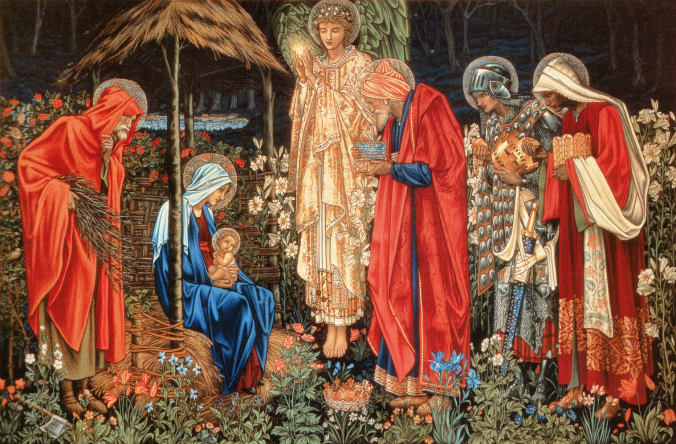
When Jesus was born in Bethlehem of Judea, in the days of King Herod, behold, magi from the east arrived in Jerusalem, saying, “Where is the newborn king of the Jews? We saw his star at its rising and have come to do him homage.” When King Herod heard this, he was greatly troubled, and all Jerusalem with him. Assembling all the chief priests and the scribes of the people, He inquired of them where the Christ was to be born. They said to him, “In Bethlehem of Judea, for thus it has been written through the prophet: And you, Bethlehem, land of Judah, are by no means least among the rulers of Judah; since from you shall come a ruler, who is to shepherd my people Israel.” Then Herod called the magi secretly and ascertained from them the time of the star’s appearance. He sent them to Bethlehem and said, “Go and search diligently for the child. When you have found him, bring me word, that I too may go and do him homage.” After their audience with the king they set out. And behold, the star that they had seen at its rising preceded them, until it came and stopped over the place where the child was. They were overjoyed at seeing the star, and on entering the house they saw the child with Mary his mother. They prostrated themselves and did him homage. Then they opened their treasures and offered him gifts of gold, frankincense, and myrrh. And having been warned in a dream not to return to Herod, they departed for their country by another way.

Meditation Reflection:

After the bustle and excitement of Christmas celebrations, the days following often produce mixed feelings.  On the one hand a sigh of welcomed relaxation and the comfort of settling back into normalcy.  On the other hand, a sigh of sadness as we ache from missing our loved ones, along with a moan of pain as the brutal cold and darkness depress our commute.

Although the Christmas decorations may be coming down and routine returning , the true “Spirit of Christmas” (as every Hallmark movie loves to reference), ought to remain present and illuminate our homes.  The Feast of the Epiphany witnesses that the birth of Christ has ushered in a light that radiates with the strength of mid-summer rays and remains enduringly without diminishment.

The wise men travelled an arduous distance to find this light in the darkness.  As we begin surfing the internet for discount airline tickets and the brief relief of a warm, sunny vacation, we can take a lesson from the magi and intentionally seek out the true and lasting “Sun” of God.  Rather than merely making plans for the Caribbean, make plans to seek the Lord as well, where you can soak in the warmth of His rays of grace and love.  Surf for Christ-destinations such as Eucharistic Adoration, Mass, Confession, Scripture, spiritual reading, or silent prayer. Vacations refresh us with the energy we need to keep going in our daily routine.  Breaking away to soak up quality time with Christ will do the same.  It will refresh our weary spirits, lighten our dark moods, and deepen our lives with purpose and personal connection.

So, wrap up and stack your red and green decor in totes, and without a doubt discard the once fragrant Christmas tree that has now dried up into a mess of needles and a worrisome fire hazard.  Keep the light of Christ however.  After having drawn near to Him at His birth, remain with Him.  Keep close to Him.  Lay your whole self before Him in homage as the magi did, and offer Him every gift and talent you possess.  “Then you shall be radiant at what you see, your heart shall throb and overflow” (Isaiah 60:5).

Christmas celebrates the appearance of our long awaited Savior which lasts eternally not just one day. His coming should be transformative and therefore change the way we think and act, and re-prioritize our hopes and desires.  The New Year doesn’t mark the end of the holidays.  Rather, it marks the beginning of our new, and renewed, life in Christ.  The Magi left Bethlehem filled with joy and hope.  Mary left Bethlehem with Jesus in her arms close to her heart.  May we leave this Christmas season in the same way.

Consider:

  • Spend a few minutes in prayer drawing near to Christ like Mary, Joseph, and the Magi.  Surrender to Him in humility, love, and homage as they did.
  • How might you keep close to Christ daily and weekly?  Where might you encounter Him?
  • What gifts might you offer to Jesus?
    • Gold (wealth) – how well are you doing at tithing? Do you give the Lord your first 10% in thanksgiving and faith? Is there some way He is asking you to be more generous with your money or with your time and service?
    • Frankincense (used in worship of God) – How can you offer Christ your worship?  What might you offer to Him as a sacrifice?  How can you apply your talents and abilities to advancing the Kingdom of God?
      • [For example: offer patience with a family member as a sacrifice, offer your daily work as a sacrifice – especially the most tedious aspects, or offer living your faith authentically in the workplace rather than joining in un-Christian jokes, conversations, or activities.]
    • Myrrh (used as ointment for burial) – How can you honor Christ’s death for you?  Do you live as one saved or persist in certain sins?  Consider how to live more intentionally as one freed by Christ.  Meditate on the sufferings of Christ and unite your own suffering to His.

Make a Resolution (Practical Application):

  • Choose one “gift” to present to Jesus for this year.
  • Seek Christ this week in an intentional way.  Set aside 10-15 minutes for prayer or spiritual reading, or seek Him in the sacraments.

Related Posts:

Setting goals for the New Year – Lessons from the Magi

The Universal Search For God

~ Written by Angela Jendro © 2018

* To receive these weekly posts automatically in your email just click the “follow” tab in the bottom right hand corner and enter your email address.


Where Truth & Love Reign

by Angela (Lambert) Jendro

 love one another

November 26th, 2017 Solemnity of Christ the King

Gospel of Matthew 25:31-46 NAB

Jesus said to his disciples: “When the Son of Man comes in his glory, and all the angels with him, he will sit upon his glorious throne, and all the nations will be assembled before him. And he will separate them one from another, as a shepherd separates the sheep from the goats. He will place the sheep on his right and the goats on his left. Then the king will say to those on his right, ‘Come, you who are blessed by my Father. Inherit the kingdom prepared for you from the foundation of the world. For I was hungry and you gave me food, I was thirsty and you gave me drink, a stranger and you welcomed me, naked and you clothed me, ill and you cared for me, in prison and you visited me.’ Then the righteous will answer him and say, ‘Lord, when did we see you hungry and feed you, or thirsty and give you drink? When did we see you a stranger and welcome you, or naked and clothe you? When did we see you ill or in prison, and visit you?’ And the king will say to them in reply, ‘Amen, I say to you, whatever you did for one of the least brothers of mine, you did for me.’ Then he will say to those on his left, ‘Depart from me, you accursed, into the eternal fire prepared for the devil and his angels. For I was hungry and you gave me no food, I was thirsty and you gave me no drink, a stranger and you gave me no welcome, naked and you gave me no clothing, ill and in prison, and you did not care for me.’ Then they will answer and say, ‘Lord, when did we see you hungry or thirsty or a stranger or naked or ill or in prison, and not minister to your needs?’ He will answer them, ‘Amen, I say to you, what you did not do for one of these least ones, you did not do for me.’ And these will go off to eternal punishment, but the righteous to eternal life.”

Meditation Reflection:

At first glance, this passage can seem a little harsh.  We like to imagine a more sentimental Jesus, gently escorting every person to eternal pleasure, not a rigid judge calculating our deeds and sending some to eternal suffering.

Jesus is king and judge, but as He often reminded His followers – His kingdom is not of this world. When pressed by Pilate to explain further, Jesus answered “I came into the world for this, to bear witness to the truth; and all who are on the side of truth listen to my voice” (John 18:37).

We, like Pilate, may ask “Truth? What is that?” (John 18:38).

Truth is Reality.  As Pope Benedict XVI often said in his writings, it means acknowledging that God is the Creator and we are creatures.  The laws of nature that govern the health of our soul are as real and concrete as the laws that govern the health our body.

The truth is also that God is love and we are made in His image.  Though weakened by sin, we have been re-made by Christ and transformed by His grace to image God’s love again.  Thus, St. John can say,

My dear friends, let us love one another, since love is from God and everyone who loves is a child of God and knows God.  Whoever fails to love does not know God, because God is love…as long as we love one another God remains in us and His love comes to its perfection in us.” 1John 4:7-8,12

So if the Truth is that God is love and we are love, what does that mean on an everyday level?  How does that look?  How does it translate to our schedules?

Pope St. John Paul II defined love clearly and simply: it is self-gift.  Thus the paradox of human happiness he concluded, is that we find fulfillment for ourselves in giving of ourselves.

This means fighting the pull of self-centeredness and mere consumerism.  We have to turn our attention from acquiring things, to giving of ourselves.  Should we try to over-complicate the matter or pay mere lip service, Jesus states clearly the fruits of authentic love: feeding the hungry, clothing the naked, visiting the sick or imprisoned…

Jesus is Truth and Love.  No one can pretend to be something they are not when standing before Him.  Those who love will rejoice to be fully united with the King of Love.  Confident in His mercy, they will say yes to His transforming grace which will free them from any remaining pulls of worldliness or selfishness so they can be free to fully enter the Communion of Saints and Angels in union with God.  Those who prefer the Kingdom of Self will refuse to enter the Kingdom of Self-Gift, preferring to be alone.

We see this in an analogous way during the holidays.  Time with family requires a sacrifice of time, generosity of food and travel, hospitality, patience, and attentiveness toward others.  The more we love our family, the easier those things become, so much so we may even look forward to those opportunities as a gift of service that brings us joy.  The less we love, the more burdensome they seem, so much so a person may choose to remain alone on the holiday rather than deal with it all.

It’s not so much that Jesus will come to decide who “gets” to go to Heaven and who doesn’t, since He came to offer Redemption to all.  It’s more the case that He will come as Judge of the Truth about our decision to accept or reject His saving grace in our hearts.  The world might say, “show me the money,” but Jesus will say, “Show me your love.”

Life is short, eternity is long.  We must begin EVERY day with prayer – even just 5-10 minutes and go to Mass EVERY Sunday, to unite ourselves to the source of Love and Grace.  From this union with Christ, fruits of His Spirit of love will permeate the actions and decisions of our day (see Galatians 5:22-23). If we first love God above all things, we will then love our neighbor as ourselves because we will see God’s image in them and desire as Christ does to mend its wounds of sin that their God-given dignity and glory might shine more gloriously.

Sound too simplistic?  Give it a try.  Compare a day began with 10 minutes of prayer and a day without.  I can attest that I am a far more loving person with prayer and a far more frazzled impatient person without it.  See how your week goes after attending Sunday Mass.  Try going to one daily Mass in addition and notice the fruits that follow in your interactions with others that day.

Consider:

  • Consider how love makes work or service less burdensome.
  • Consider how selfishness undermines relationship and causes discord in your family, friendships, and work.
  • Consider how Christ’s love and grace has transformed you.  How has He changed you for the better over the years?  How has His Spirit changed the way you think and act? What are areas of your life that still need transformation?
  • When have you experienced self-fulfillment/happiness through self-gift?  How might you continue to give of yourself to those in your daily life?
  • Take a moment for gratitude, to thank Christ for the sins that He has conquered so far in you.  Then take a moment for petition, asking Christ to conquer those sins that still remain.  Finally, take a moment for intercession, praying for those in need of healing that Christ might conquer the sins burdening them.
  • Close your eyes and imagine the joy of Heaven.  Imagine Christ coming in all His glory, shining brighter than the sun, smiling, and holding out His hand for you to join Him.

Make a Resolution (Practical Application):

  • Begin every day this week with 5-10 minutes of prayer.  Read the Scriptures, thank God, surrender your day to Christ, spend a couple of minutes in silence.
  • Intentionally practice one corporal and one spiritual Works of Mercy a day.
  • Read about the life of a saint who is similar to you in some way to learn from his or her example.  You can research “patron saint of__________” to find someone with an affinity to your work or your struggle.  You could also try researching someone with your same vocation such as married, single, or religious. You can find saints who were young or old, men or women, from small towns or big cities, were well educated and travelled or simple and hidden.  You may also like to research a saint who shares your name.

~ Written by Angela Jendro © 2017

* To receive these weekly posts automatically in your email just click the “follow” tab in the bottom right hand corner and enter your email address.


The Vocation To Love

by Angela (Lambert) Jendro


November 19th, 2017 33rd Sunday in Ordinary Time

Gospel of Matthew 25:14-30 NAB

Jesus told his disciples this parable: “A man going on a journey called in his servants and entrusted his possessions to them. To one he gave five talents; to another, two; to a third, one–to each according to his ability. Then he went away. Immediately the one who received five talents went and traded with them, and made another five. Likewise, the one who received two made another two. But the man who received one went off and dug a hole in the ground and buried his master’s money.

After a long time the master of those servants came back and settled accounts with them. The one who had received five talents came forward bringing the additional five. He said, ‘Master, you gave me five talents. See, I have made five more.’ His master said to him, ‘Well done, my good and faithful servant. Since you were faithful in small matters, I will give you great responsibilities. Come, share your master’s joy.’ Then the one who had received two talents also came forward and said, ‘Master, you gave me two talents. See, I have made two more.’ His master said to him, ‘Well done, my good and faithful servant. Since you were faithful in small matters, I will give you great responsibilities. Come, share your master’s joy.’ Then the one who had received the one talent came forward and said, ‘Master, I knew you were a demanding person, harvesting where you did not plant and gathering where you did not scatter; so out of fear I went off and buried your talent in the ground. Here it is back.’ His master said to him in reply, ‘You wicked, lazy servant! So you knew that I harvest where I did not plant and gather where I did not scatter? Should you not then have put my money in the bank so that I could have got it back with interest on my return? Now then! Take the talent from him and give it to the one with ten. For to everyone who has, more will be given and he will grow rich; but from the one who has not, even what he has will be taken away. And throw this useless servant into the darkness outside, where there will be wailing and grinding of teeth.'”

Meditation Reflection:

Fair doesn’t always mean equal. Most often it requires a sliding scale.  Chores and responsibilities in the home depend on age and ability.  In the same way, privileges correspond to the level of responsibility and trustworthiness.  The workplace organizes in roles determined by qualification and experience, thus each is expected to contribute in the manner expected of their specific job.

Jesus reveals that in the kingdom of God there’s a sliding scale as well.  Each person has a job which is suited to his or her abilities and expectations for outcome that correspond to them.  Thanks be to God!

It seems reasonable so what’s the problem?  Sin.  I’d like to consider specifically Envy and Sloth.  Envy stirs discontent within us.  It looks around at others and desires their gifts and goods, and rejoices at their misfortunes.  It makes us want others’ privileges without necessarily their responsibilities.  It convinces us the grass is greener on the other side and blinds us to the Cross present in every state and place in life.

Envy can even distort spiritual aspirations.  The Lord has a plan for each one of us (Jeremiah 29:11). He has poured out His redemptive love for all mankind and invites everyone to Heaven.  He calls us each to love where He has placed us, not where He has placed someone else.

Sometimes love includes warm feelings and gratitude, other times it tries our patience and drains us.  At all times however, love is faithful.  I love my kids when receiving their hugs and when disciplining them during a tantrum, when being met with appreciation or the attitude that I can’t do anything right.   I love my students when engaging in an inspiring conversation with them, and when having to track down their missing homework or correct a bad behavior.

During the difficult tasks of love however, it’s tempting to think that we are in the wrong place.  We look around us and consider if we would be happier doing something else for the Lord.  And yet, precisely in faithfully loving during good times and bad, we most resemble our Lord and act as His disciples.

The second obstacle to faithful love is sloth.  Sloth is physical and/or spiritual laziness.  It especially undermines our strength of perseverance in the unappealing aspects of relational love such as the daily routine of chores, conflict resolution, work deadlines, bearing wrongs patiently, praying when we don’t feel like it, or going to Mass even though we’d rather sleep in.  It’s then that we want to just bury the talent God gave us and click the next episode of Netflix.

But God has made us with a purpose and has entrusted us with a noble task.  He calls us to greatness through great love.  Jesus called St. Mother Teresa to greatness through “small acts done with great love.” Before her, St. Therese of Lisieux the Little Flower, from whom Mother Teresa chose her name, learned the “Little Way” from Jesus and Mary.  Though a cloistered Carmelite nun who died at a young age, Jesus inspired millions through the love He poured into her and through her, so much so that Pope St. John Paull II proclaimed her a Doctor of the Church on October 19th, 1997.

In his homily, he described her missionary aspirations, which Christ asked her to fulfill not by travel (as she wished)  but through contemplative prayer and sacrifice.  Though not the martyr’s glorious death she desired, she came to understand that each is called to a different service, but all are called to the same purpose – love.  In fact, she concluded and exclaimed, “O Jesus, my Love … at last I have found my vocation; my vocation is Love!'” (Ms B, 3vº).  She understood that Christ simply wanted us to love with faithfulness wherever we were and that fidelity contributed to Christ’s larger mission (she is in fact the patron saint of missions).  Pope St. John Paul II described her insight in his homily saying,

 “Thérèse of Lisieux did not only grasp and describe the profound truth of Love as the centre and heart of the Church, but in her short life she lived it intensely. It is precisely this convergence of doctrine and concrete experience, of truth and life, of teaching and practice, which shines with particular brightness in this saint, and which makes her an attractive model especially for young people and for those who are seeking true meaning for their life.”

John Paul II followed the Little Way and Christ called him to love in astounding and public ways, travelling around the world, encountering millions of people, and fighting deathly philosophies becoming a saint through love too.  At the same time, St. Therese’s parents, who lived a simple Catholic family life, were canonized saints by Pope Francis in October of 2015.  Whether a pope or a parent, all are called to love and through that love be saints.  It’s love that God gives to us, and love that He wants returned – not buried and barren, but fruitfully multiplied.  Love gives love, and in giving it receives.  As St. John exclaimed in his first letter:

“We love because he first loved us.I John 4:19

Consider:

  • Who is someone who loves you faithfully in both times of crisis and the ordinary, yet repetitive, needs of everyday?
  • What makes you feel the most loved?
  • Where has God placed you to love?  Who are the people in your family, neighborhood, friendships, and work?  How might you show them love?  What practical help might they need?  What encouragement, time, or conversation may they need?  How might you brighten their day or help carry their burden?
  • Pray that the Holy Spirit will enable you to see opportunities to love, even in the difficult ways like disciplining or meeting deadlines.
  • Consider if envy or sloth ever undermine your vocation to love.  To you ever undervalue your vocation or your work?  Does it ever feel like it’s not enough?  Do you feel overwhelmed or tempted by distraction?

Make a Resolution (Practical Application):

  • Choose one person each day to love – with intention, patience, perseverance, and generosity.
  • Read John Paul II’s homily about St. Therese of Lisieux when he proclaimed her a Doctor of the Church.
  • Read about Mother Teresa or some of her writings.
  • Spend time with someone loving and learn from their example.

~ Written by Angela Jendro © 2017

* To receive these weekly posts automatically in your email just click the “follow” tab in the bottom right hand corner and enter your email address.


Fueling the Fire of Love

by Angela (Lambert) Jendro

20170217_010616065_iOS 

November 12th, 2017 32nd Sunday in Ordinary Time

Gospel of Matthew 25:1-13 NAB

Jesus told his disciples this parable: “The kingdom of heaven will be like ten virgins who took their lamps and went out to meet the bridegroom. Five of them were foolish and five were wise. The foolish ones, when taking their lamps, brought no oil with them, but the wise brought flasks of oil with their lamps. Since the bridegroom was long delayed, they all became drowsy and fell asleep. At midnight, there was a cry, ‘Behold, the bridegroom! Come out to meet him!’ Then all those virgins got up and trimmed their lamps. The foolish ones said to the wise, ‘Give us some of your oil, for our lamps are going out.’ But the wise ones replied, ‘No, for there may not be enough for us and you. Go instead to the merchants and buy some for yourselves.’ While they went off to buy it, the bridegroom came and those who were ready went into the wedding feast with him. Then the door was locked. Afterwards the other virgins came and said, ‘Lord, Lord, open the door for us!’ But he said in reply, ‘Amen, I say to you, I do not know you.’ Therefore, stay awake, for you know neither the day nor the hour.”

Meditation Reflection:

What do we need to be ready for Christ?  At Baptism we received a lighted candle, and the call to be the light of Christ in the world.  Sometimes we may feel that zeal and live our faith in a powerful way.  Other times the routine and busyness of every day drains our energy and we become drowsy or complacent.  Work projects or sports tournaments begin to overshadow weekly Sunday Mass and after rationalizing missing one Sunday we easily slip into missing most.  Seeing our bible collect dust we might open it up and resolve to read it every day until we’ve completed it cover to cover.  Half-way through Genesis, the first book of the Bible, we give up.  Maybe we are going through a tough time and it renews our zeal to pray daily.  After it passes we continue a little longer in thanksgiving.  A few weeks into the hum drum of life without much drama we begin to forget that time with the Lord.

So how do we keep our candles lit during the long wait? Heaven is union with God and so we need to burn with the fire of His love.  Authentic love perseveres because it’s rooted deeper than the emotions.  It requires conviction, consistent nurturing, and Christ’s grace.

Every relationship requires effort and ongoing time and attention to be sustained.  In the same way, we can fuel our love for Christ by developing our convictions through ongoing study of Scripture, the teachings of our Faith, and the lives of the saints.  We can nurture our relationship by setting aside time with the Lord daily in prayer and weekly at Mass.  Lastly, we can ask Christ for His grace to sustain us and transform us.  Most importantly, when we come to the banquet of His love in the Eucharist, He fills us with His divine love which burns away anything that comes between us and Him.

We can also root out things that undermine our relationship with Christ by rooting them out in our human relationships as well.  Being attentive to our family, friends, neighbors, and coworkers will require many of the same virtues we need to be attentive to the Lord.  To listen to our loved one when they need to talk will mean saying no to whatever else was occupying our attention at that moment.  To visit someone will mean scheduling time and moving other things around to make it happen.

Christ wants to visit us today.  Where can He find an open door and a lighted lamp?  Hopefully He can find us at prayer, speak to us in Scripture, and be received by us in the Eucharist at Mass.  Then, when He comes again for the final time, we will be ready and our joy will be complete.  During our lives we will have said, “Come Lord, enter my heart and be welcomed by my love.”  And at the end of our lives, He will stretch His hand out to us, where we will find the door open and He will say to us, “Come my child, enter my heart and be welcomed eternally by my love.”

Consider:

  • When has your faith been most on fire for the Lord?  Was it after a retreat, an experience in prayer, a profound event in your life, a speaker or book you read, sacred music that lifted your heart?
  • What competes with your devotion to Christ?  Distractions from pleasures, anxiety from stress, a busy schedule, a pull toward laziness, numbness from emotional pain, an addiction?
  • How do you prepare for guests, especially at the holidays?  Consider the extra thoughtfulness you put into preparing food they will like or attentiveness to the little details that will add warmth to the experience.
  • Consider Christ visiting.  How might you be attentive to Him? Schedule time for conversation.  Welcome Him through others by works of mercy.

Make a Resolution (Practical Application):

  • Resolve on one thing this week to detach you from something that competes with love for Christ, and one thing to keep the fire of love lit for Him.
    •  Ideas for detachment:  Identify an attachment (click here for how to: identifying attachments), then practice the opposite virtue.  If you don’t pray because you sleep through your morning alarm, resolve to get up at the right time or 10 minutes earlier.  If you have work or sports on Sundays, look ahead to find a Mass time that will work, even if you have to visit a different parish to do so.  If possible, change your work schedule.
    • Ideas for feeding the fire:  10 minutes of prayer, spiritual reading, learning about your faith through books, podcasts, or a class at church, reading about the life of a saint, spending time with a faith-filled Christian friend.

~ Written by Angela Jendro © 2017

* To receive these weekly posts automatically in your email just click the “follow” tab in the bottom right hand corner and enter your email address.


Keeping it Simple and Keeping it Real

by Angela (Lambert) Jendro


October 29th, 2017 30th Sunday in Ordinary Time

Gospel of Matthew 22:32-40 NAB

When the Pharisees heard that Jesus had silenced the Sadducees, they gathered together, and one of them, a scholar of the law tested him by asking, “Teacher, which commandment in the law is the greatest?” He said to him, “You shall love the Lord, your God, with all your heart, with all your soul, and with all your mind. This is the greatest and the first commandment. The second is like it: You shall love your neighbor as yourself. The whole law and the prophets depend on these two commandments.”

Meditation Reflection:

St. John tells us that “God is Love” (I John 4:8).  He actively loves you and I at every moment.  He created the world out of nothing to be a home for humankind and continues to hold all things in existence and guide them by His divine providence. He created each of our souls at the moment of our conception.  The Second Person of the Trinity even became man, suffered, and died for our Redemption after we sinned so we could become new creations by grace.  Even before creation however, He was Love.  In His very essence God is a union of three divine Persons – Father, Son, and Holy Spirit.  His very nature is an eternal relationship of love.

Moreover, Genesis reveals that God’s love is so great He made humankind in His image to participate in His love. Thus the God who is love, created us to also be love. In the first creation account He created man and woman at the same time, that they too might be a union of persons, capable of love and creativity like God.

“God created mankind in His image; in the image of God He created them; male and female He created them. God blessed them and God said to them: Be fertile and multiply.” Genesis 1:27-28

In the second Genesis account God created man first but he felt alone and unfulfilled.  There was no suitable partner for him among all of God’s animals.  Why?  Aren’t dogs and cats adorable?  Wouldn’t it be wonderful to enjoy God-given reign over all of creation without having to share it with anyone? Adam had water front property, lush gardens, and plenty of food.  He had everything a single person could desire – power, pleasure, abundance, security, and was surrounded by affectionate pets.  Why was he unhappy?

“The LORD God said: It is not good for the man to be alone. I will make a helper suited to him. Genesis 2:18

Made in the image of God, Adam could only find fulfillment through being a union of persons.  Together Adam and Eve could unite both body and soul.  They could know one another, choose one another, and love one another, both spiritually and physically.

In the Beginning, living in God’s image was simple and joy-filled.  Adam and Eve walked with God in the Garden.  Their work was without toil and they rested each Sabbath to worship God and rejoice in gratitude.  As Pope Benedict XVI explains:

In the creation account the sabbath is depicted as the day when the human being, in the freedom of worship, participates in God’s freedom, in God’s rest, and thus in God’s peace.” (In the Beginning…A Catholic Understanding of the Story of Creation and the Fall, 1990)

Things only get complicated after the Fall, that first dreadful sin.  God is a realist.  He made everything according to a rational order and taught Adam and Eve those laws so they might be safe and flourish.  In their moment of temptation however, they rebelled in pride, chasing the illusion that they could be the creators of reality rather than creatures already a part of reality.  Yet, the truth is always true.  God said their choice would bring death, the serpent said it wouldn’t, and Adam and Eve chose based on their senses – “it seemed good and looked delightful.”  They chose against God and they found He was right – death entered the world.

It’s easy to point the finger at their foolishness, but consider our own common teenage rebellions.  Despite the love and trustworthy guidance of good parents, how often do teens think to themselves, “I know more than mom and dad.  I’m going to do this my way and ignore their rules,” only to find themselves suffering the results their parents had warned them of?

When have you thought the same thing about God’s guidance?  God guides us through the natural law, Scriptures, and the Church.  Yet, we still struggle with the tempting thought that what we feel like doing is better than what we ought to do.  Again and again, we suffer when our feelings prove illusory and God’s guidance true.

People will often say, “The Church isn’t realistic.  It needs to get with the times.”  Abstinence for unmarried persons instead of birth control? Fantasy.  Truthfulness at work?  You’ll never get ahead.  Children instead of pets?  Maybe one or two, but beyond that will be misery.  Church every Sunday?  That’s excessive.  Resting on Sunday?  Who will get all the work done?

Yet, the truth remains the truth.  Our illusions do not change reality.  We chase where our impulses lead only to find ourselves depressed and unhappy.

Happiness is simple.  It means being a real realist. It means living as a human person not something else you or the culture imagines.  It may not be easy, but God gives us grace to live in His truth.

God’s laws only become complicated inasmuch as we make them complicated.  In my classroom I have a mini basketball and hoop for kids to play during passing time.  I begin the year with two rules: when the bell rings the ball gets put away, and no blood (I don’t want kids getting hurt and there’s a reason I’m a teacher and not a doctor or nurse).  Some classes get it and those are the only two rules that I ever need.  They have a little fun and our class begins on a positive note.  Others overcomplicate things.  They start fighting over the ball, becoming overly rough or competitive, launching it over people’s heads, or they keep trying to shoot the ball into its rightful place despite missing many times.  In consequence, they force me to make more rules to ensure that my basic two are met and what began as simple fun becomes a frustration.

Jesus teaches that God really only has two rules as well.  If we simply love God with our whole self – heart, mind, and soul, everything else falls into place.  Living in union with God we find our true selves and the source of all happiness.  From our free relationship of love with God, we then seek to love others, His image among us.  Through self-gift and loving relationship, we find self-fulfillment and deep joy because we are living in reality, feeding on real food and journeying toward our real end.

All the other rules are in response to the myriad of ways we violate the basic two.  If we loved God first then our neighbor, we would have the common sense to do the other things as well.  If I love God, I’m going to spend Sunday with Him.  If I love my neighbor, I’m not going to lie or cheat him, and if I see him in need I will want to help.

Developing Christian common sense may take time, depending on your past formation or experiences.  Jesus knows our brokenness, blindness, and weakness.  He came to be our Healer, the true Light to guide us, and the source of Strength to transform us.  Love has a mysterious and beautiful power to melt away sadness and hurt, and fill us with joy.  You might begin by needing a rule to go to Mass on Sunday, but once you experience the touch of Christ’s love, you will find it a gift instead.

Consider:

  • When have you experienced God’s love – through another person, in prayer, or at Mass?
  • When has God’s truth been a sure guide for you during a confusing time?
  • Which laws of God, either through Scripture or the Church, do you find most difficult to accept or to live out?
  • How has God’s grace enabled you to live virtuously or love at a level you couldn’t have imagined before?
  • How might you love God more?  What areas of your heart, mind, soul, or strength do you still withhold from him?  Is there a teaching of Christ you struggle to accept?  Is there someone you find difficult to give generously of your heart to? Do you spend Sunday with the Lord and family or use your strength for more work instead? Do you spend time thanking God and being in His presence, or do you love something else more?
  • Reflect on Mary’s perfect love exemplified by her simple Yes at every moment.

Make a Resolution (Practical Application):

  • Each day this week give God more of your heart, mind, or strength.  Ask Him to increase your love for Him in each of these areas then do one concrete thing a day to act on that love.
  •               Ideas:
    • To love God more with your mind spend 5 more minutes a day with Scripture, listen to Christian podcasts or radio, learn about the faith at your parish or by reading a spiritual book.
    • To love God more with your heart, increase your affection for Him by making a gratitude list, praying a Psalm  (especially 23, 27, 119, or 139), meditating on the rosary, or attending a daily Mass.
    • To love God more with your strength, do something of service for someone in need.  Care for someone who is sick, help out a co-worker who is swamped, volunteer to help at your church by taking care of the building or grounds or by helping with the service as a greeter or usher.   Most importantly, resolve to avoid servile work on Sunday and instead play with your kids or go visit a friend.

Related Posts

~ Written by Angela Jendro © 2017

* To receive these weekly posts automatically in your email just click the “follow” tab in the bottom right hand corner and enter your email address.


God’s Treasure – Knowing Your Value

image by aint_he_faithful

by Angela (Lambert) Jendro


October 21st, 2017 29th Sunday in Ordinary Time

 Gospel of Matthew 22:15-21 NAB

The Pharisees went off and plotted how they might entrap Jesus in speech. They sent their disciples to him, with the Herodians, saying, “Teacher, we know that you are a truthful man and that you teach the way of God in accordance with the truth. And you are not concerned with anyone’s opinion, for you do not regard a person’s status. Tell us, then, what is your opinion: Is it lawful to pay the census tax to Caesar or not?” Knowing their malice, Jesus said, “Why are you testing me, you hypocrites? Show me the coin that pays the census tax.” Then they handed him the Roman coin. He said to them, “Whose image is this and whose inscription?” They replied, “Caesar’s.” At that he said to them, “Then repay to Caesar what belongs to Caesar and to God what belongs to God.”

Meditation Reflection:

Consider the value and meaning we place on money.

First, there’s the cultural pressure to value ourselves based on our bank account.  We call name brand clothes, luxury vehicles, the size and elegance of a home, or exotic vacations “status symbols” because they reflect our monetary power and therefore our personal value.  Consider how many people struggle with low self-esteem, whether in grade school or retired, because they lack the apparent wealth of others.

Our perception of the value of our work can also be tied to the numbers.  How many decisions do we make based on how much money it pays rather than based on whether it’s God’s will? How many opportunities do we miss because we are afraid of having less and worry that we will thereby be less.

Currency further identifies our national ties.  Each country has its own currency with images of its leaders and heroes.  To buy or sell in another nation requires exchanging your local money for the proper foreign coins.

These habits of mind might belong in the kingdom of fallen man, but not in the Kingdom of God.  God created everything from nothing, and continues to govern it and hold it in existence.  He imprinted His image on man and woman, and placed a value of infinite worth on each.  The only way to devalue this currency is to distort God’s image within us, which we all do through sin (except Jesus and Mary) since Adam and Eve.  Nevertheless, Jesus came to restore God’s image within us, and to elevate it to an even higher union and dignity by uniting our human nature with His divine nature through His Incarnation, suffering, death, and resurrection.

Jesus doesn’t condemn Caesar’s image on Roman coins because it’s an earthly currency for an earthly political system.  Rather, Jesus reminds us that our citizenship in His kingdom transcends our human institutions.

God desires that we revere Him as the King of kings, worship Him as Creator, and love Him as Father and Redeemer.   He has bestowed His royal dignity upon us and urges us to return back to Him His image.  We don’t earn heavenly currency, we become it and we receive it.

Jesus reveals that we are God’s treasure.  If we want to chase the dollar, we should chase God’s dollar.  Through deeper union with the Lord, His grace transforms us more and more into His likeness.  We also begin to see God’s image in others and their corresponding value and beauty.

Thus one person, no matter how broken, is worth more than as many images of Ben Franklin you could stack.

I was reminded again of this truth just a couple of weeks ago when my sister and brother-in-law welcomed my baby nephew into the world.  Our whole family rejoiced at such a precious gift and my heart aches until I can visit and hold him in my arms. The only addition possible to this joy, was the preciousness of the love which my sister’s children showed toward their baby brother, and the sweet love my children expressed over him too.

Love sees the whole person.  When a family member or loved one becomes ensnared in a serious sin, addiction, or suffers under mental illness, we feel sorrow because we see how these things distort the image of the true person we know, and all they could be.  We want the ones we love to flourish.  We value them for simply them, not anything they have accomplished or not.  I love family reunions just because I enjoy being around those I love.  I have grown up with my brother, sister, and cousins for many years now.  I have seen us all go through ups and downs, great strides and tough struggles.  I love them all when they are doing well, and just as much when they are struggling.  I hate anything that would hold them back from the fullness of Christ’s joy, and yet I also know that God can work all things together for good.

Money can buy temporary pleasures and momentary experiences.  However, the more we image the Lord, the deeper we experience a well-spring of joy, and far richer experiences than we can find anywhere else.  It can hardly be described in words so I won’t even try.  Christ doesn’t explain it either.  He simply says, “Come and see” (John 1:39).

Come and see Jesus, and see your true worth in His eyes.

Consider:

  •  Think of the people you His vision.  Ask Him to enable you to see yourself and others as God does.

Make a Resolution (Practical Application):

  •  Each morning, “give to God what is God’s” – His image in you.  Pray for trust that “the One who began a good work in you will continue to complete it until the day of Christ Jesus” (Philippians 1:6)
Prayer by St. Cardinal John Henry Newman

God has created me to do Him some definite service. He has committed some work to me which He has not committed to another. I have my mission. I may never know it in this life, but I shall be told it in the next. I am a link in a chain, a bond of connection between persons. He has not created me for naught. I shall do good; I shall do His work. I shall be an angel of peace, a preacher of truth in my own place, while not intending it if I do but keep His commandments. Therefore, I will trust Him, whatever I am, I can never be thrown away. If I am in sickness, my sickness may serve Him, in perplexity, my perplexity may serve Him. If I am in sorrow, my sorrow may serve Him. He does nothing in vain. He knows what He is about. He may take away my friends. He may throw me among strangers. He may make me feel desolate, make my spirits sink, hide my future from me. Still, He knows what He is about.

  • This week, try to see yourself and others as God does.  Pray for their freedom and yours from sin, fear, or addiction, and the gift of Christ-filled joy.

Related Posts:

Becoming Rich: Investment Strategies From Christ

Preparing the Soil…Spiritual Receptivity

Finding Fulfillment in Self-Gift

Authentic Love

~ Written by Angela Jendro © 2017

* To receive these weekly posts automatically in your email just click the “follow” tab in the bottom right hand corner and enter your email address.


Love Beats the Deadline

by Angela (Lambert) Jendro

wedding of the lamb

October 15th, 2017  28th Sunday in Ordinary Time

 Gospel of Matthew 22:1-14 NAB

Jesus again in reply spoke to the chief priests and elders of the people in, saying, “The kingdom of heaven may be likened to a king who gave a wedding feast for his son. He dispatched his servants to summon the invited guests to the feast, but they refused to come. A second time he sent other servants, saying, ‘Tell those invited: “Behold, I have prepared my banquet, my calves and fattened cattle are killed, and everything is ready; come to the feast.”‘ Some ignored the invitation and went away, one to his farm, another to his business. The rest laid hold of his servants, mistreated them, and killed them. The king was enraged and sent his troops, destroyed those murderers, and burned their city. Then he said to his servants, ‘The feast is ready, but those who were invited were not worthy to come. Go out, therefore, into the main roads and invite to the feast whomever you find.’ The servants went out into the streets and gathered all they found, bad and good alike, and the hall was filled with guests. But when the king came in to meet the guests, he saw a man there not dressed in a wedding garment. The king said to him, ‘My friend, how is it that you came in here without a wedding garment?’ But he was reduced to silence. Then the king said to his attendants, ‘Bind his hands and feet, and cast him into the darkness outside, where there will be wailing and grinding of teeth.’ Many are invited, but few are chosen.”

Meditation Reflection:

Jesus often compares Heaven to a wedding feast. Weddings celebrate a sacred union in love of two persons.  It means total gift of self and lifelong commitment.   Marriage best represents God’s invitation to relationship with us and His desire for total self-gift.  Though He made numerous covenants with the Hebrew people, He also made clear that He desired their hearts in addition to outward obedience, and authentic respect to mere lip service.

God is both transcendent and immanent.  He is both God almighty who existed before creation and exceeds our understanding, and the God Who sent His Son to become incarnate, walk the earth with us, and suffer and die for us. Even now His Holy Spirit guides us and Christ is present to us in the sacraments and His Mystical Body the Church.

The book of Revelation beautifully prophecies the wedding of the Lamb to which we have each received an invitation.  Christ – the Lamb, has come and His bride – the Church, has prepared her heart for him:

Let us rejoice and be glad and give the glory to Him, for the marriage of the Lamb has come and His bride has made herself ready.  It was given to her to clothe herself in fine linen, birth and clean; for the fine linen is the righteous acts of the saints.  Then He said to me, ‘Write, “Blessed are those who are invited to the marriage supper of the Lamb.”’ Revelation 19:7-9

Christ loves each and every person passionately.  He pursues them, woos them, fights for them, and offers eternal union with Him in Heaven.  In today’s Gospel however, He laments that not everyone says yes.  They come up with excuses, put Him off, or avoid Him altogether.  Eventually the door is shut.  Harsh, you might say?

Jesus strikes at our complacency.  We all too easily forget the gift of salvation, of our eternal destination, and our higher calling.  The frenetic pace of life, the constant stream of tasks, or the allure of diversions become a dangerous siren call, singing that we are made for earth and we have all the time in the world.

However, every day we are one day closer to eternity.  If we didn’t grow our love for the Lord then we weakened it.  Love needs ongoing nurturing.  Relationships are work!  Even a relationship with God.

Moreover, sometimes indecision is a decision.  Deadlines are part of reality.  If I stay undecided about my son playing basketball, eventually the registration closes. If I hem and haw about planning a family trip, eventually a year passes without travel and I have essentially said no.  Lastly, if a couple is in a serious relationship of several years and one person drags his/her feet about marriage, eventually the other will need to move on from the relationship to find someone else to build a life with.

Thankfully Jesus waits patiently our entire life.  He reminds us today however, that death is the deadline.  By that point we have said yes or no to the Lord and even our indecision reveals itself as a rejection of Christ.

But let’s not wait until the last moment.  I have heard persons who put off kids, when they finally held their first in their arms say, “why did we wait so long?”   Couples in love when they finally meet say “I wish I had met you sooner.”  The more we love, the more we see how much greater it is than anything else we had previously thought to be more important.  We will say the same of Christ – I wish I had let you in sooner.

We can ask ourselves, what holds us back from the wedding?  What keeps me from union with the Lord?  What do I need to do to prepare myself for this marriage?  The King of Heaven and Earth has personally invited you.  Drop everything, get dressed, and go!

Consider:

  • The Mass is actually a mystical participation in the eternal wedding feast of the Lamb in heaven.
    • What things or habits undermine getting to Mass or distract you during Mass?
      • Is it sleeping in, kids’ activities, running errands, going into work, exercising instead, watching news, or just relaxing?
    •  What helps you enter more deeply into the Mass?
      • Getting to know the priest and parishioners so you feel more a part of the community, reading the Gospel ahead of time, learning about the Mass, participating as a musician, greeter, usher, or extraordinary minister of Holy Communion, writing down key points from the homily?
  • Imagine you were to enter Heaven today.  What aspects of your heart and character would Jesus praise you for, as clothing you in garments for the king?  What vices or attitudes would He ask you to change in order to be properly dressed?
  • The lives of the saints illustrate the transformation possible with the grace of God.  Each began like you and me, but through relationship with Christ they were made perfectly ready for heaven by the end of their life.  If you were to appear in a book of the Lives of the Saints, what would it say?  Where would it begin, and how would you like it to end?
  • We cannot perfect ourselves, but we can cooperate with the grace of Christ and let Him purify our hearts.  Take a moment to offer a prayer of surrender the Lord.  Offer to Him all your struggles, worries, imperfections, and desires.
“I am confident of this, that the one who began a good work in you will continue to complete it until the day of Christ Jesus.”  Philippians 1:6

Make a Resolution (Practical Application):

  • Do one thing each day this week to prepare for the eternal wedding feast of heaven.  Change out of one garment of vice or unforgiveness, and put on a garment of virtue and love.  As St. Peter says, “Above all, let your love for one another be intense, because love covers a multitude of sins.” (I Peter 4:8)
  • Resolve to attend Mass every Sunday and make the necessary arrangements for that to happen.
  • Spend five minutes with Christ when you first wake up, midday, and in the evening.  Invite Him into your life right where you are at that moment.
  • Read about the life of a saint.  You could research a saint whose personality, experiences, or work is similar to yours.  You could also just read about the saint of the day.  Catholicculture.org gives a nice summary. Click on the tab “liturgical year” then select “today”.
  • Learn more about the Mass.  Attend a “teaching Mass” where the priest explains each of the parts as he celebrates it.  Read a book about the Mass.  Read “The Lamb’s Supper” by Scott Hahn which is about the relationship between the Mass and Heaven based on the book of Revelation.

Related Posts:

~ Written by Angela Jendro © 2017

* To receive these weekly posts automatically in your email just click the “follow” tab in the bottom right hand corner and enter your email address.


Authentic Love

by Angela (Lambert) Jendro

August 19th, 2017; 20th Sunday in Ordinary Time

Gospel of Matthew 16:21-27 NAB

Jesus began to show his disciples that he must go to Jerusalem and suffer greatly from the elders, the chief priests, and the scribes, and be killed and on the third day be raised. Then Peter took Jesus aside and began to rebuke him, “God forbid, Lord! No such thing shall ever happen to you.” He turned and said to Peter, “Get behind me, Satan! You are an obstacle to me. You are thinking not as God does, but as human beings do.” Then Jesus said to his disciples, “Whoever wishes to come after me must deny himself, take up his cross, and follow me. For whoever wishes to save his life will lose it, but whoever loses his life for my sake will find it. What profit would there be for one to gain the whole world and forfeit his life? Or what can one give in exchange for his life? For the Son of Man will come with his angels in his Father’s glory, and then he will repay all according to his conduct.”

Meditation Reflection:

Peter loved Jesus.  He left everything to follow Him. Peter put his whole heart into the mission and his courage and zeal expressed themselves in extraordinary ways.  Moved by faith, Peter walked on water.  With his heart open to the Holy Spirit, he boldly answered Jesus’ questions to the disciples “Who do you say that I am?” by proclaiming that Jesus is the Christ and the Son of God.

Love inspires, emboldens, strengthens, and provides unique insights into the beloved.  Like the love between a husband and wife, a mother or father and their children, a beloved brother or sister, or a dearest friend, love wells up inside and can’t help but express itself exclamations of affection, physical closeness, and fierce protectiveness.

Due to our wounded, fallen nature however, our love can also be misdirected.  In this Gospel passage, Peter’s love mixed with his pride and with his worldly understanding to embolden him in a way that undermined, rather than supported, Jesus.

Our love needs conversion to be authentic and to be true to our beloved.  It requires ongoing formation in what is True and Good as God has revealed it, rather than as our emotions direct us or the culture.  It requires practice as well, to break bad habits and form good ones, or to overcome personal weaknesses that hurt the relationship.

Peter loved Jesus and was honored to be given the keys to the kingdom just one chapter prior to this.  However, his pride and ambition, together with his cultural assumptions about what that kingdom would look like, misdirected his love to preserving an earthly kingdom by preserving Jesus’ earthly life.  Just when Jesus needed the support of His disciples the most, as His “Hour” of Redemptive suffering for all mankind approached, Peter pulled Him aside and tried to dissuade Him.

Similar to Peter, our love needs Christ’s grace and truth to be authentic.  Consider the sentiment “I just want you to be happy.”  It can motivate noble sacrifice, but it can also rationalize weakness.  If we define happiness as merely earthly comfort, ease, security, and pleasure, we risk encouraging our beloved to turn from their cross rather than helping them carry it.  Yet, in trying to save their life, we could actually cripple them.

Consider the paradox inherent in parenting.  Kids need protection, nurturing, and comfort.  At the same time, to mature into adulthood, they also need to work through difficulties, setbacks, and pain.  The temptation to remove everything hard undermines the maturation process, whereas supporting them through the struggle without removing it for them can aid their maturation.  To know when to intervene and when to stand back is NOT easy!  It requires the counsel of the Holy Spirit and the grace of fortitude.  When Jesus’ life was threatened by King Herod, Mary and Joseph fled to Egypt to protect Him.  When Jesus was scourged and crucified however, Mary stood by Him, feeling every pain with Him, but knew it was necessary for His mission.

In marriage, family life, and friendship, authentic love needs conversion.  When we say “I just want you to be happy,” we have to be honest about which kind of happiness we desire for them.  Jesus is clear,

Whoever wishes to come after me must deny himself, take up his cross, and follow me. For whoever wishes to save his life will lose it, but whoever loses his life for my sake will find it.” 


Those we love will struggle with sin.  It’s the battle of this life.  Authentic love won’t condone the sin or escaping it.  Rather, it will strengthen a person to speak the truth in love and support the beloved through the pain of conversion because true life and true freedom is found in the Lord. In the first reading for today (Jeremiah 20:7-9), the prophet Jeremiah expresses authentic love.  His human nature desired comfort and to simply be liked.  Nevertheless, his people had succumbed to habits of sin and needed to be corrected lest they die eternally from their destructive behavior and attitudes.  He didn’t want to speak out anymore because every time he did they met him with anger.  However, when he tried to remain silent, the truth welled up in him and he couldn’t hold it in any longer without suffering even greater pain.

True love can’t stand to see sin hurting it’s beloved.  Our friends and family need us to battle for their souls with the strength of prayer, God’s Truth, and the cross, not sentimentality.  And we need those who love us to battle for our souls in the same way.

To do this, we need to actively cooperate with the Holy Spirit that our love can be fully converted.  St. Paul states it well when he says,

“Do not conform yourselves to this age but be transformed by the renewal of your mind, that you may discern what is the will of God, what is good and pleasing and perfect.” Romans 12:2

It will take time, effort, and support.  However, we can be encouraged by Peter’s example.  Peter’s conversion took time as well, but by the end of his life his love had become so perfect, that he accepted the cross and crucifixion for himself that he had once tried to dissuade Jesus from.

I’ll end with two quotes that I read often which give me hope:

Pope Francis   January 19, 2016

“there is no saint without a past and no sinner without a future


St. Josemaria Escriva

“A saint is a sinner that keeps trying.”

Consider:

  • Reflect on Mary’s love for Jesus.  Consider her fierce protection when He was young.  Consider her fierce loyalty to His mission on the Cross, despite both of their suffering.
  • Consider the words “I just want you to be happy.”  Pray about what true happiness is, where it can be found, and how it can be attained.
  • When has Christian love required you to carry a cross?  Who supported you?  Who tried to dissuade you?
  • When have you had to stand by someone while they carried a cross?  In what ways were you tempted to encourage them to leave the cross?  How were you able to support them in their pain or struggle and make the burden easier?

Make a Resolution (Practical Application):

  • Do one thing each day for “the renewal of your mind, that you may discern what is the will of God, what is good and pleasing and perfect.”
    • Spend 5 minutes with Scripture
    • Read a good Christian book
    • Listen to Christian podcasts
    • Visit with a Christian friend
  • Support a friend on their spiritual journey who is struggling with a sin or with a cross.
    • Pray and sacrifice for them; Speak truth in love; Visit them; encourage them with Scriptures of hope and resurrection after the Cross.


~ Written by Angela Jendro © 2017

* To receive these weekly posts automatically in your email just click the “follow” tab in the bottom right hand corner and enter your email address.


Finding Peace Amidst Division…Reaching out to Christ

by Angela (Lambert) Jendro

August 19th, 2017; 20th Sunday in Ordinary Time

Gospel of Matthew 15:21-28 NAB

At that time, Jesus withdrew to the region of Tyre and Sidon. And behold, a Canaanite woman of that district came and called out, “Have pity on me, Lord, Son of David! My daughter is tormented by a demon.” But Jesus did not say a word in answer to her. Jesus’ disciples came and asked him, “Send her away, for she keeps calling out after us.” He said in reply, “I was sent only to the lost sheep of the house of Israel.” But the woman came and did Jesus homage, saying, “Lord, help me.” He said in reply, “It is not right to take the food of the children and throw it to the dogs.” She said, “Please, Lord, for even the dogs eat the scraps that fall from the table of their masters.” Then Jesus said to her in reply, “O woman, great is your faith! Let it be done for you as you wish.” And the woman’s daughter was healed from that hour.

Meditation Reflection:

The evil of division, prejudice, and animosity between peoples entered the world with original sin.  When Adam and Eve introduced a rift between themselves and God, a rift began between the two of them as well.  It soon spread to their children Cain and Abel.  At the Tower of Babel the rift became complete with the separation of languages.

Some rifts begin with legitimate reasons.  A person, family, or community, treats another unjustly and fails to make amends.  The victim(s) retaliate to achieve justice for themselves or they separate themselves from the dangerous, unrepentant threat.

Other rifts arise from illegitimate reasons.  Prejudice based on sex, race, nationality, disability, religion, or even political positions can cause rifts and violence such as we have seen in the recent news.  Whether motivated by envy, greed, or lust for power, the perpetrators have two things in common – they blame someone or some group for their problems and do not value the dignity of every human life.

ISIS’ lust for power at the cost of genocidal murder, human trafficking, abuse of women, and indiscriminate terrorist attacks illustrates the evil of this sin at its worst.  They de-humanize groups of people in order to assert their own greedy, and lustful agenda.

In our own country, the bastion for human rights and equality, we too have struggled to maintain our value for all human life.  Abortion has been legal for over forty years, marginalizing all persons in the womb.  The child will be protected if he or she is wanted, but eliminated if blame can put on the child for any reason, even simple inconvenience.  Moreover, the pressure to abort children who may have disabilities dangerously erodes the protection of any person with a disability.  The definition of “life support” has become a topic of debate, not just about breathing tubes but even food and water.  In the last election, the problem of violent and visceral division between people of differing political views, as well as the ongoing division caused by sexism, surfaced for the world to see.  Lastly, the evil of racism reared its ugly head in Charlottesville, Virginia with messages of white supremacy and even deadly violence.

In today’s Gospel Jesus ignored the Canaanite woman in a seemingly cold manner.  On the surface it seems prejudiced or at the least nationalistic.  The Jews and Canaanites had been at odds for centuries.  She cries to him for help and He says nothing!  He only speaks to her when the apostles beg Him to quiet her down, not for any reason of compassion, but because her persistence had grown annoying.  Why would Jesus, who should be above such ethnic and religious animosity, have done this?

Jesus reveals that peace and reconciliation requires repentance and mercy by contrasting the hypocritical faith of some Pharisees, with the repentant faith of the Canaanite woman. The Jews had been entrusted with the supreme gift of God’s divine Revelation.  They had the burden and privilege of protecting this gift that they might be a light to rest of the world.  In consequence, they had the privilege of receiving the Messiah as children of God, but they also had greater fault whenever they rejected God.  In the passage just prior to this one, Jesus rebukes some Pharisees for their hypocritical practice of denying support for their parents by donating the money to the Temple.  Their false charity was exposed as actual injustice and a failure to follow the fourth commandment.  Jesus goes on to explain that what makes a person defiled is what comes from their heart, not what goes in to their mouth.  Thus, religious practices without heartfelt faith do not aid a person.

In contrast, Jesus’ very next encounter is with the Canaanite woman.  Whereas she does not belong to the heritage of the Jews, she demonstrates the heartfelt faith that Jesus describes.  God had instructed the Jews to remain separate from the Canaanites so as to protect them from being influenced by their evil practices.  In Deuteronomy 20:15-18 God warns them to destroy the Canaanites “that they may not teach you to do according to all their abominable practices which they have done in the service of their gods, and so to sin against the Lord your God.”  The Canaanite woman in this passage, acknowledged the pitifulness of her dignity which had been degraded by the immoral acts of her people and likely herself.  Nevertheless, her good heart recognized the Savior and pleaded in faith for His mercy.  In humility, and absolute trust in Him, she laid before Him her need.  She persisted despite being ignored, confident His compassion would win out.  When He compared her people to dogs she agreed with Him.  She acknowledged the truth of their sins. Sin not only offends God, but it degrades the sinner.    Nevertheless, she persisted that His mercy had the power to conquer the evil which plagued her daughter and the suffering that plagued her.

Jesus responds to the authenticity of her heart, exclaiming “O woman, great is your faith!”  Her honesty, repentance, and humility opened the door for Christ to shower His mercy upon her and usher in peace and reconciliation.

Sins of division and prejudice need healing.  God’s divine laws provide the structure for justice needed for peace.  Because of sin however, we can twist those laws to rationalize our sin.  Thus, conversion of heart is needed in addition to the conversion of actions.  This requires the saving grace of Christ.

“Called to beatitude but wounded by sin, man stands in need of salvation from God. Divine help comes to him in Christ through the law that guides him and the grace that sustains him” Catechism of the Catholic Church par. 1949

Christ came to restore the unity of the human family, making us sons and daughters of God by adoption through grace.  The Pharisees and the Canaanite woman illustrate our part in His work.  We must acknowledge our sin (MUCH easier said than done!), realize our need for Christ, and ask for His mercy.  Thankfully, He assures us His answer will always be yes.

Our country and our world need prayer more than ever.  This week, let us pray for reconciliation within broken relationships in our own lives and work toward peace within our families and communities, that God might bring reconciliation between peoples opposed to one another throughout the world.   May we all recognize the inherent dignity of every human person, called by God to live eternally as His son or daughter.

Consider:

  • Who do you find easy to value?  Who is it easy to love and why?
  • Who do you struggle to appreciate?  Who is most difficult to see as a child of God? Have you experienced or seen prejudice firsthand?
  • Consider how sin degrades a person, similar to the way sickness deteriorates a body.
  • How does healing and grace resemble medicinal healing?  Does it sometimes require distasteful medicine, or even amputation?
  • Consider why we must acknowledge sin and the need for help to begin healing.  Have you ever known someone who refused to acknowledge they were sick, even though it was apparent to their loved ones?  Or, knowing they were sick, refused to see a doctor?
  • Imagine yourself as the woman crying out to Jesus.  You know you have no right for Him to listen to you because you have rejected God for so many years.  Would you be tempted to say nothing out of fear of rejection?  Consider the courage it takes for you beg Him for mercy.  Imagine His eyes and His voice as He says to you with undeserved graciousness: “O woman, great is your faith! Let it be done for you as you wish.”

Make a Resolution (Practical Application):

  • Pray for, and work toward, peace with someone.  It could be by cultivating more peace in your encounters with your spouse and kids, apologizing and making amends with someone you have hurt or been unjust toward, removing slander or critical personal attacks from your social media and replacing them with positive acknowledgments, removing yourself from contentious and prejudiced conversations among coworkers or neighbors, or making peace with God by going to the Sacrament of Confession.

Related Posts:

Finding Fulfillment in Self-Gift

Getting the Last Word…but Making it a Blessing

How Can God be Both Justice and Mercy?

~ Written by Angela Jendro © 2017

* To receive these weekly posts automatically in your email just click the “follow” tab in the bottom right hand corner and enter your email address.


Preparing the Soil…Spiritual Receptivity

by Angela Lambert

July 16th, 2017; 15th Sunday Ordinary Time

Gospel of Matthew 13:1-23

On that day, Jesus went out of the house and sat down by the sea. Such large crowds gathered around him that he got into a boat and sat down, and the whole crowd stood along the shore. And he spoke to them at length in parables, saying:

 “A sower went out to sow. And as he sowed, some seed fell on the path, and birds came and ate it up. Some fell on rocky ground, where it had little soil. It sprang up at once because the soil was not deep, and when the sun rose it was scorched, and it withered for lack of roots. Some seed fell among thorns, and the thorns grew up and choked it. But some seed fell on rich soil, and produced fruit, a hundred or sixty or thirtyfold. Whoever has ears ought to hear.”

The disciples approached him and said, “Why do you speak to them in parables?” He said to them in reply, “Because knowledge of the mysteries of the kingdom of heaven has been granted to you, but to them it has not been granted. To anyone who has, more will be given and he will grow rich; from anyone who has not, even what he has will be taken away. This is why I speak to them in parables, because they look but do not see and hear but do not listen or understand. Isaiah’s prophecy is fulfilled in them, which says: You shall indeed hear but not understand, you shall indeed look but never see. Gross is the heart of this people, they will hardly hear with their ears, they have closed their eyes, lest they see with their eyes and hear with their ears and understand with their hearts and be converted, and I heal them. “But blessed are your eyes, because they see, and your ears, because they hear. Amen, I say to you, many prophets and righteous people longed to see what you see but did not see it, and to hear what you hear but did not hear it. “

Hear then the parable of the sower. The seed sown on the path is the one who hears the word of the kingdom without understanding it, and the evil one comes and steals away what was sown in his heart. The seed sown on rocky ground is the one who hears the word and receives it at once with joy. But he has no root and lasts only for a time. When some tribulation or persecution comes because of the word, he immediately falls away. The seed sown among thorns is the one who hears the word, but then worldly anxiety and the lure of riches choke the word and it bears no fruit. But the seed sown on rich soil is the one who hears the word and understands it, who indeed bears fruit and yields a hundred or sixty or thirtyfold.”

Meditation Reflection:

St. Paul tells us that “Jesus is the same yesterday, and today, and forever” (Hebrews 13:8).  So why does the Word of Christ set some people’s hearts on fire while others pass it by with apathy or disdain?  Does Jesus play favorites with who He invites to understand His message and who He lets go?  How does He choose to whom “knowledge of the mysteries of heaven is granted”?

Jesus’ answers in a surprising way – He is the sower who offers Himself to everyone; whether it takes root depends on us. We are responsible for the extent to which we receive His Word.

It reminds me of my kids’ proverbial complaint that I’m not fair.  Each one is certain that they have more chores than the others, and that they receive less than the others.  I remind them that it only appears that way because they see their work but don’t see the work their siblings do.  Either, because sometimes it occurs when they are not around, or because they just refuse to acknowledge it.  Similarly, the appearance of others receiving more stems from ingratitude and envy rather than a material difference.  It’s easy to fall into the same trap spiritually as God’s children.  God treats us all fairly, it’s our perception that tends to need adjustment.

Jesus’ parable illustrates the affect that attitude has on our faith.  For God’s Word to be sown in our hearts and transformative, we must be receptive.  Receptivity requires an attitude of gratitude, humility, and love. Resistance undermines the work God can do within us, and the fruit it can bear in our lives.

The seed that falls on the path has no effect because it’s met with apathy or hostility.  Consider the things that deaden our hearts or fuel them with anger towards God.  Certainly secular culture, infused with hedonistic consumerism, dulls our desire for God by distracting us with instant gratifications and claiming that God is irrelevant to society.  When things go wrong or we suffer however, our faith in God’s existence suddenly appears but only to blame Him.  Anger and apathy make relationship impossible with anyone.  Relationships require investment, interest, and openness.  Much like the futility of reasoning with someone who’s already discounted you, if we don’t care about God except to shake our fist at Him, nothing He says or does will be convincing.

The rocky soil illustrates faith rooted only in sentimentality and emotions.  It resembles the infatuation stage of a relationship.  During that time, the couple is enamored with one another and experience strong feelings that say their love will last forever.  Those feelings however, do not, as C.S. Lewis puts it, deliver on their promises.  Feelings, by nature, come and go.  Lasting love is a decision not an emotion.  The infatuation stage in our relationship with God may include powerful feelings of love for the Lord and the desire for holiness.   When a person encounters suffering or confusion, that love will either wither from shallowness, or go deeper to root down further in the soil.   Fair weather friends make for rocky relationships, and the same goes for our relationship with God.

For those who make it past luke-warmness, and deeper than mere emotions, thorns still threaten to choke out faith with worldly anxiety and desires.  To live in the world but not of the world, is no easy task.  Worry about our comfort, security, and what others think about us can quickly turn our gaze from God back to earth, crowding out room for His grace. We sit down to pray but our phone buzzes with a notification.  Worry or desire pulls us away from Scripture and back into our technology.  Social events fill up the calendar and we think we are too busy to go to Church.  We might tell ourselves that we just have to prioritize these worldly things for a time, and then we will be able to relax and give God our whole selves.  It tends to only be a trick we play on ourselves, like the carrot at the end of the stick – the donkey keeps walking but the carrot keeps moving at the same time he does.

A person who has found Christ, realizes that in Him they have everything.  A humble heart, open to the Lord, fills with gratitude as it receives grace upon grace.  Apathy turns to zeal, sentimentality to conviction, and the constant grasping after the next thing is replaced with spiritual fulfillment and peace.  In this rich soil, the soul begins to bear fruits of faith, hope, and love, along with joy, peace, patience, kindness, goodness, faithfulness, gentleness, and self-control (see Galatians 5:22-23).

When we find ourselves saying, “Why doesn’t God speak to me?  I pray but don’t hear anything?,” or “I just don’t feel like praying or going to Church, I don’t get anything out of it,” or “My life always feels so out of control no matter what I do, why can’t I ever just find peace?”; we can take a step back and evaluate the soil in our souls.  The Word of God has come to us in the flesh and remains with us, what can we do to better receive Him?  Begin with asking for His help.

Consider:

  • When do you struggle with feelings of not caring about God or your faith?  What or who fuels that hardening of heart, and what/who softens your heart toward God?
  • Despite my love for flowers and home-grown vegetables, I’m a terrible gardener because I’m not attentive enough about keeping things watered or clearing away weeds.  How can you be more attentive to the garden of your soul?  What does it need to be watered, and what weeds need clearing away?
  • Pray about how deeply your faith is rooted.  Is it guided primarily by emotions or by principle?  Consider how your relationship with God is similar to, or different than, your relationships with others.
  • Ask the Holy Spirit to reveal the thorns in your spiritual life.  Prayerfully consider what competes with your prayer time, Mass, your generosity with the Lord, or your openness to His teachings.  Ask for Christ to remove the thorns and replace them with greater love.
  • Mary exemplifies perfect receptivity to the Lord, rooted in deep love and enduring the hardest tribulations.  Ask for her intercession to soften your heart and to “open your eyes to see and your ears to hear” as she did.

Make a Resolution (Practical Application):

Work on preparing the soil for Christ:

  • If you need more gratitude: each night list 10 things you are thankful for from the day.
  • If you need more humility and detachment: Pray the Humility Prayer each day.
  • If you need more openness:  Read Scripture for 5 minutes each day.  It could be the daily readings (which can be found at http://usccb.org), a devotional, or simply opening up one of the Gospels (Matthew, Mark, Luke, or John).

Related Posts:

~ Written by Angela Lambert © 2017

* To receive these weekly posts automatically in your email just click the “follow” tab in the bottom right hand corner and enter your email address.