Excerpt fr om Take Time for Him: Simple, Soulful Gospel Meditations to Ignite the Busy Person’s Spiritual Life Get your own papercopy from Amazon!
Remember to rate and review it!
17th Sunday of Ordinary Time
Readings for Sunday’s Liturgy
Meditation Reflection: Gospel of Matthew 13:44-52
Jesus’ parables illustrate the attitude of people who have discovered the treasure of life with God. To be a citizen in His kingdom, a son or daughter of this good Father, is worth trading everything for. Both the landowner and the merchant shrewdly went all-in for this investment, knowing it was a sure bet and incomparably more valuable than anything else that they owned.
Discovering the love of Jesus Christ, experiencing His liberating grace and forgiveness, is an incredible feeling. It overwhelms a person with joy. Yes, Jesus’ kingdom has laws. He says, if you love me then follow my commands. But His commands are the way of love and the way of living to the highest degree of your dignity and will lead you to the fullness of your development.
On the one hand, we hate rules in our culture. We balk at phrases like “submission to authority” and only like a monarchy for the glamorous magazine photos, not as a political system. Our democratic ideals, although a fruit of our Christian heritage, can also color our vision of faith in a negative way. The Kingdom of God is not a democracy because it’s not akin to a political system governing equals, but rather a family governed by our Heavenly Father who has appointed His Son as king. God has revealed the laws of His kingdom, both through the natural moral law, and the divinely revealed law through Moses and through Jesus. We may resist the faith as an imposition of rules to control us, but it would be to assume those rules were imposed arbitrarily by someone without the right authority and for their own personal interest or gain. However, God’s laws are at the heart and foundation of creation. He revealed the ultimate science behind our human nature and the instructions for how to flourish. Our adolescent view of our Father’s rules changes when we mature in the faith and realize His wisdom and His benevolence.
So, what must we sell to buy this field or this pearl, this “treasury of truth” as St. Augustine called it? We must relinquish anything that would edge out Christ or drain our spiritual resources. If we delight in the law of the Lord, as the Psalms often repeat, how can we meditate on them if media edges out our time for prayer? If we wish to love our neighbor as Christ has loved us, how can we see their needs and humbly serve them if our busy schedules consume our thoughts and actions? How can we enjoy the fruits of purity if we are stuck in the mud of lust? How can we enjoy fellowship with our brothers and sisters in Christ if we can’t let go of being overly competitive, cynical, or unforgiving?
We must say no to lesser treasures, to possess the greatest treasure. Without love this seems too much, similar to a single person who can’t imagine being tied down to one person their whole life, until they meet that person and suddenly they can’t wait. St. Augustine famously observed:
“Two cities, then, have been created by two loves: that is, the earthly by love of self extending even to contempt of God, and the heavenly by love of God extending to contempt of self. The one, therefore, glories in itself, the other in the Lord; the one seeks glory from men, the other finds its highest glory in God, the Witness of our conscience.”
Praise be to God that Jesus has cast His net to the whole world, inviting every single person into His kingdom. He has no immigration caps or limits. In the end, those who want to enter may, and those who do not may not. Love is total and generous. As a couple approaches marriage, they move from individual lives to a shared life. In their marriage vows they don’t parse percentages; they vow a gift of their whole selves for their whole lives together. Christ has offered us His perfect love, total and sacrificial. The only proper response is joy, gratitude, and a reciprocal gift of self. You see this joyful abandonment expressed in the life of every saint, beginning with the disciples who “left everything and followed Him” (Luke 5:11).
Consider:
- When have you experienced the joy described in these parables? When have you experienced the value of faith in Christ?
- What have you had to sacrifice to follow Christ and to love as He loves? Is there anything presently that competes with your discipleship?
- Consider the difference between a democracy and a monarchy. How is God’s kingdom different than our own governments? How does it resemble family structure?
Make a Resolution (Practical Application):
- Tell one person about a time you experienced Christ and felt tremendous joy.
- Make a list of your daily and weekly tasks and goals. Look over them and prioritize them in light of the Gospel.
- Pray a Psalm each day. They are prayers filled with praise and trust.
~ Written by Angela Jendro © 2019

 These parables have been a rock of hope for me as a mother and teacher. I feel like I put so much time and effort into carefully forming my children and students in the faith only to be discouraged by the worldly attitudes that apparently pop up overnight like the weeds in Jesus’ first parable. Like the servants I exclaim with surprise, Lord did we not sow good seed in your field, where have the weeds come from? One day we’re listening to Christian music in the car, and the next the kids are streaming explicit rap music on Spotify. Whereas before the kids couldn’t wait to read bible stories together, suddenly, they start dragging their feet and complaining. The values of prayer, service, and modesty now seem to be riddled with competing values of constant activity and entertainment – from sports to social media to video games, the goal of making lots of money, and popular clothing styles that degrade their God-given dignity.
 When I feel this surprise and frustration I’m encouraged by Jesus’ lack of surprise and calm confidence. Jesus expected the weeds. He knows they didn’t come from us (well, maybe some of them – none of us are perfect yet!). He advises us to persevere with confidence because the mustard seed of our work, the hidden leaven of our efforts toward their formation, will grow with supernatural grace. In the end, Christ will be victorious, and the weeds will be separated out and tossed aside. As St. Paul declared to the Philippians:
 Jesus answers in a surprising way – He is the sower who offers Himself to everyone; whether it takes root depends on us. We are responsible for the extent to which we receive His Word.
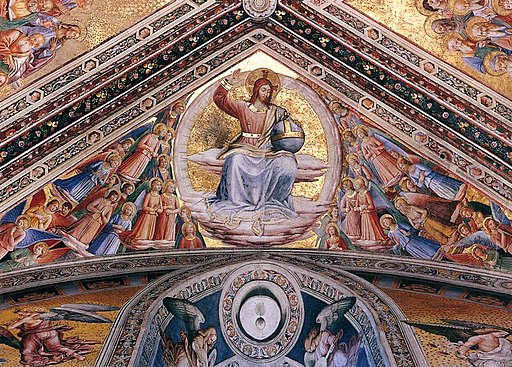 Jesus promises that “Everyone who acknowledges me before others I will acknowledge before my heavenly Father.” To do that however, we must proclaim the God Who became Man, that He is the fullness of Revelation – Divine Truth, the Savior of all mankind, and Love incarnate. To proclaim a myth of our own making, and worse to belittle Christ by using a weakened, distorted, version of Him as our inspiration, is to deny Christ. Jesus warns “But whoever denies me before others, I will deny before my heavenly Father.”
 The Son of God became man, in every way. He invested His mind and heart, and His body and blood. He desires nearness to us in the most intimate of ways. Jesus spent thirty-three years living humbly, and bringing tangible, immanent love to those He encountered. His sacrificial suffering and death of the Cross atoned for our sins, giving us new life as children of God for eternity.
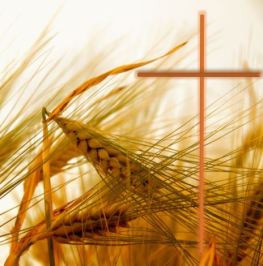 Jesus instituted the Sacrament of the Eucharist for two reasons. He established it as a memorial so that His sacrifice on the Cross would be made present again every time the Mass is celebrated so that we might be nourished by its graces. Secondly, because He wants to be as near to us as possible. When we receive the Eucharist at Communion, Jesus offers Himself in the most intimate and loving way, like that of a husband and wife. Through His Eucharistic presence, He continues to be with us in a tangible way.
 Consider for a moment this incredible fact: we are made in the image and likeness of the Trinitarian God. Although God’s essence exceeds our understanding, He has nevertheless chosen to reveal His nature to us and even given us an experience of it imprinted on our own human nature.
 At the completion of His mission however, He ascended back to heaven to reign in glory as the Son of God. Because of His humility during His earthly life, we overlook at times His divine dignity and His rightful place in Heaven. Beyond anything we could have imagined, He promised to prepare a place for us there as well!
 When we place our faith in Christ, He sends the Holy Spirit that we may live by His Truth, following His commands, and thereby grow in intimate love. Jesus told the apostles,
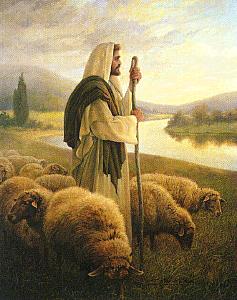 Just as predators try to find ways to get around parents to manipulate children, spiritual “thieves and robbers” try to get around Christ to attack us, God’s children. First, they try to separate us from His influence by undermining our trust in Him, His Word, or His Church. Common attempts sound something like: “Christ’s teachings hold you back. If you want to get ahead in life you have to be willing to get your hands dirty”, or “It’s not that you are going against Christ’s teachings, you are just modernizing them.” In regards to those difficult passages in Scripture, the ones that really strike at your conscience, you will be urged to simply pass over them or interpret them in a more relaxed way – “Forgive others, yes, but forgive her?, I don’t think He meant that…” Jesus stresses that we must die to ourselves in this life and deny ourselves. Instead we rationalize that He only meant that symbolically, or at least in a modest way – like going on a diet or not aiming too high. Finally, the Church, Christ’s living voice of authority, is the clearest voice of our Shepherd and therefore the harshest recipient of worldly criticism.
 Take Time For Him