
Excerpt from Take Time for Him: Simple, Soulful Gospel Meditations to Ignite the Busy Person’s Spiritual Life Get your own papercopy from Amazon!
Remember to rate and review it!
28th Sunday of Ordinary Time
Readings for Sunday’s Liturgy
Meditation Reflection: Matthew 22:1-14
Jesus often compares Heaven to a wedding feast. Weddings celebrate a sacred union in love of two persons. It means total gift of self and lifelong commitment. Marriage best represents God’s invitation to relationship with us and His desire for mutual self-gift of mind, heart, and action.

God is both the almighty who existed before creation and exceeds our understanding, and the God Who sent His Son to become incarnate, walk the earth with us, and suffer and die for us. Even now His Holy Spirit dwells within us, and Christ is present to us in the Sacraments and His Mystical Body the Church. Moreover, our Trinitarian God has invited us through His Son into a participation of His self-giving love through a union akin to marriage.
Marriage begins with a wedding and weddings require enormous preparation – both for the event planning and for the relational development needed to become one. The Wedding of the Lamb, described in the book of Revelation, celebrates the fruit of this long process when our final union with Christ will become complete. Jesus has already opened the gates of Heaven for us and ascended there. For our part, our earthly pilgrimage from sinner to saint is our marriage prep. The kind of union the Trinitarian God intends for us is nothing short of total, relational, and loving. In consequence, our journey to the alter requires knowing Christ more deeply, trusting Him completely, and loving Him above all things. It means leaving behind our “single lives” for the gift of a shared life in the Father, Son, and Holy Spirit. Weddings can be draining but when the day arrives it’s all worth it. Similarly, Revelation 19:7-9 describes the joy of our long- awaited union as well:
| Let us rejoice and be glad and give him glory. For the wedding day of the Lamb has come, his bride has made herself ready. She was allowed to wear a bright, clean linen garment. (The linen represents the righteous deeds of the holy ones.) Then the angel said to me, “Write this: Blessed are those who have been called to the wedding feast of the Lamb.” |
Christ loves each and every person passionately. He pursues them, woos them, fights for them, and offers eternal union with Him in Heaven. In today’s Gospel however, He laments that not everyone says yes. They come up with excuses, put Him off, or avoid Him altogether. Eventually the door is shut. Harsh, you might say?
Jesus strikes at our complacency. We all too easily forget the gift of salvation, of our eternal destination, and our higher calling. The frenetic pace of life, the constant stream of tasks, or the allure of diversions become a dangerous siren call, singing that we are made for earth and we have all the time in the world.
However, every day we are one day closer to eternity. If we didn’t grow our love for the Lord, then we weakened it. Love needs ongoing nurturing. Relationships are work! Even a relationship with God.
Moreover, sometimes indecision is a decision. Deadlines are part of reality. If I stay undecided about my son playing basketball, eventually the registration closes. If I hem and haw about planning a family trip, eventually a year passes without travel and I have essentially said no. Lastly, if a couple is in a serious relationship of several years and one person drags his/her feet about marriage, eventually the other will need to move on from the relationship to find someone else to build a life with.
Thankfully Jesus waits patiently our entire life. He reminds us today however, that death is the deadline. By that point we have said yes or no to the Lord and even our indecision reveals itself as a rejection of Christ.
But let’s not wait until the last moment. I have heard people who put off kids, when they finally held their first in their arms say, “why did we wait so long?” Couples in love when they finally meet say “I wish I had met you sooner.” The more we love, the more we see how much greater it is than anything else we had previously thought to be more important. We will say the same of Christ – I wish I had let you in sooner.
We can ask ourselves, what holds us back from the wedding? What keeps me from union with the Lord? What do I need to do to prepare myself for this marriage? The King of Heaven and Earth has personally invited you. Drop everything, get dressed, and go!
Consider:
- The Mass is a mystical participation in the eternal wedding feast of the Lamb in heaven.
- What things or habits undermine getting to Mass or distract you during Mass?
- Is it sleeping in, kids’ activities, running errands, going into work, exercising instead, watching news, or just relaxing?
- What helps you enter more deeply into the Mass?
- Getting to know the priest and parishioners so you feel more a part of the community, reading the Gospel ahead of time, learning about the Mass, participating as a musician, greeter, usher, or extraordinary minister of Holy Communion, writing down key points from the homily?
- What things or habits undermine getting to Mass or distract you during Mass?
- Imagine you were to enter Heaven today.
- What aspects of your heart and character would Jesus praise you for, as clothing you in garments for the king?
- What vices or attitudes would He ask you to change in order to be properly dressed?
- The lives of the saints illustrate the transformation possible with the grace of God. Each began like you and me, but through relationship with Christ they were made perfectly ready for heaven by the end of their life. If you were to appear in a book of the Lives of the Saints, what would it say? Where would it begin, and how would you like it to end?
- We cannot perfect ourselves, but we can cooperate with the grace of Christ and let Him purify our hearts. Take a moment to offer a prayer of surrender the Lord. Offer to Him all your struggles, worries, imperfections, and desires.
| I am confident of this, that the one who began a good work in you will continue to complete it until the day of Christ Jesus. Philippians 1:6 |
Make a Resolution (Practical Application):
- Do one thing each day this week to prepare for the eternal wedding feast of heaven. Change out of one garment of vice or unforgiveness and put on a garment of virtue and love. As St. Peter says:
| Above all, let your love for one another be intense, because love covers a multitude of sins. (I Peter 4:8) |
- Resolve to attend Mass every Sunday and make the necessary arrangements for that to happen.
- Spend five minutes with Christ when you first wake up, midday, and in the evening. Invite Him into your life right where you are at that moment.
- Read about the life of a saint. You could research a saint whose personality, experiences, or work is like yours. You could also just read about the saint of the day. Catholicculture.org gives a nice summary. Click on the tab “liturgical year” then select “today”.
- Learn more about the Mass. Attend a “teaching Mass” where the priest explains each of the parts as he celebrates it. Read a book about the Mass. Read “The Lamb’s Supper” by Scott Hahn which is about the relationship between the Mass and Heaven based on the book of Revelation.
~ Written by Angela Jendro © 2019
| * To receive these weekly posts automatically in your email just click the “follow” tab in the bottom right hand corner and enter your email address. You can also follow me @taketimeforhim on Twitter and Facebook. |



 om
om 

 These parables have been a rock of hope for me as a mother and teacher. I feel like I put so much time and effort into carefully forming my children and students in the faith only to be discouraged by the worldly attitudes that apparently pop up overnight like the weeds in Jesus’ first parable. Like the servants I exclaim with surprise, Lord did we not sow good seed in your field, where have the weeds come from? One day we’re listening to Christian music in the car, and the next the kids are streaming explicit rap music on Spotify. Whereas before the kids couldn’t wait to read bible stories together, suddenly, they start dragging their feet and complaining. The values of prayer, service, and modesty now seem to be riddled with competing values of constant activity and entertainment – from sports to social media to video games, the goal of making lots of money, and popular clothing styles that degrade their God-given dignity.
 When I feel this surprise and frustration I’m encouraged by Jesus’ lack of surprise and calm confidence. Jesus expected the weeds. He knows they didn’t come from us (well, maybe some of them – none of us are perfect yet!). He advises us to persevere with confidence because the mustard seed of our work, the hidden leaven of our efforts toward their formation, will grow with supernatural grace. In the end, Christ will be victorious, and the weeds will be separated out and tossed aside. As St. Paul declared to the Philippians:
 Jesus answers in a surprising way – He is the sower who offers Himself to everyone; whether it takes root depends on us. We are responsible for the extent to which we receive His Word.
 Jesus promises that “Everyone who acknowledges me before others I will acknowledge before my heavenly Father.” To do that however, we must proclaim the God Who became Man, that He is the fullness of Revelation – Divine Truth, the Savior of all mankind, and Love incarnate. To proclaim a myth of our own making, and worse to belittle Christ by using a weakened, distorted, version of Him as our inspiration, is to deny Christ. Jesus warns “But whoever denies me before others, I will deny before my heavenly Father.”
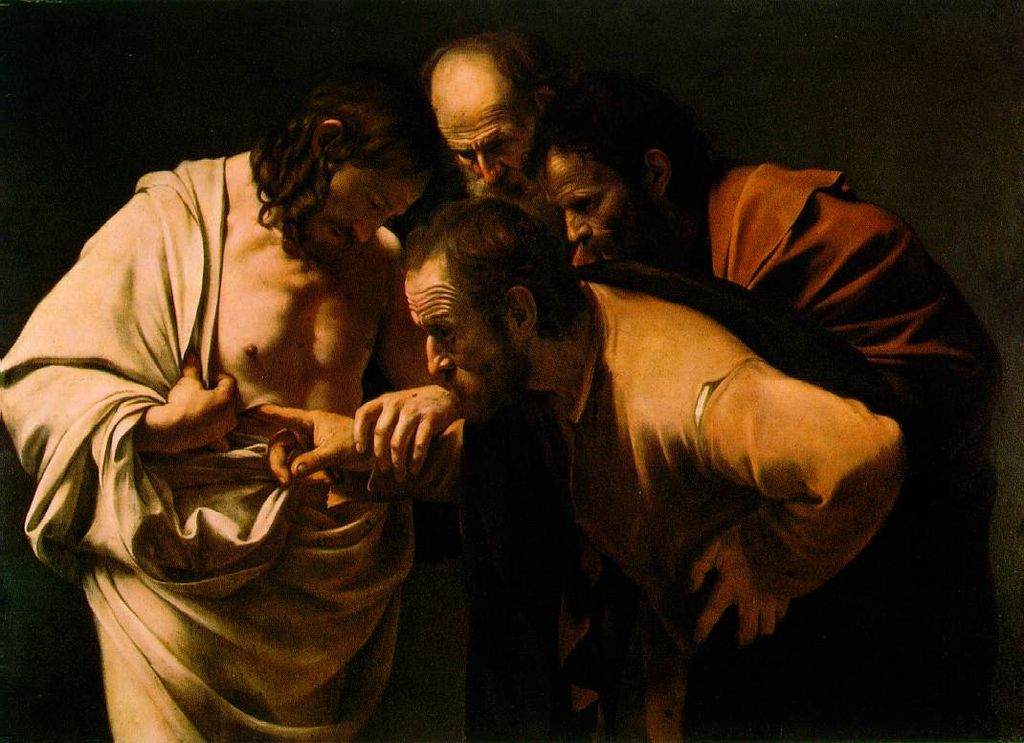 The Son of God became man, in every way. He invested His mind and heart, and His body and blood. He desires nearness to us in the most intimate of ways. Jesus spent thirty-three years living humbly, and bringing tangible, immanent love to those He encountered. His sacrificial suffering and death of the Cross atoned for our sins, giving us new life as children of God for eternity.
 Jesus instituted the Sacrament of the Eucharist for two reasons. He established it as a memorial so that His sacrifice on the Cross would be made present again every time the Mass is celebrated so that we might be nourished by its graces. Secondly, because He wants to be as near to us as possible. When we receive the Eucharist at Communion, Jesus offers Himself in the most intimate and loving way, like that of a husband and wife. Through His Eucharistic presence, He continues to be with us in a tangible way.
