The Ascension of Christ & the Surprising Nature of the Kingdom of God

Excerpt frTake Time For Him Book coverom Take Time for Him: Simple, Soulful Gospel Meditations to Ignite the Busy Person’s Spiritual Life  Get your own papercopy from Amazon!

Remember to rate and review it!

The Ascension of the Lord

Acts of the Apostles 1:1-11 and the Sunday Readings

Meditation Reflection

Christ is so humble in His Incarnation that we, like the apostles in today’s passage, can forget the awesome reality of His divinity.  For most of His earthly life, Jesus chose to veil His divinity.  He humbly lived among us as one of us, choosing a life of poverty and sacrifice. Even when condemned to crucifixion, He told Pilate that He was not powerless in the situation (cf. John 18:36). Jesus chose to be sacrificed to save us. He could have saved Himself, as those taunting Him urged, or defended Himself as Pilate suggested, but love kept Him on the Cross. Christ came down from heaven to be a ransom for our sins. Ascension of Christ_ Getty ImagesAt the completion of His mission however, He ascended back to heaven to reign in glory as the Son of God. Because of His humility during His earthly life, we overlook at times His divine dignity and His rightful place in Heaven. Beyond anything we could have imagined, He promised to prepare a place for us there as well!

Jesus kept surprising His apostles and He continues to surprise us. They imagined the savior as someone who would overpower their persecutors and restore things to how they used to be during the best time in Jewish history. It took a while for them to accept that He would die and rise again.

Confused and scattered at His crucifixion, they rejoiced in awe at His resurrection. Overwhelmed with joy that Christ was alive, and excited by His show of power they still imagined that they would enjoy the booty of His victory in an earthly kingdom. “Finally”, they must have thought, “now He will bring to fruition all our hopes and desires.” Thus, they ask, “Lord, are you at this time going to restore the kingdom to Israel?”

 Jesus did not come to stay on earth however, but to bring us back to Heaven. He does not put new wine into old wine skins (Matthew 9:14-17). His kingdom exceeds our imagination. The experience the Jews had under King David provided a foretaste and glimpse of the kingdom of God. Jesus reveals that God has much more in store for us.

In order to receive the Holy Spirit and begin their new life in Christ, they had to let go of their previous hopes and plans. To rule in the Kingdom of God meant to surrender worldly power for the power of the Holy Spirit. The Spirit transforms lives with saving grace, Truth, peace, and love.  No other nation or religion has had the same universal, enduring, transformative effect, of the Christian faith. The only explanation for this miracle is the Holy Spirit.

Jesus makes all things new (Revelation 21:5). As we celebrate the Ascension of Christ into heaven, we let go of our desires for Jesus to make things how they used to be, or how we wish them to be. Christ’s physical absence grieved the apostles and we too can be grieved by the absence of tangible comfort and security. However, by letting Jesus ascend to Heaven, they received Him back even more intimately and powerfully in their very souls on Pentecost when they received the Holy Spirit.

Christian discipleship means sharing in Christ’s death that we might also share in His resurrection. But it doesn’t stop there. Discipleship means accepting the unanticipated, unimaginable “new” that Jesus has for us. He wants so much more for us than we can plan and blesses us with so much more than we deserve. By surrendering our grip on control in our Christian walk, we get to live in the freedom of gift. There are no words to describe this freedom and joy other than surprise; or as John puts it: “From his fulness have we all received, grace upon grace” (John 1:16 RSV).

Consider:

  • When has God surprised you? How have His plans for your life exceeded your own expectations?
  • In what areas of your life do you struggle to surrender control? Consider what underlies your resistance.  Is it fear of the unknown or of change, distrust, lack of faith, perfectionism, pride and the desire to accomplish things yourself, or vanity and concern for what others will think?
  • Reflect on your life from the point of view of the kingdom of God rather than the kingdom of earth. Re- value wealth and status from this perspective. What is truly valuable? What is true greatness?
  • Consider God’s love for you. He has prepared a place for you, provided the Way, opened the gates, and given you the Holy Spirit and the Church to guide you and empower you. He has done everything in His mighty power to be with you and shower His love upon you. What can you do to be with Him and love Him in return?

Make a Resolution (Practical Application):

  • Each day this week, be open to God’s surprises. In the morning, offer your day to God and surrender control to Him. In the evening, reflect back on the day and recount when you were resistant or when He surprised you.


~ Written by Angela Jendro © 2019

* To receive these weekly posts automatically in your email just click the “follow” tab in the bottom right hand corner and enter your email address. You can also follow me @taketimeforhim on Twitter and Facebook.

Finding True Love

Excerpt frTake Time For Him Book coverom Take Time for Him: Simple, Soulful Gospel Meditations to Ignite the Busy Person’s Spiritual Life  Get your own papercopy from Amazon!

Remember to rate and review it!

6th Sunday of Easter

Gospel of John 14:15-21 and the Sunday readings

Meditation Reflection:

Every human person yearns for love, intimacy, and understanding. We may not need to be loved or understood by everyone, but we desire that connection with at least one person and preferably a whole community. Without it, we suffer an oppressive loneliness leading to depression, anxiety, and confusion.

Given the rapid advances in communication, it would seem we should feel more connected than ever and therefore happier than ever. Yet, consider the high rate of depression and suicide in our culture, despite the unprecedented wealth and physical well-being compared to any other time in history. So, if we are relatively wealthy, healthy, and connected, why aren’t we happy?

Jesus reveals the answer in today’s Gospel passage.  The world offers superficial connection, defining love as self- gratification rather than self-gift. Self-centered love uses others to make oneself feel good or to advance one toward a personal goal. It might demonstrate a modicum of virtue, but only insofar as it provides personal reward. Intimate married love has been replaced with casual sex and pornography. Intimate family love through the gift of children has been replaced with pets (not that pets are bad, just that they are not kids). Intimacy of friendship or shared work carry some comradery, but disillusionment ensues when they are quickly exchanged for a personal advancement. All these experiences leave people feeling used and alone, rather than loved.

Pope Francis shed light on our pain by identifying the source of our wounds. He connected our pain with our disconnect from Truth and the experience of mercy. In his book, The Name of God is Mercy, he wrote,

“…humanity is wounded, deeply wounded. Either it does not know how to cure its wounds or it believes that it’s not possible to cure them. And it’s not just a question of social ills or people wounded by poverty, social exclusion, or one of the many slaveries of the third millennium.  Relativism wounds people too:  all things seem equal, all things appear the same…

Pope Francis identified relativism as a wound because it disables our ability to determine right from wrong and truth from error. Christ forbids us from judging other people because only He knows what is in their hearts. However, we must be able to make moral judgements about actions and choices.  It’s just as important to know the dangers of sin to the spiritual life, as it is to know the dangers of gravity when leaping from high places.  I tell my boys all the time, especially in the summer when they are careening down the hill on their bikes or scooters, “Force = Mass times Acceleration – think about how fast you are going, because you could get hurt badly!”  The same truth becomes even more important as they get older. Now that my oldest has his driving permit and is nearing his license, I try to curb the teenage boy’s “need for speed” with the same physics lesson. I’m not being judgmental; I’m being loving by teaching him the truth. The same applies to the spiritual life. Sin wounds, hurts, and can even kill.  The Truth of Christ is a saving gift.

In today’s Gospel Jesus teaches that Truth, Goodness, and Love are inseparable. Without truth and without virtue, we will miss out on love. Jesus said that He is the Truth (John 14:6), and those who love Him follow His commands. God is a relationship of three distinct Persons in one divine nature.

The three Persons of the Trinity share a unity that exceeds our understanding, but Jesus unveiled a glimpse of its experience. He speaks on numerous occasions of the unity of He and the Father. That unity comes from a relationship of love and obedience through an eternal self-gift. The Holy Spirit is described as the Love between the Father and the Son. For us to share in the intimate relationship of the Trinity, we must share in God’s love through the gift of the Holy Spirit.

In-the-World-Not-of-the-World-DESKTOPWhen we place our faith in Christ, He sends the Holy Spirit that we may live by His Truth, following His commands, and thereby grow in intimate love.  Jesus told the apostles,
I give you a new commandment: love one another. As I have loved you, so you also should love one another. This is how all will know that you are my disciples, if you have love for one another.” (John 13:34-35)

In other words, we must not only love in general but love like Christ – sacrificial, unconditional, and merciful. Merciful love means forgiveness, and it also means speaking the Truth instead of enabling someone in their self-deception or rationalization. It means never helping someone sin, but always helping them when they try to leave their sin.

To love in this way, we need supernatural grace which flows from the indwelling of the Holy Spirit. St. Cyril of Alexandria (c. AD 375 – 444), a bishop and Doctor of the Church, describes the Spirit’s transformative power in a beautiful way in a commentary he wrote on the Gospel of John:

“After Christ had completed his mission on earth, it still remained necessary for us to become sharers in the divine nature of the Word. We had to give up our own life and be so transformed that we would begin to live an entirely new kind of life that would be pleasing to God. This was something we could do only by sharing in the Holy Spirit…

Only by his own presence within us in this way could he give us confidence to cry out, Abba, Father, make it easy for us to grow in holiness and, through our possession of the all-powerful Spirit, fortify us invincibly against the wiles of the devil and the assaults of men.

It can easily be shown from examples both in the Old Testament and the New that the Spirit changes those in whom he comes to dwell; he so transforms them that they begin to live a completely new kind of life…

Does this not show that the Spirit changes those in whom he comes to dwell and alters the whole pattern of their lives? With the Spirit within them it is quite natural for people who had been absorbed by the things of this world to become entirely other-worldly in outlook, and for cowards to become men of great courage.”

The Holy Spirit infuses us with Divine Love which bears fruit in our lives. This love is so exceptional, that Jesus tells His disciples it will be evident to the world that they are His followers. The fruit of worldly love is loneliness, anxiety, and depression. The fruit of Christian love is intimacy with God and His followers, peace, and joy. Worldly wisdom wounds, but Christian wisdom heals. The great paradox of happiness, which Pope St. John Paul II re-iterated time and again, is that self-fulfillment can only be found in self-gift. Christians experience the intimacy of friendship in their shared vision of the Truth, the intimacy of true love in living their vocational call to sacramental married love, Holy Orders, vows of religious life, or the single vocation, and above all – the deepest, most intimate, abiding love of our Trinitarian God dwelling in our soul as His very own Temple. Happiness is loving and being loved, Truly.

Consider:

  • Consider the relationship between Truth and Love. Why is honesty necessary for relationship? How does honesty deepen intimacy?
  • Have you ever had to make a decision that required you to choose between worldly wisdom and Christian wisdom? Which did you follow and why? What were the results?
  • Consider the power of the Holy Spirit to transform us. Have you experienced spiritual healing, transformation, or love through the Holy Spirit? Have you witnessed it at work in another person?

Make a Resolution (Practical Application):

  • Grow in your relationship with Christ who is the Truth, by studying Scripture or studying the faith. Read a spiritual book, join a bible study, listen to Christian talk radio or podcasts, or visit with someone advanced in the faith who can teach you.
  • Invite the Holy Spirit to bear more fruits of love within you by connecting with Him in prayer and/or the sacraments. Add just 5-10 minutes of prayer to your day (or if possible, I highly recommend adding a daily Mass), and note the change in your reactions to others and to situations, or to the level of peace you feel amidst whatever is happening around

~ Written by Angela Jendro © 2019

* To receive these weekly posts automatically in your email just click the “follow” tab in the bottom right hand corner and enter your email address. You can also follow me @taketimeforhim on Twitter and Facebook.

We All Need a Loving Gatekeeper and Filter: Christ Our Good Shepherd

Excerpt frTake Time For Him Book coverom Take Time for Him: Simple, Soulful Gospel Meditations to Ignite the Busy Person’s Spiritual Life  Get your own papercopy from Amazon!

Remember to rate and review it!

4th Sunday of Easter

Gospel of John 10:1-10 and the Sunday readings

Meditation Reflection:

Quite often as a mom I feel like a gatekeeper. When my kids ask to go somewhere, I need to know where, with whom, and for how long before I approve. Technology plagues me with even more gate-keeping work: parent controls, ratings evaluations, and download or streaming restrictions. The ever-multiplying accounts, passwords, devices, programs, and updates can feel like an interminable game of whack-a-mole. Christmas and birthdays used to be fun, now they feel like a migraine-inducing tidal wave of gate-keeping duties while excited, impatient children complain as I set the perimeters that I am being too slow, and of course too controlling. I’ve at least developed a one-line response to save my overtaxed brain from responding to the myriad of “logical” arguments and pleas of trust from my young teens. “It’s as simple as this,” I say, “You shall not have unfiltered access to the internet.” The Church could consider adding that as the 11th Commandment for the modern era.

Let’s face it, even adults, as children of God, need filters. We too can be easily allured by promises of pleasure, freedom, status, or adventure from false advertisers; and I don’t just mean commercially.    Despite having everything, Adam and Eve fell prey to Satan’s proposition that God’s single rule (not to eat the fruit of the tree of knowledge of good and evil) was controlling and denying them fun out of selfish motivations. Satan continues to deceive us through similar false promises.

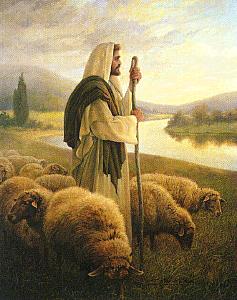
Christ the shepeherdJust as predators try to find ways to get around parents to manipulate children, spiritual “thieves and robbers” try to get around Christ to attack us, God’s children. First, they try to separate us from His influence by undermining our trust in Him, His Word, or His Church. Common attempts sound something like: “Christ’s teachings hold you back. If you want to get ahead in life you have to be willing to get your hands dirty”, or “It’s not that you are going against Christ’s teachings, you are just modernizing them.” In regards to those difficult passages in Scripture, the ones that really strike at your conscience, you will be urged to simply pass over them or interpret them in a more relaxed way – “Forgive others, yes, but forgive her?, I don’t think He meant that…” Jesus stresses that we must die to ourselves in this life and deny ourselves. Instead we rationalize that He only meant that symbolically, or at least in a modest way – like going on a diet or not aiming too high. Finally, the Church, Christ’s living voice of authority, is the clearest voice of our Shepherd and therefore the harshest recipient of worldly criticism.

We are children of God, in need of a loving gatekeeper. Christ’s commands, given through Scripture and the Church, can seem restrictive and controlling if we have an adolescent view. However, as we develop in spiritual maturity, we begin to appreciate the wisdom and the love underlying them.

When I’m tempted to brush off a Church teaching or a little pull at my conscience, I stop and recall that Christ loves me more than I love myself, and He is far wiser than me. Who am I going to trust? Any other false shepherd – whether secular culture, another person, or my own impulses – eventually drains rather than fills and proves a destructive, rather than uplifting force.

Christ, our Good Shepherd, leads to green pasture. He refreshes our souls and leads us beside peaceful waters (Psalm 23). Jesus lamented to St. Faustina that distrust on the part of souls causes Him the greatest pain.  As a mom of teens, I know what He means.   I want my kids to trust me too, and so I repeat the prayer He gave to St. Faustina, “Jesus I trust in You.”

Consider:

  • When have you been steered wrong – by others, by cultural norms, or by your own impulses? What was the reason? What did you learn?
  • When have you been steered right by Christ? How has His wisdom brought deeper joy and fullness of life, even amidst suffering, than these other voices?
    • Have you ever had to be the gatekeeper for loved ones? Consider the love it takes to be strong and the need for them to trust you.
  • How can you trust Christ more and listen to His voice more often? Could you attend Church more regularly? Could you invest more time into Christian friendships? Do you make time to study your Bible, read quality devotionals, or learn more about your faith?

Make a Resolution (Practical Application):

  • Choose one way to listen more to the voice of Christ this week.
    • Ideas: Add 10 minutes to your prayer time, pray the rosary in the car, listen to Christian radio, listen to Christian podcasts, read the daily Scriptures (these can be found at usccb.org), post inspirational Scripture quotes in places you will see them often, meet with a Christian friend.
  • Consider adding a filter, rating restrictions, or accountability software to your personal technology.


Follow bar

Determined Discipleship

Excerpt frTake Time For Him Book coverom Take Time for Him: Simple, Soulful Gospel Meditations to Ignite the Busy Person’s Spiritual Life  Get your own papercopy from Amazon!

Remember to rate and review it!

1st Sunday of Lent

Gospel of Matthew 4:1-11

Meditation Reflection:

Before Jesus began His public ministry, He went into the desert to pray and fast for forty days. Spending time in the desert meant leaving comforts, distractions, and entertainment, and being alone in solitude. This may sound appealing, especially if you have a demanding job or little kids. Yet, when we do make time to be alone in the silence, it can be uncomfortable and disconcerting. We must face ourselves, the inner thoughts we have been pushing to the side, fears, insecurities, doubts, ambitions, and vanities. The biggest battle most of will face, is with ourselves and the enemy loves to bite at our heels as we do. Thus, Jesus prepared for His ministry by enduring all the temptations you and I experience and overcoming them.

Satan began with the stomach and physical pleasure (where he trips most of us up!), by 512px-Immenraet_Temptation_of_Christ_wikimediatempting the starving Christ with bread. He waited until Jesus was at the end of His fast when He would be tired, hungry, and physically weak. Similarly, the devil tries to exacerbate our problems when we are worn out and vulnerable. How many of us have failed to pray in the morning because we didn’t want to give up the comfort of sleep? When have you missed Mass because it would be an inconvenience or it was cold outside? Are there times when putting your feet up, having a beer or glass of wine, and watching tv took precedence over interacting with your spouse or kids at the end of a long workday (especially when kids require discipline or help with homework)? How many opportunities do we miss simply because it’s uncomfortable or we are too lazy? Unless we overcome our own slothful inertia, we cannot be strong enough to be the salt of the earth that Jesus needs from His disciples.

curbbing ambitionAfter overcoming our desires for pleasure and comfort, the next hurdle is fame and ambition. Satan loves to stroke our ego and promote the lie that the measure of our worth is measured by our success. Yet, our Lord chose a life of humility and rejected some of the apostles’ notions that His kingdom would bring them worldly notoriety. God works the most through the small and the weak. St. Paul even states that in our weakness God’s power is brought to perfection (I Corinthians 2:12). Until we curb our own ambitions, we won’t be free to work for God’s ambitions.

Finally, the ultimate stumbling block of the Christian faith, is suffering. Satan’s third temptation offered Jesus the kingdom without the Cross; a short cut around humiliation and struggle. Whether its discipleship, marriage, family, or work, many people give up when things get hard. Our culture of instant gratification further softens our resolve along with an expectation that we should always be happy.

Christ endured and overcame every temptation, that we might be strengthened to do the same. Jesus unites Himself to us in our struggle and imbues us with His divine grace.

During Lent, we step away into the desert so that we might encounter the truth about ourselves. We struggle against our own will through acts of fasting and self-denial. We battle our greed and self-centeredness through works of charity and almsgiving. We increase our prayer, and contemplate the mystery of Christ’s suffering, death, and resurrection, to deepen our love for our savior and to more closely follow Him.

Don’t be discouraged if you have already cheated on your Lenten sacrifice. Self-knowledge is the beginning of conversion and develops humility. Each day, we must pick up our cross, and as our awareness of our own weakness intensifies, our awareness of our need for Christ will also intensify. Whether you give something up or do something extra (or both), choose something that will touch the temptation you find most difficult – comfort, notoriety, or happiness at the expense of Christian fidelity. Discipleship is difficult, and even the apostles’ conversions took time, so be patient. After three years with Christ and the gift of the Holy Spirit at Pentecost, they eventually stopped trying to change Christ, and instead surrendered to being changed by Him. If we spend more time with our Lord, our love for Him will deepen, and we too will be more conformed to Him, and able to joyfully celebrate His final victory at the Resurrection.

Consider:

  • Which comforts or pleasures tempt you the most? Sleep, soda, alcohol, television, food, desserts, music, movies?
  • What do you want others to notice about you most? What do you take the most pride in? Do you feel small or unimportant if your work isn’t acknowledged or honored by others?
  • How do you avoid suffering? Do you avoid conflict with your spouse or kids? Do you take short cuts at work? Do you try to get ahead by putting others down or by neglecting your duties toward God or family?
  • Consider past Lents. How has God strengthened you? How have you grown as a Christian?
  • Invite Christ into this Lent. Be docile to the Holy Spirit and ask Him to strengthen an area of your faith

Make a Resolution (Practical Application):

  • Each morning this week begin with this prayer by Francis de Sales:

My God, I give you this day. I offer you, now, all of the good that I shall do, and I promise to accept, for love of you, all of the difficulty that I shall meet. Help me to conduct myself during this day in a manner pleasing to you. Amen.


~ Written by Angela Jendro © 2019

* To receive these weekly posts automatically in your email just click the “follow” tab in the bottom right hand corner and enter your email address. You can also find me @taketimeforhim on Twitter and Facebook.

Additional Recommendations for Spiritual Reading:

*As an Amazon Associate I earn from qualifying purchases.

Getting the Last Word…but Making it a Blessing

Excerpt frTake Time For Him Book coverom Take Time for Him: Simple, Soulful Gospel Meditations to Ignite the Busy Person’s Spiritual Life  Get your own papercopy from Amazon!

Remember to rate and review it!

7th Sunday of Ordinary Time

Gospel of Matthew 5:38-48

Meditation Reflection:

 Forgiveness and love are the mark of Christ, and therefore the signifier of His followers. In 1981, Pope St. John Paul II was shot by a Turkish assassin Ali Agca. The attempt occurred on the feast of Our Lady of Fatima and JPII credited Mary for “guiding the bullet” which just barely missed a major artery. Even while in the ambulance, JPII voiced his forgiveness of the assassin. Later after he had recovered, he visited Agca in prison and offered his forgiveness in person. Agca had not offered an apology and only inquired as to why he wasn’t dead. This encounter however had an impact and later when he was released from prison, Agca travelled to St. Peter’s to place roses on John Paul II’s tomb.

St. John tells us that “God is Love” (1 John 4:7, emphasis added) and Jesus tells us to be perfect as the Father – therefore perfect in Love. The term perfect means “full, or complete.” When Jesus refers to His Heavenly Father’s perfection therefore, He means that God’s love lacks nothing and is total. By contrast, “even tax collectors” love their friends, but their love is imperfect because it is incomplete. Total love includes those who love us and those who do not.

But how we can love someone who hates us or hurts us? Does Jesus mean we must be friends with people who wish us harm or take advantage of us? No. Love is defined as “willing another person’s good.” Thankfully, this does not require feelings of love, or even reciprocal friendship. It doesn’t even mean trusting the person. It simply means choosing not to act in revenge or anger, and instead doing that which promotes the good of the other. Thus, we can pray for our enemies, in which we petition God on their behalf for graces to be bestowed upon them. We can speak kindly, act respectfully, and do the right thing toward others, not because they necessarily deserve it, but because it’s who we want to be.

Authentic love can also sometimes mean tough love. It can require choices that appear unloving but are in fact healthy boundaries. Loving an addict for instance or someone with mental illness will require tough love but will be more effective toward their health than enabling them in their sickness. Disciplining children is tough love, but it helps the child grow in goodness.

Christ calls His followers to imitate His mercy. This demand goes above and beyond natural strength and even natural wisdom or common sense. It only makes sense considering the mystery of Christ’s suffering, death, and resurrection for our salvation, and it can only be accomplished with the aid of His divine grace.

Christ loved us while we were yet sinners. He willed our good and worked for our salvation even when we were mired in sin and rejected Him. As His disciples, we can work for the salvation of others, even when they too are mired in sin and working against us. This can be tricky, but my mother offered me advice about these situations that I have found to be a guiding principle. When tempted to react vengefully when faced with difficult people and situations, she would say, “don’t let their behavior change who you are.” Her wisdom strengthened my resolve and shed light on how to decide what to do. No matter what others are doing or how low they sink, the truth is if we just fire back, we sink to their level too. Jesus wants us to rise above, with the help of His grace and the light of His example. Whether it transforms the other person or not, it will definitely transform us.

Loving our enemy is necessary to stop the cycle of violence, and our only hope for human unity. When we are the ones caught up in it, we want to get the last word in or throw the last punch. When we are the observer however, we just want it to stop. As a mom, I get tired of hearing my kids bicker. Both claim it’s the other’s fault and point the finger at who started it. Both go on and on and on, despite my attempts to break it up because they are obsessed with having the last word. I wonder if God views our bickering in the same way. Maybe the other person did start it, so what? Why can’t we just stop? No one can move on unless we do, and everyone is miserable.

Loving our enemy is a supernatural virtue. To cultivate charity, we need to connect to God and His stream of grace in prayer and the sacraments. We must meditate on the Gospels to develop our sense of what Jesus would do. We need to make time for fellowship with Christians walking the walk and learn from their insights and examples. In this way, we can grow in love until it fills every gap in our heart and reaches the fullness of perfection like that of our Father in heaven.

Consider:

  • Who do you find easy to love and why?
  • Who do you find difficult to love? Who could you identify as your enemy?
    • In what way do they provoke you to strike back?
    • How might you react with love instead? How could you “will their good”?
  • Consider how we love our children even when they disobey, say hurtful things, or work against us. Do you ever feel anger toward your kids, but choose/will what’s good for them?
  • Consider God’s perspective as our Father and us as His children. How does He view our bickering, feuds, back-biting, and competitiveness? What would He say to you about how you treat your brother or sister in Christ?
  • We can pick our friends, but we can’t pick our family. Consider how loving our natural siblings can cultivate the virtues needed to love our spiritual siblings.
  • Read the story of St. Maria Goretti and reflect on her example of tough love, forgiveness, and the transformation it caused in her assailant.

Make a Resolution (Practical Application):

  • Pick one person who makes your life difficult.
    • 1) Begin each day with a sincere prayer for them. (not a list of all their flaws that God should fix, but rather for God’s blessing upon them!)
    • 2) Resolve each day this week to refrain from snide remarks to them or about them, gossip, or any kind of action that would anger or hurt them.

~ Written by Angela Jendro © 2019

* To receive these weekly posts automatically in your email just click the “follow” tab in the bottom right hand corner and enter your email address. You can also find me @taketimeforhim on Facebook and Twitter

Additional Recommendations for Spiritual Reading:

*As an Amazon Associate I earn from qualifying purchases.

Keeping it Real

Excerpt frTake Time For Him Book coverom Take Time for Him: Simple, Soulful Gospel Meditations to Ignite the Busy Person’s Spiritual Life  Get your own papercopy from Amazon!

Remember to rate and review it!

6th Sunday of Ordinary Time

Gospel of Matthew 5: 17-37

Meditation Reflection:

 Freedom in Christ is founded on freedom from being fake. We are masters at the false front. By an early age most of us can pull off “I’m fine” to anyone who asks, no matter how untrue it may be. Keeping up appearances, looking successful, and seeming to be more than we are occurs in every time period and culture. Social media amplifies today’s version, as we can literally craft our public persona via selective posts and pictures.

We not only mask our imperfections; we often mask our sins as well. From the back-handed compliment, to disparaging remarks prefaced by “God bless her soul, but…”, to shallow mantras like “You only live once” or “it’s not like it’s against the law”, we rationalize our viciousness in countless ways. Like addicts, we deny we have a problem with sin, and we excuse and blame our behavior on everyone and everything but ourselves.

Just as sobriety can only be achieved through facing reality, so human freedom from sin being realcan only be wrought from an utter realness about ourselves. When Moses asked God to reveal His Name, God responded that it is “YHWH” or “I AM”. God revealed that He is. God is being and existence, He is the source of all that is real. Thus, union with God requires utter realness and authenticity.

Lewis wrote about this mystery in a brilliantly imaginative way in his book The Great Divorce. The divorce in this case refers to the divide between heaven and hell and describes the process of purgation for those still travelling to heaven. Drawing from scriptural imagery, he describes inhabitants of hell as phantoms. On the opposite spectrum, he calls those in heaven “solid people.” The main character arrives at a gray bus stop, phantom-ish, and his journey toward heaven is one of becoming more solid – or more “real”. To do this he must surrender all that he keeps false within himself. I won’t give away more than that, as I highly recommend this read! I will only offer this teaser – Lewis creates numerous characters whose struggle to move from ghostish versions of themselves to the authentic provides deep insight into the rationalizations with which most of us struggle, the pain of conversion, and the joy of letting it go and experiencing authentic freedom.

In today’s Gospel passage, Jesus directly calls us out on how we tip toe around the truth and avoid real virtue and, in consequence, real love and relationship. How many times have we heard the excuse, “well, it’s not like I’ve killed anyone. I’m a decent person.”? Yet, harboring anger can be deeply destructive and emerge in violence that might be more subtle, but no less real. Passive-aggressive behaviors, online bullying, slander, gossip, critical remarks and callous attitudes prevent relationship and they hold us back from heaven.

Jesus states clearly, “I tell you, unless your righteousness surpasses that of the scribes and Pharisees, you will not enter into the kingdom of heaven” (Matthew 5:20) and “so be perfect, just as your heavenly father is perfect” (Matthew 5:48) A man who loves his wife, doesn’t look lustfully at other women. A woman who loves her husband, doesn’t flirt with other men. Does it matter whether it’s technically adultery? Jesus calls out the dishonesty. Either way, it certainly feels like cheating to the other spouse. Why? Because love is total, exclusive, and lifelong. Our love for our spouse should mirror love for God. In fact, God created the first man and woman in the state of marriage because as two persons in a relationship of life- giving love, they imaged the Triune God!

Authenticity begins by simply letting our Yes be yes, and our No be no. Drop the exaggerations and minimizations. Leave the white lies. Take down the false fronts. It feels like going a day without make-up at first, but not forever. As we become more at peace with ourselves, we become more comfortable in the truth. Eventually the fake-ness we clung to in the past will feel like too much make-up, caked on, that you can’t wait to wash off at the end of the day.

Jesus wants us, not the façades we create. He accepts us as we are and helps us become the truest version of ourselves. When this happens, we can begin to experience the real relationship, and real love necessary for heaven.

Consider:

  • List your most common struggles in a day, then pray about what interior attitude or disposition underlies them.
    • Consider the 7 Capital Sins for ideas (pride, envy, greed, anger, sloth, lust, and gluttony)
  • What is your most common/tempting rationalization?
  • In what ways have you grown in authenticity over the years? Reflect on how good it feels to be yourself.
  • Who is someone you can be completely yourself around; who knows the “real” you?
  • Consider how honesty is necessary for relationship.

Make a Resolution (Practical Application):

  • Tackle one rationalization this week. Be direct with yourself and with God. Name the struggle, occasions of temptation, and the rationalization you use. Decide on how you will avoid the temptation or create a counter-mantra to repeat when you hear yourself rationalizing.

Example:

  • Daily struggle: Crabby toward your spouse and kids
  • Occasions of temptation: Getting out the door in the morning, right after a long day at work, or when interrupted during a project
  • Rationalizations: “They’re my family and should love me unconditionally – this is just who I am”; “I work hard to care for my family, and it just means I will be stressed out”
  • Counter-mantras: “They’re my family – they deserve my best behavior” or “I need to find balance in my life so I can be a peaceful person to my family”
  • Avoiding temptation –
    • Begin the day 10 minutes earlier so you aren’t stressed about running late (even better, begin with a prayer!);
    • create transition time between work and home – listen to Christian music on the drive and count your blessings so you arrive with a positive attitude;
    • adjust expectations for completing projects – expect to get interrupted by kids and be grateful for them, try to include them in the project if possible
  • ~ Written by Angela M. Jendro © 2019
  • For more inspiration right to your email click the FOLLOW tab. You can also follow me @taketimeforhim on Twitter and Facebook

Additional Recommendations for Spiritual Reading:

*As an Amazon Associate I earn from qualifying purchases.

Lighting the Path and Seasoning the Journey Because Blending In is Bland

Excerpt frTake Time For Him Book coverom Take Time for Him: Simple, Soulful Gospel Meditations to Ignite the Busy Person’s Spiritual Life  Get your own papercopy from Amazon!

Remember to rate and review it!

5th Sunday of Ordinary Time

Gospel of Matthew 5:13-16

Meditation Reflection:

 People often complain they need to see something to believe it. Although faith requires going beyond sight, the seeds of faith can be planted through allowing others to see for themselves the work of Christ in our lives. Authentic, Christian discipleship causes deep transformation. This supernatural change witnesses in an evidentiary way, the reality of the Holy Spirit and the life of grace.

The first converts to Christianity were moved by the way Christians lived differently than everyone else. Amidst a callous, hedonistic culture, Christians treated one another with love and respect. Christian marriages were marked by mutual kindness and fidelity. Slaves were considered brothers and sisters in Christ. Martyrs sacrificed everything joyfully in witness to their belief in the resurrection. The way martyrs faced their death so peacefully and courageously, converted many onlookers who could plainly see that the dying Christians were acting with a strength and calm that exceeded the limits of human nature. Tertullian famously articulated this phenomenon saying, “The blood of the martyrs, is the seed of the Church” (197 A.D.).

As modern Christians, our lives ought to witness the reality of grace as well, by following Christ beyond our comfort zone. Sometimes we can make our faith life a little too neat and tidy. We make Sunday Mass a casual commitment, and parish fellowship a comfortable social club. We might look to faith for comfort, but we don’t expect the impossible from God, and we ask that He not expect the impossible of us.

Although this sounds like a reasonable relationship, it doesn’t do much to reveal the life of grace, or the reality of God’s supernatural love and aid. After teaching the Beatitudes, the heart of the New Law, Jesus followed up with this analogy to salt and light. The journey of faith, though very personal, also has an evangelistic element; it’s a gift we both receive and give in return. Christ urges us to follow the path of the Beatitudes to its end. He’s right that authentic discipleship will not blend in. Simply living the Christian faith, is a witness to truths that others try to avoid, resulting in numerous pressures from others to be quiet. Those pressures come in many forms – accusations of being overly zealous, judgmental, intolerant, or making one’ private faith public. Secular culture continues to find ways to diminish the witness of faith and put a bushel basket over the light by re-defining religion as personal sentiment and forbidding it to bear external fruit unless that fruit can be limited to, and labeled as, secular humanitarianism.

At the same time, although Christ was persecuted by some, He was also sought out by many others. Jesus promised, “If you continue in my word, you are truly my disciples, and you will know the truth, and the truth will make you free” (John 8:31-32 RSV). Genuine discipleship can transform us and transform society, adding freedom to both. St. Paul told the Galatians, that the fruits of the Spirit are not of this world. By drawing near to God in prayer, the Spirit bears fruits within Christians of divine love, joy, peace, patience, kindness, goodness, faithfulness, gentleness, and self-control (Galatians 5:22-23). The world needs these fruits and hungers for them. If we keep our faith in a box that we only take out on Sundays or Christmas, we put a bushel over the light of Christ and make it impotent, leaving the world to suffer rather than to offer it hope.

I love Jesus’ analogy to salt. Maybe because I love salt on everything! It’s so basic, but it makes everything taste so wonderful. Our faith is the salt that makes life seasoned and enjoyable. If we offer the world a bland form of our faith, what is the point? We wouldn’t make anyone feel uncomfortable, but we would also deny them the chance to taste something remarkable.

Jesus is “the Way, the Truth, and the Life.” He teaches us the path to follow and provides the necessary grace needed to make the journey. When we live in relationship with Him, our life can’t help but radiate His peace, love, and wisdom. If we can have the courage to follow Christ beyond our comfort zone, Christ promises that we can be a light for others shining the truth they need to be free, and the salt that seasons their life with His joy.

Consider:

  • What do you find comfortable about your Christian faith? What’s easy or natural for you?
  • What do you find uncomfortable? What teachings seem “too much”? In which areas of your life, or among which people, do you try to downplay your faith?
  • How might you live your faith more deeply or more authentically?
  • Reflect on the effect of salt and light. Fast from salt for a day and consider the difference without it. Try functioning with only the aid of natural light rather than light bulbs. How does it limit your work and your experience?
  • Consider each aspect of your day – home, work, activities, etc. Reflect on how you can live your faith in each

Make a Resolution (Practical Application):

  • At the beginning of each transition in your day, begin with a prayer for Christ to teach you, and help you, live as His disciple in that part of your
    • The prayer can be a spontaneous prayer of your own words, or a written prayer you recite at each transition. Ideas: Our Father, Glory Be, Hail Mary, Memorare, a verse from a Psalm, a prayer to the Holy Spirit, the Disciple prayer by Cardinal Newman,
    • I personally like the prayer of St. Thomas Aquinas: “Grant O Merciful God, that I may ardently desire, prudently examine, truthfully acknowledge, and perfectly accomplish, what is pleasing to Thee, for the praise and glory of Thy Name”

Follow bar

~ Written by Angela M. Jendro © 2019

Additional Recommendations for Spiritual Reading:

*As an Amazon Associate I earn from qualifying purchases.

The Relevance of Ritual

Excerpt frTake Time For Him Book coverom Take Time for Him: Simple, Soulful Gospel Meditations to Ignite the Busy Person’s Spiritual Life  Get your own papercopy from Amazon!

Remember to rate and review it!

Feast of the Presentation of the Lord

Gospel of Luke 2:22-40

Meditation Reflection:

 “This is my life, my dream, my job, or my kids.” How quickly we can turn receiving a gift from God, to jealously withholding it for our personal plans. Worship and even ritual provide opportunities to keep this wily attitude in check and remind us of the purpose God has for them all.

The Presentation in the Temple is a religious practice of the Jews that began with the establishment of the Levitical priesthood. The firstborn son of the family had been designated by God to serve as priest, but when it changed to the tribe of Levi serving as priests, families would “redeem” the son from service by exchanging something. This offering provided for the Levites, whose priesthood allowed for more consistency in religious practices.

The image of the Presentation also serves as a reminder that our lives are not our own, and neither are our children’s, or any “baby” (be that a work, talent, or ministry, etc.) we possess. Everything belongs to God and ought to be offered back to Him. Our natural lives are a gift from the Creator, and our supernatural lives came at a cost paid by our Savior. The practice of reminding ourselves periodically in a formal or intentional way can help curb our tendency to grasp at things.

Organized religion often gets derided in the media and cultural conversation, even by some Christians. Yet, Joseph, Mary, and Jesus participated faithfully in the Jewish religion. Though an exceptional family, they never asked to be an exception to the rules. When Jesus instituted the New Covenant, He maintained formal worship through the Mass and the sacramental life. God doesn’t need our worship, we need it. We need to offer ourselves and our work to Him, to praise Him with gratitude and make supplication for our needs.

Making time for sacrament preparation can prove difficult for busy people and families. Whether it’s classes for Baptism, First Communion, Confirmation, or Matrimony, the Church provides a process of preparation that, though time consuming, orients our lives in Christ in an essential way.

Presentation of Jesus_Fra_Bartolomeo_Wikimedia

Fra Bartolomeo Wikimedia

Through these experiences, God can surprise us. Mary and Joseph presented Jesus like any Jewish couple would. The day had personal significance for them like any parents, but they didn’t stand out in the crowd. Nevertheless, this encounter with God in ritual yielded spiritual insights and fruits.

First, God blessed Simeon and Anna – two people who had faithfully sought God in prayer their whole lives and came to Him in the Temple regularly. Their example encourages us to persevere in the practice of our faith, even when it seems dry.

Secondly, Simeon’s prophecy articulated the nature of Mary’s vocation to motherhood, especially motherhood to Christ. Every mother and father looks at their infant and wonders who he or she will grow up to be, and seeing how special their child is, senses the child will be amazing. Simeon confirmed that Jesus would be a glory for Israel. However, he also warned that Jesus would experience conflict and rejection. Similarly, as children get older parents know the pain of seeing their child accepted by some but ignored or ridiculed by others. Finally, Simeon predicted a sword would pierce Mary’s heart too. Her Son is the Sacrifice for our Salvation, and she felt His pain in her own heart, like every mother and father who suffers to see their child in pain.

It’s especially difficult to surrender to God’s plan when we or our loved one must suffer. Jesus promised that to be His follower we must take up our cross and follow Him. This also entails allowing our loved one to take up their cross too. We can’t prevent every suffering nor ought we dissuade them from a sacrifice to which God is calling them (like Peter when he rebuked Jesus for saying He must die). We can however share the burden like Simon of Cyrene and be present to them like Mary and John.

Much of discipleship consists in the humdrum of regular prayer, work, and worship: starting the day with a Gospel reading and meditation, going about the tasks of your workday, attending Mass on Sunday, volunteering in the parish, and celebrating the sacraments with loved ones.

Aspects of worship may feel at times monotonous, but they are in fact irreplaceable touchstones with God; reminders that we and all that we love belong to Him. Moreover, in these moments, like Mary and Joseph at the Presentation, you may find yourself surprised by the Spirit.

Consider:

  • Imagine the rhythm of daily life for Jesus, Mary, and Joseph as faithful Jews.
  • How does the rhythm of daily prayer, Sunday worship, and liturgical seasons provide a needed framework for your faith life?
  • How might you enter more deeply into prayer or the sacramental life of the Church?
  • What has God entrusted to you as your “baby” or “babies”? Offer it back to Him in prayer and dedicate it to His plans by His graces with the cooperation of your work.

Make a Resolution (Practical Application):

  • If you are still forming the habit of regular prayer or church attendance, resolve to attend Mass every Sunday and pray every day. Decide where, when, and how.
  • Offer your life, your work, and your loved ones to God in prayer each day this week.

©Angela M Jendro 2019

Follow bar


Additional Recommendations for Spiritual Reading:

*As an Amazon Associate I earn from qualifying purchases.

Watch & Wait, Look & See

Excerpt frTake Time For Him Book coverom Take Time for Him: Simple, Soulful Gospel Meditations to Ignite the Busy Person’s Spiritual Life  Get your own papercopy from Amazon!

Remember to rate and review it!

2nd Sunday of Ordinary Time

Gospel of John 1:29-34

Meditation Reflection:

John the Baptist_Tissot_Brooklyn Museum

The Voice in the Desert by James Tissot Brooklyn Museum

 How did John the Baptist know that Jesus was the Savior before He even said a word to him? You might be thinking: “Easy, the Holy Spirit revealed it to John in that moment”. While that’s true, what wasn’t easy was the receptivity John nurtured during the years leading up to that moment. What if he had been distracted by the heat or his hunger, or too busy talking to notice? John heard the Holy Spirit as Jesus approached because he had first spent years in the desert praying, waiting, and listening.

Accustomed to instant gratification and the fast pace of life, together with a heavily marketed atmosphere, we can easily develop a tendency to expect Christ to sell Himself to us and to make His pitch with immediate persuasion. Whether we question God’s existence, His nearness, or His willingness to help us, we often complain that God is silent or distant. Yet, we have to honestly ask ourselves, have we even sought God out? Have we taken even 5-10 minutes of silence a day to listen? Have we cracked open our Bible, His Word to us, to see if He might speak there? Maybe God is silent, or maybe His response is right there on the coffee table unopened. Have we waited on the Lord, or are we expecting an immediate result? Have we been receptive to the Lord’s prompting, or do we attempt to lead God and boss Him around, deaf to His guidance?

John the Baptist sought the Lord, venturing into the desert where he could encounter God away from the distractions of everyday life. He waited on God, fully expecting an answer by spending his time preparing through preaching repentance and baptizing. When the Savior came at last, John could receive Him and recognize Him as Lord because he was looking and listening.

It reminds me a little of family road trips. The kid engrossed in his iPhone or tablet misses extraordinary sights, or at the very least, out of the ordinary landscapes. The person vigilantly watching out the window however, can take in the beauty, appreciate the landscape, and spot the surprise spectacles. By the time he has shouted “look!” and the distracted child responds, the sight has passed. Moreover, at the end of the journey, the one focused on the tablet retains the same vision of the world as when he left home, whereas the one who looked out the window broadened his vision and experience.

If we feel like God is distant, we need simply to look out the window and reach out to Him in prayer. If we require His help, we need only to ask and listen. When we look for the Savior, we find Him. God does His part, and more. We need to make the effort to look up from our commonplace experience and distractions and seek Him.

Psalm 40 begins by singing,

I have waited, waited for the LORD,

and he stooped toward me and heard my cry.

What a beautiful expression. God has seen our suffering and heard our pleas. He stooped to become man and dwell among us, personally healing and strengthening us. When a person experiences the saving love of Christ, they cannot resist proclaiming it to others. Like the child shouting “look!”, they instinctively cry out “look!” as well; or as John proclaimed, “Behold! The Lamb of God”.

Everyone seeks happiness, security, and love. We can search for all these things online, in our careers, or the economy, but only Christ can deliver on His promises. Blessed Archbishop Fulton Sheen described John the Baptist as “no frivolous reed shaken by every breath of popular applause.” When we seek approval from others or from cultural standards, we become feeble like a reed. We sway at every idea, comment, or attack and easily break. Firmness of character and security of happiness can be found in Jesus Christ alone, who can provide peace and rewards of a supernatural level. It is the Lord, who provides Faith, Hope, and Love. It is His Holy Spirit who infuses us with His sevenfold gifts of Wisdom, Understanding, Counsel, Knowledge, Piety, Fortitude, and Fear of the Lord. If we desire the Spirit’s fruits of love, joy, peace, patience, kindness, goodness, faithfulness, and self- control, we need merely to invite the Lord into our soul to dwell and be receptive to the transformation He effects.

At the same time, to realize our need for a Savior, we must also acknowledge the reality of our sinfulness. The first step to seeking the Lord is to grapple with our need for Him and our own insufficiency. Sheen pointed out that, “Skepticism is never certain of itself, being less a firm intellectual position than a pose to justify bad behavior.” Some who seem to seek God, actually hide behind their questions in order to avoid moral change. Those who see the degrading effect their sin has on their life run to the water to be cleansed like those who came out to John the Baptist in droves. Those who encounter Christ’s mercy proclaim with John, “Now I have seen, and testify that he is the Son of God.” If you want to find out for yourself, respond to Christ’s invitation to “come and see” (Jn 1:39). You might just see something incredible!

Consider:

  • Where can you go to encounter the Lord?
    • In a quiet place for prayer in your home, Church or Eucharistic adoration? In the Scriptures or reading the lives of the saints? In visiting with a prayerful friend? By listening to Christian radio?
  • On the road trip of life, are you more like the child distracted by a tablet or the child looking out the window?
  • If you were to go out to the desert to see John the Baptist, what do you imagine it would be like? Would you want to receive the baptism of repentance? What would he exhort you to change in your life?
  • When has Christ “stooped toward you and heard your cry?” Did it fill you with peace and joy? Did you want to tell others?

Make a Resolution (Practical Application):

  • Watch, wait, and listen to the Lord this week by setting aside 5-10 minutes each day to seek Him in prayer, Scripture, or Christian

Follow bar

Additional Recommendations for Spiritual Reading:

*As an Amazon Associate I earn from qualifying purchases.

Can’t Wait to Start: Feast of the Baptism of the Lord

Excerpt frTake Time For Him Book coverom Take Time for Him: Simple, Soulful Gospel Meditations to Ignite the Busy Person’s Spiritual Life  Get your own papercopy from Amazon!


Remember to rate and review it!


Gospel of Matthew 3:13-17

Meditation:

 When Jesus humbled Himself to become man, He took upon Himself every human experience. This included long years of painstaking maturation and living in obedience to His parents. Jesus refused short cuts. He accepted the hard road of the heavy burden of sin for us. He experienced the vulnerability of an infant in the womb, the work of human learning and growth, the struggle of every pre-teen to obey their parents even though they feel old enough to be independent, and obedient service to his daily work as a carpenter, the Jewish prayers and observances, 250px-Baptism-of-Christ-xx-Francesco-Albanand His responsibilities toward His parents. He could have come down from heaven as a mature thirty-year-old of nobility, but instead began at the beginning, and walked the human journey in poverty with us to the end. At last, the time had come for Him to begin His public work of preaching, healing, and establishing the Church.

If you have ever had to wait a long time to start a work you are passionate about you know how it feels. Whether it’s enduring years and years of education to prepare you for your career, waiting decades to be old enough to have a family of your own and find the right person to have it with, saving up for a long period of time to venture out to your favorite travel spots, the wait took perseverance and patience. Remember how it seemed like ages before you could drive or turned 18 and had the privileges of being an adult?

Jesus’ Baptism marked His entry into public life. John was correct that Jesus didn’t need to be baptized since Jesus was perfect. However, Jesus didn’t have to do anything for us really, He chose to for our redemption. Therefore, He entered the waters not as a sinful man Himself, but on behalf of sinful mankind who He would liberate through His death and resurrection. Thus He began His ministry by pointing to its end – the Cross. Blessed Archbishop Fulton Sheen describes the connection in his book, The Life of Christ, by saying:

The baptism of the Jordan was a prelude to the baptism of which He would later speak, the baptism of his Passion…Thus his baptism of water looked forward to his baptism of blood…In the waters of the Jordan he was identified with sinners; in the baptism of his Death, he would bear the full burden of their guilt…

The Cross must have been looming up in his thoughts now with increasing vividness. It was no afterthought in his mind. He was temporarily immersed in the waters of the Jordan only to emerge again. So would he be immersed by the death on the Cross and the burial in the tomb, only to emerge triumphantly in the Resurrection.

Jesus entered the water as the Son of Man, but He was also the Son of God. His divinity had been veiled since the Epiphany, but at His Baptism the Father and the Holy Spirit visibly showed their oneness in Christ’s mission, since as a Trinity all three Persons acted together. The Father sent the Son, and “the Spirit was anointing him not just for teaching, but for redeeming.” As an analogy, consider a son delivering Tupperware packed meals, home-made artwork, and some supplies to a neighbor who is ill. Although he trucked it over, the gifts were from the whole family and each had offered something to the care basket.

Baptism is such an incredible sacrament. It washes away ALL prior sin and its punishments. A person arises from the water truly a new person with a new start. Even more, this isn’t only a debt free launch like the gift of a college education to a young adult whose parents generously paid the bill. It’s like starting out with a treasure in the bank. Baptism bestows the life of the Trinity dwelling within us, making us sons and daughters of God, heirs of Heaven, and infused with spiritual gifts of Faith, Hope, Charity, and many other virtues.

This gift came at a cost, and Christ paid that price. Thus baptism was both a joyful anticipation of the greatest moment in history – our Redemption, and at the same time a hastening to the Cross. However, Jesus burned with a passion to heal us out of His immense love, especially for the poorest of the poor. Sheen’s insight into the symbol of the dove supports this:

The dove was the symbol of gentleness and peacefulness, but above all it was the type of sacrifice possible to the lowliest people.

Whenever a Hebrew thought of a lamb or a dove, they immediately thought of a sacrifice for sin. Therefore, the Spirit descending upon Our Lord was for them a symbol of submission to sacrifice.

Gentle, Peaceful, Poor in Spirit, Sacrificial. This describes Christ’s love for us, and our call as baptized Christians. Baptism gives us an amazing start to life in Christ. We have all the means and no debt. But this gift is meant to be invested, like the parable of talents. Parents who put their kid through college do so in hopes that their child will get to pursue their dream or at least earn a position that can afford them a stable income, not so the child can come back home and remain jobless indefinitely with no aspirations. Baptism launches us into the life of grace, one that is meant to be lived like Christ’s – from God and for others. Christian discipleship leads to the Cross, but we can approach it with the same passion and strength as Christ did, knowing that our sacrifice united to His can bring salvation to the souls of those still suffering under the pains of sin and error.

Jesus didn’t need to be baptized but thank God He did! Jesus walks with us through every experience, knowing exactly how we feel. Moreover, He has the power to redeem every failure, heal every wound, dispel every lie, comfort every sorrow, and lift us up in grace.

Consider:

  • What is something you had to wait or work for, for many years? How might Christ have felt when He finally began His public ministry?
  • Where are you at in your spiritual maturation? As you grow in your faith, how might you assume more responsibility and leadership roles within your church?
  • Reflect on the gift of Baptism. Consider the freedom bestowed by Jesus’ sacrifice. Meditate on the indwelling of the Trinity in your soul and the transformation that takes place through His grace.
  • How might you respond to the grace you have been given? What crosses and sacrifices can you carry with Christ for the salvation of souls?

Make a Resolution (Practical Application):

  • Jesus shared in our human experience. Throughout your day, consider how Jesus can relate to each aspect of your life. For example, Jesus probably began His day with prayer, ate some breakfast, worked on his carpentry projects and deadlines, looked forward to lunch, had customers he enjoyed and customers who were difficult, had friendships,
  • Find a way to take more initiative in spreading the faith. Whether leading prayer in your family, volunteering at church, or speaking positively about God in casual
  • If you have a present struggle, intentionally offer it to Christ in union with His sacrifice for the salvation of souls.


Follow bar