Risk and Reward

by Angela (Lambert) Jendro

miracle of loaves and fish

[reposted and updated from July 26, 2015]

July 28th, 2018; 17th Sunday in Ordinary Time

Gospel of John 6:1-15 NAB

“Jesus went across the Sea of Galilee. A large crowd followed him, because they saw the signs he was performing on the sick. Jesus went up on the mountain, and there he sat down with his disciples. The Jewish feast of Passover was near. When Jesus raised his eyes and saw that a large crowd was coming to him, he said to Philip, “Where can we buy enough food for them to eat?” He said this to test him, because he himself knew what he was going to do. Philip answered him, “Two hundred days’ wages worth of food would not be enough for each of them to have a little.” One of his disciples, Andrew, the brother of Simon Peter, said to him, “There is a boy here who has five barley loaves and two fish; but what good are these for so many?” Jesus said, “Have the people recline.” Now there was a great deal of grass in that place. So the men reclined, about five thousand in number. Then Jesus took the loaves, gave thanks, and distributed them to those who were reclining, and also as much of the fish as they wanted. When they had had their fill, he said to his disciples, “Gather the fragments left over, so that nothing will be wasted.” So they collected them, and filled twelve wicker baskets with fragments from the five barley loaves that had been more than they could eat. When the people saw the sign he had done, they said, “This is truly the Prophet, the one who is to come into the world.” Since Jesus knew that they were going to come and carry him off to make him king, he withdrew again to the mountain alone.”

Meditation Reflection:

A friend of mine has a gift for including others and making them feel a part of things. In observing him these past few years I realized that he does this by asking whoever is around for help with whatever project or task he is doing. If he is working in the garage or the yard and you happen by, be assured that a tool will be handed to you or a job assigned. His talent is most evident in the way he even includes his kids and their friends. The result is not the feeling of slave labor however, but rather the experience of being important, included, and an integrated part of what’s going on. It forms bonds and knits everyone together. The truth is, he doesn’t always need help, but he does enjoy people and being together.

Christ’s miracle in this passage reveals what I find to be one of the most remarkable mysteries of our faith: that God includes us in His work of salvation. It wouldn’t surprise me that Christ did something amazing. It does surprise me when He does something amazing with a small contribution from me.

When we look at the needs of the world, we can be overwhelmed like Philip. Like Andrew, we may consider what small resources are available to us but in contrast to the need they seem pointless. The critical question for you and I is whether we will make the contribution anyway, with faith that Christ can work wonders even today.

If the contribution is small it can seem worth the gamble and it makes us feel like good people. However, in the case of the child in this passage, it required all the food he had. Our faith is most tested when our contribution requires real sacrifice and real risk.   The boy could have reasoned that it would be imprudent to offer so much when so little could seemingly be achieved.  Children usually have more hope than prudence however, and in this case it turned out to be a blessing.  The boy didn’t know how his small contribution would help, but he trusted Who he gave it to.

In his spiritual classic, Abandonment to Divine Providence, Fr. Jean-Pierre de Caussade exhorts us to continue to make these acts of faith with confidence because Christ still works miracles today. He writes,

It is this same Jesus Christ, always alive and active, who continues to live and work fresh wonders in the souls of those who love Him.

Blessed Cardinal John Henry Newman also urged that our faith is in some ways measured by our risk.  He challenges us to consider how much we have “ventured,” or bet, on Jesus being Who He says He is; much like the boy who trusted the person of Jesus more than the mathematical ratio of loaves to people who needed to be fed.

As regards individuals, then, it is quite true, that all of us must for certain make ventures for heaven, yet without the certainty of success through them. This, indeed, is the very meaning of the word “venture;” for that is a strange venture which has nothing in it of fear, risk, danger, anxiety, uncertainty. Yes; so it certainly is; and in this consists the excellence and nobleness of faith; this is the very reason why faith is singled out from other graces, and honoured as the especial means of our justification, because its presence implies that we have the heart to make a venture.” (Sermon 20)

Faith requires a risk for a reward that can only be calculated supernaturally. According to Christ’s math, five loaves and two fish can feed five thousand people with leftovers to boot. Like my friend, Christ does not necessarily need our particular contribution, but He does desire us and working with Him results in an experience of being bonded, knit together, and the satisfaction of being a part of something amazing.

Consider:

  • Do you believe Christ still works miracles today? Have you experienced one in your own life?
  • What sacrifice is Christ asking you to make for His work?
  • Is there a need that keeps tugging at your heart? Is there anything you can do to help, no matter how small the effect might be?
  • Consider Christ’s love and friendship for you; that He desires to work with you and to include you in His mission.

Make a Resolution (Practical Application):

  • Each day this week, offer to Christ the work of your day and entrust Him with the results.
  • Identify one thing about your life or work that you know is Christ’s will but you often get discouraged about because it’s seemingly so small in the world’s eyes. Ask Christ for faith and encouragement.

~ Written by Angela Jendro © 2018

Finding Freedom

by Angela (Lambert) Jendro

July 15th,2018 15th Sunday in Ordinary Time

Gospel of Mark 6:7-13 NAB

Jesus summoned the Twelve and began to send them out two by two and gave them authority over unclean spirits. He instructed them to take nothing for the journey but a walking stick— no food, no sack, no money in their belts. They were, however, to wear sandals but not a second tunic. He said to them, “Wherever you enter a house, stay there until you leave. Whatever place does not welcome you or listen to you, leave there and shake the dust off your feet in testimony against them.” So they went off and preached repentance. The Twelve drove out many demons, and they anointed with oil many who were sick and cured them.

Meditation Reflection:

Jesus conquered Satan, and just as He healed persons afflicted by demons, He also gave His authority to His apostles to drive them out as well. Jesus personally extends this opportunity for freedom to you and I through the ministry of His Church and His grace. The question is only if we will invite Christ and His followers in and accept healing, or refuse to listen and force them out.

Satan and his demons, even if they do not take total possession of a person, can and do take control of pieces of us whenever we allow ourselves to be bound by their lies and their allurements.

Whereas Christ is the Truth (John 14:6), Satan is the father of lies (John 8:44).  How can we discern between the two?  Truth builds up and encourages. Even if it’s not what we want to hear, it always leads to our true good and real happiness. In contrast, Satan’s lies derail us from happiness and discourage us, even to the point of despair.

His common tactics include whispers that you are not worthy, that you cannot be loved, that you will never find happiness, that you are a failure, that God is a tyrant and faith is an illusion. Broken with despair, Satan offers false hope through sin.  He promises that happiness can only be found in pleasure so seek it without restraint or any moral boundaries.  He urges you to look out only for yourself and seek total independence – from any need of others and from God, and from anyone relying on you either.  The fruit of these lies however only reveal that the truth is true – that these do not bring happiness but intense sorrow, loneliness, and a degradation of your true dignity.  We need only to look at our secular hedonistic culture to see evidence of this.  In its pursuit of pleasure and freedom without God or morality, it has produced widespread depression, high suicide rates, slavery to addiction, and callousness toward the dignity of human life.

Contrary to Satan’s lies, the truth is in fact liberating.  You CAN find joy and happiness living a moral life in relationship with Christ.  Where do we find evidence of people who experience real freedom of soul, peace of spirit, and radiate joy?  In the lives of the Saints and in the lives of everyday Christians who strive to live a life of holiness with the help of grace.

Christ came to conquer sin and death that we might experience freedom and the fullness of joy (see John 15:11).  In today’s passage we see that He does this by giving His own authority to those He had chosen and sending them out to us.  Christ gave His saving Truth to His Church, not because of the apostles’ perfect character but simply because He willed it and wanted to personally extend His Gospel throughout the whole world.  He continues to do this through the apostles’ successors today, the bishops, who are also flawed human beings, and yet still messengers of the authoritative and saving word of God.  He also does this through every baptized Christian, whom He calls to be witnesses of the truth of the Gospel.

We need witnesses of this reality to give us hope and the strength to choose Christ – who is the Way, the Truth, and the Life.  Consider the battle with addiction. At first it offered relief from pain and promised feelings of happiness for the person.  Instead it brought loss and self-destruction.  Still, the idea of giving up that addiction may feel like facing a life of misery.  The testimony of those who have conquered it and now experience freedom can strengthen the addict to reach for the hope of happiness in sobriety instead of reaching for their drug.

Similarly, in a culture obsessed with lust, chaste love may appear like misery.  The joy and freedom testified by chaste singles and faithful married couples prove the lie to be wrong.  Especially impressive today, are those who struggle with homosexual desires who choose chaste love.  Their witness directly contradicts the current propaganda that they won’t be happy unless they have homosexually physical relationships.  (For examples of their testimonies, see the website couragerc.org).

Satan tempted Jesus to be king without the Cross, and he tempts us the same way.  Nevertheless, Jesus proved that suffering and death brings resurrection and grace.  Following Christ will not be pleasurable all the time, but it will be joyful and meaningful.  The days of my children’s births were not pleasurable, but they were the most joyful and meaningful days of my life.  Any noble and worthwhile pursuit will require sacrifice, but there’s a kind of pleasure in the sacrifice when you know you are working toward something great.  What greater work can we do than taking Christ’s yoke upon us and building up the Kingdom of God?!

Jesus confronts the lies we cling to and our sin.  We must say yes to Him to be free of them, thus the call for repentance before being able to receive healing.  Oftentimes our response to being convicted of sin is to become defensive, attack the messenger, or walk away.  To this response Jesus tells the apostles to “shake the dust from their feet” and move on to those who are open to His Word.  Yet, sin is precisely where the demons have a foothold in our heart and deprive us of true joy.  You may not feel strong enough to overcome a sin, but by acknowledging your sin and inviting Christ in, and His Body the Church, He can drive the demons out and fill you with His peace; and one day you might get to be the hand of Christ to help someone else in your situation.  The choice is up to you.

Consider:

  • Think of one sin you struggle with the most.
    • What are the lies and rationalizations that keep you tied to this sin?
  • People were free to accept or reject the apostles.  Consider how receptive or defensive you are toward those Christ sends to you.  Who specifically are those persons in your life?
  • Invite Christ to free you with the help of His grace, to accept His Truth and to detach from the lie or sin you are struggling against.  You don’t have to do it alone, He gives you the whole Church, infused with His own authority and grace, to strengthen and support you.
  • The Truth is true.  How might you witness to this by your words and life?

Make a Resolution (Practical Application):

  • Identify one specific, practical way you will reach out to accept the support of Christ’s Church to help you overcome your sin and receive freedom and healing.
    • (Examples: talking openly with a spiritual friend or your priest; receiving grace through attending a daily Mass; meditating on Scriptures or spiritual books that address your particular struggles; going to the sacrament of Confession…)

~ Written by Angela Jendro © 2018

* To receive these weekly posts automatically in your email just click the “follow” tab in the bottom right hand corner and enter your email address.

It’s Not Magic, but it is Supernatural

by Angela (Lambert) Jendro


July 1st, 2018 13th Sunday in Ordinary Time

Gospel of Mark 5:21-43 NAB

When Jesus had crossed again in the boat to the other side, a large crowd gathered around him, and he stayed close to the sea. One of the synagogue officials, named Jairus, came forward. Seeing him he fell at his feet and pleaded earnestly with him, saying, “My daughter is at the point of death. Please, come lay your hands on her that she may get well and live.” He went off with him, and a large crowd followed him and pressed upon him.

There was a woman afflicted with hemorrhages for twelve years. She had suffered greatly at the hands of many doctors and had spent all that she had. Yet she was not helped but only grew worse. She had heard about Jesus and came up behind him in the crowd and touched his cloak. She said, “If I but touch his clothes, I shall be cured.” Immediately her flow of blood dried up. She felt in her body that she was healed of her affliction. Jesus, aware at once that power had gone out from him, turned around in the crowd and asked, “Who has touched my clothes?” But his disciples said to Jesus, “You see how the crowd is pressing upon you, and yet you ask, ‘Who touched me?'” And he looked around to see who had done it. The woman, realizing what had happened to her, approached in fear and trembling. She fell down before Jesus and told him the whole truth. He said to her, “Daughter, your faith has saved you. Go in peace and be cured of your affliction.”

While he was still speaking, people from the synagogue official’s house arrived and said, “Your daughter has died; why trouble the teacher any longer?” Disregarding the message that was reported, Jesus said to the synagogue official, “Do not be afraid; just have faith.” He did not allow anyone to accompany him inside except Peter, James, and John, the brother of James. When they arrived at the house of the synagogue official, he caught sight of a commotion, people weeping and wailing loudly. So he went in and said to them, “Why this commotion and weeping? The child is not dead but asleep.” And they ridiculed him. Then he put them all out. He took along the child’s father and mother and those who were with him and entered the room where the child was. He took the child by the hand and said to her, “Talitha koum,”which means, “Little girl, I say to you, arise!” The girl, a child of twelve, arose immediately and walked around. At that they were utterly astounded. He gave strict orders that no one should know this and said that she should be given something to eat.

Meditation Reflection:

The Scriptures today confront our anger at God for death and suffering.  Wisdom 1:13-14 (RSV) however reminds us however that neither of these came from Him:

“God did not make death, and He does not delight in the death of the living.  For He created all things that they might exist.” 

When we read the Creation account in Genesis 1 and 2, nowhere do we find disease, suffering, or death.  Rather, God’s creation reflected His glory and so He commanded all the living things that He made to “be fruitful and multiply.”

Death entered not through God, but through sin.  Satan and the fallen angels sinned against God and chose an eternity of suffering for the sake of prideful rebellion over an eternity of joy at the cost of humble obedience.  Adam and Eve did not experience suffering or death until they joined Satan in sin and disobeyed God as well.  In consequence, Genesis 3-9 relay the sad story of the proliferation of sin and suffering beginning with this first Original Sin.  Toil, pain in childbirth, marital struggles, sibling rivalry, murder, polygamy, sickness, and death each begin with the decision to sin by the free will of individuals.  As much as we want to blame God, the truth is most of our suffering stems from our own poor choices or the choices of others.

Sure, you might say, we’re at fault but can’t God do anything about it?  Why does He sit back in silence?  Doesn’t He care?

YES!  From the beginning, God offered a merciful helping hand to sinful humanity.  When Adam and Eve realized they were naked, He gave them clothes.  When He confronted them about the consequences of their sins He also promised to one day send a Savior (Genesis 3:15).  He made covenants with Noah, Abraham, Moses, David, and so on.  Finally, His only begotten Son left the glory of Heaven to take on a lowly human nature, freely divesting Himself of His divine power to live the life of a creature so as to carry our Cross and personally meet us in our need.   St. Paul describes it well in 2 Corinthians 8:9 (RSV):

“For you know the grace of our Lord Jesus Christ, that though He was rich, yet for your sake He became poor, so that by His poverty you might become rich.”

God literally has some skin in the game.  Not only does He offer healing, in today’s Gospel we see how much He cares when He heals.  He accompanies the grief-stricken father to attend to the dying little girl.  When He enters the room He doesn’t want people gawking or treating it like magic.  Instead Jesus sends everyone out but the parents and a few of His apostles.  When Jesus heals it’s a personal encounter.  Jesus understands our pain and our needs because He lived it.  Being man, He has shared our experience.  Being God, He has the power to re-create us and restore us with a Word.  By His divine power, Jesus commanded the girl to get up, thereby empowering her to do so. “Little girl, I say to you, arise.” From His human experience, He commands the little group with Him to give her something to eat.  What a great little detail!  I imagine her family and the apostles were just standing there in shock when she came back to life.  Jesus moves on to the practical need at hand – after getting well from a long sickness a person is ravishingly hungry.  Therefore He instructed them not to talk about it but instead to give her something to eat.

This encounter with the grieving father and dying girl has all the drama of a great script.  Except, a fiction writer would not have interrupted the momentum with the seemingly tangential account of the woman with a hemorrhage – an encounter with competing drama that would be a distraction to a story.  But, this is not a fictional story, this is real life.    I learned early on as a mom that once you have kids you can say goodbye to uninterrupted focus on any task.  Nothing, not even dishes, can be completed without interruption.  Even now, although my kids are teens, I was interrupted yesterday by all three texting and calling and needing something even though I had said I was travelling for a few hours and would have spotty cell service.  I recall one time in particular that illustrates the mulit-tasking of relational living.  At the time my kids were little.  I was driving home from visiting my dad and my brother caught a ride with me.  As we were talking in the front seat kids asked for snacks, water, help with the dvd, and so on.  I just kept talking, driving, and handing things back or fixing the dvd player with one hand, all while keeping my eyes on the road.  My brother just stopped and laughed and said, “how are you doing this?”.  With my first child I was a rookie for sure, but by three I had practice.

Jesus lived real life and cared for real people.  While helping one family, a woman reached out in faith and needed His help too.  People’s needs are rarely convenient, but love always makes time.  As God, Jesus could easily heal her as He walked along, somewhat like my brother’s astonishment as I tended to needs of three children while we travelled without taking my eyes off the road for even a second.  Here again however, Jesus underscores the relationship between faith, healing, and personal encounter with Him.  He’s not a magic wand or a machine. She was healed because of His power and her faith.  At the same time, He stopped what He was doing to pause and encounter her personally. In asking who touched Him, He invites her to not only receive His healing power, but to be received by Him personally.  He doesn’t want her to feel like a desperate beggar.  He gives her the opportunity to bravely step forward, and then affirms her for her faith and gives her His peace.  How many people must have avoided her for so many years due to her bleeding?  And here Jesus receives her and invites her back into communion with God and with society.

We live in a culture that wants a quick fix with a pill to remedy any ailment.  Thankfully, we live in a time when medicine has produced a pill to fix a myriad of things.  However, some things cannot be alleviated so simply.  Christianity is not a pill that will make you instantly happy and take away all of your problems.  It is however a personal encounter with Christ, Who is both God and man and cares for you.  Suffering and death come from sin.  Life and joy come from God.  Faith does heal.  Sometimes He heals in a moment, other times it takes years of relationship with Him to allow His work to fully take root in our souls.  The Gospel affirms that no matter how dire the situation, Jesus will answer.  We only need to ask in prayer or to reach out to Him and touch Him.   Be prepared though.  After suffering for so long, health can seem foreign.  When Jesus commands you to arise and be at peace, you must leave your sickness behind and live as a new creation.

Consider:

  • Spend some time in silence, reaching out to Christ like the father of the little girl or the woman with the hemorrhage. Bring your troubles and worries to God…be humble like the woman to admit you need help.

Make a Resolution (Practical Application):

  • Set a reminder on your phone or with sticky notes to pause throughout the day and encounter Christ.  Bring your needs of the moment before Him, no matter how small, and offer Him thanks for His presence and help.

~ Written by Angela Jendro © 2018
* To receive these weekly posts automatically in your email just click the “follow” tab in the bottom right hand corner and enter your email address.


Patience

by Angela (Lambert) Jendro


June 24th, 2018 Feast of the Birth of St. John the Baptist

Gospel of Luke 1:57-66, 80 NAB

When the time arrived for Elizabeth to have her child she gave birth to a son. Her neighbors and relatives heard that the Lord had shown his great mercy toward her, and they rejoiced with her. When they came on the eighth day to circumcise the child, they were going to call him Zechariah after his father, but his mother said in reply, “No. He will be called John.” But they answered her, “There is no one among your relatives who has this name.” So they made signs, asking his father what he wished him to be called. He asked for a tablet and wrote, “John is his name,” and all were amazed. Immediately his mouth was opened, his tongue freed, and he spoke blessing God. Then fear came upon all their neighbors, and all these matters were discussed throughout the hill country of Judea. All who heard these things took them to heart, saying, “What, then, will this child be?” For surely the hand of the Lord was with him. The child grew and became strong in spirit, and he was in the desert until the day of his manifestation to Israel.

Meditation Reflection:

Gazing upon a newborn baby, we encounter the mystery of life as we wonder as St. John’s family did, “What then will this child be?”.  Babies are full of potential, their lives completely ahead of them.  Teens and adults grapple with the question again, “What will I do with my life?”  Many of the joys and sorrows of parents correspond to what unfolds as the answer.

Waiting to see requires patience.  Children grow year by year, one stage at a time.  Their personality and character develop and blossom organically.  Discovering God’s plan means patiently waiting, hoping, and praying.

God too is patient.  He cares for us always, at every moment.  From the creation of Adam and Eve, to the Incarnation of His Son, to the end of time – God patiently guides the unfolding of human history in the lives of each individual, each of which are His sons and daughters. Moreover, He guides Salvation history, by which He redeems and heals mankind from the original sin of the Fall and every personal sin committed by individuals thereafter.

Every day since Adam and Eve first turned away from Him by sin, God has faithfully and steadfastly lead us toward salvation.  In His mercy He pours out His grace upon us.  Even when we rebel, and turn away, He waits patiently for our return.  Of course, God is everywhere so we can’t leave Him physically, but we can leave Him spiritually.  Thus, returning to God means a turning of heart – repentance.  God is far more patient than we are. We want everything immediately, at the least by two days or less with free shipping!  God’s work however can take days, weeks, years, decades, and even a lifetime.

St. John the Baptist was the last of the prophets and the precursor to Christ.  His birth was indeed special.  His family waited years to see his role in God’s plan, but the Jewish people had waited hundreds of years for his day, and humanity thousands of years.  John the Baptist proclaimed with fervor God’s faithfulness.  He announced the coming of the Lamb of God Who would take away our sin.  Thus, God kept His promise to save mankind by sending His only Son.  We need only do our part to receive that salvation, as John the Baptist zealously repeated and Jesus exhorted – repent and believe.

Consider:

  • God has a plan for you and for your life.  Pray for patience and openness to the Holy Spirit as it unfolds daily.
  • Is there anything for which you are impatient right now?  Have you complained to God, demanding your prayer to be answered in two days or less like Amazon?
  • Consider God’s faithfulness in your life.  Take a moment to recall His blessings today, this week, this year, and over your lifetime.
  • Imagine your family asking in amazement after your birth “What, then, will this child be?”.  Consider the wonderful things, with God’s help, that you have done with your life so far.  Consider what you might do with the Lord in your life today and into the future also.  How might you become more loving and Christ-like toward others and make an impact in their lives?

Make a Resolution (Practical Application):

  • Intentionally offer each day to the Lord in prayer.  At the close of the day, reflect back on the good you were able to do with God’s grace, and for the moments you failed pray that you might be more receptive to His guidance tomorrow.


~ Written by Angela Jendro © 2018
* To receive these weekly posts automatically in your email just click the “follow” tab in the bottom right hand corner and enter your email address.


Rising with Christ

by Angela (Lambert) Jendro

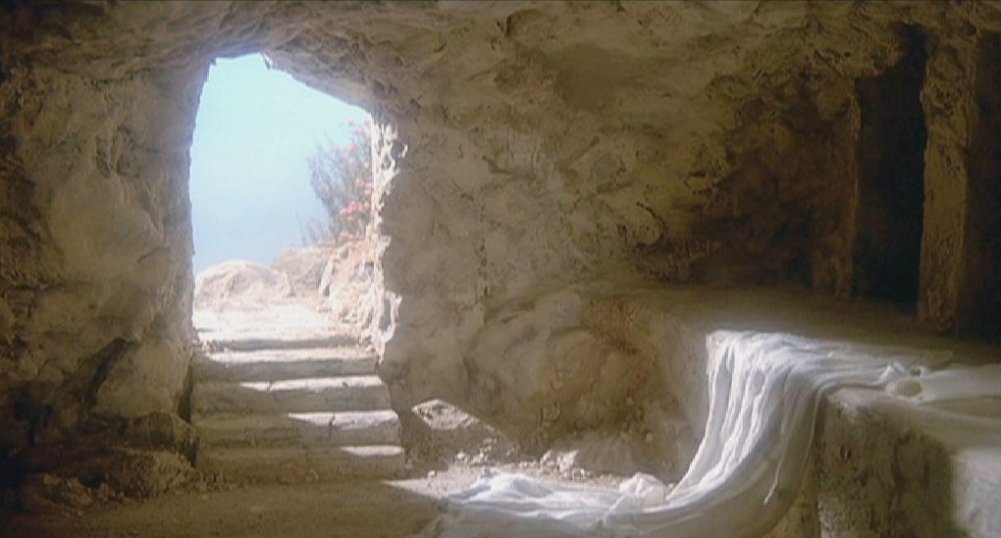
 See the source image

April 1st, 2018 Easter Sunday

Gospel of Mark 16:1-7 NAB

When the sabbath was over, Mary Magdalene, Mary, the mother of James, and Salome bought spices so that they might go and anoint him. Very early when the sun had risen, on the first day of the week, they came to the tomb. They were saying to one another, “Who will roll back the stone for us from the entrance to the tomb?” When they looked up, they saw that the stone had been rolled back; it was very large. On entering the tomb they saw a young man sitting on the right side, clothed in a white robe, and they were utterly amazed. He said to them, “Do not be amazed! You seek Jesus of Nazareth, the crucified. He has been raised; he is not here. Behold the place where they laid him. But go and tell his disciples and Peter,  ‘He is going before you to Galilee; there you will see him, as he told you.'”

Meditation Reflection:

Christ’s resurrection initiated resurrection to new life for every human person who accepts it.  In the Church’s liturgy every Sunday is an Easter. The first day of the new week is now the first day of our new life.

As we worship our Lord and celebrate His victory, we ought to share in His Easter joy.  He invites us to rise with Him.  As hard as suffering and sacrifice may be, rising can also be a challenge.  It means the courage to step forward into a new life, to accept change, and to embrace the unknown new.  It also means forgiveness and letting go of the past.  As painful as cycles of sin or anger may be, we sometimes hold on to them simply because of their familiarity.

Easter joy promises lasting life, not a passing phase.  Christ’s victory over sin and Satan is permanent. When we step forward in faith and hope, we entrust ourselves to the Lord Who has already won.  His grace can sustain us because He has merited it for us and He has proven it. Jesus promised the apostles,

Because I live, you will live also” (John 14:19)

Through the blood and water that poured out from His side on the Cross, Jesus has dispensed His grace through Baptism and the sacraments.  He pours out upon us both the forgiveness of sins and the supernatural grace to sin less and love as He loves more.

This Easter, step out in hope.  Allow Christ to roll away the stone and give you the courage and the humility to begin again in the life He has won for you.

Consider:

  • Reflect on the victory of Christ.  Imagine His reign from Heaven as our Eternal High Priest and King who intercedes for us and fights for our salvation.
  • Consider the areas of your life that have been renewed in Christ.  Reflect on the light and the joy that infuses them.
  • Consider the areas of your life where you still hold on to self-will, fear, pride, or anger.  Pray for Christ to raise you from that tomb as well.
  • Spend 5 minutes in prayers of gratitude for Christ’s blessings to you this past year.

Make a Resolution (Practical Application):

  •  Begin forming a new (good) habit that reflects y our faith in Christ.  For example – one work of mercy a day, 10 minutes of prayer a day, refraining from gossip or crude language, learning about the Bible, listening to Christian music, driving with generosity rather than impatience…
  • Next Sunday is the Feast of Divine Mercy.  Pray the Chaplet of Mercy or read about the devotion given to St. Faustina and commemorated by Pope St. John Paul II. (See my past post Divine Mercy…Can you believe it?)


~ Written by Angela Jendro © 2018

* To receive these weekly posts automatically in your email just click the “follow” tab in the bottom right hand corner and enter your email address.


Lent – That Others May See More of Jesus In Us

by Angela (Lambert) Jendro


March 18th, 2018 5th Sunday of Lent

Gospel of John12:20-33 NAB

Some Greeks who had come to worship at the Passover Feast came to Philip, who was from Bethsaida in Galilee, and asked him, “Sir, we would like to see Jesus.” Philip went and told Andrew; then Andrew and Philip went and told Jesus. Jesus answered them, “The hour has come for the Son of Man to be glorified. Amen, amen, I say to you, unless a grain of wheat falls to the ground and dies, it remains just a grain of wheat; but if it dies, it produces much fruit. Whoever loves his life loses it, and whoever hates his life in this world will preserve it for eternal life. Whoever serves me must follow me, and where I am, there also will my servant be. The Father will honor whoever serves me. “I am troubled now. Yet what should I say? ‘Father, save me from this hour’? But it was for this purpose that I came to this hour. Father, glorify your name.” Then a voice came from heaven, “I have glorified it and will glorify it again.” The crowd there heard it and said it was thunder; but others said, “An angel has spoken to him.” Jesus answered and said, “This voice did not come for my sake but for yours. Now is the time of judgment on this world; now the ruler of this world will be driven out. And when I am lifted up from the earth, I will draw everyone to myself.” He said this indicating the kind of death he would die.

Meditation Reflection:

Someone may say to you, “[Your Name], I would like to see Jesus.”  Imagine that for a moment and take it in.  A person looking to you with a hopeful and somewhat anxious expression, addressing you by name, and depending on you to connect them to Christ.

“Why me?” you might say.  Yet, in a secular culture void of God, searching souls see Christ from a distance and feel more at a loss to find their way to Him than you may think.  Thus, your relationship with Jesus, and their relationship with you, provides the bridge they need.

Yet, to be Christ’s light and love in the world, to be a bridge, demands a serious choice which will decide the trajectory of your whole life.  Jesus made this choice, and so must each of His followers.

The choice – to live for yourself or to live for the Lord, to build a life of your own making or to build the kingdom of God.

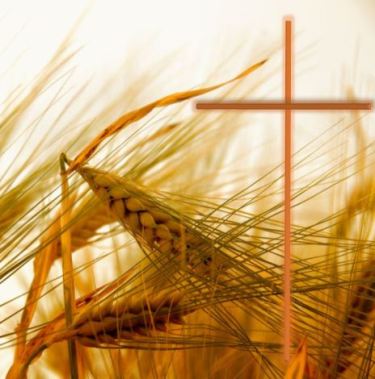
A grain of wheat, in and of itself, is small and insignificant – enough to feed only a bird. Yet, within it lies tremendous potential – enough to feed human persons.  The movement from potential to actuality however begins with death.

If a grain were a conscious soul with a mind and will, it would see before it a decision:

  1. Go on living as a seed for itself, unchanged and comfortable.
  2. Surrender itself to the Creator, be broken apart in death and then transformed into something new and quite different from its experience as a seed.

Although the second option sounds scary, to grow and change also entails being lifted up from the ground, becoming tall stalks of wheat, and finally, maturing to the point where it can be picked as harvest for others.  The first choice may be easier, but the second adds so much more meaning to its life.

As Jesus’ “Hour” approached, He came to the final crossroads of His decision.  He had said Yes to the Father when He agreed to become man at the incarnation, He said No to Satan in the desert when offered the kingdoms of the world without the Cross, and now as His final suffering and death approached He weighed His decision aloud for His disciples to hear and one day follow.

Jesus didn’t want to suffer but He did want to save us. So what was He really to do?  Christ’s magnanimous love refused to live for Himself, and so chose the path to the Cross.  He chose to die that He might be lifted up – on the Cross and in His Resurrection – and thereby bear fruit that gives all mankind who plucks it life eternal.

As Christ’s disciples, we first must receive life from our Lord who has become our spiritual bread.  Under the appearance of wheat bread in the host, He gives His very Body, Blood, Soul, and Divinity to us in the Eucharist.  With this union and grace, we then are asked to allow Him to transform our souls.

He begins by breaking down sin and selfishness.  Dying to ourselves marks the first stage of development.  Thus prayer, fasting, and almsgiving facilitate this process by putting God first, denying ourselves pleasures, and opening ourselves up to the poor around us.

From this death to self however, which no doubt is painful, emerges transformation.  Sin and self at bay, Christ is more free to build virtues within us and to grow authentic Christian love.  The process snowballs positively as the greater one loves, the easier sacrifice becomes.  In full Christian development, love is so perfected that it, like Christ, can’t bear to choose pleasure or comfort over love of God and neighbor. We experience something of this in human loves between parent and child, spouses, or dear friends.  In loving relationships, giving of one’s self or possessions is felt to be an opportunity rather than a burden.

In this fifth week of Lent, you may be feeling the pain of perseverance in the commitments you made Ash Wednesday.  However, the more weak you feel on your own, the more reliant you become on Christ and His grace to support you.  Have hope, we are past the midpoint!  Just as there can be no Easter Sunday without Good Friday, we can’t truly feast until we’ve fasted.  The more we enter in to Lent, the more joy we will experience during Easter.

Like Jesus, we might pray to the Father:

“I am troubled now. Yet what should I say? ‘Father, save me from this hour’? But it was for this purpose that I came to this hour.”

We choose death to self because we desire life in Christ – which we know to be much happier, peaceful, and fulfilling than anything we could construct for ourselves.  We don’t die for its own sake but rather to receive greater life.

Jesus teaches, “Whoever serves me must follow me, and where I am, there also will my servant be.”  In consequence, as we approach Holy Week we endeavor to be with our Lord wherever He is – at the Last Supper on Holy Thursday, at the Cross on Good Friday, waiting in anticipation Holy Saturday, and rejoicing in His Resurrection on Easter Sunday.

If we persevere and remain near to Christ, those near to us can be blessed by His Presence too. Our lived discipleship might drive out the lies of Satan with Christ’s Truth.  You can be a witness that Christ brings true happiness to someone disillusioned by the world’s false promises.  Your unconditional love can drive out the lie that someone is only as valuable as they are useful.  Your forgiveness can drive away the temptation of despair with the truth of mercy.

Christ’s saving love draws everyone to Himself.  If we allow ourselves to be conformed to Him, we just might be that bridge to Christ for someone’s salvation, or that stalk of wheat which they pluck to receive our Lord for the first time.

Consider:

  • Meditate on the words, “we would like to see Jesus.”  Make this your prayer to the Holy Spirit and spend 5 minutes in silent prayer listening.
  • Consider Christ’s gift of self for you.  Pray about how you might give more of yourself to Him and to others.
  • In what ways does your life witness your faith to others?  In what ways do you hide your faith?
    •  Are you a joyful or a gloomy Christian? Do you greet people with a smile? (one of Mother Teresa’s common suggestions)
    • In conversations, does your speech reflect your Christian values or do you participate in gossip or vulgar jokes.
    • Do you speak about your church or priest with respect or are you overly critical?
    • Do you reach out to persons at work or in your neighborhood who seem to be friendless or having a tough time, or are you too focused on your own life?

 Make a Resolution (Practical Application):


~ Written by Angela Jendro © 2018

* To receive these weekly posts automatically in your email just click the “follow” tab in the bottom right hand corner and enter your email address.


I Can’t Believe My Eyes!


by Angela (Lambert) Jendro

February 25th, 2018 2nd Sunday of Lent

Gospel of Mark 9:2-10 NAB

Jesus took Peter, James, and John and led them up a high mountain apart by themselves. And he was transfigured before them, and his clothes became dazzling white, such as no fuller on earth could bleach them. Then Elijah appeared to them along with Moses, and they were conversing with Jesus. Then Peter said to Jesus in reply, “Rabbi, it is good that we are here! Let us make three tents: one for you, one for Moses, and one for Elijah.” He hardly knew what to say, they were so terrified. Then a cloud came, casting a shadow over them; from the cloud came a voice,  “This is my beloved Son. Listen to him.” Suddenly, looking around, they no longer saw anyone but Jesus alone with them. As they were coming down from the mountain, he charged them not to relate what they had seen to anyone, except when the Son of Man had risen from the dead. So they kept the matter to themselves, questioning what rising from the dead meant.

Meditation Reflection:

I can’t believe my eyes!  Peter, James, and John must surely have thought this at the Transfiguration. They would again – though for a different reason – at the Cross; and again at the sight of the risen Lord (their disbelief so great Jesus urged them to touch Him and feel for themselves). There, at the Transfiguration, Jesus’ divinity and Messianic promise radiated unveiled in glory.  Despite the awe inspired by this divine theophany, they struggled to understand what Jesus meant by rising from the dead.

The Apostles believed Jesus to be the Messiah and remained with Him through the entire three-year tenure of His public ministry.  Nevertheless, they often underestimated Christ, and despite the innumerable miracles they witnessed firsthand, regularly regressed to earthly problem solving without calculating the supernatural aid of their divine Master.  Consider the storm on the sea in which they were sure they would drown while Jesus lay asleep (Mark 4:35-41), or their concern over forgetting to bring bread on their voyage even though Jesus had just multiplied loaves and fishes on two different occasions for the multitudes (Mark 8:14-21).  Despite the pervasive modern attitude that “I’ll believe it when I see it,” we like the disciples, tend to ignore the very rule we place on God.  Miracle after miracle He works in our lives, and yet we continue to worry.  Jesus could very well say to many of us, “Having eyes do you not see, and having ears do you not hear? And do you not remember?” (Mark 8:18 RSV).

How could there be so much intimacy with the incarnate Lord – so much love, and so much loyalty – and yet so little trust?  They lacked the gift of the Holy Spirit and sanctifying grace won for us by Christ’s Paschal Mystery.  The bridge from human weakness and anxiety to the strength of Christian peace is the beams of the Cross.

Everyone’s spiritual journey is unique.  At the same time, we are all human and so the stages of our spiritual development share some commonality just like our physical development.  We begin more easily trusting that which is familiar to us in the natural, visible world, and distrusting that which is possible only to God who transcends our understanding.  Discipleship requires the movement of grace and receptivity to the invitation of Christ. We need the Holy Spirit to enable us to follow the Lord where He leads, even though it may mystify and surprise us.  As God reminds us in Isaiah 55:8-9:

For My thoughts are not your thoughts, neither are your ways My ways, says the Lord.  For as the heavens are higher than the earth, so are my ways higher than your ways and my thoughts than your thoughts.” RSV

Every disciple of Christ struggles to move from the immediacy of visible world, to consistent sight of the even deeper reality of the invisible world.  The two are not mutually exclusive, but rather intimately related to one another.  As Catholics we call it the “sacramental principle.” God knows our struggle, which is why “the Word became flesh and dwelt among us” (John 1: 14 RSV).

During Lent we take a step back to evaluate just how deep our faith really goes and to examine what “safety nets” of ours we keep erected in case God doesn’t come through for us.  These attachments hold us back from full freedom in the Lord.  Like the apostles, we worry about things like bread and tents (financial and physical security), when Christ has provided everything we need and more…including life itself and a room in His Father’s house.

During Lent, as we contemplate the awesome, sacrificial love of Christ, we are challenged to invite Him more fully into every aspect of our lives.  Certainly He has proven that we can trust Him – the man that died and rose again for us, the man who is also God!

So, consider: What limits do you place on God? Where’s the boundary of your faith? Do you trust God to secure your eternal home, but doubt with matters related to your earthly one?  Sometimes the visible world can seem more real than the invisible.  The immediacy and demands of each day’s tasks can beguile our imagination into feeling as if God is remote and unrelated to the day’s needs, at least in any concrete or practical way.   But, God is Lord of Heaven and Earth.  His power and His love know no bounds.

Abraham believed this to his very core.  He trusted God to be Who He claimed to be.  His faith was so confident that he didn’t even hesitate when he raised the knife to sacrifice his only beloved son and his only hope of a legacy.  St. Paul described Abraham’s magnanimous faith in his letter to the Hebrews saying:

By faith Abraham, when he was tested, offered up Isaac, and he who had received the promises was ready to offer up his only son, of whom it was said “Through Isaac shall your descendants be named.’  He considered that God was able to raise men even from the dead; hence he did receive him back, and this was a symbol.” (Hebrews 11:17-19 RSV).

The eyes of faith see the visible and the invisible.  They “understand that the world was created by the word of God, so that what is seen was made out of things which do not appear” (Hebrews 11: 3).  Faith trusts that God is who He says He is, and who He has shown Himself to be time and again.  Yes, it exceeds our understanding, because “with God, nothing is impossible.”  So, as we journey through Lent, may we spend more time with the Lord and develop greater awareness of His daily presence.  Hopefully by the end, we will be somewhat closer to the confidence of St. Paul in his letter to the Romans:

“Brothers and sisters: If God is for us, who can be against us? He who did not spare his own Son but handed him over for us all, how will he not also give us everything else along with him?” Romans 8:31-32 NAB

Consider:

  • Sarah conceived Isaac despite being barren and past the natural age.  St. Paul writes that God did this because of her faith saying, “she considered Him faithful Who had promised” (Hebrews 11: 11 RSV).
    • Consider God’s faithfulness.  How has God been there for you when it counted?  How has He answered prayers in a way you didn’t expect?  How has He brought good out of a bad situation?
    • Consider God’s generosity. Ask the Holy Spirit to help you look back on the day, week, year, and course of your life and see God’s blessings.  Then spend a few minutes in prayers of gratitude.
    • Entrust to God your cares.  Make a list of your worries or of what’s weighing on your heart, and place them in the care of Christ in prayer.

Make a Resolution (Practical Application):

Related Posts:

~ Written by Angela Jendro © 2018

* To receive these weekly posts automatically in your email just click the “follow” tab in the bottom right hand corner and enter your email address.


The Peace of Christ

By Angela (Lambert) Jendro

February 4th, 2018 5th Sunday in Ordinary Time

Gospel of Mark 1:29-39 NAB

On leaving the synagogue Jesus entered the house of Simon and Andrew with James and John. Simon’s mother-in-law lay sick with a fever. They immediately told him about her. He approached, grasped her hand, and helped her up. Then the fever left her and she waited on them. When it was evening, after sunset, they brought to him all who were ill or possessed by demons. The whole town was gathered at the door. He cured many who were sick with various diseases, and he drove out many demons, not permitting them to speak because they knew him.
Rising very early before dawn, he left and went off to a deserted place, where he prayed. Simon and those who were with him pursued him and on finding him said, “Everyone is looking for you.” He told them, “Let us go on to the nearby villages that I may preach there also. For this purpose have I come.” So he went into their synagogues, preaching and driving out demons throughout the whole of Galilee.

Meditation Reflection:

Everyone encounters suffering in some form.  Whether physical sickness, the sickness of a loved one, spiritual or emotional sickness from Satan’s lies and those of the secular culture, the pain of divorce or the loss of a job, or just the “drudgery” of life Job complained of in the first reading (Job 7:1).  Even worse, underlying every difficulty is the grating anxiety to find an escape, and the fearful suspicion there may not be one.

Science, medicine, psychology, exercise, achievements, and vacations can only provide a partial remedy.  Escapes into addiction only worsen the problem.

It has always stuck me how many times Jesus says, “Peace be with you” together with His admonition to “Be not afraid.”  Jesus, both man and God, has experienced our suffering and even our anxiety.  He has compassion for our weakness and reaches out with His divine power to save us.  As David proclaimed in today’s Psalm,

He heals the brokenhearted
and binds up their wounds.
Psalm 147:3

Jesus, the Word of God, through whom all things came to be (John 1:3), came to heal the wounds of sin and restore us to wholeness.  Moreover, because God always gives in abundance, Jesus imparted gifts upon us even greater than those lost by Adam and Eve (CCC, par. 420).

Jesus Christ not only heals the brokenhearted, He embraces them in His own Divine Love.  The lonely He makes children of God and their souls His dwelling place.  A Christian can never be truly lonely, since they only need to look interiorly to find their Lord.  In addition, each Christian is incorporated into Christ’s Mystical Body the Church, and shares in the stream of grace that runs through it, and connects us one to another.  Any suffering you endure can be offered up as a grace and blessing for someone else, and vice versa.   Christ therefore transforms the “drudgery” of daily work by making even the smallest task, if done in love, a noble and efficacious participation in His work of redemption.

Even death no longer hangs over us as a futile end.  In Christ it has become the consummation of our earthly service, and the commencement of our heavenly reward.  The longing for God which begins here, finds it’s fulfillment and joy in eternity; much like a wedding marks the transition from the growing love of engagement, to the total union of marriage.  Thus, heaven is described by God as a wedding feast in the book of Revelation:

Let us rejoice and be glad and give him glory.

For the wedding day of the Lamb has come,

his bride has made herself ready.

She was allowed to wear a bright, clean linen garment.” – The linen represents the righteous deeds of the holy ones.

Then the angel said to me, “Write this: Blessed are those who have been called to the wedding feast of the Lamb.”

Revelation 19:7-9

No wonder “the whole town was gathered at the door” in today’s Gospel.  Jesus is the savior every human person longs for and needs.  He gives freely and abundantly.   May we seek Him out for ourselves, and also bring Him to others in need of His healing.

Simon Peter said to Jesus, “Everyone is looking for you.”  His words remain true today and in every age.

Consider:

  • Take a few minutes to lay your burdens and anxieties before Christ in prayer.  Approach Him with trusting faith to help you.
  • Take a few minutes to bring the burdens and anxieties of those you love before Christ.
  • Consider the difference between the temporary or partial relief you find in natural comforts, compared to the fullness of the peace of Christ found in prayer.

Make a Resolution (Practical Application):

Like the people in Simon Peter’s town, seek out Christ.   Choose one concrete way to encounter Him each day this week.

  • Ideas: Take 5 minutes for silent prayer, visit Christ in Eucharistic Adoration, spend 10 minutes with Christ in Scripture, attend a daily Mass, read about the life of a saint or one of their writings, make time to visit a Christian friend who always seems to make Christ visible to you.

~ Written by Angela Jendro © 2018

* To receive these weekly posts automatically in your email just click the “follow” tab in the bottom right hand corner and enter your email address.


Shining a Light into The Darkness


by Angela (Lambert) Jendro


January 27th, 2018 4th Sunday in Ordinary Time

Gospel of Mark 1:21-28 NAB

Then they came to Capernaum, and on the sabbath Jesus entered the synagogue and taught. The people were astonished at his teaching, for he taught them as one having authority and not as the scribes. In their synagogue was a man with an unclean spirit; he cried out, “What have you to do with us, Jesus of Nazareth? Have you come to destroy us? I know who you are—the Holy One of God!” Jesus rebuked him and said, “Quiet! Come out of him!” The unclean spirit convulsed him and with a loud cry came out of him. All were amazed and asked one another, “What is this? A new teaching with authority. He commands even the unclean spirits and they obey him.” His fame spread everywhere throughout the whole region of Galilee.

Meditation Reflection:

Jesus casts out demons with the power and authority of God Himself.  He frees us from their lies and from the darkness of sin.  This is truly a gift and a great relief.

Our present secular culture needs this gift.  Marked by the highest levels of anxiety and depression, the darkness from which these symptoms often proceed need to be cast out with the authority and light of Christ.

The great theologian Hans Urs von Balthasar (1905-1988), explored the relationship between darkness, sin, and anxiety in his work The Christian and Anxiety (Ignatius Press).  He notes,

The main effect of darkness is that it separates, isolates, makes lonely.”

Similarly, the darkness of sin separates the sinner from others, isolates him from God whose light he evades to continue in sin, resulting in dark loneliness.  In Exodus, the penultimate plague aptly describes the culmination of Pharaoh’s obstinate evasion of God, who had made Himself visibly manifest.  A darkness came over the Egyptians for three days, “a darkness to be felt” (Exodus 10:21) The dense, suffocating, darkness effected a social paralysis, symptomatic of their spiritual sickness.

and there was thick darkness in all the land of Egypt three days; they did not see one another, nor did any rise from his place for three days; but all the people of Israel had light where they dwelt.”

Von Balthasar further wrote that the loss of light signifies the loss of reality.  Without light we cannot see and therefore remain trapped by our imagination. Reflecting on Wisdom chapter 17, he writes, “The wicked are afraid of Nothing, of nothing real.”  God is Reality.  His divine Name, Yahweh, which means “I Am”, revealed Him to be existence itself.  Therefore, to hide from His Light, to duck His Truth, means to retreat into an imaginary world of one’s own creation.  In addition, it deprives us of the answers we need most of all – Who am I?  What is my purpose?  What’s the meaning of life? How do I find happiness?

Like living in denial of a physical illness,  one can only self-soothe by justifying sin for so long before the underlying dread and pain of spiritual illness becomes too intense to leave untreated.

Sin can become paralyzing.  Moreover Satan, the “Accuser” as Jesus calls him, whispers fearful lies into the darkness so as to keep a person from reentering the light.  The demons of shame, despair, and distrust bind the sinner to his dark loneliness.

And into this darkness, Christ the Light came.  He “spoke with authority” because he spoke Truth, thereby dispelling lies.  His Light cast out the demons of darkness, His Truth cast out the Father of Lies, and His merciful love strengthened and healed so that the sinner might become whole again.  How many miracles of Jesus demonstrate this!  The paralyzed man who could walk again.  The lepers, cast out from society, healed and able to rejoin their families.  The demoniacs freed and restored to their loved ones.  Christ’s light shone on prostitutes, tax collectors, and pagans.  He liberated them from a kingdom of degradation and made them citizens and children of His Kingdom of God.

Christ continues to bring His light into the darkness through His Mystical Body the Church.  He invites us into His healing love, then His light begins to shine in us.  Wherever we are, that light shines simply by union with Him.

Elizabeth Leseur (1866-1914), a devout Catholic living in an upper-class, atheistic, French society provides a concrete example of how to be a light in darkness.  Elisabeth and her husband Felix loved one another intensely and shared an inspiring intimacy of marital friendship. As a result, it pained her severely that he was an ardent atheist.  Her love for God and her love for Felix were both so deep, and yet she couldn’t share that deepest part of herself with the man she loved the most, nor see him receive the joys and graces she enjoyed as a Christian.

She made it her apostolate to pray and sacrifice for his conversion and for their friends.  Most everyone in their society of friendship were intellectuals and anti-Catholic.  Her diary reveals how she prayerfully navigated ministering to them, bringing light to the darkness through her hidden interior life, her faithful exterior practices, her patient silence, and her readiness to speak boldly and intelligently for Christ if the moment necessitated it.  After her death, her husband discovered her secret diary.  The insights into her interior life, together with his experience of her daily love during their married life, softened his heart and converted his soul.  He went from being a hardened atheist to late becoming a Catholic priest!

Elisabeth brought her light into the darkness and it freed the one she loved the most.  One of her resolutions in her diary, can be instructive for us in the same effort.  In today’s Gospel Jesus spoke with authority and it struck people.  Elisabeth discovered the same thing in her own interactions.  She found that somehow her personal conviction of faith, was itself a strong testimony, strengthened more by authenticity and simple truth than by long explanations trying to persuade.  She writes,

“Each time the conversation leads me to speak of faith, I will do so simply, but in a direct and firm way that will leave no doubt as to my convictions.  Cleverness is nothing in such things; I am struck with the fact that unbelievers have more sympathy with people of deep faith than with those of variable and utilitarian views.  These dear unbelievers attend more to those who are ‘intransigent’ regarding the Faith than to those who by subtlety and compromise hope to bring them to accept the Faith. And yet the bold statement must be made with the most intelligent sympathy and the liveliest and most delicate charity.” The Secret Diary of Elisabeth Leseur; Sophia Institute Press

Our culture suffers under “a darkness that can be felt,” but Christ’s light shines into that darkness to cast it out and replace it with freedom.

“In Him was life, and the life was the light of men.  The light shines in the darkness, and the darkness has not overcome it.” John 1:4-5

May the light of Christ shine in us!

Consider:

  • Are there shadows of darkness with which you struggle?  Bring them to prayer and expose them to the light of Christ in Scripture and the sacraments.
  • Compare who the world says that you are and what your worth is, with who Christ says that you are.  Which do you listen to more?  How might you strengthen Christ’s voice within you?
  • Spend 5 minutes of silent prayer, loving Christ and receiving His love.
  • How might you grow your relationship with Christ and let Him shine more brightly in your life?  How might you bring His warmth, love, and truth to those in your life?

Make a Resolution (Practical Application):

  • Resolve to pray for and develop a deeper love for Christ and to shine Him more brightly.
  • Pray the Prayer of St Francis of Assisi daily. 
  • Pray the Rosary.  Mary always purifies and strengthens our love for Jesus.

Related Posts:

~ Written by Angela Jendro © 2018

* To receive these weekly posts automatically in your email just click the “follow” tab in the bottom right hand corner and enter your email address.


Have You Found What You’re Looking For?

by Angela (Lambert) Jendro


Peter and andrew

January 14th, 2018 2nd Sunday in Ordinary Time

Gospel of John 1:35-42 NAB

John was standing with two of his disciples, and as he watched Jesus walk by, he said, “Behold, the Lamb of God.” The two disciples heard what he said and followed Jesus. Jesus turned and saw them following him and said to them, “What are you looking for?” They said to him, “Rabbi” — which translated means Teacher —, “where are you staying?” He said to them, “Come, and you will see.” So they went and saw where Jesus was staying, and they stayed with him that day. It was about four in the afternoon. Andrew, the brother of Simon Peter, was one of the two who heard John and followed Jesus. He first found his own brother Simon and told him, “We have found the Messiah” — which is translated Christ —. Then he brought him to Jesus. Jesus looked at him and said, “You are Simon the son of John; you will be called Cephas” — which is translated Peter.

 Meditation Reflection:

Imagine what it must have been like for the apostles near the end of their lives, to remember back to the very beginning when they first met Jesus – before their zealous and arduous work as the leaders of Jesus’ Church, before they received the Holy Spirit at Pentecost, before Jesus’ astounding Resurrection, before His shocking suffering and death, before witnessing in amazement His teaching and miracles.  Back when they lived ordinary lives, as ordinary men, waiting upon the Lord in His silence.

The Lord had spoken to His People through prophets since His first revelation to Abraham.  They had enjoyed ongoing relationship with Him, even when they experienced the pain of God’s discipline.  Eventually however, their obstinacy toward God grew so hardened that it caused God to withdraw His immanent presence from the Temple. Without God’s help the people fell captive to foreign nations and lived in exile.

Years later, King Cyrus of Persia issued an edict allowing the Jews to return to Jerusalem and even contributed funds to aid in the rebuilding of the Temple which had been destroyed.  Eventually some returned to Jerusalem, but God’s divine and immanent presence (which had remained upon the Ark of the Covenant from their time in the desert during the Exodus through its housing in the Temple until the Babylonian Exile), did not return to the Temple.  Although God anointed prophets to mediate His Word through this time, God then remained silent for about 400 years leading up to the Incarnation of Christ.

In consequence, the Jews endured about 400 years of divine silence.  During that time they clung to the words of God’s earlier prophets and to His Law given through Moses.  They considered God’s promises and kept hope that one day He, who is always faithful, would fulfill them.

At long last, their hope for God’s Word and for renewed relationship enlivened with anticipation when John the Baptist appeared, as “A voice of one crying out in the desert: ‘Prepare the way of the Lord, make straight his paths” (Mark 1:3; Isaiah 40:3).

The long silence finally broken and the power of John’s prophecy excited some to speculate whether John was in fact the Messiah.

Both Messiah and Christ mean “anointed one.”  In the Old Testament, those God had appointed as either priest, prophet, or king would be anointed with oil.  Each were called in some way to mediate between God and the People, and were bestowed with a measure of God’s authority.

The priesthood of the Old Covenant foreshadowed the eternal priesthood of Jesus, who would offer Himself as the perfect sacrifice for the sins of all mankind.  The prophets mediated God’s word, preparing us for the incarnation of the Word of God, and later the indwelling of that Word in our souls through Baptism.  Finally, the role of king was to govern the people as a steward of God who is the true king.  Jesus came as king to reign not as a steward, but with the authority of God.

“All were amazed and asked one another, “What is this? A new teaching with authority. He commands even the unclean spirits and they obey him.” Mark 1:27

 “Why does this man speak that way? He is blaspheming. Who but God alone can forgive sins?” Mark 2:7

John the Baptist answered the Messianic speculation directly, stating, “I am not the Messiah” (John 1:20). He too was waiting patiently upon the Lord.  He faithfully preached repentance, as God had asked of him, and baptized with water as a sign of readiness.

Finally, the Holy Spirit revealed the Messiah to John – it was Jesus.  There, waiting expectantly, were St. Andrew and another disciple of John. Upon hearing his prophetic declaration, “Behold the Lamb of God,” they began following Jesus immediately, apparently without even saying a word.  When Jesus turned to ask them what they wanted, they expressed their desire to remain with Him.  They accepted Jesus’ invitation to come, and in their encounter with the Person of Jesus, determined with conviction that He was in fact the Messiah.  In consequence, Andrew hurried to his brother to share the unbelievable news.

Their day probably began like every other day.  Breakfast, work, prayer, routine.  In that moment however, they dropped everything to find Jesus.

Everything had changed.

In that first encounter, Jesus called Simon by name, and gave him a new name indicating his new role in the New Covenant. Simon would leave the normalcy of the life he knew, to be Peter, “Rock”, upon which Christ would build His Church.  Imagine the trust he must have had in the Lord to persevere in his discipleship through so many changes, so much confusion, and so much responsibility.

So much took place over the course of their lives, but it all began with dropping what they were doing when the time came, and going to find the Messiah.

We are all searching and waiting –  for meaning, for purpose, and for happiness.  We go about our everyday, on the lookout for the answer to come.  Yet, Christ has come.  He is what we have been looking for, even if we couldn’t put a name to it like the Jews.  Praise be to God!

The Anointed One has come.  He heals wounds of sin and strengthens us with grace through His sacrifice on the Cross, poured out for us in the Sacraments.

Jesus is the Word of God, who reveals God’s plan for our lives, our purpose, and His constant care.

Jesus is king.  We enter His kingdom through Baptism and must work to allow His rule over our lives daily.  Through our adoption as sons and daughters of God, He makes us rich as heirs of heaven.

We have found the Messiah.”  There’s no more need to search, only to follow; to say yes to Jesus’ invitation “Come, and you will see.”

Christianity is not a consumer product, a happy drug, an interesting philosophy, or a social club.  Christianity is following Christ, the Anointed One of God, and staying with Him. None of us can imagine where it will lead, only follow one step at a time, waiting during times of silence, and acting when He calls our name.  Where it leads only the Lord knows, but it will certainly be an adventure and full of surprises.

Consider:

  • Spend a few minutes in silent prayer, just being in the presence of Christ.
  • When have you felt excitement about your faith like the apostles?
  • How has encountering Christ transformed you? In what ways has it changed the way you think, guided your actions, or changed your desires and priorities?
  • Prayerfully consider what mission Christ has for you.

Make a Resolution (Practical Application):

  • Take one step toward Christ every day. Follow Him in Scripture reading, works of love, or the sacraments.
  • Take 5 minutes of silence to rest in the Lord.


~ Written by Angela Jendro © 2018

* To receive these weekly posts automatically in your email just click the “follow” tab in the bottom right hand corner and enter your email address.