I Can’t Believe My Eyes!


by Angela (Lambert) Jendro

February 25th, 2018 2nd Sunday of Lent

Gospel of Mark 9:2-10 NAB

Jesus took Peter, James, and John and led them up a high mountain apart by themselves. And he was transfigured before them, and his clothes became dazzling white, such as no fuller on earth could bleach them. Then Elijah appeared to them along with Moses, and they were conversing with Jesus. Then Peter said to Jesus in reply, “Rabbi, it is good that we are here! Let us make three tents: one for you, one for Moses, and one for Elijah.” He hardly knew what to say, they were so terrified. Then a cloud came, casting a shadow over them; from the cloud came a voice,  “This is my beloved Son. Listen to him.” Suddenly, looking around, they no longer saw anyone but Jesus alone with them. As they were coming down from the mountain, he charged them not to relate what they had seen to anyone, except when the Son of Man had risen from the dead. So they kept the matter to themselves, questioning what rising from the dead meant.

Meditation Reflection:

I can’t believe my eyes!  Peter, James, and John must surely have thought this at the Transfiguration. They would again – though for a different reason – at the Cross; and again at the sight of the risen Lord (their disbelief so great Jesus urged them to touch Him and feel for themselves). There, at the Transfiguration, Jesus’ divinity and Messianic promise radiated unveiled in glory.  Despite the awe inspired by this divine theophany, they struggled to understand what Jesus meant by rising from the dead.

The Apostles believed Jesus to be the Messiah and remained with Him through the entire three-year tenure of His public ministry.  Nevertheless, they often underestimated Christ, and despite the innumerable miracles they witnessed firsthand, regularly regressed to earthly problem solving without calculating the supernatural aid of their divine Master.  Consider the storm on the sea in which they were sure they would drown while Jesus lay asleep (Mark 4:35-41), or their concern over forgetting to bring bread on their voyage even though Jesus had just multiplied loaves and fishes on two different occasions for the multitudes (Mark 8:14-21).  Despite the pervasive modern attitude that “I’ll believe it when I see it,” we like the disciples, tend to ignore the very rule we place on God.  Miracle after miracle He works in our lives, and yet we continue to worry.  Jesus could very well say to many of us, “Having eyes do you not see, and having ears do you not hear? And do you not remember?” (Mark 8:18 RSV).

How could there be so much intimacy with the incarnate Lord – so much love, and so much loyalty – and yet so little trust?  They lacked the gift of the Holy Spirit and sanctifying grace won for us by Christ’s Paschal Mystery.  The bridge from human weakness and anxiety to the strength of Christian peace is the beams of the Cross.

Everyone’s spiritual journey is unique.  At the same time, we are all human and so the stages of our spiritual development share some commonality just like our physical development.  We begin more easily trusting that which is familiar to us in the natural, visible world, and distrusting that which is possible only to God who transcends our understanding.  Discipleship requires the movement of grace and receptivity to the invitation of Christ. We need the Holy Spirit to enable us to follow the Lord where He leads, even though it may mystify and surprise us.  As God reminds us in Isaiah 55:8-9:

For My thoughts are not your thoughts, neither are your ways My ways, says the Lord.  For as the heavens are higher than the earth, so are my ways higher than your ways and my thoughts than your thoughts.” RSV

Every disciple of Christ struggles to move from the immediacy of visible world, to consistent sight of the even deeper reality of the invisible world.  The two are not mutually exclusive, but rather intimately related to one another.  As Catholics we call it the “sacramental principle.” God knows our struggle, which is why “the Word became flesh and dwelt among us” (John 1: 14 RSV).

During Lent we take a step back to evaluate just how deep our faith really goes and to examine what “safety nets” of ours we keep erected in case God doesn’t come through for us.  These attachments hold us back from full freedom in the Lord.  Like the apostles, we worry about things like bread and tents (financial and physical security), when Christ has provided everything we need and more…including life itself and a room in His Father’s house.

During Lent, as we contemplate the awesome, sacrificial love of Christ, we are challenged to invite Him more fully into every aspect of our lives.  Certainly He has proven that we can trust Him – the man that died and rose again for us, the man who is also God!

So, consider: What limits do you place on God? Where’s the boundary of your faith? Do you trust God to secure your eternal home, but doubt with matters related to your earthly one?  Sometimes the visible world can seem more real than the invisible.  The immediacy and demands of each day’s tasks can beguile our imagination into feeling as if God is remote and unrelated to the day’s needs, at least in any concrete or practical way.   But, God is Lord of Heaven and Earth.  His power and His love know no bounds.

Abraham believed this to his very core.  He trusted God to be Who He claimed to be.  His faith was so confident that he didn’t even hesitate when he raised the knife to sacrifice his only beloved son and his only hope of a legacy.  St. Paul described Abraham’s magnanimous faith in his letter to the Hebrews saying:

By faith Abraham, when he was tested, offered up Isaac, and he who had received the promises was ready to offer up his only son, of whom it was said “Through Isaac shall your descendants be named.’  He considered that God was able to raise men even from the dead; hence he did receive him back, and this was a symbol.” (Hebrews 11:17-19 RSV).

The eyes of faith see the visible and the invisible.  They “understand that the world was created by the word of God, so that what is seen was made out of things which do not appear” (Hebrews 11: 3).  Faith trusts that God is who He says He is, and who He has shown Himself to be time and again.  Yes, it exceeds our understanding, because “with God, nothing is impossible.”  So, as we journey through Lent, may we spend more time with the Lord and develop greater awareness of His daily presence.  Hopefully by the end, we will be somewhat closer to the confidence of St. Paul in his letter to the Romans:

“Brothers and sisters: If God is for us, who can be against us? He who did not spare his own Son but handed him over for us all, how will he not also give us everything else along with him?” Romans 8:31-32 NAB

Consider:

  • Sarah conceived Isaac despite being barren and past the natural age.  St. Paul writes that God did this because of her faith saying, “she considered Him faithful Who had promised” (Hebrews 11: 11 RSV).
    • Consider God’s faithfulness.  How has God been there for you when it counted?  How has He answered prayers in a way you didn’t expect?  How has He brought good out of a bad situation?
    • Consider God’s generosity. Ask the Holy Spirit to help you look back on the day, week, year, and course of your life and see God’s blessings.  Then spend a few minutes in prayers of gratitude.
    • Entrust to God your cares.  Make a list of your worries or of what’s weighing on your heart, and place them in the care of Christ in prayer.

Make a Resolution (Practical Application):

Related Posts:

~ Written by Angela Jendro © 2018

* To receive these weekly posts automatically in your email just click the “follow” tab in the bottom right hand corner and enter your email address.


Desert Decisions

by Angela (Lambert) Jendro

February 18th, 2018 1st Sunday of Lent

Gospel of Mark 1:12-15 NAB

The Spirit drove Jesus out into the desert, and he remained in the desert for forty days, tempted by Satan. He was among wild beasts, and the angels ministered to him. After John had been arrested, Jesus came to Galilee proclaiming the gospel of God: “This is the time of fulfillment. The kingdom of God is at hand. Repent, and believe in the gospel.”

Meditation Reflection:

The transition from Christ’s hidden life to His public ministry began with His Baptism and then the temptation in the desert.  There,  He had to decide whether to work for self-gain in this world, or self-sacrifice for the next.

At the Incarnation Christ, though the Second Person of the Blessed Trinity, took on a human nature and humbly chose to live the human experience.

Who, though he was in the form of God, did not regard equality with God something to be grasped. Rather, he emptied himself, taking the form of a slave, coming in human likeness; and found human in appearance, he humbled himself, becoming obedient to death, even death on a cross. Philippians 2:7

In consequence, Jesus grew “in wisdom and stature” (Luke 2:52 RSV), obedient to His parents, embracing the temporal condition of human development.  He did not begin His public ministry until the age of 30, which marked full manhood at the time and the transition to leadership roles.  It was also the age Levitical priests would enter the full service of the Lord (see Numbers 4:3, 30).

The commencement of His mission was preceded by temptation and trial.  He, like us, had to choose which trajectory His life would take.  In the desert, Satan enticed the Lord to direct His divine gifts to pampering His human nature.  Matthew (4:1-11) details the temptations specifically: bodily pleasure (bread), tremendous fame (leap from temple pinnacle), and worldly power (all the kingdoms of the earth).  Satan forced the choice before the Lord: the immediacy of the visible world and self-gain without the Cross, or the work of establishing the invisible kingdom of God which would require self-immolation and suffering Crucifixion before rising again.

Each of us faces the same temptations and the same choice.  We can either use our God-given gifts to promote ourselves and worldly achievements, or direct them to the Father’s will and the building up of His kingdom.

Lent provides a time to step into the desert with the Lord, to pray and fast, and to re-orient the trajectory of our lives.  As a Church, the People of God, we take 40 days each year to shed the illusion that we can live for both worlds or that we can have the kingdom without the Cross.

Through fasting, with the help of grace, we deny ourselves tempting pleasures to strengthen our will and remember that “man shall not live by bread alone, but by every word that proceeds from the mouth of God” (MT 4:4).  Furthermore, it reveals the truth of just how attached we may be and loosens the hold that habit may have over us.  Fasting also unites us to the redemptive value Christ has placed on suffering through His own suffering and death.  In fact, on one occasion Jesus even says to His disciples that some demons “cannot be driven out by anything but prayer and fasting” (Mark 9:29).  Thus, through our Lenten fasting, we join our sacrifices to His, to cast out the demons in our lives with His help, so that we might share in His mission and thus share in the hope of His Resurrection.

Through prayer we draw closer to the Lord, that the invisible might become more visible and His grace might transform us.  Encountering Christ in the Scriptures, the Mass, the Rosary, the lives of the saints, Eucharistic Adoration, the Stations of the Cross, and other prayerful devotions, our love for Him is enkindled and our discipleship strengthened.

Finally, the Lenten practice of almsgiving takes us outside of ourselves through service of the needs of others.  This can range from sharing your money with the poor to sharing a blanket with your child.  It also includes sharing your time with someone sorrowing, lonely, or sick. It begins with meeting the needs of your family then your co-workers or neighbors and friends, your local parish and community, and finally the world-wide needs of the Church.  Catholic Relief Service’s “Operation Rice Bowl” provides an opportunity as a family to make simpler meals during Lent and to donate the money saved to feed the hungry in poor areas of the world (https://www.crsricebowl.org/about)

Together as Christians, we join Christ in the desert during Lent.  We draw away from the immediate and tempting pleasures of the moment and of this world, and draw nearer to Christ and the eternal, even more real, pleasures of the Heaven.  At the end of this purification we share in the joy of His resurrection at Easter.  Easter is the beginning of a new creation, and we hope to be a new, or renewed, creation Easter Sunday as well. Lent is a time to “repent and believe in the gospel” so that, transformed by grace, we may live in the Kingdom of God which is now at hand in Jesus Christ.

Consider:

  • Consider in prayer the deeper, truer, reality of the spiritual world.  Reflect on the illusory promises of pleasure, fame, and status compared with the enduring graces of Christian love, strength, and joy.
  • Ask Christ in prayer to reveal an attachment you may have, that up until now you have been blind to such as subtle forms of pride, vanity, greed, or pleasures.
  • Take time for gratitude.
  • Ask Mary to help you see the needs around you as she did at the Wedding at Cana.

Make a Resolution (Practical Application):

  • Swap out 15 minutes of media time for 15 minutes of prayer or silence.

Related Posts:

~ Written by Angela Jendro © 2018

* To receive these weekly posts automatically in your email just click the “follow” tab in the bottom right hand corner and enter your email address.


The Peace of Christ

By Angela (Lambert) Jendro

February 4th, 2018 5th Sunday in Ordinary Time

Gospel of Mark 1:29-39 NAB

On leaving the synagogue Jesus entered the house of Simon and Andrew with James and John. Simon’s mother-in-law lay sick with a fever. They immediately told him about her. He approached, grasped her hand, and helped her up. Then the fever left her and she waited on them. When it was evening, after sunset, they brought to him all who were ill or possessed by demons. The whole town was gathered at the door. He cured many who were sick with various diseases, and he drove out many demons, not permitting them to speak because they knew him.
Rising very early before dawn, he left and went off to a deserted place, where he prayed. Simon and those who were with him pursued him and on finding him said, “Everyone is looking for you.” He told them, “Let us go on to the nearby villages that I may preach there also. For this purpose have I come.” So he went into their synagogues, preaching and driving out demons throughout the whole of Galilee.

Meditation Reflection:

Everyone encounters suffering in some form.  Whether physical sickness, the sickness of a loved one, spiritual or emotional sickness from Satan’s lies and those of the secular culture, the pain of divorce or the loss of a job, or just the “drudgery” of life Job complained of in the first reading (Job 7:1).  Even worse, underlying every difficulty is the grating anxiety to find an escape, and the fearful suspicion there may not be one.

Science, medicine, psychology, exercise, achievements, and vacations can only provide a partial remedy.  Escapes into addiction only worsen the problem.

It has always stuck me how many times Jesus says, “Peace be with you” together with His admonition to “Be not afraid.”  Jesus, both man and God, has experienced our suffering and even our anxiety.  He has compassion for our weakness and reaches out with His divine power to save us.  As David proclaimed in today’s Psalm,

He heals the brokenhearted
and binds up their wounds.
Psalm 147:3

Jesus, the Word of God, through whom all things came to be (John 1:3), came to heal the wounds of sin and restore us to wholeness.  Moreover, because God always gives in abundance, Jesus imparted gifts upon us even greater than those lost by Adam and Eve (CCC, par. 420).

Jesus Christ not only heals the brokenhearted, He embraces them in His own Divine Love.  The lonely He makes children of God and their souls His dwelling place.  A Christian can never be truly lonely, since they only need to look interiorly to find their Lord.  In addition, each Christian is incorporated into Christ’s Mystical Body the Church, and shares in the stream of grace that runs through it, and connects us one to another.  Any suffering you endure can be offered up as a grace and blessing for someone else, and vice versa.   Christ therefore transforms the “drudgery” of daily work by making even the smallest task, if done in love, a noble and efficacious participation in His work of redemption.

Even death no longer hangs over us as a futile end.  In Christ it has become the consummation of our earthly service, and the commencement of our heavenly reward.  The longing for God which begins here, finds it’s fulfillment and joy in eternity; much like a wedding marks the transition from the growing love of engagement, to the total union of marriage.  Thus, heaven is described by God as a wedding feast in the book of Revelation:

Let us rejoice and be glad and give him glory.

For the wedding day of the Lamb has come,

his bride has made herself ready.

She was allowed to wear a bright, clean linen garment.” – The linen represents the righteous deeds of the holy ones.

Then the angel said to me, “Write this: Blessed are those who have been called to the wedding feast of the Lamb.”

Revelation 19:7-9

No wonder “the whole town was gathered at the door” in today’s Gospel.  Jesus is the savior every human person longs for and needs.  He gives freely and abundantly.   May we seek Him out for ourselves, and also bring Him to others in need of His healing.

Simon Peter said to Jesus, “Everyone is looking for you.”  His words remain true today and in every age.

Consider:

  • Take a few minutes to lay your burdens and anxieties before Christ in prayer.  Approach Him with trusting faith to help you.
  • Take a few minutes to bring the burdens and anxieties of those you love before Christ.
  • Consider the difference between the temporary or partial relief you find in natural comforts, compared to the fullness of the peace of Christ found in prayer.

Make a Resolution (Practical Application):

Like the people in Simon Peter’s town, seek out Christ.   Choose one concrete way to encounter Him each day this week.

  • Ideas: Take 5 minutes for silent prayer, visit Christ in Eucharistic Adoration, spend 10 minutes with Christ in Scripture, attend a daily Mass, read about the life of a saint or one of their writings, make time to visit a Christian friend who always seems to make Christ visible to you.

~ Written by Angela Jendro © 2018

* To receive these weekly posts automatically in your email just click the “follow” tab in the bottom right hand corner and enter your email address.


Soaking up the Sun of God

by Angela (Lambert) Jendro

 Epiphany 2.png


January 7, 2018 The Epiphany of the Lord

Gospel of Matthew 2:1-12 NAB

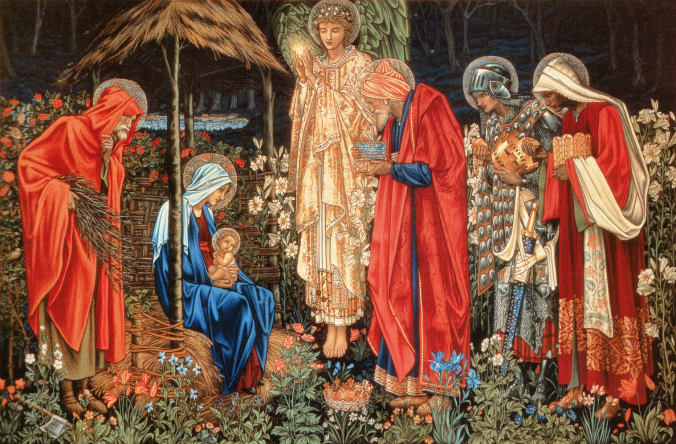
When Jesus was born in Bethlehem of Judea, in the days of King Herod, behold, magi from the east arrived in Jerusalem, saying, “Where is the newborn king of the Jews? We saw his star at its rising and have come to do him homage.” When King Herod heard this, he was greatly troubled, and all Jerusalem with him. Assembling all the chief priests and the scribes of the people, He inquired of them where the Christ was to be born. They said to him, “In Bethlehem of Judea, for thus it has been written through the prophet: And you, Bethlehem, land of Judah, are by no means least among the rulers of Judah; since from you shall come a ruler, who is to shepherd my people Israel.” Then Herod called the magi secretly and ascertained from them the time of the star’s appearance. He sent them to Bethlehem and said, “Go and search diligently for the child. When you have found him, bring me word, that I too may go and do him homage.” After their audience with the king they set out. And behold, the star that they had seen at its rising preceded them, until it came and stopped over the place where the child was. They were overjoyed at seeing the star, and on entering the house they saw the child with Mary his mother. They prostrated themselves and did him homage. Then they opened their treasures and offered him gifts of gold, frankincense, and myrrh. And having been warned in a dream not to return to Herod, they departed for their country by another way.

Meditation Reflection:

After the bustle and excitement of Christmas celebrations, the days following often produce mixed feelings.  On the one hand a sigh of welcomed relaxation and the comfort of settling back into normalcy.  On the other hand, a sigh of sadness as we ache from missing our loved ones, along with a moan of pain as the brutal cold and darkness depress our commute.

Although the Christmas decorations may be coming down and routine returning , the true “Spirit of Christmas” (as every Hallmark movie loves to reference), ought to remain present and illuminate our homes.  The Feast of the Epiphany witnesses that the birth of Christ has ushered in a light that radiates with the strength of mid-summer rays and remains enduringly without diminishment.

The wise men travelled an arduous distance to find this light in the darkness.  As we begin surfing the internet for discount airline tickets and the brief relief of a warm, sunny vacation, we can take a lesson from the magi and intentionally seek out the true and lasting “Sun” of God.  Rather than merely making plans for the Caribbean, make plans to seek the Lord as well, where you can soak in the warmth of His rays of grace and love.  Surf for Christ-destinations such as Eucharistic Adoration, Mass, Confession, Scripture, spiritual reading, or silent prayer. Vacations refresh us with the energy we need to keep going in our daily routine.  Breaking away to soak up quality time with Christ will do the same.  It will refresh our weary spirits, lighten our dark moods, and deepen our lives with purpose and personal connection.

So, wrap up and stack your red and green decor in totes, and without a doubt discard the once fragrant Christmas tree that has now dried up into a mess of needles and a worrisome fire hazard.  Keep the light of Christ however.  After having drawn near to Him at His birth, remain with Him.  Keep close to Him.  Lay your whole self before Him in homage as the magi did, and offer Him every gift and talent you possess.  “Then you shall be radiant at what you see, your heart shall throb and overflow” (Isaiah 60:5).

Christmas celebrates the appearance of our long awaited Savior which lasts eternally not just one day. His coming should be transformative and therefore change the way we think and act, and re-prioritize our hopes and desires.  The New Year doesn’t mark the end of the holidays.  Rather, it marks the beginning of our new, and renewed, life in Christ.  The Magi left Bethlehem filled with joy and hope.  Mary left Bethlehem with Jesus in her arms close to her heart.  May we leave this Christmas season in the same way.

Consider:

  • Spend a few minutes in prayer drawing near to Christ like Mary, Joseph, and the Magi.  Surrender to Him in humility, love, and homage as they did.
  • How might you keep close to Christ daily and weekly?  Where might you encounter Him?
  • What gifts might you offer to Jesus?
    • Gold (wealth) – how well are you doing at tithing? Do you give the Lord your first 10% in thanksgiving and faith? Is there some way He is asking you to be more generous with your money or with your time and service?
    • Frankincense (used in worship of God) – How can you offer Christ your worship?  What might you offer to Him as a sacrifice?  How can you apply your talents and abilities to advancing the Kingdom of God?
      • [For example: offer patience with a family member as a sacrifice, offer your daily work as a sacrifice – especially the most tedious aspects, or offer living your faith authentically in the workplace rather than joining in un-Christian jokes, conversations, or activities.]
    • Myrrh (used as ointment for burial) – How can you honor Christ’s death for you?  Do you live as one saved or persist in certain sins?  Consider how to live more intentionally as one freed by Christ.  Meditate on the sufferings of Christ and unite your own suffering to His.

Make a Resolution (Practical Application):

  • Choose one “gift” to present to Jesus for this year.
  • Seek Christ this week in an intentional way.  Set aside 10-15 minutes for prayer or spiritual reading, or seek Him in the sacraments.

Related Posts:

Setting goals for the New Year – Lessons from the Magi

The Universal Search For God

~ Written by Angela Jendro © 2018

* To receive these weekly posts automatically in your email just click the “follow” tab in the bottom right hand corner and enter your email address.


Making Room for Christ

by Angela (Lambert) Jendro

 making room for christ to come

December 10th, 2017 2nd Sunday of Advent

Gospel of Mark 1:1-8 NAB

The beginning of the gospel of Jesus Christ the Son of God.  As it is written in Isaiah the prophet: Behold, I am sending my messenger ahead of you; he will prepare your way. A voice of one crying out in the desert: “Prepare the way of the Lord, make straight his paths.” John the Baptist appeared in the desert proclaiming a baptism of repentance for the forgiveness of sins. People of the whole Judean countryside and all the inhabitants of Jerusalem were going out to him and were being baptized by him in the Jordan River as they acknowledged their sins. John was clothed in camel’s hair, with a leather belt around his waist. He fed on locusts and wild honey. And this is what he proclaimed: “One mightier than I is coming after me. I am not worthy to stoop and loosen the thongs of his sandals. I have baptized you with water; he will baptize you with the Holy Spirit.”

Meditation Reflection:

It’s the time of year for making room – in our closets, our homes, our schedules, and our lives.

We live in a culture so in love with stuff that we need storage units just to hold the overflow of possessions. Additionally, the rampant competitiveness in the culture adds pressure to our schedule, forcing our waking hours to overflow into the late night and early mornings.

When I was single I could handle quite a bit of buildup in things and reduction in sleep.  A few weeks into motherhood however it became clear we would all drown if I didn’t take regular action.   When my kids were younger we had a tradition every year of cleaning out their rooms and closets a couple of weeks before Christmas and a couple of weeks before their birthdays.  I would give them two bags – one for garbage and one for giveaway.  Anything broken, grown out of, or no longer used had to go to make room for the new gifts.  I too would clean out my things and reassess our calendar.

Advent provides an opportunity for us to do the same thing in our spiritual lives a few weeks before Christmas.  In anticipation of the greatest gift – Jesus Christ, the Son of God – we must make room in our souls, our schedules, and our lives.  It’s a time to step back and make an honest examination of what occupies our hearts.  Much like when I hold up an old sweater and debate whether I will really wear it again or not, I must examine the things I spend time and energy on and ask if they are still worth it, or just taking up valuable space.

If it’s so difficult to let go of an old ratty sweater overrun with pills, how much more difficult to let go of old bad habits or frames of mind.  We hold on to useless or worn out things simply because we hate change and we love nostalgia.  We may rationalize that we will “use that someday” but we don’t even know all the “thats” we have anymore.  We just don’t want to let go of something that’s been with us so long.

Similarly, we resist honestly evaluating our priorities, bad habits and sins.  In some ways they can begin to feel a part of our identity.  However, the process of decluttering our soul can be marvelously freeing and enable us to move forward in our lives.  The questions we must ask will vary as much as the clutter in our homes.  You may have to consider, “Am I a hard worker, or have I become a workaholic? Or the opposite: “Do I have a healthy amount of down time in my life, or have I just become lazy?”  About attitudes one might ask “Am I someone who doesn’t get riled up about much, or am I just complacent?” or the opposite: “Am I someone who cares passionately about things, or do I make an idol out of causes or get too involved in other people’s business?”

Outside perspective can help.  If you share a closet, garage, or home with someone, they will quickly tell you which items have been hogging space for no reason.   Loving family and friends can also offer valuable insight.  They can more easily identify the ways you have grown as a person and the things that hold you back.  The Holy Spirit can also guide you if you ask.  He can enlighten your mind to see things from God’s perspective and soothe you with grace to let the lesser goods go.

After decluttering, the final preparations for Christmas celebrations involve cleaning.  Mineral build up on the faucet, sticky fingerprints and globs of ketchup on the refrigerator, half-finished projects that have become an eyesore or safety hazard, and dusty surfaces dull the beauty of our homes.  It takes time and sweat, but the shiny glean in every room renews our appreciation of the gifts God has bestowed upon us and the joy of home.

In the same way, our virtues and gifts can dull from the challenges of everyday life.   Stepping back for a little introspection can help us reclaim those pieces of ourselves we love and let them shine again.

Some things may need to go and some things may be reasonable to keep, or some things may need a deep clean, but at the end of the process our souls shine with the beauty God has given us, and Christ has more room to fill with His divine presence and peace.

Consider:

  • Prayerfully list your priorities.  Where do God, work, family, friends, hobbies, and self-care rank?
  • Consider your schedule: How well do you balance time for God, time for taking care of yourself, time for helping others, and time to accomplish your work well?
  • Consider your possessions:  How well do your things represent your priorities?  Are there ways your possessions could better reflect what matters to you?
  • Consider your heart:  What occupies your desires most?  Be honest.  Then relate them back to your priority list.  Prayerfully ask the Holy Spirit to increase your desire for the Lord and for loving relationship with others, and to decrease your desire for what competes with them.
  • Consider your mind:  What occupies your thoughts?  What do you spend time learning about?  How well are you making time for introspection and spiritual growth?  Do you take the time to think of others or to identify your own needs?  What tends to distract you or consume your mind? How might you detach somewhat?

Make a Resolution (Practical Application):

  • Make room for Christ in your home, your schedule, and your heart.  Declutter your biggest horde, simplify your time commitments, and increase your prayer and spiritual reading by 10 minutes.
  • Do an examination of conscience and encounter Christ in the Sacrament of Reconciliation.

Related Posts:


~ Written by Angela Jendro © 2017

* To receive these weekly posts automatically in your email just click the “follow” tab in the bottom right hand corner and enter your email address.


Fueling the Fire of Love

by Angela (Lambert) Jendro

20170217_010616065_iOS 

November 12th, 2017 32nd Sunday in Ordinary Time

Gospel of Matthew 25:1-13 NAB

Jesus told his disciples this parable: “The kingdom of heaven will be like ten virgins who took their lamps and went out to meet the bridegroom. Five of them were foolish and five were wise. The foolish ones, when taking their lamps, brought no oil with them, but the wise brought flasks of oil with their lamps. Since the bridegroom was long delayed, they all became drowsy and fell asleep. At midnight, there was a cry, ‘Behold, the bridegroom! Come out to meet him!’ Then all those virgins got up and trimmed their lamps. The foolish ones said to the wise, ‘Give us some of your oil, for our lamps are going out.’ But the wise ones replied, ‘No, for there may not be enough for us and you. Go instead to the merchants and buy some for yourselves.’ While they went off to buy it, the bridegroom came and those who were ready went into the wedding feast with him. Then the door was locked. Afterwards the other virgins came and said, ‘Lord, Lord, open the door for us!’ But he said in reply, ‘Amen, I say to you, I do not know you.’ Therefore, stay awake, for you know neither the day nor the hour.”

Meditation Reflection:

What do we need to be ready for Christ?  At Baptism we received a lighted candle, and the call to be the light of Christ in the world.  Sometimes we may feel that zeal and live our faith in a powerful way.  Other times the routine and busyness of every day drains our energy and we become drowsy or complacent.  Work projects or sports tournaments begin to overshadow weekly Sunday Mass and after rationalizing missing one Sunday we easily slip into missing most.  Seeing our bible collect dust we might open it up and resolve to read it every day until we’ve completed it cover to cover.  Half-way through Genesis, the first book of the Bible, we give up.  Maybe we are going through a tough time and it renews our zeal to pray daily.  After it passes we continue a little longer in thanksgiving.  A few weeks into the hum drum of life without much drama we begin to forget that time with the Lord.

So how do we keep our candles lit during the long wait? Heaven is union with God and so we need to burn with the fire of His love.  Authentic love perseveres because it’s rooted deeper than the emotions.  It requires conviction, consistent nurturing, and Christ’s grace.

Every relationship requires effort and ongoing time and attention to be sustained.  In the same way, we can fuel our love for Christ by developing our convictions through ongoing study of Scripture, the teachings of our Faith, and the lives of the saints.  We can nurture our relationship by setting aside time with the Lord daily in prayer and weekly at Mass.  Lastly, we can ask Christ for His grace to sustain us and transform us.  Most importantly, when we come to the banquet of His love in the Eucharist, He fills us with His divine love which burns away anything that comes between us and Him.

We can also root out things that undermine our relationship with Christ by rooting them out in our human relationships as well.  Being attentive to our family, friends, neighbors, and coworkers will require many of the same virtues we need to be attentive to the Lord.  To listen to our loved one when they need to talk will mean saying no to whatever else was occupying our attention at that moment.  To visit someone will mean scheduling time and moving other things around to make it happen.

Christ wants to visit us today.  Where can He find an open door and a lighted lamp?  Hopefully He can find us at prayer, speak to us in Scripture, and be received by us in the Eucharist at Mass.  Then, when He comes again for the final time, we will be ready and our joy will be complete.  During our lives we will have said, “Come Lord, enter my heart and be welcomed by my love.”  And at the end of our lives, He will stretch His hand out to us, where we will find the door open and He will say to us, “Come my child, enter my heart and be welcomed eternally by my love.”

Consider:

  • When has your faith been most on fire for the Lord?  Was it after a retreat, an experience in prayer, a profound event in your life, a speaker or book you read, sacred music that lifted your heart?
  • What competes with your devotion to Christ?  Distractions from pleasures, anxiety from stress, a busy schedule, a pull toward laziness, numbness from emotional pain, an addiction?
  • How do you prepare for guests, especially at the holidays?  Consider the extra thoughtfulness you put into preparing food they will like or attentiveness to the little details that will add warmth to the experience.
  • Consider Christ visiting.  How might you be attentive to Him? Schedule time for conversation.  Welcome Him through others by works of mercy.

Make a Resolution (Practical Application):

  • Resolve on one thing this week to detach you from something that competes with love for Christ, and one thing to keep the fire of love lit for Him.
    •  Ideas for detachment:  Identify an attachment (click here for how to: identifying attachments), then practice the opposite virtue.  If you don’t pray because you sleep through your morning alarm, resolve to get up at the right time or 10 minutes earlier.  If you have work or sports on Sundays, look ahead to find a Mass time that will work, even if you have to visit a different parish to do so.  If possible, change your work schedule.
    • Ideas for feeding the fire:  10 minutes of prayer, spiritual reading, learning about your faith through books, podcasts, or a class at church, reading about the life of a saint, spending time with a faith-filled Christian friend.

~ Written by Angela Jendro © 2017

* To receive these weekly posts automatically in your email just click the “follow” tab in the bottom right hand corner and enter your email address.


Keeping it Simple and Keeping it Real

by Angela (Lambert) Jendro


October 29th, 2017 30th Sunday in Ordinary Time

Gospel of Matthew 22:32-40 NAB

When the Pharisees heard that Jesus had silenced the Sadducees, they gathered together, and one of them, a scholar of the law tested him by asking, “Teacher, which commandment in the law is the greatest?” He said to him, “You shall love the Lord, your God, with all your heart, with all your soul, and with all your mind. This is the greatest and the first commandment. The second is like it: You shall love your neighbor as yourself. The whole law and the prophets depend on these two commandments.”

Meditation Reflection:

St. John tells us that “God is Love” (I John 4:8).  He actively loves you and I at every moment.  He created the world out of nothing to be a home for humankind and continues to hold all things in existence and guide them by His divine providence. He created each of our souls at the moment of our conception.  The Second Person of the Trinity even became man, suffered, and died for our Redemption after we sinned so we could become new creations by grace.  Even before creation however, He was Love.  In His very essence God is a union of three divine Persons – Father, Son, and Holy Spirit.  His very nature is an eternal relationship of love.

Moreover, Genesis reveals that God’s love is so great He made humankind in His image to participate in His love. Thus the God who is love, created us to also be love. In the first creation account He created man and woman at the same time, that they too might be a union of persons, capable of love and creativity like God.

“God created mankind in His image; in the image of God He created them; male and female He created them. God blessed them and God said to them: Be fertile and multiply.” Genesis 1:27-28

In the second Genesis account God created man first but he felt alone and unfulfilled.  There was no suitable partner for him among all of God’s animals.  Why?  Aren’t dogs and cats adorable?  Wouldn’t it be wonderful to enjoy God-given reign over all of creation without having to share it with anyone? Adam had water front property, lush gardens, and plenty of food.  He had everything a single person could desire – power, pleasure, abundance, security, and was surrounded by affectionate pets.  Why was he unhappy?

“The LORD God said: It is not good for the man to be alone. I will make a helper suited to him. Genesis 2:18

Made in the image of God, Adam could only find fulfillment through being a union of persons.  Together Adam and Eve could unite both body and soul.  They could know one another, choose one another, and love one another, both spiritually and physically.

In the Beginning, living in God’s image was simple and joy-filled.  Adam and Eve walked with God in the Garden.  Their work was without toil and they rested each Sabbath to worship God and rejoice in gratitude.  As Pope Benedict XVI explains:

In the creation account the sabbath is depicted as the day when the human being, in the freedom of worship, participates in God’s freedom, in God’s rest, and thus in God’s peace.” (In the Beginning…A Catholic Understanding of the Story of Creation and the Fall, 1990)

Things only get complicated after the Fall, that first dreadful sin.  God is a realist.  He made everything according to a rational order and taught Adam and Eve those laws so they might be safe and flourish.  In their moment of temptation however, they rebelled in pride, chasing the illusion that they could be the creators of reality rather than creatures already a part of reality.  Yet, the truth is always true.  God said their choice would bring death, the serpent said it wouldn’t, and Adam and Eve chose based on their senses – “it seemed good and looked delightful.”  They chose against God and they found He was right – death entered the world.

It’s easy to point the finger at their foolishness, but consider our own common teenage rebellions.  Despite the love and trustworthy guidance of good parents, how often do teens think to themselves, “I know more than mom and dad.  I’m going to do this my way and ignore their rules,” only to find themselves suffering the results their parents had warned them of?

When have you thought the same thing about God’s guidance?  God guides us through the natural law, Scriptures, and the Church.  Yet, we still struggle with the tempting thought that what we feel like doing is better than what we ought to do.  Again and again, we suffer when our feelings prove illusory and God’s guidance true.

People will often say, “The Church isn’t realistic.  It needs to get with the times.”  Abstinence for unmarried persons instead of birth control? Fantasy.  Truthfulness at work?  You’ll never get ahead.  Children instead of pets?  Maybe one or two, but beyond that will be misery.  Church every Sunday?  That’s excessive.  Resting on Sunday?  Who will get all the work done?

Yet, the truth remains the truth.  Our illusions do not change reality.  We chase where our impulses lead only to find ourselves depressed and unhappy.

Happiness is simple.  It means being a real realist. It means living as a human person not something else you or the culture imagines.  It may not be easy, but God gives us grace to live in His truth.

God’s laws only become complicated inasmuch as we make them complicated.  In my classroom I have a mini basketball and hoop for kids to play during passing time.  I begin the year with two rules: when the bell rings the ball gets put away, and no blood (I don’t want kids getting hurt and there’s a reason I’m a teacher and not a doctor or nurse).  Some classes get it and those are the only two rules that I ever need.  They have a little fun and our class begins on a positive note.  Others overcomplicate things.  They start fighting over the ball, becoming overly rough or competitive, launching it over people’s heads, or they keep trying to shoot the ball into its rightful place despite missing many times.  In consequence, they force me to make more rules to ensure that my basic two are met and what began as simple fun becomes a frustration.

Jesus teaches that God really only has two rules as well.  If we simply love God with our whole self – heart, mind, and soul, everything else falls into place.  Living in union with God we find our true selves and the source of all happiness.  From our free relationship of love with God, we then seek to love others, His image among us.  Through self-gift and loving relationship, we find self-fulfillment and deep joy because we are living in reality, feeding on real food and journeying toward our real end.

All the other rules are in response to the myriad of ways we violate the basic two.  If we loved God first then our neighbor, we would have the common sense to do the other things as well.  If I love God, I’m going to spend Sunday with Him.  If I love my neighbor, I’m not going to lie or cheat him, and if I see him in need I will want to help.

Developing Christian common sense may take time, depending on your past formation or experiences.  Jesus knows our brokenness, blindness, and weakness.  He came to be our Healer, the true Light to guide us, and the source of Strength to transform us.  Love has a mysterious and beautiful power to melt away sadness and hurt, and fill us with joy.  You might begin by needing a rule to go to Mass on Sunday, but once you experience the touch of Christ’s love, you will find it a gift instead.

Consider:

  • When have you experienced God’s love – through another person, in prayer, or at Mass?
  • When has God’s truth been a sure guide for you during a confusing time?
  • Which laws of God, either through Scripture or the Church, do you find most difficult to accept or to live out?
  • How has God’s grace enabled you to live virtuously or love at a level you couldn’t have imagined before?
  • How might you love God more?  What areas of your heart, mind, soul, or strength do you still withhold from him?  Is there a teaching of Christ you struggle to accept?  Is there someone you find difficult to give generously of your heart to? Do you spend Sunday with the Lord and family or use your strength for more work instead? Do you spend time thanking God and being in His presence, or do you love something else more?
  • Reflect on Mary’s perfect love exemplified by her simple Yes at every moment.

Make a Resolution (Practical Application):

  • Each day this week give God more of your heart, mind, or strength.  Ask Him to increase your love for Him in each of these areas then do one concrete thing a day to act on that love.
  •               Ideas:
    • To love God more with your mind spend 5 more minutes a day with Scripture, listen to Christian podcasts or radio, learn about the faith at your parish or by reading a spiritual book.
    • To love God more with your heart, increase your affection for Him by making a gratitude list, praying a Psalm  (especially 23, 27, 119, or 139), meditating on the rosary, or attending a daily Mass.
    • To love God more with your strength, do something of service for someone in need.  Care for someone who is sick, help out a co-worker who is swamped, volunteer to help at your church by taking care of the building or grounds or by helping with the service as a greeter or usher.   Most importantly, resolve to avoid servile work on Sunday and instead play with your kids or go visit a friend.

Related Posts

~ Written by Angela Jendro © 2017

* To receive these weekly posts automatically in your email just click the “follow” tab in the bottom right hand corner and enter your email address.


God’s Treasure – Knowing Your Value

image by aint_he_faithful

by Angela (Lambert) Jendro


October 21st, 2017 29th Sunday in Ordinary Time

 Gospel of Matthew 22:15-21 NAB

The Pharisees went off and plotted how they might entrap Jesus in speech. They sent their disciples to him, with the Herodians, saying, “Teacher, we know that you are a truthful man and that you teach the way of God in accordance with the truth. And you are not concerned with anyone’s opinion, for you do not regard a person’s status. Tell us, then, what is your opinion: Is it lawful to pay the census tax to Caesar or not?” Knowing their malice, Jesus said, “Why are you testing me, you hypocrites? Show me the coin that pays the census tax.” Then they handed him the Roman coin. He said to them, “Whose image is this and whose inscription?” They replied, “Caesar’s.” At that he said to them, “Then repay to Caesar what belongs to Caesar and to God what belongs to God.”

Meditation Reflection:

Consider the value and meaning we place on money.

First, there’s the cultural pressure to value ourselves based on our bank account.  We call name brand clothes, luxury vehicles, the size and elegance of a home, or exotic vacations “status symbols” because they reflect our monetary power and therefore our personal value.  Consider how many people struggle with low self-esteem, whether in grade school or retired, because they lack the apparent wealth of others.

Our perception of the value of our work can also be tied to the numbers.  How many decisions do we make based on how much money it pays rather than based on whether it’s God’s will? How many opportunities do we miss because we are afraid of having less and worry that we will thereby be less.

Currency further identifies our national ties.  Each country has its own currency with images of its leaders and heroes.  To buy or sell in another nation requires exchanging your local money for the proper foreign coins.

These habits of mind might belong in the kingdom of fallen man, but not in the Kingdom of God.  God created everything from nothing, and continues to govern it and hold it in existence.  He imprinted His image on man and woman, and placed a value of infinite worth on each.  The only way to devalue this currency is to distort God’s image within us, which we all do through sin (except Jesus and Mary) since Adam and Eve.  Nevertheless, Jesus came to restore God’s image within us, and to elevate it to an even higher union and dignity by uniting our human nature with His divine nature through His Incarnation, suffering, death, and resurrection.

Jesus doesn’t condemn Caesar’s image on Roman coins because it’s an earthly currency for an earthly political system.  Rather, Jesus reminds us that our citizenship in His kingdom transcends our human institutions.

God desires that we revere Him as the King of kings, worship Him as Creator, and love Him as Father and Redeemer.   He has bestowed His royal dignity upon us and urges us to return back to Him His image.  We don’t earn heavenly currency, we become it and we receive it.

Jesus reveals that we are God’s treasure.  If we want to chase the dollar, we should chase God’s dollar.  Through deeper union with the Lord, His grace transforms us more and more into His likeness.  We also begin to see God’s image in others and their corresponding value and beauty.

Thus one person, no matter how broken, is worth more than as many images of Ben Franklin you could stack.

I was reminded again of this truth just a couple of weeks ago when my sister and brother-in-law welcomed my baby nephew into the world.  Our whole family rejoiced at such a precious gift and my heart aches until I can visit and hold him in my arms. The only addition possible to this joy, was the preciousness of the love which my sister’s children showed toward their baby brother, and the sweet love my children expressed over him too.

Love sees the whole person.  When a family member or loved one becomes ensnared in a serious sin, addiction, or suffers under mental illness, we feel sorrow because we see how these things distort the image of the true person we know, and all they could be.  We want the ones we love to flourish.  We value them for simply them, not anything they have accomplished or not.  I love family reunions just because I enjoy being around those I love.  I have grown up with my brother, sister, and cousins for many years now.  I have seen us all go through ups and downs, great strides and tough struggles.  I love them all when they are doing well, and just as much when they are struggling.  I hate anything that would hold them back from the fullness of Christ’s joy, and yet I also know that God can work all things together for good.

Money can buy temporary pleasures and momentary experiences.  However, the more we image the Lord, the deeper we experience a well-spring of joy, and far richer experiences than we can find anywhere else.  It can hardly be described in words so I won’t even try.  Christ doesn’t explain it either.  He simply says, “Come and see” (John 1:39).

Come and see Jesus, and see your true worth in His eyes.

Consider:

  •  Think of the people you His vision.  Ask Him to enable you to see yourself and others as God does.

Make a Resolution (Practical Application):

  •  Each morning, “give to God what is God’s” – His image in you.  Pray for trust that “the One who began a good work in you will continue to complete it until the day of Christ Jesus” (Philippians 1:6)
Prayer by St. Cardinal John Henry Newman

God has created me to do Him some definite service. He has committed some work to me which He has not committed to another. I have my mission. I may never know it in this life, but I shall be told it in the next. I am a link in a chain, a bond of connection between persons. He has not created me for naught. I shall do good; I shall do His work. I shall be an angel of peace, a preacher of truth in my own place, while not intending it if I do but keep His commandments. Therefore, I will trust Him, whatever I am, I can never be thrown away. If I am in sickness, my sickness may serve Him, in perplexity, my perplexity may serve Him. If I am in sorrow, my sorrow may serve Him. He does nothing in vain. He knows what He is about. He may take away my friends. He may throw me among strangers. He may make me feel desolate, make my spirits sink, hide my future from me. Still, He knows what He is about.

  • This week, try to see yourself and others as God does.  Pray for their freedom and yours from sin, fear, or addiction, and the gift of Christ-filled joy.

Related Posts:

Becoming Rich: Investment Strategies From Christ

Preparing the Soil…Spiritual Receptivity

Finding Fulfillment in Self-Gift

Authentic Love

~ Written by Angela Jendro © 2017

* To receive these weekly posts automatically in your email just click the “follow” tab in the bottom right hand corner and enter your email address.


Choosing between Adolescent Illusions or Adult Freedom

by Angela (Lambert) Jendro
fra-angelico-the-annunciation1

In the top left, Adam and Eve leaving the Garden after pridefully rejecting God for false illusions of freedom. In contrast, Mary humbly receives God at the Annunciation, finding true freedom in service.

October 8th,2017 27th Sunday in Ordinary Time

Gospel of Matthew 21:33-43 NAB

Jesus said to the chief priests and the elders of the people: “Hear another parable. There was a landowner who planted a vineyard, put a hedge around it, dug a wine press in it, and built a tower. Then he leased it to tenants and went on a journey. When vintage time drew near, he sent his servants to the tenants to obtain his produce. But the tenants seized the servants and one they beat, another they killed, and a third they stoned. Again he sent other servants, more numerous than the first ones, but they treated them in the same way. Finally, he sent his son to them, thinking, ‘They will respect my son.’ But when the tenants saw the son, they said to one another, ‘This is the heir. Come, let us kill him and acquire his inheritance.’ They seized him, threw him out of the vineyard, and killed him. What will the owner of the vineyard do to those tenants when he comes?” They answered him, “He will put those wretched men to a wretched death and lease his vineyard to other tenants who will give him the produce at the proper times.” Jesus said to them, “Did you never read in the Scriptures: The stone that the builders rejected has become the cornerstone; by the Lord has this been done, and it is wonderful in our eyes? Therefore, I say to you, the kingdom of God will be taken away from you and given to a people that will produce its fruit.”

Meditation Reflection:

Spiritual growth, like physical and emotional development, must move from childhood and adolescence to reach mature adulthood. As our Heavenly Father, the Lord patiently endures our annoying behaviors of immaturity and lovingly guides us into adulthood.  Unfortunately, just as some grown adults seem stuck in adolescent thinking and habits, so too many of us hold on to immature spiritual attitudes and resist the leadership of our Father, thus stunting our growth.

Weighed down by the effects of original sin, tempted by the Enemy and bolstered by our own pride, most often we substitute a false sense of entitlement and independence for rightful gratitude and obedience to God.  Like the teen who begins to think his parents owe him everything he desires, or defies their rules with a sense of superiority, we can get stuck in the trap of demanding God’s goodness while denying His Lordship.

Pope Benedict XVI relates this struggle to the original temptation of Adam and Eve, which he describes as a denial of their “creatureliness.”  Having grown accustomed to the paradisiacal gift of their existence and the beautiful Garden, the Enemy introduced the idea of entitlement and ingratitude.  Satan himself had refused to live in gratitude, preferring his own self-centered pride.

Called “the father of lies,” Satan lives in eternal anger at God who is reality itself (as revealed to Moses when He shared His Name – YHWH – “I AM”).  The Enemy prefers his Illusions of entitled independence to a life of gift.  However, illusions cannot satisfy but only leave us empty.

Angry at God, he tries to recruit others to his side.  He hates to see persons living in the joy of God’s love, therefore he proposed an alternative, distorted view of the Lord to Adam and Eve.    He suggested that their experience was not in fact paradisiacal, but rather quite impoverished.  To depend on God or obey His laws, he proposed, would be to accept slavery to a selfish and manipulative deity.  In truth Satan was the selfish, manipulative one with a god-complex, whereas the Lord had been nothing but generous and truthful with Adam and Eve.  Satan argued that contrary to their experience, freedom and happiness lay in rebellion rather than rightful relationship with the Lord.  Rather than rebuking the serpent for such hateful lies, they thought about the serpent’s words and chose to reject what they knew about God from experience for the false hope of a better life without God.

This same temptation infects each of us, their children, both from within our own rebellious hearts and the sly lies of the Enemy.  Jesus’ parable tells of God’s care for us, providing everything we need.  He rightly expects only His due, and yet we resist Him.

God blesses us with every good thing, but envy looks outward and turns back to God in complaint that we don’t have more. Every week that God blesses us with life, He asks only for one day in return.  Moreover, as our loving Father, He doesn’t even ask that the day be spent in chores but rather that we rest and spend time with Him and our family. Yet, how often do we complain that setting aside work to worship the Lord is burdensome!

Consider also our prayers of entreaty for God to provide – a job, a home, possibly a spouse and children.  We praise God for a short while when He bestows these gifts, but soon begin to complain about them.  Even worse, we easily forget that they were even gifts and delude ourselves that we have achieved them single-handedly.  Confident now in our own abilities we fall into the destructive cycle of always grasping for more, never satisfied and never at rest, spiritually alone; producing the hell-ish existence that Satan hoped for us.

Do not be deceived, my beloved brothers: all good giving and every perfect gift is from above, coming down from the Father of lights.  James 1:16

Today’s Gospel reiterates the theme from each of the readings this past week, “The Kingdom of God is at hand” (Luke 10:11).  Christ has come and He invites every human person to relationship with Him.  We must make a choice and take responsibility for the consequences like adults.

Moreover, we must examine or attitude toward those whom Jesus has sent with His authority to bring God’s truth to us. Jesus told His apostles that “Whoever listens to you listens to me. Whoever rejects you rejects Me. And whoever rejects Me rejects the One who sent Me(Luke 10:16). Jesus established the Church to preserve, protect, and promulgate His Word.  When we feel like characterizing the moral law or Church teaching as oppressive rather than freeing, we can remember from whom that lie comes.  We must decide if we trust God or tempting illusions.

Jesus invites us into mature relationship with the Lord.  He offers the freedom and dignity of spiritual adulthood through the guidance of the Holy Spirit, Scripture, and the Church.  He even provides the grace to transform our hearts from weakness to strength, from selfishness to self-gift, and from illusions to Truth.

He asks each and every one of us today, “which do you choose”?

Consider:

  • Invite the Holy Spirit to guide you in a prayer of gratitude.   Ask Him to open your heart and mind, as you reflect on every good thing that comes from God.
  • Consider where envy, greed, or pride distorts your perception and causes discontentment to fester.   Reflect on the situation(s) from the perspective of Christ’s example.
    • Greed or Envy: The newest gadget is only an illusory pleasure, whereas union with Christ in prayer and sacraments yields deep abiding joy.
    • Pride: In the Kingdom of God, service and sacrifice rank highest rather than lowest.
  • Consider how an adult views freedom in contrast with an adolescent.  Do you trust God’s guidance to be freeing, or do your own judgment or worldly wisdom?
  • How is the Lord visiting you today?  What fruits is He asking for as produce of the gifts He has bestowed upon you?  How might you put your gifts more at the service of God and others?

Make a Resolution (Practical Application):

  • Make a list of each of God’s gifts in your life.
  • For each gift, offer one fruit a day for each back to God. For example:
    • Your Job:  Offer the fruit of Christian witness by refraining from vulgar language or joining in crude jokes.  Be truthful where you are tempted to lie or exaggerate.  Do one act of service for a co-worker.  Be joyful for the day and refrain from complaint.  Refuse to begin or join gossip.
    • Your Family:  Do one act of humble service for your spouse, children, or parents.  Combat taking your spouse or parents for granted by recognizing them with a word of thanks or deed of kindness, out of gratitude their contributions.

~ Written by Angela Jendro © 2017

* To receive these weekly posts automatically in your email just click the “follow” tab in the bottom right hand corner and enter your email address.


Christian Conflict Resolution

by Angela (Lambert) Jendro

September 10, 2017; 23rd Sunday in Ordinary Time

 Gospel of Matthew 18:15-20 NAB

Jesus said to his disciples: “If your brother sins against you, go and tell him his fault between you and him alone. If he listens to you, you have won over your brother. If he does not listen, take one or two others along with you, so that ‘every fact may be established on the testimony of two or three witnesses.’ If he refuses to listen to them, tell the church. If he refuses to listen even to the church, then treat him as you would a Gentile or a tax collector. Amen, I say to you, whatever you bind on earth shall be bound in heaven, and whatever you loose on earth shall be loosed in heaven. Again, amen, I say to you, if two of you agree on earth about anything for which they are to pray, it shall be granted to them by my heavenly Father. For where two or three are gathered together in my name, there am I in the midst of them”

Meditation Reflection:

Incorporation into the Christian community means being adopted into a family.  This in turn means we have a greater responsibility toward our brothers and sisters in Christ.

Jesus knows families can struggle with dysfunctional ways of dealing with things – from gossip, to triangulating, to manipulation or passive aggressive tactics, and more.  As the head of the Christian family however, He provides us with clear instructions about the best way to love our brother or sister in difficult situations.

First, Jesus tells us to confront our loved one directly if they have hurt us in some way.  This means we cannot play the martyr, hope they read our mind, let it build up, or sweep it under the rug.  Jesus knows healthy relationships require honest communication and ongoing reconciliation.  We all sin and we all inevitably treat our loved ones unfairly or unkindly.  To move forward reconciliation is essential.  In our pride however, we sometimes don’t even realize we are hurting the one we love unless they tell us.  Jesus instructs, therefore, that Christian love should make the person aware of their sin.  The Church actually lists this as a Spiritual Work of Mercy called “admonish the sinner.”  It’s not meant to be mean or judgmental, but to help a person grow into Christian maturity.

If the person won’t listen, likely claiming that you are being unfair, then Jesus proposes you bring another witness or two.  The goal would be to open the person’s eyes to their sin so they can be healed and reconciliation can be restored.  Sometimes the perspective of a couple of people can help to establish with objectivity the truth of the situation.

It’s amazing how blind we are to our sinful attitudes and habits, especially toward our family!  Even when confronted, we hold on so tightly, and refuse to change.  We often rationalize, “This is how I am. My family should just love me unconditionally.”  However, because our family loves us unconditionally, we should try even harder to change because we want to give them the best version of ourselves not the worst.

In general, Jesus wants us to avoid the tornadic plague of gossip or the festering sore of passive aggressive retaliation.  He wants His family to be happy, healthy, and loving.  Direct communication and the ally of one or two close friends is usually enough for most problems.  However, there are some injustices which require wider assistance and, if not changed, are too destructive to let go on.  For instance, if a family member refuses to change his or her abusive behavior or treat an addiction, it needs to be brought to light for the whole community.  If the person still refuses to change, family members are sometimes forced to separate themselves from the person in order to protect themselves and others, and to, in love, withdraw from enabling the abuser or addict. It may seem extreme and even un-Christian, however Jesus came to conquer sin not to support it.  Paradoxically, separating from addicts or abusers can motivate change.  At the very least, it is a way of evangelizing.  It shows by your actions that the behavior is wrong.  Lastly, Jesus is teaching us that although we have a serious responsibility toward the souls of our Christian brothers and sisters, after we have gone through the process He laid out, we may feel sorrow for their situation but we are not responsible for their behavior.  At that point, we can have peace that we have done everything we could.  We must work tirelessly for the salvation of souls, but we must also know the limits placed on us by free will.

Thankfully, we can always be a blessing to others through prayer and sacrifice.  Even if we must separate from someone physically, financially, or even in communication, we can still pray for them.   Moreover, just as Jesus exhorted us to confront a person together, He also exhorts us to pray for others together.  As children of God, and heirs with Christ (Romans 8:17), our prayers come before Him with all the force and influence a son or daughter can have on their father, especially when they plead with him as a family.

In conclusion, the vocation of marriage plays an important role in the formation of this mindset and the practice of applying Christian love to all different kinds of situations.  In his encyclical Familaris Consortio, Pope St. John Paull II called the family the first “school” of Christian love, from which persons develop the Christian self-giving necessary for mature interaction with the world as adults.  He writes:

The family is the first and fundamental school of social living: as a community of love, it finds in self-giving the law that guides it and makes it grow. The self- giving that inspires the love of husband and wife for each other is the model and norm for the self-giving that must be practiced in the relationships between brothers and sisters and the different generations living together in the family. And the communion and sharing that are part of everyday life in the home at times of joy and at times of difficulty are the most concrete and effective pedagogy for the active, responsible and fruitful inclusion of the children in the wider horizon of society.

Familiaris Consortio par. 37

True love is more than an emotion.  It’s a decision to choose the good for one’s beloved.  The best course of action isn’t always easy and it isn’t always clear.  Thankfully, we are not alone in this.  We can look to Jesus and to our Christian family to show us the way.

Consider:

  •  Consider the gift of being God’s daughter or son.  Reflect on Jesus’ love for you as your Brother.
  • Consider how you handle conflict. What do you do well? What could you improve?
  • How might you apply Jesus’ instructions for resolving problems to a situation in your life?
  • When has someone shown “tough love” toward you? How did their loving honesty help you grow?
  • St. Padre Pio said, “Prayer is the best weapon we possess. It is the key that opens the heart of God.”   Consider the power of prayer.  Reflect on the gift of being able to actively fight for our brothers and sisters by praying for them to a God who loves us and will listen to us.

Make a Resolution (Practical Application):

  •  Apply Jesus’ process to a conflict in your life this week.
  • Resolve not to gossip this week.
  • Say a prayer every day for someone who bothers you.

Related Posts:

Finding Peace Amidst Division

Authentic Love

Getting the Last Word…But Making it a Blessing

~ Written by Angela Jendro © 2017

* To receive these weekly posts automatically in your email just click the “follow” tab in the bottom right hand corner and enter your email address.