Hope in Christ in Times of Darkness

by Angela Lambert

light-in-dark

October 9th, 2016 28th Sunday in Ordinary Time

Gospel Luke 17:11-19 NAB

As Jesus continued his journey to Jerusalem, he traveled through Samaria and Galilee. As he was entering a village, ten lepers met him. They stood at a distance from him and raised their voices, saying, “Jesus, Master! Have pity on us!” And when he saw them, he said, “Go show yourselves to the priests.” As they were going they were cleansed. And one of them, realizing he had been healed, returned, glorifying God in a loud voice; and he fell at the feet of Jesus and thanked him. He was a Samaritan. Jesus said in reply, “Ten were cleansed, were they not? Where are the other nine? Has none but this foreigner returned to give thanks to God?” Then he said to him, “Stand up and go; your faith has saved you.”

Meditation Reflection:

On His way to Jerusalem, where He would be rejected and killed for our sins, Jesus encountered ten lepers.  Since leprosy is highly contagious those who suffered with its physical harms additionally suffered from social isolation and rejection as well, banished to stay separate from healthy people.  When the lepers saw Jesus they called out because they could not approach in their condition.  Jesus’ instructions to show themselves to the priests required them to make an act of faith and hope.  Faith believes God’s words and hope acts upon those promises before necessarily seeing them.   At that time, if someone believed they had been healed from leprosy, they had to show themselves to the priests for examination before being cleared to reenter the community.  The lepers did not question Jesus’ command but did as He instructed before they had been healed.  They acted with hope based on belief in Jesus and His words.  As they walked in hope, they were cured.

The virtues of faith and hope direct one toward the highest of all virtues – charity.  Charity is the love of God above all things and love of neighbor out of love for God.  Only one leper demonstrated this higher virtue.  Jesus, who knows the hearts of all men, indicated that the man who returned had a deeper and more fruitful faith than the other nine.  Why?  He returned to Jesus to say thank you.

Consider how many of us quickly forget God’s miraculous work in our lives shortly after the crisis is over. We fall back into our regular routines and grow complacent or even complain about mundane things. Even worse, when the next crisis upsets our lives, we sometimes forget God’s power and fall to discouragement and negativity.  How can we avoid this common mistake?

A simple thank you and a disposition of gratitude express, as well as develop, the essential virtues of the spiritual life. Every day, and many times throughout the day, we have to choose our attitude.  We regularly experience the temptation to succumb to negativity, skepticism, disgust, and even despair.  Our present culture, especially during the current election cycle, presents seemingly constant negative and depressing messages.  From mainstream news to social media to conversations at work, the temptation to view the state of our nation in an overly negative light and give up in despair is constant.  However, with faith in Christ’s promise and hope in His transformative love, we can work through this crisis with the aid of the Holy Spirit and supernatural grace.

If everything depended on us alone, then discouragement and despair would be a sensible response. Take for example the Gospel passage.  The lepers would have considered their future to consist merely of painful physical deterioration and utter loneliness. Their lives took a completely new trajectory when they encountered Christ.  This surprising, unexpected event, liberated them their illness and gave them new hope for their future.

Propping up hope that man can save himself, then deepening discouragement at the realization that we can’t, are two common ways the devil tries to lead us away from the Lord.  We can benefit from doing a daily attitude check and remembering that when we encounter Christ, surprising, unexpected things can happen and change our lives and our world.

A favorite author of mine and Catholic historian, Christopher Dawson, wrote an essay entitled “The Six Ages of the Church” which gives me perspective for our current situation as a Church and as a nation.   In this essay he proposed that throughout the course of its 2000 year history, the Church has (and continues) to experience a cycle of three stages: crisis, response, and flourishing. With each challenge the Church experiences setbacks and loss.  In response, new apostolates arise and face the challenge resulting in a time of flourishing and achievement.  The next crisis sets the Church back again but new responses emerge again as well, and so on and so forth.

Viewing history from this perch inspires hope as we consider every age poses its challenges and Christians have felt the same confusion, disillusionment, and fear that we do.  Yet, in every age the Holy Spirit worked in the hearts of God’s people and inspired them with new ways to meet those challenges, adapt, and overcome.

light-2

This cycle applies to our individual lives as well.  We will encounter challenges that leave us feeling confused and helpless.  Nevertheless, if we call out to Jesus and walk forward in faith and hope, He will transform our lives and we will indeed flourish.  During times of peace, the challenge is to remain grateful and to return to the Lord, remembering that He is the source of our health.  We are always dependent on Him.  During times of crisis, we need to remember God’s power to transform, possibly even through us.  Thanksgiving, counting our blessings, and confidently surrendering to the Lord should be our daily response.  No matter what our crisis – individually, locally, or nationally – there are always things for which to be grateful and always hope for renewal.  As St. Paul says in 1 Thessalonians 5: 18 In all circumstances, give thanks,
for this is the will of God for you in Christ Jesus.”

Consider:

  • Reflect back on times that God helped you through a difficulty.  Consider the feelings you experienced beforehand and the joy afterward.
  • Consider how your faith, hope, and charity have grown over the years. How have your encounters with Christ in your daily life deepened your convictions?
  • When do you feel discouraged, pessimistic, and negative? What areas of your life are particularly vulnerable to this attitude?  How might you change your perspective?  What might you be overlooking or taking for granted in the situation?  How might you make a positive difference in it?
  • If you have children, consider what kind of formation they will need to be Christian leaders in our present culture. What virtues could you help them develop?  What persons or saints could you point them to for inspiration?  How might you nurture and develop their faith and their conscience?  How can you teach by example in your own life?

Make a Resolution (Practical Application):

  • Make a gratitude list. Each day reflect and thank God for three things from that day.
  • Do one thing this week to make a positive contribution or change where you are usually negative.
    • (examples: bring a treat for everyone to a meeting you would rather avoid and choose to smile; pray for our leaders each day this week; tell someone thank you each day for something; if you don’t like the music at church, volunteer your musical talents; if you don’t like what your spouse cooks for dinner, cook something yourself for everyone; if you keep having negative encounters with your child, proactively plan an activity or time together that will be positive; etc.)
  • Reduce discouraging messages this week (either via media or negative friends), and increase encouraging messages (read Scripture, listen to uplifting music or inspiring biographies).

*note of thanks to reader Carl Cadwallader for the topic suggestion of hope in Christ in times of darkness.

light-shine

~ Written by Angela Lambert © 2016

* To receive these weekly posts automatically in your email just click the “follow” tab in the bottom right hand corner and enter your email address.


Toughening Up

by Angela Lambert
saved from ministrymatters.com

saved from ministrymatters.com

October 2nd, 2016; 27th Sunday in Ordinary Time

Gospel Luke 17:5-10 NAB

 The apostles said to the Lord, “Increase our faith.” The Lord replied, “If you have faith the size of a mustard seed, you would say to this mulberry tree, ‘Be uprooted and planted in the sea,’ and it would obey you.

“Who among you would say to your servant who has just come in from plowing or tending sheep in the field, ‘Come here immediately and take your place at table’?  Would he not rather say to him, ‘Prepare something for me to eat. Put on your apron and wait on me while I eat and drink. You may eat and drink when I am finished’? Is he grateful to that servant because he did what was commanded? So should it be with you. When you have done all you have been commanded, say, ‘We are unprofitable servants; we have done what we were obliged to do.’”

 Meditation Reflection:

We live in a culture rife with an entitlement attitude.  Generation Yers get the worst rap for this and to be fair university studies have provided proof of its epidemic.  Generation Z is too young to tell for certain but from my own anecdotal experience it doesn’t appear likely to be much different.  (I myself am on the very beginning edge of Gen Y, although I was somewhat sheltered from an entitlement perspective thanks to my mother’s tireless efforts to curb my many attempts at this attitude).

Merriam-Webster defines this attitude as: “the feeling or belief that you deserve to be given something (such as special privileges).”  A NY Post article from May 10, 2010 cited a University of New Hampshire study which concluded that: “Gen Yers are characterized by a ‘very inflated sense of self’ that leads to ‘unrealistic expectations’ and, ultimately, ‘chronic disappointment.’” (http://nypost.com).  Granted, not every Gen Yer suffers from an inflated sense of self, it does seem to be a cultural trend and it impacts our relationships and sense of satisfaction at work, in our families, and in our faith.

Because of the effects of Original Sin, we all tend toward a self-centered narcissism and will continue to spiral down if our trajectory isn’t changed by grace, parenting, or other formative agents.  Jesus’ interaction with the apostles in this passage reminds me of interactions I’ve had with my own children.  When asked to do the dishes, clean a bathroom, or fold laundry I am met with attitudes of “why me?”  On other occasions a child of mine actually notices things that need to be done around the house.  Rather than simply pitching in and taking care of the problem, they see it as a job opportunity for which they should be rewarded. The conversation looks something like this –

Child:  “Mom, what will you give me if I unload the dishes?”

Me.:  “Clean dishes on which to eat.”

Child: “Mom, what will you give me if I clean the cat’s litter box?”

Me:  “I’ll let you keep having the cat as a pet.”

Child: “Mom, what will you give me if I help with the laundry?”

Me: “Clean clothes.”

Child: “Ackh.  Mooooom.  Forget it.”

5 mintues later:

Child: “I’m bored.”
Me: “Then do the dishes.”
Child: “That’s boring too.  What can I do that’s fun?”

Me: “I’m not your cruise ship captain.  Do the dishes and maybe boredom won’t seem like such a bad thing.”

If only we could say our conversations with God didn’t look remarkably similar.  How often do we take an entitlement attitude with the Lord?  It looks something like “Look Lord, I went to Mass on Sunday! What do I get?”  Or, “I put a few dollars in the collection plate, what will you give me?”

The entitlement attitude affects our expectations for the work to reward ratio as well and may be somewhat analogous to the passage for today’s Gospel.  The same NY Post article cited another study which summarized the expectations of entitled employees:

According to another study, which will be published in the Journal of Management in September…when it comes to work, the two things Gen Yers care most about are a) high salaries, and b) lots of leisure time off the job. ‘They want everything,’ says Campbell. ‘They want the time off. They want the big bucks.’ …

To reach their conclusions, Campbell and co-author Jean Twenge — a professor of psychology at San Diego State and author of “Generation Me,” a book examining discontent among members of Gen Y — worked over the data from an ongoing survey of high school students conducted annually since 1975 by the University of Michigan. Among their findings was that while both Gen Y and Gen X want sizable salaries, Gen X workers show greater awareness that a hefty paycheck comes with a hefty workload.

As Christians, we ought to evaluate our own expectations of working for the Lord.  We can forget that it’s a privilege to work as a laborer for the Lord in bringing in His harvest and that it’s a blessing to have a job.  When we feel like complaining, “What do I get for “carrying this cross?”, we can remember that we get to carry a cross.  We get to work.  We get to be near to Christ in the most intimate and meritorious moment of His work of salvation. We even get to help.  We also gain numerous other rewards from carrying our cross and laboring with the Lord, taking His yoke upon our shoulders.  Growing up, whenever I would feel sorry for myself or want pity, my mom would respond with a singular word that I detested: “Tough”.  Sometimes she would even lengthen her response a little to: “Toughen up”.  I loathed these words and swore I would never be so unfeeling toward my own children. Of course, you can guess, there came one fateful day when those same words came issuing from my own mouth in response to my own child’s self-pity moment.  I realize now that my mom’s approach helped inoculate me from an entitlement attitude and in fact, made me tougher.  In one word she exposed my self-pity for being an “unrealistic expectation” and reset my expectations to something more along the lines of reality.  Crosses have a similar effect.  Sometimes we whine to God and it feels like He is coldly ignoring our need and simply retorting “tough.”  However, sometimes those very crosses strengthen us and enable us to increase in faith as well as hope and love.

If we want the Lord to increase our faith we need not look much further than prayer, sacraments, fellowship, and picking up our cross daily and following Him.  Yet, we often expect huge returns for minimal effort.  Christ reminds us today that we are blessed to labor in His kingdom.  We are blessed to be near Him in the cross.  The faith and satisfaction we will gain from hard earned sweat and blood in the field will give a much more satisfying feeling than the superficial reward of a participation trophy.

God provides the supernatural strength we need to follow Him, we just have to adjust our expectations and persevere when things get tough.  St. Paul reminds us in second letter to Timothy, that God enables us to toughen up through His grace that we might be courageous and noble:

“Beloved: I remind you, to stir into flame the gift of God that you have through the imposition of my hands. For God did not give us a spirit of cowardice but rather of power and love and self-control… bear your share of hardship for the gospel with the strength that comes from God.” 2Timothy 1:6-8

Consider:

  • What kind of attitude do you have toward God? How has it grown and matured over the years?
  • Reflect on the gift of working side by side with Christ as He brings in the harvest. Jesus says, “the harvest is ready but the laborers are few.”  Have you had the chance to be a part of someone’s spiritual journey?  How did it feel to see the seeds of faith grow into noble discipleship?
  • In what way could you adjust your expectations of discipleship? Do you suffer from an impulsiveness that needs instant gratification or are you able to delay gratification?
  • My mother’s discipline, though apparently counter-cultural at the time, inoculated me from suffering the poison of entitlement mentality (as much as I tried to get her to cave into the idea!). Who has been courageous enough in your life to lovingly adjust your perspective even if you fought them on it?
  • When have you felt deep satisfaction in work itself rather than the reward at the end? How does this relate to work as a disciple?

Make a Resolution (Practical Application):

  • Pray and reflect on the prayer of St. Francis this week.
  • Call or write a thank you to someone who has saved you or healed you from an entitlement attitude.
  •  If you have children, grandchildren, or work with children, reflect each day on your interactions with them and consider if there is an analogy to your own interactions with the Lord.

Related past posts:

https://taketimeforhim.com/2016/09/03/following-christ-at-all-costs/

https://taketimeforhim.com/2016/08/13/the-the-fork-in-the-road-for-every-christian/

https://taketimeforhim.com/2016/07/30/becoming-rich-investment-strategies-from-christ/

~ Written by Angela Lambert © 2016

* To receive these weekly posts automatically in your email just click the “follow” tab in the bottom right hand corner and enter your email address.


Following Christ At All Costs

by Angela Lambert
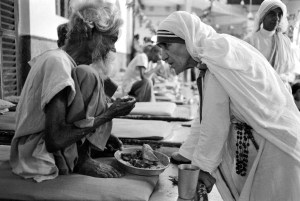
INDIA - OCTOBER 01:  Mother Teresa and the poor in Calcutta, India in October, 1979.  (Photo by Jean-Claude FRANCOLON/Gamma-Rapho via Getty Images)

INDIA – OCTOBER 01: Mother Teresa and the poor in Calcutta, India in October, 1979. (Photo by Jean-Claude FRANCOLON/Gamma-Rapho via Getty Images)

September 4th, 2016; 23rd Sunday in Ordinary Time

Gospel Luke 14:25-33 NAB

Great crowds were traveling with Jesus, and he turned and addressed them, “If anyone comes to me without hating his father and mother, wife and children, brothers and sisters, and even his own life, he cannot be my disciple. Whoever does not carry his own cross and come after me cannot be my disciple. Which of you wishing to construct a tower does not first sit down and calculate the cost to see if there is enough for its completion? Otherwise, after laying the foundation and finding himself unable to finish the work the onlookers should laugh at him and say, ‘This one began to build but did not have the resources to finish.’ Or what king marching into battle would not first sit down and decide whether with ten thousand troops he can successfully oppose another king advancing upon him with twenty thousand troops? But if not, while he is still far away, he will send a delegation to ask for peace terms. In the same way, anyone of you who does not renounce all his possessions cannot be my disciple.”

 Meditation Reflection:

How can Christ, whose new commandment to us was to “love one another as I have loved you” simultaneously ask that we hate our family members?  As we celebrate the canonization of Mother Teresa, we can look to her example to illuminate this paradox. Jesus’ challenge that “whoever does not carry his own cross and come after Me cannot be my disciple” proved a difficult task and one that required great love, detachment, and grace for Mother Teresa who left her home, her family, and even her beloved convent to serve the poorest of the poor on the streets in India.  Jesus rightly warns to count the cost before we set out on a project lest we find ourselves giving up midway.  Discipleship calls for a total gift of self, in response to the Lord who made the ultimate gift of self for us through His Incarnation, Death, and Resurrection.

In a perfect world, or at least in heaven, loves do not compete with one another and we aren’t painfully pulled in opposing directions.  In our current fallen state however, we come to crossroads where we must choose between two loves.  It’s one thing to forsake the love of a material good or a sinful habit, but the hardest love to forsake is that of someone with whom we have an intimate relationship who refuses to share us with Christ and gives us an ultimatum.

This ultimatum may not sound as direct as “it’s me or Christ!” but it will likely pit some aspect of following Christ against something the person wants of you.  Following Christ results in a life of sacrifice that’s counter-cultural.  Authentic Christians don’t blend in and that bothers people who don’t want to stir the waters. Living your faith, even quietly, can prick the conscience of another and result in lashing out to ease his or her own angst.  Similar to Jesus, Christians offer love unconditionally to others.  Unfortunately, the same is not always true on the other end and the painful choice between following Christ or making the person you care about happy must be made.

This choice takes as many forms as there are relationships.  For a teen it can be a couple breaking up because one chooses purity over promiscuity or being left out of social gatherings because of a refusal to drink.  For a young adult it can be a person choosing the religious life despite the discouragement of parents, or moving away from family and friends for a service they are called to by Christ. For parents it can mean getting the silent treatment from a child because you refuse to condone their wrong behavior.  For a spouse it can mean suffering the anger of the other sometimes even divorce because one refuses to compromise living out his or her faith to appease the other’s sin.  No one wants a rift in their family- whether between parents, children, or spouses.  At the same time not everything is in our control except our own decision to follow the Lord.   Navigating these situations can be confusing and spiritual direction should be sought to sort out how to authentically love in particular situations.

Mother Teresa desired to follow Christ and to give her whole life in love to Him.  First it meant leaving her family to join the Sisters of Loreto as a nun and serve in India as a teacher.  Next, she received her “call within a call” to go out into the streets and serve the poorest of the poor.  She was happy as a nun and asked Jesus if she could just serve Him more devoutly in the way she already was.  Each time however He repeated His request for her to satiate His thirst for souls by ministering to the poor and destitute.  He would ask her each time, “Wouldst thou refuse Me?”

Mother Teresa felt torn between two loves.  Her love for the other sisters, her students, and her life in the convent was certainly a noble love, but discipleship called her to follow Christ to a place that meant she would have to choose between the two.  Ultimately, Mother Teresa could not surrender her love for Jesus to anything else and so she gave up and gave in to the Lord.  As she followed Christ, Mother Teresa surrendered everything to Him – material goods, physical comforts, family, and even the convent.  She went into the most destitute streets with nothing but a sari and a passion for Jesus.

Mother Teresa did not want to have come so far only to turn back.  She had made a choice for Christ, to be a disciple, whatever may be.  Hopefully our discipleship will bring greater peace to our families and relationships and maybe our sacrifices will not be as large as Mother Teresa’s.  Only Christ knows the crosses we will have to carry but He asks that we be ready to face whatever may come with single minded devotion, lest we come so far only to turn back.

Contrary to cultural demands, Christians cannot compartmentalize their faith.  We are followers of Christ at church, at home, at work, when alone, or when with friends.  We have to be prepared that some people, even some we for whom we care deeply, may not tolerate our discipleship and choose to leave us.  In these instances, we can look to Christ for the grace and grit to carry our cross, a cross which He promises will end in a resurrection.

This Sunday, may we count the cost and, with the grace of Christ, decide to follow Him to the end.  The joy of Mother Teresa, and the light of love and mercy her life became, serves as a witness for us of the glorious destination of discipleship – a project worth completing!

Consider:

  • Are you a disciple of Christ?  If the answer is yes, what moves you to love Him and to follow Him? If the answer is no or not yet, what attracts you about Christ or piques your curiosity?
  • In what ways has discipleship caused you to live counter-culturally? Has it strained any of your relationships?
  • How has carrying your cross produced resurrections and blessings in your life? What have been some of the fruits of your discipleship?
  • What cross are you carrying right now? In what way does it resemble Jesus’ cross? How does it bring you closer to Him as you share in His experience?
  • It feels good to accomplish something hard that required grit and perseverance. Consider how it will feel to “finish the race” as St. Paul says, and to have followed Christ (with the help of His grace) to the end.

Make a Resolution (Practical Application):

  • Learn more about Mother Teresa or read a collection of her writings or quotations.
  • If you feel tension between following Christ and appeasing someone you love, seek spiritual direction this week from your priest or a wise and holy person you know. Reach out in person, by phone, or email.
  • Pray an Act Of Consecration to Jesus each day this week.

~ Written by Angela Lambert © 2016

* To receive these weekly posts automatically in your email just click the “follow” tab in the bottom right hand corner and enter your email address.


The View From Mount Humility

by Angela Lambert

20160820_204509111_iOS


August 28th, 2016; 22nd Sunday in Ordinary Time

Gospel of Luke 14:1,7-14  NAB

On a sabbath Jesus went to dine at the home of one of the leading Pharisees, and the people there were observing him carefully. He told a parable to those who had been invited, noticing how they were choosing the places of honor at the table. “When you are invited by someone to a wedding banquet, do not recline at table in the place of honor. A more distinguished guest than you may have been invited by him, and the host who invited both of you may approach you and say, ‘Give your place to this man,’ and then you would proceed with embarrassment to take the lowest place. Rather, when you are invited, go and take the lowest place so that when the host comes to you he may say, ‘My friend, move up to a higher position.’ Then you will enjoy the esteem of your companions at the table. For every one who exalts himself will be humbled, but the one who humbles himself will be exalted.” Then he said to the host who invited him, “When you hold a lunch or a dinner, do not invite your friends or your brothers or your relatives or your wealthy neighbors, in case they may invite you back and you have repayment. Rather, when you hold a banquet, invite the poor, the crippled, the lame, the blind; blessed indeed will you be because of their inability to repay you. For you will be repaid at the resurrection of the righteous.”

Meditation Reflection:

If pride comes before the fall, once could say humility comes before the ascent.  Our selfie-culture promotes self-assertion and our own honor and fame, bolstering pride and feeding competitiveness.  Yet, studies have shown that the social media craze can make persons feel depressed as they strive to compete with the seemingly perfect and glamorous lives of their friends based on the pictures they post.

I can certainly relate.  It seems like the night I order pizza for the kids someone posts a colorful, healthy, made-from-scratch dinner their family is enjoying.  As I take a mental break from the tedium of work, I see a post of someone’s adventurous travels.  When I take a moment to relax after having a difficult parenting day, I see a pictures of friends with their smiling kids, dressed in clean matching clothes, doing a fun family activity.  The temptation can be to respond by working on one’s own image and creating the appearance of similar importance and prestige (the definition of which varies based on what’s important to you).  In Jesus’ time, one’s image and importance could be seen by where one sat at the table. It’s not much different however than seeking social recognition online, at work, or amongst one’s peers based on achievements, physical appearance, or possessions.

For every vice with which one struggles, St. Francis de Sales advises conquering it by aiming for the opposite virtue.  To combat pride therefore, one must cultivate humility.

Humility does NOT mean self-hate or false modesty.  Rather, it refers to an authentic and accurate view of one’s worth as well as the worth of others.  Pride takes many forms as we vie with one another for our place – some obvious and others subtle.

Merriam-Webster defines humility as “not thinking of yourself as better than other people.” God revealed the inherent dignity of every human person by creating each one in His image and likeness (independent of differences in appearance or abilities) and by Christ dying on the cross to save each and every one of us.  If God would become man, to suffer and die for someone, how can I not value them as anything less than priceless?  It doesn’t make me any less, but it also means I’m not anything more.     C.S. Lewis captured this mystery well in his essay, “The Weight of Glory”.  In it, he reflects on the grandeur of the human person, whose immortal nature will share in the either the horror of hell or the magnificent glory of God in Heaven.  He writes:

There are no ordinary people. You have never talked to a mere mortal. Nations, cultures, arts, civilization—these are mortal, and their life is to ours as the life of a gnat. But it is immortals whom we joke with, work with, marry, snub, and exploit—immortal horrors or everlasting splendours. This does not mean that we are to be perpetually solemn. We must play. But our merriment must be of that kind (and it is, in fact, the merriest kind) which exists between people who have, from the outset, taken each other seriously—no flippancy, no superiority, no presumption. And our charity must be a real and costly love, with deep feeling for the sins in spite of which we love the sinner—no mere tolerance or indulgence which parodies love as flippancy parodies merriment. Next to the Blessed Sacrament itself, your neighbour is the holiest object presented to your senses. If he is your Christian neighbour he is holy in almost the same way, for in him also Christ vere latitat—the glorifier and the glorified, Glory Himself, is truly hidden.”

In consequence, we need not honor others because we think so little of ourselves, but rather because we rejoice in our shared glory as sons and daughters of God.

A second reflection on humility relates to a definition which can be found in the Catholic Encyclopedia, which defines it further in this way:

“Humility in a higher and ethical sense is that by which a man has a modest estimate of his own worth, and submits himself to others. According to this meaning no man can humiliate another, but only himself, and this he can do properly only when aided by Divine grace.”

“Submitting oneself to others” is verbiage that sounds as archaic as the Latin in which it was originally written.  In our anti-authroity, “look out for #1” society this just seems antiquated.  I have been blessed however to experience the receiving end of this idea and I will admit that it creates a loving, peaceful community.  Just the other day, I walked in late to a meeting at work and a co-worker saw my need as I scanned the full room futily for an open seat.  He waved me over,  reached for a folding chair next to the wall, then opened it for me in an open spot he had found.  It made me feel cared for and respected.  Similarly, I am blessed to work at a place where colleagues regularly open the door for one another, ask genuinely how one is doing, and offer help whenever they see a need. This practice of showing deference toward others, far from demeaning one, creates esteem.

As a parent however I am finding it ever more difficult to create a sense of deference in my children.  On a recent road trip they argued that I was being a hypocrite because I made them take turns between the bucket seats in our van and the back seat but I always got to sit up front.  “Why do you get to sit up front?” they asked, “and why don’t you have to take a turn being squished in the back bench seat?”  “Because I’m an adult” I replied.  It seemed obvious to me. That thought would never have crossed my mind as a child. I had done my time sitting in the back as a kid.  Yet, it was not so obvious to them.  A similar incident occurred during a trip for my sister’s wedding. My dad had graciously rented a mini-van to help drive us as well as other extended family around.  On one excursion my aunt decided to come along and my kids began to fight over who had to give up a bucket seat for her.  She kindly offered to sit in the far back which, I remarked, was virtuous of her, but denied my kids the opportunity to practice virtue themselves.  Much like Jesus’ parable, her humility resulted in being urged to a place of honor (even if its’ prime seating in a van!), whereas one of my children had to be scolded and moved to the back.

Practicing deference shows love and respect.  It means honoring one another rather than grasping at it for oneself.  This doesn’t mean you will be destined to be a doormat, but as Sirach proclaims in chapter 3:17-18:

“My child, conduct your affairs with humility, and you will be loved more than a giver of gifts. Humble yourself the more, the greater you are, and you will find favor with God.”

Paradoxically, when we celebrate and appreciate others, we ourselves experience celebration and appreciation too.  Moreover, by valuing what truly maters in others, we learn to value ourselves more authentically as well.  It means we feel secure in our worth as sons and daughters of God.  We feel loved for who we are and not just what we can do.  It frees us to be teachable and learn from those who know more or have more experience.  It also frees us to mentor others in love rather than pride who could learn from us.  This builds the kingdom of God and gives us a taste of the wedding feast of heaven, where everyone rejoices in the grace of God and the work He has accomplished in the souls of every person there, including ourselves.

Jesus accepted the invitation to dine at the home of a leading Pharisee.  Humility does not therefore entail avoiding all social opportunities.  Instead, Christ exhorts us to evaluate the reasons for our decisions and to be aware of the snares of subtle pride.  Christ dined with the Pharisee to teach, heal, and save.  Others had come to be taught, healed, and saved.  Still others, Jesus observed, concerned themselves with image, honor, and their place at the prestigious table.  Jesus teaches us to celebrate the honors of others and thereby frees us from the striving and grasping after notoriety.  Instead of de-valuing your own worth, it actually means you feel secure and content with who you are and it frees you from judging yourself in comparison to others.  A good friend of mine once said, “to compare is to despair.”  I have found that to be true.  If however you take joy in other people you will be happy in any circumstance – either celebrating their successes, or being thankful to be in a position to offer help if they are in need.

Consider:

  • In what ways or areas do you sometimes over-estimate yourself? In what ways or areas do you sometimes under-estimate yourself?
  • Consider the deference Christ shows toward you by dying on the Cross for you, inviting you into relationship with Him, and transforming your life with his grace.
  • How might you show greater deference and humility toward others?
    • In your home and family.
    • Toward your peers and colleagues.
  • Reflect on the relationship between being humble and being teachable.
  • Consider the relationship between humility and service.
  • Consider the relationship between being humble and accepting the responsibility of leadership.
  • How does Christ model true humility in each of these ways?
    • Think of His obedience to Mary and Joseph.
    • Consider His relationships with His family, friends, and disciples.
    • Reflect on His humiliation on the Cross to elevate us.
  • With whom, or in what situations, do you struggle with pride, over-competitiveness, or excessive focus on your image the most? Invite Christ to help you with His grace to acquire peace and humility in that.

Make a Resolution (Practical Application):

  • Pray the Litany of Humility each day this week.
  • Choose one person or area of your life in which you struggle with pride, over-competitiveness, or excessive focus on your image. Each morning this week, decide on one way in which you can practice humility in relation to that person or situation.
    • Examples: Towards Persons – ask him/her for help when needed, offer assistance, encouragement, or praise. Toward situations – Let others speak first at meetings, choose a simpler hair style or clothing for the day, invite a visitor in even if the house is a mess.
  • ~ Written by Angela Lambert © 2016
* To receive these weekly posts automatically in your email just click the “follow” tab in the bottom right hand corner and enter your email address.


The Fork In The Road For Every Christian

by Angela Jendro

fork in the road

20th Sunday in Ordinary Time

Gospel Luke 12:49-53 NAB

Jesus said to his disciples: “I have come to set the earth on fire, and how I wish it were already blazing! There is a baptism with which I must be baptized, and how great is my anguish until it is accomplished! Do you think that I have come to establish peace on the earth?  No, I tell you, but rather division. From now on a household of five will be divided, three against two and two against three; a father will be divided against his son and a son against his father, a mother against her daughter and a daughter against her mother, a mother-in-law against her daughter-in-law and a daughter-in-law against her mother-in-law.”

Meditation Reflection:

Imagine someone else saying the same words as Jesus did.  You might accuse them of not being very Christian.  Isn’t Jesus the Prince of Peace?  Isn’t He the nicest guy there ever was?  Aren’t Christians supposed to be nice people? Yet, Jesus exclaimed with great passion His eagerness to set the world ablaze.  This doesn’t seem to fit the sandal-wearing, nice, historical moral teacher image our culture likes to portray Jesus as.

fire pic

Jesus does bring peace, but not a superficial conciliation. He came to defeat sin and redeem mankind, accomplished through His own baptism of the Cross, one that caused Him great “anguish until it is accomplished.Fire purifies and destroys.  Christ came to set fire to sin, to destroy its corrupting influence in our lives, and to make room for life in God.  That battle begins within ourselves and extends to sin outside ourselves.  Purification can burn, but at the end of the process one feels liberated and empowered. To ignite this fire and make our purification possible, Christ knew He had to suffer and die first – something that caused Him distress as He waited in anticipation.

As disciples of Christ, we share in both His rewards and His suffering.  Christ’s words about causing division seem shocking.  Isn’t He supposed to bring unity and harmony? Jesus offers unity, but not everyone accepts it.  Note that although Jesus often ate with sinners, not every sinner chose to eat with Him and several found His witness challenging enough that they tried to silence Him altogether by crucifying Him.

I often quote G.K. Chesterton who said, “The Christian ideal has not been tried and found wanting. It’s been found difficult; and left untried.”  At the fork in the road therefore, where one mfork in the road 2ust choose the path of discipleship or the path of least resistance, Christians must resolve and accept that as they walk to the left after Christ, some of their closest companions may walk to the right instead and their paths will separate.  Although Christians, like Christ, ought to keep the door open to those friendships, oftentimes living our faith can mean losing some relationships.  Jesus is Goodness, Truth, and Love.  Yet, He was rejected by many.  As we strive to be more Christ-like, we have to prepare ourselves for the same experience.


Even in the Old Testament, authentic prophets consistently experienced rejection and suffering.  The community they came to help change would pressure them to conform instead.  When God’s prophets refused, they found themselves exiled or running from death threats.  The first reading for this Sunday’s liturgy provides an evocative image of this from the life of Jeremiah:

“And so they took Jeremiah and threw him into the cistern of Prince Malchiah…There was no water in the cistern, only mud, and Jeremiah sank into the mud.” Jeremiah 38:6

stuck in the mud

This image strikes me because of the several analogous experiences I can think of in my own life.  Jeremiah acts in truth and love only to be thrown into a pit.  The mud makes the image even better as a symbol of the depressive reality of ones you love rejecting Christ (and you) in favor of persisting in their sins.  When Jeremiah “sank into the mud,” I am reminded of the feeling of helplessness and despair that can discourage me in these moments. Thankfully, Jeremiah did not remain in the mud forever, Jesus’ death was followed by His resurrection, and God will lift us up too.  David expresses this in Psalm 40:2

“The LORD heard my cry. He drew me out of the pit of destruction, out of the mud of the swamp; he set my feet upon a crag; he made firm my steps.”

Walking the path of discipleship may take you down a different road than some of the persons you love.  You might experience the pain of division and loss, not because you didn’t invite them along but because they refuse to come with you.  This fork in the road can come in many different forms at different times in our lives.  Choosing between following Christ and following someone we love is as painful as fire.

Our contemporary culture adds even more pressure.  It seems more rare these days to find people who can be friends even though they have different views and beliefs. Instead, the attitude appears to be that one must condone the decisions of another or they can’t be friends.

Discipleship may be difficult but in the end Christ conquers all.  He can provide the guidance to achieve the tricky balance of loving others without condoning sin, as well as the humility to be receptive to the hard truth about our own sins a Christian friend might challenge.  Every person must make a choice and, praise be to Christ, He provides us with the grace and the guts we will need to follow Him no matter the cost.

Have you had a similar experience?  If you’d be willing to share, write a short account of your fork in the road in the comment section below!

that you and I may be mutually encouraged by one another’s faith, yours and mine. Romans 1:12

Consider:

  •  How has Christ set your heart on fire?
    • How has He purified it?
    • How has that purification made you more zealous and joyful?
  • Has living out your Christian faith ever caused you to experience persecution from persons you care about?
    • In what ways did it feel like you were sinking into a pit of mud?
    • In what ways did God lift you up from the pit and set you on rock?
  • Who are your true friends who accept you as you are, complete with respect for your beliefs?
  • Have you ever been the one doing the persecuting or rejecting? Consider why we find it difficult to be around people who challenge us to be better simply by the way they are living their own lives.
  • Are there persons with whom you struggle to be an authentic Christian around? Do you live your faith at work or out with friends, or do you hide it so they won’t think differently about you?

Make a Resolution (Practical Application):

  • Pray Psalm 40 each day this week.
  • Resolve to let your faith be seen in some small way, especially in a place where you usually lack the courage. (e.g. wearing a cross necklace, having a small crucifix or rosary on your desk, writing favorite bible verses on notecards and placing them in places you will see – whether in your work space or at home, walking away from conversations that disparage the faith or other persons, etc.)

~ Written by Angela jendro © 2019

Follow bar


Loving Confidence in Prayer

by Angela Lambert

Jesus teach prayerjesus-fasting-in-wilderness-desert

July 24th, 2016; 17th Sunday in Ordinary Time

Gospel of Luke 11:1-13 NAB

Jesus was praying in a certain place, and when he had finished, one of his disciples said to him, “Lord, teach us to pray just as John taught his disciples.” He said to them, “When you pray, say: Father, hallowed be your name, your kingdom come. Give us each day our daily bread and forgive us our sins for we ourselves forgive everyone in debt to us, and do not subject us to the final test.” And he said to them, “Suppose one of you has a friend to whom he goes at midnight and says, ‘Friend, lend me three loaves of bread, for a friend of mine has arrived at my house from a journey and I have nothing to offer him,’ and he says in reply from within, ‘Do not bother me; the door has already been locked and my children and I are already in bed. I cannot get up to give you anything.’ I tell you, if he does not get up to give the visitor the loaves because of their friendship, he will get up to give him whatever he needs because of his persistence. “And I tell you, ask and you will receive; seek and you will find; knock and the door will be opened to you. For everyone who asks, receives; and the one who seeks, finds; and to the one who knocks, the door will be opened. What father among you would hand his son a snake when he asks for a fish? Or hand him a scorpion when he asks for an egg? If you then, who are wicked, know how to give good gifts to your children, how much more will the Father in heaven give the Holy Spirit to those who ask him?”

Meditation Reflection:

Jesus Christ is the visible image of the invisible God.  “Whoever has seen Me has seen the Father” (John 14:9), He says. In contrast, pagan gods tended to be images of the visible traits of humankind.  Thus, they tended to mirror fallen man’s tendencies toward power, greed, lust, and narcissism.

This answered man’s nagging questions about the origins of good and evil but it also left him subject to the whims of unpredictable powers.  Be it Greek, Roman, or Babylonian gods, people tried to satiate the needs of their deities to avoid calamities and possibly manipulate them for favors.  This explains, for instance, why the Romans did not care who a person worshiped provided they did their part to appease the Roman gods too and why they blamed Christians for the fall of Rome.

This appeasement of the gods should not be mistaken for relationship.  It would be more apt to describe it as mutual manipulation.   In some places it spiraled into superstition bordering on the obsessive-compulsive.  For instance, some farmers would address one god for the successful tilling of soil, another for the planting of seed, another for the growth of the seed, another for the harvest, and so on.  Even well after the West became Christianized this practice proved difficult to root out since it had become so ingrained in the culture and in fallen man’s temptation to control rather than to trust.  In modern times, we must resist the secular attempt to lump Christianity with all of the other religions into one vague spirituality.  The history of pagan worship differs in an absolute way from Judeo-Christian worship. God has distinguished Himself from every other faith from the moment He revealed Himself to Abraham to the death and Resurrection of His Son and the sending of His Holy Spirit.

This difference is most notable in the way in which Christians pray.  Rather than the “multiplying of words” to appease or manipulate, Christian prayer is grounded in familial relationship.  When Jesus teaches the apostles to pray He shares with them His own prayer.  Through Baptism we become incorporated into the Mystical Body of Christ, receiving adoption and becoming children of God (see John 1:12, Galatians 3:26, Romans 8:15-16).  We cannot make ourselves someone’s child.  The intimacy and privilege of familial relationship comes to us as a gift – either through nature or through the will of the parents by adoption.  God has willfully adopted us and Christ has made that possible through His sacrifice. Thus, He teaches us to address God as Father and enter into a relationship of sonship or daughterhood with the Lord.  Consequently, we should begin prayer by simply meditating on the gift of God’s fatherhood and the reliable, selfless, pure love that it bestows.  Even one moment of contemplation of this sublime gift moves our hearts to praise God and so Jesus instructs our next words to be “hallowed be Your Name.”

In pagan practices, calling on gods by name provided connection and sometimes a power over them. This can be true to some extent even in our human relationships.  On the positive side, by knowing someone’s name a person can network, get in contact with him or her, or continue the relationship.  On the negative side, it can also mean identity theft, access to personal information for the purpose of fraud, etc.  Christ instructs His disciples to avoid these tendencies with God’s name.  God desires authentic relationship.  He knows every person’s hearts and He cannot be manipulated.  Thus, Jesus warns, “Not everyone who says to me, ‘Lord, Lord,’ will enter the kingdom of heaven, but only the one who does the will of my Father in heaven (MT 7:21)

As a result, authentic relationship with God recognizes Him as the true Good and petitions: “Your kingdom come.”  God ought to rule our lives, not the other way around.  How does God do this?  How does His kingdom of love, joy, and peace come to reign in our hearts?  Through the gift of the Holy Spirit.  Consequently, Jesus teaches us to ask God for our daily bread and explains directly after that God will always increase the Holy Spirit if we ask: “If you then, who are wicked, know how to give good gifts to your children, how much more will the Father in heaven give the Holy Spirit to those who ask him?”

Lastly, since sin and hatred are incompatible with God, Jesus tells us to give forgiveness and ask for forgiveness that we may be reconciled with God and one another.  Moreover, He encourages us to ask in advance for God to spare us from temptations which would be too much for us and lead to abandoning Him.

Should you be afraid of God’s response (or lack thereof) if you pray, Jesus reveals to us how God views our prayers so that we may be confident when we approach Him.  God is not an image of us, we are an image of Him.  Even though we may be lazy or slow to help others, God is not.  As a teenager I noticed the difference between my response to my parents requests and their response to mine.  If asked to run to the store or help with a chore, I might drag my feet, feel too tired, grumble, or say no.  If I needed something however, they always responded promptly and reliably.  When I became a mother I finally understood this phenomenon. (Even while writing this I have been interrupted with requests from my kids a dozen times!)  The difference was mature love.  The love of good parents is an image of the love of God – self-less, prompt, generous, and happy to help.  Hopefully as children of God, we can mature in our prayer so that our petitions move from the emotional demands of a toddler or elementary school child, to the respectful, humble, and grateful petition of an adult child confident in the relationship with his or her parents.

Consider:

  • Have you ever helped someone even when it was inconvenient and would rather have avoided it?  Have you done things for your kids you never would have imagined doing before you had them?
  • Consider the difference between asking your mom or dad for help as opposed to a friend or neighbor. What things might you ask of them that you wouldn’t from the others?
  • Reflect on God’s love as that of a perfect Father. Reflect on the loving gratitude that should emanate from this relationship.
  • Where do you need God’s kingdom to come more in your life? Where do you need His peace, joy, justice, love…?
  • Do you forgive others as you would have God forgive you? Are there any grudges you need to let go?  Are you quick to reconcile when someone apologizes?
  • Imagine how Christ must have looked while praying alone. Imagine you are one of the apostles, witnessing Him regularly taking time in solitude with the Lord.  What do you think moved them so much that they asked Him to teach them to pray in the same way?  Ask Christ to teach you to pray as He did too.
  • Pray for an increase in trust and a purified sight of God.

Make a Resolution (Practical Application):

  • Pray the Our Father slowly and meditatively each day this week.
  • Pray each day for an increase in trust.
    • Maybe repeat the words given to St. Faustina by Christ to have written under His image: “Jesus I Trust in You.”
    • Or pray the words of the father who brought his son possessed by a mute spirit to Christ (MT 9:22-24) “But if you can do anything, have compassion on us and help us.” Jesus said to him, “‘If you can!’ Everything is possible to one who has faith.” Then the boy’s father cried out, “I do believe, help my unbelief!”
  • Each day be forgiving toward someone in the same way you would like God to be patient and forgiving toward you.
    • Ideas: The person who cuts you off in traffic, the colleague who annoyingly one-ups you, the child who throws a tantrum or acts ungratefully, the spouse who forgets something or acts irritably, the fast food employee who messes up your order…

~ Written by Angela Lambert © 2016

* To receive these weekly posts automatically in your email just click the “follow” tab in the bottom right hand corner and enter your email address.


Encountering Christ Through Your Life…Gospel Meditation for Sunday July 3rd, 2016

by Angela Lambert

pope francis and refugees

Pope Francis welcomes a group of Syrian refugees after landing at Ciampino airport in Rome following a visit at the Moria refugee camp in the Greek island of Lesbos, April 16. Filippo Monteforte / Pool via Reuters

July 3rd, 2016; 14th Sunday in Ordinary Time

Gospel of Luke 10:1-12, 17-20 NAB

At that time the Lord appointed seventy-two others whom he sent ahead of him in pairs to every town and place he intended to visit. He said to them, “The harvest is abundant but the laborers are few; so ask the master of the harvest to send out laborers for his harvest. Go on your way; behold, I am sending you like lambs among wolves. Carry no money bag, no sack, no sandals;
and greet no one along the way. Into whatever house you enter, first say, ‘Peace to this household.’ If a peaceful person lives there, your peace will rest on him; but if not, it will return to you. Stay in the same house and eat and drink what is offered to you, for the laborer deserves his payment. Do not move about from one house to another. Whatever town you enter and they welcome you, eat what is set before you, cure the sick in it and say to them, ‘The kingdom of God is at hand for you.’ Whatever town you enter and they do not receive you, go out into the streets and say, ‘The dust of your town that clings to our feet, even that we shake off against you.’ Yet know this: the kingdom of God is at hand. I tell you, it will be more tolerable for Sodom on that day than for that town.”

The seventy-two returned rejoicing, and said, “Lord, even the demons are subject to us because of your name.” Jesus said, “I have observed Satan fall like lightning from the sky. Behold, I have given you the power to ‘tread upon serpents’ and scorpions and upon the full force of the enemy and nothing will harm you. Nevertheless, do not rejoice because the spirits are subject to you,
but rejoice because your names are written in heaven.”

Meditation Reflection:

Jesus desires personal relationship with each human person.  At the same time, no man is an island, and therefore Jesus encounters persons within the context of their lives. Our experiences and choices, together with our relationships with others, form the framework through which we receive and respond to Christ.

Our personal encounter with Christ may begin with a personally appointed disciple of His, sent ahead of Him.  For some, a certain preparation may be needed before Christ’s visit will be fruitful.  Someone whose heart is hardened toward God by experiences of pain or falsehood may need their demons cast out so Christ can fully enter.  In some cases, this happens in a literal way through the name of Jesus and the authority granted by Him.  In other cases, it happens in a more analogous way through the softening of a heart by the experience of Christian love, the opening of a mind through seeds of truth, or the reception of mercy in a time of need.  An otherwise weak soul, may find the courage to say yes to Christ after being inspired by the bravery of another.  A proud soul may see the beauty of meekness through the gentle joy of colleague.  Our perception of God can be obscured by our experiences in life – either of prosperity or pain – but it can also be clarified by our experiences in life, especially through encounters with other Christians.

Christ call us to proclaim the kingdom of God to others and He equips us with the supernatural power and grace to do so.  The good news of the Lord’s presence and mercy is proclaimed through a myriad of ways and tailored to the individuals who will receive it.  God may call you to witness through your example, through your choices, through works of mercy, through your patience and kindness, through your prayers and sacrifices, or through words of teaching, encouragement, conviction, or comfort.  Conversions continue to take place even in surprising places.  Peter Leithart, writer for First Things magazine, reports in his article “Islamicization of Europe or Christianization of Islam?”, that many Muslim refugees migrating into Europe from Iraq, Afghanistan, Pakistan, and central Asia have been converting to Christianity and requesting baptism by the droves.  The article cites a variety of reasons for this phenomena but ultimately individuals in need have encountered Christ through the Christians who have aided them which sparked openness to Christianity and a desire for Christ.

The kingdom of God, which is none other than union with God, begins here on earth at the crucial crossroads of the human will.  The seventy-two sent out by Christ recounted their exhilaration at being able to cast out demons.  The devil seems oppressively powerful, yet at the simple name of Jesus, he is conquered.  Unfortunately, a simple “no” by the human will can shut Jesus out.  Relationship requires the reciprocal good will of two people.  Christ loves us, but if we do not love Him in return there can be no friendship.  As Christian disciples, we must pray to be His missionaries laboring in His harvest and take care to not turn others away by their encounter with us.  We should also not become discouraged if even after great feats people in our lives still reject God.    Ultimately, that is between them and God.  The stakes are high – heaven! – so let’s pray that we can open hearts to receive the Lord for all of eternity.

Consider:

  •  Consider how Christ has sent messengers ahead of Him to you.
    • Who brought to you His truth, sacraments, love, or compassion?
    • How did it increase your faith or clarify your understanding of Christ?
  • Consider how you are a messenger of Christ – to your family, your colleagues, your neighbors, and your friends.
    • In what ways to you demonstrate Christ’s love and truth to them?
    • In what ways could you improve your Christian witness?
  • Reflect on your receptivity. How open are you to the Word of God in Scripture, through His Church, through others?  What hinders you and what helps you?
  • Reflect on Christian evangelization occurring in Europe by reading Peter Leithart’s article:First Things. “Islamicization of Europe or Christianization of Islam?”

Make a Resolution (Practical Application):

  •  Each day prayerfully and intentionally decide on one person with whom you will share Christ.  Prayerfully decide how and when you will do it. (e.g. saying a kind word to someone who annoys you at work, praying with your children together before bed, doing something loving toward your spouse, forgiving someone in need of mercy, etc.)
  • Reach out to someone who has been instrumental in your own conversion and thank him or her. It could be as simple as an email, text, hand-written note, or phone call.

~ Written by Angela Lambert © 2016

* To receive these weekly posts automatically in your email just click the “follow” tab in the bottom right hand corner and enter your email address.


Excuses, Excuses…Be Brave! Be Determined!

merciful father

June 26th, 2016; 13th Sunday in Ordinary Time

Gospel of Luke 9:51-62

When the days for Jesus’ being taken up were fulfilled, he resolutely determined to journey to Jerusalem, and he sent messengers ahead of him. On the way they entered a Samaritan village
to prepare for his reception there, but they would not welcome him because the destination of his journey was Jerusalem. When the disciples James and John saw this they asked, “Lord, do you want us to call down fire from heaven to consume them?” Jesus turned and rebuked them, and they journeyed to another village. As they were proceeding on their journey someone said to him, “I will follow you wherever you go.” Jesus answered him, “Foxes have dens and birds of the sky have nests, but the Son of Man has nowhere to rest his head.” And to another he said, “Follow me.” But he replied, “Lord, let me go first and bury my father.” But he answered him, “Let the dead bury their dead. But you, go and proclaim the kingdom of God.” And another said, “I will follow you, Lord, but first let me say farewell to my family at home.” To him Jesus said, “No one who sets a hand to the plow and looks to what was left behind is fit for the kingdom of God.”

 Meditation Reflection:

Being a Christian means following Christ, wherever and whenever He goes.  Full discipleship requires 100% commitment, not the made-to-order or pick and choose buffet we are accustomed to in our culture.  Consider Jesus’ own example.  He needed to journey to Jerusalem.  Notice the attitude He chose – resolution and determination.  Followers of Christ need the same resolution and determination.  In fact, St. Teresa of Avila, the great Spanish mystic, emphasized repeatedly the need for determination in order to advance in the spiritual life.

As Jesus journeyed, doing the Father’s will, those He encountered each had an opportunity to join Him.  The Samaritans received messengers from Christ but rejected the Lord before He even arrived when they learned accepting Christ meant surrendering their bitterness toward Jerusalem.

The next person took the initiative to seek Jesus and requested to be in His company.  Jesus, who knows the hearts of each one of us, warned the man that being near to Christ would bring spiritual security and comfort but not necessarily the feeling of physical security and comfort.

The next two men Jesus invited to follow Him, but both requested to do something else first.  Their requests seem valid and even noble.  In fact, burying the dead is a corporal work of mercy and honoring your father and mother is the 4th commandment. Is Jesus asking us to neglect our duties?  Does Christian discipleship excuse neglecting our families?  Does God contradict Himself?  No.  Do we sometimes rationalize our cowardice or weakness by twisting God’s commands against Him?  Yes.  Many of us (including myself!), often excuse our lack of time for prayer by pitting it against the active life of charity.  It sounds something like this: “I don’t have time to sit and pray because I need to do…which God would want me to do.”  A practical example would be, “I could sit and pray (a.k.a. do nothing) or work an extra hour to provide for my family, or do a load of laundry and dishes, or run an errand.  God wants me to care for my family, that is my prayer.”

Sometimes that might be the case.  But, in truth, there’s usually time for both.  In addition, without prayer, even our loving activities can tend to be more self-loving rather than other-loving. Jesus knew the hearts of the two men who wanted to return to their families before following Him.  Rather than contradicting His command that we love one another, especially our families, He may have been calling them out on their rationalizations.  It reminds me of when I gather my kids for family prayer.  My two boys will often try to get out of it by appealing to my earlier request that they get outside for awhile or they were just about to start a chore I had assigned earlier.  In reality, they had time for both those things before and after prayer, it just sounds like a better excuse.

Let’s face it, we have an inner desire for God and we may even have authentic zeal for discipleship, but we also struggle with attachments that hold us back.  The good news, is that if we open ourselves up to Christ in prayer, He will reveal those attachments to us and provide the grace to overcome them.  It requires resolution and determination, but with God all things are possible.

Consider:

  • Like the Samaritans, how many of us hold on to bitterness, anger, or un-forgiveness?  Prayerfully ask Christ to reveal if any of these are holding you back from following Him.  Pray for the grace to surrender it to the Lord.
  • Like the man who proclaimed he would follow Christ wherever He goes, consider why you are a Christian. Is your love for the Lord intermixed with some self-love as well?  Do you complain when you encounter trials?  Are you impatient or upset when you experience discomfort?
  • What rationalizations do you use to delay responding to Christ or to responding more generously? What rationalizations have you overcome on your spiritual journey?   How has that experience strengthened your will to follow the Lord?
  • A favorite book of mine called “The Fire Within” by Fr. Thomas Dubay provides some great steps for identifying and overcoming attachments. Prayerfully read my summary of Fr. Dubay’s steps and see if you can identify one attachment and make a plan for rooting it out.identifying attachments

Make a Resolution (Practical Application):

  • Each day this week thank God for one deterrent He has helped you overcome or from which He has freed you, and invite Him to reveal and free you from a current hindrance you may or may not realize you have.
  • Pray for an increase in resolution and determination. Choose one concrete thing you can do this week to apply it.  (e.g. pray 15 minutes each morning or evening, say something kind to your spouse when you want to say something critical, hug your child when you want to throw your hands up in exasperation, choose a daily Mass to attend and do what it takes to get there, go to Confession…)
  • Using Fr. Dubay’s steps, identify a current attachment and do one thing each day to root it out.

~ Written by Angela Lambert © 2016

* To receive these weekly posts automatically in your email just click the “follow” tab in the bottom right hand corner and enter your email address.

To Serve is to Reign…Gospel Meditation for Mark 9:30-37

by Angela Jendro

pope-francis-hugging-disabled-childpope-selfie

25th  Sunday in Ordinary Time

Gospel of Mark 9:30-37 NAB

Jesus and his disciples left from there and began a journey through Galilee, but he did not wish anyone to know about it. He was teaching his disciples and telling them, “The Son of Man is to be handed over to men and they will kill him, and three days after his death the Son of Man will rise.” But they did not understand the saying, and they were afraid to question him. They came to Capernaum and, once inside the house, he began to ask them, “What were you arguing about on the way?” But they remained silent. They had been discussing among themselves on the way who was the greatest. Then he sat down, called the Twelve, and said to them, “If anyone wishes to be first, he shall be the last of all and the servant of all.” Taking a child, he placed it in the their midst, and putting his arms around it, he said to them, “Whoever receives one child such as this in my name, receives me; and whoever receives me, receives not me but the One who sent me.”

Meditation Reflection:

This week, a student of mine asked me why a woman cannot be the pope. This question, and its underlying one – why a woman can’t be a priest, gets asked every year. I myself wrestled with this question when I was in college. I’m glad I pursued the answered because there are beautiful theological reasons. Oftentimes however, what we are really asking is why a woman can’t hold what seems to be the highest and most powerful position in the Church. This seems sexist, unfair, and therefore not Christ-like. The apostles in today’s passage viewed leadership in Christ’s kingdom in a similar way. They were arguing along the way about who would have the highest position, the most power and prestige. If Christ’s kingdom resembled worldly kingdoms that would have been an appropriate question. Jesus corrects them in a pointed way. As God says in Isaiah 55:8 “‘For My thoughts are not your thoughts, nor are your ways My ways.” Jesus had just taught the apostles that the Son of Man, the Messiah, would have to suffer and be killed. Rather than considering that they might be called to follow in His footsteps they wonder who will take leadership afterward. Jesus clarifies what He means by His kingdom. His words would have been surprising to the apostles and they are still surprising to us today.

It’s hard to truly believe Jesus when He teaches that “Whoever receives one child such as this in my name, receives me; and whoever receives me, receives not me but the One who sent me.” We would rather believe that discipleship means visible worldly greatness. The world looks at the papacy and sees position and power. However, beginning with Pope Gregory the Great in the 6th century, the title the pope has used for himself has been “the servant of the servants of God.” Discipleship of Christ means following the path of humility and self-sacrifice, the same path Christ took. What can be more humble and self-sacrificing than caring for a small child, especially if you are its mother or father? This path of humility is open to all with equal opportunity. Some might even say that women have an unequal and greater opportunity since we alone have the ability to carry in our wombs new life at its most vulnerable stage.

Every Christian can become a saint if he or she cooperates with the grace of Christ. The Second Vatican Council used the phrase “the universal call to holiness” to describe the doctrine that God desires everyone to have perfect union with Him. The opportunity is equal, it’s or response which is unequal. Teresa of Avila said that what prevents individuals from experiencing greater depths of prayer and union with God is a lack of generosity, courage, and humility.

I wasn’t asked by Christ to be pope, but I was asked to be a mother and a teacher. In the world’s eyes there is nothing notable about my position except that I maybe “wasted” some of my talents and opportunities that I could have used for wealth and power instead. My eyes are on a different prize though. I don’t want to be the one in power, I want to be Jesus’ disciple. All I ask is that He say to me one day, “Well done my good and faithful servant.” I may not be the servant of the servants of God, but I accept being the servant of those He “put His arm around” and placed in my care.

Consider:

  • Who has God placed in your care? How has this made you grow in humility?
  • When do you feel tempted by worldly prestige?
  • Consider how you prioritize your life. How might Christ re-order your priorities? Ask for His help and grace.

Make a Resolution (Practical Application):

  • Write out your priorities – look at where you spend your time and money. Pray about it each day this week and ask Christ to show you where you are doing well and where you need to change.
  • Pope Francis visited the U.S. for the world meeting of families. Read one of his speeches or homilies from when he was here. Consider how he shares Christ’s values as it pertains to family and discipleship. [A couple of my favorite sources: vatican.va (vatican website) and zenit.org (Catholic news agency)]

~ Written by Angela (Lambert) Jendro © 2015; updated  © 2018

* These Sunday meditations are intended to engage the heart and imagination in prayer and include a practical application (resolutions) to your daily life. In our presentation on prayer I offer a more detailed discussion of ways to pray with Scripture that can take 5 minutes, 15 minutes, or half an hour and vary in depth depending on your time-frame and prayer goals.